SINGAPORE – Political parties were back on walkabouts on Friday (June 19), hitting the ground on the first day that Singapore eased restrictions on dining at F&B establishments and small social gatherings.
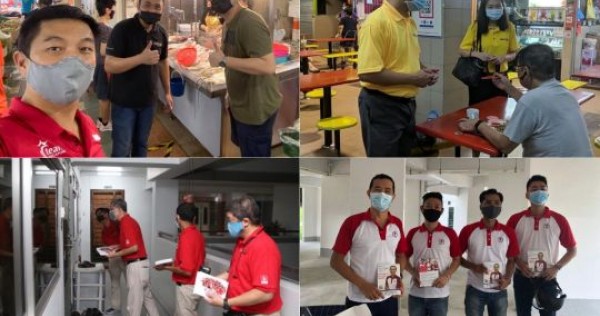
MPs from the People’s Action Party (PAP) and candidates from opposition parties were seen meeting residents in markets and doing home visits throughout the day throughout the island.
In keeping with safe distancing guidelines, they wore masks, largely kept to groups of no larger than five and did not shake hands with residents. Parties had put all such outreach on hold during circuit breaker.
Both the PAP and the Progress Singapore Party (PSP) were at the Mayflower Market and Hawker Centre in the newly formed Kebun Baru constituency at different times on Friday morning.
Mr Henry Kwek, the PAP MP for the ward, visited the market early in the morning. He posted photos of himself talking to residents and shopkeepers.
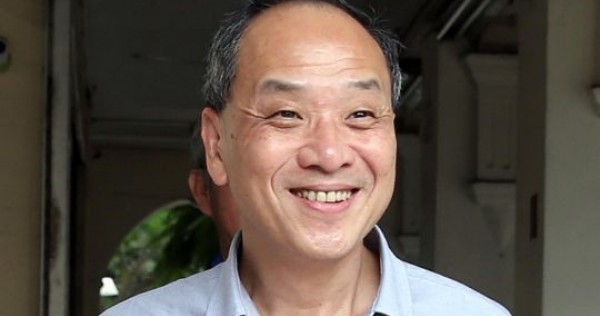
SINGAPORE – Workers’ Party MP Low Thia Khiang is recovering steadily, said party chief Pritam Singh on Friday (June 19).
In a Facebook post, Mr Singh said he visited Mr Low at his home in the evening, to see how the former WP secretary-general was after his fall on April 30.
Mr Low, 63, had injured his head from the fall, and was warded in the intensive care unit of Khoo Teck Puat Hospital. He was discharged from hospital after a 21-day stay.
Mr Singh said he could only speak to Mr Low over the phone before Friday, as safe distancing restrictions had prevented him from visiting earlier.
“Mr Low is recovering steadily, but as advised by doctors, has been told not to rush his recovery. For a man of his drive and sense of purpose, I can imagine this advice is difficult for him to abide by!” he wrote.
“But in view of the seriousness of his injuries, he is sticking to the doctor’s orders. Mr Low is touched and grateful for all the words of concern and support, and thanks everyone.”
SINGAPORE: In early March, the Singapore Government announced the launch of TraceTogether, its app to aid contact tracing.
The app was designed to use the Bluetooth Low Energy feature to establish contacts between users who had installed the app, and recording that information within the app. That information would be subsequently retrieved should its user be tested positive for COVID-19, thereby identifying the other users the individual had come into contact with.
To date, the app has had moderate success with about 1.8 million downloads or 25 per cent of the population.
Given the urgency to enhance contact tracing ability due to the fast spreading COVID-19, the Singapore Government applied design thinking principles from the outset in addressing privacy issues when conceptualising the app before its launch.
Minister-in-charge of Smart Nation initiative Dr Vivian Balakrishnan has said in Parliament the data will be only downloaded and used in limited public health circumstances related to COVID-19 and if so, would only be accessed by a small number of government officers.
In addition the design phase added a number of other features such as the automatic destruction of data after a 25-day period and the storage of encrypted information on the app alone.
The app has been open sourced, which means that the source code or the programming language behind the software is publicly available. This important step allows anyone to view the exact code of the technology, and in so doing, to see exactly how the software works.
Members of the open source community both in Singapore and overseas have looked closely at the code. Their reports verify that the code indeed does what the Government says it does and no more.
A BIG DEBATE ABOUT MAKING TRACETOGETHER TOKEN MANDATORY
However, last week the Government announced further enhancements – it will incorporate TraceTogther’s features onto a token which will be distributed to all Singapore residents and combine this app with the other key contact tracing technology tool, SafeEntry.
A woman scans a QR code for SafeEntry digital check-in before entering the building. (Photo: Gaya Chandramohan)
The aim is to reach 75 per cent of the population. The token will help those with hardware issues (such as some Apple users and those with battery issues) and the segments of our population who do not carry around a smartphone.
Interestingly enough, this move has generated a lot of debate. A petition asking the Government not to make the new token mandatory which has garnered 45,000 signatures to date.
On the other hand, some quarters contend that given Singapore’s fight against COVID-19 is still ongoing, the use of this technology should now be made mandatory when people leave the house, similar to the treatment for face masks.
Any move towards mandatory use of a token or any particular technology is one not to be taken lightly. One reason why the technology in token form has generated a lot more interest is because a wearable is traditionally perceived as an extension of personality, in closer physical proximity than your mobile phone.
People have said making the carrying of such a token mandatory may also seem overly intrusive especially if coupled with the unfounded belief that the token tracks locations or uploads information on its own (which it does not).
Coupled with irrational fear, mandating use of a device will stir up “tin foil hat” responses to try and circumvent the technology. This is hugely counter-productive and would mean a waste of implementation resources.
Mandatory rules also require enforcement which carries a separate cost in itself. Given that the token is a helpful tool for contact tracing, the last thing we want is to devote scarce resources to police such rules.
TraceTogether is a mobile app developed by the Government Technology Agency (GovTech) in collaboration with the Ministry of Health (MOH). (Photo: Hanidah Amin)
Amidst the background of relaxing restrictions as new infections slow down, it would also seem that the urgency to rush the tokens into mandatory use has tapered off.
THE CHICKEN AND EGG CHALLENGE
We are told that at least 75 per cent of the population needs to use the technology in order for it to be effective.
But if we need some people to use the technology to prove a use case, how does one get sufficient numbers to use it in the first place? Will making it mandatory solve the problem? Perhaps – but the catch is – how do you justify it being mandatory without proving the use case?
This conundrum is not a new one – every new app or mobile game introduced faces the challenge of not only getting the app to work properly but also to make the app “viral” – where users will not only install and use the app without much prompting but will in fact encourage their contacts to do the same. That is the reason why only one in one thousand start-ups make it.
This is the chicken and egg problem for the Government – do you wait for the technology to become widespread to prove its efficacy or do you make it mandatory from the outset? Is being mandatory the only way to make it widespread?
Before we go steaming down that path, perhaps consider this familiar example. By all measure, the Health Promotion Board’s (HPB) Healthy 365 programme is a success – almost 2 million people have activated their app and synced their devices.
Even though the sign up process was rather tedious and the aim of the programme was not really life-threatening, Singaporeans have adopted this with gusto even though it tracks and collects a lot more data.
By the use of small challenges, the tracking of various metrics steps and checking in at certain locations and providing people with small rewards for achieving little targets, the HPB has created the desired action without people feeling forced to do so. That is the process of gamification– to direct desired behaviour without having to order it.
Tourists pass by a flag-raising ceremony at Chiang Kai Shek Memorial Hall in Taipei, Taiwan, Mar 11, 2020. (File photo: REUTERS/Ann Wang)
When the Taiwanese government introduced its general goods and services tax, they faced a problem in getting smaller businesses to pay the tax and issue receipts that reflect the tax value.
Its solution was to introduce a national lottery based on the receipts that had been issued. Every tax receipt printed would be an entry ticket to the national lottery sponsored by the government. In the first year the tax collection went up by 75 per cent, more than covering the cost of the lottery.
Over the years the lottery prize money has been increased but these still dwarf the amount collected.
In addition, enforcement costs are minimal because businesses are happy to issue receipts and consumers ask for receipts. As an added bonus, receipts are no longer indiscriminately discarded because people dutifully collect their receipts for submission to the lottery.
These are good examples of the use of gamification to solve a real world problem. I am certain our planners will be able to do the same to bring up the usage levels of TraceTogether without mandating its use. The question it would seem is whether we have the luxury of time to do so.
SINGAPORE: When Julia Anna Deufel went to her regular coffee haunt in Bukit Timah recently with her reusable mug, she was not allowed to use it.
The 27-year-old was surprised as the store encourages such Bring Your Own (BYO) practices and sells its own mugs for this purpose. The store offers a discount for using such reusables as well.
“I was informed that they were not accepting BYO for hygiene reasons,” Ms Deufel said.
In turn, the circuit breaker period, designed to limit the spread of COVID-19, led to an increase in disposable containers and cutlery usage, according to a survey released recently. An additional 1,334 tonnes of plastic waste, equivalent to the weight of 92 double-decker buses, was generated from takeaway and delivery meals during the period, the study found.
The study involved six alumni students from the National University of Singapore’s Master of Science (Environmental Management) programme, who surveyed 1,110 households. The respondents were asked a set of multiple-choice and open ended questions, including the frequency of buying takeaway meals and ordering meals via delivery platforms before and during the circuit breaker. Respondents were also asked whether they opted for disposable containers and cutlery when ordering.
CNA’s checks with coffee shops like Dutch Colony Co and Starbucks showed that these outlets were not accepting reusable items as of Monday this week. At the stores, employees pointed to hygiene reasons for not allowing the use of these items.
In explaining the move, firms that responded to CNA also said that it was for hygiene reasons.
A spokesperson for bubble tea chain Koi said that the firm stopped accepting reusable bottles and cups around the second week of March.
“Bottles and cups come into direct contact with a person’s mouth and it is common for traces of body fluids, like saliva, to remain and be in the bottles and cups after usage or even a quick rinse,” he said.
He added that because employees cannot ascertain how each reusable item is washed, “every reusable bottle and cup introduced into our beverage preparation space is a potential for cross contamination”.
Beverages are crafted close to one another in our operation space with the same set of craft wares, and cross-contamination would affect subsequent beverages, he said.
He added that it was “not operationally feasible” to do a full clean up on beverage preparation space after every reusable bottle or cup is used.
“This is the same principle as the required Food Safety & Hygiene measure, where (an) employee’s personal bottle or cup must be stored in a designated space, away from the beverage preparation station for our customers,” he said.
“Our objective is to protect all our customers and frontline employees. We will continue to review this temporary measure of not accepting reusable bottles and cups, while monitoring the Covid-19 situation.”
Similarly, Sharetea said the decision to stop accepting reusable containers at its outlets was announced on Mar 22.
It was one way to protect employees at outlets, a spokesperson said.
“Whilst we welcome our customers to bring their own cups, we have no way of confirming if the container has been washed thoroughly prior to their visit. As our staff would have to handle the containers during preparation of drinks, we wanted to minimize the risk of any potential contamination instore,” she said.
While an increasing number of customers had been taking their own containers to the outlets, “we are at a point whereby hygiene and safety is of paramount importance, thus we can understand why BYO is now taking a step back during this pandemic.
“We would like to be conservative in our approach and try our best to minimize any potential risks as best as we can.”
Woobbee brand manager Benjamin Lim said that his stores also stopped allowing BYO in March to “protect both customers and staff” because staff cannot guarantee that the coronavirus is not on the reusable container.
But with dining-in being allowed again, he said that such reusables are likely to be allowed in July.
Some eateries have opted for a solution by offering the rental of reusable items through firms like barePack And Muuse.
Through these firms, consumers can use an app, place an order at the eatery, and scan a QR code to retrieve a reusable item. barePack has signed on 60 cafes and restaurants, while Muuse has signed on more than 40 food and beverage outlets.
Founder of barePack Roxane Uzureau-Zhu said that people may be leaning towards such greener solutions as they are being confronted by the plastic waste they generate in a “new way”.
She added that the convenience of not having to remember to leave home with a reusable item may be making more of them lean towards solutions such as her firm’s.
IS THERE REALLY A RISK?
In response to queries from CNA, the Singapore Food Agency said it encourages everyone to bring their own clean containers at eateries. This would reduce the amount of waste generated and ease the demand for disposable containers. In turn, retailers should allow their customers to use their own reusable containers.
SFA said that contact with personal or reusable food containers is “no different from contact with other common touch surfaces” like lift buttons and door knobs. “There is currently no evidence that COVID-19 is spread through food,” a spokesperson added.
(Photo: Unsplash/Yu Hosoi)
However, she cautioned that if consumers bring their own reusable containers for takeaway, they should ensure that the container, including its exterior, is washed thoroughly with detergent and water and is clean before use and that they should wash hands thoroughly before touching takeaway container and before eating.
It is “more important” that individuals exercise good social responsibility and personal hygiene by doing things like not sharing food or drinks with others, and washing hands with soap and water before eating and going to the toilet, she added.
Infectious diseases expert Leong Hoe Nam, who also practises BYO and has faced some rejection from eateries, said that they could be responding with fear instead of logic.
“The risk is extremely remote of COVID-19 spreading through reusable containers,” he said. He also stressed that washing hands regularly will help to contain any risk.
He added that users of reusable items should make sure their itemis clean, and that putting containers in a sealed reusable bag would make BYO even safer.
“A rinse of the container will wash out any virus,” he said.
Dr Serena Caucci, senior research associate at United Nations University (UNU-FLORES) based in Germany said that contact with a reusable container from an infected person could theoreticallyallow for the transmission of droplets from the reusable to the next person that handles the container.
Her research interests include contaminants of emerging concern and sustainable development.
However, she said: “The use of reusable items is unlikely to spread the coronavirus, if both vendors and customers take proper hygiene measures like washing the containers thoroughly, for example, in the dishwasher or disinfecting, in between the use of these items.”
If hygiene measures are not respected, the reusable container could become contaminated, she added.
“As with many other items handled by infected individuals, the droplets on the surfaces of the reusable boxes or cups could enter the eateries’ process and lead to the transfer of the droplets in the food delivery chain, posing a risk to the next customers or the workers themselves.”
Whether eateries should allow the use of reusables is not straightforward, she said, “especially when we must consider personal habits and hygiene awareness at the individual level”.
“Epidemiologists and infectious diseases experts have stressed enough that washing hands is the biggest priority when speaking of precautionary measures. If we think about the risk of contracting COVID-19 or transmitting it to others, there is a higher chance that this occurs due to poor hand hygiene practices compared to the use of reusable containers,” she added.
However, she said that the risk could be linked to the diversity of individual standards of hygiene among the population.
“The impossibility of knowing the sanitation standards applied to reusables generates thus difficulties in the acceptance of the “bring your own” approach,” she said.
Eateries therefore have the right to be concerned, she said. However, she said that under the current circumstances, increased hygiene requirements and measures should already be enforced in eateries, covering also the washing technology of utensils and standards put in place for dishwashing personnel as recommended by the World Health Organisation.
“The odds of contracting the virus in this way are low but it is sensible to take precautions. We must not forget that beyond the use of reusables, other actions like handling cash or handling the packaging of single-use boxes could anyway have the same role in helping spread the virus,” she said.
SINGAPORE: The National Day Parade (NDP) is a Singaporean event that stirs up emotions and sometimes much discussion about how it should be conducted and what the funpack should contain.
This year, as Singapore’s fight against the coronavirus continues, the discussion has been more robust than usual.
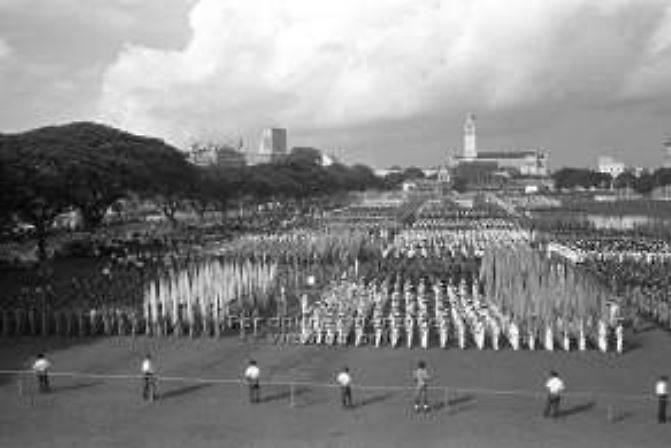
I confess – I am an NDP fan. I have been one since Singapore’s first on 9 August 1966, when I was a young police cadet marching in a contingent carrying flags.
Even now I remember the awe of standing in the Padang, among thousands of other participants in their respective contingents.
The Padang in 1966 where the first National Day Parade was held. (Photo: National Archives of Singapore/Ministry of Information and the Arts collection)
Then in 1969, on Singapore’s fourth National Day, I found myself sitting on the steps of City Hall. I was in the combined choir selected to sing the National Anthem. It was also the 150th Anniversary since Stamford Raffles established a trading post in Singapore, and foreign dignitaries were invited.
I will always remember my excitement, taking in the panoramic view I had of the parade.
It was the first time a mobile column, led by the Singapore Armed Forces’ first shipment of AMX-13 tanks, rumbled down St Andrews Road past City Hall. It raised goosebumps all round. The display of armour did not go unnoticed both in Singapore and elsewhere.
A SHOW OF CONFIDENCE, A REMINDER TO KEEP LOOKING UP
To understand the significance, we must remember that we were a young nation then. We were grappling with a host of economic, racial, security and diplomatic issues arising from our separation with Malaysia, the impending British military withdrawal, and the hanging of the Indonesian saboteurs who bombed MacDonald House during Confrontation.
The air was thick with anxiety and fear. Suddenly cut loose from our hinterland, the question on everyone’s mind was whether we could go it alone and survive.
In such a time, NDP was a show of strength and confidence that instilled a sense of nationhood, patriotism and pride in being Singaporean. It encouraged us to imagine a brighter future, even if that scenario seemed far from the current reality.
As Singapore grew and prospered, NDP has been a platform to also showcase and celebrate our nation’s progress, and draw strength from our achievements as we rally ourselves to prepare for the future.
MARKING MILESTONES IN OUR SINGAPORE STORY
NDP still is all these things.
In 2015, our Golden Jubilee, we marked 50 years as a sovereign independent nation in perhaps the most memorable parade ever at the Padang. It was the largest national day parade to-date.
It was a beautiful celebration of our resolve to survive and our progress as a nation over the last 50 years. It evoked pride in our nation, as it reminded us of how far we had come and encouraged us to look forward to our future.
From the showcasing of our pioneer generation and the colourful display of our identity and diverse cultures, to the spectacular parade, mobile column and flypast in the shape of 50, it encapsulated our spirit and energy.
A poignant moment that touched everyone was the tribute segment in the parade dedicated to the life and accomplishments of Mr Lee Kuan Yew who died five months earlier.
A young man lets the Singapore flag flap in the wind at the National Day Parade 2015 at the Padang on Aug 9, 2015. (Photo: TODAY/Raj Nadarajan)
Regardless of our political persuasions, most Singaporeans recognised the crucial role he had played in the development of Singapore and wanted to show our appreciation.
Just last year, we celebrated our 54th year of Independence. It was special because it was also our Bicentennial. It was held at the Padang, although we do parades there only once every five years, because of the Padang’s historical significance.
The show took us back to our past to appreciate how far we had come and how we got here. It instilled confidence as we looked forward and girded ourselves to face new problems in an uncertain world.
A RALLYING POINT IN HARD TIMES
NDPs have also served to rally Singaporeans in the face of crises and difficult economic times. This happened in 1985 when, after almost 20 years of uninterrupted growth, Singapore suffered its first recession.
Affected by a worldwide slowdown, our economy registered zero growth. The mood was sombre. There were no floats and no fireworks.
But there was an NDP. They may have been downcast, but Singaporeans gave their best to put up a good show. It was cause to be confident that we would turn adversity into success, even as we set our sights ahead to a new vision for our country.
The next hit came in 1997, when the Asian Financial Crisis swept the region. Singapore sank into a deep recession in 1998. It was the first of many crises in the following decade when we had to contend with the SARS outbreak in 2003 and then the Great Financial Crisis in 2008.
In those years, budgets were tight but we held the NDP without fail. Participants and spectators regardless of race, language or religion came together as one nation to reaffirm our commitment to doing more for this country in unity and harmony.
The 2003 NDP, for instance, was held at a time when SARS and the terrorist threat after 911 heightened health and security concerns for Singapore. But everyone rose to the occasion.
The heroes in the battle against SARS were remembered and honoured at the Parade. Spirits were lifted. Singaporeans understood the meaning of tenacity, commitment and resilience.
NDP 2009 was also held amid most challenging circumstances. Singapore was in our deepest recession since Independence and the local spread of the Influenza A (H1N1) virus was peaking. There were calls for the parade to be cancelled, postponed, or scaled down.
The fly-past segment, at a preview of NDP 2017. (Photo: Nicole Lim)
Undaunted, the NDP organisers went all out to engage as many people as possible, working with a wide range of organisations and embarking on a massive social media effort, to execute the 8.22pm Pledge Moment. They understood the power of drawing Singaporeans together to reaffirm their commitment to our country.
It was a very special and meaningful moment when the hearts and minds of all Singaporeans tuned in to one message – we stick together through rough times.
OUR BIGGEST CRISIS EVER
This year we face our toughest crisis yet. COVID-19 has threatened our lives and livelihoods. It has brought the entire country to almost a standstill.
Singapore is now slowly and cautiously trying to get back on our feet. Some Singaporeans think that money spent on the NDP could be better used to help the needy.
But we have never cancelled any NDP, no matter how dark the times. Doing so now would be like surrendering to the coronavirus.
I have always seen the NDP as more than a celebration of nationhood and Singapore’s progress. It is a demonstration – to the world and ourselves – of the determination and resilience that keeps us going no matter what hits us, of our confidence in our future, and of our pride in our unity.
Every segment of the parade and show reminds us that we helped to build this, our, nation, reaffirms our can-do spirit, and spurs us on to greater success.
Creative directors may change from year to year, but the theme is always the Singapore Story – how we overcame challenges in the past, how far we have come, and what our future could be if we remain united and true to our beliefs.
This is why the NDP is so special and important to us. It is a reaffirmation that we can, and we will, all stand together to face the challenges to our nation and our countrymen.
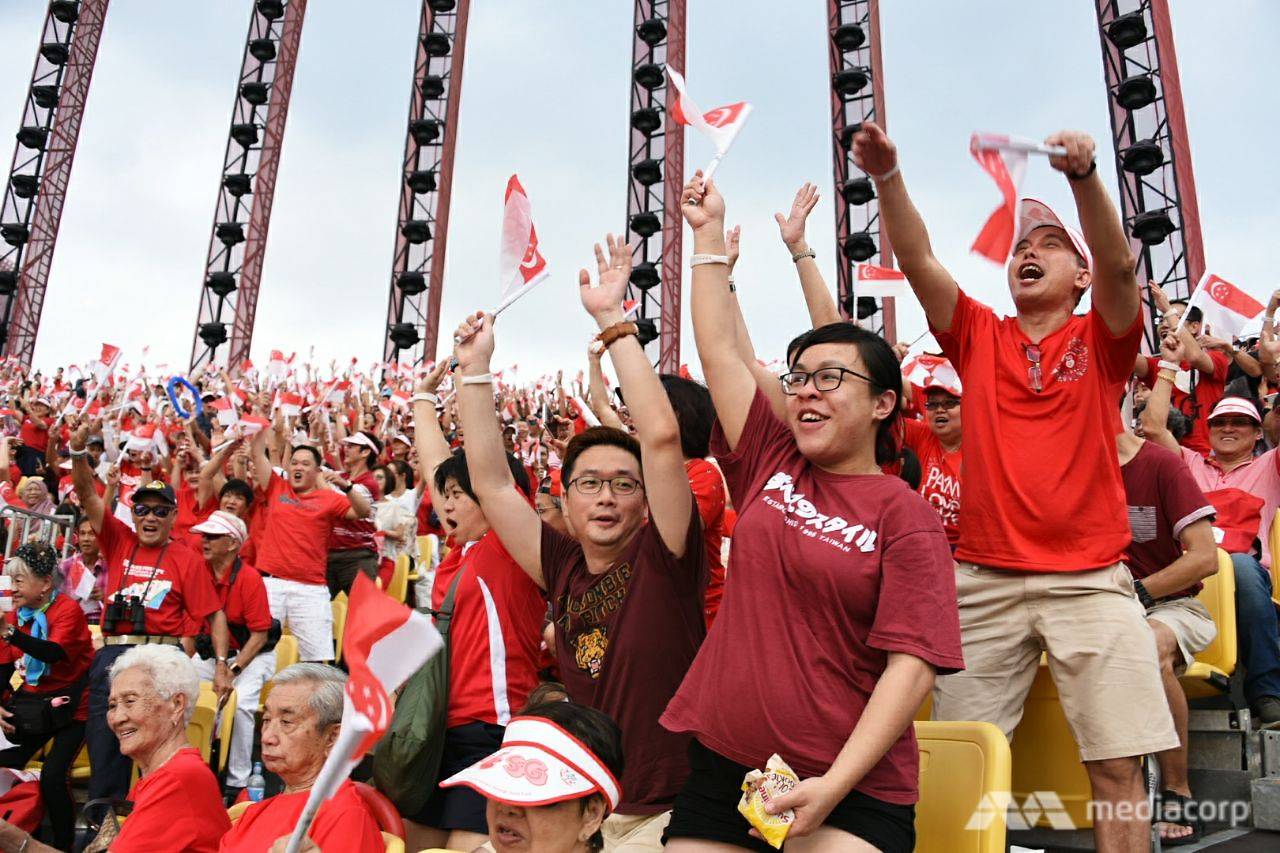
Spectators doing the Kallang Wave at the Padang on Aug 9, 2019. (Photo: Try Sutrisno Foo)
Some may even say, like Ivan Heng who was NDP Creative Director in 2009, that the NDP is a “uniquely Singapore phenomenon”. This phrase jumped out at me. How does one describe an event that reinforces our unity and recharges our spirits?
This is the time we need the NDP most.
In the last 10 years until I retired, I had been involved in the NDP Executive Committee. I looked forward to every rehearsal. It never failed to amaze me how hard and quickly the organisers and participants worked to solve problems so that each rehearsal was better than the one before, culminating in a spectacular show on the big day.
I could tell that their dedication and commitment and what drove them to perfection came simply from a love for this country that is our home. This is priceless.
It’s been more than a year since A&W made its celebrated return to Singapore, and along with its signature curly fries and root beer floats were lofty plans to open more outlets across the island as well as the intention to go halal.
A&W has since launched a grand total of one additional restaurant in Ang Mo Kio and still no halal certification yet, according to the Islamic Religious Council of Singapore (MUIS).
In fact, the statutory board isn’t even processing any applications right now. That surprised quite a lot of Muslim folk here, who’ve been intently waiting for any news of halal confirmation for the cult fast-food chain. Some of ‘em might have already dined in at A&W as well.
A minor kerfuffle broke out on social media in the past few days when the official Twitter account of MUIS’ halal food and certification arm confirmed that A&W does not have the halal certification.
There are 142 new coronavirus cases confirmed as of Friday noon (June 19), taking Singapore’s total to 41,615.
They include a community case involving a prison inmate on a social visit pass, said the Ministry of Health (MOH) on Friday.
He had arrived in Singapore before the implementation of border measures and had been segregated from the general inmate population since his admission to Changi Prison Complex on June 6, the ministry said.
Friday’s new patient figure of 142 is the lowest since April 8, when there were also 142 cases.
Migrant workers living in dormitories make up the vast majority of the other cases on Friday, said the MOH.
More details will be announced on Friday night.
On Thursday, MOH announced a new coronavirus cluster – a dormitory at 10 Tech Park Crescent in Tuas.
The cluster includes two new Covid-19 patients confirmed on Thursday. They were linked to two previous cases, meaning that the cluster has four cases, MOH said on Thursday.
It was the first time a new cluster was announced after no new clusters were found for two successive days.
SINGAPORE: Restaurants were filled out on Friday (Jun 19), the first day of Phase 2 of Singapore’s reopening after a two-month-long COVID-19 “circuit breaker”.
Phase 2 was announced on Jun 15, after which modern European restaurant LeVeL33 set the date for its own reopening.
Just minutes after the rooftop restaurant at Marina Bay Financial Centre made its announcement, bookings and enquiries started streaming in and “did not stop”, said its founding manager director Dr Martin Bém.
Diners at LeVeL33’s alfresco dining area. (Photo: Goh Chiew Tong)
“I suspect this is not only for the view but that guests may feel also a bit safer in an outdoor and obviously ventilated environment,” he said.
“Plus I think they were just dying to get out, and get a meal and a drink outside their homes.”
Phase 2 allows for customers to dine-in at restaurants instead of having to order takeaway. However, diners will have to be in groups of no more than five people and tables have to be spaced 1m apart.
On Friday evening, steady crowds were seen at some of the popular F&B outlets.
Mr Cheng Hsin Yao, the owner of Picnic Food Park at Wisma Atria that houses brands like Omakase Burger and Supergeek, said its restaurants also received reservation requests within minutes of the big announcement.
However, with the reduction in the number of tables available, the number of reservations the restaurants could take were also reduced.
Diners at Picnic Food Park. (Photo: Cheng Hsin Yao)
Restaurants managed by Picnic Food Park had also begun an ordering system that required diners to order on their phones using QR codes.
“It’s web-based and we won’t annoy you by asking you to download yet another app,” said Mr Cheng.
Even so, staff were on hand to explain to diners how the system worked and also to troubleshoot issues, he said.
The company said that as of 8.50pm, it had served a total of 150 dinner guests.
LeVeL33 saw 134 reservations made for Friday’s dinner. Some walk-in customers had to be turned away due to the lack of capacity.
Among the changes observed at the restaurant was its menu – the restaurant was serving just one menu instead of multiple ones like it used to, due to safe distancing measures for kitchen staff.
On top of temperature-taking and contact tracing, each table was also served by the same waiter throughout the meal and sanitary wipes were provided.
HUGE DRAW DESPITE ADDITIONAL SAFETY MEASURES FOR BUFFETS
Self-service buffet lines are not allowed during Phase 2. Communal amenities such as drinks dispensers or common condiments are also prohibited.
But that did not stop buffet restaurants from opening and eager diners from showing up to queue.
When CNA visited popular hotpot chain Haidilao’s Paya Lebar Quarter outlet at 6.45pm, its manager said that the seats in the restaurant were all taken and that groups with more than two guests would have to wait at least two hours to be seated.
Haidilao only announced its reopening on Jun 17 but already, most of their restaurants are fully booked until Jun 21.
Haidilao staff taking temperature for its customers at the Payar Lebar Quarter outlet. (Photo: Goh Chiew Tong)
In the queue at the Paya Lebar outlet on Friday evening was Mr Jason Chang, who said he had taken a queue number that afternoon while he was out for lunch.
The 23-year-old said he decided to head out for dinner because “it is the first day” of the reopening, but added he would not be dining out much in the future as he was still working from home.
While condiment stations are closed, Haidilao customers can still customise their own sauces with this guide and order sheet. (Photo: Goh Chiew Tong)
Staff at Haidilao were seen engaging in crowd management at a waiting area, which was equipped with six tables. Once the waiting area was full, a worker would take down customers’ contact details and inform them they would receive a call when seats became available.
As communal amenities were not allowed, workers were also seen helping customers get condiments and fruits. Those who wanted to customise their own sauces had to fill in an order form and a member of staff would bring the sauces to them from the kitchen.
The queue outside I’m Kim Korean BBQ restaurant at SOTA, shortly before it opened its doors for dinner service. (Photo: Goh Chiew Tong)
Earlier, at 5.30pm, there were eight people waiting outside the I’m Kim Korean BBQ restaurant at the School of The Arts (SOTA). All of them had reserved before coming.
One customer told CNA he had been a frequent patron of the barbecue restaurant and had made reservations immediately after Phase 2 was announced.
Mr Kevin Chui, the general manager of Kingdom Food Group which owns I’m Kim, noted the extended waiting time, given that it was no longer a self-service buffet.
Changing to an a la carte buffet menu, which requires customers to use an order sheet, is “tedious and unproductive”, he said.
“We only had two days to redesign the workflow and last-minute recruitment as a la carte buffet style will require much more manpower.
“This in turn increases our operating cost by almost 20 per cent while on the other hand, our sales will drop by 40 per cent to 50 per cent due to the spacing requirements,” he added.
The self-service buffet area has been cordoned off for staff to prepare customers’ orders. (Photo: Goh Chiew Tong)
Mr Chui said he had to hire five more people to join his service staff for the SOTA outlet so that customers could be given their food promptly. Two workers were also going around serving drinks and preparing sauces, which was not needed before.
“There are customers who ask, why can’t I serve myself? But they just have to swallow it, just like we do,” said Mr Chui.
As the waiting time was now longer, the restaurant extended its dine-in time limit – which was typically one-and-a-half hours – by 10 minutes.
Despite the changes, I’m Kim maintained safety measures remained its “greatest focus”. Patrons had to log their visits on the digital check-in system SafeEntry and their temperatures were recorded by staff.
“We are also doing more vigorous cleaning to ensure our restaurants are not just safe for customers, but also for our own working team members,” said Mr Chui. “On top of that, we also wish to ensure our customers are satisfied with our food and service.”
Over at conveyor belt sushi restaurant Genki Sushi, there were acrylic shields for counter seats, which can be adjusted according to the size of the group.
Mr Jun Uchida, the executive director for Genko Senshi, installing acrylic shields for counter seatings. (Photo: Goh Chiew Tong)
Common touch points such as booth seats and the iconic kousoku trains that deliver sushi to customers were wiped down thoroughly and disinfected after every group of diners had left.
“We have also temporarily stopped the iced water dispenser service. Condiments and cutlery will be served to diners,” said Genki Sushi in a response to CNA’s queries.
When CNA visited the Orchard Outlet at 4.15pm, workers were seen wearing face masks under their face shields.
There were at least nine people milling about outside the restaurant, waiting for a queue number.
The queue outside Genki Sushi at Orchard Central at 4.15pm. (Photo: Goh Chiew Tong)
A 17-year-old customer who only wanted to be known as Shiddah said she waited up to 45 minutes for a table, which was twice the time it would have taken before. But she said it was worth the wait as she and her friends had all been “craving Japanese food”.
“I feel relieved that we can finally head out together but we are also extra conscious of safety measures in place,” she said.
DELIVERY AND TAKEAWAY DEALS HERE TO STAY
Deliveries and partnerships will remain a key strategy for a while longer as restaurants manage their new workflow and try to recover the losses made during the circuit breaker.
F&B establishments have also been discouraged from offering special discounts for at least the first two weeks of Phase 2. This is to avoid the potential to attract crowds, authorities had said in a joint advisory on Jun 16.
Several F&B joints that CNA spoke to said that they will continue providing attractive online promotions and islandwide delivery for their customers.
For instance, Korean fried chicken restaurant chain Chir Chir Chicken partnered with bubble tea chain The Alley over the circuit breaker to offer set meals online.
“When it was announced that bubble tea shops would not be able to operate as standalone stores, we recognised the demand (for bubble tea) that would arise and saw an opportunity to establish a mutually beneficial partnership with The Alley,” said Chir Chir Chicken’s spokesperson.
The response was “overwhelming” and even though the demand gradually tapered towards the end of Phase 1, sales were “consistent”. Hence, the partnership will continue not just for deliveries but for dine-in as well.
“The Alley beverages will be available on our menu at our 313@Somerset and Jem restaurants,” its spokesperson added.
Not all bubble tea collaborations would continue, however. Restaurant chain Collin’s will stop offering Gong Cha bubble tea in Phase 2, and dim sum place Yum Cha will also cease its partnership with Milksha bubble tea.
“Our restaurants are not designed with enough working space to accommodate a proper bubble tea offering. It could be done when there was no dine-in as space was aplenty,” said Mr Jonathan Lim, chief development officer of Collin’s.
Other businesses who experienced success through active promotion of food online intend to continue doing so even as their outlets open for dine-in.
Mr Kenneth Koh, the owner of En Sushi, started offering 1-for-1 donburi bowls and paying for Facebook advertisements to “stand out”.
“Everyone was going online and all the offerings looked the same. I’m a small little shop and I had to separate myself from the long-standing brands,” he said.
Mr Koh recalled earning just S$60 on the second day of the circuit breaker, which was an all-time low for the business. However, after offering online deals and a flat charge of S$5.90 for islandwide delivery, he was earning S$6,000 on his best day.
Despite a popular reception on En Sushi’s first day of reopening, Mr Koh said he would still “concentrate full-force” on delivery.
“I feel that human behaviour will change. The number of people coming out to dine will not be like before,” he said. “But I might be wrong.”
For now, he will continue with the 1-for-1 promotion, but reduce the number of offerings by one third and change the deals every few days.
Mr Cheng of Picnic Food Park agreed that digitalisation, and delivery and takeaway options are here to stay, “love it or hate it”.
“We’ve done a lot of work creating some amazing packages and bundles tailored specifically for our delivery and takeaway guests and we anticipate that to take up at least 50 per cent to 60 per cent of our business on a permanent basis,” he said.
“The food business has always been a location business. And everyone’s primary location now is ‘at home’, so that is where the future of food will be.”
More religious activities will be allowed to gradually resume at places of worship from Friday (June 19) as Singapore emerges from the circuit breaker.
These have to be carried out with the necessary precautions in place to reduce physical interactions.
Congregational and other worship services, starting with up to 50 people at a time, excluding religious and supporting workers, may resume from June 26 to allow religious organisations to prepare safe management measures.
The Ministry of Culture, Community and Youth (MCCY) said in an advisory late on Thursday that the organisations are required to submit their safe management plans at least three days before commencing phase two activities.
The plans should include manpower deployment, ensuring that worshippers observe a 1m safe distance when worshipping individually or in groups of no more than five, and keeping worship services as short as possible.
Singing and other live performances will not be permitted during the service, and there should not be any sharing of prayer or other common items.
With Father’s Day drawing near, many families are gearing up to celebrate. Unfortunately, this family has to deal with a heartbreaking reality.
Their father, Muhammad Syahid Bin Supari, is currently in the hospital after sustaining severe brain injuries from a motorcycle accident on June 17.
According to his wife Yani’s Facebook update, the accident took place around 1.30pm at the section of East Coast Parkway (ECP), towards the town area after Still Road South Exit.
Unconscious and suffered from cracked skull
Yani did not give many details, she only said that it had been raining then and Syahid was found in a nearby canal following the accident.
Thankfully someone spotted Syahid and saved him, she said. He could have drowned otherwise.
However, he sustained serious injuries when found: A cracked skull and a bleeding brain.