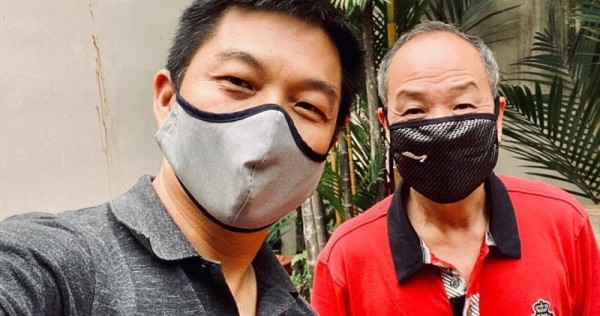
SINGAPORE: Mr Lee Hsien Yang, the brother of Prime Minister Lee Hsien Loong, has joined the Progress Singapore Party (PSP) led by Dr Tan Cheng Bock.
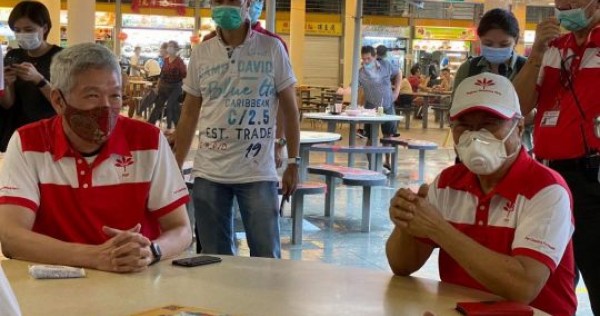
Dr Tan announced this on Wednesday morning (Jun 24) after having breakfast with Mr Lee at Tiong Bahru Market.
“I have great pleasure in giving this (Progress Singapore Party) membership card to Lee Hsien Yang,” said Dr Tan, adding that Mr Lee joined “some time ago, but we couldn’t communicate this”.
“But now we are able to come together, and this morning we use this occasion to hand him this precious card.”
Dr Tan did not confirm if Mr Lee will be contesting in the upcoming General Election.
When asked how he would contribute to the party, Mr Lee said there were “many ways” to do so.
“I think it’s not difficult to guess what ways they are; there are many ways to do it,” he said.
When asked if he will be contesting in the election, Mr Lee said: “(If) people think it’s a good idea, we can think about it.”
He added: “You’ll hear (about) it quite quickly.”
Lee Hsien Yang and Dr Tan Cheng Bock at Tiong Bahru Market on Jun 24, 2020. (Photo: Amir Yusof)
Lee Hsien Yang and Dr Tan Cheng Bock at Tiong Bahru Market on Jun 24, 2020. (Photo: Amir Yusof)
PSP’s announcement comes a day after the Prime Minister announced in a televised address on Tuesday that he had advised President Halimah Yacob to dissolve Parliament and issue the Writ of Election.
Following this, the Prime Minister’s Office announced the dissolution of Parliament, paving the way for Nomination Day to be held on Jun 30. The Elections Department announced later that Polling Day will fall on Jul 10.
In July 2019, Dr Tan said he would welcome Mr Lee if he decided to join the party’s ranks, provided he adheres to PSP’s terms.
Mr Lee, who has been seen in public with Dr Tan on more than one occasion, said in a Facebook post earlier this year said that Dr Tan was “the leader Singapore deserves”.
“I have known Cheng Bock for many years and he has consistently put the interests of the people first,” said Mr Lee in the post dated Jan 24, 2019.
“We are fortunate that he has stepped forward to serve Singapore,” he added.
Mr Lee, along with his sister Lee Wei Ling, has been involved in a public spat with the Prime Minister over whether the late Mr Lee Kuan Yew’s family home at 38 Oxley Road should be demolished in due course.
On Tuesday, Dr Tan said that PSP was interested in contesting the West Coast, Tanjong Pagar and Chua Chu Kang Group Representation Constituencies as well as the Hong Kah North, Marymount, Pioneer, Yio Chu Kang and Kebun Baru Single Member Constituencies.
However Dr Tan, who was answering questions from members of the media at a virtual press conference, maintained that things could change, and the final decision on the seats that PSP will contest would only be unveiled on Nomination Day.
SINGAPORE – Mr Lee Hsien Yang, estranged brother of Singapore’s Prime Minister Lee Hsien Loong, has joined Dr Tan Cheng Bock’s Progress Singapore Party (PSP), The Straits Times has learnt.
ST understands he will not be fielded as a candidate in the next general election on July 10, and it remains to be seen how he will contribute to the PSP’s campaign for 24 seats in nine constituencies.
This development comes a day after Parliament was dissolved and the Writ of Election was issued. Nomination Day will be on June 30, with Polling Day on July 10.
Mr Lee is expected to be announced as a member by Dr Tan on Wednesday (June 24) morning.
Party sources told The Straits Times that the rumours of Mr Lee joining PSP had been in the works for at least the last three months, and this development was something which secretary-general Tan Cheng Bock personally guarded close to his chest.
Dr Tan has said on multiple occasions that he and Mr Lee are good friends and that if Mr Lee wants to join PSP, it would have to be on the terms of the party.
SINGAPORE: Singapore is likely to take a “step by step approach” on reopening its border with Malaysia, with measures in place to conduct COVID-19 tests and contact tracing, said Foreign Affairs Minister Vivian Balakrishnan.
“I do not see it possible to have a big bang complete, no holds barred, no restrictions, no tests (approach) – I think that would be unwise,” said Dr Balakrishnan.
“But we can open up in steps, have the appropriate measures to test people, contact trace people because when you open up, your risk (of infection) will inevitably increase.”
Dr Balakrishnan was speaking to host Diana Ser in the last of three special episodes of CNA’s In Conversation that was aired on Tuesday (Jun 23).
When asked about when travel between Singapore and Malaysia can resume, he said he would “hesitate to put a timeline”, adding that authorities on both sides of the Causeway have to work out many details.
“We have to work out those protocols and to make sure those protocols are effective on both sides of the Causeway. So just give us a few, I would say, days to weeks,” he said.
One key consideration would be public health, Dr Balakrishnan said.
“We need to protect the public health of both Singapore and Malaysia, and we need to understand that the world’s busiest land crossing is between Johor and Singapore … so we have to work out a lot of details,” he said.
“Right now … there are papers and phone calls being exchanged, we’re trying to sort it out.”
Putrajaya had said last week that Singaporeans may be allowed to enter Malaysia without the need to undergo COVID-19 screening and home quarantine, but that there should be a reciprocal arrangement for Malaysians.
In response, Singapore’s Ministry of Foreign Affairs said any bilateral arrangements on travel would have to include mutually agreed public health protocols in order to safeguard citizens of both countries.
STRENGTH OF SINGAPORE-MALAYSIA RELATIONS
Throughout the COVID-19 pandemic, Singapore and Malaysia cooperated “very effectively”, said Dr Balakrishnan.
“There has been a lot of interaction, phone calls, video conferences at all times of the day and night, at all levels of leadership,” he said. “And that communication has been very useful and has helped to build trust.”
The Causeway early in the morning at around 7.20am on Mar 18, 2020. (Photo: Try Sutrisno Foo)
“Fortunately, because we were in touch, and we were, on our side, able to respond quickly. If you actually think about the outcomes, it’s actually a pretty good record,” he said.
“Throughout this movement control order or our own circuit breaker, the supply chains between Malaysia and Singapore continued to flow.”
Health authorities on both sides were also in close consultation, he said, adding that Singapore and Malaysia had also helped to get each other’s citizens home from overseas during the COVID-19 outbreak.
“There were Singaporeans on Malaysian flights from other parts of the world returning and when we had space, we also provided seats to Malaysians who were also trying to return. In other words, not only were we mutually providing consular services to our citizens, we were also acting as a transit centre for our citizens desperately trying to go home,” Dr Balakrishnan said.
“Communications continued, supplies continued, essential medical supplies continued. People flow, repatriation, consular services continued and we cooperated very effectively.”
TRUST, RELIABILITY IN DECISION TO REOPEN BORDERS
As countries around the world gradually restart their economies, Singapore is also trying to reopen its borders.
It started with a “fast lane” agreement with China, where approved travellers must take COVID-19 swab tests among other measures.
“It is no accident that we are the first country in Southeast Asia that China has agreed for arrangements for what we call a reciprocal green lane. Because they know us, they can see beyond the numbers, they know what the real situation is on the ground and more important than that, they know we are reliable and trustworthy,” said Dr Balakrishnan.
“So we started with China, but we are also negotiating similar special reciprocal travel arrangements with other countries.”
When asked about how Singapore decides which country to establish these arrangements with, Dr Balakrishnan said: “It’s countries where we have strong diplomatic ties with, it’s countries we have strong business and economic interests in, it’s countries where our public health systems, their systems and ours, are familiar with each other.
“We understand their tests, they understand our test. We have a mutual appreciation of each other’s concerns. And we’re able to synchronise our – for instance, our testing regimes. So that’s the way it proceeds.”
These arrangements will have to withstand the test of time, he added, meaning that they have to be in place in the next 12 to 18 months.
“There will be ups and downs, not only in Singapore, but in other countries as well. So these arrangements have to be flexible enough to deal with changing circumstances. But the key thing is communication, is trust, is openness, is reliability,” Dr Balakrishnan said.
“And I have to tell you that we have to be very, very careful that as we open, we don’t reopen Pandora’s box and the virus gets out on a rampage again. It’s a very delicate operation.”
Responding to a question on whether the pandemic has given the Government an opportunity to reassess the digital divide, Dr Balakrishnan said COVID-19 has “turbo-charged” Singapore’s digital efforts.
“We’ve made enormous efforts, we now are appointing a thousand digital ambassadors, we are trying systematically to reach out to seniors, or to families which may have been less exposed, or less well off or less aware of the need to go digital,” said Dr Balakrishnan, who is also Minister-in-charge of the Smart Nation initiative.
“So this is something which we are very aware and which we intend to close and to close urgently, because we need to.”
COVID-19 AMONG MIGRANT WORKERS
The minister also touched on the COVID-19 situation among migrant workers living in dormitories, saying Singapore responded “completely transparently”.
“We did not, in any way, try to obfuscate that fact that we were having a problem,” he said. “The key thing was how we responded.”
Dr Balakrishnan added that Singapore took its responsibility seriously and treated migrant workers the way it treats its own citizens.
“I’ve spoken to the foreign ministers of each of these countries, and I can tell you this … I didn’t actually have to say very much because they knew – and they had listened to our Prime Minister make that assurance – that we will treat, give you the best possible medical care, we will treat you like a Singaporean,” he said.
“That assurance which I may add, no prime minister anywhere in the world has made to migrant workers, was a very powerful reassurance.”
Dr Balakrishnan said his foreign counterparts understood the nature of the problem.
“They knew that we were having high numbers because we were testing extensively and we were testing people who were asymptomatic. They understood and appreciated the Prime Minister’s assurance on care,” he added.
While Singapore has seen a high number of cases among the migrant worker community, its mortality rate from COVID-19 is very low, and this shows the quality of healthcare in Singapore, said Dr Balakrishnan.
“It also shows that our ICU capacity, our ability to monitor and treat people very early very aggressively made a difference,” he added.
Dr Balakrishnan also noted that the number of community cases has been low.
“At least in all my interactions, (people) could differentiate the numbers. They say yes, we know you had a problem in the dormitories, but we look at your community cases, it’s really very very few, and most importantly, your mortality rates are the lowest in the world,” he said.
“And they told me: ‘We still know that the safest place to be in the world is Singapore. And if I ever had COVID, actually I would want to be in Singapore.’ That is a vote of confidence.”
SINGAPORE: After nearly two months in circuit breaker mode, Singapore is gradually re-opening.
At the same time, we all need to continue to make concessions and limit our movement until the fight against COVID-19 is truly over. Central to this is the need to look out for our seniors.
In March, government figures showed one in four people infected with COVID-19 in Singapore was aged 60 and above.
The elderly are more vulnerable to COVID-19 as their immune systems are at higher risk of being overwhelmed by infections due to their advanced age.
In some cases, elderly COVID-19 patients may have undiagnosed undernutrition and poor muscle health, as well as pre-existing chronic conditions such as diabetes and hypertension, which are known to increase the risk of poor outcomes and death.
The elderly are all too aware of this. As a geriatrician, I have observed a higher level of anxiety in the elderly.
Many worry about the risk of infection, especially those admitted to the hospital. With the support of their families, these patients often ask to be discharged as soon as possible.
Yet these patients can only be discharged if they have enough physiological reserves, which is demonstrated by good nutrition, lean muscle mass and physical strength to ensure a faster recovery. Otherwise, their recovery at home may be compromised by a pre-mature discharge.
So as we all try to stay healthy, what more can seniors do to protect themselves, beyond limiting their social interactions and taking extra care with personal hygiene and safe distancing?
Members of the public visit a durian stall at Toa Payoh Central on Jun 19. (Photo: Jeremy Long)
THE FIRST LINE OF DEFENCE
Staying active is crucial as it can boost the immune system to help defeat invading viruses. Since our immune systems weaken with age, it is vital for the elderly to keep moving – even when indoors.
For patients at high risk of complications from COVID-19, the European Society for Clinical Nutrition and Metabolism recommends traditional exercises such as Tai Ji Quan, Qigong and yoga as home-based exercises for the older persons.
In addition, physically and mentally able seniors are also encouraged to do resistance training such as lifting light weights or exercises, using their own body weight to improve muscle, bone and overall physical health.
This is something I advocate on a daily basis in my practice, particularly in my outpatient clinics. One of my octogenarian patients performs 30 squats at home every day, in spite of his advanced age and having multiple medical conditions.
Seniors who are reluctant to do so can turn to simple household chores such as cooking, carrying groceries, or watering the garden to maintain muscle strength. Online public exercise programmes by the Health Promotion Board (HPB) can also help them keep fit.
At the same time, the elderly should not over exert themselves since this can erase the benefits of exercising and put them at risk of injury, according to research by the Human Performance Laboratory and the Department of Nutrition and Health Care Management at the Appalachian State University.
Regular exercise helps to protect against diseases, and is central to improving cardiovascular health, lowering blood pressure, controlling body weight and maintaining muscle strength.
In particular, strong muscles are associated with immune system regulation, and play an integral role in our ability to maintain good health.
For the elderly and those caring for them, we need to be mindful that age-related muscle loss can affect those who may otherwise seem healthy, according to the Strengthening Health In Elderly Through Nutrition (SHIELD) study.
The study by Changi General Hospital, SingHealth Polyclinics and Abbott revealed that one in five participants aged 65 and older has low muscle mass despite normal nutritional status. The clinical study also showed that the loss of muscle mass increases each year after the age of 65, with women more at risk than men.
A man pushes an elderly man on a wheelchair, both wearing masks, at Orchard Road, Singapore on Feb 3. (Photo: Gaya Chandramohan)
A subsequent study involving over 800 independently-living, community-dwelling older adults at risk of undernutrition in Singapore found four in five participants had low muscle mass, compared with the findings in the previous group of participants with normal nutritional status.
Due to the natural ageing process, adults on average lose 8 per cent of their muscle mass every decade starting at age 40, according to Dr Low Yen Ling, co-author of the SHIELD study and Abbott’s nutrition divisional vice president, scientific and medical affairs.
Some of the signs of muscle loss include less energy, slower walking speed, decreased strength, fatigue and general weakness.
“One of the simplest ways to assess muscle strength in older adults is to look at their handgrip. If they struggle to open a jar lid, it is an indication that their hands may be getting weaker and can be a warning sign of a progressive loss of muscle strength,” Dr Low said during the study.
After the age of 70, the rate of muscle loss can double, especially if they are not exercising regularly and ensuring all their nutritional needs are met.
Exercising needs to be coupled with good nutrition to maintain good muscle health. In fact, good nutrition, regular physical activity, muscle health and a healthy immune system are inextricably linked.
Amino acids, the building blocks of muscles, are essential for the immune system to function properly.
While amino acids can be derived from good nutrition and a diet with adequate protein, our muscles form a natural reservoir of these amino acids, providing a continuous supply to fight infections and rebuild damaged tissues.
(Photo: Unsplash)
Physical exercises not only help to maintain and build this reservoir, research shows they directly influence the immune system by priming it.
This is because muscles are also a reservoir for immune cells and contain almost as many immune cells as that circulate in the blood.
Studies have shown that the amount and activity of immune cells in the blood system increase after moderate exercise, and this is true for the older population too.
Getting enough protein isn’t always easy, especially since our protein needs increase with age.
Some seniors experience a decreased appetite, or encounter problems chewing meat which can hinder their protein intake, so taking steps to ensure they consume enough protein is important.
Normal sources of protein in daily diet are soybean, nuts, eggs, meat, fish and dairy products. Oral nutritional supplements can also be used if diet alone is insufficient to meet the daily requirements for older persons.
In addition, there is one key micronutrient which can help preserve muscle mass – beta-hydroxy-beta-methylbutyrate (HMB). It is an active metabolite of the amino acid leucine that occurs naturally in the body and is found in small amounts in foods like avocadoes, citrus fruits, cauliflower and catfish.
Research has shown that as we get older, we produce less HMB but prolonged supplementation of the metabolite can improve muscle mass and strengthen the quality of muscles in older adults.
(Photo: Pexels)
The presence of sufficient amounts of amino acids can stimulate muscle protein synthesis and inhibit muscle breakdown. Resistance-based exercise further enhances these effects.
Dr Tan Ngiap Chuan, Senior Consultant and Family Physician at SingHealth Polyclinics, reiterates that muscle loss begins from adulthood if an individual leads a sedentary life with a diet lacking in proteins.
Besides maintaining a protein-rich diet, seniors should therefore engage in doses of exercises for active and graceful ageing. Receiving the routine vaccination will also help build immunity and keep you safe from other infectious diseases, which is especially crucial during this time.
In these unprecedented times, the best way of reducing the risk of contracting any infection, and ensuring the greatest chances of recovery if one is infected, is to have a strong immune system.
We cannot underestimate the value of good nutrition and regular exercise to help seniors maintain good health, boost their immune system and reduce the risk of acquiring infectious diseases.
As we look to resuming our regular lives, the elderly and those caring for them should aim to build up their immunity to ensure they can stay safe, both now and for years to come.
Download our app or subscribe to our Telegram channel for the latest updates on the coronavirus outbreak: https://cna.asia/telegram
Adjunct Assistant Professor Samuel Chew is Senior Consultant of Geriatric Medicine at the Changi General Hospital, and principal investigator for the Strengthening Health in Elderly Through Nutrition (SHIELD) Study.
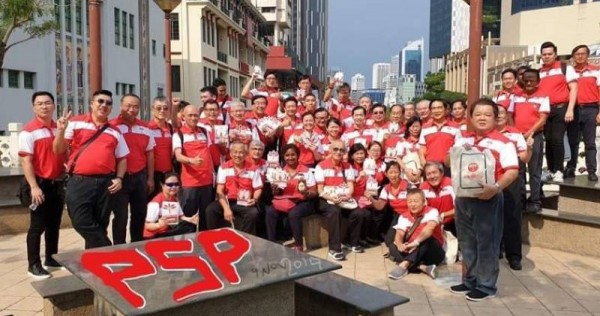
Progress Singapore Party (PSP)’s chief, Dr Tan Cheng Bock revealed the list of constituencies that his party are looking at contesting for the upcoming general election today (June 23) at a press conference.
The areas are West Coast, Chua Chu Kang, Tanjong Pagar GRCs; and Hong Kah North, Marymount, Pioneer, Yio Chu Kang and Kebun Baru SMCs.
“We select the areas we want to go and contest based on whether we can win or not,” said Dr Tan, adding that since he has been a doctor in western Singapore and formerly an MP in the region, hence the party’s focus on the western parts of Singapore.
He was quick to add that on Nomination Day, things might change as “politics is very fluid”.
PSP will be studying the places that Dr Tan outlined to know “where they stand when they go there”.
This new list means that PSP will be contesting for just 22 seats at the next election, down from the 29 seats that assistant secretary-general Leong Mun Wai had told The Straits Times on June 13.
President Halimah Yacob dissolved Parliament today (June 23) and this means that the general election is impending. Here’s what you can expect in the weeks ahead:
1. Dissolution of Parliament (June 23)
The President of Singapore dissolves the Parliament on the advice of the Prime Minister.
2. Writ of Election
The President issues a Writ of Election to the Returning Officer, specifying the date and place of the nomination of candidates.
3. Nomination Day (June 30)
Candidates present their documents to the Returning Officer and the Nomination Day must be held no earlier than five days or no later than one month after the Writ of Election has been issued.
With a bevy of faces — both familiar and new — in high definition, and concluding with an enigmatic “coming soon”, all the Workers’ Party (WP) general election trailer lacked was the Avengers soundtrack for dramatic effect.
Set instead to some flighty classical music, the 15-second-long clip, which was published on the party’s Facebook page this (June 23) afternoon introduced 12 faces, offering a hint at the party’s line-up for the upcoming general election.
General Election 2020 will be Dr Ang Yong Guan’s third outing as an election candidate. And the party that he represents will be the third party that he is campaigning under.
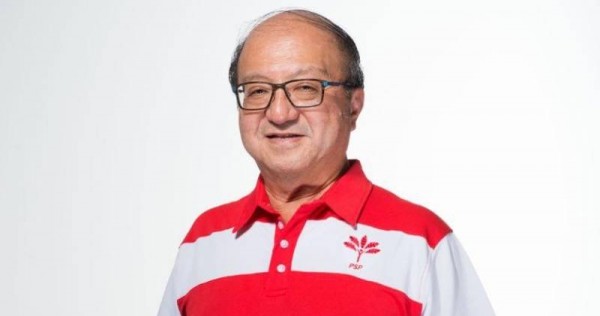
Ang was officially revealed as one of Progress Singapore Party’s (PSP) candidates for the upcoming election at the party’s press conference held on Tuesday (June 23).
Ang first stood for election in 2011 as a member of the Singapore Democratic Party. In 2014, he became a founding member and chairman of the Singaporeans First (SingFirst) party, and was a candidate in the 2015 election.
Hence, people took a double-take when he made his first appearance as a PSP member in April. He has since been seen accompanying Dr Tan Cheng Bock and other PSP party members on walkabouts around Singapore.
Ang shared that his plunge into local politics was motivated by his dissatisfaction with the direction that the People’s Action Party (PAP) was heading, “especially with the high ministerial pay”.
Prior to standing for election, Ang was a community leader at Kembangan constituency, helping then-PAP MP George Yeo.
Guess who’s just made an appearance on Tan Chuan-Jin’s Facebook page?
It’s none other than Workers’ Party’s former chief Low Thia Khiang, who’s been recovering from a fall at home in April.
While they occupy different seats in Parliament, that hasn’t stopped the Speaker and the longest-serving opposition MP from striking up a friendship.
In a Facebook post on Tuesday (June 23), Tan wrote that he has “kept in touch with Low since his fall” and is “glad to see him in good spirits and recovering”.
He paid Low a visit at his home with some pears and durians and the pair had a nice long chat over tea and bak chang (rice dumpling).
Singapore has been praised for being a clean and green country, but do we know what it takes to make that happen?
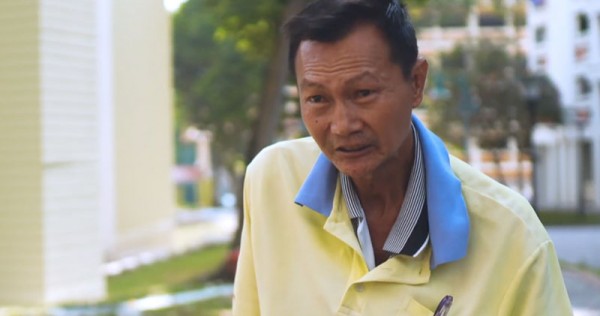
Well, a spotlight has been cast on the unsung heroes who maintain our estates every day in the form of a YouTube video by the Aljunied-Hougang Town Council — specifically on a cleaner named Ong Teng Kee from the Paya Lebar ward.
Ong has been working as an estate cleaner for seven years and admitted that it is harder to clean the upper floors of the HDB blocks. He said his knees hurt especially when he’s sweeping the stairwell.
“There are two times in a year where we have to work a lot harder,” Ong said in Mandarin. “[The first is] the Chinese New Year spring cleaning period where people will throw a lot of stuff out. Another is the seventh month where residents will pray and place offerings along the corridor.
“They will shout ‘Huat ah!’ and throw the paper offerings happily while we cleaners will have a hard time sweeping it up.”