Home Blog Page 249

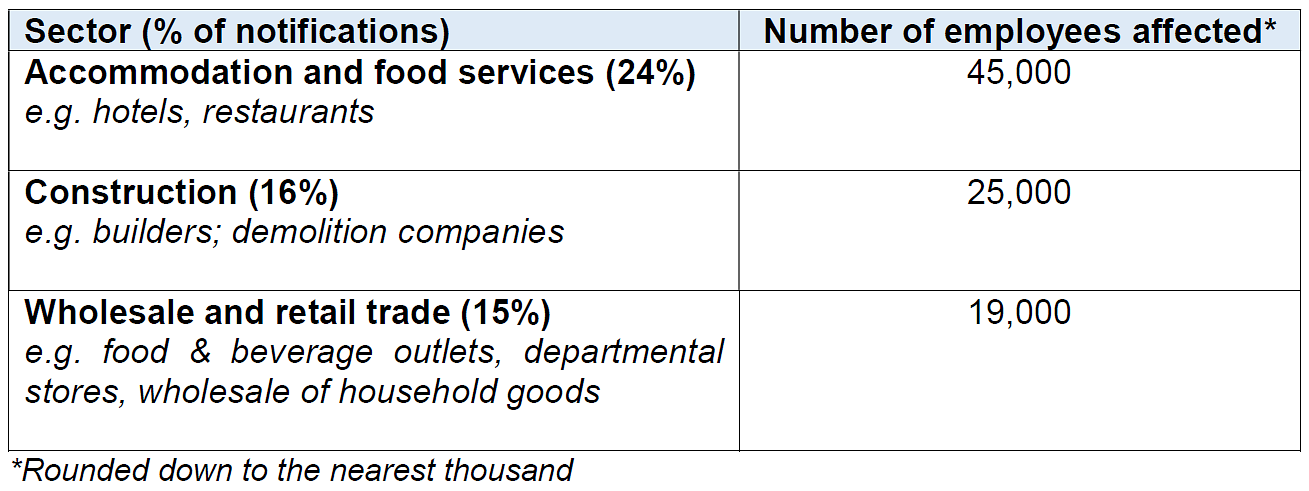
GE2020: PAP's Nadia Ahmad Samdin goes from reporting the news to becoming the news

0

[ad_1]

In the 2011 general election, Tin Pei Ling — now Member of Parliament for MacPherson SMC — was the youngest candidate at age 28 to be fielded by the People’s Action Party (PAP). This year, the honour could go to Nadia Ahmad Samdin.

This morning (June 24), Deputy Prime Minister Heng Swee Keat introduced the 30-year-old lawyer as one of the party’s new candidates alongside Edward Chia Bing Hui, Ivan Lim Shaw Chuan, and Desmond Tan Kok Ming.

Belying her youth is her lengthy experience in community service — the TSMP Law Corporation Associate Director has been volunteering for various causes since the age of 15, and she’s been active in the Cheng San-Seletar ward in Ang Mo Kio GRC.

It was not stated where she will be contesting in in the upcoming general election, and with whom. 

Interestingly enough, Nadia has also been on the other side of the panel as a current affairs producer with CNA. 

Here’s a CNA video from 2016 featuring Nadia reflecting on the legacy of founding prime minister Lee Kuan Yew.  

[ad_2]

Source link

SDA's Desmond Lim a Datuk? Quirky facts about Singapore's politicians you probably never knew

0

[ad_1]

Now that we’re in the thick of things with GE2020 in full swing, all eyes are on the political candidates that will be running for this year’s election. 

You may know all about our politician’s favourite foods, their hidden talents, or whose social media game is on point, but here are other fun facts we dug up on that you may not know or may have forgotten.

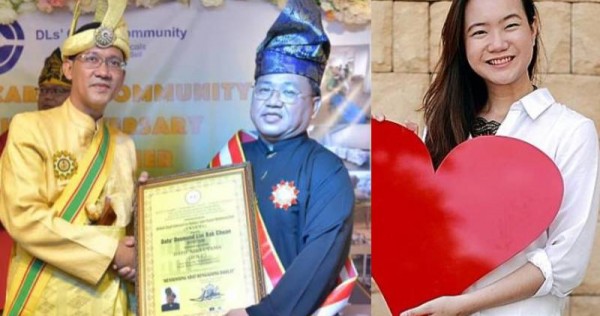
SDA’s Desmond Lim a Datuk

Politicians are known to be high-fliers, but a Datuk? Singapore Democratic Alliance’s Desmond Lim may be the first. 

On the website of the Dedicated Locals’ Caring Community, a voluntary organisation set up by Lim in 2011, it stated that Lim was conferred the title of ‘Dato’ in 2019 for his contributions.

[ad_2]

Source link

The dummy's guide to Singapore's political parties: The NSP edition

0

[ad_1]

Unless you’ve been living under a rock, you should have some inkling of the People’s Action Party (PAP) and the Workers’ Party (WP).

But what about RP? Or PSP? Or SDP? If these acronyms mean nothing to you, then you’re in the right place.

In this series — a cheat sheet of sorts — we sieve out the facts you ought to know about Singapore’s 13 registered political parties.

By the end of this, you should have a better idea of the parties who may be contesting in the upcoming general election and what they’re all about.

Our next party holds the honour of being the first opposition party besides the Workers’ Party to clinch a seat in Parliament under the Non-Constituency MP scheme.

National Solidarity Party

When were they formed?

The party was founded in 1987. Its founding members include president Kum Teng Hock, a former member of the People’s Action Party and secretary-general Soon Kia Seng, the former chairman of the Singapore Democratic Party.

[ad_2]

Source link

GE2020: Chee Soon Juan says SDP's fundraising event canned by police

0

[ad_1]

An attempt by Singapore Democratic Party’s (SDP) chief Chee Soon Juan to literally walk the talk has been shelved after the party could not secure a permit from the police.

SDP’s application to hold a three-day fundraising event was rejected on the basis that it could cause crowds to gather, Dr Chee said on Facebook today (June 24).

Dr Chee had originally planned a one-man islandwide walkathon, called Walk The Talk, to raise funds for SDP.

According to him, the police had explained that cause-based activities, even if carried out by an individual, could result in crowds gathering.

Dr Chee questioned the decision, writing: “But how is this different from when I go on a walkabout? If the authorities are afraid of activities that might cause crowds to gather during the Covid pandemic, why call for elections now?”

SDP said in a separate statement today that it remains “undaunted” and appealed for its followers to donate or buy its merchandise to help its campaign.

[ad_2]

Source link

PN Balji: The Opposition party to watch in GE2020 is not WP

0

[ad_1]

The party to watch in GE2020 is not the Workers’ Party (WP), but Tan Cheng Bock’s.

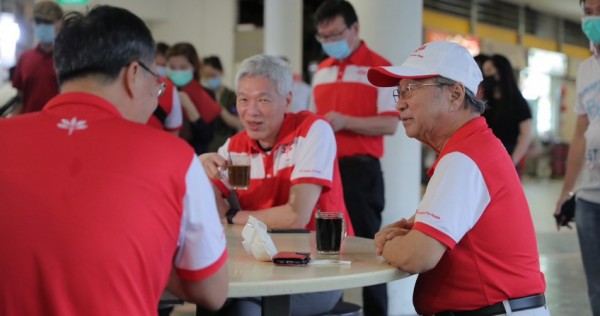
As Singaporeans were wading through a wet and cold morning today (June 24), a very famous man donned the red colours of the Progress Singapore Party and turned up at the Tiong Bahru hawker centre.

Those political pundits shaking their heads and complaining about a walk in the park for the ruling party must have started to relook the jigsaw puzzle and ask themselves where to fit this man’s move.

Will a politics-shy Lee Hsien Yang, the Prime Minister’s brother, stand for election? He cannot not afford to because the time has come for him to show his hand. That means all the teasing photographs of him appearing with Tan in public over the last year must stop.

With Nomination Day just six days away, Tan and Lee must get serious and stop their mind games and tell voters if Lee is in or out.

[ad_2]

Source link

GE2020 explainer: When will the election results be out and how do I find out who won?

0

[ad_1]

With election 2020 coming up, there may be a lot of questions that you have, especially if you are voting for the first time. 

We understand that there are a lot of terms to learn and things to understand. That’s why we’ve created a list of GE2020 explainers to help you break down election season and everything surrounding it. 

So what’s next after you’ve cast your vote and how can you keep tabs on the results? We answer all these questions and more. 

When does polling close?

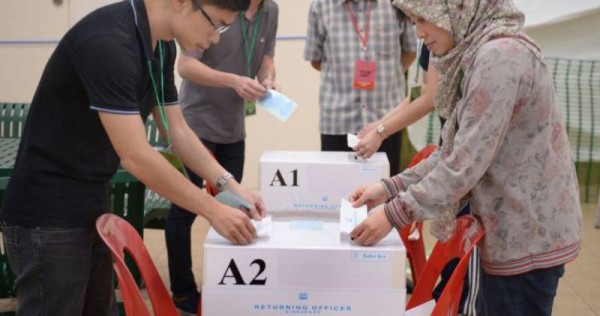
On polling day, voters have to cast their votes between 8am and 8pm at their allotted polling stations. After polling closes, ballot boxes containing the votes will be sealed by election officers. 

[ad_2]

Source link

Singapore GE2020: New constituency political broadcasts to air from July 3 to 7

0

[ad_1]

SINGAPORE – From July 3 to July 7, Singaporeans will be able to watch political candidates speak during prime time on television, with the special broadcasts arranged for the various constituencies scheduled to run from 7pm on these days.

Two party political broadcasts will also be aired during this general election, on July 2 and on July 9, which is Cooling-Off Day.

These party political broadcasts are among the exceptions to the prohibition of campaign activities on the day, which is meant for voters to think about their choice.

With large physical rallies disallowed during GE2020, in line with health advisories to curb the spread of the contagious coronavirus, the political broadcasts on national TV have taken on an added significance for candidates to get their message across.

In particular, the Government has arranged for special constituency political broadcasts, so all candidates have a chance to address voters on TV.

For these constituency-based broadcasts, each candidate will get three minutes to speak.

[ad_2]

Source link

GE2020 explainer: What is an NMP and what do they do?

0

[ad_1]

MP, Minister, NCMP: These are terms that you may hear tossed about during election season, or during any parliamentary session for that matter.

We understand that it can be confusing as to what is what since they do all sound pretty similar. And yes the quick answer is that not all MPs are made equal.

If you are a first-time voter or just someone who isn’t all that familiar with Singapore politics, don’t let all these terms tossed out scare you as we break it down and layout the deets, and help you get prepped for the impending election.

This time, we take a look at the nominated members of parliament (NMP).

[ad_2]

Source link

GE2020: Constituency political broadcasts to start from Jul 3; keep safe distance when campaigning, says ELD

0

SINGAPORE: The Elections Department (ELD) on Wednesday (Jun 24) announced more details about TV broadcasts and livestreaming facilities, which political parties would rely heavily on in the coming General Election as there will be no physical political rallies.

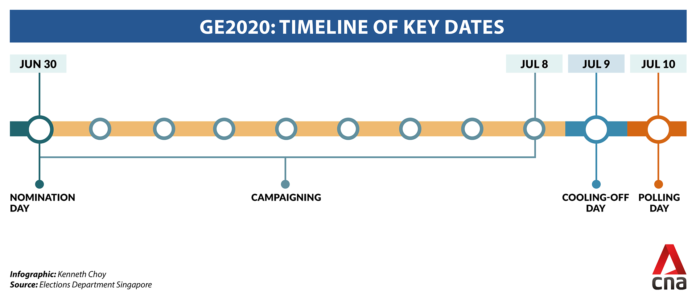
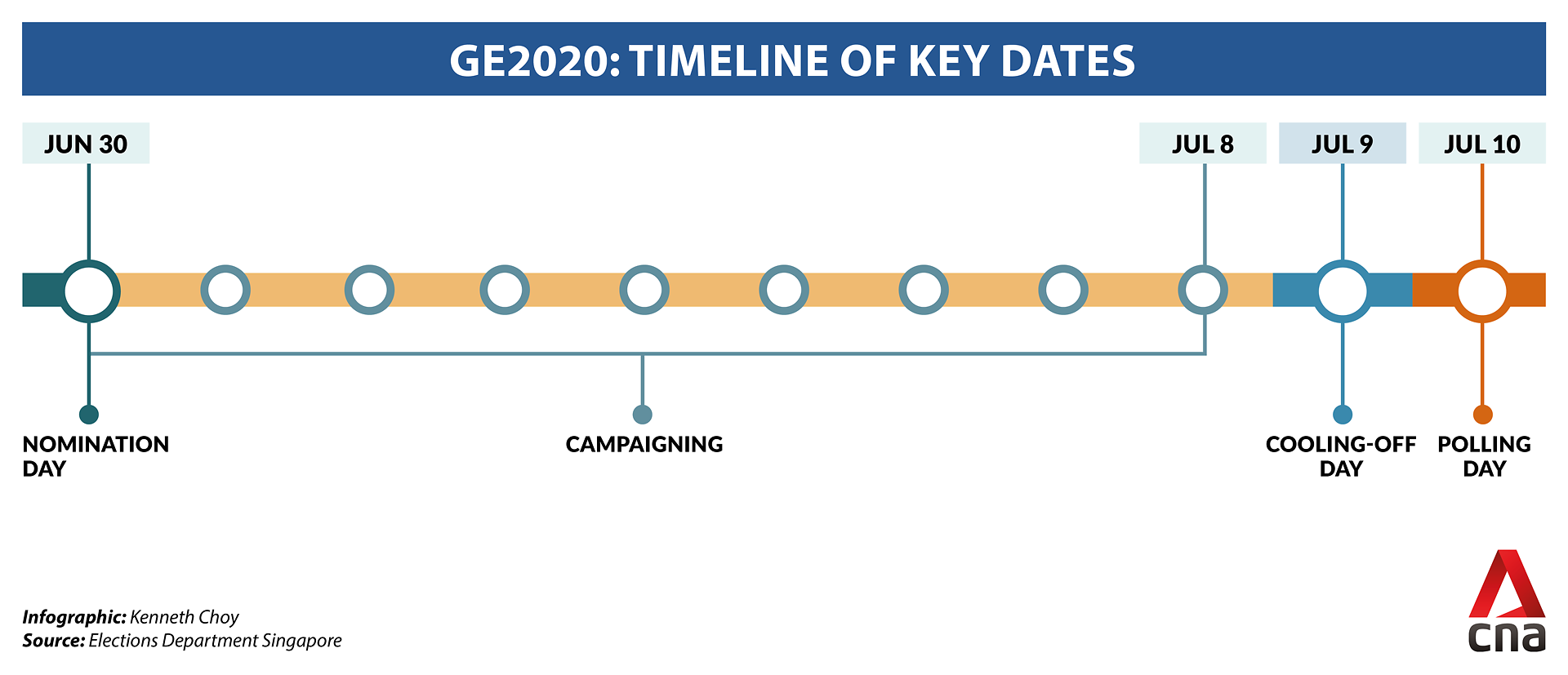
This came after the Writ of Election was issued on Tuesday, officially triggering the election process. Nomination Day has been set on Jun 30, while polling day will be held on Jul 10. 

GE2020 timeline of key dates

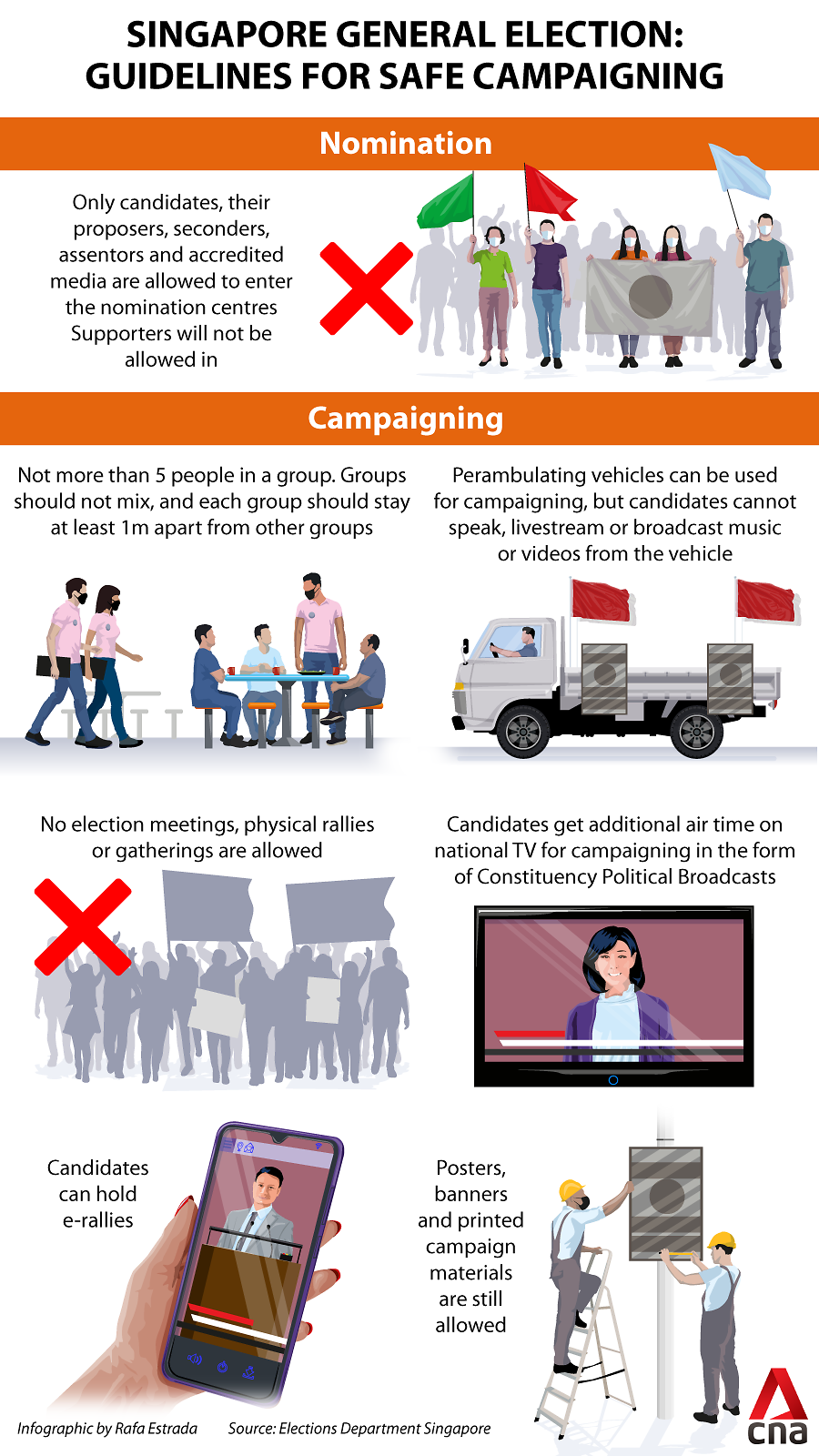
There will be no physical rallies or other large gatherings during this election due to restrictions to control the spread of COVID-19. Walkabouts are allowed but are subjected to strict guidelines which ELD emphasised again on Wednesday.

READ: PM Lee calls General Election 2020, says it will ‘clear the decks’ for a fresh mandate

READ: More electoral divisions, no 6-member GRCs in coming election: EBRC report

In place of large gatherings, up to 10 livestreaming venues will be provided each day by the Government for online rallies from Jul 1 to Jul 8 at these timings: 7am to 10am, 12noon to 3pm and 7pm to 10pm. 

Candidates can apply for these timeslots, which cost S$107 each, from 8pm to 1pm the previous day, except on Jun 30 when applications will be accepted from 3pm to 6pm.

“If a particular slot is oversubscribed, it will be allocated via ballot,” said ELD in response to queries.

“Use of the subsidised venues is entirely optional. Candidates may campaign via live streaming outside of the provided venues and timeslots.”

In full: PM Lee’s speech on advising President Halimah to dissolve Parliament, issue Writ of Election

Constituency Political Broadcasts – a new feature in the coming election – will be aired on Mediacorp’s Channel 5 from Jul 3 to Jul 7, from 7pm onwards, said ELD. 

The pre-recorded broadcasts allow candidates three minutes each to reach out to voters.

Candidates in a Single Member Constituency (SMC) will each get three minutes of airtime, a team contesting a four-member Group Representation Constituency (GRC) will get 12 minutes, while a group of candidates for a five-member GRC will get 15 minutes to speak.

More details will be issued by Jun 25, ELD said in a media release.

READ: No rallies, but more TV broadcasts in preliminary campaigning guidelines for General Election

READ: Political parties to get free airtime, subsidised livestreaming venues if GE takes place in Phase 2

As in previous years, political parties that field at least six candidates are entitled to Party Political Broadcasts (PPBs) that are scheduled on Jul 2 and Jul 9, from 7pm onwards. These will be broadcast on 19 TV and radio channels.

PPBs are one of the exceptions to the prohibition of campaign activities on Cooling-Off Day on Jul 9.

On Nomination Day, supporters will not be allowed in the Nomination Centres, and the candidates’ thank you speeches will be carried on national TV and its online channels.

ELD reiterated its advice to all candidates to use its digital services to prepare their submissions and to adhere to safe distancing rules on Nomination Day, in light of the COVID-19 outbreak.

NO FIST BUMPS, HIGH FIVES

ELD also reminded candidates and political parties to safe distance when conducting walkabouts and door-to-door campaigning.

“The same MOH (Ministry of Health) guidelines that apply to the public will also apply to the political candidates,” said ELD.

While it had issued guidelines before, it highlighted “best practices” in a media release on Wednesday which include: Avoiding physical contact such as fist bumps and high fives, and keeping interactions with members of the public short.

If a crowd forms around candidates or their group, they should remind the public to comply with the safe distancing measures, said ELD. 

“If members of the public still do not comply with safe distancing measures, political parties and candidates are encouraged to disengage and leave the area,” it said.

READ: No fines issued so far to PSP members over alleged safe distancing breaches during Bukit Batok walkabout: NEA

It also said that masks should not be removed for taking photos or while talking to others. Masks should cover the nose and mouth fully, and only be taken off when eating or drinking.

Singapore general election 2020: Safe campaigning guidelines

For a recorded interview or broadcast, masks should be worn, especially in settings where safe distancing is difficult to maintain. The speaker should only remove their masks in an environment where safe management practices are in place and they can maintain a 1m distance from the next person, ELD added.

“Misplacing or forgetting one’s mask is not a reasonable excuse for not wearing a mask in public. To avoid this, you are encouraged to carry spare face masks,” said ELD.

Masks should also be kept on during a house visit, if candidates visit a home and in line with Phase 2 health advisories, household visitors should be limited to five people.

AVOID GATHERING IN PUBLIC: ELD

In another indication of how different this election will be, ELD reminded the public to watch the political broadcasts from their homes, and to avoid gathering in public to do so. 

Members of the public were also reminded not to gather or loiter in the vicinity of Nomination Centres during nomination proceedings or at facilities used for livestreaming e-rallies.

READ: What are the COVID-19 safety measures for Polling Day? Here’s what voters need to know

In Focus: A General Election with a ‘COVID twist’ – how a pandemic may shape a pivotal contest

“Protecting the health and safety of members of the public – including political parties, candidates and voters – is of utmost importance,” ELD said. 

“ELD calls on all political parties and candidates to adhere to safe management measures and the prevailing public health advisories during campaigning, so that campaigning can be conducted safely. 

“As part of social responsibility, political parties and candidates are also encouraged to take their temperature daily and stay home when unwell.”

In response to queries on polling for overseas voters and voters who are ill on Polling Day, ELD said: “More details on these issues that relate to polling day will be announced to the media after Nomination Day.”

BOOKMARK THIS: Our comprehensive coverage of the coronavirus outbreak and its developments

Download our app or subscribe to our Telegram channel for the latest updates on GE2020: https://cna.asia/telegram
Source link

COVID-19: Majority of employers ‘reasonable and fair’ in cost-saving measures

0

SINGAPORE: The majority of employers in Singapore have been “reasonable and fair” when adopting cost-saving measures during the COVID-19 situation.

The findings were jointly released on Wednesday (Jun 24) by the Ministry of Manpower (MOM) and employment discrimination watchdog Tripartite Alliance for Fair and Progressive Employment Practices (TAFEP).

Since Mar 12, employers with at least 10 employees have been required to notify MOM if they implement cost-saving measures that affect the monthly salaries of their employee. 

In the following three months, more than 4,800 employers did so, with more than 187,000 employees affected by their cost-saving measures.

READ: NTUC ‘realistic’ about tougher times ahead, will continue preserving and creating jobs: Ng Chee Meng 

READ: National Jobs Council will open pathways to jobs amid COVID-19 pandemic: Josephine Teo

INTERVENTION FOR “EXCESSIVE” MEASURES

During this process, if an employer’s cost-saving measures appeared to be excessive in the notification submitted to MOM, TAFEP would step in to assess if the measures were fair and reasonable, said the release.

Of the 4,800 employers who notified MOM of their cost-cutting measures, TAFEP engaged about 700 employers with more than 33,000 affected workers.

“About 300 employers agreed to review their measures, including to provide more wage support or require employees to clear fewer days of annual leave,” said the release.

“The remaining employers were able to justify the necessity of their cost-saving measures for business survival,” it added.

READ: COVID-19: National Wages Council suggests management lead by example when cutting pay

READ: Employers that ‘disguise retrenchments’ may have Jobs Support Scheme, work pass privileges withdrawn: Josephine Teo

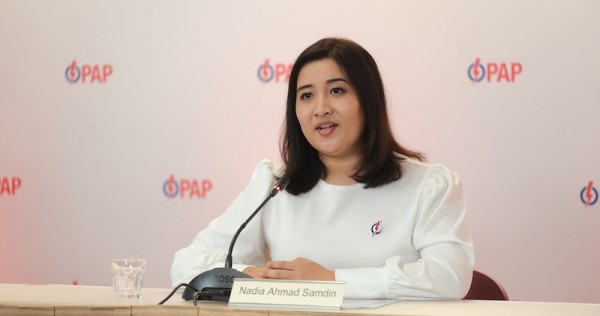
45,000 WORKERS FROM ACCOMMODATION AND FOOD SERVICES

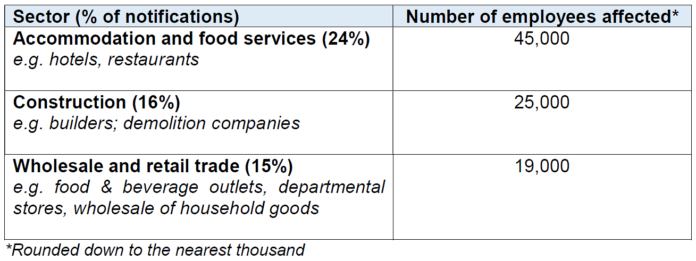
According to the data from MOM and TAFEP, nearly one-quarter of the 187,000 employees affected by the cost-cutting measures were from the accommodation and food services.

The sector also made up 24 per cent of all mandatory cost-cutting notifications to MOM in the three months after Mar 12.

Another 16 per cent of the employers who had made notifications during that period were from the construction industry, while 15 per cent were from the wholesale and retail trade sector.

employers implementing cost-saving measures

(Graphic: MOM/TAFEP)

The top three cost-saving measures implemented were no-pay leave, adjustments to monthly salary components and shorter work weeks.

Based on the notifications received, most employees saw their salaries reduced by up to 25 per cent because of the cost-saving measures.

POOR OR DELAYED COMMUNICATIONS

Separately, MOM has also been helping more than 600 individual employees who felt that the cost-saving measures implemented by their companies were unfair or unreasonable, said the release.

“This is understandable given the adjustments employees have had to make during this period in terms of their work and salary arrangements,” said MOM.

The most common issue raised was whether it was acceptable for employers to ask employees to consume annual leave or take no-pay leave, despite employers receiving support from the government, such as the jobs support scheme and foreign worker levy rebates.

“To manage cost pressures and conserve manpower for when they are most needed, the tripartite partners agreed that it is reasonable for employers to ask employees to tap on existing leave entitlements or even take some no-pay leave when business activity has been sharply reduced,” said the release.

“It is a shared responsibility and employees are encouraged to support their companies’ cost-saving measures to help the company tide through this difficult period, in order to avoid the worse alternative of retrenchment,” it added.

READ: Retrenchments and withdrawn job offers: Singapore’s labour market shows signs of COVID-19 strain

READ: COVID-19: More than 7,000 workers matched to new jobs under NTUC’s Job Security Council

So far, there has not been a case of an employer wilfully refusing to channel Government support funding to proper use, said the release.

The majority of complaints were found to have arisen from poor or delayed communications, with MOM’s interventions revealing that in 74 per cent of cases, employers did not communicate the measures well, or failed to explain the necessity for adopting the cost-saving measures, or both.

“At the start of the ‘circuit breaker’, some employers were also unsure of the quantum of support they would be receiving and how they should use the JSS payout, the release said.

After the ministry engaged employers, they were cooperative and prepared to review their pracrices, with employees also willing to accept the cost-saving measures to save their jobs.

“To get through this crisis and save jobs, everyone must come together and do their part,” said Mrs Roslyn Ten, general manager of TAFEP.

“Employers will need to be responsible in how they adopt cost-saving measures to keep their businesses afloat. Employers also need to be open and transparent with employees on the need for cost-saving measures, and how these are to be implemented,” she added.

READ: Some companies still hiring even as retrenchments rise by about 10% amid COVID-19 pandemic

READ: Government to roll out new measures to help companies adopt flexible work arrangements

Ms Christine Loh, director of employment standards enforcement at MOM, said that both employers and employees have to make sacrifices to prevent retrenchment and preserve jobs.

“MOM will investigate complaints and take actions against employers who do not treat employees fairly,” said Ms Loh.

BOOKMARK THIS: Our comprehensive coverage of the coronavirus outbreak and its developments

Download our app or subscribe to our Telegram channel for the latest updates on the coronavirus outbreak: https://cna.asia/telegram

Source link