There’s no question too dumb, too outrageous, or too insignificant, at least not in our books.
Voting is a big responsibility, after all. And especially if you are doing it for the first time, it’s not surprising to have many questions.
Which is why we’ve done up our own in-depth FAQ we hope would cover all your queries that you may have when casting your vote for Singapore.
In this edition of the FAQ, we delve into all things about the actual voting that you may have questions about.
1. Who will I be voting for, is it one person or a group of people?
That really depends on where you’re staying, and if you belong to a Single Member Constituency (SMC) or a Group Representation Constituency (GRC). As their names would’ve suggested, that’d decide whether there’s only one person, or a team running for your area.
If you aren’t sure of which constituency you’re in — understandable, since it may change every election — you can find out over here.
SINGAPORE: A total of 1.4 million Singaporeans will receive S$570 million in GST vouchers next month, the Ministry of Finance (MOF) said on Wednesday (Jul 1).
The benefits include a GST voucher of up to S$300 in cash, which will be credited directly into citizens’ bank accounts from Aug 1.
To qualify for the cash voucher, citizens must be aged 21 and above this year, with an assessable income of S$28,000 or less for year of assessment 2019.
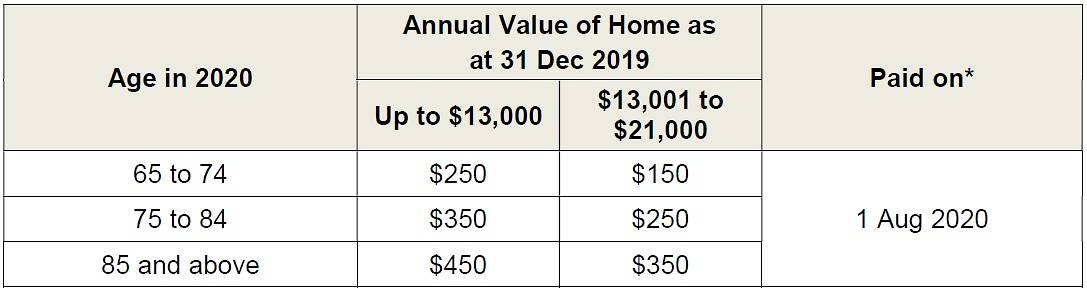
Those eligible will receive either S$150 or S$300 based on the annual value of their home.
Table showing GSTV-Cash payment eligibility criteria. (Image: Ministry of Finance)
Those who own more than one property are not eligible for the GST cash voucher.
Nine in 10 eligible citizens will receive the cash payouts automatically, MOF said.
Those who have not provided their bank account numbers can do so online by Jul 22 in order to receive their payouts via bank transfer. The rest will receive cheques sent to their official address by Aug 17.
In total, the cash payouts will amount to about S$410 million.
About 545,000 Singaporeans aged 65 and above this year will also receive a top-up to their MediSave accounts of up to S$450 each from Aug 1. In total, the top-ups will amount to about S$160 million.
Table showing GSTV-MediSave top-up eligibility criteria. (Image: Ministry of Finance)
SMS NOTIFICATIONS TO BE SENT OUT
Eligible Singaporeans who have registered their mobile numbers with SingPass will receive SMS notifications between Wednesday to Friday, informing them of their their GST voucher benefits, while the rest will receive letters.
To verify the authenticity of the SMS notification, citizens can check that the SMS is sent by “GSTV”.
These SMS notifications only inform citizens of their benefits. Citizens will not be asked to reply to their SMS or to provide any information to the sender “GSTV”.
Those who wish to view their GST voucher cash and MediSave benefits online can do so by logging into the website using their SingPass.
MOF said GST voucher benefits have been disbursed to eligible Singaporeans in August since 2010. It is a permanent schedule introduced to help lower- and middle-income Singaporeans offset some of their GST expenses.
SINGAPORE – One imported case was among the coronavirus patients announced in Singapore on Tuesday (June 30), said the Ministry of Health (MOH).
The patient, a 44-year-old permanent resident, returned to Singapore from India on June 24.
She was placed on stay-home notice (SHN) upon arrival and had been ferried in a dedicated transport to an SHN facility to start her 14-day isolation. She developed symptoms during SHN, said MOH.
It is the first imported case since June 14, when a Bangladeshi man who came to Singapore to seek medical treatment that was not related to Covid-19 later tested positive for the coronavirus.
The woman was initially counted as a community case on Tuesday afternoon but later reclassified on Tuesday night as an imported one by MOH.
The five community cases reported on Tuesday are two Singaporeans and three work permit holders.
Among the two Singaporean patients, one was detected by the ministry’s proactive surveillance of persons deployed to front-line Covid-19 operations, even though he is asymptomatic.
Epidemiological investigations are ongoing for the other Singaporean patient.
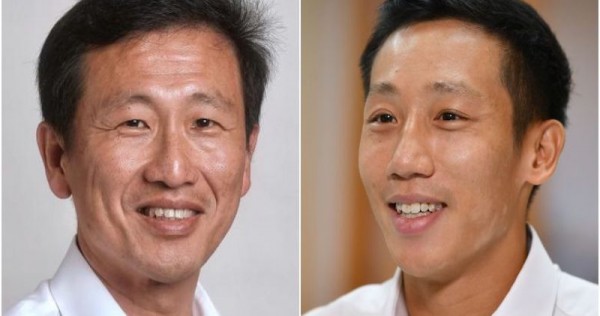
SINGAPORE – When PAP new face Xie Yao Quan was introduced last week as a last-minute replacement for Mr Ivan Lim, who pulled out as a candidate after an online controversy, some netizens commented that Mr Xie, 35, bore a resemblance to Education Minister Ong Ye Kung.
As it turns out, there was some truth to the speculation. Speaking to reporters on Nomination Day (June 30), Mr Ong, 50, confirmed that he and Mr Xie, the head of healthcare redesign at Alexandra Hospital, are cousins.
Speaking in Mandarin, Mr Ong said that their mothers are sisters.
“We used to play as children, and he would call me ‘kor kor’. But I’ve not seen him for years, save for the occasional family gathering. Now when I see him, he would call me ‘minister’, which is a bit awkward,” he laughed.
Asked for his thoughts on Mr Xie’s candidacy, Mr Ong gave his cousin this piece of advice: “Work hard… do your best, (have your) heart in the right place, be humble, show residents that you care and want to do your best to serve them.”
The nomination process for Singapore’s July 10 general election closed on Tuesday with 192 candidates filing their papers to contest the 93 parliamentary seats.
For the second consecutive election – and only the second time since the country’s independence – Prime Minister Lee Hsien Loong’s People’s Action Party (PAP) will face opponents in all seats.
Many political observers expect the ruling party to comfortably extend its uninterrupted rule of Singapore that stretches back to 1959.
On polling day, 10 parties will vie with the PAP for 17 group representation constituencies (GRCs) that each consist of four or five seats, and 14 single-seat constituencies.
The Workers’ Party (WP) and the Progress Singapore Party (PSP) – the biggest of these small opposition groups – together will contest 45 seats, or about 50 per cent of parliamentary districts.
SINGAPORE: After a whirlwind week of new faces being unveiled and interesting configurations introduced for specific Group Representation Constituencies (GRCs), the chess board is now set.
After Nomination Day, the People’s Action Party (PAP) will likely see the toughest fights in key battlegrounds such as Sengkang, West Coast and East Coast GRC.
The PAP’s West Coast team has been bolstered with Minister for Social and Family Development Desmond Lee, while arguably the biggest surprise of the day saw Deputy Prime Minister (DPM) Heng Swee Keat move from Tampines to lead the PAP’s East Coast team against the Workers’ Party’s (WP) team of Abdul Shariff Aboo Kassim, Kenneth Foo, Terence Tan, Dylan Ng and Nicole Seah.
Senior Minister of State for Trade and Industry Dr Koh Poh Koon, previously a Member of Parliament for Ang Mo Kio GRC, now joins the PAP’s Tampines team.
Sengkang, a place where many young families reside, may be a bellwether for future elections, and will see Ng Chee Meng lead the PAP team there against the WP’s Jamus Lim, Raeesah Khan, Louis Chua and He Ting Ru.
Workers’ Party candidates (top row) Jamus Lim, Raeesah Khan, He Ting Ru and Louis Chua will face off with Ng Chee Meng, Lam Pin Min, Amrin Amin and Raymond Lye of the People’s Action Party (bottom row) in the new Sengkang GRC. (Photos: People’s Action Party/Workers’ Party)
There were also some surprises on the opposition side, notably Singapore Democratic Party (SDP) chairman Dr Paul Tambyah choosing to stake his claim on the Bukit Panjang Single Member Constituency (SMC) rather than the Holland-Bukit Timah GRC where he has been a part of the SDP team contesting in the past two elections.
But quite apart from which candidates will be fielded where, the fact remains that most Singapore General Elections have been shaped by the national mood and whether parties can articulate the best narratives that move voters.
There is no doubt COVID-19 forms that overarching backdrop that fuels top-of-mind concerns for most Singaporeans worried about jobs, livelihoods and more “bread and butter issues”.
The PAP will likely stress the credentials of its leaders and tout its past experience riding Singapore through past storms, including the global financial crisis and Asian financial crisis.
For the PAP, COVID-19 could nudge voters to adopt a conventional “flight to safety” mentality and vote for the incumbent PAP government.
The PAP’s campaign, centred on giving it a fresh, full five-year mandate to deal with “Our Lives, Our Jobs, Our Future”, the title of the party’s election manifesto, shows it knows this.
As Prime Minister Lee Hsien Loong noted in his speech last week calling the election: “We must be psychologically prepared for more ups and downs in this fight against COVID-19. Economically, we must brace ourselves for a very tough period ahead. Singapore has not yet felt the full economic fallout from COVID-19. But it is coming.”
As it currently stands, Singapore is forecast to encounter her worst recession since independence, with unemployment expected to rise steeply.
The Government had responded with four budgets – the Unity, Resilience, Solidarity and Fortitude Budgets – allocating a record sum of nearly S$100 billion, or about 20 per cent of GDP, to fight the pandemic.
The PAP manifesto also pulls the PAP’s intended narrative together and presents a vision of hope and togetherness to voters:
We are sailing into the storm of a century. But we will face it with unity, resilience, solidarity and fortitude. We will work with you to seize new opportunities, reshape our future and build a sparkling city of tomorrow. We will overcome this crisis, triumph over adversity and emerge stronger. We will do all this and more, because we have the Singapore spirit and each other.
Deputy Prime Minister Heng Swee Keat at a People’s Action Party media conference on Jun 30, 2020.
The steering of the ship analogy is generally safe. History has shown voters are inclined towards a political choice offering “safe harbour” at the ballot box, as was the case in December 2001 when the PAP won a record 75.3 per cent of the votes on the back of the September 11 attacks in the US.
Yet this narrative is also easy to attack, particularly given how Singapore’s fight against the pandemic has seen some setbacks, such as the outbreaks within foreign worker dormitories.
Incidents over the past week also distracted voters from the PAP’s campaign, including the eventual withdrawal of Ivan Lim, who dropped out of the race after a wave of allegations over his past conduct emerged, which overshadowed the party’s manifesto launch on the same day.
The episode opened the door for doubts to be cast on the PAP candidate selection process, sitting candidates and MPs, and for concerns that the GRC system allows new candidates to sweep into Parliament with less scrutiny to be seeded.
The PAP grasped how damaging the incident could be – and so PAP Secretary-General Lee Hsien Loong’s promise that the veracity of such claims will be investigated after the election is to be welcomed.
A wild card in this election is how voters will view leadership renewal – and whether they would reward parties with leaders stepping down in recognising their contributions and legacies or do otherwise.
With 27 new candidates unveiled by the PAP, the highest number since Singapore’s independence, a record number of veteran MPs have stepped down.
In particular, Emeritus Senior Minister Goh Chok Tong, Coordinating Minister for Infrastructure and Transport Minister Khaw Boon Wan, as well as Nee Soon GRC MP Lee Bee Wah also announced their decision not to run.
Emeritus Senior Minister Goh Chok Tong at the PAP65 Awards and Convention on Nov 10, 2019. (Photo: Gaya Chandramohan)
In the WP camp, the nation’s longest-serving opposition Member of Parliament Low Thia Kiang’s departure, along with Chen Show Mao and Png Eng Huat, has been met with some surprise, coupled with a tinge of sadness by voters in Hougang and Aljunied GRC.
Singaporeans will look to the prospects of new candidates filling the void left by the three WP men, ensuring that both Aljunied GRC and Hougang SMC will remain some of the most exciting seats to watch in the coming GE.
Importantly, for the WP, this GE will also be used to judge if voters and supporters will give Pritam Singh – who is leading the WP into the election for the first time – the same show of support it gave Low.
LEE HSIEN YANG’S EMERGENCE
A third development that threatened to hijack the PAP’s narrative comes from Dr Tan Cheng Bock’s new Progress Singapore Party (PSP), with the emergence of Mr Lee Hsien Yang, the younger brother of Lee Hsien Loong, as a key member.
Mr Lee Hsien Yang’s presence may have diverted voters’ attention away from the PAP towards his bitter family dispute with PM Lee, dubbed “Oxley-gate” in recent weeks.
FILE PHOTO: Lee Hsien Yang (C) and Tan Cheng Bock of the Progress Singapore Party (PSP) have their breakfast before a walkabout ahead of the general election in Singapore June 28, 2020. REUTERS/Edgar Su/File photo
He used the possibility of his being fielded by the PSP to his advantage and attempted to harness the legacy of Lee Kuan Yew – the “LKY-effect” believed to have played a part in the PAP romping to a high vote share of 69.9 per cent at the previous GE in 2015. In a walkabout with Lee Hsien Yang, Dr Tan was heard introducing him to residents saying “his father founded Singapore, you know”.
With Mr Lee Hsien Yang not standing as a candidate in the General Election, these issues will likely take a backseat in the days ahead.
The opposition parties have all put forth manifestos, ranging from those that have specific proposals, like the Singapore Democratic Party (SDP)’s call to suspend the Goods and Services Tax, to those like the PSP’s that envisages a new redistribution of the fruits of economic growth. Most of these pick at the pain points Singaporeans feel.
But it is the narrative of the Workers’ Party (WP) that hits at the heart of the PAP’s campaign. Its manifesto titled “Make Your Vote Count”, combines its narrative and campaign slogan into one. In essence, the WP seeks to implore voters to ensure that checks and balances are retained in Parliament.
As WP party leader Pritam Singh explained at the manifesto’s launch on Sunday (Jun 28): “The slogan calls into focus the overwhelming parliamentary super-majority held by the People’s Action Party (PAP). There’s a real risk of a wipeout of elected opposition MPs with 100 per cent of the elected seats in PAP hands at these general elections.”
Workers’ Party (WP) candidates Pritam Singh, Sylvia Lim, Gerald Giam, Leon Perera and Muhamad Faisal Manap arrive at Deyi Secondary to submit nomination papers for Aljunied GRC, on Jun 30, 2020. (Photo: Jeremy Long)
An opposition narrative is emerging. This claim of a wipeout of the opposition has also been repeated by opposition figures including Goh Meng Seng, the People’s Power Party sole contender, as he arrived to submit his nomination papers on Tuesday (Jun 30).
The PAP knows it must tackle this argument head on. PM Lee said on Monday (Jun 29) during the unveiling of PAP candidates for Ang Mo Kio GRC that the WP’s argument is a “tactic” to “paint the possibility that they will lose and, therefore, hope that through reverse psychology, people will vote for them to make sure that they’re not going to be wiped out.”
Will voters worry more of this new “freak election” result – where the opposition could be eliminated from Parliament – or vote for a steady pair of hands in a time of coronavirus? The next 10 days will be critical for all sides to win voters over.
One thing is clear – voters remain jittery about the health risks of voting at this time. Yet the pragmatic response of Singaporeans will be to get on with the task of voting because it is deemed essential.
Terence Lee is Associate Professor of Communication and Media at Murdoch University, Australia. He is co-editor with Professor Kevin Y L Tan of Voting in Change: Politics of Singapore’s 2011 General Election and Change in Voting: Singapore’s 2015 General Election, both published by Ethos Books.
Following investigations on its fund-raising activities, Crisis Centre (Singapore) president Dennis Lee Wen Da has been prohibited from conducting any fund-raising appeals, while the welfare organisation itself has also been restricted in this aspect.
The centre had been suspended from conducting all fund-raising appeals since Aug 15 last year as investigations into its fund-raising activities found “serious concerns about the charity’s governance, record-keeping practices and ability to be accountable to its donors”.
The last day of its suspension is Tuesday (June 30).
The Commissioner of Charities (COC), Dr Ang Hak Seng, said in a statement on Tuesday that investigations have shown that Mr Lee did not properly administer the four fund-raising appeals by Crisis Centre, which he was in charge of.
Mr Lee had also failed to ensure proper accountability over the funds received.
The COC has barred Mr Lee from conducting any fund-raising appeals – including any under other charities – from July 1.
Crisis Centre is also restricted from conducting any fund-raising appeals until it meets three conditions.
The Bishan-Toa Payoh GRC has evolved over decades — and Dr Ng Eng Hen knows it well.
In a Facebook Live session on Tuesday night (June 30), Dr Ng, who has been MP for the constituency since 2001, shared why the place has been close to his heart for much longer.
“I’m from the Merdeka Generation. My visual memory of Toa Payoh is slightly more dated than my colleagues’,” the 61-year-old chuckled.
He recounted the time when he visited friends living in the town when he was in his teens.
“I took the bus here, there was no MRT, and there was no Bishan.
“Toa Payoh of the 70s and 80s, many of you would know that Toa Payoh was called the ‘Chicago of the East’ for good reason,” he said.
The nickname came from the town’s association with secret societies and gang clashes, which remained for some time after its development in the 60s.
It’s official — campaigning for GE2020 has kicked off. With 192 candidates from 11 parties gunning for the 93 seats up for grabs, get ready to be bombarded with e-rallies, livestreams and campaign speeches.
In case you missed it, here are the highlights from the People’s Action Party’s (PAP) Marsiling-Yew Tee GRC team livestream last night (June 30):
Third episode of 𝗠𝗮𝗿𝘀𝗶𝗹𝗶𝗻𝗴-𝗬𝗲𝘄 𝗧𝗲𝗲 𝗧𝗩 (𝗺𝘆𝗧𝗩) as we will introduce some of the key highlights of our manifesto for…



.jpg "gohmengsengstfile-1.jpg")