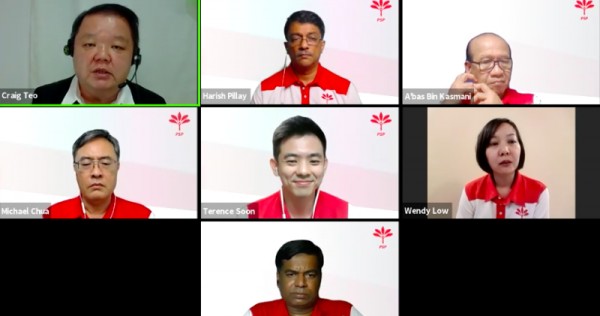
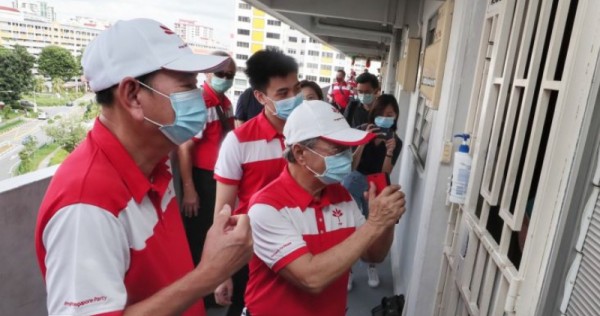
Progress Singapore Party’s (PSP) first e-rally was held on Zoom and on Facebook live last night (July 3), with the party’s media liaison and actor Craig Teo as its host.
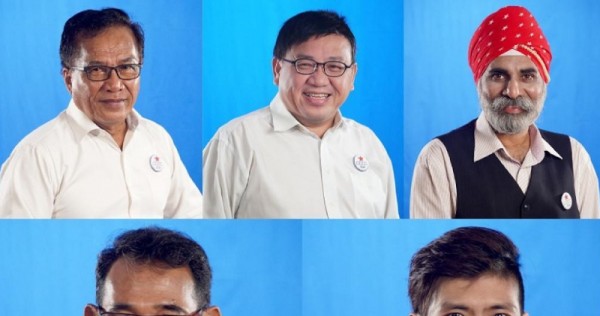
The session featured candidates from Tanjong Pagar GRC – Michael Chua, Wendy Low, Harish Pillay, Terence Soon and Abas Kasmani, as well as Kebun Baru SMC candidate Kumaran Pillai.
In the two-hour session, all candidates shared the issues that they would like to tackle if elected into Parliament, such as climate change, CPF retirement and living wage for the elderly.
Too busy to watch? We’ve got you covered. Here are three highlights from PSP’s first e-rally:
There are no physical rallies held this year in view of the Covid-19 situation, and all the parties have gone online to share their thoughts and vision for Singapore, as well as to address concerns that Singaporeans might have.
We’ll be adding to this list throughout the day, so do check back for updates on the latest schedules regularly.
SINGAPORE – Cinemas can reopen from July 13, according to a July 3 statement from the Infocomm Media Development Authority (IMDA).
They have been closed since March 27 as part of the fight against Covid-19.
The reopenings, which are the result of consultations between the authorities and cinema operators, will take place with added safety precautions.
These include a 1m social distancing seat configuration. Up to five patrons, comprising friends and family, can sit together without the 1m distancing requirement, but different groups of patrons have to observe it.
Also, there will be a limit of 50 patrons per cinema hall. Masks will be mandatory at all times, including inside the hall, except when consuming food and drink, according to the statement.
Among the films to usher in the reopening is the highly anticipated follow-up to the zombie thriller Train To Busan (2016), one of the highest-grossing South Korean films in Singapore.
Train To Busan: Peninsula will open July 15 here, the same day it is released in South Korea.
Aljunied GRC incumbent the Workers’ Party has addressed a major issue on voters’ minds — the Aljunied-Hougang Town Council (AHTC) saga.
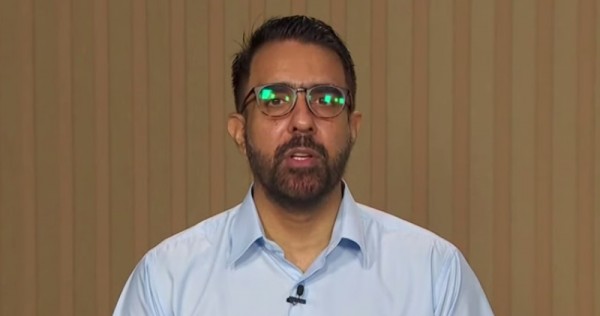
In a constituency political broadcast on Friday (July 3), party chief Pritam Singh said: “The financial position of AHTC today is healthy.
“The town council has steadily built up its operating fund position since WP’s current term started in late 2015.”
According to him, the latest audited figure recorded an accumulated surplus of $7.9 million, which was more than double the amount when the party took over from the previous Aljunied Town Council in 2011.
“Last year, AHTC’s financial statements were given a clean and unqualified opinion. The Ministry of National Development also graded AHTC’s Corporate Governance with a Green banding,” he added.
A spotlight was cast on the governance of the town council after a civil suit was initiated in 2017.
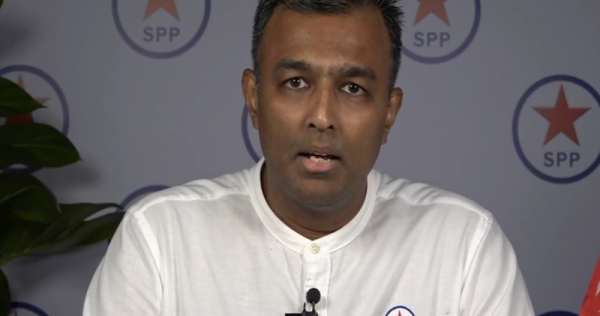
In his online address to the people of Potong Pasir SMC earlier tonight (July 3), Singapore People’s Party chairman Jose Raymond laid out his plans for the ward should he be elected.
The 48-year-old former journalist and ex-press secretary to Minister Vivian Balakrishnan is taking on the incumbent People’s Action Party candidate Sitoh Yih Pin this general election after succeeding Lina Chiam, the wife of stalwart opposition politician Chiam See Tong, last November.
Part of Raymond’s manifesto for Potong Pasir involves the eradication of Meet-the-People Sessions, a concept that he calls “out-of-date”.
“Today, residents need to have their problems solved quickly. And with technology and communication tools, we must aspire to be more effective in how we can provide service to our residents,” he declared in the Facebook Live video.
“Having to wait for hours just to have an appeal heard should be a process from the past which we should just move on once and for all.”
Progress Singapore Party (PSP) leader Tan Cheng Bock on Friday (July 3) gave his take on the debate on the 10 million population figure, saying the reason it has become a hot topic is due to a lack of transparency by the Government.
“If the data is not given to you, people will speculate… because they don’t know. You are not transparent with your data,” he told reporters while canvassing for votes in Chua Chu Kang GRC, which his party is contesting.
He also said that in principle, he would have no objection to the 10 million figure if the reasons given by the Government are “sound and logical”.
“Just tell us: we want the 10 million, and why. We need it because of this reason, we see it (this way),” he said, adding that people will then say “if it can or cannot (be done)”.
“But you’ve got to show us the data. Don’t give it to us in bits and pieces.”
Dr Tan, who is leading the PSP’s A-team to contest in West Coast GRC, was asked for his thoughts on the exchanges between the People’s Action Party and the Singapore Democratic Party, since Wednesday, over the 10 million figure.
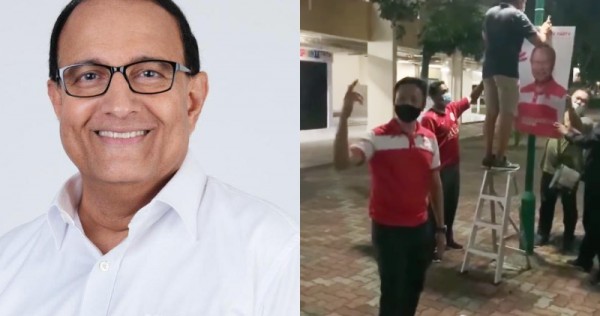
Minister for Communications and Information S Iswaran fired a volley at Progress Singapore Party (PSP) and its leader Dr Tan Cheng Bock over an incident that saw election posters taken down in West Coast GRC.
The minister has accused PSP of giving an “untrue spin to this issue” through videos put out by the party.
In a video posted on the PSP West Coast Facebook page late July 2, PSP campaign posters are seen being taken down from a lamp post. The caption noted that 50 posters had to be taken down under orders by Elections Department (ELD) following a complaint by West Coast Town Council.
Led by party chief Dr Tan, PSP is taking on the incumbent People’s Action Party (PAP) team in West Coast, led by Iswaran.
“Hours of hard work went down the drain. It was puzzling because the PAP posters were left untouched,” the post claimed.
Unless you’ve been living under a rock, you should have some inkling of the People’s Action Party (PAP) and the Workers’ Party (WP).
But what about RP? Or PSP? Or SDP? If these acronyms mean nothing to you, then you’re in the right place.
In this series — a cheat sheet of sorts — we sieve out the facts you ought to know about Singapore’s political parties.
By the end of this, you should have a better idea of the parties who may be contesting in the upcoming general election and what they’re all about.
Our next party is set for a leadership renewal next election, but first, it’s up for a fierce three-way fight this election.
Singapore Democratic Alliance
When were they formed?
Formed in 2001, the SDA was led by veteran opposition politician Chiam See Tong, then secretary-general of the Singapore People’s Party (SPP).
The party started as a five-party coalition, comprising the SPP, the National Solidarity Party (NSP), Singapore National Front (SNF), Singapore Justice Party (SJP) and Singapore Malay National Organisation (PKMS).
SINGAPORE: It is essential to give Singaporeans a choice at the General Election as “every vote will point the Government in the direction that Singaporeans think it should take”, said Red Dot United’s chairperson Michelle Lee on Friday (Jul 3).
Speaking to CNA on the sidelines of the NUSS Pre-General Election Forum 2020, she cited the 2011 polls – when the PAP’s vote share fell to 60.1 per cent – as a sign of how voters should be given the chance to pick between the People’s Action Party (PAP) and the opposition.
After the PAP saw its share of the popular vote fall to its lowest since independence, the Government made “baby steps” to enact changes, such as cutting the Prime Minister’s salary by 36 per cent in 2012, Ms Lee said.
However, Singapore saw “something different” in 2015, when the ruling party took advantage of its popularity, she claimed. Having emerged with a better election result – winning 69.9 per cent of the popular vote – the Government increased the prices of many things and implemented laws like the Protection from Online Falsehoods and Manipulation Act, or POFMA.
Ms Lee was among six opposition politicians who were invited to discuss the current election and share their party’s platform. The event was moderated by former Nominated Member of Parliament Viswa Sadasivan.
All political parties were invited, but the PAP, National Solidarity Party, Peoples Voice, Singapore People’s Party and Workers’ Party either declined or did not reply, according to Mr Sadasivan.
The forum was held in collaboration with online publication Mothership.
Opposition party members at the NUSS Pre-General Election Forum 2020. (Photo: Anne-Marie Lim)
Red Dot United, the country’s newest political party formed only in May, is competing in Jurong GRC – traditionally a PAP stronghold.
The PAP’s team is helmed by Senior Minister Tharman Shanmugaratnam, who is leading a lineup that includes Mr Tan Wu Meng, Ms Rahayu Mahzam, Mr Xie Yao Quan and Mr Shawn Huang.
In 2015, Mr Shanmugaratnam’s team garnered the largest vote share among all the constituencies with the PAP picking up 79.3 per cent of the votes.
On Friday, Ms Lee said her party was willing to step back from this election. But when it learnt that no other opposition party was gunning for Jurong GRC, it decided to join the contest.
“(The) Government talks about having a mandate. You can’t have a mandate if it’s a walkover,” the 43-year-old added.
When asked during the forum if this General Election could be considered a watershed, Ms Lee replied that participating in the contest was more of a “starting step”.
After the election, the party plans to organise events that educate people on Singapore politics, such as forums and mock Parliament sessions, she said.
Red Dot Party members speak to members of the public during a walkabout along Jurong West Street 52 on Jul 3, 2020. (Photo: Gaya Chandramohan)
Elsewhere on Friday evening, Ms Lee’s running mates were on a walkabout along Jurong West Street 52 and Lakeside MRT station.
Mr Ravi Philemon, 52, the secretary-general of Red Dot United, party members Ms Liyana Dhamirah, 33, and Mr Alec Tok, 55, interacted with residents having their dinner at coffee shops and handed out pamphlets.
Mr Nicholas Tang, 28, the fifth member on Red Dot United’s Jurong team, was with Ms Lee at the forum.
While Ms Liyana and Mr Tok were interacting with a resident, Mr Huang of the PAP – who was also on his walkabout – stopped to exchange pleasantries.
Mr Philemon told CNA that residents have been “very, very supportive” and that has encouraged the new party.
“We were not very sure when we first started this campaign, but now we are much surer. The people here … like that we have given them an opportunity to choose. So I think we made the right choice coming here,” said the previous Progress Singapore Party member.
Red Dot United members speaking to the public during a walkabout along Jurong West Street 52 on Jul 3, 2020. (Photo: Gaya Chandramohan)
When asked about concerns of going up against a heavyweight like Mr Shanmugaratnam, Mr Philemon appeared unfazed.
He said: “There’s a certain (party) line that Mr Tharman cannot cross no matter how much he feels about a certain topic, like how much he feels that the social safety net should be spread”.
“We are not bound by those lines, we can advocate and push for a bigger social safety net for the people.”
Mr Ravi also felt that as a new party, Red Dot United was punching above its weight given how it has scaled up quickly and offered a good slate of candidates.
“It shows our ability to get things done,” he said.
SINGAPORE: Could the ministerial committee in charge of tackling COVID-19 have lost their focus on public health and started thinking about the election in March? Infectious diseases expert and Singapore Democratic Party (SDP) chairman Paul Tambyah suggested this possibility at a forum on Friday night (Jul 3).
Dr Tambyah was sharing his views at the National University of Singapore Society (NUSS) Pre-General Election Forum 2020.
The forum, held in collaboration with Mothership, was moderated by former nominated Member of Parliament (MP) Viswa Sadasivan. Other speakers included were People’s Power Party’s Goh Meng Seng, Singapore Democratic Alliance’s Harminder Pal Singh, Reform Party’s Charles Yeo, Progress Singapore Party’s Francis Yuen and Red Dot United’s Michelle Lee.
Opposition party members at the NUSS Pre-General Election Forum 2020. (Photo: Anne-Marie Lim)
Dr Tambyah, who was recently elected to be the president of the US-based International Society of Infectious Diseases (ISID), praised Singapore’s initial handling of the pandemic, saying that he had given comments to CNA in January on the issue.
“I think it was widely acknowledged in January and February, Singapore handled the pandemic really well. We followed the basic principles of public health. You identify all cases, you identify their contacts, you do extensive testing, you quarantine the contacts, you isolate, identify and you prevent chains of transmission from occurring,” he said.
In February, Dr Tambyah said there was a cluster of COVID-19 cases involving Bangladeshi workers at the Seletar Aerospace Heights construction site, and this was also “handled really well”, with identification of contacts, quarantine, and testing.
“And then what happened was the employers started thinking, ‘hey my workers are living in the same dormitory maybe you should bring them for testing’.
“And then what happened was Ministry of Manpower issued a statement telling the employers they were not allowed to bring their workers for testing, and if they brought their workers for testing, they would lose their work pass privileges,” said Dr Tambyah.
He said that “all hell broke loose” in March, with people returning from the United States and Italy, and outbreaks in the dormitories.
“I have an opinion as to why that happened, I don’t know for sure. But you know that was the time they started talking about an early election. And you wonder whether the ministerial committee lost their focus on the public health and started thinking about the election,” he said.
“Like even today, we’ve got this cluster of cases in Tampines. And the head of the ministerial committee has to go to Marsiling to explain to people why they should vote for PAP even though Madam Halimah abandoned the constituents there,” said Dr Tambyah.
“He should be there in Tampines trying to sort out what’s going on with the outbreak. So it’s a huge distraction and we’ve argued that for a long time – that this distraction has actually hampered what was really going well, has just gone south.”
Dr Tambyah stressed that this has got “nothing to do with the public health officials who are excellent professionals – the scientists, the nurses, the doctors”.
“A lot of this could have been done better and the consequences are devastating. We’ve got … 44,000 people infected and they are invisible to the majority of Singaporeans but these are real people,” he added.
DENYING THE INCUMBENT A “BLANK CHEQUE”
Other topics discussed at the forum, which lasted more than two hours, included what the opposition candidates can offer and how they need to be in Parliament to deny the incumbent “a blank cheque”.
SDA’s chief media officer Mr Singh said he felt it was “totally irresponsible” for the PAP to have called an election at this time, but “what is done is done”.
“And it is done because they have been unilaterally making decisions and being given a free cheque to make a decision, a blank cheque if I can use the word, and that’s one of the main reasons … that we need to see a more variety of colours in Parliament. We need to have the alternative parties, the opposition parties coming in because they have had a blank cheque for too long a period,” said Mr Singh.
Reform Party’s Mr Yeo urged electors to vote for “each and every opposition party”, saying that “political fragmentation” is in the interest of Singaporeans.
All the political parties were invited to Friday’s forum, but the People’s Action Party, National Solidarity Party, Peoples Voice, Singapore People’s Party and Workers’ Party either declined or did not reply to the invite, said moderator Mr Sadasivan.