After weeks of intense politicking, Singapore’s most unusual general election yet is finally over, with the nation pulling off a successful election amidst the Covid-19 pandemic.
Nonetheless, it’s all done and dusted. The ruling People’s Action Party (PAP) retains its supermajority in Parliament this time around but lost the newly carved-out Sengkang GRC to the opposing Workers’ Party (WP), which now has 10 elected MPs in office.
In what has been dubbed a crisis election, the PAP won 61.24 per cent of the overall votes, a 8.66 per cent drop from its 69.9 per cent share in the 2015 polls. The share of the popular vote was not as high as he would have liked and Prime Minister Lee Hsien Loong acknowledged that there indeed was a “clear desire for a diversity” of views in Parliament.
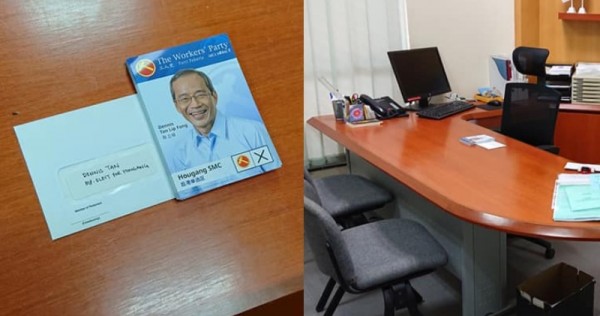
Png Eng Huat from the Workers’ Party (WP) has successfully passed the torch to Dennis Tan, as the latter was announced MP-elect for Hougang SMC early this morning (July 11).
Tan won against the People’s Action Party’s (PAP) Lee Hong Chuang, garnering 61.19 per cent of the votes.
Shortly after learning of the win, Png took to Facebook to congratulate Tan on “fighting a good fight”.
The 58-year-old said he had tidied up the office he had been using for the past eight years and left a note for Tan, writing: “I wish to share with him what Mr Low Thia Khiang told me eight years ago when I first became the MP for Hougang.”
Png also thanked Hougang residents for their courage and support, writing: “Your love for democracy has touched the hearts of many Singaporeans.”
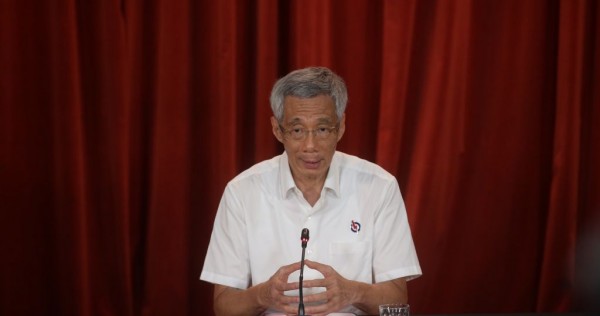
SINGAPORE – With the election now over, it is time for Singaporeans to put aside their differences and come together to overcome the challenges of the Covid-19 pandemic, protect jobs and “create the future together”, said Prime Minister Lee Hsien Loong early on Saturday (July 11) morning as he addressed the media, an hour after it was confirmed that the People’s Action Party (PAP) won 61.24 per cent of the votes cast.
It was a swing of almost nine percentage points from the 69.86 per cent vote share in the last election in 2015, and saw the opposition win a record 10 seats.
As a whole, Mr Lee said, he was satisfied with the results of GE2020, and the vote share showed wide support for the Government. “I’m honoured and humbled by the faith Singaporeans have put in the PAP,” he said.
But “the percentage of the popular vote is not as high as I would have hoped for”, he said, and the mandate not as strong as he had asked for.
SINGAPORE – Amid the ongoing pandemic, the question as Singaporeans headed to the polls was this: Would they prioritise bread-and-butter issues in a flight to safety and leadership?
In the end, the flight turned out to be more of a shuffle. And voters – especially younger ones – sent a strong signal that they wanted not just bread and butter, but more chefs to butter their toast.
On Friday (July 10), the ruling People’s Action Party won 61.24 per cent of valid votes cast, down from 69.9 per cent in 2015, a swing of nearly 9 percentage points. It secured 83 of 93 seats, down from 83 out of 89 seats in 2015.
The opposition Workers’ Party (WP) not only strengthened its hold over Aljunied GRC and Hougang SMC, but added another feather to its cap in the form of Sengkang GRC with a comfortable 4.26-point margin.
The Progress Singapore Party put up a strong fight in West Coast GRC, losing to the PAP by fewer than 4 percentage points.
Even before a single vote was cast and before he had any notion of whether he would be returning to Parliament, Progress Singapore Party (PSP) chief Tan Cheng Bock was already talking about succession in the party leadership.
At his last press conference of the campaign, he had made clear that his party – just a year old and on its first electoral outing – would not “run away” regardless of what happened.
Dr Tan stressed that the party must have an internal succession plan, though he added that it must not be rushed.
With the results this morning, which saw the PSP not winning a single seat in the next Parliament, the succession question has become more urgent.
The PSP’s A team barely lost the much anticipated West Coast GRC contest with 48.31 per cent of the votes, and the party put up a positive showing in the other three group representation constituencies and five single-member constituencies it contested, averaging almost 40 per cent.
The Singapore Democratic Party’s (SDP) strategy of focusing its firepower on single seats failed to bear fruit last night, as the party lost in all five constituencies it contested – even as a nationwide swing towards opposition parties helped raise vote shares.
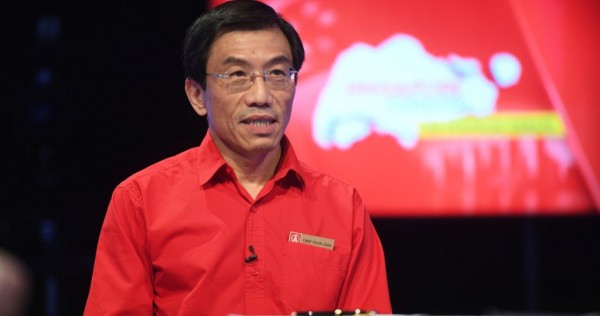
The party’s top two leaders – secretary-general Chee Soon Juan and chairman Paul Tambyah – both improved on their party’s performances in Bukit Batok and Bukit Panjang, but neither did well enough to secure a Non-Constituency MP (NCMP) seat as one of the best-performing losers. Professor Tambyah was the party’s best performer with 46.26 per cent of the votes in Bukit Panjang.
The party’s candidates in Holland-Bukit Timah GRC, Marsiling-Yew Tee GRC and Yuhua SMC all received less than 40 per cent of the votes.
The results mean the SDP has been usurped by the Progress Singapore Party (PSP) in the opposition party pecking order. While the Workers’ Party will have 10 MPs, the year-old PSP, led by Dr Tan Cheng Bock, looks set to take two NCMP seats for its narrow loss in West Coast GRC.
A woman and a man have spent $7,000 in their quest to expose massage parlours for providing sexual services.
The pair, who declined to be identified, had contacted Shin Min Daily News with allegations that three massage establishments along Little India were involved in illegal activities.
The woman said that she and her male companion had gone shopping in Little India on January 17 this year, at around 11.30pm, when they got into an altercation with a masseuse.
The masseuse had allegedly flashed her middle finger, hurled vulgarities and spat at them.
Half a year after the incident, the couple has spent $7,000 to hire a private investigator and collect evidence, in hopes of exposing the massage parlours for providing sexual services.
The woman told Shin Min: “We first paid the private investigator more than $2,000 for one week’s worth of work.
“We then spent another $5,000 to hire people to pose as customers and enter the ‘lion’s den’.
“They patronised each massage parlour two to three times so that we could gather evidence.”
SINGAPORE – Singaporeans returned the People’s Action Party (PAP) to government, handing it 83 of the 93 seats, but there was a major upset in Sengkang GRC, which fell to the Workers’ Party (WP), amid a stronger showing for the opposition.
In what was dubbed a crisis election, or the Covid-19 polls, the PAP won 61.24 per cent of the votes, an 8.7-point swing from its 69.9 per cent share in the 2015 polls. This was slightly above the 60.1 per cent it garnered in 2011, which was the party’s worst showing.
The election, billed as the most significant since Singapore’s independence given the backdrop of the pandemic, will see the opposition presence almost doubled to 10 elected MPs in the next Parliament, Singapore’s 14th, since 1965.
Speaking at a 4.30am press conference, Prime Minister Lee Hsien Loong said the PAP had been given a “clear mandate” and a “good result”. Although the share of the popular vote was not as high as he would have liked, it still reflected broad based support for the PAP, he said.
People’s Action Party (PAP) 63.18% Singapore Democratic Party (SDP) 36.82% The People’s Action Party has won Marsiling-Yew Tee GRC against the Singapore Democratic Party.
PAP received 69,722 votes while SDP received 40,641 votes.
The People’s Action Party is leading the Singapore Democratic Party in Marsiling-Yew Tee GRC for GE2020, according to the sample count.
PAP currently has 64 per cent of the votes, compared to SDP’s 36 per cent.
The PAP team consists of Lawrence Wong, Alex Yam, Hany Soh and Zaqy Mohamad, while SDP’s candidates are Bryan Lim, Damanhuri Abas, Khung Wai Yeen and Benjamin Pwee.
The sample count has been a strong indication of the final result in past elections.
It is derived from 100 random ballot papers from every polling station in the constituency, taking into account the weightage of each polling station.
SINGAPORE: The People’s Action Party (PAP) has clinched 61.24 per cent of the votes in this year’s General Election, but a swing to the Opposition saw the Workers’ Party (WP) make inroads into Parliament by claiming its second Group Representation Constituency (GRC) in polls held amid the COVID-19 pandemic.
The ruling party won 83 seats out of an available 93. The victory saw the PAP’s vote share slide by close to nine percentage points from the last General Election, where it garnered 69.9 per cent of the votes.
Prime Minister Lee Hsien Loong acknowledged that despite winning the mandate, the percentage of the popular vote was not as high as he had hoped for.
“Nevertheless, the results reflect broad-based support for the PAP,” Mr Lee said at a press conference marking the end of the election. “Singaporeans understand what is at stake and why we must come together to uphold our national interests.”
“I will use this mandate responsibly to deal with COVID-19 and the economic downturn to take us through the crisis safely and beyond,” he added.
In the 2015 General Election, the PAP secured 83 seats out of 89 seats in 29 constituencies.
With the WP’s victory in the newly formed four-member Sengkang GRC, this election marks the first time that an opposition party will hold two GRCs since the GRC scheme came into effect in 1988.
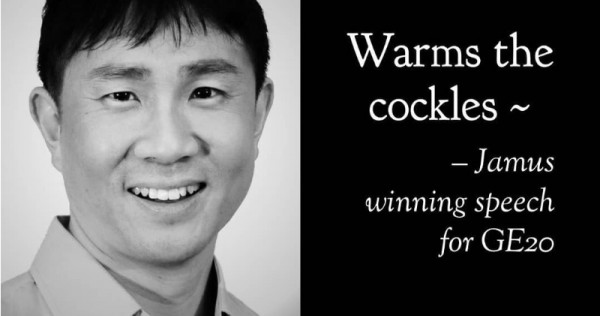
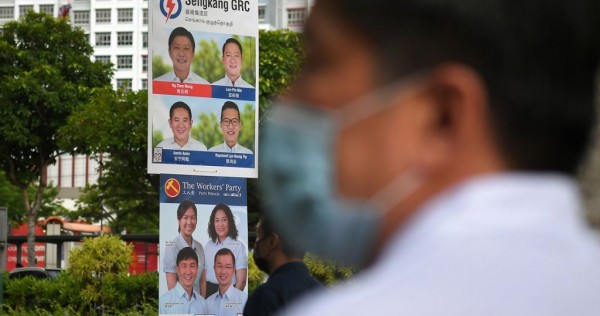
With 52.13 per cent of the votes, the Sengkang team comprising Jamus Lim, Raeesah Khan, He Ting Ru and Louis Chua edged out the PAP’s team that included labour chief Ng Chee Meng, political office-holders Lam Pin Min and Amrin Amin as well as lawyer Raymond Lye, who is a new face this election.
The WP also retained the five-member Aljunied GRC – where it increased its vote share by nine percentage points – and Hougang Single-Member Constituency (SMC).
This year’s election was also contested by the newly formed Progress Singapore Party (PSP) led by former PAP Member of Parliament (MP) Tan Cheng Bock, who set up the party last year. The party contested 24 seats in four GRCs and five SMCs, the most among all the opposition parties.
In one of the closest battles of the night, Dr Tan’s team finished with 48.31 per cent of the votes in West Coast GRC, just 3.38 percentage points behind the PAP. In 2015, the PAP team there won 78.57 per cent of the votes against the Reform Party (RP).
For the second time in Singapore’s history, all seats were contested, with two constituencies – Pioneer SMC and Pasir Ris-Punggol GRC – seeing three-cornered fights. Altogether, there were 10 opposition parties and one independent candidate who vied for a spot in Parliament.
A total of 2,535,565 votes, including rejected votes, were cast in what was the country’s 13th election since independence. This made up 95.63 per cent of the 2,651,435 registered electors, the largest turnout since 1997.
Just less than an hour before polls were due to close, the Elections Department announced that voting hours were being extended by two hours to 10pm after COVID-19 precautionary measures caused delays at a number of polling stations and long waiting times for many voters.
THE PAP’S BIGGEST WINNERS
The PAP’s team of Tharman Shanmugaratnam, Shawn Huang, Rahayu Mahzam, Xie Yao Quan and Tan Wu Meng claimed the highest percentage of victory in any constituency, winning in Jurong GRC with 74.62 per cent of the vote against new party Red Dot United (RDU).
This was followed by PAP’s Melvin Yong in the new Radin Mas SMC, who clinched 74.03 per cent of the votes; the party’s incumbent Lim Biow Chuan in Mountbatten SMC with 73.84 per cent; and Prime Minister Lee Hsien Loong’s team in Ang Mo Kio GRC, which scored a 71.91 per cent against RP secretary-general Kenneth Jeyaretnam’s team.
In a video broadcast online, Mr Lee said his team was grateful for the trust and confidence the Ang Mo Kio residents had given his team, and they would do their best to serve residents for the next five years.
People’s Action Party Secretary-General Lee Hsien Loong arrives at the party’s Teck Ghee branch on Jul 11, 2020. (Photo: Jeremy Long)
The party had reduced shares of the vote in most constituencies, including in the two key battlegrounds of West Coast GRC and East Coast GRC which it just held on to.
In the closely watched battle for East Coast GRC, after a surprise move by Deputy Prime Minister Heng Swee Keat from Tampines GRC to anchor the team, the PAP garnered 53.41 per cent of the votes – down from 60.7 per cent in 2015 – beating the WP team of Nicole Seah, Dylan Ng, Kenneth Foo, Terence Tan and Shariff Kassim.
In his speech thanking voters and party activists, Mr Heng said that his team was “determined” to serve residents better and to “emerge stronger” from the COVID-19 crisis.
“We’ll reach out to better understand your concerns and aspirations, and work together with you to realise our East Coast plan to build a more vibrant, caring and green community,” he said.
Two exceptions to the decline in vote share were Ms Tin Pei Ling’s improved showing in MacPherson SMC with 71.74 per cent against People’s Power Party’s Goh Meng Seng; and Mr Lim in Mountbatten.
THE PSP AND THE VOTE SWING
It was constituencies contested by the PSP that saw some of the largest vote swings against the ruling party.
West Coast GRC saw a nearly 27 percentage-point reduction in the PAP’s margin of victory. Communications and Information Minister S Iswaran said this narrow win against Dr Tan’s team “reflects the nature of the competition and obviously, the various issues that have been canvassed in the course of this General Election”.
“But I think it’s too early to draw definitive conclusions,” he added. “I think we have to go back and study the results and understand for ourselves what are the reasons that might have accounted for this.”
In Chua Chu Kang GRC, the PSP scored 41.36 per cent of the vote, cutting the incumbent PAP team’s victory margin of the previous election by some 18 percentage points.
In Hong Kah North, PSP first-time candidate Gigene Wong scored 39.02 per cent against PAP veteran Amy Khor, a swing of 13.78 percentage points. Dr Khor clinched 74.76 per cent of the vote in 2015.
Even in Tanjong Pagar GRC, long considered a PAP stronghold, the incumbent team – which included Minister for Trade and Industry Chan Chun Sing and Minister in the Prime Minister’s Office Indranee Rajah – saw its winning margin reduced by 14 percentage points against a PSP team that finished with 36.87 per cent of the vote.
The PSP contested several new SMCs, resulting in another close battle in Marymount where its candidate Ang Yong Guan got 44.96 per cent of the vote against PAP new face Gan Siow Huang.
The PSP candidates got 39.17 per cent of the vote in Yio Chu Kang and 37.03 per cent in Kebun Baru. In Nee Soon GRC, the PSP picked up 38.1 per cent of the vote.
Progress Singapore Party chief Tan Cheng Bock speaks at a press conference at the party’s headquarters on Jul 11, 2020. (Photo: Gaya Chandramohan)
Speaking at a press conference held at PSP’s headquarters, secretary-general Dr Tan told reporters that while his party may not have won any seats, they had “caused an impact” and he was “quite proud” of their performance given that they were a new party.
“I think it’s a beginning of a new chapter for PSP, and I think the movement that I’ve created will grow,” he said. “I think the team that I have built will go further in the next election.”
On the decline in the PAP’s results across the board, he said his team’s challenge in West Coast GRC might have “actually maybe distracted them; they must be careful of us”.
THE WP MAKES FURTHER INROADS
The WP held on to and increased its margin of support in Hougang SMC and Aljunied GRC, as well as gained four new seats in Parliament with its win in Sengkang GRC.
Workers’ Party supporters celebrate the results of the General Election along Hougang Avenue 5 on Jul 11, 2020. (Photo: Marcus Ramos)
In Hougang, held by the WP since 1991, PAP’s Lee Hong Chuang was defeated by WP’s Dennis Tan who got 61.9 per cent of the vote.
Thanking voters, Mr Tan called Hougang the “beacon of democracy in Singapore” and said that he would speak up for its residents in Parliament.
In Aljunied, which it has held since 2011, the WP team of party chief Pritam Singh, Sylvia Lim, Gerald Giam, Faisal Manap and Leon Perera extended its lead to 59.93 per cent – compared to scraping through with 50.95 per cent of the votes in 2015.
Mr Singh, in a press conference following the results, said his team would “continue to endeavor for good outcomes on the ground” and to represent voters “faithfully in Parliament”.
“Today’s results are positive, but we have to hit the ground running. We should not get over our head with the results. There’s much work to do. And I can assure you this Workers’ Party team is committed to serve Singapore,” he added.
The WP contested a total of 21 seats in four GRCs and two single-seat wards. This was seven less than in the last General Election.
The party improved its showing in East Coast GRC and Marine Parade GRC by six to seven percentage points, to 46.59 per cent and 42.24 per cent respectively.
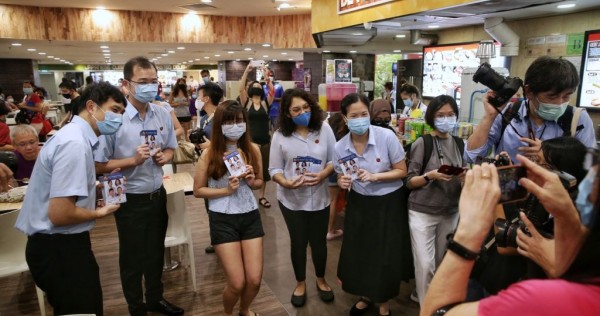
Workers’ Party supporters gather at a coffee shop at Block 322 along Hougang Avenue 5 on Jul 11, 2020. (Photo: Marcus Ramos)
Ms Nicole Seah, who was part of WP’s East Coast GRC slate, said they had gone into the election giving their best, knowing it was going to be a tough fight.
“The votes and the encouragement we received showed us that a very large part of East Coast GRC voters do want to see more fairness in our political system,” she added.
THE SDP LOSES ITS BIDS
The SDP had gambled by fielding two of its strongest candidates, party secretary general Chee Soon Juan and party chairman Paul Tambyah, in single-seat wards. Both were unsuccessful in their bids, but made gains.
In Bukit Panjang SMC, Dr Tambyah got 46.26 per cent of the votes, compared to SDP candidate Khung Wai Yeen’s 31.62 per cent in 2015.
Dr Chee failed to unseat PAP incumbent Murali Pillai in Bukit Batok SMC, but got 45.2 per cent of the vote – more than six percentage points higher than his result in the 2016 by-election, also against Mr Murali.
Speaking to the media after the results, Dr Tambyah and Dr Chee thanked voters and volunteers for their support during this election and said that they would do better in the next round.
“We are going to continue to see what we can begin to improve on, and then come back stronger,” Dr Chee said.
The Singapore Democratic Party’s Chee Soon Juan and Paul Tambyah speak to the media at the party’s headquarters on Jul 11, 2020. (Photo: Try Sutrisno Foo)
Dr Tambyah added that the party ran a “strong campaign” and they could “hold our heads up high” in view of the current circumstances where the election was held during a pandemic.
The party also failed to defeat the PAP in its bid for Marsiling-Yew Tee GRC and Holland-Bukit Timah GRC, scoring 36.82 and 33.64 per cent of the votes respectively.
SMALLER PARTIES MAKE SOME HEADWAY
Efforts by the other parties to oust the incumbents fell through, although some saw the share of their votes increase.
The Singapore People’s Party received 32.74 per cent of the votes in Bishan-Toa Payoh GRC and 39.31 per cent in Potong Pasir SMC. Current secretary-general Steve Chia was part of a team contesting in Bishan-Toa Payoh GRC.
In 2015, the party picked up 26.41 per cent of the votes in Bishan-Toa Payoh GRC and 33.61 per cent in Potong Pasir SMC.
The RP lost in Ang Mo Kio GRC against a PAP team led by Prime Minister Lee, but made progress with 28.09 per cent of the vote share, compared to just 21.36 per cent in 2015.
Party chief Kenneth Jeyaretnam, who spent the campaigning period on a stay-home notice, said he was “pretty pleased” with the latest results and called it “respectable”.
Kenneth Jeyaretnam and Charles Yeo of the Reform Party (RP) seen at Deyi Secondary School. (Photo: Hanidah Amin)
The 2020 election also saw the entry of Red Dot United, the country’s newest political party formed in May by two former PSP members Michelle Lee and Mr Philemon.
It contested in Jurong GRC against a PAP team anchored by heavyweight Tharman Shanmugaratnam and obtained 25.38 per cent of the votes, about four percentage points higher than what Singapore First secured in 2015.
The National Solidarity Party made small gains in two constituencies it contested previously, picking up 32.71 per cent of the votes in Sembawang GRC and 33.59 per cent in Tampines.
The Peoples Voice lost in Jalan Besar GRC, Mountbatten SMC, and Pasir-Ris-Punggol where the three-way tussle shrank the Singapore Democratic Alliance’s vote share to 23.67 per cent from 27 per cent in the previous polls.