Home Blog Page 185

Commentary: SGX sees boom in retail investments. But can it last?

0

SINGAPORE: The Singapore Exchange (SGX) is witnessing a strong retail boom during the COVID-19 pandemic that is helping to drive up liquidity and profits.

The last time the Singapore stock market saw such a major surge in retail participation was probably during the 1993 initial public offering (IPO) of Singtel, which gave many Singaporeans their first exposure to the stock market.

The 2020 retail rush is taking place under very different circumstances, however. The current influx of retail money could yet turn into a source of excessive speculation and volatility, and is unlikely to be a game changer for SGX.

As with most sectors of the economy during this historic global pandemic, how Singapore manages the outbreak is the largest determinant of the outlook for Singapore’s stock market operator.

SURGE IN INTEREST

Retail interest in the Singapore stock market has taken off in the first few months of 2020. Since Jan 6, Singapore-listed stocks have received a net increase of S$6.8 billion of retail funds, according to SGX data.

That has more than offset the net outflow of S$5.7 billion from institutional investors. By contrast, retail net outflow between Sep 30 and Dec 30 last year, was about S$189.9 million, while institutional net outflow was about S$41.9 million over the same period. 

READ: Commentary: The biggest shock from COVID-19 will be felt on the US dollar

The increase in retail interest in Singapore’s equity markets has been a boon for SGX by most metrics.

The average daily turnover of securities on SGX for each month of 2020 so far has represented an average increase of about 48 per cent from a year earlier, and in June stood at S$1.7 billion. 

The mean year-on-year increase in average daily turnover in the last six months of 2019 was just 4.5 per cent.

The increased trading activity has lifted SGX’s bottom line. For the three months ended March 2020, net profit rose 38 per cent to S$137.5 million. SGX will report its full fiscal year results on Jul 30.

The benefits are more profound than higher earnings. Stockbrokers told media in May that they were seeing a spike in new account openings from retail investors, as well as the reactivation of dormant accounts. 

If these new participants remain active, they could continue to contribute liquidity to the market for years.

FILE PHOTO - People pass stock index tickers at the Singapore Exchange (SGX) premises

FILE PHOTO – People pass stock index tickers at the Singapore Exchange (SGX) premises October 17, 2013. REUTERS/Edgar Su

For SGX, this retail wave must seem like a flood after a drought. Improving retail participation has been one prong of many in the exchange’s strategy to reverse a long-term decline in market liquidity. 

But despite heavy spending on initiatives — imposing a minimum allocation for retail in Mainboard IPOs, providing a free stock screening tool on its website and producing a regular series of articles about leading companies, for instance — SGX has until now had only limited success on the retail front.

THIS TIME IT’S DIFFERENT

It may be tempting to regard the current retail surge as a repeat of the Singtel IPO, a key milestone in the development of Singapore’s stock market that catalysed a surge in retail participation. But such a comparison may not be entirely appropriate.

When Singtel was privatised and listed on what was then the Stock Exchange of Singapore (SES) in 1993, it set aside shares to be issued to Singapore citizens at a discount. Another tranche of shares for Singapore citizens were sold in 1996.

READ: Commentary: Investors will soon struggle to find assets to put their cash in

For many Singaporeans at the time, Singtel was their first publicly listed stock. Largely due to the IPO, more than a million Singaporeans today own Singtel stock.

But retail investors who got Singtel’s shares at IPO joined the market at the start of a long economic bull run, between the 1991 Persian Gulf War and the 1997 Asian Financial Crisis. Today’s new retail accounts are being set up in the midst of a once-in-a-generation crisis. 

Retail investors piling into equities at this moment are not so much buying on optimism about growth as they are taking a risk on equities because safer investments are offering dismal yields amid ultra-accommodative central bank policies 

While the Singtel retail investors in 1993 had a long bull run ahead of them to reward their foray into the stock market, today’s new retail players are gazing into an uncertain future. Sell-side analysts have been calling for a bottom, but the fact is that institutional investors have yet to return.

The stock market has rallied in the United States, where the virus has not been contained; in China, fundamentals have not caught up with skyrocketing prices; and in Singapore, the Straits Times Index has gained 17.7 per cent since its March low. 

Singtel logo is seen on its building

An exterior view shows the logo of Singtel displayed on its building in Singapore on Jan 22, 2015. (File photo: AFP/Roslan Rahman)

The climbing stock prices in the face of historic economic disruption suggest that the greater risk is that of overconfidence among equity investors.

MUCH HINGES ON KEEPING COVID-19 IN CHECK

Moreover, markets have yet to fully face the full economic impact of the pandemic. As the pandemic continues to dampen overall demand and stifle trade, people will continue to lose income and jobs. Stocks will not seem as attractive under those conditions.

It remains to be seen whether SGX’s new retail investors will remain active if stock returns do not meet expectations.

SGX is not the only stock exchange in the region to see a retail surge either. Retail participation in Malaysia has also increased this year. In Hong Kong, trading turnover and market velocity are up. 

The influx of retail activity is unlikely to give SGX much of a leg up against its rivals when everyone else seems to be surfing the same wave.

READ: Commentary: To save its markets, Hong Kong needs to rely on China

What might actually set SGX apart, though, is Singapore’s ability to manage the virus.

In the short term, having the virus under control within Singapore’s borders will help the country’s capital markets to get back on track. Retail liquidity is usually great, but in these times it is also highly opportunistic and speculative.

COVID-19 office workers Raffles Place (9)

Office workers at Raffles Place after the circuit breaker period. (Photo: Gaya Chandramohan)

A stock market backed by a functioning, largely virus-free economy is significantly more attractive to a potential issuer and to risk-sensitive institutional investors than a stock market in a country still struggling with the virus.

There are good and large companies, especially in the tech sector, in the region that are in the IPO pipeline. Singapore has a chance to snag some of these if it plays its cards right.

In the longer term, confidence in Singapore’s crisis management will help to strengthen the country’s status as a safe haven for assets.

READ: Commentary: The next tech crash is around the corner thanks to COVID-19

Whether Singapore can pull ahead of its rivals on this front remains to be seen.

While the country’s pandemic response was laudable at the start of the outbreak, it has also had some missteps, especially in the handling of the spread among foreign workers. Community cases have also started to creep higher after social distancing rules were relaxed.

Singapore’s handling of this new phase of the pandemic will be closely watched by investors as it is also likely to have an impact on the health of our stock markets.

Kenneth Lim is a writer who has been covering capital markets in Singapore and the United States since 2003.
Source link

Telehealth gets a boost from COVID-19 pandemic

0

SINGAPORE: Telehealth has been given a boost during the COVID-19 pandemic, as more patients feel comfortable seeking out medical services and seeing their doctors online.

Studies worldwide have shown that patient outcomes in telemedicine consultations are not inferior to those in standard care situations, but some medical conditions still need to be assessed by doctors – in person.

Telehealth is the use of digital and telecommunications technology to access health care services remotely. It’s a marriage of medicine, and technology.

Telemedicine is a subset of telehealth. Using telemedicine, patients can consult doctors virtually.

Doctors can then diagnose conditions, and prescribe treatments.

For healthcare systems, it is a way of doing more, with less.

Online doctor consultations are a booming business

Online doctor consultations are a booming business as the coronavirus crisis keeps people at home. AFP/Hector RETAMAL

READ: As doctors go virtual, pandemic turbocharges telemedicine

Dr Christina Low is CEO and co-founder of HiDoc, a telemedicine app from Singapore. She said that when telehealth was first created, it was to treat patients in remote places with little access to health facilities.

“But increasingly today, we see it becoming more of a tool for convenient medical care. It connects patients to doctors when non-urgent immediate care is needed, as well as follow-up care with both specialists and primary physicians,” she said.

Aside from access, the use of telehealth can also amplify the capacity of clinicians and healthcare networks.

This is especially useful for healthcare systems that do not have enough clinicians per head of population.

THE RISE OF TELEMEDICINE

Telemedicine has been used in the medical sector for a number of years now, but when the COVID-19 pandemic hit, social distancing became the new normal and people around the world turned online for most activities including, seeing a doctor.

Besides convenience, telemedicine also reduces the risk and exposure to infection.

telemedicine russia

A doctor speaks with a patient during an online consultation session at a telemedicine centre in Moscow on Apr 7, 2020. The city of Moscow opened a telemedicine centre to treat and support coronavirus patients who are well enough to stay home. (Photo: AFP/Alexander Nemenov)

“The COVID crisis certainly accelerated telehealth as it provides real opportunity to link patients with expert clinicians without the need for travel or physical contact and that increases the capacity of clinicians, and obviously reduces the risk of infection,” said Mr Rob Walton, president and CEO of GE Healthcare’s business across ASEAN, Korea, Australia and New Zealand.

In one survey by Mercer, 78 per cent of respondents from Asian countries said they were ready to use digital healthcare, compared with 66 per cent globally.

So it was not surprising that when the pandemic hit, telemedicine apps in many markets saw big spikes in demand, industry insiders said.

READ: More demand for telemedicine as Indonesians stay away from hospitals amid COVID-19

“What has happened with COVID-19 is that it has removed that behavioural and economic barrier for a more widespread adoption of telemedicine,” said Dr Low.

Ms Renee McGowan, CEO for Mercer in Asia, said that one of those markets was China, where about 50 per cent of medical care moved online.

“That really changed the dynamic of healthcare and added additional services that just weren’t there before,” she said.

LIMITATIONS

According to the World Health Organization, 58 per cent of countries surveyed are now using telemedicine to replace in person consultations.

The majority also use telemedicine to triage patients to determine the severity of illness.

Medical doctor Makoto Kitada demonstrates a telemedicine application service called 'CLINICS&a

Medical doctor Makoto Kitada demonstrates a telemedicine application service called ‘CLINICS’, developed by Japanese medical start-up Medley Inc., in Tokyo, Japan, July 8, 2020. REUTERS/Issei Kato

READ: With apps and remote medicine, Japan offers glimpse of doctor visits post-coronavirus

But while such digital solutions are seen as safe and convenient, particularly during a pandemic, telemedicine does have its limitations.

One concern is how an online diagnosis compares with a face-to-face consultation with a doctor.

“The biggest contributing factor for the lack of adoption is probably the scepticism of online diagnosis,” said Dr Low.

“But it’s important also to sort of highlight that when the doctors are providing services using telemed modalities, they must ensure that they are providing the same quality and standard of care,” she added.

READ: Commentary: Making a trip to the clinic is not the only way to get medical treatment during COVID-19

Dr Ravinder Singh Sachdev, deputy chief medical informatics officer at Tan Tock Seng Hospital, added that studies worldwide have shown that patient outcomes in telemedicine consultations are not inferior to those in standard care situations.

At the same time, he added, “not everybody can benefit from telehealth”.

“If they’ve got significant acute illnesses that need constant monitoring and review and lab tests done daily, for example, not necessarily beneficial to have it done via telemedicine,” said Dr Ravinder, who is helping to drive the National Healthcare Group’s Care Transformation and Telemedicine projects.

“These tend to be very easily managed via telemedicine,” he said.

READ: Getting an MC – and medicine in 90 minutes – on your phone? We test it out

FUTURE OF HEALTHCARE

Industry watchers said the COVID-19 pandemic could radically change the telemedicine sector, and its role in healthcare systems around the world. The key is to figure out how to sustain the momentum built during the pandemic.

“The future of healthcare is certainly digital. The increase that we’ve seen in telemedicine has to a large extent been forced upon people because of lockdowns. But it’s not going away,” said Ms McGowan.

“What we do know is that once individual consumers start using digital tools, including digital healthcare tools, they continue using them. So we fully expect that individual consumers will continue to use telemedicine as a complementary part of their medical care,” she added.

Source link

Commentary: I used to think a staycation was a poor alternative for being overseas. Then I took one

0

SINGAPORE: When I first learnt about the concept of staycations, I thought it was just another newfangled term that would disappear from our lexicon within months. 

I had so many questions and no answers. 

Wasn’t the whole point of a holiday to leave the country to experience new cultures and seek out exotic places? 

Why would anyone spend the same amount — or more than — a holiday abroad to stay in the country? 

Who were these people with ridiculous amounts of money and leave days to waste, when they could explore their own country anytime without booking another place to stay? 

In my mind, staycations felt like rainbow cake: Another pretentious fad that masked a grim reality. Like the enticing multicoloured layers that concealed often inferior cake, a staycation was merely window dressing to make those who had to remain in the country for one reason or another feel better about their dismal predicament. 

Then I gave in to a good friend’s plea to take a staycation together last year — and I have never been happier to eat my words.

TAKE A HOLIDAY AT HOME

Given the severe impact of COVID-19 on our tourism industry from retrenchment exercises to drastically falling visitor numbers, the Singapore Tourism Board (STB) recently partnered other agencies to launch a S$45 million marketing campaign over the next nine months.

The campaign encourages Singaporeans to take a local holiday and rediscover our country while supporting local businesses through various initiatives, including promotions for attractions, tours and hotel stays.

One of these ways is the good old staycation, which has proven it’s here to stay.

Hand opening door to hotel room

(Photo: Pexels/Pixabay)

READ: S$45 million tourism campaign launched urging locals to explore Singapore

Admittedly, I would’ve scoffed at this effort pre-coronavirus and think it a gimmick. Prior to my own staycation, I couldn’t fathom that anyone would willingly spend time and money in their country if they’d rather be away. The old me would say it seems more prudent to save the money until we can travel freely again.

THE UNEXPECTED BENEFITS OF A STAYCATION

When I went on my first staycation, I didn’t expect to feel rejuvenated. Even though I only spent a weekend away and my staycation was barely 30 minutes from home, I couldn’t remember the last time I felt so well-rested.

Perhaps it was the lack of hassle — no stalking the SkyScanner site for cheap flights, no cumbersome airport security and immigration clearances, and no time difference. No pre-trip anxieties over planning this and booking that, and no post-holiday blues.

Yet somehow, despite being so close to home and work, a staycation removed me from the bubble of my regular life, allowing me to check out of work, family and social obligations and be someone else for a day or two.

These rose-tinted glasses were entirely necessary to help me truly relax. Suddenly, I could rewatch Mean Girls for the 10th time just because. I could take a nap simply because I felt like it. And when I woke, I could get some glorious sunlight by the pool and pretend I wasn’t shackled to my work laptop or enslaved to my iPhone.

READ: Commentary: Staying home has warped our sense of time

READ: Commentary: Immobility during COVID-19 and its effects on our sleep, physical activity and well-being

See, before COVID-19, we’ve become so obsessed with productivity as a society that even when we’re on vacation, we subconsciously believe we must constantly do something to make a vacation worth our time, whether it’s shooting photos, visiting attractions or dining at fancy restaurants. We felt we had to check these boxes, partly for our social media followers, because otherwise, it didn’t happen.

After almost every holiday, I often craved taking another to recover from the one I’d just returned from.

Ironically, one of the most amazing ways to spend one’s annual leave is to do absolutely nothing.

From my experience, being in your own country allows you to do just that. It gives you a degree of mental freedom starkly different from the high-powered headspace you’ve got to be in while overseas, since there is little to no pressure to jam pack as much exploration as you can into your itinerary.

Here’s the dirty secret for those of us already booking the hotels in Singapore that have recently reopened: Staycations are the perfect middle ground.

Infinity pool condominium

(Photo: Unsplash)

They allow for a genuinely relaxing holiday, without jostling with crowds of tourists, struggling to appreciate what year this castle was built and for which wife, navigating foreign streets whose names you cannot pronounce, and other logistical nightmares.

With COVID-19 still in the background of our lives, staycations will likely become an even more attractive option now. Ensconced in a cosy hotel room, we can return to the quiet life pre-COVID, taking a break from the “new normal”.

Aside from general escapism, staycations are also practical.

As someone who loves solo travelling, one of the perennial worries I had pre-COVID was falling ill in another country and having to navigate their healthcare system alone. 

READ: Singapore hotels look to woo staycationers with promotions, COVID-19 safety measures

READ: Commentary: Our flights of fancy have stopped but were they all that romantic anyway?

I’ve heard enough horror stories of travel gone bad, like paying thousand-dollar medical bills for antibiotics for a foot fungal infection and fainting in the middle of a tour in North Korea only to wake up in a hospital where no one spoke English … in North Korea.

No matter how developed the country I was heading to and how well regarded their society is, nothing beats the comforting familiarity of our healthcare system.

Changi Airport 43

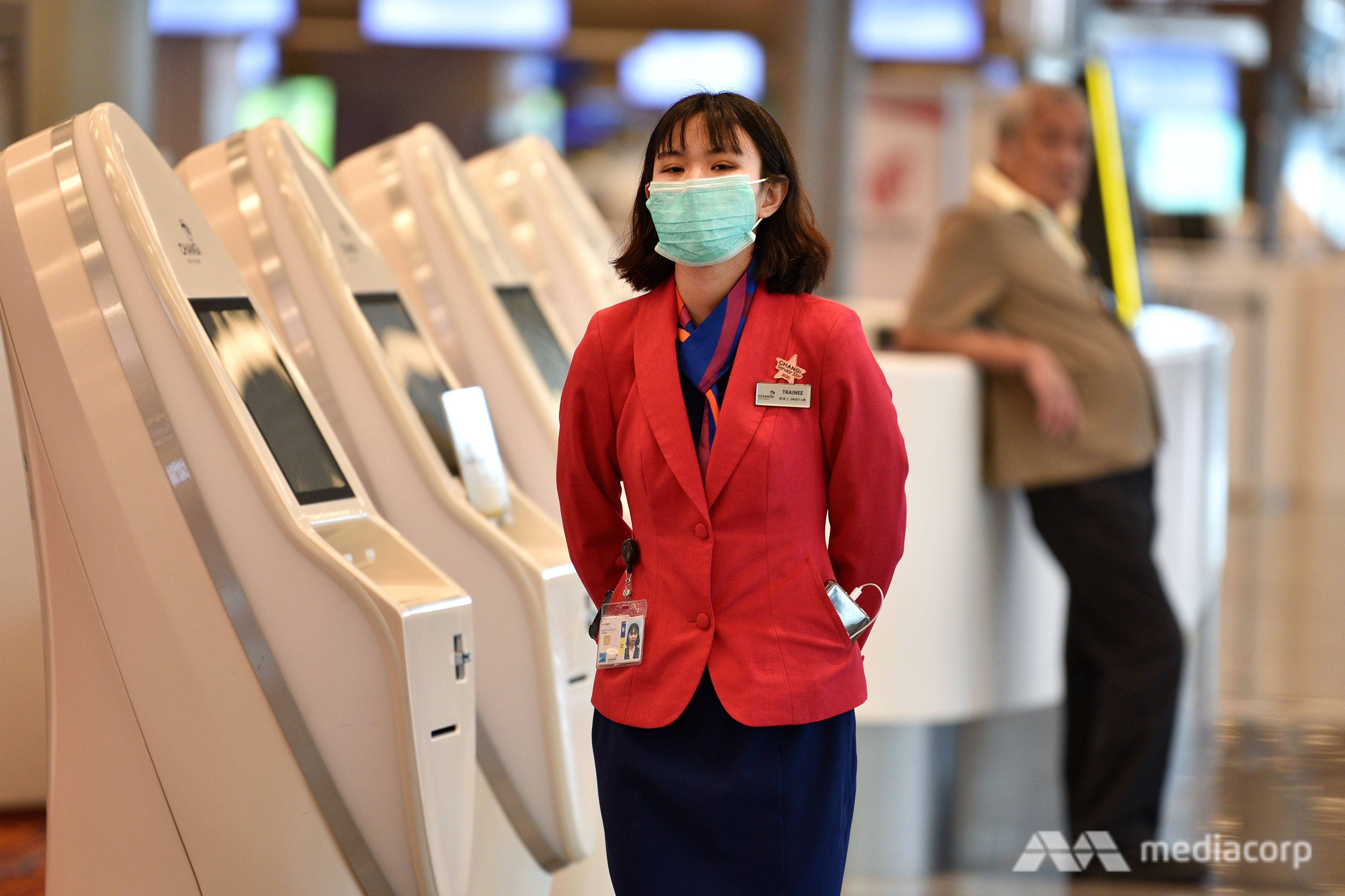
In wake of the novel coronavirus COVID-19, a Changi Airport staff is seen with a face mask at Terminal 1 departure lounge on Monday (March 30) (Photo: Jeremy Long)

Falling sick outside the comfort of one’s own country can also be a horrifying and incredibly stressful experience that may be an entertaining story only in hindsight, but would otherwise turn a holiday into an obstacle course to be traversed.

In a post-COVID world, travel would inevitably be fraught with a heightened wariness, not least regarding how the country we’re visiting has dealt with the dreaded disease.

It is also easier to practise safe distancing in Singapore even at local attractions, since most of us have gotten used to these stringent measures, not to mention the thoughtful markings everywhere.

READ: Hotels can apply to reopen for staycation bookings

While I deeply miss the anticipation of being in an airport before take off and the thrill of adventure, the travel bug hasn’t bitten hard yet.

Even as the COVID-19 crisis has forced me to learn how to stay put, I know I’ll get more antsy as months pass without any travel plans.

Some days, I catch myself looking at listings on Airbnb, revisiting old travel photos, vicariously scrolling through Instagram accounts of outdoor influencers or searching for air tickets to remote mountains and beaches halfway across the world.

But mostly, I’m surprisingly content with the thought that my next holiday could well be in a hotel room in Katong.

LISTEN: COVID-19: Aviation and flying never ever the same again

BOOKMARK THIS: Our comprehensive coverage of the coronavirus outbreak and its developments

Download our app or subscribe to our Telegram channel for the latest updates on the coronavirus outbreak: https://cna.asia/telegram

Grace Yeoh is a senior journalist at CNA Insider.

Source link

Changi Village Hawker Centre, Pasir Ris West Plaza among places visited by COVID-19 cases while infectious

0

SINGAPORE: A hawker centre and Kopitiam food court were among the new locations added to the list of places visited by COVID-19 cases in the community during their infectious period, the Ministry of Health (MOH) announced on Wednesday (Jul 22). 

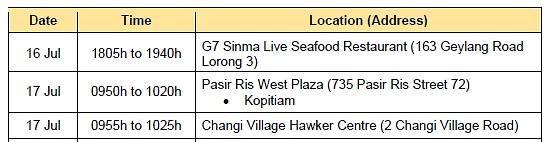
The locations include the Kopitiam at Pasir Ris West Plaza, Changi Village Hawker Centre and G7 Sinma Live Seafood Restaurant at Geylang Road Lorong 3.

UPDATED MAP: All the places that COVID-19 community cases visited while they were infectious 

They were visited at the following times:

Locations visited by COVID-19 cases Jul 22, 2020

Those identified as close contacts of confirmed COVID-19 cases would have been notified by MOH, said the ministry.

It added that people who were at these locations during the specified timings should monitor their health closely for 14 days from their date of visit.

“They should see a doctor promptly if they develop symptoms of acute respiratory infection (such as cough, sore throat and runny nose), as well as fever and loss of taste or smell, and inform the doctor of their exposure history,” said MOH.

“There is no need to avoid places where confirmed cases of COVID-19 have been.”

The National Environment Agency will also engage the management of affected premises to provide guidance on cleaning and disinfection.

READ: 310 new COVID-19 cases in Singapore, including 7 community infections

Singapore reported 310 new cases of COVID-19 on Wednesday, bringing the total number of cases in the country to 48,744.

Seven of the new cases are community infections, involving three Singaporeans, three work pass holders and one work permit holder.

There were also six imported cases who had been placed on stay-home notice upon arrival in Singapore. 

The remaining cases are work permit holders residing in foreign worker dormitories.

BOOKMARK THIS: Our comprehensive coverage of the coronavirus outbreak and its developments

Download our app or subscribe to our Telegram channel for the latest updates on the coronavirus outbreak: https://cna.asia/telegram

Source link

Baby can't wait: Woman gives birth in car after accident causes traffic jam on CTE

0

[ad_1]

It’s not every day that a baby is born in a car.

A woman was forced to give birth in her car last night (July 21) after a vehicle collision caused a massive traffic jam on the Central Expressway (CTE), reported Lianhe Wanbao. 

The Singapore Civil Defence Force (SCDF) was alerted to the accident involving a car and a container lorry along the CTE towards the Ayer Rajah Expressway.

Due to the extent of the accident — the vehicles had crashed into the central divider on one lane, while the container had overturned onto another lane — only one lane could be used.

This caused a traffic jam that lasted at least two hours. Caught in the middle of the chain of vehicles was a pregnant woman who was making her way to the hospital to deliver her baby.

[ad_2]

Source link

'What if it was me?': Driver reflects after helping man who passed out behind the wheel

0

[ad_1]

Besides keeping an eye on the road, drivers have been watching out for fellow motorists.

One recent example is Facebook user Erman Eusope who 
WHAT IF IT WAS ME!

I drove past Tampines Road at about 315pm this afternoon, (20th July 2020)
towards Hougang Ave 7,…Posted by Erman Eusope on Monday, July 20, 2020″>shared his experience after trying to help a fellow driver on July 20.

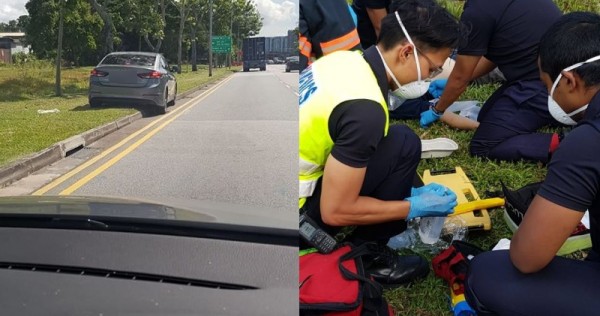
In the post, Erman said he slowed down his vehicle after spotting a stationary car on a grass patch along Tampines Road. Its hazard lights were not turned on.

[ad_2]

Source link

From manhole to sampling bottle: How wastewater helps indicate presence of COVID-19 in foreign worker dormitories

0

SINGAPORE: It takes two keys and as many members of the team to prise open the hefty manhole cover. Sometimes, more hands are required.

Clad in their personal protective equipment – waterproof boots, two layers of clothes, N95 masks, face shields and double layers of gloves – the team from the National Environmental Agency’s (NEA) Environmental Health Institute are searching for clues which could potentially point to the presence of the COVID-19 virus in a dormitory metres away from where they stand.

Part of a pilot programme launched by the NEA and supported by the National Water Agency PUB and Home Team Science and Technology Agency (HTX), this sampling of wastewater is used to support monitoring and management of COVID-19 transmission among workers living in dormitories. 

“Monitoring wastewater for COVID-19 allows us to understand the situation in the community (where it is) being sampled,” said Dr Judith Wong, a research scientist at the Environmental Health Institute, on Wednesday (Jul 22).

READ: More wastewater testing under way in Singapore to tackle COVID-19; pilot launched at foreign worker dormitories

“We know that infected persons shed the virus in stool and wastewater receives stool as well as other respiratory discharges such as sputum and nasal aspirates. 

“So monitoring wastewater for the virus allows a non-invasive approach to understand the COVID-19 situation and this is independent of clinical testing regimes as well as the health-seeking behaviour of a population.”

Upon lifting the manhole cover, the team insert rubber sampler tubing which will help typically help collect between 200 to 800ml of wastewater. This wastewater is pumped into an autosampler. 

The autosampler is programmed to collect the samples over a period of time and after the samples have been collected, the team will transfer the samples into sampling bottles which will be transported to the laboratory for testing.

The entire process can take between 30 minutes to up to three hours depending on factors such as whether the site designated for the extraction of the sample is suitable.

Samples will be then processed in the laboratory and testing is done to detect whether SARS-CoV-2 material is present in wastewater. SARS-CoV-2 is the virus that causes COVID-19.

The methodology for wastewater sampling and testing for COVID-19 was developed by the Environmental Health Institute, with scientific inputs from the Singapore Centre for Environmental Life Sciences at the Nanyang Technological University, Singapore-Massachusetts Institute of Technology Alliance for Research and Technology and the National University of Singapore.

“This methodology has been used to support the national effort in infection control and prevention of COVID-19,” explained Dr Wong. 

“It is used to complement the existing swab strategy at the dormitories. For example, when we monitor the virus signals in the dormitories … we are able to understand or not whether infection control measures have been effectively carried out.”

wastewater sampling 2

After the samples have been collected, the team will transfer the samples into sampling bottles which will be transported to the laboratory for testing. (Photo: Jeremy Long)

In a dormitory with no known transmission of the virus, if no virus signals are detected in the wastewater, this provides an “added assurance” that the dormitory is clear from infections, Dr Wong added. 

“However, if virus signals are detected in this dormitory, it will then prompt appropriate follow-up measures such as swab testing of the population to allow us to identify the infected migrant worker,” said Dr Wong. 

“Thereafter, it will allow appropriate medical care to be given and also for the case to be isolated to prevent future transmissions.”

MOTIVATED BY POSITIVE CONTRIBUTIONS

As a group, migrant workers living in dormitories in Singapore have been the hardest-hit by COVID-19, making up the vast majority of the 48,744 confirmed cases as of Jul 22.

The pilot programme began in April and has since been expanded to more than 30 dormitories so far. About 20 personnel are deployed in various roles ranging from collecting samples to working in the laboratories, said Dr Wong.

A team which typically consists two to three personnel are deployed to between six and eight sites per day. 

Manholes selected by the team need to be located away from the public, not along a main road or a pedestrian walkway, and need to contain the wastewater from the community that scientists plan to test.

“It’s quite exhausting, its quite hot; we go through the heat, the weather, even the tiredness of opening the manholes and so on,” said Dr Wong. 

“But our team is really motivated by the positive contributions that it can bring to the community.” 

BOOKMARK THIS: Our comprehensive coverage of the coronavirus outbreak and its developments

Download our app or subscribe to our Telegram channel for the latest updates on the coronavirus outbreak: https://cna.asia/telegram

Source link

Woman jailed for 1,011 illegal ez-link top-ups totalling $41k

0

[ad_1]

A part-time supermarket cashier copied the bank card details of 34 customers into a notebook and used the information to make 1,011 unauthorised ez-link top-up transactions totalling $41,330.

Kas Qiu Caiying then travelled to a number of MRT stations to seek cash refunds from the more than 500 ez-link cards she had used to store the monies.

The 30-year-old Singaporean was sentenced on Tuesday (July 21) to eight months’ jail after pleading guilty to 11 charges under the Computer Misuse Act involving more than $28,000.

Twenty-four other similar charges linked to the remaining amount were considered during sentencing.

Deputy Public Prosecutor Ben Mathias Tan said that Qiu was employed by the supermarket in Woodlands Avenue 1 between January and August 2018.

She was also holding a full-time job from April that year as an operations executive at the government-run Selarang Halfway House, which provides aftercare support to selected former offenders.

The Straits Times understands that she is no longer working at the facility.

[ad_2]

Source link

Tesla Singapore job listing suggests possibility of electric car maker setting up shop

0

[ad_1]

Singapore and Tesla may not have had the best of relations, with CEO Elon Musk reiterating back in 2019 that the nation has been “unwelcome” to the company, and unsupportive of electric vehicles.

One year on, and it seems a partnership might be in the pipeline, as Tesla looks to the local market for five new roles on LinkedIn.

The company is seeking a prospective Vehicle Service Technician, Vehicle Readiness Specialist, Service Manager, Service Advisor, and Parts Advisor, all of whom are expected to be based in Singapore.

A detailed list of responsibilities and requirements has been included as well, with a focus on customer service and automotive repair.

A description of the job listing reads –

[ad_2]

Source link

On average, Singaporeans made $2,200 selling stuff on Carousell during circuit breaker

0

[ad_1]

The Covid-19 pandemic has set Singapore on the path to face its worst recession since independence, but in today’s digital age and #hustle era, Singaporeans have been finding ways to still make some money for themselves despite setbacks. 

One of the many ways that Singaporeans have been making the best out of their situation is through selling wares on homegrown online marketplace Carousell. Which has been pretty lucrative it seems — the average Singaporean made $2,200 on the platform during the circuit breaker from April 7 to June 1.  

According to Carousell, Singaporeans made more than one million transactions for second-hand items. These included cases where folks wanted to earn extra money, supplement income or cushion the blow of unemployment. 

[ad_2]

Source link