E-commerce sites Shopee and Lazada have removed dozens of listings selling unauthorised Microsoft software on their platform for as low as $10.
The listings, which were removed by yesterday, offered so-called “lifetime subscriptions” with product keys at prices lower than those of official retailers.
The Straits Times understands that the product keys peddled by these online sellers were copies for the education sector and other corporate subscriptions.
On its official website, Microsoft offers a personal subscription for its Microsoft 365 software pack for $108 a year. This includes popular programs like Microsoft Word, PowerPoint and Excel.
A Microsoft spokesman told ST last Thursday that it neither sells “lifetime” subscriptions nor product keys by themselves.
“Microsoft does not authorise any platform to sell counterfeit or infringing Microsoft software. We work closely with the platforms to try to protect customers from unwittingly acquiring counterfeit or unlicensed software, and participate in their marketplace monitoring,” said the spokesman.
SINGAPORE – Singapore’s political system will have to evolve to accommodate the desire for greater diversity of views in politics while still maintaining cohesion and a sense of national purpose, said Prime Minister Lee Hsien Loong.
He noted in a speech on Monday (July 27) that the new Parliament will have 12 opposition MPs – the largest number in recent history.
“The election has shown a strong desire among Singaporeans for greater diversity of views in politics,” Mr Lee said. “Voters want the PAP to form the government, but they also want more robust debate of policies and plans.
“This trend is here to stay. We have to give expression to it.”
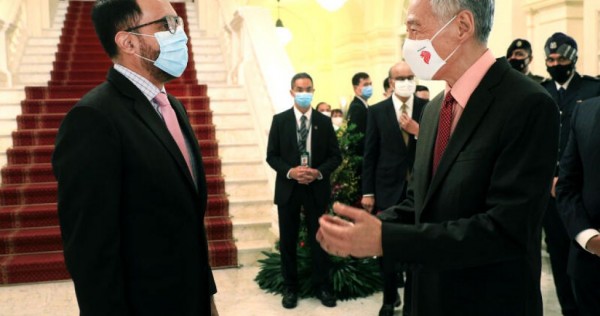
Mr Lee was speaking at the sfaysal testing-in of the new Cabinet and political office-holders, which was held in two separate locations – the Istana and Parliament House.
The Prime Minister was the first to be sworn in, followed by Deputy Prime Minister Heng Swee Keat and Senior Ministers Teo Chee Hean and Tharman Shanmugaratnam.
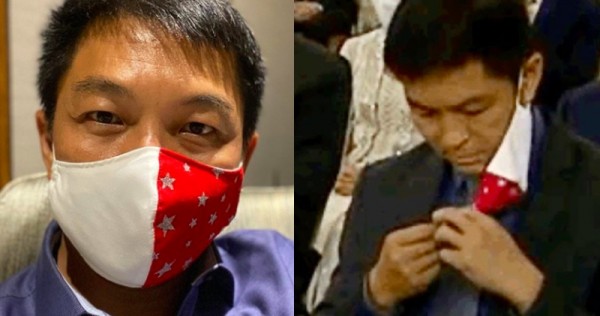
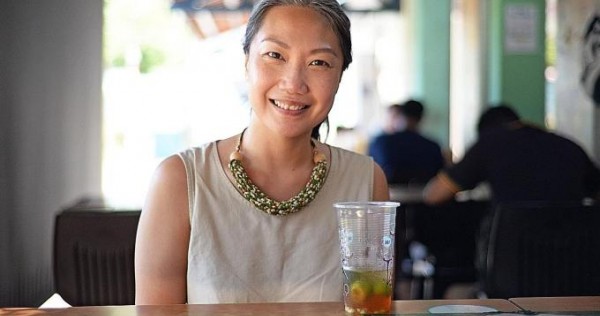
Newly elected Member of Parliament Carrie Tan is not your regular politician.
Sporting her signature salt and pepper hair at the age of 38, she stood out among the 27 fresh faces the People’s Action Party unveiled for the recent general election.
Ms Tan was an MP-elect for Nee Soon group representation constituency, replacing Dr Lee Bee Wah, and she was also one of the record number of 10 new female candidates the PAP fielded this year.
This year will see 27 elected female MPs entering Parliament – the highest ever.
Ms Tan told The New Paper: “I think it is encouraging and (having more female voices) in Parliament will hopefully help us push forward more policies that can be considered holistically from the female’s perspective.”
She joined politics to champion causes not just for women, but also to speak up on issues such as caregiving support and support for the sandwich generation.
Ms Tan is the founder of charity group Daughters Of Tomorrow, which she started in 2013 after ending an abusive relationship. She is now dating a divorcee and enjoys spending time with his two young children.
SINGAPORE: Surgical masks are one of the most sought-after items in the world now.
Even with Singapore Techologies (ST) Engineering producing surgical masks here since February — after a foreign supplier could not fulfil its contractual obligations to Singapore — these have been available only to front-line healthcare workers.
But there are alternatives out there. In the past few months, many people, from scientists to tailors, have tried to develop face masks that are both comfortable and safe.
Not all masks, however, are created equal. There are disposable three-layer masks, carbon filter masks, silicone gill masks, and even masks made of copper or nano-silver, said to kill viruses and bacteria.
With so many masks on the market, ranging in price from about 40 cents to S$76, this raises the question of how effective they each are.
The programme Talking Point finds out what science says about various masks — and seven things people should consider to protect themselves. (Watch the episode here.)
Some masks are labelled disposable, some are labelled surgical.
1. DISPOSABLE MASKS MAY NOT BE MEDICAL-GRADE
Although there are many disposable masks, and some are labelled surgical masks, not all conform to international standards, said Gareth Tang, senior vice-president of technology and head of Innosparks at ST Engineering.
Tang, who led the setting up of its surgical mask production line in just two weeks, said the company has “stringent, end-to-end quality control” to ensure that its surgical masks are medical-grade.
This includes testing how breathable the masks are and how efficient the layers of filtration are.
The bacterial filtration efficiency of a surgical mask must be above 95 per cent, and it must be resistant to the penetration of bodily fluids, according to the Health Sciences Authority.
So the efficiency reading of 98 per cent on the factory floor marks a level that “blocks 98 per cent of bacteria and viruses, and that includes the COVID-19 virus, through the mask”, Tang noted.
The company is now working on making its masks more widely available, he said. “We hope to bring this mask to the general public in the near term.”
Compound structure of a face mask containing copper.
2. COPPER AND SILVER CAN KILL BACTERIA
The most expensive masks are those containing copper or silver.
In ancient times, the Egyptians used these metals to treat wounds, noted Lam Yeng Ming, professor and chair of materials science and engineering at Nanyang Technological University. So copper and silver “have been shown to kill bacteria”.
“They’re effective in some circumstances,” she said. That includes viruses, provided the copper or silver ions interact with the virus. For example, when a virus lands on a copper surface, the metal’s ions attack and kill the cells.
But this process takes time, anywhere from 30 minutes to a day. Another problem is that some face masks with copper woven into the fabric have spaces between the copper fibres.
“Between these lines, you can fit quite a lot of the virus,” she said. “If this spacing is hundreds of microns, essentially it can’t filter out (viruses).”
A nano-silver mask Talking Point sent to her to examine, however, was found to be fully coated with the metal, so the virus “should come into contact with these silver surfaces”.
While nano-silver and copper have shown to be effective against different viruses, she said tests specific to the virus that causes COVID-19 are key.
“That has to be conclusive. There are some studies being done, but I think more studies need to be done,” she added.
WATCH: Reusable or surgical — which is the right mask for you? (22:25)
3. STUDIES LACKING ON CARBON FILTER MASKS TOO
Some manufacturers claim that masks with a carbon filter are effective in filtering out bacteria and viruses.
Carbon filters are widely used in air purifiers to absorb and capture smoke and other gaseous pollutants — but they are not any more effective than other masks when it comes to the coronavirus.
“A carbon filter mask is effective (against) air pollutants, but for bacteria and for viruses, there definitely haven’t been many studies to show its effectiveness,” said Lam.
Chrissandra Chong sews as a hobby — and makes her own masks.
4. DO HOME-MADE MASKS WORK?
The second government-issued reusable mask has antibacterial properties. But like some people, Chrissandra Chong finds that “it sticks too closely to my face for me to breathe easily”.
The freelance branding consultant sews her own masks — with “adjustable ear loops” to cater for different face shapes and designed to be more breathable.
She has made more than 200 masks since February, and volunteers for Masks Sewn with Love, a grassroots initiative that has provided over 100,000 masks for vulnerable groups.
According to the World Health Organisation, the ideal fabric mask should have at least three layers: An innermost layer of absorbent material like cotton and two other layers made of water-resistant material such as polypropylene.
Silicone gill masks.
5. SILICONE GILL MASKS CAN CAUSE SKIN IRRITATION
The mask that resembles the N95 respirator is called a gill mask, made from soft silicone material. It creates a seal on one’s face.
But because it can “offer relatively airtight protection”, using this mask can lead to skin irritation, said Eileen Tan, a dermatologist who runs her own practice, Eileen Tan Skin Clinic and Associates.
“It may not be suitable for everyday use or for people with sensitive skin,” she added.
A healthcare worker with skin inflammation.
6. HOW YOU CAN TAKE CARE OF YOUR SKIN
Tan has seen a 15 to 20 per cent increase in the number of patients seeking help for mask-related skin problems.
One can get skin inflammation, for example, from the build-up of moisture, heat and increase in sebum production, which can lead to clogged pores, she said.
She recommends changing one’s mask every four to six hours “if you can afford to”, and taking “mask breaks” of about 15 to 30 minutes to “allow your skin to rest”.
“Consider things like a cloth mask, which is a more breathable kind of fabric (and) more comfortable,” she added.
7. KEEP GOOD MASK-WEARING HABITS
Senior consultant Kalisvar Marimuthu from the National Centre for Infectious Diseases uses five reusable masks each week.
It is important, he said, to wash one’s mask every day, as that removes not only viruses, but also saliva stains and dust particles on the mask.
He also advises against touching the front of the mask when removing it, as the chances are people would touch their nose or mouth after that.
Watch this episode of Talking Point here. New episodes on Channel 5 every Thursday at 9.30pm.
Talking Point host Diana Ser goes through the different types of masks.
SINGAPORE: Singapore sovereign wealth fund GIC posted a drop in returns for the last financial year, as it warned of a challenging global economic outlook amid the COVID-19 pandemic.
For the year ended Mar 31, GIC’s 20-year annualised real rate of return came in at 2.7 per cent, down from 3.4 per cent in the previous financial year, according to its annual report released on Tuesday (Jul 28).
A key metric for evaluating GIC’s investment performance, the 20-year annualised rate of return is a rolling return where years are dropped and added as the computation window moves.
The dip in the real rate of return was largely due to “tremendous returns” during the tech bubble in the late-1990s to 2000 that dropped out of the 20-year window, said GIC’s chief executive officer Lim Chow Kiat during a press briefing ahead of the report’s release.
While the COVID-19 crisis has heightened vulnerabilities in the investment environment, Mr Lim said GIC had taken a “defensive position” even before the pandemic hit due to high valuations on assets and global headwinds.
GIC’s portfolio, which is broadly split into six categories of assets, saw nominal bonds and cash – considerably safer investments – take up a larger share of the asset mix, from 39 per cent in the year ended Mar 31, 2019, to 44 per cent in the last financial year.
Meanwhile, the proportion of developed and emerging market public equities – assets that generate higher returns but are also riskier – in the portfolio fell by four and three percentage points respectively.
Taking such a position cushioned GIC’s investments from the “worst of the volatility” in the financial markets in the first quarter of this year, Mr Lim said in the report.
Dr Jeffrey Jaensubhakij, GIC’s group chief investment officer, said that teams have been worried about high valuations “for some time” and had been looking for investments that provide a more stable income.
For instance in private equity, it focused on businesses that offered a stable subscription revenue. At the same time it sold off assets in markets that had become too expensive, putting the money instead into “dry powder” – an industry term for highly liquid and cash-like assets.
GIC, which manages Singapore’s reserves, is “hopeful” it is able to deploy “quite a bit of dry powder” it has on hand, said Mr Lim, adding that the move hinges on how the coronavirus situation and the economy unfolds.
GIC has increasingly taken a cautious macro stance in recent years. It will continue to do so, noted the report, given its mandate to achieve good long-term returns above global inflation.
AREAS GIC IS TURNING TO
Apart from turning to growth sectors like healthcare and technology, GIC is looking at the consumer businesses given the rise of e-commerce, as well as in infrastructure – particularly in the energy sector – which it believes will bounce back after the pandemic.
GIC has also been acquiring stakes in data centres and properties given the rise of digitalisation and e-commerce, said Dr Jaensubhakij.
“If COVID-19 has proven anything, it’s that people can shop from home and want to shop from home,” he added.
In terms of GIC’s investment approach, Mr Lim said it will have to “go earlier in our investment value chain” and work more closely with the companies.
“In quite a few cases, (we) supply them capital at the very early stage, rather than wait for some sort of secondary market offering,” he noted.
GIC is still bullish about China, even though a poll by UBS Evidence Lab found that more companies are planning to move their production out of China in the near future.
“It actually takes a long time (to shift production out of China) because China’s got a fantastic manufacturing centre of excellence, you can get all your suppliers close by,” Dr Jaensubhakij said.
Exposure to Asia as a whole will likely increase, Mr Lim said, as they expect urbanisation and the middle class to expand, and more Asian companies to go international.
Mr Lim said the United States, with its “strong private sector”, remains another bright spot, along with Indonesia and Vietnam, which have a sizeable young workforce and domestic markets.
On the other hand, emerging markets are a cause for concern amid the pandemic.
“We worry about the capacity of some of these countries in being able to cope with the rise of infection and all the healthcare needs,” Mr Lim said.
One upside of COVID-19 has been that the prices of some assets have fallen to reasonable levels, said Dr Jaensubhakij, referring to public equities and corporate bonds specifically in areas like the consumer sector.
“Our teams were really looking at different companies … but (they were) too expensive. When the price dropped down, we were able to step in,” he said.
While GIC does not allocate its assets by country or regions, it monitors its exposure to ensure adequate risk diversification worldwide, it said in its report.
Currently, 34 per cent of its assets are in the US, 19 per cent in Asia (excluding Japan), 13 per cent in Japan and 19 per cent in the United Kingdom and the Eurozone.
CHALLENGES AHEAD
Mr Lim explained that there are four aspects that have shaped today’s investment environment: Roadblocks for globalisation, increasing industry consolidation, both rising headwinds and opportunities in Asia, as well as policies that have resulted in high debts and low interest rates.
Major countries have reduced their commitment to globalisation and as they try to protect their domestic interest even more, Mr Lim wrote in the report.
This could result in governments tightening restrictions on foreign labour and capital, which would hurt productivity as well as countries heavily reliant on foreign investments and exports.
A man wearing a protective face mask, following an outbreak of COVID-19, walks in front of a stock quotation board outside a brokerage in Tokyo, Japan. (Photo: Reuters/Stoyan Nenov)
At the same time, with global interest rates at 140-year lows and both corporate and public debt levels going up, inflation could go up and currency moves could play a larger role in returns.
COVID-19, he wrote, has intensified some of these factors.
For example, it has sped up the push to re-shore supply chains while hastening domestic production of certain essential goods, dealing another blow to globalisation.
Industry consolidation could also occur at a faster pace as the virus “drastically” weakens the finances of many companies, particularly small- to medium-sized ones.
“Given the depth and duration of this crisis, many will not survive while others will require additional funding, seek alliances or be acquired,” Mr Lim wrote.
The impact of COVID-19 on the financial markets will depend on how well and quickly the virus can be contained, how consumers and different sectors react to the virus and the types of economic policies governments wield to manage the crisis, Mr Lim said during the briefing.
“We think that the timing and the shape of recovery is highly, highly uncertain, because you have to be confident about each of these three to be quite sure what happens subsequently,” he added.
GIC is one of three entities managing Singapore’s reserves, along with the Monetary Authority of Singapore and Temasek Holdings.
Unlike Temasek, GIC does not own the assets it manages and does not invest in Singapore.
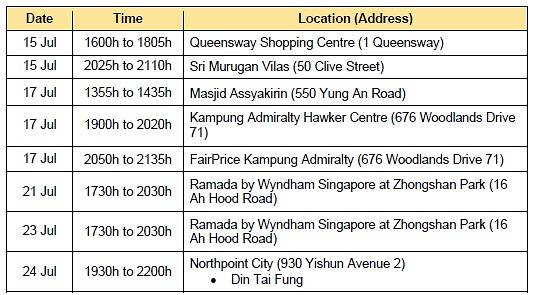
SINGAPORE: A mosque, a shopping centre and a hawker centre were among the new locations added on Monday (Jul 27) to the list of places visited by COVID-19 cases in the community during their infectious period.
The locations include Assyakirin Mosque in Jurong, Queensway Shopping Centre and Kampung Admiralty Hawker Centre, the Ministry of Health said in its daily update.
Also added to the list are Sri Murugan Vilas restaurant at Clive Street, the FairPrice outlet at Kampung Admiralty, Ramada by Wyndham Singapore at Zhongshan Park and the Din Tai Fung outlet at Northpoint City.
Ramada by Wyndham Singapore at Zhongshan Park, a hotel located on 16 Ah Hood Road, appeared twice on the list – on Jul 21 and 23. It was also listed on Saturday, having been visited by COVID-19 cases during their infectious period on Jul 12, Jul 14, Jul 18, Jul 19 and Jul 20.
The new locations are as follows:
Those identified as close contacts of confirmed COVID-19 cases would have been notified by MOH, said the ministry.
It added that people who were at these locations during the specified timings should monitor their health closely for 14 days from their date of visit.
“They should see a doctor promptly if they develop symptoms of acute respiratory infection (such as cough, sore throat and runny nose), as well as fever and loss of taste or smell, and inform the doctor of their exposure history,” said MOH.
“There is no need to avoid places where confirmed cases of COVID-19 have been.”
The National Environment Agency will also engage the management of affected premises to provide guidance on cleaning and disinfection.
Singapore reported 469 new COVID-19 infections on Monday, bringing the national total to 50,838.
This includes two community infections involving one Singaporean and one work pass holder.
There are also 15 new imported cases – two Singaporeans, seven work pass holders, four work permit holders and two dependant’s pass holders. They have been placed on stay-home notices upon arrival.
The remaining cases are work permit holders residing in dormitories.
SINGAPORE: In usual times, they would stand shoulder-to-shoulder at the Istana staircase, but on Monday evening (Jul 27), members of Singapore’s new Cabinet stood at arm’s length from each other on the front entrance steps to pose for a family photo.
This was part of the safe-distancing measures at the swearing-in ceremony, which saw 33 political office holders split into two groups as they took their oaths of allegiance to serve Singapore.
Proceedings at the Istana, including speeches by President Halimah Yacob and Prime Minister Lee Hsien Loong, were broadcast to Parliament House via video link.
Prime Minister Lee Hsien Loong receiving the instrument of appointment after he was sworn in as Prime Minister at the Istana on Jul 27, 2020. (Photo: Jeremy Long)
Ministers S Iswaran, Ng Eng Hen, Josephine Teo, Indranee Rajah and Maliki Osman taking their oaths of allegiance at the swearing-in ceremony on Jul 27, 2020. (Photo: Jeremy Long)
Senior Minister and Coordinating Minister for National Security Teo Chee Hean taking the oath of allegiance at as he was sworn in at Parliament House on Jul 27, 2020. (Photo: Hanidah Amin)
(From left) Ministers K Shanmugam, Chan Chun Sing, Vivian Balakrishnan and Gan Kim Yong take the oath at the swearing-in ceremony at the Parliament House on Jul 27, 2020. (Photo: Hanidah Amin)
President Halimah Yacob’s address, along with other proceedings at the Istana were broadcast to Parliament House, where half of the political office holders were sworn in on Jul 27, 2020 (Photo: Hanidah Amin)
Deputy Prime Minister and Finance Minister Heng Swee Keat after he signed the affirmation of allegiance at Parliament House on Jul 27, 2020. He is also Coordinating Minister for Economic Policies. (Photo: Hanidah Amin)
Trade and Industry Minister Chan Chun Sing holding the instrument of appointment after being sworn in at the Parliament House on Jul 27, 2020. (Photo: Hanidah Amin)
Manpower Minister Josephine Teo, Ministers in the Prime Minister’s Office Indranee Rajah and Maliki Osman being sworn in at the Istana on Jul 27, 2020. (Photo: Jeremy Long)
Ministers of State Sun Xueling, Gan Siow Huang and Tan Kiat How being sworn in at the Istana on Jul 27, 2020 (Photo: Jeremy Long)
New Minister of State for Home Affairs and for Sustainability and the Environment Desmond Tan after receiving the instrument of allegiance at the swearing-in ceremony at the Parliament House on Jul 27, 2020. (Photo: Hanidah Amin)
New Minister for Social and Family Development Masagos Zulkifli at the swearing-in ceremony at Parliament House on Jul 27, 2020. (Photo: Hanidah Amin)
Prime Minister Lee Hsien Loong reiterates that he will see Singapore through the COVID-19 crisis in a speech at the swearing-in ceremony at the Istana, on Jul 27, 2020. (Photo: Jeremy Long)
Newly sworn-in office holders rise for the national anthem which wrapped the swearing-in ceremony presided over by President Halimah Yacob at the Istana on Jul 27, 2020. (Photo: Jeremy Long)
Chief Justice Sundaresh Menon, Prime Minister Lee Hsien Loong, President Halimah Yacob and Senior Minister Tharman Shanmugaratnam pose for a photo after the Cabinet swearing-in ceremony at the Istana, on Jul 27, 2020. (Photo: Jeremy Long)
Prime Minister Lee Hsien Loong, President Halimah Yacob and Chief Justice Sundaresh Menon pose for a photo with the newly sworn-in Ministers of State at the Istana, on Jul 27, 2020. (Photo: -Jeremy Long)
Neither being heavily pregnant in her third trimester nor being in her post-pregnancy confinement stopped Claudia Tan Yanhua, a nurse from the National University Hospital (NUH), from responding to the call of duty.
On two separate occasions, the 31-year-old nurse went above and beyond to render assistance to two cardiac arrest cases even though she was off duty. Tan had signed up to be a community first responder.
Her display of selflessness was highlighted in a Singapore Civil Defence Force (SCDF) Facebook post on Wednesday (July 22).
Heavily pregnant during first incident
According to SCDF, Tan was getting ready for work in September 2019 when she was alerted of a cardiac arrest case in a condominium unit just two floors below her own home, through the myResponder app on her phone.
Despite being in her third trimester, Tan “dashed over to render aid” to her neighbour.
SINGAPORE – In an animated recounting of events, retired local actor-director Ng Aik Leong told the court that the Bangladeshi worker he is accused of voluntarily causing hurt had given him the “right” to “hammer him”.
Ng, 59, better known as Huang Yiliang, claimed trial on Monday (July 27) to a charge of voluntarily causing hurt to one Mr Jahidul at the Singapore Islamic Hub (SIH) at around 4.20pm on Dec 11, 2018.
He allegedly attacked Mr Jahidul, a Bangladeshi who worked for him, by using a metal scraper with a wooden handle – hitting him twice in the abdomen and once on the head.
This caused an injury to Mr Jahidul’s scalp, as well as an abrasion on his upper abdomen.
Ng represented himself, while Mr Jahidul was not present in court as he is currently being isolated at a foreign worker dormitory.
Deputy Public Prosecutor Chong Kee En called three witnesses to the stand on Monday – Mr Mohammad Akhtar Abdul Khalil, a security officer at SIH in Braddell Road, and two police officers who were first responders at the scene: Sergeant Wesley Teo, and Staff Sergeant Lim Rong Hoe.