Stay in the know with a recap of our top stories today.
1. Singaporean celebs share their mental health struggles
When celebrities come forward and share their stories with the public, it not only raises awareness, but also helps other sufferers know that they are not alone… » READ MORE
2. This easy hack makes washing your dabao plastic containers a breeze
Keyana is a model, dancer and R&B artist who is on her way to becoming a breakout star in Singapore. At only 17 years old she released her debut song and music video, Save It, earlier this year.
“The initial inspiration for the song came from a place of heartache, rooted from lost love,” she says over the phone to the Post .
“However, as I elaborated on the personal meaning of that pain, I came to realise that it had a more positive message – that when it comes to the end of any relationship, while it is normal to dwell on the pain, we actually tend to focus on self-improvement.”
Keyana is a poster child for all that Singapore promotes about its multiculturalism. Half-Chinese, half-Ghanaian, she was raised mainly by her mother and her family in Singapore, and has never truly had a chance to explore her Ghanaian ancestry.
“To be honest, I have never been immersed in any Ghanaian culture and only know a very bit of my Ghanaian heritage,” she says.
She is transparent about some of the microaggressions she faced growing up as an African-Singaporean in Singapore.
SINGAPORE: Local singer Mohamad Aliff Aziz pleaded guilty on Friday (Aug 7) to stealing from an Indonesian celebrity in her hotel room and to behaving in a disorderly manner outside Orchard Towers.
His lawyer Murali Pillai from Rajah & Tann was granted his request for a report to assess Aliff’s suitability for a mandatory treatment order.
A mandatory treatment order directs an offender with treatable psychiatric conditions to undergo psychiatric treatment in lieu of jail time.
The court heard that Aliff, a freelance singer based in Singapore and Malaysia, had met 32-year-old Indonesian Raja Yunika Perdhana Putri in her hotel room at Studio M Hotel on Jun 7 last year.
They met to chat and discuss how the woman could help further Aliff’s singing career in Indonesia.
After discussing the matter, the woman went to the second level of the hotel room at about 1am to rest, leaving her handbag on the first floor.
While she rested, Aliff opened her handbag and took about S$300 and 1,000,000 Indonesian rupiah (S$93.70) before leaving.
The woman woke up at about 3am and realised that the money was gone, but when she confronted Aliff, he denied taking it.
She filed a police report and Aliff subsequently admitted taking the money as he was in need of it. He changed the rupiah into Singapore dollars and spent the stolen money on food and transport.
BEHAVED IN DRUNKEN MANNER MONTHS LATER
A few months after this, Aliff was intoxicated near Orchard Towers, shouting loudly and gesticulating towards another person and drawing a crowd.
The police arrived at about 4am on Nov 10 last year under the link bridge at Orchard Towers and advised Aliff to calm down.
He eventually did so, but the police officers followed Aliff from a distance to ensure that he did not cause more trouble.
At 6.25am, Aliff began shouting loudly again and gesticulating towards passers-by, walking towards a taxi and kicking its bumper.
Mohamad Aliff Aziz pinned down after behaving in a disorderly manner. (Photos: Facebook/Awie Casper)
The police advised him again to calm down, but he did not. Instead, he continued his disorderly behaviour by shouting and making gestures.
He ran into an acquaintance and they began walking together, trailed by the police, but soon got into a scuffle and began pushing each other and shouting.
The police intervened and arrested Aliff.
He has since repaid the Indonesian celebrity the S$400 he stole from her.
His lawyer Mr Murali on Friday asked for a mandatory treatment order suitability report, and the prosecutor did not object to it but reserved their final position on sentence.
Aliff has one prior conviction of theft with common intention in 2014, for which he was fined S$2,000.
Mr Murali said Aliff was “labouring under a psychiatric condition” and regrets his actions. Referring to the charge of disorderly behaviour, he said there was no injury caused nor damage to property.
District Judge Victor Yeo called for the report and said Aliff is required to attend an assessment at the Institute of Mental Health, so that the report can be prepared by an appointed psychiatrist.
He will return to court for sentencing on Sep 14.
For theft, he can be jailed for up to seven years and fined. For behaving in a disorderly manner in a public place, he could be jailed for up to six months, fined up to S$2,000, or both.
SINGAPORE – Singapore has charged a director of Citadelle Corporate Services Pte Ltd for falsifying letters related to Wirecard, the collapsed German payments firm.
R Shanmugaratnam was charged with “wilfully and with intent to defraud” falsifying letters from Citadelle to Wirecard representing that it held money in escrow accounts, though the accounts did not hold such balances, according to charge sheets filed by Singapore authorities on July 3.
Shanmugaratnam had fraudulently said in March 2016 that 47 million euros (S$76 million), 66.4 million euros and 30 million euros were held by Citadelle in escrow accounts as of Dec 31, 2015, according to three charge sheets.
He also falsely said in March 2017 that there was a balance of 177.5 million euros in an escrow account on Dec 31, 2016, according to the fourth charge sheet.
Citadelle, a business administration company, is at the heart of an investigation in the Philippines that exposed fraudulent activity at Wirecard.
Reuters was not immediately able to reach Shanmugaratnam, a 54-year-old Singapore citizen, for comment.
SINGAPORE: In the midst of the financial crisis brought about by the COVID-19 pandemic, there is a silver lining for home owners.
Across the world, central banks like the United States’ Federal Reserve have slashed interest rates to boost economic growth, owing to uncertainty over the situation.
In Singapore, there has also been a decline in the Singapore Interbank Offered Rate (Sibor), which historically tracks US Fed rates.
This means banks here have reduced some of their home loan interest rates — good news for property owners with mortgages to pay, like Richard Yeong.
The 39-year-old banking professional bought his first home in 2016 and has since switched to a cheaper loan package twice, saving him thousands of dollars.
With global interest rates likely to stay low for longer, this is an ideal time for home owners to either reprice or refinance their mortgage. But which is better?
WATCH: Should I reprice or refinance my housing loan? Money hacks #3 (4:28)
The programme Money Mind has a guide to what they should consider before they switch their home loan packages. (Watch the episode here.)
1. WHAT’S THE DIFFERENCE BETWEEN REFINANCING AND REPRICING?
When you refinance, you are taking out a loan with another institution to pay off your existing loan. Typically, people do this to take advantage of lower interest rates and make savings on their home loan.
Repricing, on the other hand, allows home owners to switch to a more competitive loan package within the same institution.
Both aim to lower the monthly repayment amount and the interest rate charged for the loan.
2. REPRICING MAY BE A SAFER BET IF YOU HAVE CHANGED JOBS
If you choose to refinance, the new bank would assess your background, ask for your payslips and do a valuation of the property, said Stacked Homes co-founder Ryan Ong.
“There’s a chance, if your financial situation has changed, that you may not be able to get the same kind of loan that you had before — if you’re earning less, for example.”
With repricing, there is less paperwork, said Lena Teng, who leads the solutions and investment team at MoneyOwl, a financial adviser and fund management company.
“You don’t have to go through the whole hassle of a credit assessment … legal fees and valuation fee as well as any lock-in (penalty) fee that you might be liable for,” she cited.
“Do consider repricing first, before going straight into refinancing.”
3. CALCULATE YOUR REFINANCING COSTS FIRST
It is important that home owners compare the two options in terms of cost savings, taking into account the various fees such as the penalty for exiting a lock-in.
This lock-in period, usually two to three years, is the length of time during which a penalty is incurred if one pays off a loan in full.
Generally speaking, one should not break one’s lock-in period, as the penalty can be substantial.
For example, with a S$700,000 loan carrying an interest rate of 1.55 per cent for 25 years, the total interest payable by the end of the loan tenure is S$140,000.
If one reprices with the same institution at 1.35 per cent, the total interest payable drops to S$125,000.
If another institution is willing to offer an even lower interest rate of 1.25 per cent, the total interest payable drops further to $116,000.
A home owner refinancing within his lock-in period, however, would be subject to a repayment fee of 1.5 per cent of the outstanding loan. Including valuation and legal fees, the total refinancing cost would come to $13,000.
In this instance, the nett saving is S$11,000, while repricing offers a potential saving of S$15,000.
“Refinancing might cost you around S$2,500 to S$3,000 in conveyance fees, for example. That’s not including other costs,” said Ong. “Repricing might only cost around S$500 to S$800. There are also some people who have free repricing options.”
4. WHAT ABOUT FIXED RATES VERSUS FLOATING RATES?
There are generally two types of interest rate structures in the market: Fixed rates and floating rates. The former means the borrower locks in a certain interest rate for a fixed period.
A floating rate can be benchmarked against a reference rate that is pegged to transparent market indicators, like the three-month Sibor or the Swap Offer Rate.
It can also be pegged to the bank’s board rate or a fixed deposit rate, and this is “usually less transparent”, said Teng.
“(A floating rate) is subject to … greater volatility in the sense that when it changes every one or three months, your monthly repayments would also fluctuate accordingly,” she added.
According to the Association of Banks in Singapore (ABS), fixed rate loans are “a good option if interest rates are low when you take out a housing loan, or if you want to budget with certainty over the initial few years of your housing loan”.
As for floating rate loans, if the reference rate goes up or down, one’s housing loan interest rate and monthly instalment would vary accordingly, subject to the terms of the loan agreement, the ABS said in a consumer guide on its website.
5. THE SAVINGS CAN BE SUBSTANTIAL
When Yeong refinanced his housing loan in 2018, he managed to secure a floating rate of 1.65 per cent. But it spiked to 2.18 per cent last year.
Before the year end, he refinanced his loan again, at a fixed rate of 1.89 per cent for the first year, resulting in “quite a significant” S$400 to S$500 saving in monthly mortgage fees, he said.
“The extra savings definitely go a long way (towards defraying) the cost of living … house maintenance as well as — given the COVID situation has (us) working from home — higher utility bills,” he added.
Maybank Singapore head of consumer finance Alan Yet noted that the Singapore dollar three-month Sibor dropped from 2 per cent in June last year to 0.54 per cent this June.
“The gap is huge. By refinancing (your home loan) today, you’re likely to save about 60 to 70 basis points, as compared to one year ago,” he said.
“Seventy basis points will translate into S$7,000 per year from a (S$1 million) loan outstanding … That’s very substantial.”
Whether one chooses to reprice or refinance, however, the experts advise doing one’s sums before committing to a new mortgage.
SINGAPORE: Singapore and Malaysia have finalised arrangements for cross-border travel via the Reciprocal Green Lane (RGL) and Periodic Commuting Arrangement (PCA), and both schemes will be open for applications next Monday (Aug 10).
The PCA will allow Singapore and Malaysia citizens or Permanent Residents (PRs) who hold long-term immigration passes for business and work purposes in the other country to enter that country for work.
The other cross-border travel scheme – the RGL – is for Malaysia and Singapore residents keen to do shorter-term travel of up to 14 days, for essential business and official purposes.
For those who need to travel for work purposes, we have compiled a list of frequently asked questions based on information released by the authorities so far.
Q: How can Malaysian citizens/ Permanent Residents holding a Singapore work permit apply for PCA and when can they return home?
A: Under the PCA, Malaysia Citizens and PRs with valid Singapore work passes should remain in Singapore for at least 90 days before returning to Malaysia for home leave. Those eligible to apply will need to have the following passes – Employment Pass, EntrePass, Personalised Employment Pass, S Pass and Work Permit. The pass should be valid for at least 15 days from the date of entry into Singapore.
The entry and exit point between Singapore and Malaysia must be via the land crossings – Woodlands Checkpoint or Tuas Checkpoint.
When they enter Singapore, travellers under this scheme are required to serve a Stay-Home Notice (SHN) of at least 7 days and undertake a COVID-19 swab test. The employee must remain in the declared SHN accommodation for at least 7 days from the date of entry into Singapore and test negative for COVID-19, whichever is later. Once the employee has served the SHN and tests negative for COVID-19, the employee can commence work.
Authorities conducting temperature screening at Tuas checkpoint on Jan 24, 2020. (Photo: TODAY/Najeer Yusof)
Singapore-based companies that wish to apply for the PCA for their employees may submit their applications from Aug 10 at 12pm onwards, through CorpPass.
Employers may choose a date of entry within a 60-day window of their application. All applications will be processed on a first-come, first-served basis. Employers must submit their applications at least 7 days before their employees enter Singapore.
Q: For Malaysia citizens/PRs who have entered Singapore via PCA, what are some of the health protocols involved?
A: After clearing immigration, the employees will have to take their personal transport. These include motorbikes, private buses that only ferry Malaysian passengers who are serving SHN, or taxis and private hire cars directly from the immigration checkpoint to the declared SHN accommodation. They should not stop at any other destination along the journey.
If they are being driven, the employees should indicate clearly to the driver that they are serving an SHN. The employee should not take public transport or flag down a taxi while serving the SHN.
A healthcare worker dressed in personal protective equipment collects a nasal swab sample for COVID-19 in Singapore on Apr 27, 2020. (Photo: AFP/Roslan Rahman)
Those under SHN will only be permitted to leave their accommodation to head to the designated testing facility for the COVID-19 swab test on the assigned date and appointment time of swabbing, with similar transportation restrictions.
The employee or the employer will bear the costs of the employee’s accommodation for the SHN and post-arrival COVID-19 swab test in Singapore, subject to prevailing Ministry of Manpower requirements.
Q: For Singapore citizens/PRs holding a Malaysia work permit, how different is the procedure to obtain PCA?
A: The minimum duration of stay as well as the entry and exit points are the same.
Those eligible to apply for a PCA must hold a long term visa for business or work purposes in Malaysia.
Employers can apply for PCA for their employees to enter Malaysia via the MyTravelPass online application at least 10 working days before the date of travel. Employers also need to provide a letter of appointment and copy of passport during the application.
Meanwhile, as part of health protocols outlined by Malaysia’s Immigration Department, employees will be subject to a modified Home Surveillance Order (HSO) for 7 days.
They must also undertake a COVID-19 test via antibody test kits at the end of HSO and will be released from HSO if tested negative. Travellers must also subscribe to the MySejahtera application, developed by the Malaysia government to manage the COVID-19 outbreak and conduct contact tracing across the country.
These travellers may also apply for a waiver for their SHN during the duration of their short-term home leave in Singapore, after spending at least 90 days working in Malaysia.
According to Singapore’s Immigration and Checkpoints Authority (ICA), the intent of the Malaysia-issued PCA passes is to allow Singapore Citizens and PRs to re-enter Malaysia after their home leave, to continue with their business or work. In lieu of SHN, the returnee will undergo a COVID-19 swab test upon arrival at Woodlands Checkpoint or Tuas Checkpoint in Singapore, at their own cost.
Q: How can a Singapore resident apply for RGL to visit Malaysia?
A: All nationalities who are legal residents in Singapore and need to enter Malaysia for essential business travel and official purposes can apply for RGL. This will be approved on a single-entry basis.
Unlike the PCA where employees may only travel via the land crossings, individuals entering the other country via RGL may also travel via air. Hence, Singapore residents may also fly to Malaysia via direct flights and enter through Kuala Lumpur International Airport (KLIA), KLIA2 and Penang International Airport.
The maximum period of stay is 14 days. Travellers are required to submit and adhere to a controlled itinerary throughout the duration of their visit.
Before departing Singapore for Malaysia, the traveller’s sponsoring enterprise or government agency in Malaysia will apply on behalf of the applicant. This should be done at least 10 days before the date of travel. The sponsor would also need to provide a traveller certificate to certify that traveller has tested negative for COVID-19 via a swab test taken within 72 hours before departure.
Health workers collect samples for COVID-19 testing in Gombak on the outskirts of Kuala Lumpur on Apr 22, 2020. (Photo: AFP/Mohd Rasfan)
Documents needed for online application are a copy of the traveller’s passport, letter of invitation, an itinerary for the duration of stay, proof of hotel accommodation as well as health and travel history declaration.
Upon arrival in Malaysia, the traveller will be transferred to accommodation via transport provided by the sponsor or government agency. The traveller is also required to subscribe to the MySejahtera mobile app, and undertake a COVID-19 swab test at the point of entry or 24 hours of arriving in Malaysia.
If tested positive, the traveller will be accorded the necessary medical treatment by the Malaysia government. If tested negative, the traveller may proceed with the controlled itinerary.
Q: Is the process any different for Malaysia residents applying for RGL to enter Singapore?
A: All legal residents in Malaysia, who need to make single-entry, short-term essential travel to Singapore for business and official purposes, are eligible to apply for the RGL.
Similarly, travellers have to take a swab test within 72 hours of departure.
Residents in Malaysia seeking to travel to Singapore for short-term essential business or official travel via the RGL must be hosted by a company or a government agency in Singapore.
The host company can self-sponsor and file the application for a SafeTravel Pass on behalf of the traveller either directly or through a sponsoring government agency.
When the SafeTravel Pass application is approved, an approval letter will be issued to the sponsoring company or government agency by email within three working days.
With this letter, an approved applicant who is a visa-required passport holder may then apply for a visa for travel to Singapore through the usual channels at least four working days before departure.
A health worker takes a COVID-19 nasal swab test sample from an essential worker in Singapore, Jun 10, 2020. (Photo: AFP/Roslan Rahman)
If the applicant already has an existing valid visa, the visa suspension will be lifted when the SafeTravel Pass is approved, and the traveller need not apply for a new visa.
For travellers entering Singapore by air, they are encouraged to pre-register and pre-pay for the COVID-19 swab test prior to entry into Singapore. Preregistration and pre-payment can be made at the online portal and travellers should expect to pay around S$300 for the test upon arrival at the airport.
For travellers entering Singapore by land, travellers will make payment at the testing stations located at Woodlands and Tuas Checkpoint. Only card payments or PayPal are accepted. Travellers should expect to pay around S$200 for the test upon arrival at the land checkpoints.
Q: Is travel for study or leisure purposes permitted via PCA or RGL?
A: No, the PCA and RGL are not to facilitate movement for students or tourists across the border. SafeTravel Passes are only issued to travellers making short-term essential business and official travel. These passes are not applicable for tourists.
Travellers seeking to enter Singapore for study may wish to visit the ICA website.
Meanwhile, those seeking to enter Malaysia for purposes other than essential business and official travel should contact the Malaysian High Commission in Singapore for further details.
Q: What about emergency travel for compassionate reasons, to attend a funeral or visit a sick loved one?
Singapore’s Minister for Foreign Affairs Vivian Balakrishnan said on Jul 26 that both countries were working on terms to allow people to travel between Singapore and Malaysia on compassionate reasons such as to visit their loved ones who are sick or to attend funerals.
He said that this category of people moving across borders is on a “much smaller scale” and authorities are working out arrangements to facilitate this. However, no details have been announced yet.
TEL AVIV/SINGAPORE – Beware, Singaporeans standing too close, automated drones might be keeping an eye on you from above.
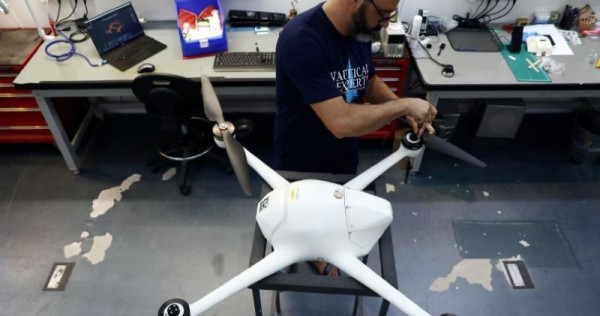
Singapore’s police have been trialling two pilotless drones developed by Israel’s Airobotics to help enforce social distancing measures aimed at containing the spread of Covid-19.
The small machines weigh 10 kg (22 pounds) and are programmed to track anomalies such as gatherings and stream footage to the police.
The three-and-a-half-month trial, over an industrial estate in the west of the city, is the first time automated commercial drones have been approved to fly over a major metropolis, according to Airobotics.
“Specifically for Covid, what we are doing is helping them maintain normal operations,” CEO Ran Krauss told Reuters. “The pandemic created a situation where it might be difficult for police to maintain operations.”
Singapore government’s Home Team Science & Technology Agency (HTX) said it had trialled the drones with police.
You say “fireworks”, Singaporeans will confirm whip out their mobile phones and ask “where?!”. So it’s not surprising that “NDP fireworks” will get an even more kan cheong response.
But wait! Knowing Singaporeans, we will FOMO and call our father, mother, sister, brother, Ah Ma, Ah Kong, helper, dog, hamster and 64 relatives to catch the annual pyrotechnic display together – especially since it’ll be brought out of the usual NDP arena and launched at 10 locations across Singapore this year.
But please don’t. Cuz #covid.
Here are the 10 locations from which the fireworks will be launched at NDP2020 (doesn’t this remind you of 4D results?):
• Ang Mo Kio
• Bishan
• Buona Vista
• Lakeside Garden at Jurong Lake Gardens
• Marina Reservoir
• Punggol
• Sembawang
• Tampines
• Woodlands
• Yew Tee
But precisely where in the towns, the Committee will not reveal – a wise move, we feel, to prevent the public from gathering in large groups in one location.
SINGAPORE – The Health Sciences Authority (HSA) has warned people not to buy or consume three products that are sold online, two of which had been banned before but resurfaced recently with new packaging.
The dangerous products are powdered drinks Coco Curv, ChocoFit and candy Hamer Candy, it said on Thursday (Aug 6).
Both Coco Curv and ChocoFit contain sibutramine, a prescription drug to aid weight loss that was banned in Singapore in 2010 for increasing heart attack and stroke risks.
The third is Hamer Candy, which contains nortadalafil, a substance chemically related to tadalafil, a prescription erectile dysfunction drug.
Inappropriate use of tadalafil will raise a person’s risk of getting a stroke, heart attack, low blood pressure and painful and exceedingly long erections.
The three products were sold on local e-commerce platforms such as Shopee and Qoo10, as well as social media platforms such as Facebook and Instagram.
The HSA said it has issued warnings to the sellers and suppliers to stop selling them. It has also directed the respective website administrators to take down the affected listings.
A Montessori pre-school in Clementi is being investigated over allegations of child abuse.
The allegations surfaced online last month after a person claiming to be a teacher at the centre wrote an anonymous post about a colleague, identified only as V, who force-fed a child who cried so hard that she vomited.
“To our horror, teacher V made (the child) eat her vomit,” said the writer, who also accused V of taping the mouths of noisy children.
The allegations were posted on confession site Storience, which encourages users to share stories, experiences and secrets with a guarantee of absolute privacy.
In a Facebook post last Wednesday, Storience said it had removed posts relating to the alleged incident because the writer had requested for them to be taken down.
The writer also claimed that when the pre-school owner was informed of both incidents, V was “let off with just verbal warnings on the basis that she promised to change”.
Responding to queries from The New Paper, a spokesman for the Early Childhood Development Agency (ECDA) said it took a serious view of any case of child mismanagement.