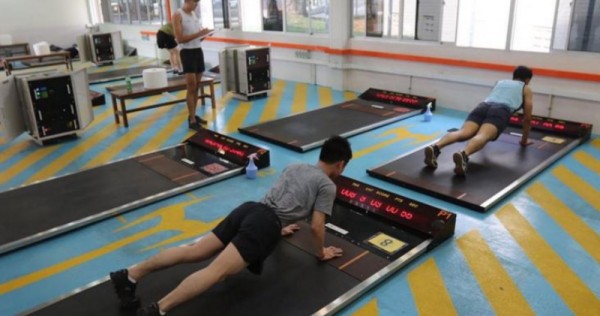
SINGAPORE – Individual physical proficiency tests (IPPT) and in-camp training (ICT) for operationally-ready national servicemen (NSmen) will resume progressively from October, said the Ministry of Defence (Mindef) on Thursday (Sept 3).
Singapore Armed Forces NSmen whose IPPT window closes on or before Feb 7, 2021 will be granted a one-time waiver.
As part of safe management measures, NSmen returning for unit-level ICTs will be tested for Covid-19.
Mindef provided these updates in a Facebook post and said the testing of NSmen would help “prevent, detect and contain Covid-19 infections”.
From Oct 1, Fitness Conditioning Centres at various camps will also reopen for IPPT.
Mindef said the tests will be conducted “at a reduced capacity and group size, and in accordance with safe management measures to safeguard the health and well-being of NSmen”.
It explained that the one-time waiver of IPPT requirements for NSmen whose IPPT window closes on or before Feb 7, 2021 was due to the earlier closure of fitness centres and the gradual pace of reopening.
Those exempted will be informed individually via SMS and a letter this month.
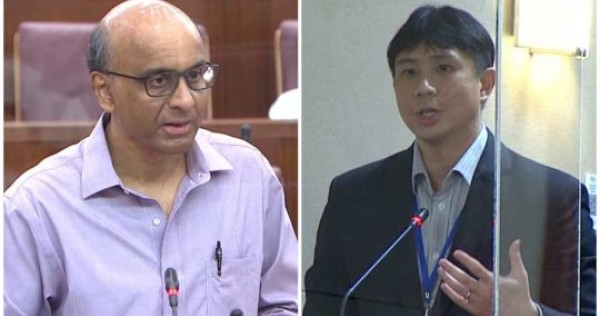
SINGAPORE – No one should assume he has a monopoly over compassion, said Senior Minister Tharman Shanmugaratnam as he responded to Workers’ Party (WP) MP Jamus Lim’s arguments on minimum wage and policymaking.
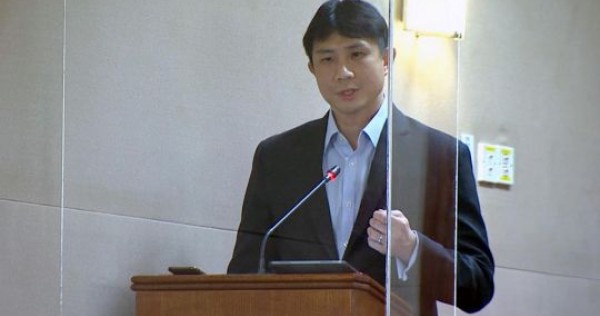
The lengthy debate between Associate Professor Lim and seven People’s Action Party MPs was sparked by the Sengkang GRC MP’s maiden speech, in which he called for greater compassion and thoughtfulness in policymaking.
Singapore should “no longer privilege efficiency at the sheer expense of equity”, said Prof Lim in Parliament.
“Because we are no longer a third-world nation, we cannot continue to operate as if we are blind to the consequences that tough-nosed policies carry for our people,” he added.
Prof Lim contended that the issue with the Government’s policymaking today that has let many fall through the cracks is a lack of compassion. “I humbly suggest that the root of these challenges is insufficient compassion in our policymaking process,” he said.
Rising to join the debate, Mr Tharman said several of his fellow PAP MPs had made an impression on him with their speeches over the past few days.
SINGAPORE: A debate over minimum wage and policymaking took place in Parliament on Thursday (Sep 3), with a speech by Workers’ Party (WP) Member of Parliament Jamus Lim challenged by six MPs from the ruling People’s Action Party (PAP), including Senior Minister Tharman Shanmugaratnam.
In his response to the President’s Address, Dr Lim focused on the need for more compassionate policymaking and recommended a “simple, across-the board” minimum wage as one plausible policy. The minimum wage was also one of the recommendations that the opposition party had made in its manifesto for the recent General Election.
Following his speech, a lengthy to-and-fro ensued between Dr Lim and the PAP MPs, who challenged him on the efficacy of a minimum wage, as well as the timing and appropriate figure.
In his responses, Dr Lim acknowledged that rolling out a minimum wage in times of an economic crisis “may not be ideal”. He also said that he does not know what an appropriate minimum wage should be and proposed that an independent panel should study the issue.
In response to a question about whether he had proposals to deal with youth unemployment, he said he did not have a specific policy in mind.
MORE COMPASSION IN POLICYMAKING: JAMUS LIM
In his speech, Dr Lim, who is an economics professor, said the country’s existing approach to policymaking, which leans towards efficiency instead of equity, “can benefit from a greater injection of compassion and thoughtfulness”.
The current way of designing policies may have worked well, bringing Singapore from a third-world country to the first-world status, but he said it is time for a change given how “the gains from this progress have not been equally shared across society”.
The opposition MP said compassionate policymaking involves being more cognisant of how the policies play out “not just on the aggregate, but also how they impact different groups, especially those at the margins of society”.
Marginal changes, which are made so as not to break a system that has worked well, do little to “right the boat”, he added.
Dr Lim said policies such as the social assistance scheme ComCare have “made substantive steps towards bolstering (a) sense of opportunity and care for others in (the) society”, and show that the Government is “capable of injecting compassion” into policies.
He argued that “much more” can be done. This includes implementing “a simple across-the-board” minimum wage and an official poverty line closely linked to ComCare, among others.
In his speech, Dr Lim noted that Singapore has its own version of a minimum wage – the progressive wage model, which refers to “wage ladders” first rolled out in 2015 to help raise the salaries of low-wage workers through skills upgrading and improvements to productivity.
“Yet until recently, we had deemed it unwise to make it universal and still dress the policy with so many additional conditions that employers use to retain workers on the lowest rung of wages,” he said.
Although the Government has warned that a national minimum wage could lead to higher costs and lost jobs, there is evidence to show that a majority of Singaporeans are willing to pay more for essential services and that the “employment impact of a minimum wage is likely to be very limited”, he added.
Dr Lim acknowledged that some may think it is not the right time to pursue “such soft policies” amid a pandemic-induced crisis, but said he would argue to the contrary.
“Let us commit to the principles of compassionate policymaking now and chart out plans in the moment. When the crisis has blown over, we will be prepared to implement the policies we commit to today.”
NO ONE HAS A MONOPOLY OVER COMPASSION: THARMAN
The nearly 40-minute-long debate prompted a rare intervention from Mr Tharman.
“None of us have a monopoly over compassion and I say this is not to discredit anyone. In particular, I really respect where member Jamus Lim is coming from intellectually, emotionally and so on,” he said, adding that speeches from MPs in recent days, including some from his own party, have made an impression on him.
“Not just for the very forceful proposals they were making, often going beyond what the Government is doing, but the emotional force of their conviction.
“I’m not directing this at anyone in particular – none of us should assume that we have a monopoly over compassion,” he added.
Senior Minister Tharman Shanmugaratnam speaking in Parliament on Sep 3, 2020.
Mr Tharman went on to say: “Here’s a bit of advice – try to avoid strawman arguments, like saying that the Government is only interested in efficiency, and not equity. That’s frankly laughable.”
He added that raising living standards for the poor is a “complicated matter”, with one issue being how to achieve this without losing the wage earner’s ability to have the pride of a job and earn a wage.
The Government is doing so through many policies such as the progressive wage model, and it acknowledges that more has to be done. Many speeches delivered in Parliament over the last few days echoed the same sentiment, he added.
“We are frankly not very far away from each other in that objective … There is a consensus, let me put it that way.
“That should be our objective, but just try to avoid strawman arguments and pretending that you have a … monopoly of compassion,” said Mr Tharman.
On the progressive wage model, the Senior Minister said the Government believes in the importance of raising the wages of its lowest-paid workers.
“We really believe this. We’ve achieved significant progress in the last 10 years, and in the last five years, and we think we should go further.”
He also said he would not “exaggerate the differences” between the progressive wage model and the minimum wage model, noting that the former is a “minimum wage plus” with a sectoral approach.
To that, Dr Lim responded: “I regret if it came across that I was suggesting that only I or the party, or any individual has a monopoly over compassion.
“In fact, that was explicitly why I did cite cases where I felt that existing policy demonstrated oodles of compassion. I even cited other members who are not from our party that have also talked about compassion.”
That said, Dr Lim said he did not think he was setting out a strawman argument.
“I’m not suggesting that every policy that is currently in place is only geared to efficiency. I’m not suggesting that every policy that I have laid out in my speech and elsewhere, is only geared to equity.”
Instead, it is a continuum, he added. “And I am arguing that we can move more in the direction of favoring equity over efficiency, and that was the entire point of the argument.”
WHEN TO ROLL OUT MINIMUM WAGE
Before Mr Tharman, Minister of State for Manpower and Education Gan Siow Huang was among the PAP MPs to seek clarifications.
She agreed that policymakers need to demonstrate compassion while drawing up policies, and said this is actually being done by the Government, given how some policies are “very complicated” because there is no one-size fits all approach.
But she disagreed with the opposition MP that a minimum wage can be rolled out with minimal impact on unemployment. Ms Gan argued that especially in a recession, such a policy carries a “very real risk” of causing many workers to go from “low wage … to no wage”.
Dr Lim replied: “I would argue that we should be able to think about implementing policies like a minimum wage in a time of crisis, because this concentrates the mind.”
He added that there is “no doubt that at this very moment, such a policy may not be ideal”. “But let us come together and agree that this is a principle that we want to roll out so that when we set these plans in place after the storm has passed, we can easily bring them to pass,” he said.
Following up on that, MacPherson SMC MP Tin Pei Ling asked if Dr Lim recognises that implementing a minimum wage in the current climate will have unintended adverse economic consequences. She also wanted to know if the minimum wage should be a policy that is withdrawn during an economic crisis and re-introduced during better times.
“I did say that this is not an ideal time but I do not know if we were to rule out the minimum wage, whether this would result in actual adverse consequences so it is a necessary but not sufficient condition,” said the WP MP.
Responding to Ms Tin’s second question, Dr Lin said that is not the case and he would argue “the complete opposite”, as the point of a minimum wage is “to provide a social safety net”. To remove the policy during a crisis will “pull the rugs out from under those workers that rely on the minimum wage in times of crisis”, he added.
WHAT SHOULD A MINIMUM WAGE BE?
Sembawang GRC MP Vikram Nair asked what level of minimum wage Dr Lim would propose, and if there are other countries with a minimum wage and have a lower unemployment rate than Singapore.
Senior Minister of State for Manpower Zaqy Mohamad had a similar question on the WP MP’s definition of a minimum wage.
In his clarification, Mr Zaqy said that work on the progressive wage model has been under way since 2012, and is “not a new concept where … it’s thought of just after elections”. He added that the progressive wage model is “differentiated across sectors – a fundamental difference compared with a national minimum wage – and takes into account “what is bearable by every sector”. It also helps to raise productivity among workers.
In his reply to Mr Nair, Dr Lim said he does not know what an appropriate minimum wage should be, which is “exactly why what we need is a national commission to understand (and) study this”.
He proposed that an independent panel, consisting of university professors and tripartite representatives, be formed to study this issue “year after year after the minimum wage policy is rolled out because that will allow us to continually evaluate whether the level of the minimum wage is actually appropriate”.
Dr Lim went on to say that instead of comparing raw unemployment rates across countries, his argument that a minimum wage policy has minimal impact on unemployment is based on “reams and reams of studies … that have repeatedly shown that in almost every instance, the unemployment impact is either very minimal or statistically insignificant”.
As for Mr Zaqy’s question, he replied: “As long as you have the possibility that another sector has a minimum wage that is different from the first, you run the risk that that there is going to be substitution between one sector versus another.
“You want to shut out this possibility of substituting between workers in one sector and another such that employers end up gaming the system in that fashion.”
Some other questions raised by the PAP MPs, who included Potong Pasir MP Sitoh Yih Pin, ranged from how Dr Lim would suggest improving youth employment in Singapore, the feasibility of being compassionate without considering how to pay for these policies, as well as the use of the Government’s reserves.
On youth employment, Ms Tin asked Dr Lim if he has specific proposals to improve youth employment in Singapore.
He replied that this is a “tricky” issue as youth unemployment tends to have a “very cyclical” nature. This as youths may delay their entry into the labour force to pursue further studies in times of crisis.
“So you actually see an increase in unemployment in a time such as this when we’re in crisis, but it’s actually not a bad thing. You want these people to actually go in and build up their human capital,” Dr Lim said, when he was interrupted by Senior Minister of State for Health Janil Puthucheary.
“Mr Jamus Lim was asked a question. While I appreciate his erudition in economics and I’m learning quite a lot from him, he hasn’t answered Ms Tin’s question,” said Dr Puthucheary, adding that Ms Tin had asked if Dr Lim had a proposal and “not the principles under which employment changes or doesn’t change”.
To that, the opposition MP responded that he was laying out an “important context”.
“We do not want to rule out … specific proposals to address youth unemployment in a time when we are in a recession because we are not sure if the unemployment is justified or not. That’s the reason for me stating that context.”
He added that he did “not have a specific policy in mind” as he had not thought about the matter.
In between, fellow WP MP Leon Perera jumped into the debate by asking a series of questions, which included what the PAP MPs would say to workers earning below S$1,300 a month – the amount that the Government estimates to be what is needed to meet basic needs.
SINGAPORE – Workers’ Party (WP) MP Jamus Lim (Sengkang GRC) made several suggestions on minimum wage and compassionate policymaking in his maiden speech in Parliament on Thursday (Sept 3), drawing a string of questions from People’s Action Party (PAP) MPs, including Senior Minister Tharman Shanmugaratnam (Jurong GRC).
During the debate on the President’s Address, Associate Professor Lim argued, among other things, that many problems faced by segments of the population such as low-wage workers, the elderly and single mothers, could be attributed to “insufficient compassion in our policymaking process”.
While he acknowledged that Singapore has a form of minimum wage in the Progressive Wage Model (PWM), he noted that it was not universal and suggested Singapore could implement “a simple, across-the-board minimum wage”.
The employment impact of such a minimum wage would “likely be very limited”, he added.
SINGAPORE: People’s Action Party (PAP) Members of Parliament (MP) on Thursday (Sep 3) called on the Government to strengthen social safety nets by “socialising” pre-school education and increasing support for vulnerable families.
The MPs were speaking on the fourth day of the debate on the President’s Address. President Halimah Yacob said in her address last week that the benefits of pursuing economic growth should be shared “widely” with all citizens.
Sembawang GRC MP Vikram Nair speaking in Parliament on Sep 3, 2020.
MP for Sembawang GRC Vikram Nair said the Government should consider “socialising” pre-school fees to level the starting points for children’s education.
“Pre-school is not compulsory. It has been made significantly more affordable but it is still more expensive than primary school,” he said, pointing out that parents sometimes have a “perception” that some pre-schools are significantly better than others.
“I acknowledge that the socialising of pre-school to try and make it equally accessible, free and potentially even compulsory, will (cost) significantly more than primary school. So this is a big-ticket item and this is something that, I think, we should focus on if the budget allows it.”
Ms Sun Xueling, Minister of State for Education as well as Social and Family Development, said the Government should examine how it can further enable pre-school participation, as a child’s formative years play a critical role in their development.
“While the vast majority of each cohort has attended pre-school prior to Primary 1, there is nonetheless a group of children whose attendance is irregular in pre-school and a few who have not even enrolled in childcare or pre-school,” she said.
Ms Sun pointed out that since January, many families are now paying less for pre-school because of enhanced subsidies, with the share of Government-supported pre-schools set to increase from more than 50 per cent of the market to 80 per cent by 2025.
“The Government is also investing significantly in the software aspects of teacher recruitment, progression and professional development,” she added.
“Taken together, this sends a strong signal that the Government prioritises the early learning years and wants to give every child a good starting point from which they can chart their future paths.”
Chua Chu Kang GRC MP Zhulkarnain Abdul Rahim speaking in Parliament on Sep 3, 2020.
Besides financial help, Chua Chu Kang GRC MP Zhulkarnain Abdul Rahim said vulnerable families should also get more help to ease their “mental and emotional strain”.
“The family or the building block is very different now than what it was 30 years ago,” he said in his first speech in Parliament.
“Blended families, unwed mothers, single working adults taking care of their elderly parents all make up our building blocks of society. We must not leave anyone behind, especially the vulnerable.”
Mr Zhulkarnain urged the Government to make it easier for the discreet reporting of domestic violence involving elderly abuse and immigrant wives.
The Government should also look at how it can attract and retain temporary foster caregiverswho can care for vulnerable children, such as those whose parents are incarcerated.
“The broader point I am making is this – we need to see beyond the lens of the beneficiary or recipient,” he said. “We need to look at it from the perspective of the provider also.”
Ang Mo Kio GRC MP Nadia Ahmad Samdin speaking in Parliament on Sep 3, 2020.
Fellow new MP Nadia Ahmad Samdin asked if the Government could consider introducing a fixed rental fee for a longer period of time to allow vulnerable families to build up their savings for “rainier days”. Rental fees are currently pegged to household income.
Ms Nadia spoke about a 20-year-old woman who lives in a rental flat with her husband and two children. Her husband is usually not at home as he is serving National Service.
“She shared with me her hopes of finding a job, but worried there would be no caregiver for her children as her husband’s vocation did not allow him to return home in the evenings, and that the flat’s monthly rental fees would be adjusted upwards when she became a new income earner in the house,” said Ms Nadia, who is MP for Ang Mo Kio GRC.
Ms Nadia said the affordability of rental flats is important as some vulnerable youths, upon reaching the age of 19, are no longer able to stay in protective homes under the Children and Young Persons Act but do not have families to reintegrate with.
“The sudden shift to independent living without a routine, while having to find work to pay for accommodation, can be overwhelming, and these youths sometimes are not able to reach their full potential,” she added.
“SOCIETY OF OPPORTUNITIES”
Minister of State for Home Affairs Desmond Tan acknowledged that there are families out there who need help.
“I am most concerned about young children and the opportunities that they may lose if nothing is done,” said the MP for Pasir Ris-Punggol GRC.
Mr Tan added that he would like to see a “society of opportunities for all”, noting that the economic impact from COVID-19 has hit lower-income households much harder.
“While there are various Government schemes to support individuals and families along the life journeys, there is an important role for the community and individuals to reach out to fellow Singaporeans,” he said.
Mr Tan gave the example of a 24-year-old grassroots leader named Hamid, whom he said was part of a group of volunteers who tutored children living in rental blocks and helped deliver special care packs during the “circuit breaker” period, on top of regular Zoom sessions.
“I urge members of this House, many of whom have spoken passionately about this topic, to rally our community to step up and do something for our children who may not have a good start to ensure they receive at least a good education,” he added.
“Together, let us ensure that there will always be social mobility in our society and this remains deeply anchored in our value system.”
Ever wonder where food offerings go after seventh lunar month prayers?
While most of them are thrown away by cleaners in the morning, a group of people have gone around neighbourhoods late at night, salvaging the fruits left behind by devotees.
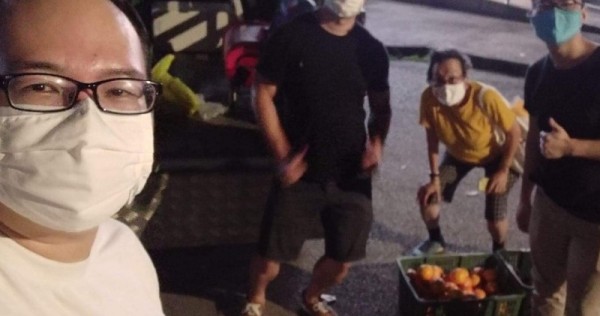
Daniel Tay, 41, is a freegan in Singapore who recently organised and led a small group of people on fruit hunts in Bishan and Ang Mo Kio.
Freegans reject consumerism and seek to help the environment by reducing waste. One way of doing so is to collect edible food or usable items that have been discarded.
Tay wrote in a Facebook post today (Sept 3) that they collected more than 200 fruits over the past two nights, the majority of them oranges. Other fruits included pineapples, apples, bananas, rambutans, and langsat.
But before you assume that the freegans just grabbed the offerings off the side of footpaths, Tay told 8World that he consulted a Taoist priest before starting on the activity.
She thought she was “fulfilling obligations” by reporting her sexual assault to her employer, but an East Asian Institute (EAI) employee claimed it has only led to bullying and attempts at covering up the incident.
EAI, a think tank under the National University of Singapore (NUS), is looking into the employee’s allegation that she faced retaliation for reporting its former director for sexual assault, it said in a statement to the media yesterday (Sept 2).
Prof Zheng Yongnian, the person accused of sexual assault, has also resigned from EAI and NUS, and is on leave until his contract expires later this month, EAI added.
The sexual assault and bullying accusations first came to light when a Twitter user, who identified herself as Charlotte, posted a string of tweets in August relating her predicament.
I am Charlotte, current staff at East Asian Institute, National University of Singapore. I was sexually harassed by former Director Zheng Yongnian in 2018. I reported to the police and Zheng was administrated with a warning for offence of Outrage of Modesty after investigation.
SINGAPORE – Individual physical proficiency tests (IPPT) and in-camp training (ICT) for operationally-ready national servicemen (NSmen) will resume progressively from October, said the Ministry of Defence (Mindef) on Thursday (Sept 3).
Singapore Armed Forces NSmen whose IPPT window closes on or before Feb 7, 2021 will be granted a one-time waiver.
As part of safe management measures, NSmen returning for unit-level ICTs will be tested for Covid-19.
Mindef provided these updates in a Facebook post and said the testing of NSmen would help “prevent, detect and contain Covid-19 infections”.
From Oct 1, Fitness Conditioning Centres at various camps will also reopen for IPPT.
Mindef said the tests will be conducted “at a reduced capacity and group size, and in accordance with safe management measures to safeguard the health and well-being of NSmen”.
It explained that the one-time waiver of IPPT requirements for NSmen whose IPPT window closes on or before Feb 7, 2021 was due to the earlier closure of fitness centres and the gradual pace of reopening.
Those exempted will be informed individually via SMS and a letter this month.
SINGAPORE – A youth who flung a metal mug at his family’s domestic helper, fracturing her nose, was sentenced on Tuesday (Sept 1) to at least six months’ reformative training.
This means, Ng Jia Sheng, now 20, will be detained at a centre and follow a strict regimen that includes foot drills and counselling.
The Singaporean pleaded guilty in June to using criminal force on Ms Estabillo Soledad Agustin in 2018, as well as causing grievous hurt by performing a rash act.
He also admitted to using insulting words on the 41-year-old Filipina that caused her alarm, which is an offence under the Protection from Harassment Act.
Ms Agustin has since returned to the Philippines.
Court documents said Ng and Ms Agustin were involved in a dispute at his family home in Greenwood Avenue near Dunearn Road on June 7, 2018.
Ng had asked the maid to turn on an air-conditioner and became angry when she replied in “an irritated manner”.
The two subsequently got into an argument after Ms Agustin switched it on and threw the controller on a table.
And certainly for Singaporeans, nothing gets in the way of our love for food, even if it’s food items from across the Causeway.
42-year-old Brenda Tan is proof of that. Thanks to Covid-19 and the borders between Singapore and Malaysia shut for leisure travel for the rest of the year, Tan looked into other means of obtaining the banana cake from Johor Bahru’s Hiap Joo that is well-loved in her family.