SINGAPORE: The 40-year-old Chong Pang City neighbourhood centre will get a rejuvenation in the form of a new integrated development with a community club, market and hawker centre, and facilities such as swimming pools and shops.
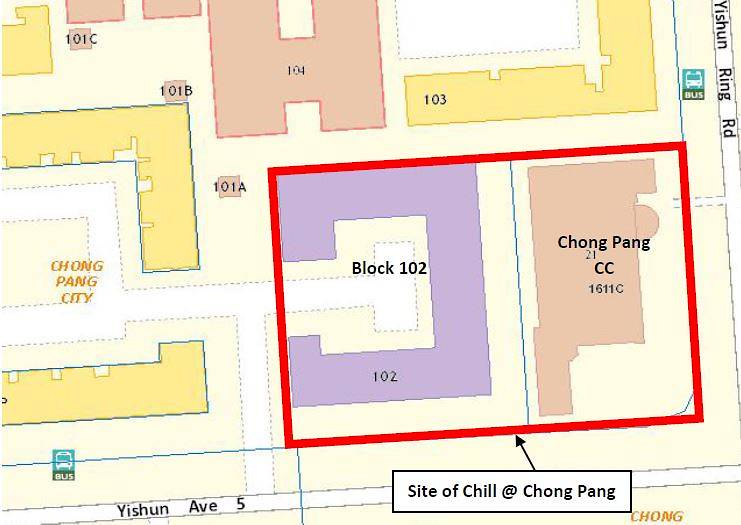
The multistorey 0.9ha development – bigger than a football field – will be called Chill @ Chong Pang. It will stand on the site of the current Chong Pang Community Club and Block 102 Yishun Avenue 5, a four-storey Housing Board commercial block which the Singapore Land Authority (SLA) will acquire, authorities announced on Tuesday (Sep 8).
Artist impression of Chill @ Chong Pang, which will include a new community club, a replacement market and hawker centre. It is expected to be completed in 2027. (Picture: Singapore Land Authority)
SLA has gazetted the acquisition of the affected land, and will assist affected shop owners and tenants through the acquisition process, it said.
The block comprises 17 sold shops on the ground floor and 51 shops rented out by HDB. Part of the surface car park will also be affected.
Site map of Chill @ Chong Pang. (Picture: Singapore Land Authority)
Announced by Nee Soon Member of Parliament (MP) K Shanmugam, Chill @ Chong Pang will have three swimming pools, a gymnasium, fitness studios, a commercial space suitable for parents with young children and more than 300 car park lots.
Noting that Nee Soon GRC has seen many new developments over the years, Mr Shanmugam, who is also Law and Home Affairs Minister, said: “This Chill @ Chong Pang is another such development. It’s going to be, I think, very welcomed by the residents of Nee Soon, because it doesn’t just serve Chong Pang … Nee Soon South is one side, Nee Soon Central is on the other side, all within a short walk away.”
Residents of nearby Nee Soon East and Nee Soon Link will also be able to enjoy the facilities, he added.
Artist impression of Chill @ Chong Pang, which will include a new community club, a replacement market and hawker centre. (Picture: Singapore Land Authority)
The Chong Pang Market and Food Centre – which has 56 cooked food stalls and 123 market stalls – at Blocks 104 and 105 and three kiosks at Blocks 101A, 101B and 101C will be relocated to the replacement market and hawker centre once the development is ready.
Stallholders and kiosk tenants can continue to operate at their original locations until the new building is ready. The vacated site will be redeveloped into a community plaza by 2028, said Mr Shanmugam.
Stallholders and tenants will be offered “full market compensation”, he added.
Chong Pang City is the first neighbourhood centre in Yishun New Town, and is about 40 years old. The current amenities and facilities at Chong Pang City are “ageing” and “in need of rejuvenation”, said SLA, the People’s Association, the National Environment Agency and Sport Singapore in a joint media release.
Construction for the new integrated development is expected to start in the second half of 2022 and be completed in 2027.
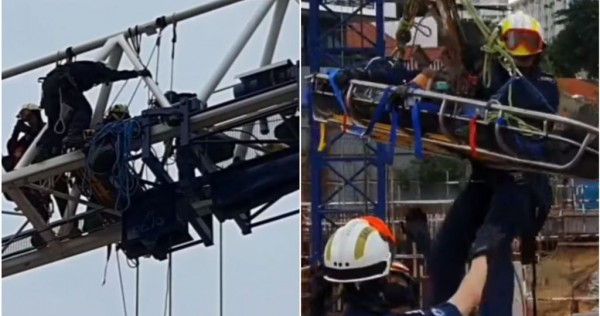
SINGAPORE – A man working on a tower crane found himself suspended 40m up and unable to head down to safety, after injuring his leg in mid-air.
When alerted to the incident at a How Sun Drive construction site on Monday (Sept 7) at 4.25pm, the Singapore Civil Defence Force (SCDF) sent in a team of firefighters and members of its elite division, the Disaster Assistance and Rescue Team (Dart) to rescue the worker.
Four Dart specialists scaled a cat ladder to access the crane, before traversing across its narrow arm to reach the injured man, SCDF said on Facebook on Tuesday.
The team secured themselves in place and set up a lowering system with ropes and pulleys.
One of the Dart specialists, who was cross-trained as an emergency medical technician, treated and bandaged the man’s wound while up on the crane.
SINGAPORE: A day after the Ministry of Manpower (MOM) announced that all foreign workers dormitories were cleared of COVID-19 – with the exception of 17 blocks in six purpose-built dormitories set aside for quarantine – another 800 migrant workers had to be isolated.
And it was all due to the discovery of one new COVID-19 case in a previously cleared dormitory on Aug 12.
Since then, there have been more reports of new clusters in dormitories previously cleared of the disease, including Sungei Tengah Lodge – Singapore’s biggest dormitory – Tuas View Dormitory and Homestay Lodge.
The other new clusters are at: Changi Lodge 2, North Coast Lodge, Toh Guan Dormitory, Cochrane Lodge 2, Westlite Toh Guan, Blue Stars Dormitory, Cochrane Lodge 1, Mandai Lodge 1, Tuas South Dormitory, Cassia @ Penjuru, CDPL Tuas Dormitory and Kranji Lodge 1.
NEW ACE GROUP
The task of tackling the outbreak in the dormitories has now fallen on the new Assurance, Care and Engagement (ACE) Group under MOM.
Led by ACE Group chief Tung Yui Fai, the group will take over fully from the Inter-Agency Taskforce from Oct 1.
Its mandate: To provide assurance to migrant workers living in dormitories. To this end, the ACE Group is putting in place a comprehensive medical support plan, making health services more accessible, enhancing engagement with workers and other stakeholders, and fostering stronger partnerships among Singaporeans, workers’ groups, employers and dormitory operators.
Speaking exclusively to CNA on Sep 3, Mr Tung said his team intends to continue building on the good work done by the taskforce.
“After five months, this taskforce has managed to contain the outbreak, and tested more than 300,000 migrant workers … what is more significant that we maybe do not see, is that because of the work of the Inter-Agency Taskforce, we were able to avert a major health crisis that potentially would have overwhelmed our public healthcare system,” he said.
NEW CASES IN CLEARED DORMS
The elephant in the room of course, is that new infections are still emerging from previously cleared dorms. But the former army Brigadier-General is seemingly unfazed.
“When we say we have cleared the dorms, what we meant is that we have tested all the workers, and ensured that they’ve tested negative before we put them in the dorm.
“Reinfection can come from either past, old infections or could be the infections were gotten from a third party, either people coming into contact with the workers and the dorm, or in the worksite. So, I don’t think we can always be sure that even we have cleared dorms, there will be no reinfections,” he said.
Tung Yui Fai will lead the Assurance, Care and Engagement (ACE) Group, under the Ministry of Manpower, to fight COVID-19 infections at dormitories. (Photo: MediaCorp)
ACE Group’s medical director Lam Meng Chon added: “All residents are tested and they are either negative, or they have recovered, or if they’re positive cases have been sent out for the appropriate care that they require.
“But that occurs only at a point in time, there is an incubation period for the virus, so when the person gets infected, maybe one or two days before dorm clearance, it could be that the test will turn out negative.”
To minimise the risk of new clusters forming, the ACE Group plans to use a multi-layered approach of prevention through safe distancing measures, protection through early detection and rostered routine testing, and swift isolation of new COVID-19 positive cases.
“The strategy we have designed, allows us to have some confidence of being able to detect and manage,” said Mr Tung.
“Of course going ahead, ACE (Group) would also want to look at using technology, better technology, to better sense, better detect, better contain and isolate,” he added.
ROSTERED ROUTINE TESTING
Mr Tung stressed that the ACE Group cannot do this alone, with migrant workers, dorm operators and employers all having a part to play.
This includes practising safe distancing measures, ensuring safe living conditions and taking part in the rostered routine testing – a process that is instrument to early detection of COVID-19 positive cases and preventing the spread of the coronavirus to the rest of the dormitories.
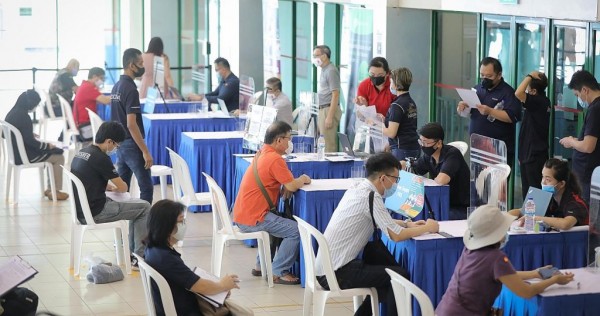
As part of the safeguards to ensure the safe restart of work, workers staying in dormitories, workers in the construction, marine and process sectors, and personnel who go into the work sites are required to undergo rostered routine testing for COVID-19 every 14 days.
When asked how the ACE Group will help employers comply with the strenuous fortnightly testing requirements, Mr Tung said convenience is key.
“We are helping the employers by auto generating the schedule after the first, once they’ve arranged, the subsequent registration is automatically generated.
“We are also allowing choices for employers, if they decide it’s more convenient for the workers to be tested in the dormitories, we have also set up in-dorm RRT centres, and we are also now going to pilot night testing in dormitories, another avenue to make it more convenient for the employers to come on board,” said Mr Tung.
ACE Group’s medical director Lam Meng Chon said continuous testing through the rostered routine testing will help to break the chain of COVID-19 transmission. (Photo: MediaCorp)
Dr Lam noted that the continuous rostered routine testing will help to break the chain of COVID-19 transmission.
And in the event that new infections may inevitably occur, he said authorities will continue to conduct contact tracing and isolate cases, both at the dormitories and places of work.
“Within the worksite, the sector agency will work closely with employers to assess the risk, and even implement a safety timeout if required.
“And within dormitories, that’s where we would proceed with aggressive testing, as well as quarantining the whole block as a precaution and assess the risk and rescind quarantine if some of the workers are assessed to be of low or no risk, Dr Lam said.
“So that’s the containment strategy that is part of the overall management of re-emergence if we do witness it.,” he added.
KEEPING WORKERS HEALTHY
The ACE Group will meanwhile oversee the setting up of 12 medical centres islandwide, in addition to on-site medical facilities at larger dormitories.
Dr Lam said these will help foreign workers manage their acute and chronic conditions, including mental health, more easily.
The strategy will be complemented by telemedicine and mobile apps that would enable self-monitoring by workers.
This includes health and temperature checks via the FWMOMCare app twice daily, which workers can report their symptoms if they feel unwell.
In addition, the Group is monitoring trends of acute respiratory illnesses and screening wastewater for viral traces of COVID-19 as part of its detection plan.
“I think the key is not whether new cases will arise, but whether we can prevent these cases from being clusters that get larger and larger. And ideally, never going back to the same situation that we had in April, where the dormitories had to be gazetted,” said Professor Hsu Li Yang, vice dean for Global Health & Programme Leader for Infectious Diseases at the NUS Saw Swee Hock School of Public Health.
While guarding against new COVID-19 infections remains a key priority for the ACE Group, it also has been working towards a more sustainable approach to keep workers healthy – both physically and mentally – in the long term.
Mr Tung said he is prepared for the responsibilities and challenges in his new role.
“I think when COVID-19 happened … during the circuit breaker, it really disrupted the way we lived, the way work. And I was wondering what I can do to be part of this effort to combat COVID-19. Then I got the phone call, and I just said yes, and I’m here now.”
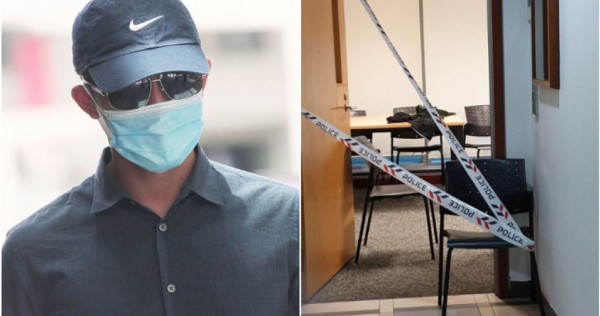
SINGAPORE – A woman who accused a Singapore Management University (SMU) student of molesting her on campus said she had pushed him away and dodged his attempts to kiss her earlier.
When he allegedly groped her, she pried his fingers off. But she did not leave because there was no transport that early in the morning and she did not want to make things awkward between them, as they had mutual friends.
The SMU student, Lee Yan Ru, now 24, is facing one molestation charge.
In the early hours of Jan 8 last year, he is said to have stimulated himself while he was on top of the woman, who was asleep.
The woman, who was 21 then, took the stand after lunch on Monday (Sept 7), on the first day of Lee’s trial.
She testified that she got to know him around December 2018 when he messaged her on Instagram.
“I was very casual because we have mutual friends. He contacted me first,” she told District Judge Sharmila Sripathy.
The woman, who studies in another university, cannot be named due to a gag order.
SINGAPORE – The studio lights dim, the band begins to strum, and it’s showtime for a Singapore getai concert – a popular form of entertainment in southeast Asia that features songs, skits and over-the-top costumes to celebrate the dead.
Because of the coronavirus, instead of being watched by a live audience of thousands, the performance is taking place in a studio and broadcast over the internet. The livestream is a lifeline for performers like Febe Huang, who earns her living staging getai with her husband across the region.
“When this pandemic hit, there were two or three months where we just didn’t have any income at all,” she said. “We started selling things online so we had a little bit of a salary. And now this livestreamed getai has started.”
Getai shows are mainly held during the Hungry Ghost Festival in the seventh month of the lunar calendar, when spirits of the dead are believed to return to wander the Earth. Performers say without the thrill of a live crowd, it’s not quite the same.
Workers have so far been sheltered from the full impact of pandemic by substantial govt support
There is a limit to what the Government can do to cushion the weakening job market, said observers, who expect tens of thousands of jobs here to be cut within the next half a year, when the full impact of the Covid-19 pandemic will be felt.
Measures that have staved off retrenchments, such as the recently extended Jobs Support Scheme (JSS) that helps offset part of the wages of local workers, draw heavily on the country’s reserves, added experts, who fear the intensity of layoffs will build up for a while.
Aviation, tourism, retail, hospitality, entertainment, food and beverage, marine and offshore, and construction will be hit hard.
Their views echoed those of Deputy Prime Minister Heng Swee Keat, who in a ministerial statement on Aug 17 said that retrenchments will be inevitable despite the Government’s best efforts. He added that the JSS cannot be sustained at current levels.
Labour experts said workers have so far been sheltered from the worst economic effects due to substantial government support.
SINGAPORE: Budget airline options on long-haul routes will decline significantly for at least the next few years, impacting air fares in popular markets such as Southeast Asia-Australia and Europe-North America once international travel resumes following COVID-19.
Long-haul, low-cost is a relatively small segment of global air transport but in recent years grew rapidly, particularly in Asia, with profound economic impact as flights of over five hours became more affordable.
However, it was hardly all rosy for the segment as almost all its operations were already unprofitable in 2019.
COVID-19 has brought an even bleaker outlook for this segment as the prospects for achieving profitability become more challenging – even in a five-year timeframe.
VIABILITY OF OPERATORS
Consequently, long-haul, low-cost airlines will have to restructure or even shut down.
One, Thailand’s NokScoot, already decided in late June to cease operations and liquidate.
A joint venture between Nok and Singapore Airlines’ low-cost subsidiary Scoot, NokScoot was operating seven Boeing 777 aircraft to North Asia and India prior to COVID-19.
NokScoot was one of a handful of low-cost carriers (LCCs) that was focused entirely or nearly entirely on long-haul routes and operating only widebody aircraft.
Most LCCs operating widebody aircraft also have narrowbody aircraft, which are mainly used for short haul flights of under five hours although in the last few years some five to seven hour routes were launched by LCCs using new generation longer range narrowbody aircraft.
Photo of a NokScoot Boeing 777-200 aircraft. (Photo: masak2_ukon/Wikimedia Commons via Flickr2Commons)
Prior to the pandemic there were approximately 200 widebody aircraft operated by over 20 LCCs, including more than 100 aircraft operated by 12 LCCs in Asia Pacific.
Roughly 80 per cent of this fleet is now grounded and the small number of aircraft operating are mainly carrying cargo.
SHORT HAUL SEES BETTER PROSPECTS
While COVID-19 has devastated the entire airline industry, long-haul LCCs have particularly been impacted as they rely on a market segment that has had virtually no demand since late March.
Most short-haul LCCs have large domestic operations, which have partially recovered in recent months.
Short-haul international travel also has resumed in some regions, particularly Europe, while restrictions continue to impede long-haul travel with the exception of limited one-way repatriating traffic.
There were over 5,000 narrowbody aircraft operated by LCCs prior to the pandemic and only around a third of this fleet is currently grounded – a more manageable figure compared to the approximately 80 per cent of grounded widebodies.
The short haul low-cost segment is more established, much larger and has partially recovered while the less mature long-haul low-cost segment cannot even start recovering until borders reopen and quarantine restrictions are lifted.
BIGGEST PLAYERS IMPACTED
The largest three long-haul low-cost operators – AirAsia X, Norwegian and Air Canada Rouge – have indefinitely suspended all their scheduled widebody passenger flights.
Air Canada Rouge has phased out its entire widebody fleet of 25 Boeing 767s, which were used to serve about 20 destinations in Europe and South America, and plans to only operate narrowbodies when it resumes services in the future.
Norwegian has resumed limited short-haul flights within Europe using narrowbodies but does not intend to resume any long distance flights until at least the summer of 2021.
Norwegian was operating 32 Boeing 787 widebody aircraft prior to the pandemic from bases in six countries – France, Italy, Norway, Spain, the UK and the US.
Norwegian began long-haul flights in 2013, when it took delivery of its first Boeing 787 aircraft, and has since pursued rapid expansion in this segment, focusing almost entirely on the transatlantic market.
Singapore was dropped in January 2019 and its only other Asian destination, Thailand, was reduced prior to COVID-19.
FILE PHOTO: A Norwegian Air plane is refuelled at Oslo Gardermoen airport, Norway, November 7, 2019. REUTERS/Lefteris Karagiannopoulos/File Photo
Norwegian was already struggling before COVID-19, which forced a major financial restructuring in May that included almost all of the airline group’s equity being handed to creditors and a government loan guarantee from Norway.
Norwegian recently warned it will need another bailout to survive.
Even if Norwegian again averts bankruptcy, its long-haul operation – which has always been unprofitable – may never resume.
Norwegian was the second largest widebody LCC after AirAsia X, which was operating 39 Airbus A330 aircraft as of the beginning of 2020 including 24 in Malaysia, 13 in Thailand and two in Indonesia.
AIRASIA X IN TROUBLE
AirAsia X was established in 2007 as an arm of AirAsia and the two companies have had separate stock exchange listings since 2013.
AirAsia X initially only operated in Malaysia before launching affiliates in Thailand and Indonesia, where AirAsia also has short-haul affiliates, in 2014.
Last year AirAsia X carried around 9 million passengers, including 6.1 million by its Malaysian entity and 2.6 million by its Thai affiliate.
AirAsia X had about 40 scheduled routes prior to COVID-19: 28 from Kuala Lumpur, 10 from Bangkok and two from Osaka.
Only charters have been operating from Indonesia since early 2019, when the Indonesian affiliate suspended scheduled flights.
During the pandemic, AirAsia X has been operating a small number of passenger charter flights – only 2,600 passengers were carried in the second quarter – and cargo charters.
It aims to resume scheduled flights in 2021 contingent on securing new capital, which it needs to survive.
Air Asia’s future is in doubt because of the collapse in air travel as a result of coronavirus. (AFP/Manjunath KIRAN)
However, several investment firms do not expect AirAsia X will be able to succeed at raising capital given its extremely weak financial position – it has not been paying some of its aircraft leases for nearly a year – and the overall bleak outlook.
Singapore-based leasing company BOC Aviation recently filed a US$23 million lawsuit against AirAsia X alleging a breach of obligations under lease agreements for four A330s.
A takeover by its bigger sister was considered a possibility but AirAsia X recently stated that there would be no support from AirAsia, which has also been struggling although it should be able to raise the capital needed to survive.
A collapse of AirAsia X would represent a huge overall setback for the long-haul low-cost segment given it is considered the pioneer of the model along with Jetstar.
Australia-based Jetstar launched long-haul operations in 2006 and operated 11 Boeing 787s prior to COVID-19.
Jetstar, which also has a large short-haul operation with bases in four countries throughout Asia Pacific including Singapore, has not grown its long-haul operation in recent years but has remained an important competitor in this segment.
Australia has been one the world’s largest long-haul low-cost market for over a decade.
LCCs flew around 5 million passengers on long distance routes to or from Australia in 2019, capturing around 15 per cent of Australia’s total long-haul market.
Jetstar carried nearly 3 million long-haul passengers in 2019, connecting Australia with six Asian countries and Hawaii.
AirAsia X was one of five foreign LCCs serving Australia prior to the pandemic along with Scoot, Cebu Pacific, Beijing Capital and Citilink.
ECONOMIC IMPACT TO COUNTRIES
It could be several years before Australia, which has shut its borders until at least mid 2021, again has 5 million long-haul, low-cost passengers.
The economic implications for Australia will be significant given that LCCs often attract a different group of passengers than full service airlines, bringing in visitors that would otherwise not travel to Australia.
Southeast Asia also relies on long-haul, low-cost airlines to stimulate tourism.
Malaysia and Thailand each had around 5 million passengers in this segment in 2019.
Singapore was slightly smaller but its long-haul, low-cost status could grow as rival hubs downsize.
With 20 Boeing 787s, Singapore-based Scoot was the fourth largest widebody LCC prior to the pandemic but is likely to now become the largest.
SCOOT COULD FOCUS ON SHORT HAUL
Scoot has the benefit of being fully-owned by Singapore Airlines, which has strong support from main investor and sovereign wealth fund Temasek Holdings and has raised more new capital than any other airline group in Asia.
However, Scoot is also restructuring and will focus more on its regional international routes over the next few years as the short-haul segment is expected to recover faster.
Prior to the pandemic, Scoot was operating the longest LCC route in the world – Singapore to Berlin.
Scoot airplanes on the tarmac at Changi Airport. (File photo: Reuters/Edgar Su)
While Berlin and Scoot’s other European destination Athens should resume eventually, it could be a few years before it returns to Europe and even longer before it revisits European expansion plans.
Scoot’s Australia and North Asia routes will resume sooner – a few are already operating but with very limited frequencies – and should recover faster once borders reopen.
SEGMENT WILL LOOK DIFFERENT
The long-term prospects for long-haul low-cost remain bright, particularly for routes of five to eight hours within Asia Pacific, but several of the pre-COVID competitors may not be able to survive the prolonged downturn.
Ultimately new competitors will emerge, filling the void left by some of the pioneers.
Several long-haul low-cost routes are also likely to resume after the pandemic with new generation long range narrowbody aircraft.
For example, AirAsia could fill any void left by AirAsia X with A321LR and A321XLR aircraft on five to eight-hour routes.
While I still see a bright future from 2024 or 2025, in the interim there will be some dark years of very few long-haul low-cost flights.
The model was hardly proven prior to COVID and will now have to overcome even bigger questions about its long-term survivability.
Brendan Sobie is the founder of Singapore-based independent aviation consulting and analysis firm Sobie Aviation. He was previously chief analyst for CAPA – Centre for Aviation.
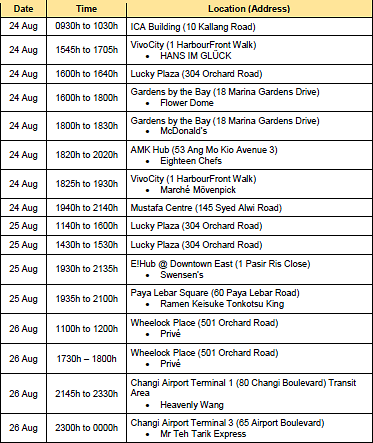
SINGAPORE: Seven shopping malls have been added to the list of public places visited by COVID-19 cases in the community during their infectious period, said the Ministry of Health on Monday (Sep 7).
The shopping centres are VivoCity, Lucky Plaza, AMK Hub, Mustafa Centre, E!Hub @ Downtown East, Paya Lebar Square and Wheelock Place.
The ICA Building and Gardens By The Bay were also on the list.
Those who have been identified as close contacts of confirmed cases would already have been notified by MOH.
As a precautionary measure, individuals who were at those locations during the specified timings should monitor their health closely for 14 days from their date of visit, said MOH.
“They should see a doctor promptly if they develop symptoms of acute respiratory infection (such as cough, sore throat and runny nose), as well as fever and loss of taste or smell, and inform the doctor of their exposure history,” it added.
The ministry said there is no need for people to avoid places that have been frequented by COVID-19 cases and that the National Environment Agency will engage the management of the affected premises to provide guidance on cleaning and disinfection.
SINGAPORE: An Indonesian maid was acquitted last Friday (Sep 4) of stealing from the family of Changi Airport Group chairman Liew Mun Leong, nearly four years after she was fired by her former employer.
In March 2019, Ms Parti Liyani was convicted of four charges of stealing, before the convictions were overturned in the High Court by Justice Chan Seng Onn. In his judgment last Friday, Justice Chan laid out the reasons for Ms Parti’s acquittal.
Here is a timeline of events related to the case:
MARCH 2007: MS PARTI STARTS WORK IN LIEW HOUSEHOLD
Ms Parti Liyani was employed as a foreign domestic worker in March 2007 in the Liew household, which comprised Mr Liew Mun Leong, his wife Madam Ng Lai Peng, their daughter Liew Cheng May, their son Karl Liew and Mr Karl Liew’s wife Heather Lim.
Mr Liew Mun Leong is her formal employer.
In March 2016, Mr Karl Liew, his wife and children moved out of the house and lived elsewhere. The court heard Ms Parti had a “cordial relationship” with the family.
MS PARTI ASKED TO CLEAN KARL LIEW’S HOME AND OFFICE
The court heard Ms Parti was deployed to work at Mr Karl Liew home and office on “multiple occasions”, in addition to her employer’s home. This contravened certain MOM regulations, the judgment said.
MOM said last Sunday that Mdm Ng deployed Ms Parti to her son’s residence between September 2016 and October 2016, and to his office around 2012 and 2013.
Parti Liyani speaking at a press conference after she was acquitted of stealing S$34,000 from Changi Airport Group chairman Liew Mun Leong and his family.
OCT 28, 2016: MS PARTI’S EMPLOYMENT TERMINATED
On Oct 28, 2016, the family decided to terminate Ms Parti’s employment after suspicions that she was stealing from the family.
She was given two hours to pack her things and leave. She also asked Mr Karl Liew for big boxes in which to send her belongings back to Indonesia.
While packing, Ms Parti threatened to lodge a complaint with MOM about being asked to clean Mr Karl Liew’s home and office.
Before two of the boxes could be sealed by her, the employment agency returned and informed Ms Parti her time was up and she had to leave. Two drivers who worked for the family sealed the boxes.
The High Court would later rule that the family had hoped she would not use that time to make a complaint to MOM. The termination of employment was a “pre-emptive first step”, Justice Chan said.
OCT 29 TO OCT 30, 2016: THE LIEWS FILE A POLICE REPORT
Ms Heather Lim said that the family should not ship the boxes to Parti without checking the contents, which may include illegal items.
They checked the contents of the boxes on Oct 29, during which they discovered items that allegedly belonged to the family. They spent about two hours taking out and sorting through the boxes and recorded a 21-second video of the process.
Mr Liew Mun Leong and his son filed the police report on Oct 30.
POLICE ALLOW FAMILY TO REMOVE ITEMS FROM BOX FOR DAILY USE
After the police report was made, the family was told by Investigating Officer Tang Ru Long that they were free to use the items that were found in the jumbo boxes, save for discarding the items.
The investigating officer said the items, which were the subject of the charges, were not personally seized or taken into custody by IO Tang as he did not wish to result in the “de-victimising” of the family.
DEC 2, 2016: MS PARTI ARRESTED
On Dec 2, Parti was arrested at Changi Airport upon her arrival in Singapore to seek employment.
Items that allegedly belonged to the Liews were found on her, including two Longchamp bags, one Gerald Genta watch, one Helix watch, two iPhones, a Prada bag and a pair of stained Gucci sunglasses, among other items.
DEC 3, 2016: POLICE VISIT THE LIEWS
The following day, IO Tang visited the Liews’ house with a crime scene photographer to take photos of the exhibits. These items would only be received into police custody on Apr 18, 2018.
DEC 2016: MS PARTI QUESTIONED BY POLICE
Parti’s statements were recorded on Dec 3, Dec 4 and on May 29.
The interviews were conducted in a mix of English and Bahasa Melayu, even though Ms Parti spoke Bahasa Indonesia.
No interpreter was present for the recording of the statements. Another investigating officer, IO Amirudin Nordin, helped translate IO Tang’s questions in English to Bahasa Melayu.
IO Amirudin “conceded” there was a difference between Bahasa Melayu and Bahasa Indonesia.
Parti Liyani with her lawyer Anil Balchandani outside the High Court on Sep 4, 2020. She was acquitted of stealing from Changi Airport Group chairman Liew Mun Leong and his family. (Photo: Humanitarian Organisation for Migration Economics)
The High Court judge said there was a possibility that the recorded statements read back to her in English and Bahasa Melayu were understood differently by Ms Parti from what IO Amirudin had meant. Two statements were not read back in Bahasa Indonesia for her confirmation.
Ms Parti also told the court that she did not feel comfortable speaking in Bahasa Melayu and that she was not given the choice of an interpreter.
AUGUST 2017: MS PARTI CHARGED
Ms Parti was charged in court in August 2017.
She faced four charges, including three charges of theft in dwelling and one charge of theft as a servant.
OCTOBER 2017: MS PARTI LODGES REPORT TO MOM
In October 2017, Ms Parti made a report to MOM about the illegal deployment by Mdm Ng to Mr Karl Liew’s house and office.
She was accused of stealing items from Mr Liew Mun Leong and his family members.
AUGUST 2018: MR LIEW MUN LEONG TESTIFIES DURING TRIAL
During the ensuing trial, Mr Liew Mun Leong told the court that he had long suspected that Ms Parti had been stealing from his family home, but that he “tolerated” her behaviour.
When questioned, Mr Liew said he had a “propensity for bags” and objected to Ms Parti’s lawyer Anil Balchandani’s assertion that two of the missing bags had been discarded.
He added that it was “not possible” for his wife to offer the discarded bags to Ms Parti.
MAR 20, 2019: MS PARTI FOUND GUILTY
District Judge Olivia Low found Ms Parti guilty on Mar 20, 2019 of stealing more than S$30,000 worth of items from the Liew family.
The judge said that she did not see “any reason why the Liew family and (their) driver Robin would conspire to frame the accused for the theft, especially when they had employed her for a number of years”.
She added that she found the prosecution’s witnesses “largely credible and consistent”, with the victims able to identify the items that belonged to them and what they did with it.
Ms Parti was sentenced to two years and two months’ jail.
SEP 4, 2020: MS PARTI ACQUITTED
On Sep 4, 2020, High Court judge Chan Seng Onn overturned the convictions and acquitted Ms Parti of all charges.
In his judgment, Justice Chan said the convictions against Ms Parti were “unsafe” due to the presence of an “improper motive” and that the prosecution had failed to prove its case beyond reasonable doubt.
Parti Liyani (6th from right) cheering with volunteers and staff from HOME and her lawyer, Anil Balchandani, after she was acquitted of stealing S$34,000 from Changi Airport Group chairman Liew Mun Leong and his family. (Photo: Facebook/HOME)
“In my judgment, there is reason to believe that the Liew family, upon realising her unhappiness, took the pre-emptive first step to terminate her employment suddenly without giving her sufficient time to pack, in the hope that Ms Parti would not use the time to make a complaint to MOM,” said the High Court Judge.
“Once she made express her desire to complain to MOM after her sudden termination on Oct 28, 2016, the Liew family followed up with the police report to ensure her return would be prevented.
“In my view, the Liew family might not have made a police report had Ms Parti not made her express threat on Oct 28, 2016 to report the matter to MOM.”
He also noted that Parti “never showed any interest” in the jumbo boxes and that there is a “real possibility of a mix-up of items”, as well as reasonable doubt that the items were not accurately documented in photographs taken by police officers five weeks later.
The judge also found Mr Karl Liew to be “a witness who was not only lacking in credibility but also did not take the process of giving testimony seriously”.
He added that it was “rather unusual” for her to mostly steal items that appear to be spoilt, broken or lacking in value to the alleged owners.
On Sep 6, the Attorney-General’s Chambers (AGC) said that Justice Chan’s findings “raise questions which warrant further investigation”.
“AGC will study the judgment to assess what further action, if any, ought to be taken in this case, in the light of (Justice Chan’s) comments,” the AGC said.
The Lamborghini Huracan EVO Rear-Wheel Drive (RWD) is now in Singapore. Engineered for driving fun, the Huracan EVO RWD has a top speed of 325km/h and accelerates from zero to 100km/h in 3.3 seconds.
Delivering 602bhp of power at 8,000rpm and 560 Nm of torque at 6,500rpm, the visceral driving machine sits on a lightweight chassis with specially calibrated Performance Traction Control System (P-TCS).
The Huracan EVO RWD’s hybrid chassis integrates lightweight aluminium and carbon fibre with an aluminium and thermoplastic resin body, with a total dry weight of 1,389kg giving a weight-to-power ratio of 2.28kg/hp. With a front/rear weight distribution of 40/60, the Huracan EVO RWD sits on a double wishbone suspension with overlapped quadrilaterals and passive shock absorbers.