SINGAPORE: Singapore athletes won three golds, two silvers and five bronzes at the 2018 Asian Para Games held in Jakarta – its best result at the Games ever.
Team Singapore ended the week ranked 16th out of 43 teams on the medal tally table.
Its previous best record was at the 2014 Games held in Incheon with one gold, one silver and four bronzes.
The three golds came from swimmers Toh Wei Soong, 20, and Yip Pin Xiu, 26.
National swimmer Yip Pin Xiu at the 2018 Asian Para Games. (Photo: Team Singapore)
The Boccia team of captain Nurulasyiqah Mohd Taha, Toh Sze Ning and reserve player Faye Lim and bowler Diane Neo won the two silver medals.
Boccia players Toh Sze Ning, Nurulasyiqah Mohd Taha and Faye Lim won a silver medal in the mixed pair BC3 finals. (Photo: Singapore National Paralympic Council/Flona Hakim)
Archer Syahidah Alim was also elected to the Asian Paralympic Committee’s Athletes’ Committee, the first Singaporean to run successfully for the role.
“It is important for Singapore to be part of Athletes Commission, to continue to bring in more diverse representation, particularly for athletes in the Southeast Asian region,” said Syahidah.
The next Asian Games will be held in the Chinese city of Hangzhou in Zhejiang Province in 2022.
SINGAPORE: The Immigration and Checkpoints Authority has detected 22 cases of travellers trying to smuggle marine turtle eggs into Singapore since April this year, said the Agri-Food and Veterinary Authority (AVA) in a Facebook post on Saturday (Oct 13).
“The marine turtle eggs were packaged as snacks and concealed within the baggage of travellers. The cases were referred to AVA for investigation,” AVA said.
AVA found that the marine turtle eggs were meant for personal consumption and “took enforcement actions” against the offenders.
Marine turtle eggs kept in plastic bags and packaged as snacks. (Photo: AVA)
Sea turtles are protected under the Convention on International Trade in Endangered Species of Wild Fauna and Flora (CITES).
The import, export, sale and display of their parts and derivatives, such as turtle eggs, are prohibited under the Singapore Endangered Species (Import and Export) Act.
If found guilty, offenders may be fined up to S$500,000 and/or jailed for two years.
Anyone with information on illegal wildlife trade can contact AVA at 6805 2992 or provide information through the online feedback form on AVA’s website.
SINGAPORE: It’s past midnight on Friday (Oct 12). Singapore Airlines is making history and I’m going along for the ride.
I’m on board the inaugural flight of SQ22, SIA’s new non-stop service to New York. It’s the first time the national carrier is serving this route in five years, after deeming it unsustainable – due, in part, to rising fuel prices – and axeing it in 2013.
When it lands in Newark Liberty International Airport in around 18 hours, SIA can once again claim to operate the “world’s longest flight”.
I’m also one of the first in the world to travel on the Airbus 350-900ULR (ultra-long-range) aircraft, which replaces the A340-500 that operated SQ22 those years ago.
Speaking to journalists at the SIA Training Centre the morning of the inaugural flight, Captain S L Leong said the A350-900ULR, which is more fuel-efficient than its predecessor, is as quiet as the A380 and a “dream” aircraft.
“It is everything that a pilot wants in an aeroplane,” said the veteran pilot, who was behind the stick during take-off and will take it again during landing.
SQ22 commander explaining the flight path for @SingaporeAir’s inaugural A350 non-stop flight to New York tonight. Capt Leong will take the stick for both take-off and landing. Got questions for him? pic.twitter.com/8PJ792NTs5
The flight in a nutshell: There are 17 crew members, including four in the cockpit and 13 in the cabin. There are 150 passengers in two classes – Business and Premium Economy.
I’m in the latter and here is my story.
10.30PM – B8 GATE HOLDING ROOM
After buying a neck cushion at WH Smith (I’ve been told it’s an essential if I’m holding out any hope for a nap in Economy), I head to the boarding gate, where there is a reception for SQ22 passengers.
Here, SIA’s performing arts troupe performs a medley of New York-themed songs including Etta James’ At Last and of course the Frank Sinatra’s New York York, with so much pizzazz that I wonder if they don’t all moonlight as wedding singers too.
11PM – BOARDING SQ22
I was one of the last passengers to get a confirmed seat on this flight, so I was pleasantly surprised to learn at check-in that I had gotten 32K, an aisle seat closest to the window – the best of both worlds, in my opinion.
Upon boarding, I find out that the window seat is vacant, which is a really lucky thing because I was just wondering how on earth I was going to manage moving all my gear in and out of the overhead bin. Now I can just dump it all on the extra seat.
HOUR 1 – CHANGI AIRPORT TARMAC
I settle in in time for pushback. The taxi is a long one – about 15 minutes – but soon, the wheels come up and we’re in the air. There’s a smattering of applause in the Premium Economy cabin.
HOUR 2
My pre-ordered Muslim meal arrives ahead of everyone else’s – as special meals do – and it’s a beef stew with mash potato.
I was planning to eat very lightly so I could sleep better later, but the potato is so creamy-delicious I scoff it all down in 10 minutes. Afterwards, I feel guilty and don’t touch dessert, which is a fruit crumble.
Beef stew with mashed potato on SQ22. (Photo: Hidayah Salamat)
As it’s the inaugural flight, media representatives including myself have been invited to cover it from beginning to end.
As a result, the official supper meal service that ensues is the busiest I have ever seen.
Every time a cabin crew member is about to do something, say pour wine or pull out a tray table, they’re asked to freeze for a photo.
Meanwhile, a passenger is asked to poke gingerly at their food for another photo opportunity. There’s heavy camera equipment pointing into the cabin from every corner. I take a few shots with my teeny iPhone and slink back into my seat.
A few minutes later, the leading stewardess assigned to my zone, Ashley, comes by with a tray, even though she knows I’ve already had my supper.
“I heard you asked about the Canyon Ranch dish. Would you like to try it?”
The cauliflower steak from Canyon Ranch’s wellness menu was a popular choice on the inaugural SQ22 flight. (Photo: Hidayah Salamat)
Canyon Ranch is the wellness company SIA has partnered with to address the health element of an ultra-long-range flight and one of its recommended dishes appears on the menu each sector.
For this sector, it’s roasted cauliflower steak with Tahini garlic sauce. Of course I had to try it. It was really good – thick and savoury with a quiet crunch. But I only eat half.
HOUR 4 – SOMEWHERE OVER THE SOUTH CHINA SEA
It’s way past my bedtime and I’m ready to sleep.
I know some people recommend sleeping a little later (and longer) so you wake up fresh and synced to New York time, but I believe you should sleep while you can. You never know what can happen on such a long flight. There may be bad turbulence or a baby may decide to cry and not stop.
(Photo: Hidayah Salamat)
Just as this thought crosses my mind, the plane starts shaking and the seat belt sign comes on.
When it finally goes off again, I make a beeline for the restroom, wash up and change into some comfortable clothes, which include bedroom slippers I nicked from my last hotel stay.
HOUR 5
Back in my seat, I put on a face mask and hope I don’t give anyone a cardiac arrest, but one of the cabin crew pokes a cup of water in my face in the dark and I’m the one that gets a fright.
(Photo: Hidayah Salamat)
Free SIA eyeshade and ear plugs – check. Vicks Vaporub (I don’t go anywhere without it) – check. Heavy-duty moisturiser for my neck and hands – check. Neck pillow – check. I’m ready to sleep.
HOUR 5 – NEAR KAGOSHIMA, JAPAN
I can’t sleep and it’s making me agitated because I hear we may get some daylight in the next couple of hours and I’m hoping to wake up to it.
There’s intermittent turbulence and contrary to what I’ve been told, the A350 isn’t that “quiet”.
The engine is roaring somewhere beneath me and the ear plugs keep popping out. I notice some of my neighbours have thrown their blanket over their head like a little tent and I do the same.
Ooh this is lovely. Goodnight, world.
HOUR 9 – NEAR ADAK ISLAND
I toss and turn a little bit, but manage to get about three hours’ sleep, which is a miracle for someone who never sleeps on the plane.
I must credit SIA for the 38-inch seat pitch and eight-inch recline, which along with the calf rest and foot bar, give me the illusion that I’m somewhat laying down.
I would’ve slept longer, but one of the babies in the cabin is screeching. I hear his mum tell someone: “He’s fine, he just needs his breakfast.” Really? Well I just need a bit more sleep.
At this point, a thick, sulphurous odour fills the cabin. Ahh … The inevitable in-flight flatulence. I dig out a chocolate cake I saved from the Canyon Ranch meal earlier and eat it under my “tent”.
Hour 10
I can’t find a movie I’m particularly interested in, so I do what everyone else seems to be doing and watch Ocean’s 8. Besides, I’ll watch anything that has Sandra Bullock or Sarah Paulson.
(Photo: Hidayah Salamat)
The cabin crew are giving out hot snacks from the “refreshment” menu, but the galley steward already passed me a chickpea masala croissant after my nap earlier so I pass.
I also say no to the mango mousse cake, but when the steward comes around again with an agave lemonade that’s “only available on this flight”, I cave.
HOUR 11
I’m starting to feel lethargic, even though I’ve been taking a walk every hour, mostly to go to the toilet.
On this particular break, I linger a little longer in the restroom to study myself in the mirror and this is when I notice the static flyaway hairs. For some reason, they’re all white hairs.
And I don’t know why, but I spend the next 30 minutes slowly plucking them out. I get to three before it occurs to me that I might be hallucinating.
HOUR 12
To save myself from growing bald, I go back to my seat and watch the Canyon Ranch exercise video. They’re all exercises you can do in your seat, like rolling your shoulders backwards and forward, and raising your arms over your head to stretch your back.
HOUR 13
I’m just staring into space now.
When I snap out of it, it’s to go on another toilet break. While there, I see the cabin crew having a briefing in the aft galley and I catch the words “early meal service” and “bad weather”.
Later I find out they’re shifting the breakfast service forward in case the flight gets hit by turbulence from Hurricane Michael. I can’t decide if I’m excited to eat again or worried about Mike.
HOUR 14
While watching the flight map (it’s really quite hypnotising), my head starts to hurt so I pop some painkillers, get my water bottle refilled and guzzle the lot.
I read somewhere that you should drink around five litres of water on a flight that’s 18 hours or more. I think I’ve only had two litres since boarding and am a little dehydrated. Ooh I smell bread rolls – the food should be out soon.
HOUR 15
Ooh, they were mini croissants. I get one with my Muslim meal, which is a chicken frittata and some fruit.
There’s only one Canyon Ranch offering per flight and the cauliflower steak was it, so I have only one meal this time, like a normal person.
Breakfast of chicken frittata on SQ22. (Photo: Hidayah Salamat)
HOUR 16 – SOMEWHERE BETWEEN TORONTO AND MONTREAL
I need a shower badly.
It’s starting to get warm in the cabin and I’m sweating. I’m also starting to crave the sun, but that’s probably because I can’t seem to find any of my stuff, even with the personal reading light on.
I’m not the only one.
A passenger in front of me has been searching high and low for his earphones, which he says he was “just holding” and a few others have shone their phone torchlights on me looking for goodness-knows-what.
My lips are so chapped it’s like they’ve got paper glue on them and I don’t know where my lip balm is.
5.29AM (US EASTERN TIME) – NOW WE’RE IN NEW YORK…
Touched down after a total flight time of 17 hours and 52 minutes.
I’m in New York and not suffering from cabin fever or deep vein thrombosis – some of the conditions associated with long-haul flights.
My verdict: 18 hours sounds like a lot and in fact, it is, but despite some interesting experiences, the time flew by for me.
SQ22 is a great deal for travellers looking to save time and avoid transfers. And with the right seat and some pre-flight planning, it could be a dream – even if you’re not flying Business.
Graphic on the world’s longest flights. (Graphic: Rafa Estrada)
SINGAPORE: Every time a 999 operator picks up the phone, there is more than a 50 per cent chance that there is, in fact, no police emergency.
Instead, there could be any number of reasons behind the call. Just ask Ms Rafa’ah Hamzah. The 28-year-old has been an emergency communications officer for five years, and she has had her fair share of strange calls.
“Could you book me a taxi?” one person asked late at night. Taxis are not stopping for me, complained another.
Ms Rafa’ah even listened as one person complained that clothes hanging to dry were dripping water from above, while another asked the police to pay his electricity bills because they were too expensive.
Then there are people who call and laugh or simply stay silent before hanging up. However, this is no laughing matter.
Out of the 683,352 calls in the first half of this year, 57 per cent were nuisance calls or not police matters, with the vast majority being the former. The same trend was reflected in 2017, with 58 per cent of more than 1 million calls not being police emergencies.
NUISANCE, NON-POLICING CALLS COULD DELAY RESPONSE TO EMERGENCIES
Assistant Superintendent of Police (ASP)Raja Mohamed Shahir Raja Mohamed Said, who is the officer-in-charge of the operations room that responds to 999 calls, said that non-emergency calls take up precious time.
Speaking to Channel NewsAsia at the Police Operations Command Centre in Novena, ASP Shahir said each time a call comes in, the operators have to treat it as an emergency case, whether or not it is.
“Even if it’s a repeated caller, we will treat each call as genuine, because we never know when he or she would need police assistance,” he said.
The consequences of people using 999 for trivial matters could be serious.
“For every nuisance call that we receive, there will be someone else who has an actual emergency, who has to wait for their call to be answered,” ASP Shahir said.
He explained that every second counts. “We do not want a situation where a person who really needs police assistance is unable to get through the line because the operators are engaged answering non-police related calls,” he said.
Officer-in-charge of the emergency hotline team ASP Raja Mohamed Shahir Raja Mohamed Said urged members of the public to call 999 only when there’s a crime in progress or somebody is committing a crime close-by, or if someone is seriously injured or is in danger. (Photo: Jalelah Abu Baker)
CHILDREN PART OF THE PROBLEM
Children are behind some of these calls. It is not uncommon for children to call 999 using their parents’ mobile phones or home landlines, ASP Shahir said.
They may call and laugh or make up situations, he said.
Ms Ra’afah said: “For example, there have been prank calls on fires, prank calls on theft, and prank calls on robberies. They are quite clever. They can just create stories.”
Some of these cases were found to be pranks after officers went to the scene, with no incident to be found.
“For children who are laughing or playing with the phone, then suddenly hang up, we would definitely call back, and ask them whether there is any police assistance required,” Ms Ra’afah said.
Even if there is silence, they call back. Sometimes, they end up on the line with parents who are unaware that their children have been playing with their phones. They then take the chance to inform them and urge them to educate their children not to misuse the 999 line.
Older children may use public phones in their schools. When they do that, the police will suggest that the school’s management should educate the students that 999 is an emergency hotline, ASP Shahir said.
Sometimes, people just do not know who else to call. ASP Shahir said elderly people who do not know which agency they should call get in touch with the police. In these cases, operators may point them in the right direction.
People also call 999 in medical emergencies, in which case the call is referred quickly to the Singapore Civil Defence Force. Still, the police urged the public to call 995 during medical emergencies.
When asked why operators entertain non-policing calls instead of turning them away, ASP Shahir said: “If they are turned away without an answer, it may not stop them from calling 999 again, and the call gets answered by another operator.”
Some of them do not know that these calls are being made, as the calls are being made through the “emergency call” function on smartphones, he added.
“That tends to be activated very frequently without the person even realising,” ASP Shahir said.
STILL ALWAYS READY FOR EMERGENCIES
When the calls are emergencies, operators have to keep composed, dealing with panicky people who may be incoherent or screaming.
Ms Ra’afah remembers one challenging call she took when she was new to the job. It was a call from a woman had been robbed. She was screaming and shouting on the phone, and it took about two minutes to calm her down, Ms Ra’afah recalled.
“We have to be fast, because the division will have to dispatch officers,” she said.
The operators feed information to officers on the ground – information that can be processed quickly so the best response to any incident can be implemented. The information that operators receive also determines the amount and type of resources needed.
“For example in a case of domestic dispute, if we know previously there were instances of violence, then at least our officers are mentally prepared that they are going to deal with somebody who could get violent,” ASP Shahir said.
While Ms Ra’afah remembers the call for being challenging, the calls that get to her are those that involve victims of sex crimes.
To cope with her emotions, she confides in her fellow colleagues. Due to the confidentiality of the calls, she is not allowed to divulge the details to anyone else, including her family members.
Ms Ra’afah also takes satisfaction in cases in which the perpetrator is apprehended and dealt with, as she is able to track the progress of cases.
CONSEQUENCES FOR REPEAT OFFENDERS
When asked what is being done to improve the current situation of nuisance calls, ASP Shahir said that the police engage everyone who might have triggered an accidental nuisance call and advise them on how to prevent a re-occurrence.
And for those who repeatedly make nuisance calls, they could be given formal warning letters, visited by an officer or even prosecuted, he added.
Officers at the Police Operations Command Centre. (Photo: Jalelah Abu Baker)
In one case, it was a man who called the hotline usually when he was drunk.
Gurcharan Singh, a 61-year-old cleaner who had been prank calling the police since 2000 was last month sentenced to three years in jail.
While Gurcharan was convicted, the police acknowledged that it can be a challenge to trace and apprehend some culprits.
Meanwhile, ASP Shahir urged members of the public to call 999 for the right reasons, so the police are not distracted from emergencies.
“We urge members of the public to call 999 only when there’s a crime in progress or somebody is committing a crime close-by or someone is seriously injured or is in danger,” he said.
Ms Ra’afah also had a message for the public.
“Please call the relevant agencies for cases not under the police purview. Parents, do educate your child on the importance and severity on making nuisance calls to 999,” she said.
SINGAPORE: Call it an occupational interest, I have always been curious about people’s accents.
Accents offer us glimpses into a speaker’s life, and can give us information about the speaker’s background.
Just like how one can tell if a person is American, British, Filipino, Indian, or French, just from the way the speaker sounds when speaking English, a Singaporean speaker of English can also be easily identified.
The Singaporean accent has always been a distinctive feature of Singapore English speakers and I am not talking about Singlish here.
MORE SINGAPOREANS SPEAKING WITH A ‘FOREIGN ACCENT’
In recent years however, I have noticed that some Singaporeans are speaking English with a somewhat “foreign” accent. I have also received queries from concerned observers about why more and more Singaporeans are sounding “fake”.
I recall vividly a student, Tom (not his real name), in my Anthropological Linguistics class a few years ago. Tom stood out because he sounded somewhat unusual.
I could not place him because his accent was not Singaporean, but it was also not American, British, Australian, or any of the accents I am familiar with.
It was a strange combination of a number of different accents, and I also thought it odd that his “accent rojak” had slightly different flavours week on week. Some weeks he sounded a little more American, sometimes a little more British, and on some occasions Australian.
(Photo: Unsplash/rawpixel)
I was intrigued, and I had to know his story.
“Are you Singaporean, Tom?” Of course, he answered proudly.
“Are your parents Singaporean?” Yes, he said.
“Have you always studied and lived in Singapore, Tom?”
“Yes …” his answer more hesitant now, perhaps knowing where I was going with this line of questioning.
Putting the strange accent aside, Tom was your typical young Chinese Singaporean in a local university reading a degree. His parents were both Chinese Singaporean. Tom and his family had also not lived outside of Singapore.
Tom’s story is in fact not unusual. Every semester, I come across a couple of students who are exactly like Tom, and the numbers are growing. How then did Tom (and others) get the accent, and why did he speak with this strange “foreign” accent?
LEARNT ACCENTS
Accents can be learnt. Hollywood actors go for accent training with dialect coaches when they have to take on roles that require them to sound a certain way.
Without the help of professional coaches, Singaporeans like Tom learn to speak in a “foreign” accent mostly from what they hear on television and radio programmes.
With easy access to the internet, cable TV and Netflix, young Singaporeans are constantly exposed to programmes that showcase Hollywood stars who, by and large, speak either American or British English.
And as young Singaporeans try to learn from what they hear on these programmes, they pick up features of speech that they may find particularly attractive, usually in a random fashion.
This kind of accent adoption is at best, a kind of mimicry. Mimicry, unfortunately, is an imperfect form of learning; and the copycat is never the real deal.
People learn to speak in a “foreign” accent mostly from what they hear on television and radio programmes. (Photo: Unsplash/Charles Deluvio)
PROFOUND LINGUISTIC INSECURITY
But what is so wrong with the Singaporean accent that some young people, like Tom, feel the need to adopt a pseudo-foreign accent? These speakers, linguists such as William Labov would say, are motivated by “a profound linguistic insecurity”.
Speakers exhibit signs of linguistic insecurity when they brand their own speech variety as inferior to other varieties, and show “an observable recognition of an exterior standard of correctness”.
The Singaporean accent, for these speakers, is considered to be less than ideal. To feel linguistically superior, it becomes paramount to adopt someone else’s accent which is supposedly more “correct” and more “standard”.
SINGAPOREANS DO NOT SPEAK GOOD ENGLISH?
This linguistic insecurity felt by some Singaporeans is no accident. There has been a national narrative that has been centered on the less-than-ideal standard of English in Singapore.
The almost two-decade long national language campaign, the Speak Good English Movement, legitimises and institutionalises the idea that Singaporeans do not speak English that passes muster.
The Speak Good English Movement therefore concerns itself with helping Singaporeans speak “good”, “standard” English. The key messages, and in fact, the very existence of this campaign, despite its best intentions, only serve to reinforce the idea that Singaporeans are poor speakers of English, or they are speakers of an undesirable variety of English.
These messages, to the truly linguistically insecure, would motivate them to elevate their Singaporean accent to, in their minds, a more “superior” and more “standard” variety – whatever that may be.
And for those Singaporeans who believe themselves to be the paragons of the English language, it becomes absolutely critical for them to sound un-Singaporean so as to distinguish themselves from their fellow Singaporeans who purportedly speak bad English.
Yet there is nothing poor or defective about the way we sound.
My research on the Singaporean accent has shown that Singaporean English speakers are highly intelligible, and that the Singaporean accent is well understood all around the world, and in fact, even more so compared to other well-known accents of English.
The problem is not how other people view us, or hear us, as it were, but the way we feel about our own accent.
The truth is, there is no need to feel insecure about the way we speak. Research on English in Singapore over the last decade has shown that English is no longer someone else’s language.
A young man lets the Singapore flag flap in the wind at the National Day Parade 2015 at the Padang on Aug 9, 2015. (Photo: TODAY/Raj Nadarajan)
CHANGE OUR ATTITUDES TOWARDS THE SINGAPOREAN ACCENT
English is not the exclusive property of the Americans, British, or Australians. English has become an international language, and has thus also nativised into different varieties of Englishes all over the world.
In the same vein, English can be considered to be a Singaporean language. It is an official language in the country. Not only does Singapore society use English predominantly, a good majority of Singaporeans also use English as their main or even sole language of communication.
Many young Singaporeans, in reality, grow up speaking English as their first language, and many of us can be said to be native speakers of English.
If you are Singaporean, and want to be known as Singaporean, then it is not only perfectly normal, but also to be expected that you sound Singaporean.
It is time to own the English language and be proud of what we have made of it. What we need to change is not our Singaporean accent, but our attitudes toward it.
Dr Tan Ying Ying is Associate Professor of Linguistics and Multilingual Studies at the School of Humanities in Nanyang Technological University. She is a Singaporean linguist working on languages in Singapore and speaks with a Singaporean accent.
SINGAPORE: Most people think that rising income inequality is bad. It is bad for politics and it is bad for society.
But what does it mean for our economic prospects as a country?
THE POLITICS OF ENVY
In a striking 2015 experiment, certain households in Kenya across 60 villages were randomly chosen to receive large financial windfalls of US$400 or US$1,500.
Those who received the cash experienced greater life satisfaction.
Those who did not saw a decrease in their life satisfaction, to a larger extent than the increase in life satisfaction experienced by the first group.
Some say the dissatisfaction experienced by the second group shows the corrosive impact of the politics of envy.
As an economist I am more interested in whether there is an adverse economic impact on those who did not receive more cash.
If those who received large financial windfalls spend more, leading to higher prices of goods and services in the village, then, we can argue that the negative reactions from inequality are no longer merely emotional but have a tangible adverse impact on the lives of others.
HOW WE SHOULD MEASURE INEQUALITY
From the standpoint of a labour economist, inequality may have another problematic effect.
An increase in income inequality is clearly undesirable if those in low-income households are not able to pursue certain economic opportunities or are prevented from realising their human capital potential because they don’t have the requisite qualifications, capabilities or networks.
A food court cleaner in Singapore. (Photo: Gaya Chandramohan)
In this case, it is bad for politics, bad for the society and bad for the economy. In other words, to determine whether increase in income inequity is bad or good, we should also study whether there is social mobility.
If social mobility remains strong, income inequality would be less of an issue. But looking at income inequality, which is the gap between those with very high income and those with very low income, is not sufficient, because one has to examine the poverty rate to see how widespread the impact of poverty may be.
If the poverty rate is high, coupled with income inequality, social mobility is likely to be low.
No doubt, this is no good for Singapore’s global image but when you look closer at the metrics by which the index judges countries by, one of the reasons for Singapore’s poor ranking is our lack of a minimum wage.
Oxfam implies that having a minimum wage will improve national outcomes in terms of achieving greater equality – whether through a lower poverty rate or higher social mobility.
Is that really so?
UNEMPLOYMENT AND THE MINIMUM WAGE CONUNDRUM
Economic theory tells us that introducing a binding minimum wage will raise labour costs across all sectors and lead to businesses retrenching some workers.
Where do the retrenched workers go? Either they will be left unemployed or they leave to work in the informal sector where wages are lower.
In many developed countries that have a minimum wage, the minimum wage co-exists with an unemployment benefits scheme.
A worker walks past Raffles Place MRT.
In this case, the minimum wage can widen the national wage gap between those who earn high incomes and those who earn low incomes, because some in this latter category have now been made redundant because of the minimum wage.
Of course, there are benefits when we introduce the minimum wage. Some studies have found that in the presence of the minimum wage, employee turnover and the number of job vacancies may fall.
Hence raising wage floors can reduce employers’ recruitment and retention costs.
But because imposing a minimum wage would reduce labour demand, finding and holding down a job might become a worry among workers.
If we introduce a minimum wage law in Singapore, small and medium-sized enterprises (SMEs) may be the most affected. Many of these sectors employ those who are very likely to be put on a minimum wage.
We should also bear in mind that Singapore has no unemployment benefits scheme, and that our social safety nets are employment-based.
Are we ready to deal with higher social welfare needs that come with higher unemployment?
If we introduce a minimum wage law in Singapore, are we prepared to introduce an unemployment benefits scheme like what most countries have done?
If we have an unemployment benefits scheme, our Workfare Income Supplement scheme, which provides additional financial support to those who earn low incomes, may not be attractive anymore as workers will be able to choose between unemployment benefits and Workfare, eroding our national work ethic.
PAYING MINIMUM WAGES TO FOREIGN WORKERS
And if we introduce a minimum wage law, would it apply equally to citizens, permanent residents and foreigners?
So many of our low-income jobs in Singapore are taken up by foreign workers because they’re not what most Singaporeans want to do.
Good luck trying to deviate from international standards set by the International Labour Organisation (ILO) to justify paying only locals a minimum wage.
Even if we find cause to do so, there’s no stopping employers who are more likely to employ permanent residents and foreigners who now cost less than a Singapore worker.
File photo of foreign workers. (Photo: Ernest Chua/TODAY)
Let’s also not forget there are other employment mechanisms that might not be primarily intended at raising the wages of low-income Singaporeans or protecting them from external competition but have that effect.
We have the foreign worker levy in place, which acts as an implicit wage floor for low-wage workers in Singapore. A high foreign worker levy raises the earnings of low-wage workers and demand for low-wage Singaporeans.
TACKLE PRODUCTIVITY AND VALUE-ADD
Even if we leave all these reservations aside and impose a minimum wage, let’s not forget that this policy change will shape behaviour such that returning to a time without a minimum wage will be close to impossible.
The minimum wage has a life of its own, and will face pressure to increase over time. Once introduced, it will be extremely politically and economically difficult to remove, and does nothing for social mobility.
My view is that in introducing a minimum wage, one may be tackling the symptoms rather than the root causes of poverty and inequality, of which one is the low value-add and productivity of low wage-workers.
Singapore has made strides in raising the productivity and value-add of low-wage workers through schemes like the Job Redesign programme, which provides companies with grants to create smarter jobs for older workers, and various other training schemes such as those operated by NTUC, SkillsFuture Singapore and self-help bodies such as the Chinese Development Assistance Council (CDAC).
Recipients of Workfare also have recourse to a Training Scheme that supports their upskilling. There are also many informal community-based groups which arrange for volunteers to give free tuition to children of low-income households.
All these measures will directly increase present and future earnings of low income households, thereby allowing their children to adequately invest in their own human capital and preserve social mobility.
A family taking a rest in Singapore. (Photo: Ruyi Wong)
There is certainly scope to fine-tune Singapore’s current mix of and see how to professionalise and upskill various sectors where we might apply a minimum wage in specific sectors, learning from the lessons from the progressive wage model for cleaners, security guards and lift technicians.
But we should try harder to increase productivity through various training schemes and job redesign programmes.
A minimum wage law does not have a good track record in raising productivity or meaningfully reducing income inequality.
It was not that long ago that the International Labour Organisation (ILO) was not very happy with Singapore for not having a minimum wage. But two decades ago, the ILO switched gears and has since been praising the Labour Movement in Singapore for initiating and implementing numerous effective training programmes for the workforce.
That should give us pause when looking at global indices that measure inequality and prescribe specific measures that might not be suitable to our context.
Chew Soon Beng is Adjunct Professor of Economics and Industrial Relations at the Nanyang Technological University.
Two out of eight interested parties were approved by authorities, but only one submitted a bid for the Tuaspring plant in the end, according to a SGX filing by Hyflux on Friday.
The Tuaspring Integrated Water and Power Plant. (Photo: Hyflux)
(Updated: )
Bookmark
SINGAPORE: With the clock ticking down to an Oct 15 deadline by which it has to sign a binding deal for its biggest water and power plant, Hyflux said it is assessing a bid submitted by one of the two interested buyers that have been approved by relevant authorities.
In the SGX filing on Friday (Oct 12), the troubled water treatment firm, which is undergoing a court-supervised reorganisation, said there were eight parties interested in its Tuaspring Integrated Water and Power Plant but only two received pre-qualification to access confidential information about the asset.
Hyflux said it is required to submit the names of potential investors to the authorities as part of the divestment process. Given Tuaspring’s value as a strategic water asset in Singapore, founder-CEO Olivia Lum had previously said that approval from the national water agency PUB is required “every step of the way”.
Of the two pre-qualified parties, one submitted a bid for the integrated plant. Hyflux said the bid is being assessed by the company and remains subject to approvals from the relevant authorities.
The SGX filing, however, did not reveal any more details, citing confidentiality requirements and the need to protect the company’s interests in ongoing negotiations.
Hyflux reiterated that it remains in negotiations for strategic investments in the overall business, with or without Tuaspring.
It also repeated that it has not committed itself to any particular option or any of the proposals received at this point in time, and remains open to considering various opportunities.
The release follows a status conference in the Singapore High Court earlier this week when the company’s legal advisors said Hyflux is in advanced talks with at least two potential strategic investors.
But they did not provide updates about the Tuaspring divestment process. Neither did the lawyers comment on an Oct 2 report by Bloomberg, which said Sembcorp Industries was the only party that submitted a bid.
Citing unnamed sources, the report said the bid from Sembcorp was below Tuaspring’s book value of S$1.3 billion and will not be enough to fully pay back loans. Keppel Corp was the other pre-qualified party but the company did not submit a binding bid in the end.
As part of an agreement with Maybank, Hyflux has until Oct 15, which is next Monday, to ink a binding deal with a successful bidder. Maybank is Tuaspring’s only secured creditor.
Analysts have said the sale of the integrated plant, which is Hyflux’s single largest asset, will be crucial in trimming the company’s “humongous” debt load.
The home-grown firm is now racing against time to get its restructuring plan in place before its six-month moratorium expires in mid-December.
JAKARTA: Team Singapore’s boccia team delivered a silver at the 2018 Asian Para Games on Friday (Oct 12), bettering Singapore’s best-ever medal haul at the Games.
The team, comprising captain Nurulasyiqah Mohd Taha, Toh Sze Ning and reserve player Faye Lim, came close to overturning a 0-3 deficit in the mixed pair B3 finals against Hong Kong. They narrowed the gap to 2-3 before finally being edged out by their rivals 2-4.
More than 50 volunteers and officials will help Singapore’s para-athletes gun for glory at the upcoming Asian Para Games 2018. Channel NewsAsia speaks to a Boccia athlete and her playing partner-turned-coach.
This is Team Singapore’s second silver in this year’s edition of the Games, after bowler Diane Neo finished second in the women’s singles TPB4 finals on Tuesday.
Team Singapore has won three golds, two silvers and five bronzes at the Games.
Lawn bowl pair Mawjit Singh and Faridah Salleh finished fourth on shots difference in the final mixed pairs B6 round-robin match . (Photo: Singapore National Paralympic Council)
Lawn bowls pair Mawjit Singh and Faridah Salleh narrowly missed out on a bronze in the final match of the mixed pairs B6 round-robin. They finished level on points in third place with Indonesia, but lost out on a podium finish due to shots difference.
SPECIAL AWARD FOR SWIMMER
Swimmer Yip Pin Xiu, who earned a gold in the women’s 50m backstroke S4 (1-4) on Monday, was honoured with a special prize, the World Para Series’ Best Female Athlete award for High Support Needs athlete. She is one of four recipients of the award and the only one to hail from Asia.
After her win, Yip said: “Knowing that I’m able to be a face and representation in swimming in Asia, I hope to encourage more Asian para-athletes to come out to join the World Para Series as well.”
Swimmer Yip Pin Xiu wins the World Para Series’ Best Female Athlete award for High Support Needs athlete. (Photo: Singapore National Paralympic Council)
AS recently as just two years ago, whether the Association of Southeast Asian Nations (Asean) is better off without the attention of the United States is not a question you would ever hear asked.
While it’s hard to believe this being the case in the long run – the relationship between Asean and America has undoubtedly been a lucrative and beneficial one – experts at the SCMP China Conference in Kuala Lumpur, are pondering if this might be for the best in the short-term.
It won’t have escaped anyone’s attention that the White House has gone through a dramatic shift in the last two years. Times have changed since former-president Barack Obama’s “Pivot to Asia.”
The new administration has adopted a somewhat different style. Rather than playing “a larger, more comprehensive role,” as Obama vowed, they have taken a more hands-off approach.
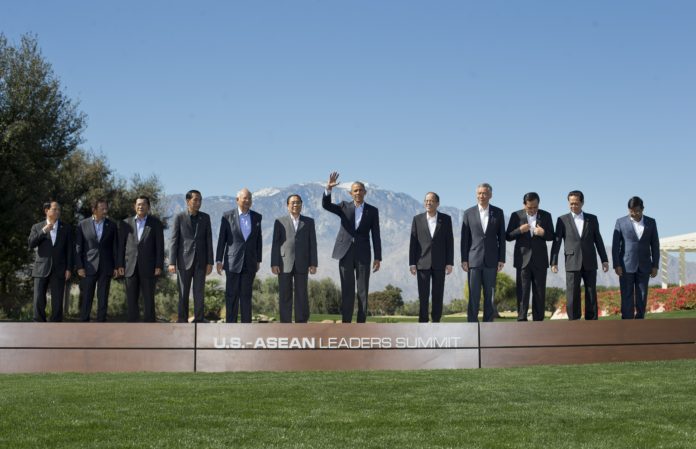
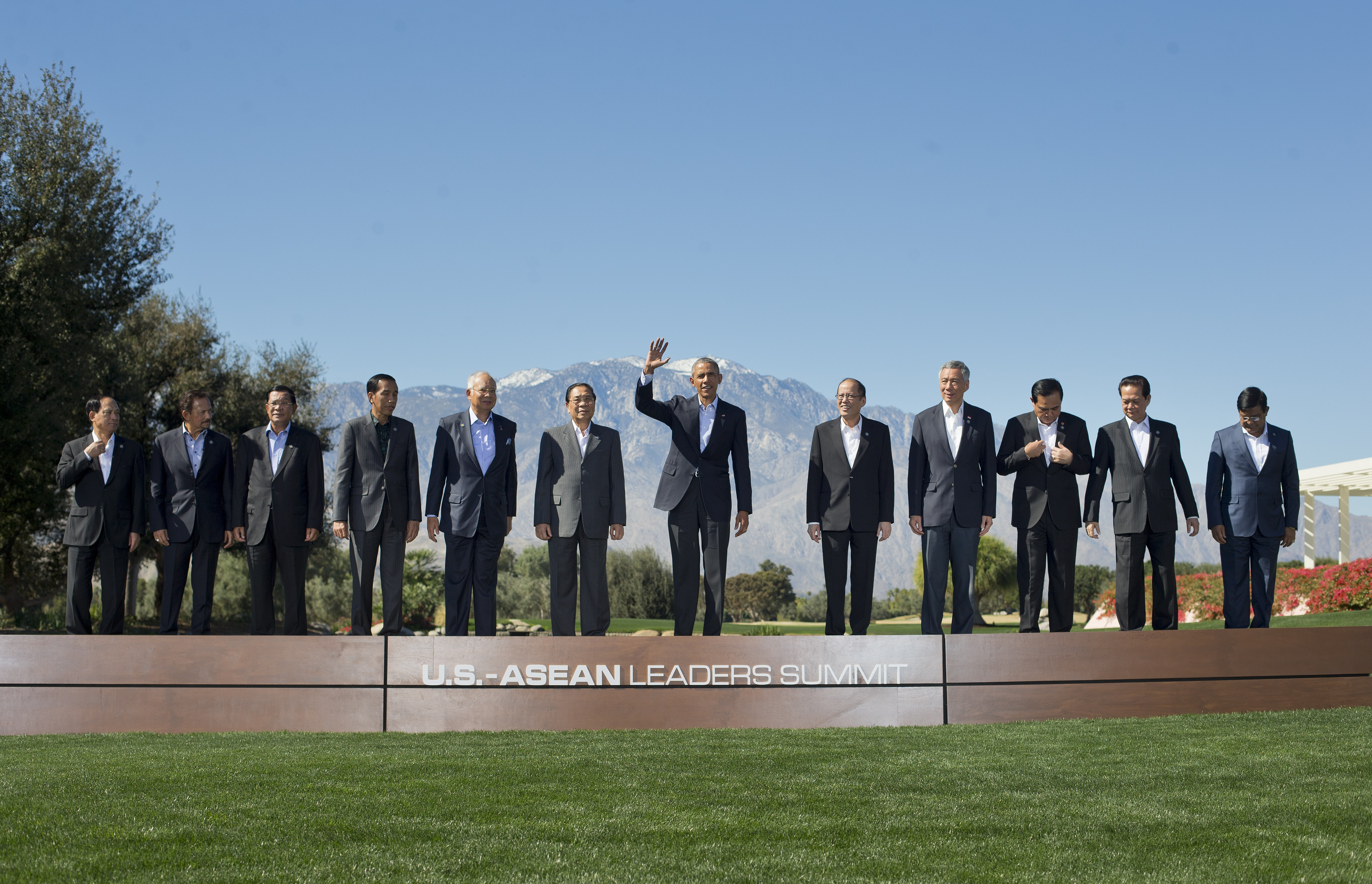
President Barack Obama, center, waves as he poses for a group photo with the leaders of ASEAN, the 10-nation Association of Southeast Asian Nations, at the Annenberg Retreat at Sunnylands in Rancho Mirage, California. Source: AP
Trump pulled out of the Trans-Pacific Partnership, which included key Southeast Asian countries, as the first order of business when he took office.
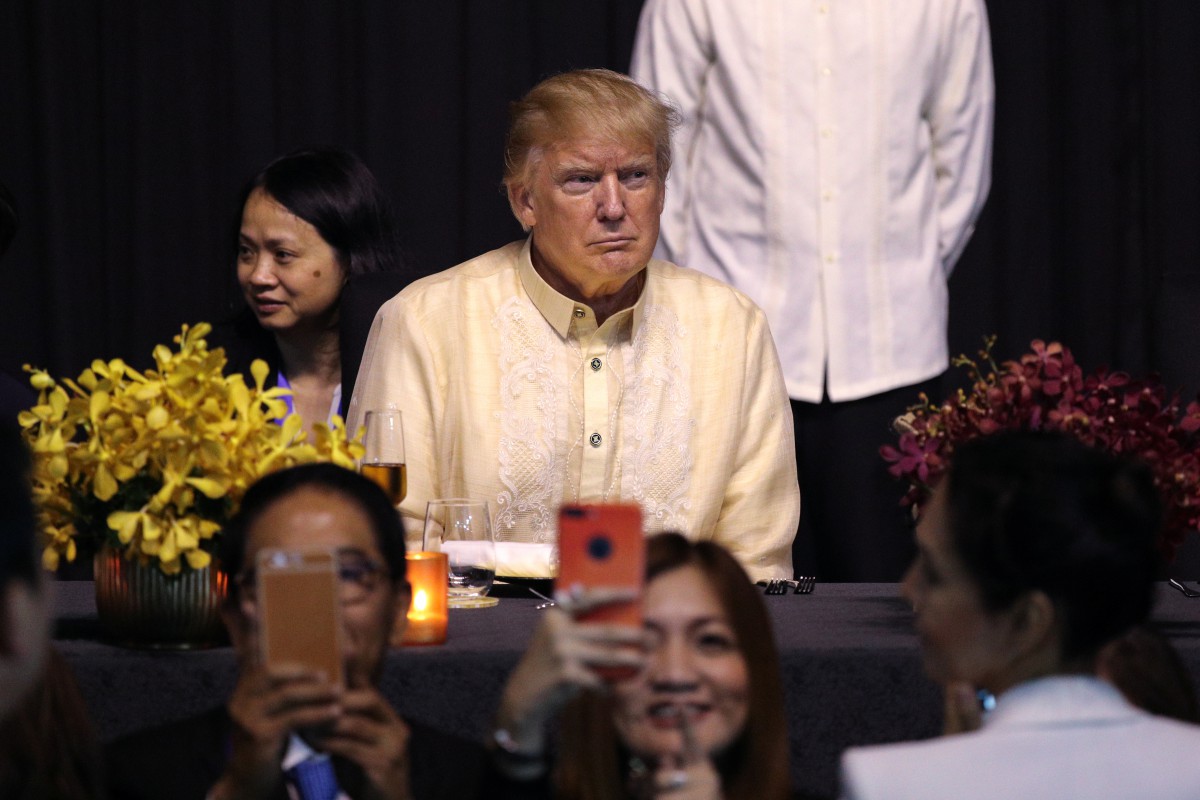
While Obama made a point of attending the annual Asean Summit, Trump only dropped in for the gala dinner last year and didn’t stay for the whole event.
This year, he has snubbed both the Asean and the East Asian Summits entirely, instead choosing to visit Europe where the US has “deep and historic ties.”
While countries in the region are “disappointed” by Trump’s lack of interest, the US president’s lack of attention to Asean “during this presidency, may not be a bad thing,” Dr Tang Siew Mun, Head of ASEAN Studies Centre at the ISEAS-Yusof Ishak Institute, told the audience.
“Any country the Trump administration zooms in on is a target, bad things will happen; sanctions, trade tariffs, tweets, and so on. No news is good news.”
And he’s not wrong. Any country that’s fallen into Trump’s line of sight has generally come out of it worse off. China is a prime example, as they now face tariffs on over US$200 billion worth of their exports and threats of more if they don’t concede to US demands.
Sanctions on Iran are to be restored after Trump withdrew from the JCPOA, and the country is fighting to secure trade deals with other countries after Trump threatened to sever business ties if they maintained links.
Even neighbours Mexico and Canada have come under fire for “taking advantage” of America’s niceness and been forced to renegotiate trade agreements.
U.S. President Donald Trump looks on during the gala dinner marking ASEAN’s 50th anniversary in Manila, Philippines, November 12, 2017. Source: Reuters/Athit Perawongmetha
It’s possible that any focus paid to Asean could backfire in a similar way, which is risky for a region that heavily relies on trade.
In April, newly appointed Deputy US Trade Representative for Asia, Jeffrey Gerrish, said the US trade relations with Asean needed “rebalancing,” citing a collective US$92 billion trade deficit.
This supposed “key priority” seems to have fallen by the wayside as more pressing global issues came to the fore, but his admission acts as a warning to Asean that too much attention is not necessarily a good thing.
“When it comes to getting attention, there’s a sweet spot…not too much, not too little,” explains Shahriman Lockman, Senior Analyst at the Institute of Strategic and International Studies Malaysia.
“For Malaysia, not being an ally of the United States is a pretty good thing right now because we don’t get the attention from the White House. Our file doesn’t go to the White House, it goes to the Pacific Command, the State Department. The professionals run the relationship and it’s predictable.”
And it is precisely Trump’s unpredictability that has caused many leaders to breathe a sigh of relief that it will be Vice President Mike Pence attending next month’s summits as opposed to his boss.
Lockman questions the value of Trump’s unwieldy countenance at the leader led events, saying you “don’t necessarily want a man like Trump in the room.”
But while Pence may be more reliable, his presence is another reminder, not only of America’s waning interest but of its waning power in the region.
As Tang points out, “US supremacy is a thing of the past.”
America is a big factor in the region, but it is far from the only factor. China is gaining traction, pouring money into Asean and supplying the majority of tourists to the region. And the largest investor of Foreign Direct Investment (FDI) is the European Union, Tang said.
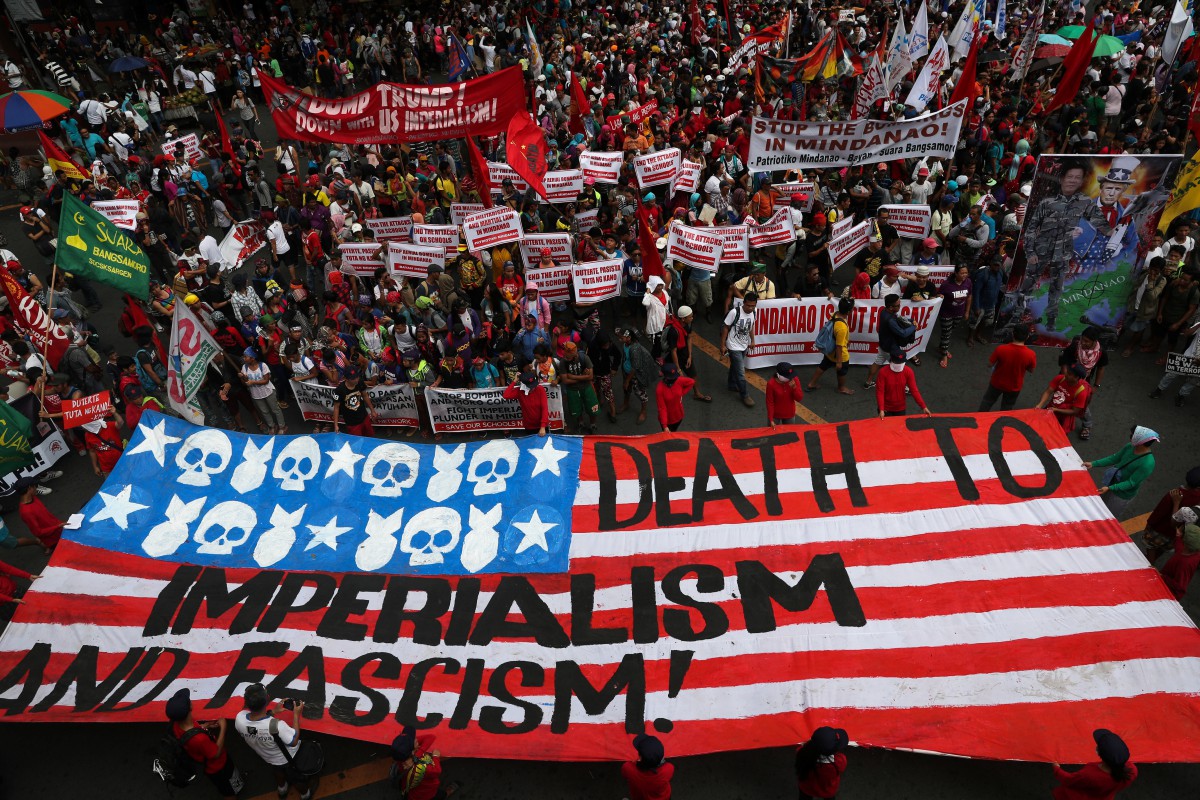
Protesters gather around a large homemade U.S. flag during a rally against U.S. President Donald Trump’s visit in Manila, Philippines November 14, 2017. Source: Reuters/Athit Perawongmetha
“There are many other players in the region. There’s no one single actor,” he said.
“You see multiple leaderships in multiple different areas. There’s no one single party that stands out.”
But this is changing. As the US retreats, China asserts its dominance.
Responses to a survey conducted among policymakers in the region reflect this, Tang said.
“When asked, the strongest power in the region now? – China. The strongest power in 10 years’ time? – China.”
SINGAPORE: Why do women struggle to find a balance between the economic pull to establish her career and the biological desire to raise a family?
In Singapore, domestic help is accessible and relatively affordable. More fathers are taking up positions as carers and homemakers.
Grandparents also contribute to the “village” that a couple needs to raise a home while building a career. And more workplaces are adopting family-friendly policies.
Yet amidst all these support measures, our women are still choosing to have less babies. Singapore’s resident total fertility rate (TFR) was 1.16 births per female in 2017, down from 1.20 in 2016.
MORE PRO-FAMILY POLICIES AT WORK
Women are not only having less babies, they are also having babies later in life. What’s more, the higher their educational qualifications, the later the age of marriage and parenthood.
It is ironic, but the highly skilled workers that we focused on developing in the past are now finding it hard to choose between careers and family.
Considering how much we’ve invested in our education, it’s understandable for men as well as women to pursue career goals first, and leave marriage and parenthood until later.
Can our workplaces be more supportive towards a workforce who wants to raise babies at the same time?
I too experienced having to dial back on my career. After my second child came along, I scaled down to part-time work. When my third child arrived, I stopped work altogether for a season, just to focus on the children’s needs.
(Photo: Unsplash/mohammed elgassier)
Luckily for me however, freelance opportunities came along, and I managed to carve a reasonable balance between work and family.
Many women who step out of waged work to care for their family report facing tremendous challenges trying to find their way back years later.
While the odds improve if they have kept abreast of industry changes, more can be done to protect their interests.
If more flexi-work options are availed to women and their spouses, allowing them more freedom to decide when to work and when to play, it will help to tip the scales in favour of parenthood.
The unfortunate truth is, children are no longer seen as a source of joy. Instead, it is a source of stress, and is overshadowed by a dazzling array of lifestyle options.
A newly-wed couple could decide to take time off and travel the world, or build lucrative careers around Instagram or YouTube as celebrity influencers.
Having a baby, sleepless nights and all, can cramp both freedom and style.
Singaporeans are pragmatics at heart.
The economic cost of child rearing is real – from diapers and milk powder during the infant stages, to childcare fees during the preschool phase, to tuition and college fees in the later years.
The pressures of education are also suffocating. Because of the push to give our young the best ingredients for success, many couples hold back from parenthood or having multiples, knowing the costs involved in tuition and enrichment lessons can stand in the thousands.
This may lead some to question: What’s the point of having kids when we have to push them to study so hard? Where is the joy?
Modern-day parenthood can be a stressful affair as society piles all manner of expectations on us.
“What? You haven’t registered your newborn in such-and-such kindergarten yet?”
“Why haven’t you enrolled her in any tuition/music/sports class?”
“Why don’t you buy your kids a handphone?” Or, “Why did you give them a handphone at such an early age?”
Our decisions for our children are scrutinised and questioned at every turn, often by well-meaning passers-by and family members. Everyone has advice to dish out, whether or not they have kids themselves.
Some parents also set high expectations on themselves, and in turn, their offspring.
Is parenting perfectionism getting in the way of simple, back-to-basics parenting, and thus parenthood itself?
WHAT’S YOUR IDEA OF BLISS?
Childbearing is a tough and complex decision, one that reaches into the very core of who we are and what it means to live well.
Someone’s idea of bliss is just he and a spouse, a nice condo and a dog; while another may include a spouse and three kids in a modest HDB.
It is difficult to convince someone whose ideal picture does not include kids, to have kids.
On the other hand, there are couples who are crazy for kids, and would do all they can to have more.
Then there are also others who are “cautiously optimistic” – open to having one or two.
How do we get more people to move into this band, hop on the kiddy bandwagon and to take the plunge earlier rather than later?
A family walking in Singapore. (Photo: Gaya Chandramohan)
Parenting is a 20 to 30-year commitment at the minimum; a long-hold investment with no guaranteed returns – well none except oodles of joy, hope and wonder.
We have invested so much into building our people’s skills for the future economy. How about future-proofing our nation by equipping couples to build loving marriages first?
Just getting two persons to marry is no guarantee of a stable and generally conflict-free home.
If you’re busy fighting fires every day, your energies are driven towards repair and resolution, rather than procreation. This is not to say that all childless couples are dysfunctional; it is still a private decision with other factors such as age and health at play.
But when a couple enjoys a healthy relationship (and sex life), and feels they are able to cope with the demands of nurturing a newborn, they may be in a prime position to procreate.
Given that there aren’t many love and marriage online forums, where can couples turn to for advice on affairs of the heart?
Perhaps more marriage preparation classes and relationship workshops can be offered to couples to equip them with communication and conflict resolution skills. Through these, they can learn how to relate better, cope with stress and conflict, and even lower divorce rates in the long run.
To sweeten the deal, we could incentivise young married couples by throwing in a “baby-making” or couple therapy retreat at a steal.
(Photo: Nisha Karyn)
APPRECIATING PARENTHOOD
Author Elizabeth Stone once penned these words, “Making the decision to have a child – it’s momentous. It is to decide forever to have your heart go walking outside your body.”
Childbearing is a momentous decision, one that needs a good measure of faith but also practical skills.
So for the “cautiously optimistic”, we need to offer compelling reasons not to hold back.
Improving work-life balance can help alleviate some of the stresses that they face in raising their families.
Equipping them with skills can enhance their sense of marital bliss and help them see the joys and meaning of parenthood.
This goes beyond dishing out monetary bonuses to helping couples become better partners for life, empowering them to build strong marriages and futures.
Hopefully, they will also begin to appreciate the positive aspects of parenthood, and see it as something worthy to be embraced.
Thriving families – made up of loving parents – are our children’s best hedge for a successful life, and our nation’s best bet for its long-term survival.
June Yong is a mother of three, an educational therapist and owner of Mama Wear Papa Shirt, a blog that discusses parenting and education in Singapore.