Home Blog Page 809

6 Steps to Follow When Doing Financial Planning

0

You have probably wondered what financial planning procedure professional’s use for their clients. But what you do not know is that you can do most of what these pros do while at home. Here are the six steps for financial planning that you can follow to achieve financial success.

1. Define the Relationship 

If you are making the financial plan for yourself, you will be both the planner and the client. However, it is still important to identify and define the relationship that exists between the client and the planner. This is especially true if your partner is involved in the financial plan and they will have responsibilities in the implementation and monitoring of decisions.

2. Collect Data, Prioritize Goals and Determine Expectations 

There are many tools that you can use to start collecting your financial data. One such tool is Mint. It is straightforward to use, and it will make your data search process less hectic.
After you have your data, the next step you should take is to set expectations. During this step look at the goals, both financial and non-financial, that you have for your finances. Also, consider the number of times that you want to check out your finances. 
It is equally essential for you to consider personal life goals such as your retirement age, your healthcare needs, and your life expectancy. Regardless, prioritizing your goals is the most significant part of establishing your expectations. The rank that you create will be used throughout the planning process to govern how you will allocate funds.

3. Evaluate and Analyze Financial Status

If you are not a professional, you can start with the basics that will help you make progress on this stage. To find out where you stand financially, you can answer all or some of the following questions:
• Is your cash flow positive? 
• Do your cash flows have any obvious outliers? 
• What net worth do you have? 
• If you had any net worth or cash flow expectations, did they become a reality? 
• Are some of your goals within reach and others out of reach but having no implementation process? 
• Have you made a plan that can help you save to achieve your goals?

4. Develop the Recommendations for the Plan

You now have your ranked list of goals, and you have analyzed your current financial status. You are now ready to make a plan for your financial future. Your flow of cash can be mapped into four parts:
• Part One 
The first thing that you should do is figure out how you will spend the money that you have currently. You can do this by illustrating and organizing automatic transfers to the different savings vehicles of your choice. The trick is to take advantage of automation. 
Automation makes it easy because not seeing money coming into your spending account will not notify you that it is missing. Also, you can use services that will give you the chance to track all the investment money that you have in one location. These services will also take charge of depositing your savings automatically. 
• Part Two 
The second step of making your plan is creating a map with details of what you will do with your future money increases. Consider whether all your increased money will go to one savings goal or if it will be divided evenly between all the goals you have created. Also, ensure that you generate a plan in case you experience payment decreases. 
Moreover, ensure that you consider the possibility of reducing the potential to encounter a downside. You can find methods to avoid risks, or you can insure yourself. The advantage of buying insurance is that you pass on any risk to someone else. 
• Part Three 
Consider estate planning as your third step. Your estate comprises of everything that you control or that is in your name in a manner that adds you benefit. This is inclusive of material possessions such as cars, houses, and retirement accounts. 
Additionally, your estate includes your other unexpected possessions such as your pets. You can think about consulting with an estate attorney especially if you have a very complicated situation. This step is very crucial because you should ensure that you have an outlined plan in case of death or incapacitation. 
• Part Four 
The final step of the plan is considering the investments that you have. If you do not have any current investment, make sure that you make a plan that includes your future investment plans. There are two rules of thumb that you can use when investing: 
• If you want to choose between two similar investments, select the one that has lower fees. 
• Ensure that your investment is diversified. For instance, investing only in stocks is not diversified. Instead, invest in commodities, real estate, and bonds as well. 
Then, consider your risk tolerance, goals, and timelines. If you are already set financially, focus more on mitigating risks than creating wealth. If you are starting, then taking risks and making more investments will make sense. If you are close to retiring, select an investment that is perfect for you without being heavily leveraged.

5. Plan Implementation

To implement effectively, ensure that you do not lose momentum. At this stage, you can consider outside help from an estate attorney who can answer your questions. Make a weekly schedule to complete the small things and do it in a way that works for you.
Also, ensure that you are taking advantage of your employee benefits and anything else that is available to you. Remember to check your tax implications every time you make a decision and find ways to reduce taxes legally.

6. Process Monitoring

It is common to find areas in your plan that were incomplete, incorrect or areas that have changed due to uncontrollable outside forces. With every change, take the new information and use it to improve your initial plan appropriately. Have a reasonable review process and be vigilant in monitoring the process and everything will work out correctly.

Conclusion 

The six steps are not easy, but they are achievable if you are willing to invest your time in creating your financial plan. However, always remember that it is more about your goals than it is about the process itself.

Last modified: April 10, 2019

Source link

How to Maintain the Power Transformer

0

The maintenance of power
transformer
is the daily work that
the electrician must do in order to keep the transformer in normal technical
condition and prolong its service life. Transformer maintenance is an important
part of electrical equipment management. If the maintenance work is done well,
not only can reduce the equipment failure rate, save maintenance costs, and
reduce costs. At the same time, it can bring good economic benefits to the
company. Today, OUGE will teach you how to maintain the power transformer in a
good way.

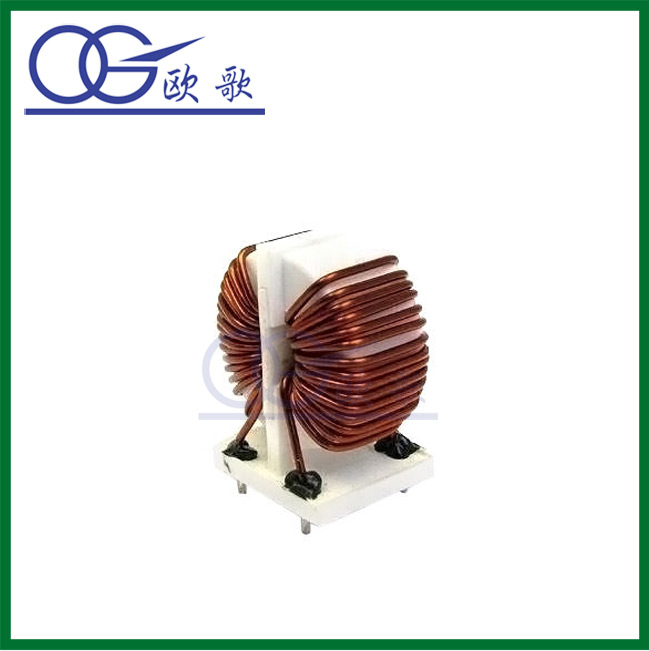
power transformer

(
OUGE Electrical Transformer )

  • Operate in the allowed temperature range

When the transformer is running, its coil
and iron core produce a copper loss and iron loss. These losses become heat
energy and make the transformer’s core and coil temperature rise. If the
temperature exceeds the allowable value for a long time, the insulation will
gradually lose its mechanical elasticity and the insulation will age.

The temperature of each part is different
when the transformer is running. The coil temperature is the highest, followed
by the core temperature, and the insulation oil temperature is lower than the
coil and core temperature. In addition, the upper oil temperature of the
transformer is higher than the lower oil temperature. The allowable temperature
in transformer operation is checked according to the upper oil temperature.

For A class insulated transformer in
normal operation, when the ambient air temperature is up to 400℃, the limit
operating temperature of the transformer winding is 1050℃. Since the temperature
of the winding is 100℃ higher than the oil temperature, in order to prevent the
deterioration of the oil, it is stipulated that the upper oil temperature of
the transformer shall not exceed 950℃. Under normal circumstances, in order to
prevent the insulation oil oxidation, the upper oil temperature should not
exceed 850℃. For transformers with forced oil circulation water cooling and air
cooling, upper oil temperature shall not exceed 750℃ frequently.

  • Monitor the temperature difference between upper oil temperature and cooling air

Only monitoring the upper oil temperature
in the operation of the transformer can not guarantee the safe operation of the
transformer, but also must monitor the temperature difference between the upper
oil temperature and the cooling air. The difference between the transformer
temperature and the ambient air temperature is called the temperature rise. For
A class insulated transformer, when the maximum ambient temperature is 400℃,
the national standard stipulates that the temperature rise of the winding is
650℃, and the allowable temperature rise of the upper oil temperature is 550℃.
As long as the temperature rise of the transformer does not exceed the
specified value, it can ensure the safe operation of the transformer within the
specified operating life under the rated load.

In normal operation, the load of the
transformer should be about 75-90% of the rated capacity of the transformer.

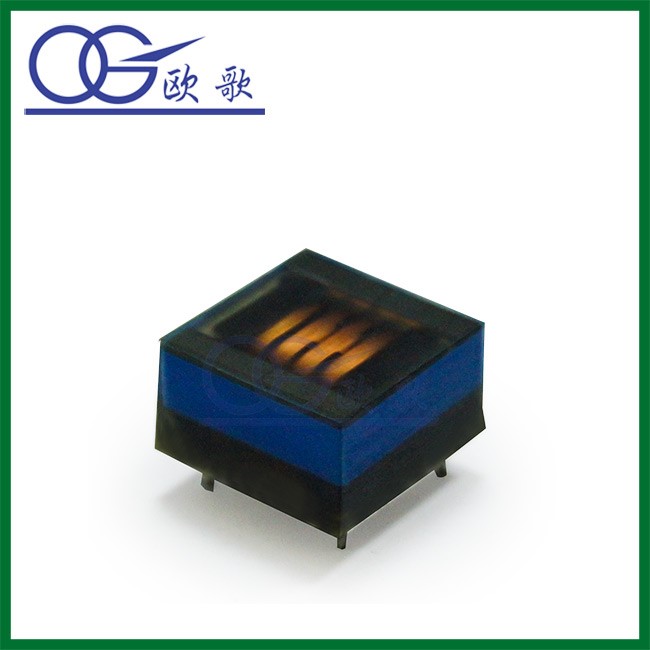
OUGE power transformer

The maximum unbalanced current at low voltage
shall not exceed 25% of the rated value, and the allowable range of transformer
supply voltage variation shall be plus or minus 5% of the rated voltage. If
this range is exceeded, tap switches shall be used to adjust the voltage to the
specified range. Normally, the tap position of the primary winding is changed
to realize voltage regulation. The device connecting and switching tap tap
position is called the tap switch, which adjusts the ratio by changing the
number of turns of the transformer’s high-voltage winding. Low voltage has no
effect on the transformer itself, only some output reduced, but it has an
effect on the electrical equipment.

The fault of the transformer can be
divided into an open circuit and short circuit. The open multimeter is easy to
detect, and the fault of short circuit cannot be detected by the multimeter.

  • Short
    circuit inspection of the power transformer

Cut off all the load of the transformer,
turn on the power supply, and see the no-load temperature rise of the
transformer. If the temperature rise is higher (hot), it must be an internal
partial short circuit.If the power is turned on for 15-30 minutes and the
temperature rises are normal, the transformer is normal.

First, a 1000 watt bulb is connected in
series in the transformer power circuit. When the power is on, the bulb only
turns red, indicating that the transformer is normal. If the bulb is very
bright or brighter, it indicates that there is a local short circuit in the
transformer.

  • The
    open circuit of the transformer

One is the internal coil break, but the
lead wire break is the most common, which should be carefully checked. If the
internal broken wire or the external can be seen to have burned traces, it can
only be replaced or rewound.

For more info, please visit:
http://www.ougedianzi.com/

Source link

Singapore authorities seize 12.7 tonnes of pangolin scales in 2nd haul within a week

0

SINGAPORE: Singapore has intercepted another illegal shipment of pangolin scales just five days after a record haul was seized.

The second haul was detected on Monday (Apr 8) in a 40-footer container that was on its way from Nigeria to Vietnam, the National Parks Board (NParks), Singapore Customs and Immigration & Checkpoints Authority (ICA) said in a media release on Wednesday. 

The container was declared to contain cassia seeds, but upon inspection, 12.7 tonnes of pangolin scales worth about US$38 million (S$52 million) were uncovered, authorities said.

The pangolin scales, which filled 474 bags, came from two species and around 21,000 pangolins would have been killed for them.

The scales seized were from the giant ground pangolin and the white-bellied tree pangolin, said NParks. Both species are considered vulnerable by the International Union for Conservation of Nature.

Pangolin scales seized Customs

Among the scales seized were those of the Giant Ground Pangolin. (Photo: NParks)

READ: Nearly 13 tonnes of pangolin scales worth S$52 million seized in Singapore 

Combined with the nearly 13-tonne find last week, the total amount of pangolin scales seized on Apr 3 and Apr 8 is a record 25.6 tonnes. 

In 2015 and 2016, Singapore made two pangolin scales seizures, amounting to 440kg.

Pangolin scales seized ICA

12.7 tonnes of pangolin scales packed into 474 gunny sacks. (Photo: NParks)

International trade in pangolin is prohibited under the Convention on International Trade in Endangered Species of Wild Flora and Fauna (CITES), which Singapore is a signatory to.

Under Singapore’s Endangered Species (Import & Export) Act, anyone convicted of the illegal import, export and re-export of wildlife, their parts and derivatives can be fined up to S$500,000 and/or jailed up to two years.

Pangolin scales are used in traditional medicines in East Asia despite little evidence that they have any curative effects.

Source link

‘Escaped’ bull within premises of Lim Chu Kang farm: Owner

0

SINGAPORE: A bull which reportedly escaped from a dairy farm in Lim Chu Kang is currently within the premises of Viknesh Dairy Farm, said the farm’s owner.

The farm’s owner, who only gave his name as Mr Manikandan, said the 2-year-old calf, called Ganesha, had escaped from its pen on Tuesday (Apr 9).

“The cow did not escape; escape means go outside (onto the) road, go Jalan Besar, go to other places,” said Mr Manikandan. “It did not go outside, it’s inside our farm.”

When CNA visited at noon on Wednesday, a search party of at least ten people was in the vicinity of the property looking for the bull. Some were seen bashing through thick vegetation adjacent to cow stalls. 

Search party for missing bull in Lim Chu Kang

A group searches for the missing bull in the vicinity of the dairy farm on Apr 10, 2019. (Photo: Matthew Mohan)

The 7-acre farm currently has 36 cows. 

The Singapore Food Agency (SFA) had said on Tuesday that it was working with the National Parks Board and the farm to locate the escaped animal, and advised anyone who spots the bull to steer clear.

“Members of the public are advised not to approach or provoke the bull,” SFA said in a statement.

Viknesh Dairy Farm in Lim Chu Kang

The owner of Viknesh Dairy Farm said the calf escaped from its pen. (Photo: Matthew Mohan)

“The farms in the vicinity have been advised of the escaped bull and to contact the authorities, if sighted,” it said.

SFA said that members of the public who spot the bull should report sightings to the Animal Response Centre at 1800-476-1600.

Source link

Telepod turns to private partnerships, swappable batteries to drive e-scooter business forward

0

SINGAPORE: Telepod is introducing a new swappable battery network and partnering with private operators to house its electric scooters, as it looks to grow its business amid regulatory challenges.

The operator, which launched in 2017, was charged in February under the Parking Places Act for providing personal mobility device-sharing services at public places without a licence or exemption. The Land Transport Authority (LTA) had also impounded 68 Telepod e-scooters that were illegally made available for hire at public places.

Telepod’s chief marketing officer Chan Jit Yen told CNA during a phone interview on Wednesday (Apr 10) that it has yet to receive a licence from LTA to offer its e-scooters for hire in public places and this “doesn’t help with business plans”.

The company was one of 10 who confirmed their intention to enter the shared mobility device space in Singapore.

To circumvent this, Telepod has partnered with private organisations to house its e-scooters, Ms Chan said. 

There are currently about 50 e-scooter stations located within private spaces, and these include Suntec Singapore, the Singapore Management University and one-north, she added.

It currently has about “a few hundred” e-scooters in circulation, the executive said.

MORE JUICE FOR E-SCOOTERS

Telepod battery swap 2

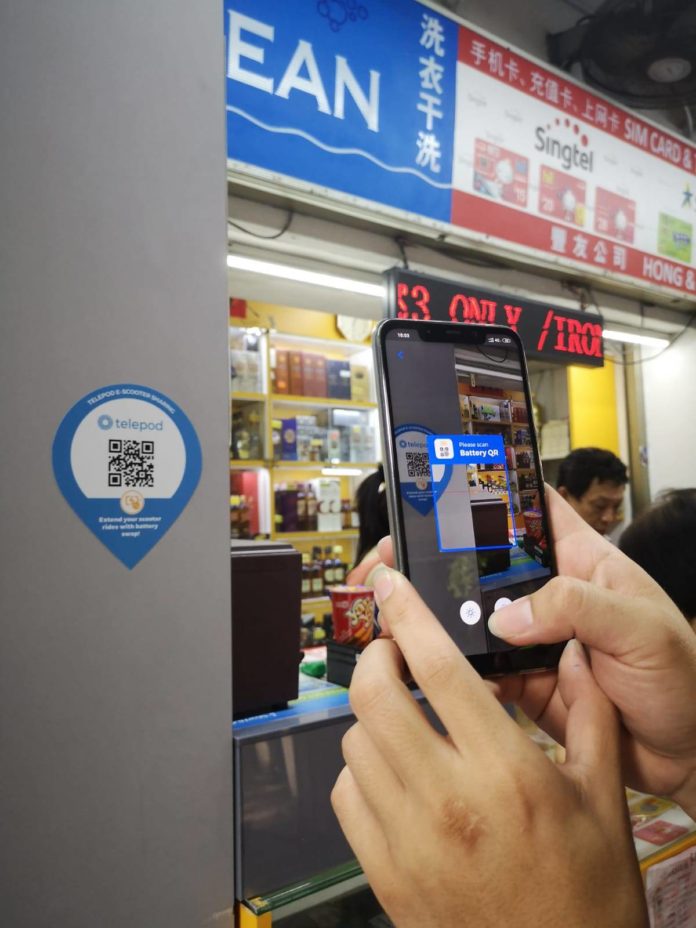
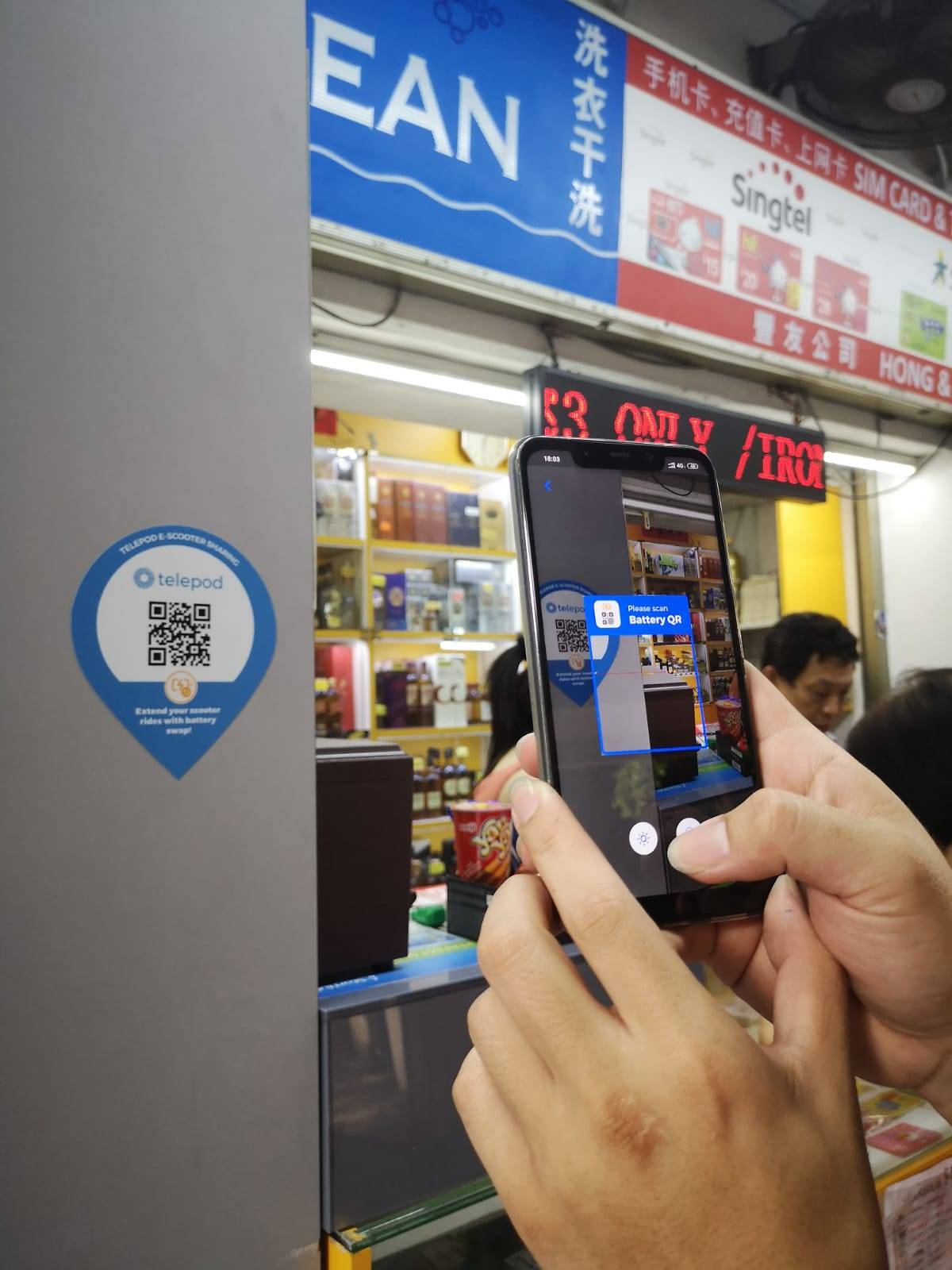
Telepod users will have scan the QR code at convenience stores offering the battery service to request for a swap. (Photo: Telepod)

Ms Chan also highlighted that Telepod is the first operator here to offer swappable batteries for e-scooters.

The service, called “Televery” and launched earlier this month, allows e-scooter riders who use it for delivery services, for example, to solve the problem of having to charge the batteries and losing the opportunity of earning money during that time.

READ: Food delivery PMD riders must comply with LTA rules, companies say

“On average, riders prefer to perform food deliveries for up to eight hours a day but, most e-scooter batteries available in the market can only last not more than two to three hours,” Telepod said in a separate press release.

“(This makes) it difficult for freelance riders to find an e-scooter that is able to serve their needs.”

Ms Chan said Telepod’s batteries have 30km mileage each when fully charged, and the swapping out process lasts “less than a minute”. 

Telepod battery swap 1

Telepod’s batteries, which are housed under the foot stand, can be swapped out in “less than a minute”, according to its CMO Chan Jit Yen. (Photo: Telepod)

There are currently “three to four” convenience stores in the Central Business District (CBD) area that are part of its battery swapping network, and each has about five batteries available.

This is just the start, Ms Chan said, as Telepod is currently speaking to bigger convenience stores operators such as Cheers and SPH Buzz to expand its network. It hopes to have about 10 such stores in the CBD area by the end of May, she added. 

It has also partnered with food delivery service operator Foodpanda to offer the latter’s delivery riders better rates for using its e-scooters and the battery service.

Telepod offers a monthly delivery pass that costs S$150 for 30 days, giving the user up to 10 hours ride time daily, as well as a weekly delivery pass that costs $45 for seven days. 

With the partnership, Foodpanda riders will get 20 per cent off the delivery pass prices, as well as 50 per cent off the cost of a battery swap, which is priced at S$3, Ms Chan said. 

“By partnering with Telepod, we can now provide the option for Foodpanda riders on e-scooters to opt for battery swaps at selected convenience stores and enjoy a more efficient delivery experience as they overcome the challenge of time-consuming charging,” said Mr Luc Andreani, managing director of Foodpanda Singapore, in the press release.

There are also plans to expand Telepod’s business, including the battery swap service, to more places, Ms Chan said.

“We’re moving to expand to more campuses in Malaysia (it is currently in Johor Baru and Kuala Lumpur), as well as to regional markets like Thailand, South Korea and Japan, within the next 12 months,” she said. 

Source link

Commentary: High stress levels a silent culprit behind diabetes

0

SINGAPORE: Whether it is replying to a work email or playing the next game of Candy Crush, you might want to keep your smartphone away till you are done with your meal.

Though those dopamine hits might distract you from the day’s woes, those online games may be actually be inducing more stress hormones in your body.

We often think of consuming too much sugar as the key cause for diabetes, but research has shown that lifestyle habits too can induce stress hormones and lead to diabetes.

READ: Want to fight the sugar problem? Start counting calories, a commentary

Classic stress hormones such as cortisol and catecholamines, if secreted often enough when our body reacts to stress, can create insulin resistance. And insulin then becomes less effective in controlling the blood glucose levels.

THE STRESS THAT LEADS TO DIABETES

Most people think of stress as acute stress. 

This is when the body enters the classical “fight or flight” mode – like when your heart races as you prepare to give a big presentation at work or when you get stuck in traffic. At this stage, your body releases glucose to prepare you to fight or to escape.

But chronic stress can also lead to diabetes. For instance, in situations where people are saddled with prolonged financial difficulty or have to hold down a challenging relationship, their alarm system is constantly activated, the pancreas struggles harder to produce enough insulin to combat the amount of glucose your body releases.

Man office stressed tired overworked

A focused man working on a sticker-covered laptop in a coffee shop. (Photo:Unsplash/Tim Gouw)

The human body has a very sensitive stress recognition system because evolution has made us biologically designed to respond to stress.

If there are too many interruptions around you – such as when you are using your smartphone to watch a video while you eat – your stress hormones will rise, more glucose will be produced, and if your pancreas cannot release enough insulin, you stand at higher risk of diabetes.

Overtime, your system gets exhausted and become less sensitive to insulin. So your blood sugar levels after a meal will take much longer to return to normal levels when you are stressed.

And when sugars build up in your bloodstream, that could unleash a whole host of health problems. Not only will your weight begin to increase. You also start to have trouble sleeping. It could also cause harm to your heart and muscles.

An individual becoming less insulin sensitive because of stress could form the basis for the development of diabetes – apart from having an unhealthy diet.

CURB YOUR STRESS

A dysregulation of stress hormones provides an important biological link between stress, depression and Type 2 diabetes.

Diabetes is a long-drawn battle in Singapore, with one-third of Singaporeans likely to have this chronic disease in their lifetime. The Republic is just behind the US, which has the highest prevalence of diabetes in developed countries.

In 2016, the Singapore Government declared a “war on diabetes” and rolled out strategies – ranging from promoting good eating habits to better disease management – in an attempt to educate its citizens about this lethal health condition.

Pre-diabetes diabetes blood sugar levels

(Photo: Pixabay/stevepb)

The Ministry of Health has also proposed four measures: First, banning the sale of higher sugar pre-packaged drinks. Second, imposing a tax on manufacturers and importers of such drinks. Third, slapping on a mandatory front-of-pack nutrition label on these drinks. Fourth, placing wider restrictions or banning the advertisements of high-sugar drinks.

But tackling sugar is not enough to solve this pressing issue of growing diabetes prevalence.

READ: Reclaiming control over diabetes, one device at a time, a commentary

Today, one in nine people – or more than 400,000 people – aged 18 to 69 has diabetes.

We are seeing a dramatic increase in Type 2 diabetes in the 18 to 40 age group, particularly in Singapore. It is not just an elderly disease anymore.

Diabetes will continue to be a problem if nothing is done. The number of diabetics under the age of 70 is expected to rise to 670,000 by 2030 and one million by 2050.

NOT JUST ABOUT SUGAR

We need to reassess the way we treat diabetic patients in Singapore, especially in younger patients, instead of just seeing it as a war on sugar.

Studies in recent years have shown us that diabetes is not just a glucose-centric disease but a multi-faceted one that can be caused by other factors apart from the consumption of sugary drinks or sweet treats.

READ: Not just sugar – You might be eating your way to pre-diabetes and not even know it

Healthy diets with less sugar can help but prevention strategies must also consider other factors that make diabetes more likely.

We don’t just have to bring down the glucose in blood; we also need to tackle blood lipids, cholesterol and blood pressure – meaning we need to help people get active to bring down their body mass index and enhance weight loss.

Pre-diabetes diabetes weight blood sugar level

(Photo: Unsplash/i yunmai)

We also need to help diabetics manage high cholesterol – to lower smoking and alcohol consumption.

And we also need to help people participate in prevention care activities – with appropriate checks in the eyes and kidneys for early warning signs

READ: Unable to look sideways? Unusual signs of diabetes often unnoticed, ignored or denied, a commentary

We need to manage the chronic disease better ourselves as individuals. Even if it can be managed, through insulin jabs for instance, failing to tackle its root causes will lead to a steady deterioration and result in devastating complications such as kidney failure, nerve damage and heart disease.

TACKLE DIABETES ON MANY FRONTS

Diabetes is a chronic disease that requires a comprehensive and sustained suite of treatment strategies. As with any chronic disease or non-communicable disease, self-management is a key element in successful treatment and improvement in health outcomes.

Pre-diabetes diabetes blood test kit

(Photo: Unsplash/rawpixel)

Understanding the information and having the capability to translate the information into positive self-care behaviours are chief components in diabetes education. 

Well-informed diabetic patients and their families, in turn, can act as ambassadors and support a wide range of healthy living activities within the community.

Managing our stress levels can be a good first step to tackling diabetes.

Professor Bernhard Boehm is the Ong Tiong Tat Chair Professor of Diabetes Research, Professor of Metabolic Medicine and Scientific Director of Metabolic Disorders Research Programme at the NTU Lee Kong Chian School of Medicine. 

Source link

Australia investigating after 585kg of Ice found in fridges from Singapore shipment

0

SYDNEY: Australian authorities are investigating after 585kg of Ice worth nearly A$440 million (US$314 million) were found hidden in refrigerators from a Singapore shipment.

The container, which was declared to contain electric ovens, was intercepted by border officials in Sydney on Mar 30.

Officials found 11 commercial refrigerators and X-rays revealed inconsistencies within their construction, according to a media release on Monday by the Australian Federal Police, Australian Border Force (ABF) and New South Wales Police. 

Drugs seized in Australia

A container filled with commercial refrigerators intercepted in Sydney. (Photo: Australian Border Force)

Seven of the refrigerators contained 561 packages of “white crystalline substances”, which later tested positive for methylamphetamine, or Ice, the media release added.

“Forensic analysis determined the packages contained a total of 585kg of Ice, which has an estimated potential street value of A$438 million.”

The shipment came from Singapore, said ABF Superintendent Garry Low at a press conference on Monday. 

In response to questions, Low said: “The actual container came from Singapore and the actual nature of where the actual drugs came from is ongoing in the investigation.”

Australian authorities have also seized documents relevant to the investigation and electronic storage devices during a search on a commercial property in Sydney suburb Wetherill Park and a home in Edensor Park.

Source link

Teenager, firefighter suffer burns in Woodlands fire

0

SINGAPORE: A teenager and a firefighter suffered burns after a fire broke out in a Housing Board flat in Woodlands on Tuesday (Apr 9).

Four others – two women and two children – were taken to the hospital for smoke inhalation.

The Singapore Civil Defence Force (SCDF) said they responded to a fire in a fifth-floor unit at Block 159 Woodlands Street 13 at around 3.30pm.

Firefighters had to force entry into the flat, where they rescued a woman, a teenager and two children who were trapped in the kitchen area.

Five other occupants in the neighbouring units were also evacuated.

“The fire which was raging, involved contents of a bedroom and the living room,” said SCDF in its statement on Facebook.

The teenager suffered burns to his back and left shoulder and was taken to Singapore General Hospital (SGH).

Two women and two children were taken to SGH and KK Women’s and Children’s Hospital for smoke inhalation.

An SCDF firefighter suffered minor burns to his left shoulder during the rescue mission and was also taken to SGH.

The fire was extinguished with two water jets. 

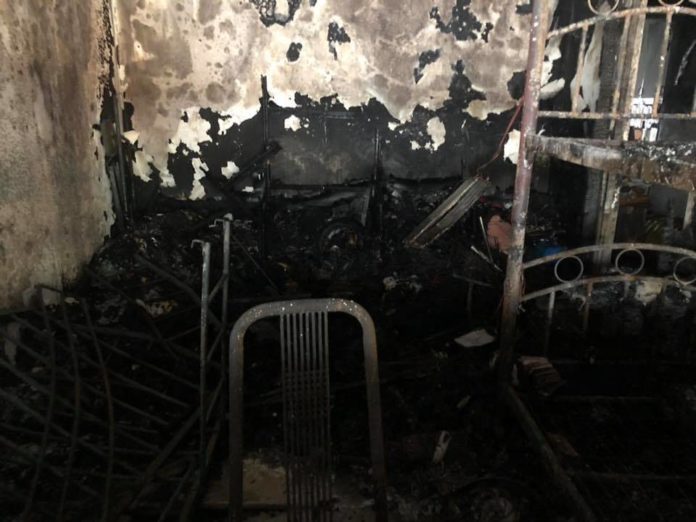
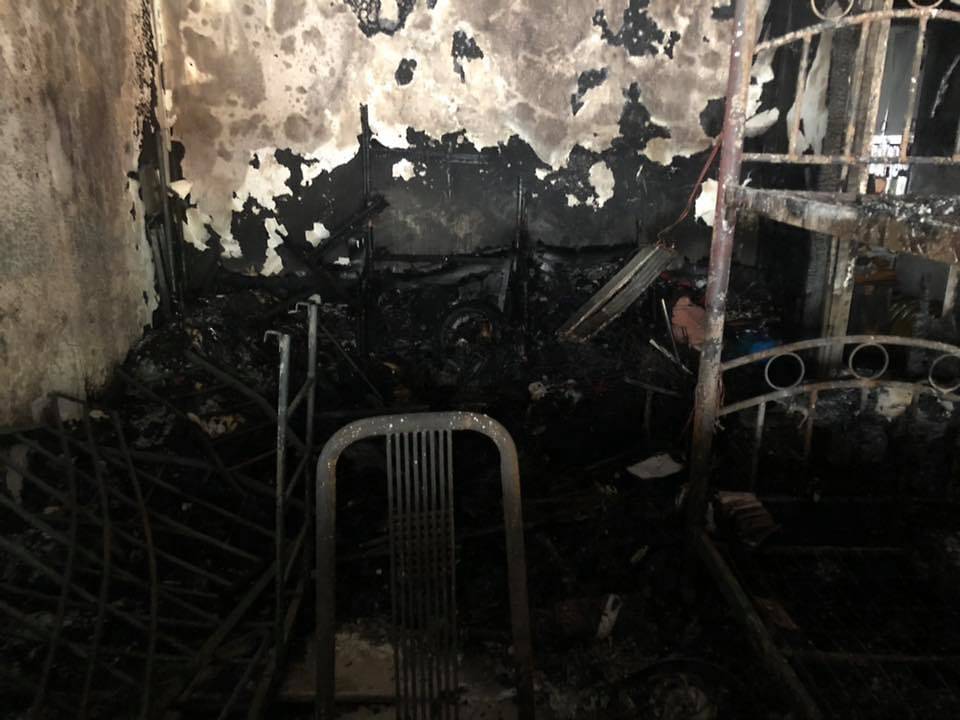
Preliminary investigations indicate that the fire was sparked by a personal mobility device that was left charging in a bedroom.

Woodlands fire

Bedroom of the burnt flat where the personal mobility device was left charging. (Photo: SCDF)

Source link

Singapore wins top prize for AI initiatives at UN-level awards

0

IMDA gets top spot in the Ethical Dimensions of the Information Society category at the World Summit on the Information Society (WSIS) forum.

AISG apprentices teaching kids AI

Primary 5 and Primary 6 students going through the AI for Kids bootcamp organised by AI Singapore. (Photo: AI Singapore/Facebook) 

SINGAPORE: Singapore won a top award at the World Summit on the Information Society (WSIS) Forum on Tuesday (Apr 9) for its efforts in artificial intelligence (AI) ethics and governance.

READ: Singapore to ‘double down’ on artificial intelligence efforts, says Vivian Balakrishnan

The Info-communications Media Development Authority of Singapore (IMDA) won top spot in the Ethical Dimensions of the Information Society category, beating four other finalists including two from the United States, according to a press release by the agency. 

The initiatives that contributed to the win include: Asia’s first model AI governance framework that was released in January; an international and industry-led advisory council on the ethical use of AI and data formed last June; and a research programme on the governance of AI and data use established in partnership with the Singapore Management University last September.

READ: New framework helps organisations ensure AI solutions are ethical: IMDA

READ: New council to advise Singapore Government on ethical use of AI, data

The WSIS prizes recognise outstanding digital projects globally, and the winners of the 18 categories were announced during an award ceremony at the annual WSIS Forum held in Geneva, Switzerland. IMDA’s assistant chief executive for data protection and innovation Yeong Zee Kin received the award on the agency’s behalf.

“Singapore’s win of the WSIS Award is affirmation of our approach that AI practices must be transparent, explainable and fair,” said Communications and Information Minister S Iswaran in the press release.

READ: SMU launches AI research centre; will look at ethics and impact on Singapore’s workforce

“These are important principles that will guide businesses in implementing AI solutions that are human-centric, while spurring innovation in a digital economy.”

There were 1,140 nominations sent in globally for the categories and, of these, 20 projects per category were selected to the second phase of online voting. The top five were then judged by an expert panel before the winner for each category was selected.

The WSIS Forum is a platform co-organised by the International Telecommunications Union, United Nations Educational, Scientific and Cultural Organization, UN Development Programme and UN Conference on Trade and Development. 

Source link

Owner’s appeal to keep koi fish tank on steps outside Tampines flat rejected by HDB

0

SINGAPORE: A koi fish tank installed on the outside steps of a Tampines flat will have to be removed as it is considered an unauthorised fixture built on common property, the Housing Development Board (HDB) said on Tuesday (Apr 9).

The owner had made an appeal after HDB ordered the tank, which is outside of a ground floor flat at Block 415 Tampines Street 41, to be taken down.

The area is considered common property, HDB told CNA in response to queries, adding that it is an offence under the Town Council’s by-laws to have unauthorised fixtures on common property.

READ: HDB orders removal of koi tank outside Tampines flat; owner to appeal

 “HDB had considered the appeal made by the flat owner very carefully, and decided that it cannot be retained,” it said in its response.

“The stairway area outside the unit is common property. The flat owner himself has acknowledged that this is so. 

“Any fixed installations by flat owners have to be confined within the premises of their unit, and not placed on common property.”

koi tank 2

There are electrical sockets and cables exposed to the weather elements, says HDB.

HDB also said it has informed Tampines Town Council and the flat owner of its decision and sought understanding for the removal of the tank.  

The tank was installed a few years ago by the resident of the flat, who was not aware that he needed a permit at the time. It was only in August last year that he requested for one from the town council.

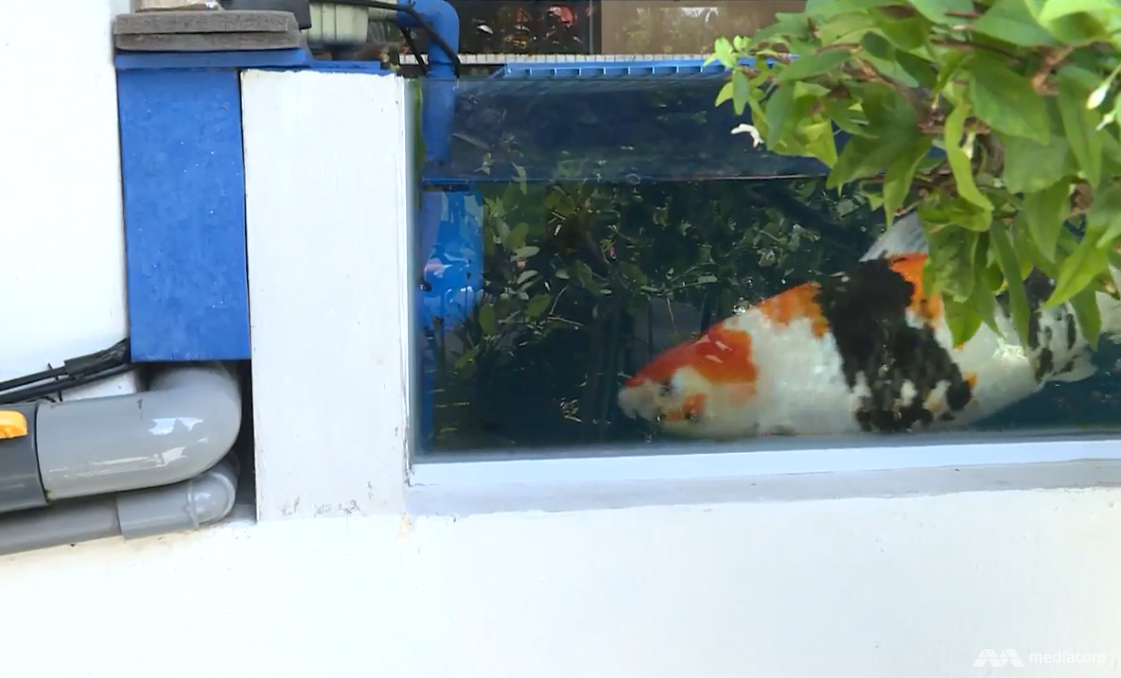
The resident had installed glass panels encasing the space on the steps leading to the entrance of the flat, converting it into an aquarium for about a dozen pet fish. The flat is accessed via the adjacent unit, which the resident also owns.

WATCH: Tampines resident works with town council to keep koi tank | Video

In January, Tampines Town Council said it was facilitating an appeal made by the resident after HDB ordered the tank to be removed, citing safety issues.

There are risks of injury or fatality that could happen from the steps having been “fundamentally altered”, HDB said.

It added that the glass panels could “shatter on impact … and unsupervised children may climb and fall into the tank through the open top”, and that there were electrical sockets and cables exposed to the weather elements. 

Although HDB gives town councils the flexibility to manage common spaces, it is guided by the principle that safety must not be compromised.

“Hence, town councils would generally allow residents to place small or movable items, such as shoe racks and potted plants along the common corridor, so long as they do not post any safety concerns,” HDB said in their previous statement.

In an interview with CNA last August, Member of Parliament for Tampines GRC Baey Yam Keng said there were no complaints regarding the tank. He also noted that while it was obviously against the by-laws, the authorities should be open-minded to look at things on a “case-by-case basis where it warrants”.

He also urged residents to consult with authorities first before going ahead with any modification to their homes.

Source link