Singapore Grand Prix organisers are stocking up on disposable face masks to sell to spectators if the worst air pollution in three years threatens to taint the city-state’s marquee sports event.
Organisers will be keeping tabs on haze readings as the $100 million (S$138 million) Formula One street race kicks off on Friday, just days after Singapore authorities warned already-unhealthy levels could worsen and advised people to reduce outdoor activity.
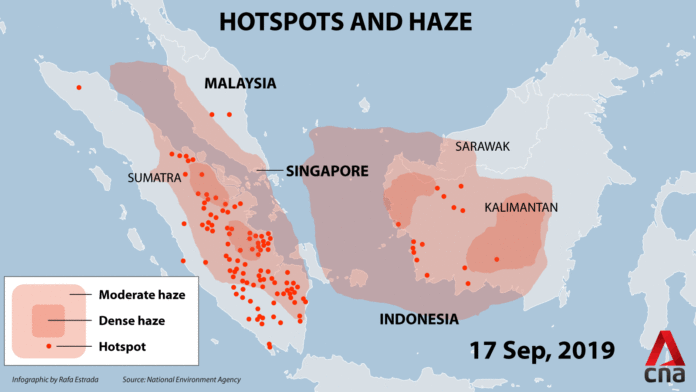
Singapore and large parts of Malaysia have been blanketed in recent days by smoke emanating from forests across Indonesia, where fires are often set to clear land for plantations.
Singapore Grand Prix said disposable masks, which cover the nose and mouth to protect the wearer from breathing in small particles of haze in the air, will be available for sale at merchandise booths if the pollution hits certain predetermined levels. They will also be made available to vulnerable groups such as the elderly, children and pregnant women at first aid booths.
SINGAPORE – A man who strangled a 28-year-old nurse in a jealous rage and tried to have sex with her corpse told police after his arrest that he spent money on her for years but ended up with “nothing”, the High Court heard on Thursday (Sept 19).
Boh Soon Ho, 51, is on trial for murdering Chinese national Zhang Huaxiang at his rented Circuit Road bedroom on March 21, 2016, after she rejected his sexual advances and told him about her relationships with other men.
The Malaysian cafeteria worker considered Ms Zhang, a former colleague, to be his girlfriend as they went shopping and had meals together, even though they had never been physically intimate.
He admitted in police statements that on the day he killed her, he became angry on hearing she was going out with another man and was still in contact with her former boyfriend in China with whom she had been physically intimate.
“I questioned myself why did I provide for her and spend money on her for the past four to five years and yet I ended up with nothing,” he said in a statement recorded on April 5, 2016, the day he was arrested after being brought back from Malaysia.
SINGAPORE – A cabby, who was unaware that he had a tumour in his liver, was driving his vehicle along Queensway on March 22 when the tumour suddenly ruptured, causing him to black out.
Mr How Yuen Fah’s taxi continued travelling towards Jalan Bukit Merah before hitting at least three pedestrians who were crossing the road at a traffic light which was then showing the green man signal.
One of them, Madam Tng Yew Huay, 66, was taken to the National University Hospital (NUH) where she died of a head injury at around 9.20pm that day.
The other pedestrians survived.
Following an inquiry on Wednesday (Sept 18), State Coroner Kamala Ponnampalam found her death to be “an unfortunate traffic misadventure”.
She said Mr How, 72, was also taken to NUH and a scan showed the ruptured tumour.
He went through surgery and further medical investigations revealed that he had hepatocellular carcinoma, a cancer of the liver.
The state coroner added: “The doctor who treated him clarified that the tumour rupture caused severe bleeding into the involved party’s abdomen and a loss of blood flow to his brain.
SINGAPORE: Formula 1 world champion Lewis Hamilton is keeping one eye on the haze situation in Singapore but admits that there is only so much drivers can do to protect themselves against dirty air should conditions worsen over the weekend.
After the Singapore National Environment Agency reported over the weekend that the air quality index entered “unhealthy” levels for the first time in three years due to forest fires in neighbouring Indonesia, conditions had improved by Thursday (Sep 19) and visibility was much clearer.
Race organisers will continue to monitor the situation, however, and championship leader Hamilton said he would also stay up to date with the conditions in and around the Marina Bay Street Circuit.
“We all have doctors on hand but it’s not been brought up as an issue for us although I am conscious of it,” the Briton told reporters on Thursday.
“Naturally, you blow your nose after a race and loads of soot comes out … you’ve got the carbon and all the other stuff you are breathing in, so clean air is an important part of it.
“I have been told not to go for runs outside but I don’t know how that would impact us in the race. Tonight and tomorrow, I will speak to my team about it but there’s only so much we can do, we can’t wear an extra mask in our helmets so it is what it is.”
A couple is seen walking at downtown Singapore on Wednesday, Sep 18, as air quality in Singapore continued to worsen with PSI readings across the island hitting the unhealthy level. (Photo: Gaya Chandramohan)
Even without the threat of haze, the Singapore Grand Prix is one of the most demanding on the calendar, running for a full two hours, in hot and humid conditions around a 23-turn floodlit street circuit.
Hamilton, however, seems to thrive in Singapore and is a firm favourite to record a fifth victory in the race as he continues his march towards a sixth world title.
“This is one of the toughest races, if not the toughest race, of the year – physically and mentally,” added Hamilton, who holds a 63-point lead over Mercedes team mate Valtteri Bottas with seven rounds remaining.
“We come here each year and it shifts between the Ferraris, the Red Bulls and us. The Red Bulls particularly have been quick over the years, so we anticipate that they’re going to be strong, and I have no idea whether Ferrari will be quick as the last two races.”
SINGAPORE: With the haze affecting many aspects of life in the region from tourism to work and school, CNA spoke to Dr Khairunnisa Yahya, a senior scientific officer at the National Environment Agency‘s (NEA) pollution control department, to find out how the haze is measured and what the various readings mean.
WHAT IS THE 24-HOUR PSI?
The 24-hour Pollutant Standards Index (PSI) is computed based on six air pollutants – PM 2.5, PM 10, ozone, sulphur dioxide, nitrogen dioxide and carbon monoxide.
It was developed as an indicator of Singapore’s daily air quality and is the reading that NEA’s daily health advisories are based on.
PSI readings can fall within each of five ranges – Good (0 to 50), Moderate (51 to 100), Unhealthy (101 to 200), Very Unhealthy (201 to 300) and Hazardous (Above 300).
WHAT IS THE ONE-HOUR PM2.5?
It is the hourly average of the PM 2.5 pollutant levels.
PM 2.5 is fine particular matter with a diameter of 2.5 micrometres or shorter.
It is the dominant pollutant during haze and can be harmful to health.
While the 24-hour PSI may be a forecast of air quality in the next 24 hours, the one-hour PM2.5 reading offers the option of looking at air quality at a single point in time.
The one-hour PM2.5 readings may fall within one of these bands – I (Normal), II (Elevated), III (High) and IV (Very High).
Health advice issued by NEA is based on the 24-hour PSI forecast so that members of the public can plan ahead.
For example, if you have an outdoor sports tournament planned for Saturday, you can look at the 24-hour PSI forecast for Saturday. If the figure is in the Unhealthy range, it may be a good idea to think of protective measures.
A man sits on a bench at Garden by the Bay East on Wednesday, Sep 18. Air quality in Singapore on Wednesday continued to worsen as haze hit unhealthy levels across the island. (Photo: Rauf Khan)
The one hour PM 2.5 readings are best used as a guide to adjust immediate activities.
Thinking of going for a dip at the nearby swimming complex? If the PM2.5 figure is in the Elevated band, you may want to postpone that swim to a later time.
People seen wearing masks on Sep 14, 2019 as the haze situation in Singapore worsened. (Photo: Chung Lyn-Yi)
Dr Khairunnisa sums it up: For the 24-hour PSI, we give out a forecast so the public can plan their activities for the day. But for the immediate activity that you are doing for the next hour or so, you should be looking at the one-hour PM2.5.”
IS THE “WINDOW TEST” A GOOD INDICATOR?
Looking out your window is not a good indicator because poor visibility is not always caused by air pollutants. It is, in fact, water that can cause visibility to worsen.
Water droplets scatter light. Water can also bind to particles of certain air pollutants, making them swell to a size that makes them scatter even more light. In this way, the haze can appear enhanced.
HDB blocks in Jurong East shrouded in haze on Sep 14, 2019. (Photo: Kevin Kwang)
The effect is even greater when there is high humidity or rain.
This means that on days where there is not just haze but also high humidity, visibility can appear worse than indicated by the air quality readings.
IF THE ONE-HOUR PM2.5 READS AS NORMAL FOR AN EXTENDED PERIOD OF TIME BUT THE 24-HOUR PSI REGISTERS AS UNHEALTHY, DOES THIS MEAN OTHER POLLUTANTS ARE AT PLAY?
It is highly unlikely that such a PSI reading is caused by pollutants other than the PM2.5.
It could be down to the fact that there were increased concentrations of PM2.5 earlier in the day, which may be confirmed by looking at PM2.5 readings recorded in the morning.
The PSI calculates the air quality over 24 hours so it is possible the reading you are looking at still factors in some of PM2.5 levels from then.
There are multiple air quality indices readily available to the public including the World Air Quality Index (AQI) from website aqicn.org, a non-profit organisation set up in 2007.
Neither the PSI nor the AQI is incorrect – each is just computed using a different air quality index. The AQI adopts the United States Environmental Protection Agency Air Quality Index reporting system.
It obtains PM2.5 data from various countries to compute the latest numbers.
Buildings in the Marina Bay Financial Centre shrouded in haze on Sep 18, 2019. (Photo: Gaya Chandramohan)
WHY IS THE PSI THE BEST READING FOR SINGAPORE?
To calculate the PSI, the NEA uses data from a network of air-monitoring stations around Singapore.
Different countries look at different health findings and their local circumstances to come up with their own index system, said Dr Khairunnisa.
As such, it has control of the entire process, ensuring a more accurate reading of the local situation.
SINGAPORE: After a day of air quality in the unhealthy range, there was an improvement in the Pollutant Standards Index (PSI) on Thursday (Sep 19).
Readings fell gradually throughout the day, and at 9pm, the 24-hours PSI entered the moderate range in all areas.
The readings were, as of 9pm:
88 in the north
92 in the east
98 in the south
93 in the west
88 in the central region
According to the National Environment Agency (NEA), PSI readings of 50 and below denote “good” air quality, “moderate” for 51-100 and “unhealthy” for 101-200.
The improved air quality was due to “a strengthening of winds blowing from the southeast”, which helped disperse the smoke haze from Singapore, said NEA in a media advisory on Thursday.
The one-hour PM2.5 reading at 9pm ranged between 18-28µg/m3, which is in the normal band.
PM2.5 is a measure of tiny particles less than 2.5 micrometres in diameter in the air. When the PM2.5 reading is in the elevated range, haze particles can affect the heart and lungs, especially in people who have chronic heart or lung conditions.
According to NEA, one-hour PM2.5 readings are a “good indicator of current air quality”, and can be used for those deciding whether to go for immediate outdoor activities, such as a jog.
A total of 196 hotspots were detected mostly in Riau, Jambi, South Sumatra and Lampung provinces of Indonesia, said NEA, down from 238 on Wednesday.
For the rest of the day, slightly hazy conditions are expected, the agency added.
The 24-hr PSI is forecast to be between the high end of the moderate range and low end of the unhealthy range.
As for the one-hour PM2.5 readings over the next 24 hours, they are expected to remain in the normal range, and may enter the elevated range if haze from the surrounding region is blown in.
The haze has also affected neighbouring Malaysia, with air quality remaining at “unhealthy” or “very unhealthy” levels in most of the country on Thursday. Nearly 2,500 schools were closed, affecting 1.7 million students.
The haze originated from peat and forest fires in Indonesia, where many still practise the slash-and-burn agricultural methods.
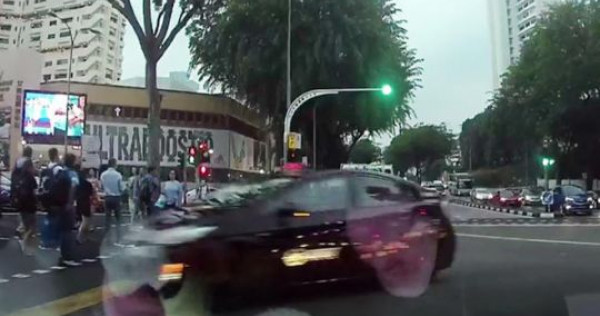
The incident happened at about 7pm on Mar 22 at the cross junction of Alexandra Road, Jalan Bukit Merah and Queensway.
Videos on social media showed the taxi, with its hazard lights on, approaching a stationary car on the first lane. The taxi then swerved abruptly to the left onto the second lane, before accelerating and turning right into oncoming traffic at the junction.
The victim suffered a head injury and died at National University Hospital (NUH). The coroner ruled her death an unfortunate traffic misadventure.
DRIVER FELT PAIN IN NECK, HAD BLURRY VISION
According to the taxi driver Mr How Yuen Fah in his testimony, he started his shift at about 6.30pm that day and picked up a group of three passengers from Bishan.
During the journey, he felt pain in his right abdomen and neck. He also started breaking out in a cold sweat and his vision became blurred.
He continued driving, however, as he was already reaching the destination and had applied medicated oil to his forehead and nose to feel better.
Mr How said the last thing he remembered before losing consciousness was signalling right at the Queensway junction.
He later woke up to his front seat passenger shouting at him, and realised that his taxi’s windscreen was cracked.
An SMRT taxi ploughed into a crowd of pedestrians at the junction of Jalan Bukit Merah and Alexandra Road on Mar 22, 2019 evening, leaving one elderly woman dead and another pedestrian injured. (Screenshot: Facebook/SG Road Vigilante)
PASSENGER PULLED STEERING WHEEL TO AVOID ANOTHER CAR
Based on the account of the taxi passengers, the person in the front seat saw that Mr How’s eyes were closed when they were at the junction. The passenger tapped the driver on the shoulder but received no response.
When the taxi started to inch forward, one of the rear passengers shouted at the front passenger to switch on the hazard lights.
“The first passenger then pulled the steering wheel to the left to avoid a collision with the vehicle that was directly in front of them,” noted the coroner.
“The first passenger stated that he did so as he feared for the safety of the people within the taxi and out of a state of panic.”
The taxi later swerved to the right, picked up speed and collided into pedestrians. It eventually came to a stop when it mounted a kerb.
At NUH, a scan on Mr How revealed a liver tumour that had ruptured, causing bleeding into the abdomen.
The sudden rupture caused “a transient period of loss of consciousness”, according to Assistant Professor Alfred Kow, senior consultant at the department of surgery in NUH.
Mr How had not been aware that there was a tumour in his liver.
SINGAPORE: Ninety-five Singapore Armed Forces (SAF) personnel received Overseas Service Medals on Thursday (Sep 19) for their contributions to disaster relief operations in Palu, Indonesia as well as counter-Islamic State efforts in the Middle East.
Of the medals given out, 68 were for SAF servicemen who worked alongside partner contingents from Australia, New Zealand and the United Kingdom to train 4,500 Iraqi troops in counter-terrorism over nine months.
The other 27 medals were awarded to Republic of Singapore Air Force (RSAF) personnel for their contributions to support disaster relief efforts in Palu, Indonesia, following the September 2018 earthquake and tsunami.
“You represented Singapore and the SAF proudly, flew our flag high through your professionalism and conduct, and fulfilled missions under trying circumstances,” said Defence Minister Ng Eng Hen, who presented the awards at the Ministry of Defence.
“As a result, you garnered praise from other militaries … You also got gratitude from the people you helped directly and from the local governments there.”
A Singapore Armed Forces Serviceman from the Counter-Terrorism Training Unit guiding a soldier from the Iraqi Security Forces during small arms training. (Photo: Ministry of Defence)
SAF has deployed teams and aircraft since 2014 in support of the multinational coalition against the Islamic State.
In his speech, Dr Ng said the fight against terrorism is “a long-term challenge”, and that Singapore and SAF will have to deal with subsequent threats as they come.
“The SAF is a relatively small-sized military but it is in Singapore’s interest to do our part to deal with this global security challenge posed by terrorism,” he said.
He also highlighted that the international coalition working together “thwarted the terrorist plots and averted many potential threats and injuries” in the Middle East, as well as in Singapore and the region.
“If we did not act against Al Qaeda and IS, I have no doubt that you will have more terrorist attacks across the regions and in Singapore,” he said.
“Your contributions there protected Singaporeans here and citizens everywhere.”
The SAF was the first foreign military to arrive in Palu on Oct 2, 2018 with two RSAF C-130 transport aircraft carrying aid supplies such as medicine, portable shelters and food to Sulawesi.
“The group there coordinated our supplies that flew to Indonesia and the relocation of displaced persons out of the affected Palu area,” said Dr Ng.
Republic of Singapore Air Force servicemen evacuating displaced personnel out of affected areas, in support of the disaster relief efforts in Palu, Indonesia. (Photo: Ministry of Defence)
The team continued to help in efforts for two months, which is longer than most other countries, Dr Ng noted.
Singapore’s deployments are examples of the increasing interconnectedness in the world today, where instability or humanitarian disasters in one part have “far-reaching implications” for another part, he said.
“Singapore and the SAF will therefore continue to do what we can as a friend that our partners and neighbours can depend on in times of need, and as a responsible member of the international community.”
This is not a drill — Marvel star Chris Hemsworth is in town for the Formula One race this weekend and you just might score a selfie or even appear on his Instagram if you’re lucky enough to spot him.
The Australian actor documented his encounters with local fans in a series of amusing Instagram stories posted today (Sept 19).
The videos showed Chris trying to make his way to the infinity pool at Marina Bay Sands but getting stopped multiple times by fans asking for pictures.
Not that we need another reason to fall in love with the chiselled hunk, but Chris was kind and patient to a fault as he posed for numerous selfies with fans.
The videos were filmed by his personal trainer Luke Zocchi and personal assistant Aaron Grist who hilariously attempted to insert themselves into the pictures.
Don’t waste it away by spending it at home because there are lots of activities happening around the island to enjoy with your friends and family. Weekends will never be the same again with this weekend planner.
1. DOWNTOWN EAST’S NEW KARAOKE VENUE
Nothing is more irritating during a karaoke session than trying to find a song that’s you’ve been obsessing over, only to find out it’s missing from the KTV system.
If you head over to Downtown East, their new karaoke joint will let you belt out any melody that exists — provided it’s available on YouTube.



.jpg "190919_chris_ig-1.jpg")



