The woman molested by a university student on a train has said that she had not received a letter of apology written by the offender from him.
The letter, reportedly handwritten by Terence Siow Kai Yuan, 23, earlier this year, was part of the defence’s mitigation during sentencing, Chinese-language newspaper Shin Min Daily News reported on Saturday.
Shin Min sent the victim, Ms Karmen Siew, 28, a copy of the letter via a messaging app.
Ms Siew said on Facebook yesterday it was the first time she had heard of the apology.
“I was never given a copy and had no idea it existed prior to Shin Min bringing it up,” she said.
Ms Siew told The New Paper that she had not read the copy of the letter sent to her.
VANCOUVER/SINGAPORE: It was “carpet time” at Ferris Elementary School in Vancouver, Canada. A class of seven-year-olds huddled near the whiteboard and begin reading simple passages aloud to start the school day.
Suddenly, classroom teacher Mrs Andrea Argao stopped the Grade 2 class and told them to sing a cheer instead.
“Can we do it a little louder to wake Josh up?” she said.
In the group was Joshua, aged eight, who appeared to be falling asleep.
Upon hearing the cheers, he perked up and sat up with the help of his education assistant, Ms Jaylene Berry. His eyes slowly refocused on the passage the class was reading.
Joshua was not daydreaming. He has Pura syndrome, a neurodevelopmental disorder characterised by moderate to severe intellectual disability, excessive sleepiness and seizures, among other symptoms.
His condition is so rare that there are fewer than 500 identified cases globally – making it a remarkable feat that Joshua is not only in school, but is able to learn alongside his peers.
Joshua is not the only student with special needs in the school.
Down the hall in another classroom, hands shot up in the air when a teacher asked for volunteers to group odd and even numbers together in a maths class.
Instead of raising his hand, seven-year-old Ahmed, a student with autism, grunted loudly and made loud noises.
Neither his teacher nor classmates scoffed at him, but instead used hand signals to “tell” Ahmed to lower his volume. Two students were tasked with grouping the numbers, and Ahmed was chosen to tally them.
Although he has yet to speak and communicates mostly through signalling, that has not stopped Ahmed from taking part in class activities and playing games with his classmates.
Seven-year-old Ahmed (left), a student with autism, sitting with his friend Ryder in class. (Photo: The Hummingbird Co Pte Ltd)
In Singapore, children like Josh and Ahmed are more likely to be placed in a special education school instead of a mainstream one.
But in British Columbia – Canada’s westernmost province which includes the city of Vancouver and has a population of almost 5 million – they get a shot at a normal school life, interacting with children without special needs.
Amid the push towards a more inclusive society in Singapore – which includes greater inclusion in schools – we accompanied philanthropic organisation Lien Foundation on a visit to Vancouver for a week earlier this year to get a first-hand look at how schools there have made inclusive classrooms a reality.
About two decades ago, public special education schools were progressively phased out in British Columbia and special education teachers were redeployed to work at the district level, helping schools with the transition to inclusion.
But the journey towards inclusion in schools had been long-fought, tracing back to around 1955, when a small group of families – unwilling to institutionalise their children with special needs – began a civil rights movement.
They protested relentlessly to remove “institutions” for the intellectually disabled and handicapped, even providing classes for the community in their homes and church basements. Forming a provincial network, the movement has now evolved into a non-profit organisation advocating for those with special needs, called Inclusion BC.
Between the 1960s and 1970s, British Columbia’s Education Ministry slowly began integrating children with special needs in schools, but students with severe disabilities were still taught separately.
Those categorised with mild disabilities were taught in the same school, but still in separate classes.
It was not until the 1990s when the provincial government eventually moved to provide equal opportunity and increased support for children with special needs.
The School Act was revised, entitling all school-aged children to a full educational programme, not separated from other students, in their neighbourhood schools.
In 1995, a Special Education Policy Framework for British Columbia was also established, which served to guide the development of legislation for special education programmes and services in British Columbia.
INCLUSIVE EDUCATION IN SINGAPORE: WORK IN PROGRESS
In Singapore, the Government has made strides towards a more inclusive education in recent years, amid calls by Members of Parliament (MPs), organisations and parents of children with special needs.
The benefits of inclusive education – where children of all needs are well-supported to learn in a non-segregated environment, and not just coexist – have been well documented since the 1990s, not least because it imparts to all children the importance of empathy and acceptance. It also enables those with special needs to form a positive sense of self.
“Curriculum is learning and learning is better when you have diversity in the classroom because kids share their experiences and ideas. When you share more ideas and more experiences, kids learn concepts better because they learn (in) different ways,” said Associate Professor Leyton Schnellert from the University of British Columbia’s Faculty of Education.
In April, a workgroup was set up by the Ministry of Social and Family Development (MSF) to look at how to better integrate children with learning needs into pre-schools.
While inclusive preschools, such as Kindle Garden and Sail Playhouse, have started operating in recent years, they still form a minority in the preschool sector.
Starting this year, it has also become compulsory for children with moderate to severe special needs to attend school under the Compulsory Education Act – unless they apply for an exemption.
Prior to the change, children with moderate to severe special needs are exempt from compulsory education.
In response to queries, Mrs Lucy Toh, Divisional Director from the Special Educational Needs Division at the Ministry of Education (MOE), said the proportion of students with special needs in Special Education (Sped) schools and mainstream schools has not changed with the extension of the Act.
Currently, there are about 32,000 students with special needs.
About 80 per cent of these students (or 25,600) have mild learning needs and are in mainstream schools, including those diagnosed with dyslexia, mild Autism Spectrum Disorder and Attention Deficit Hyperactivity Disorder, said the MOE.
The remaining 20 per cent (or 6,400), with moderate to severe needs, attend one of 19 Sped schools in Singapore, which are run by social service organisations.
While it remains a work in progress to improve inclusion in schools and expand educational pathways for children with special needs, Sped schools are expected to expand further as the number of children with special needs such as autism has risen in recent years – due in part to increased awareness and early diagnosis.
As Senior Parliamentary Secretary for Education Muhammad Faishal Ibrahim told Parliament in July last year, embracing those with different abilities will take time and a sustained effort.
‘We need everyone to commit to this – teachers, schools, parents, the public, employers and the wider society,” he said during the debate on the motion on the future of Singapore’s education system.
Ahmed with his classmates from Ferris Elementary School. (Photo: The Hummingbird Co Pte Ltd)
TAKEAWAYS FROM BRITISH COLUMBIA
As Singapore develops its own brand of inclusive education, it could take a leaf out of what British Columbia is doing. Among other things, elementary schools there have in place continuous support structures to help children with special needs.
Thanks to the alternative educational pathways and individual educational plans (IEPs) for those with special needs, the pressure of having to pass grade exams like their peers is taken off, and those with special needs can still pass through mainstream schools without “failing” or “dropping out”. If they are not able to graduate by taking the provincial exams, they receive a certificate recognising their achievements.
Here is a closer look at some of these practices:
1. CONTINUOUS SUPPORT STRUCTURES
In British Columbia, most children – including those with special needs – attend the same school from Kindergarten to Grade 7. This provides them with access to similar support structures from the age of 5 to 12.
British Columbia in Canada is divided into 60 school districts, which administer publicly funded education until the end of Grade 12 (equivalent to pre-university in Singapore). Every school district has access to a team of professional allied health educators such as occupational and speech therapists.
These therapists provide support for children with special needs in the school itself.
For example, at Ferris Elementary, speech therapists work with children with special needs in between classes – minimising the need for these children to travel out of the school, or receive additional help after school hours.
Singapore has in place support and early intervention programmes for children with special needs, but they are currently segmented between those under 6 years old (preschoolers) and those in primary schools.
Preschoolers can receive support through the MSF’s Early Intervention Programme for Infants and Children and Development Support Plus programmes, which were recently enhanced.
From Primary 1 onwards, support is provided through various schemes by the MOE such as Learning Support Programmes and Dyslexia Remediation programmes, which have been made available for all schools since 2016.
2. KEY ROLE OF ALLIED EDUCATORS
Another key factor in making inclusion a reality in mainstream schools is the availability and capabilities of allied educators and health professionals, such as occupational and speech therapists.
These assistants not only support students with special needs, but also take some pressure off classroom teachers who are teaching curriculum.
In British Columbia, education assistants are the equivalent of learning and behavioural support allied educators in Singapore – they cooperate with classroom teachers to provide support for students with special needs.
The MOE had embarked on training allied educators and teachers in special needs in 2005 to support children with mild special needs in the mainstream school system.
There are more than 25,000 students with special needs in mainstream schools here, and about 500 learning and behavioural support allied educators, said the MOE.
In British Columbia, there are currently about 73,000 students with special needs, with close to 12,000 education assistants.
At Ferris Elementary, for example, there are 12 education assistants to support a total of about 26 children – 18 with certified diagnosis of a diverse range of special needs and another 8 “low incidence cases” – from K1 to Grade 7, making the support ratio about two to one.
In comparison, there is at least one allied educator in every primary school in Singapore, the MOE said.
A learning and behavioural support allied educator in Singapore could arrange, for instance, for a weekly session of about 30 minutes to an hour with these students, during which they will receive specific coaching tailored to their needs.
For more complex cases, allied educators could work with MOE educational psychologists to draw up targeted intervention plans for the students, to help them work towards independence in their area of difficulty.
A former learning and behavioural support allied educator, who worked in a mainstream school in Singapore, said that one of the biggest challenges was the case load which she had to manage.
The 32-year-old, who only wanted to be known as Ms Lim, said that in her three years working as an allied educator, she would at times have to “juggle up to 50 cases”.
“As a result, we don’t get to spend much one-to-one time with students with special needs,” said Ms Lim, who left the profession in 2014.
She also noted that classroom teachers at times asked for “instant fixes” for children with special needs, or requested her to take them “out of the class”. This, she said, was understandable as the teachers’ workload might be heavy as well.
“They have to juggle other projects and not just teach. Also, in a class, sometimes it’s not just one student with special needs, some classes have up to 10 with varying needs,” said Ms Lim, who is now a freelance therapist but continues to work with children with special needs.
3. PROSPECTS FOR SPECIAL NEEDS EDUCATORS
While British Columbia – like Singapore – still grapples with the problem of attracting and retaining allied educators due to the long working hours and relatively poor salary, the opportunity for education assistants to improve their prospects in the Canadian province has encouraged some to continue.
Among other things, unions which protect the rights of workers such as education assistants have allocated more funds to support their skills development in recent years.
In the 2009/2010 school year, the Support Staff Education and Adjustment Committee allocated C$3 million (S$3.13 million) to support skills enhancement and retraining initiatives for workers including education assistants.
In addition, certified education assistants in British Columbia are put through at least two practicums.
Some polytechnics there also require applicants to first have two years of college study or have done 100 hours of volunteering with children before accepting them into the course.
These baseline qualifications provide certified education assistants with a launchpad to further their careers.. With additional training, they are able to transition into more challenging roles, such as becoming sign language therapists, or even classroom teachers.
However, the requirements have been notably relaxed in some school districts recently in a bid to alleviate the shortage in education assistants – much to the alarm of the current cohort, with some saying standards should not be lowered just to bring support into schools.
One education assistant who is upgrading herself is Ms Christie Hartwig, from Golden Ears Elementary, who is studying to be a classroom teacher.
For five years, she had been assisting classroom teachers to teach children with special needs. She wants to be a classroom teacher so that she could have “a chance to help everybody, not just those with special needs”.
4. GETTING CO-TEACHERS TO ‘CONQUER TOGETHER’
Granted, with a class size averaging 20 at schools in British Columbia – about half the average class size in Singapore – embracing inclusion could be easier, as the workload on classroom teachers would be lighter, and both allied educators and teachers could have more time to work with those with special needs.
But instead of the “divide and conquer” approach – where classroom teachers are still seen as leading the class with support staff – why not get curriculum teachers and allied educators to “conquer together”?
The latter is known as a “non-categorical resource model”, said Assoc Prof Schnellert, whose research interests include shifts in classroom practice.
“Someone could walk into a classroom and they couldn’t tell if I was the special educator or if I was the classroom teacher. You’re both working with kids, you’re both at the front, you’re taking turns, you’re moving around,” he said. “That’s one form that works really well if there’s a synergistic or similar personality teaching styles between the two educators.”
Ms Kate Campbell, a teacher consultant in the British Columbia district support team, added: “Some schools have collaboration time (for teachers, allied educators and allied health professionals) built into their timetables.
“It’s a nerve-racking thing to invite other professionals into your classroom sometimes (but) the more we practise it and do it, the better we get.”
Cooperation between teachers and allied educators also works both ways, said teachers in British Columbia – it is not just always about allied educators supporting teachers.
For example, Mrs Argao, Joshua’s classroom teacher, took a first aid course to learn how to lift handicapped persons to help Ms Berry lift Joshua out of his wheelchair after he got “too heavy over one summer”.
“If he is in a wheelchair, it is a barrier between him and the rest (of the class) … it also weakens his muscles, and we wanted him to still participate in class,” said Mrs Argao.
Such a model of co-teaching, as practised in British Columbia, was welcomed by Dr Jacqueline Chung, senior principal and academic director at St James’ Church Kindergarten in Singapore.
Dr Chung, who is also an Early Childhood Development Agency Fellow, was also on the trip organised by the Lien Foundation to witness how classes were conducted in elementary schools in British Columbia.
“I think often in Singapore, we think that the mainstream teacher does the mainstream stuff, and if any child has special needs, it’s the special needs teacher. And so they carve out, this is my portion, this is your portion … and hopefully whatever we do will meet the needs of the child,” she said.
She added: “But in (British Columbia), what I see here is not divide and conquer, it’s… ‘how can we together work towards supporting the child’.”
To that end, the MOE said it is working towards equipping all teachers with basic competencies to support students with special education needs.
5. IT’S NOT JUST ‘PLAY’ FOR SPECIAL NEEDS KIDS
Under the Special Education Policy Framework for British Columbia, students with special needs must each have a customised IEP, which spells out their goals for the academic year.
The IEP is collectively devised by classroom teachers, education assistants and parents of students with special needs.
The programme provides the foundation for an alternate educational pathway for those with special needs while in the mainstream system, reducing their drop out rate.
Based on their goals, students with special needs can receive a certificate even if they are unable to meet requirements to graduate with a diploma. The certificate – called the Evergreen Certificate – represents the completion of personal learning goals as laid out in the students’ IEPs.
The law also requires that the decision to put a student in a certification programme should not be made prior to Grade 10 (age 15 to 16), and should include the informed consent of the student’s parents.
In Singapore, students with special needs in mainstream schools work towards the Primary School Leaving Examination (PSLE) at Primary 6, as with their peers.
A mother of a 9-year-old boy with dyslexia and difficulties in writing – who is enrolled in a mainstream school – lamented the emphasis on preparing her child academically to pass the school’s tests, which “supersedes the focus on whether the child is being supported in his learning, based on his profile needs and abilities”.
The mother, who wished to be known only as Mrs Tan, said: “If my child cannot even differentiate between ‘B’s and ‘D’s and has problems writing words, why do I need him to learn and master a whole list (of words for) English spelling test?”
Mrs Tan said that although MOE Education Psychologists had suggested for her son to be assessed via oral modes instead of writing, this was not taken up by the school’s teachers who cited a lack of manpower and class size as obstacles to implementing differentiated learning strategies.
“The school leader and teachers said that they hoped that the need for such differentiation and adaptations like reduced questions for homework would stop and my son can catch up with his peers because he needs to be able to be ready to take the PSLE,” said Mrs Tan.
She felt that this reflected the mindset of some educators in mainstream schools that children with special needs have a “deficit” and are a “liability … always having to catch up” with their peers.
6. BREAKING DOWN THE WALLS
The British Columbia experience suggests that apart from sound policies and strong support structures, there is also a need to develop a culture that embraces inclusion in schools.
One way to achieve this is by breaking down the walls that separate children with and without special needs.
At Ferris Elementary, for example, principal Diane Steele said the school makes it a point to have “demystification” sessions for all children.
During such sessions, the conditions of students with special needs are explained to the class, with the permission – and participation – of parents, counsellors and education assistants.
She cited the case of a boy with Fetal alcohol spectrum disorders (characterised by behavioural and physical problems) who had a demystification session with a counsellor in class.
“There’s an open conversation about it. They (students) all drew a brain and they talked about how brains were different, and this little boy was able to articulate that (his) brain was different,” she said.
For Chanelle and Mia, Joshua’s classmates at Ferris Elementary, such sessions have proven to be helpful in getting to know their classmate.
Chanelle said: “We learnt that if we sing a song like Baby Shark, if he faces towards us and crawls, that means he wants (our) attention … we (can) try to help Joshua with his daily physical activity by pushing him on the track… and we can use his (bib) to wipe his drool.”
Mia added: “I first knew Joshua in September (last year) … Now I think I’ll tell people that you should be nice to him, even though he doesn’t know how to talk or walk.”
Mia Yang checks on Joshua who has Pura syndrome, a rare chromosomal disease which causes symptoms such as excessive sleepiness, speech and mobility delays. (Photo: TODAY/Photo Cynthia Choo)
NO ‘PERFECT SYSTEM’ FOR INCLUSIVE EDUCATION
One of the fiercest advocates in Singapore for inclusive education is Jalan Besar GRC Member of Parliament Denise Phua.
Ms Phua is also co-founder of Pathlight School, and helped start The Purple Parade, an annual initiative to support inclusion and celebrate abilities.
Cautioning against “blindly following” another school system, Ms Phua – who was not part of the trip organised by the Lien Foundation – called for a “local system that adopts the best of both mainstream and special education”. She noted the spectrum of special needs and the education culture in Singapore which still emphasises academic results in some ways.
Apart from academic integration, many students with special needs also require “the hidden curriculum”, which covers life skills such as work habits and social skills, said Ms Phua, who chairs the Government Parliamentary Committee for Education.
She said: “Inclusion if not carefully designed, will not lead to maximising the potential of the students in the long term.”
Nevertheless, she agreed that an inclusive system must have features such as an IEP, trained allied educators, as well as availability of education psychologists and other specialists such as occupational and speech therapists.
“For students who require more support, locate satellite schools within an education village of sorts that allows for physical and social integration even if they don’t always benefit from academic integration,” she suggested.
This story was written in partnership with philanthropic organisation Lien Foundation, as part of How We Do School, a series of learning journeys overseas to study inclusive practices in education. Visit http://inclusionmatters.sg to find out more.
JOHOR BARU – A Singaporean man paid RM28,000 (S$9,225) to settle 116 outstanding traffic summonses, at least one of which dated back to 2000, in Johor Baru on Saturday (Sept 28), after he was detained during an operation at Muzium Tokoh.
The man in his 60s was among over 3,000 people who were detained during a three-day operation, dubbed “Op Saman Tertunggak Warganegara Asing”, that began at 6am on Friday, Bernama reported.
The operation, which was the 10th of a series, involved 116 personnel and was conducted at the Gelang Patah Rest and Service area, Iskandar Puteri and at Muzium Tokoh, Jalan Lingkaran Dalam.
A total of 3,174 outstanding summonses were settled by 2,687 Singaporeans and 487 Malaysians in the operation, according to Bukit Aman Traffic Investigation and Enforcement Department deputy director Senior Asst Comm Mohd Nazri Hussain.
SINGAPORE: About 300 members and volunteers of the Progress Singapore Party (PSP) fanned out across the island on Sunday morning (Sep 29) for its first walkabout, with party secretary-general Dr Tan Cheng Bock visiting Ghim Moh and Tiong Bahru.
The walkabout for Singapore’s latest political party covered all 29 constituencies, with Dr Tan first joining a team at Ghim Moh Market & Food Centre, before heading to Tiong Bahru market.
Speaking to reporters at his home after the walkabout, Dr Tan said that he and the party got a positive reception.
“From my angle, the two places I visited, the response was very good, I’m quite surprised that many of them actually know my name,” he said. “But I also found out that they are not so sure about the PSP, because the PSP is so new.”
The purpose of the walkabout – which the PSP called “29 on 29” – was so that Singaporeans could get to know the party better, assistant secretary-general Anthony Lee said.
There was no particular significance to Dr Tan’s visit to Ghim Moh and Tiong Bahru, said PSP member Michelle Lee.
“Of course many people would want to see Doc (Tan) – we just had to consider what was easily accessible for him, we didn’t want it to be too tiring for Doc. It just happened, no meaning assigned to (it),” she said.
“Currently, our objective is to promote awareness about PSP … So they become familiar with us, familiar with Dr Tan, familiar with the party as a whole, what we stand for.”
Ghim Moh is located within the Holland-Bukit Timah GRC, which was won by the People’s Action Party (PAP) with 66.6 per cent of the vote against the Singapore Democratic Party in the 2015 General Election.
Tanjong Pagar GRC, where Tiong Bahru is located, was helmed by former prime minister Lee Kuan Yew for years. It was contested for the first time in the 2015 election, with the PAP winning 77.7 per cent of the vote.
Dr Tan Cheng Bock speaks to people at Ghim Moh Market & Food Centre. (Photo: Matthew Mohan)
Dr Tan, who has been tightlipped about PSP’s policies and election strategy, also emphasised that the choice of locations was “random”.
“It is random,” said the retired doctor, who was a PAP Member of Parliament for Ayer Rajah from 1980 to 2006. “I could have gone to Ang Mo Kio, I could have gone to Nee Soon.”
Dr Tan had announced his return to politics earlier this year, filing an application with the Registry of Societies to form a new political party on Jan 16. His party was officially registered at the end of March.
He ran for President in 2011 and narrowly lost to Dr Tony Tan.
In March 2016, Dr Tan announced his intention to run again. But he was unable to do so as the next election was reserved for Malay candidates, following changes to the Constitution that stated that if there was no president from a particular racial community for five consecutive terms, the next term will be reserved for that community.
Dr Tan mounted a legal challenge to the reserved election but the Court of Appeal dismissed his application.
A “FRIENDLY POLITICAL PARTY”
Despite being a new party, the PSP has seen “growing” membership, said Ms Lee. The party declined to disclose membership figures, but said that their youngest member was 17 years old.
“We are very encouraged by the people who have come forward to support us and our growing membership is also an indication of that,” said Ms Lee.
Dr Tan added: “It is not the numbers that we are looking for, we are also looking for the quality of people and the commitment.”
“Whether he joins me or he doesn’t join me actually is not important at all but the fact that he sympathises with my cause, he identifies the processes that I want to take for the future of Singapore,” Dr Tan said, when asked if Mr Lee Hsien Yang has joined PSP.
“Because he is also worried about the processes, he is also worried about the governance.”
Calling the PSP a “friendly political party”, Dr Tan stressed the need for his team to maintain good relationships with other opposition parties and well as the PAP.
“I think we should forget about this ‘If you’re not with me, you’re against me’ (mindset), no, we must change that, we should throw this statement out,” he said.
“You’re not with me doesn’t mean that I’m against you. It’s just that we have a different opinion, we have a different way of doing things.”
For the walkabout for instance, the PSP had sent out a “friendly courtesy note” to the other opposition parties, added Mr Lee.
During his visit to Tiong Bahru market, Dr Tan ran into MP Indranee Rajah, and they shook hands and exchanged pleasantries.
He said: “Her PAP supporters were all very friendly and I also know most of them … So I’m quite happy that the relationship is not confrontational.”
“Its to nice to see people pop by occasionally,” said Ms Indranee, who is Minister in the Prime Minister’s Office, to reporters. “My priority is the residents in the constituency and I work on the basis that you have to work hard, you have to serve residents.”
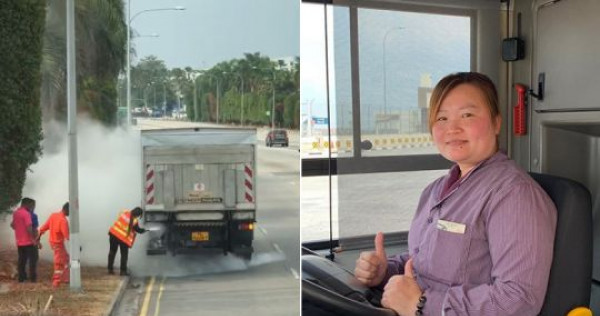
SINGAPORE – Bus driver Thian Siew Mui was driving her usual route in Tuas on Thursday morning (Sept 26) when she noticed that the side of a lorry had caught fire and rushed to put the fire out.
Ms Thian, 38, had just dropped off some passengers at the bus stop opposite the West Star industrial building near Tuas South Avenue 5. She was driving off when she noticed the lorry on fire.
She sounded the horn at the lorry driver to alert him to the fire. The driver of another lorry, which was ferrying workers, also alerted his fellow driver by sounding the horn.
All three vehicles stopped at the side of the road, and both lorry drivers tried to put out the fire in vain with three bottles of mineral water.
Ms Thian asked the 50 passengers on bus service 247 to wait, before grabbing a fire extinguisher and running to the lorry. She quickly put out the fire.
A video that is being circulated on Facebook, seemingly taken by a passenger on the bus, shows Ms Thian swiftly extinguishing the flames in the lorry and checking if the fire had been put out, before returning to the bus.
Why not rent baby items instead of buying everything brand new? From strollers and carriers to toys and winter clothing and even breast pumps, you’ll be amazed by the items available for rental.
“Most baby and kids related items are usually used for a few months and then kept in storage for a long time,” points out Herry Pudjianto, co-founder of Rent Tycoons, a peer-to-peer rental platform.
“You still can sell it for half price later, but if you rent, it only costs you a fraction of the original price and you don’t have to keep it.”
To some parents, it makes sense to rent items such as baby carriers, toys and cots since babies outgrow them so fast. Add strollers and car seats to the list because not only are they expensive, they come with zero guarantee that your little one will take to them.
Don’t forget to throw in breast pumps – you might have to try several before finding one that works for you, plus you only use them for a short time.
Bannie Kang, a South Korean mixologist who slings cocktails in Singapore, has been crowned the world’s best bartender 2019 at a major international competition hosted by booze giant Diageo.
At the 11th annual Diageo World Class Bartender of the Year competition, Kang outshook and outstirred 52 bartenders from around the world in the final round of heats that took place across four days in the Netherlands and Scotland.
In Singapore, Kang is the head bartender of Anti:Dote bar at the Fairmont Singapore, which specializes in progressive, modern cocktails made with housemade bitters, homegrown herbs and flowers, premium spirits and flavored sodas.
Throughout the competition, finalists were challenged to concoct environmentally-friendly drinks “with a sense of community at their core” and to create cocktails using a mystery box of ingredients and bar tools.
SINGAPORE: Singapore and Malaysia have agreed to extend for an additional month, the deadline to decide on whether to continue with construction of the Johor Bahru-Singapore Rapid Transit System (RTS) Link without any additional cost, Malaysia’s Ministry of Transport said in a media statement on Sunday (Sep 29).
The new deadline was set for Oct 31, the statement added.
As part of the agreement, Malaysia had agreed to reimburse Singapore for the abortive costs incurred – around S$600,000 – due to the suspension.
During the suspension period, Malaysia will decide if it intends to proceed with the RTS Link project as it is.
Malaysia can also propose changes to the project scope, and Singapore will give any such changes due consideration.
The RTS Link, which connects Bukit Chagar in Johor Bahru to Woodlands in Singapore, is expected to ferry up to 10,000 passengers per hour each way. The project was meant to be completed by 2024, but is now behind schedule with Malaysia repeatedly delaying confirmation of its joint venture partner.
According to a bilateral agreement signed in January 2018, a joint venture company comprising Singapore’s SMRT and Malaysia’s Prasarana Malaysia should have been constituted by Jun 30 last year.
The joint venture company should also have been appointed as the RTS Link operator through a concession agreement with Singapore’s Land Transport Authority and the government of Malaysia by Sep 30, 2018.
Both milestones were missed. Malaysia then asked for an extension until Mar 31, to confirm its joint venture partner.
In April, Putrajaya said it had requested for a further six-month extension from Singapore before making a decision on the RTS, to enable the Malaysian government to examine several issues including the cost of implementing the project.
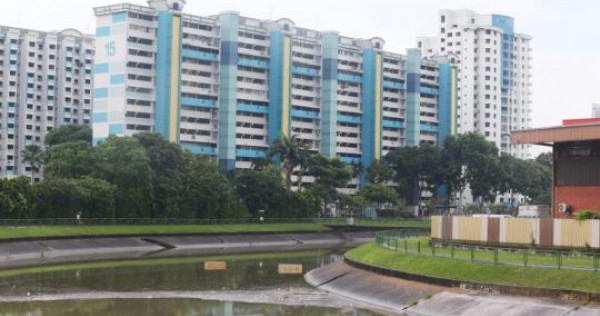
SINGAPORE – A cleaner has been fined $2,200 for “knowingly and wilfully” discarding a coffin into the Kallang River, the National Environment Agency (NEA) said on Saturday (Sept 28).
Two rectangular boxes – which turned out to be the inner and outer crates of a single coffin – were sighted floating on the Kallang River near Upper Boon Keng Road on May 8 this year. The NEA was alerted to the unusual find and they were briskly removed in the afternoon the same day.
The Straits Times understands that the cleaner, Mr Rajasingam Ramasamy, was engaged by a casket company to dispose of the coffin but he failed to do so.
The coffin was used to repatriate a body back to Singapore and was meant to be hacked up into pieces of wood and disposed of as regular trash.
“NEA’s investigations found that the accused had knowingly and wilfully discarded the coffin into the river, and his irresponsible actions had caused public alarm,” NEA said in a statement.
Waterways are meant to convey rainwater to reservoirs or the sea, NEA said. Businesses and members of the public must keep the waterways clean by not polluting or discharging bulky items into them.