Home Blog Page 676

Commentary: Love for the game? Is owning a football club worth the trouble?

0

SINGAPORE: If football can be an unforgiving sport on the pitch, what happens off it is a whole different ball game.

For many successful businessmen and cash-rich investors, owning a top European club may sound glamorous and lucrative, but can be a quick way to lose money or reputation – and often both.

READ: Commentary: Saudi Arabia wants to muscle in on World Cup 2022. Will Qatar let it?

That hasn’t stopped foreign suitors looking to court western teams.

Asia has had a long love affair with European, especially English, football.

This is reflected in the boardrooms of many famous teams. Out of the 44 clubs in the top two tiers of English football, 16 are under Asian ownership, either in full or part.

PETER LIM AND VALENCIA

Famed Singaporean billionaire Peter Lim has experienced both the highs and the lows in this area. He owns 40 per cent of Salford City, with former Manchester United legends Gary Neville, Paul Scholes, Nicky Butt, Phil Neville, Ryan Giggs and David Beckham sharing the rest.

The new regime took control in 2014, when the club was in the eighth tier of English football. Now it is in the fourth and three promotions away from the English Premier League.  

While successful, Salford is a side project compared to Valencia, six-time Spanish champions. 

In October 2014, the same year Lim bought his stake in Salford City, he was welcomed as a hero when he arrived to take control of 70.4 per cent of the club, clearing €200 million of debt (US$218 million) as part of a €420 million deal.

No wonder then that fans in the Spanish city chanted Lim’s name with great gusto. Yet, five years on, those chants have turned to a less welcoming #LimGoHome

Lim, who also tried and failed to buy English football titan Liverpool in 2010, does not need a second invitation as he is probably rarely in Spain these days. 

His roller-coaster relationship with fans is now at rock-bottom. Distrust turned to anger earlier in September when popular coach Marcelino Garcia Toral was fired.

The Brazilian, in charge since 2017, had been credited with bringing some long-awaited success to Valencia. Under his tutelage, Valencia won the Copa del Rey, a first trophy since 2008, and also qualified for the UEFA Champions League. 

Marcelino’s success had been achieved in spite of Lim. Over 50 players have been signed since 2014 and there have been eight coaching changes in a period of instability amid Lim’s micromanagement.

The unpopular Lim could be forgiven for wondering whether it has been worth it, after sinking millions into this latest endeavour.

WHY OWN A FOOTBALL CLUB?

The seductive siren of football club ownership has been incredibly enticing for scores of Asian business leaders.

After a spate of Thai acquisitions of English clubs earlier this decade, the chairman of one Bangkok club told me that the ready-made history of teams in England, the home of the modern game with a professional league, steeped in heritage and going back to 1888 – a full 95 years before South Korea founded the first in Asia – has been tempting for potential investors

READ: Commentary: Premier League wins by creating room at the top for football clubs

The lure of being involved in the English Premier League, the world’s most popular elite club competition that generates massive interest spanning several continents, also lies in its ability to turn their owners into highly recognisable figures.

Owning famous teams can help companies with international exposure but come with substantial risks. Indian poultry company Venky’s bought English Premier League team Blackburn Rovers in 2010. 

Pre Season Friendly - Blackburn Rovers v Everton

Soccer Football – Pre Season Friendly – Blackburn Rovers v Everton – Ewood Park, Blackburn, Britain – July 26, 2018 Everton’s Sandro Ramirez in action. (Photo: Reuters/John Clifton)

Despite the new owners promising stars and success, Blackburn, Premier League champion in 1995, found itself in the third tier in 2017 and struggling to win back disenchanted fans.

KING POWER’S SUCCESS WITH LEICESTER CITY

Rarer is the story of football triumph, when the love of sport marries the acumen of business, though there are laudable examples. 

Few outside Thailand had heard of King Power, the country’s dominant duty-free retail group, until the company bought Leicester City in 2010. The club started the 2015-2016 English Premier League season with odds of 5,000 to 1 to win.

Yet that is exactly what happened in an incredible campaign that captured the imagination of fans and received immense international exposure.

But financial returns can be unpredictable. English Premier League and other leading top tiers in Europe can be broadcasting and commercial money-spinners, but the sky-high salaries and transfer fees involved in keeping clubs competitive can wipe out returns. In the 2017-2018 English season, 13 top tier clubs made a profit while seven were in the red.

Profit may not be the motive for the spate of Chinese activity that started in earnest in 2014 and acquired stakes in 23 European clubs by the end of 2017. 

It has been suggested that these are part of a design to develop the sport in China in a national attempt to help build a sports industry worth US$290 billion by 2025, triple its current value.

Basketball, along with football, is the most popular sport in China, but that has failed to result

Basketball, along with football, is the most popular sport in China, but that has failed to result in a top-class team. (Photo: AFP/GREG BAKER)

READ: Commentary: They are giving up their passports to play football for China but Chinese fans remain sceptical

For Chinese companies, European clubs can act as a bridge between international and domestic markets as well as serve as a place to import football expertise to China and export Chinese players.

THE GULF STATES AND FOOTBALL

Some owners do not seem to care how much it costs. The Abu Dhabi group, headed by Sheikh Mansour bin Zayed Al Nahyan, a member of the United Arab Emirates’ ruling family and deputy prime minister, bought Manchester City in 2008. 

A decade later and the club’s account showed that around US$1.6 billion had been directly invested into the club. 

Whatever success City may have – and the club is arguably the best in England – it will be an uphill climb to recoup the cash. The same can be said for Qatar Sports Investments, a subsidiary of state-owned Qatar Investment Authority, that has taken over Paris St Germain.

The owners of both clubs have been accused of turning them into public relations machines to improve the image of their respective countries.

The Abu Dhabi Group invests, in a much more modest fashion, in Asian teams such as Al Jazira in the UAE and Japan’s Yokohama F Marinos but Asian leagues don’t have the same attraction as their more longstanding and prestigious European counterparts. 

Winning titles in Asia does not command international attention. While it is difficult to make money owning a club in Europe, in Asia, it is almost impossible. Broadcast revenues are, in most countries, negligible as are branding opportunities. 

READ: Commentary: Don’t rule out ASEAN’s bid to host 2034 World Cup

The major European leagues are bigger stages that promise glamour, fame and even sometimes profit. 

Yet it remains an unpredictable venture as the likes of Peter Lim have discovered.

John Duerden has lived in Asia for 20 years and covers the region’s sporting scene. He is the author of 3 books including Lions & Tigers – the History of football in Singapore and Malaysia (2017).


Source link

Esports a hard sell in grades-obsessed Singapore

0

[ad_1]

In a country highly focused on academic achievement, Singaporean Galvin Kang Jian Wen did something almost unthinkable – he stopped studying as a teenager to spend more time playing computer games.

He defied parental and social disapproval after his high school finals to pursue his dream of becoming an esports champion, but believes the sacrifice has paid off as he heads with his national team to Southeast Asia’s mini-Olympics.

Teenage gamers worldwide are shunning mainstream education in favour of spending hours tapping away on computers and phones, attracted by a booming esports scene where prizes at major tournaments reach millions of dollars.

But perhaps nowhere is the prospect of swapping textbooks for joysticks more daunting than in Singapore, which tops global education rankings and were striving for academic excellence is deeply ingrained in the national psyche.

[ad_2]

Source link

Woman tells driver to park properly at MBS, but she was the one who parked wrongly

0

[ad_1]

It’s the bane of all drivers — a car that’s parked too close for comfort.

On Tuesday (Oct 1), a displeased driver was forced to climb out from her Mazda at a carpark in Marina Bay Sands because the Volvo next to her car was not “parked properly”.

She even left a handwritten note for the other driver: “I think you need to learn how to park properly especially when the parking lots here are extremely limited.”

“I had to get out from the other side (of my car). Thanks!”

PHOTO: Facebook/SG Road Vigilante

Her note sounded polite but the woman ranted in an Instagram story: “(I) was so pissed off that I had to climb over the other side and there’s f***ing limited lots here.”

But it looks like the lady might be the one in need of some guidance herself.

[ad_2]

Source link

DFS offers retrenched employees better severance package after criticism

0

SINGAPORE: Retrenched DFS Group employees were offered better severance packages on Wednesday (Oct 2), but some CNA spoke to remained critical of how the exercise was conducted. 

DFS announced that retrenched workers would receive two weeks’ salary for each year of service, capped at 13 years or the equivalent of 26 weeks’ pay. 

They could either serve out their notice period or be paid in lieu of notice. 

This was more than the original offer of serving notice or payment in lieu of notice period, and a severance package capped at 13 weeks of pay, which the employees received when they were notified of the retrenchment on Thursday. 

The new terms were announced on Wednesday morning in meetings held at the hotel Royal Plaza on Scotts.

The meetings followed comments by Manpower Minister Josephine Teo, who said on Saturday that the DFS Group “could have better handled” the retrenchment exercise, particularly in the way it was communicated to employees and how the severance packages were offered.  

In a statement on Wednesday afternoon, a DFS spokesperson said the company has “made best efforts” to communicate its support in face-to-face meetings with affected staff. 

DFS has increased its “engagement and dialogue with the Ministry of Manpower (MOM), the Tripartite Alliance for Fair and Progressive Employment Practices (TAFEP) and the Taskforce for Responsible Retrenchment and Employment Facilitation (TASKFORCE)”, said the spokesperson. 

“We remain committed to carrying out this exercise in a fair and sensitive manner,” said DFS, adding that it had in a place a series of measures to assist affected staff. 

These measures were aligned with the Tripartite Advisory from the tripartite partners – MOM, the National Trades Union Congress (NTUC) and the Singapore National Employers Federation (SNEF), it said. 

“We will continue to work closely with TASKFORCE, Workforce Singapore (WSG) and external outplacement agencies to provide support to affected staff in their transition in the next several months.”

In the statement, the LVMH-owned retailer confirmed that employees at its T Galleria in Scottswalk and its shared services centre in Chai Chee were affected by the retrenchment exercise, some with immediate effect, and some over the next few months.

Staff working in the liquor and tobacco concession operations at Changi had also been given formal notice of their termination of employment with DFS, said the spokesperson. 

“This will take effect in June 2020 when DFS will officially exit the concession and a new operator will assume management.” 

READ: TAFEP looking into DFS Group’s retrenchment exercise after dozens laid off

READ: DFS to close its tobacco and liquor stores at Changi Airport

DFS Group announced in August that it would not retain its duty-free liquor and tobacco concession at Changi Airport when its lease expires in June next year.

It had previously said that about 500 people were employed at DFS’s liquor and tobacco duty-free outlets at Changi Airport and that staff members would be offered options regarding their employment, which include deployment to other DFS concessions and working for the new operator.

When CNA visited Royal Plaza on Scotts between 10am and 12pm on Wednesday, there were DFS employees gathered in the hotel lobby. 

Some had just attended their allocated meetings, while others were still waiting their turn.  

Employees CNA spoke to said they were shocked and hurt by the sudden retrenchment, and felt that the updated terms of the severance package were still below expectations. 

Several of them had walked out of the rooms designated for the meetings in tears, while others broke down as they recounted last Thursday’s announcement. 

Ms Celeste (not her real name), told CNA she had worked for the DFS Group for more than 30 years and that she was disappointed with how the retrenchment was handled, especially for long-term employees. 

“It really is so cruel. Most of us have children or parents to take care of, and they didn’t even warn us about the retrenchment,” she said. 

Another employee, who did not want to be identified but said she worked at DFS for 17 years, told CNA she was worried about how the retrenchment would affect her financial commitments. 

She told CNA how her sick husband would unlikely be able to work for a long time and how her two children were still in school. 

“I don’t think this is the right way to treat your employees. They never asked us about family background and whether we can survive if we don’t have a job. I just wish they would be more caring,” she said. 

severance letter dfs

Retrenched employees were offered new severance terms of two weeks of pay for each year of service capped at 13 years, or the equivalent of 26 weeks of pay. (Photo: Ang Hwee Min)

Employees said they felt the way the exercise was carried out was unprecedented. 

Those whose employment was terminated on Thursday with immediate effect were made to sign and return the retrenchment package agreement by noon the next day. They were also given a bag into which they were to pack their belongings, and asked to leave. 

In previous retrenchment exercises, affected staff were informed in advance so they could make the necessary preparations, according to Ms Celeste. 

“This time, there was no compassion and it was so sudden. Even with the new terms capped at 13 years, that’s less than half of the time some of us have spent at this company.

“Why can’t they have different packages for short-term and long-term employees?” she said. 

Ms Celeste told CNA that several of those who had been asked to leave on Thursday formed a Whatsapp group chat. There were 66 members, many of whom were those who had worked with DFS for more than 15 years. 

One of them, Ms Jessica (not her real name), told CNA: “As a very dedicated employee, I must say that DFS has treated me very well all these years. 

“I love this company, but with this particular incident I feel very sad that we’ve made the news for all the wrong reasons,” said Ms Jessica, who was a DFS employee for 17 years. 

“It is very inconsistent with all the values and teachings they have taught us all these years, to value our people,” she added. “This retrenchment is really like a surprise nuclear bomb.” 

Another employee, who worked for DFS Group for about 40 years, told CNA: “I was very upset over the past few days and I complained to my friends a lot.

“Now I just have no more words to express my disappointment. I never expected this to happen,” she added, tearing up. 

A number of employees said they were aware that the Singapore Manual and Mercantile Workers’ Union (SMMWU), a general union affiliated with NTUC, had reached out to DFS Group.

They told CNA they were hopeful the union could help negotiate for better severance terms. 

“We look forward to further dialogues with SMMWU and NTUC to promote good industrial relations for our mutual benefit and that of our staff,” said the DFS spokesperson. 

Secretary-general of SMMWU David Yeo told CNA that in a unionised situation, the norm for severance packages is one month for each year of service, subject to a cap of 25 years of service. 

Any deviation from the norm would be based on the company’s financial position and viability, he added. 

“If recognition is obtained by the Union to represent the workers, we will revisit the package,” said Mr Yeo. 

“What the outcome of the revisit will be is another thing altogether.”

Source link

Man with ‘suspicious bulge’ caught trying to smuggle cigarettes into Singapore: ICA

0

SINGAPORE: A Malaysian man was caught trying to smuggle contraband cigarettes into Singapore after Immigration and Checkpoints Authority (ICA) officers noticed a “suspicious bulge” in his groin area.

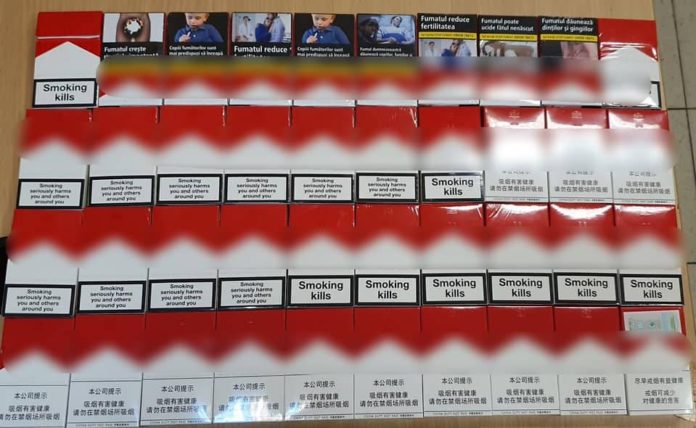
Further checks on the 39-year-old traveller on Sep 11 revealed 10 packets of cigarettes around his hip and groin area.

This case was one of six separate attempts to smuggle duty-unpaid cigarettes into Singapore last month, ICA said on Wednesday (Oct 2).

A total of 78 packets and 40 loose sticks of assorted cigarettes were detected by officers at the Singapore Cruise Centre, West Coast Pier and Marina South Pier.

READ: Woman caught for smuggling cigarettes hidden in packet of sanitary pads

READ: Man tries to smuggle cigarettes hidden in ice boxes of seafood through Woodlands Checkpoint

40 packets of duty-unpaid cigarettes

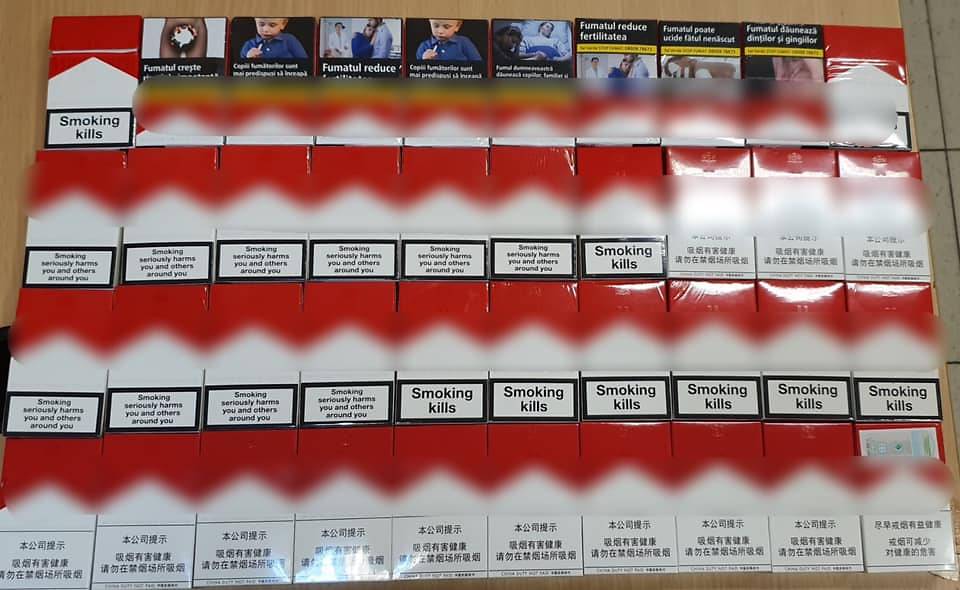
A total of 40 packets of duty-unpaid cigarettes were uncovered from a crew member’s luggage. (Photo: Facebook/Immigration & Checkpoints Authority)

On Sep 29, ICA officers uncovered 40 packets of cigarettes concealed in the luggage of a 55-year-old Romanian man. Anomalies had been detected in the scanned images of the crew member’s luggage.

Separately, three Singaporeans and a Russian were caught trying to smuggle cigarettes into Singapore in four other cases between Sep 9 and Sep 20.

The four men, aged between 28 and 64, had hidden the cigarettes underneath their clothes, inside the socks and boots they were wearing, as well as around their waists and ankles.

READ: Man arrested after trying to smuggle 12,500 cartons of cigarettes in concrete blocks into Singapore

READ: Motorcyclist tries to smuggle cigarettes hidden in loaf of bread into Singapore

Cigarettes found in socks, around ankles

Duty-unpaid cigarettes concealed around the ankles. (Photo: Facebook/Immigration & Checkpoints Authority)

All six cases were referred to the Singapore Customs for further investigation. Those found guilty of possessing duty-unpaid cigarettes can be charged in court or compounded up to S$5,000.

“This method of concealment is a cause for concern as similar methods may be used by people with ill intent to smuggle security items into Singapore,” ICA said.

Source link

Driver stops out of control taxi on PIE by letting it ram into his own car

0

[ad_1]

SINGAPORE – A Singaporean driver deliberately orchestrated a road accident – to save lives.

Education consultant Chalmers Chin was driving to work at about 8.30 am along the Pan-Island Expressway in Bukit Timah on Tuesday (Oct 1) when he saw a ComfortDelGro taxi moving erratically in front of him.

The taxi was weaving in and out of the middle lane, its hazard lights were blinking and a female passenger in the front seat was reaching over to the driver’s side, trying to steer the vehicle. Another woman passenger sitting behind had partially opened the rear door and was waving for help.

The traffic was heavy, but Mr Chin, 31, did not hesitate. “I sensed something was wrong,” he said. Driving along the right lane, he overtook the taxi, which was travelling slowly, and then cut in front of it to place his own car in its path.

The taxi then rammed into the rear of his car – as he knew it would – and the passenger in front managed to steer it to the road shoulder as it came to a halt. Mr Chin said that was the only way to stop the out-of-control vehicle.

[ad_2]

Source link

Singapore's fake news law takes effect as critics sound alarm

0

[ad_1]

Singapore’s new law to combat “fake news” came into effect Oct 2 despite criticism from tech giants and activists, who labelled the tough rules a “chilling” attempt to stifle dissent.

The law gives government ministers powers to order social media sites to put warnings next to posts authorities deem to be false, and in extreme cases get them taken down.

Facebook, Twitter and Google – who have their Asian headquarters in Singapore – were given temporary exemptions from a handful of provisions in the act to give them time to adapt.

If an action is judged to be malicious and damaging to Singapore’s interests, companies could be hit with fines of up to S$1 million, while individuals could face jail terms of up to 10 years.

[ad_2]

Source link

What is SG Nasi Lemak? Inside the Telegram chat group circulating local NSFW content

0

[ad_1]

Tumblr can ban NSFW posts and Singapore can block access to adult sites all they want, but porn always finds a way

Despite various attempts to shut them down, platforms spreading lewd content involving Singaporeans can always be found if you look at the right places. While these platforms are typically used for non-nefarious purposes, the likes of Instagram, WhatsApp and even Google Drive can be utilised to circulate illegal content — including child pornography. 

With Tumblr out of the picture, the glut of local smut has since migrated to Telegram chats, which are well able to host tens of thousands of users in a single private group. 

[ad_2]

Source link

Swapping textbooks for joysticks to represent Singapore in e-sports

0

SINGAPORE: In a country focused on academic achievement, Singaporean Galvin Kang Jian Wen did something almost unthinkable – he stopped studying as a teenager to spend more time playing computer games.

After completing his secondary school education, he defied parental disapproval to pursue his dream of becoming an e-sports champion, but believes the sacrifice has paid off as he heads with his National Team to the Southeast Asian (SEA) Games.

Teenage gamers worldwide are shunning mainstream education in favour of spending hours tapping away on computers and phones, attracted by a booming e-sports scene where prizes at major tournaments reach millions of dollars.

But perhaps nowhere is the prospect of swapping textbooks for joysticks more daunting than in Singapore, which tops global education rankings and where striving for academic excellence is deeply ingrained in the national psyche.

READ: Razer’s Tan Min-Liang pledges S$10m to grow Singapore’s e-sports, support SEA Games team

Kang – who is his national side’s coach and competes in multiplayer battle game Dota 2 under the moniker Meracle – said his belief in his own playing skills was so great he had the courage to what most would not dare.

“I stopped studying and went to pursue this passion of mine,” the 23-year-old told AFP at a SEA Games boot camp in Singapore, which was organised by the tournament’s e-sports partner, gaming hardware company Razer.

“Obviously (my parents) were not very happy about my decision because nobody wants their kids to stop studying.”

Gamers in Singapore complain the country's system of conscription -- male citizens undergo two

Few are willing to pursue a career in the fledgling e-sports scene in Singapore, which has only around 15 professional gamers. (Photo: AFP/Roslan Rahman)

EDUCATION PRESSURE

The focus on education in Singapore means few are willing to pursue a career in the fledgeling e-sports scene – Singapore has only around 15 professional gamers.

“Singapore is very focused on study,” said the country’s e-sports association president Ng Chong Geng, recalling how when he gave a talk at a university, not a single student expressed an interest in becoming a professional player.

“Now more or less everyone graduates with some sort of degree … If you try to be an e-sports athlete you have to give up on a lot of other opportunities.”

READ: Several measures in place to support local video gaming, e-sports industries: Chan Chun Sing

WHAT HAPPENS AFTER RETIREMENT?

Kang is not alone among players heading to the SEA Games, taking place in the Philippines in November and December, in having chosen to focus on gaming rather than study.

“The thing that most changed me was quitting school so I can play for the whole day, play full time,” said 17-year-old Thai Dota 2 gamer Nuengnara Teeramahanon, who quit school aged 16.

“I just did not want to study anymore, I just feel like it’s so boring.”

Few are willing to pursue a career in the fledgling eSports scene in Singapore, which has only

With some gamers dropping out of school to pursue e-sports, the lack of qualifications could be a disadvantage for players when they retire. (Photo: AFP/Roslan Rahman)

However, the lack of qualifications could be a disadvantage for players when they retire, which can come at a young age in e-sports. In some games, players can be finished by 23 as their reactions slow.

Players from nine countries will compete in six titles at the SEA Games – Mobile Legends, Arena of Valor, Dota 2, Starcraft II, Tekken 7 and Hearthstone.

Supporters hope the tournament could be a step towards a spot at the Olympics although that seems unlikely any time soon, with the venerable institution so far unenthusiastic about the discipline.

READ: Singapore companies looking to capitalise on region’s fast-growing gaming culture and interest in e-sports

Players who cut short their education and made a success of e-sports say their families have, for the most part, accepted their choice – although they stress they are not encouraging other gamers to follow their lead.

Kang used to be part of a team in the United States, where his accommodation was paid for and he received a salary and prize money. He currently plays for a Thailand-based team.

“Eventually they (my parents) were convinced,” he said. “I could pay for my own food, live on my own.”

Source link

Police warn of new scam involving fake Malaysian officer

0

SINGAPORE: The police on Wednesday (Oct 2) issued a warning about a new scam where a scammer poses as a Malaysian official.

In one such case, a man received a call from someone claiming to be from a Malaysian bank, who told him he had applied for a credit card and made a cash withdrawal with it.

The victim was told the bank would investigate the matter.

He subsequently received another call, this time from someone claiming to be a police officer from Malaysia.

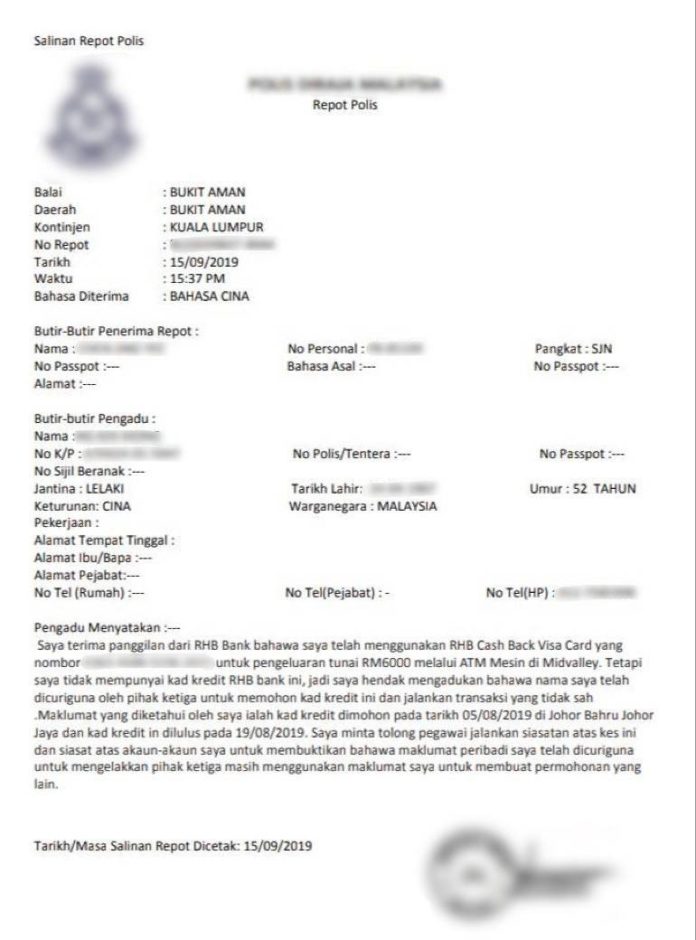
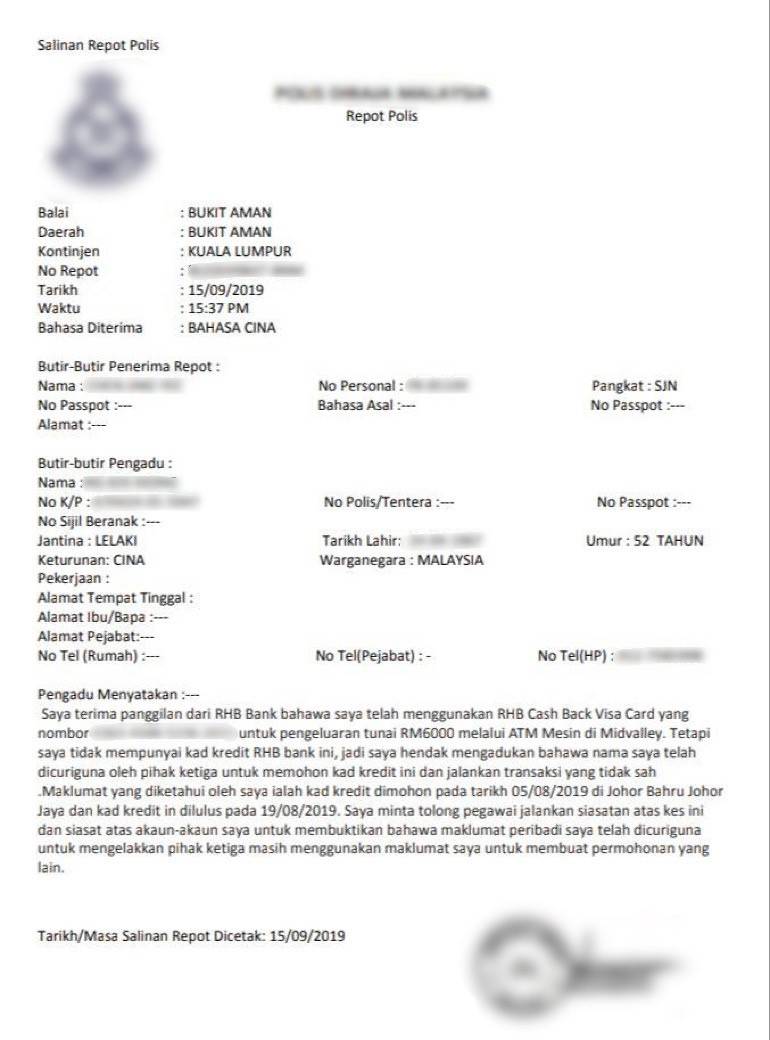
“The caller alleged that the victim has made unauthorised credit card transactions, and sent the victim an image of a Malaysian police report purportedly lodged by the victim,” said the police in a news release.

Malaysian officer scam

The scammer sent his victim an image of a Malaysian police report purportedly lodged by the victim. (Image: Singapore Police Force)

He was then asked to provide his Internet banking credentials and One-Time Password (OTP) for the purpose of investigations.

Unauthorised transactions of S$10,000 made from his bank account were later discovered by him.

The police advised members of the public to ignore such calls and not to provide their personal details.

Scammers can also use caller ID spoofing technology to mask their actual phone number, and so calls that appear to be from a local number may not actually be made in Singapore, they added.

Earlier this year, the police warned of a re-emergence of a scam involving the impersonation of China officials.

Victims were cheated of at least S$4.8 million in 65 cases between January and April this year.

READ: Singapore police’s new anti-scam centre wants to hit scammers where it hurts

A new Anti-Scam Centre has also been set up within the Commercial Affairs Department to focus on disrupting scammers’ operations and to help victims mitigate their losses.

Source link