Home Blog Page 665

Ban on personal mobility devices? ‘The battle is always against errant use’

0

SINGAPORE: While there are those who support a ban on personal mobility devices (PMDs), others feel that such a move would be an extreme measure.

In Parliament on Monday (Oct 7), Senior Minister of State for Transport Janil Puthucheary said that a ban on PMDs is possible if rider behaviour did not improve.

This marked the first time the authorities had brought up the possibility of a ban, after legalising the use of PMDs on pavements when the Active Mobility Act came into effect last year.

The statement came two weeks after the death of 65-year-old cyclist Madam Ong Bee Eng following a collision with a PMD rider, which Dr Janil said had caused public alarm over the dangers posed by such devices.

RISING NUMBER OF ACCIDENTS IN RECENT YEARS

He noted that the rise in popularity of PMDs had been accompanied by an increase in the number of accidents involving these devices.

Between 2017 and 2018, there were 228 reported accidents involving PMDs on public paths, of which 196 resulted in injuries.

There have been about eight deaths reported in the media resulting from PMD-related accidents since 2016.

However, prior to Madam Ong’s death, these have largely involved PMD riders themselves, who died after either falling from their devices or getting hit by other vehicles.

The increase in accidents here mirrors the situation in other countries.

Earlier this year, non-profit magazine Consumer Report found that more than 1,500 people had been injured in e-scooter accidents in the United States since late 2017, following the emergence of e-scooter sharing firms such as Bird and Lime.

IS A BAN NECESSARY?

In an interview with CNA938 on Wednesday Dr Janil said while a ban could be considered, he does not see it as necessary right now.

Noting the usefulness of PMDs as a mode of transport, he said the Government does not intend to take a “knee-jerk reaction” against a small number of irresponsible riders.

Janil Puthucheary speaks to CNA983 (4)

Senior Minister of State for Transport and for Communications and Information Janil Puthucheary speaks to CNA938 on Oct 9, 2019. (Photo: Gaya Chandramohan)

Still, calls to ban the devices persist.  

An online petition to ban PMDs and e-bikes here gained traction following Madam Ong’s death, with more than 68,000 signatures as of Oct 10.

Cycling advocate Francis Chu said a temporary ban on the use of PMDs on pavements should be considered.

“I believe a temporary ban of PMDs may be necessary to send a powerful message about the Government’s commitment to bring safety back to the pavement,” said the co-founder of cycling group Love Cycling SG.

National University of Singapore transport lecturer Lee Der-Horng also favours a suspension on the use of PMDs here.

While it may sound like an extreme measure, he said the pavements by-and-large are not built to support both pedestrians and cyclists, let alone PMD riders.

“If we allow PMDs on footpaths and public areas, why do we not allow pedestrians to walk on the streets?” he asked.

PMD user Shahrizal Ismail acknowledged while there are some who ride recklessly, the vast majority are responsible riders. 

The 37-year-old graphics artist supported stricter regulations, saying a ban would be an imposition on those who depend on PMDs for a living, such as delivery riders. 

“The battle is always against errant use,” said Mr Denis Koh, the chairman of PMD enthusiast group Big Wheel Scooters Singapore. 

“Focusing on the devices will bring errant riding to other forms and it won’t stop,” said Mr Koh, who sits on the Active Mobility Advisory Panel, which was formed in 2015 to propose regulations on the safe use of bicycles and PMDs here in public places here.

“Soon we will all be walking and believe me, people will still complain how people walk!” he added. 

Motorist Au Kah Kay told CNA he has encountered several narrow-misses with PMD riders who zipped onto the road as he was driving.

While the authorities should consider banning the use of PMDs given the rising number of accidents, he said: “But first put in place the regulatory framework – licensing, rider education and third party insurance.”

LOCAL REGULATIONS

In Singapore, PMDs are required to meet a number of requirements. These include a weight limit of 20kg as well as a top speed of no more than 25kmh.

Since July the authorities have also banned the sale of devices that are not UL2272-certified – a set of fire-safety requirements which cover the electrical drive train system of PMDs, including the battery system – as part of efforts to stem the rising number of fires related to their use.

While PMDs that do not meet this standard can still be used for now, they will not be allowed on pavements from July next year.

According to figures from the Singapore Civil Defence Force, there were 49 PMD-related fires in the first half of 2019, compared to 52 for the whole of last year.

E-scooters specifically – defined by the Land Transport Authority (LTA) as PMDs with handlebars – are also required to be registered as part of efforts to deter reckless riding and enhance enforcement, with some 90,000 e-scooters registered with the LTA since the beginning of this year.

READ: Mandatory inspection for e-scooters every 2 years from April 2020: LTA

READ: Major PMD retailers say will not sell devices to people under 16, among other measures

From April next year, registered e-scooters will also be required to undergo inspections once every two years to ensure they meet these standards.

The LTA also conducts regular enforcement activities, impounding devices which do not meet the standards or are found to be ridden recklessly.

In September, enforcement efforts by the LTA turned up 496 offences, with 96 devices impounded.

The authorities are also considering other measures such as mandatory insurance and licensing, as well as restrictions on import.

Still, some questioned how effective such measures are in preventing reckless riding.

Prof Lee suggested the implementation of such measures to deter errant riders may be a waste of public resources. “The effectiveness, in my opinion, will be limited or insignificant,” he said.

e-scooters

People ride shared electric scooters along Venice Beach on Aug 13, 2018 in Los Angeles, California. (Mario Tama/Getty Images/AFP)

THE SITUATION ELSEWHERE

Earlier this year France and Germany said the use of e-scooters would be banned on pavements, citing an increase in accidents.

A number of cities in the United States also restrict the use of such devices to the roads.

In Singapore on the other hand, the use of PMDs such as e-scooters on the roads is illegal, and they are restricted to the pavements.

Mr Chu, who previously sat on the Active Mobility Advisory Panel, said it would be better to restrict the use of PMDs to the roads, as is the case currently with electric bicycles here, whose use is restricted to the roads and shared pathways.

Dr Janil had in Parliament noted that the ideal would be to have one dedicated path for pedestrians and another for cyclists and PMD riders, though infrastructure constraints means there is limited space for such an approach in existing towns.

How pavements are set up here – with cycling paths often right next to pedestrian paths, with little or no differentiation between the two – needs to be relooked, said Mr Chu.  

“Compared to the Netherlands, the design in Singapore makes it too easy for people to cycle on the walking path, or pedestrians to walk on the cycling path. We need a kind of barrier to discourage cyclists to use the walking path, at least,” he said.

An “extensive and well-built” network of separate pathways for bicycles and PMDS may be the only way to ensure the safety of pedestrians, who are the primary users of pavements here, said Prof Lee.

Still, even with regulations and infrastructure in place, the onus falls on PMD users themselves to ensure the safety of others, said Government Parliamentary Committee for Transport deputy chairman Mr Ang Hin Kee.

“The regulatory framework put in place by the Government spells out clearly what is expected and provided, but that’s still dependent on users to comply.”

Source link

How one company is ramping up productivity — by helping its staff to sleep

0

SINGAPORE: In this office, people are encouraged to sleep on the job.

Office space on almost every floor has been sacrificed for rooms with double-decker capsule beds, soft and warm lighting and even blackout curtains.

It all makes for a well-rested lot of coders, developers and data analysts at e-commerce platform Shopee’s new six-storey regional headquarters in Kent Ridge, which opened last month.

“All of us have occasions when we just need that 30 minutes, (or) that one hour of a quick power nap. And that can enable us to work more efficiently,” explained Lim Teck Yong, Shopee’s head of regional operations and people team.

“It gives us that drive to continue working at a higher productivity level.”

At e-commerce platform Shopee’s regional headquarters in Kent Ridge, a room with eight beds.

A room with eight beds.

Their nap pods are thus designed to be conducive to rest, to “extract the most out of their 30-minute nap”.

As the programme Money Mind finds out, there is a need to fight fatigue — in the company, and Singapore in general. (Watch the episode here.)

READ: Feeling sleepy at work? The importance of power naps and where to take them in busy Singapore

READ: The benefits of napping – and how to snooze without affecting your sleep at night

DAY AND NIGHT

With the online shopping boom, Shopee’s developers and data analysts often spend long hours at their computer screens, hence the nap pods for them to break the monotony of coding.

WATCH: A capsule hotel? No, it’s Shopee’s sleep pods for staff (3:01)

“We’re (also) operating 24/7 so our app doesn’t stop. We have to fix issues along the way,” noted Lim.

“Many times, we have to do system maintenance at night. So some of our developers and desk operations team would stay up late at night to service the system.”

The employees have free use of the office gym, pool tables and massage services, but many choose to use the 40 nap pods scattered around the building, mostly during lunchtime and in the late evenings. There is no booking system.

“We maintain hotel-standard cleanliness in our nap pods. So we change the sheets every day,” said Lim.

In e-commerce platform Shopee’s nap pods in its regional headquarters, the sheets are changed daily.

The average age of the staff, who number more than 1,000, is about 27, and they are “all pretty dynamic, all seeking to make a change in the world”.

“Millennials today tend to work a bit harder, and hence providing these staff benefits will help ease some of the stress and the workload … and make it a bit easier for them to work,” he added.

In fact, the link between sleep and productivity is quite strong.

In 2010, a study of more than 4,000 workers from four American companies showed that those who had insufficient sleep or suffered from insomnia had three times the rate of productivity loss, versus those categorised as good sleepers.

E-commerce platform Shopee’s regional headquarters in Kent Ridge opened in September 2019.

Shopee’s office in Kent Ridge.

“(The study) also showed that workers with insomnia and sleep deprivation functioned less well. They make more mistakes. They have poorer memory and concentration, poorer interpersonal relationships and communication problems,” cited Dr Leow Leong Chai, director of the Singapore General Hospital (SGH) Sleep Disorders Unit.

And in recent years, a small but growing number of businesses here, including SAP Singapore and Google Singapore, have installed sleep pods. Even the Nanyang Technological University set up a rest pod in a library last year for its students.

READ: Commentary: Sleeping more is essential to performing well at work and school

READ: Commentary: Always tired yet can’t fall asleep? It’s a wake-up call to sleep better

NO SLEEP IS LIKE BEING DRUNK

While the amount of sleep a person requires depends on his or her age, an average of between seven and eight hours is recommended for optimum health and functioning.

The amount of sleep required depends on one's age, though seven to eight hours is recommended.

If one goes without sleep for around 20 hours straight, one’s level of functioning is equivalent to someone who is legally drunk, with a blood alcohol content of nearly 0.1 per cent, said Leow, citing another study.

“That’s how bad it is,” he said. “When you’re sleep deprived, you’d make bad decisions (and) may be more impulsive, maybe grumpier. So it’s very important to have good rest.”

In Singapore, one of the most sleep-deprived countries — where many are not getting the ideal hours of slumber at night — sleep disorders are not uncommon.

READ: Only half of Singaporeans get enough sleep: Survey

READ: Commentary: A necessity Singaporeans cannot afford – more sleep

Last year, the SGH Sleep Disorders Unit saw more than 7,300 patients, an increase of around 10 per cent from 2017.

Dr Leow Leong Chai doing a test at the Singapore General Hospital's Sleep Disorders Unit.

Dr Leow with a patient at the Sleep Disorders Unit.

For a restful sleep, experts recommend regular waking hours even at weekends, no caffeine after 2pm and no electronic devices before bedtime.

A short afternoon nap is also more effective than a cup of coffee in improving one’s function, advised Leow.

“But it’s important not to nap for too long, otherwise it’ll affect your ability to fall asleep at night. So I’d say limit the nap to 20 to 30 minutes after lunch,” he added.

At Shopee, its next step is to improve the sound insulation and overall ambience in its nap pods.

Lim Teck Yong, Shopee’s head of regional operations and people team, hopes to improve its nap pods.

Shopee’s Lim Teck Yong.

The company believes that such staff benefits keep its employees happy and thus productive. “In the near future, these will become … basic office facilities that every company should embrace,” said Lim.

“In Singapore, productivity improvement is a top priority … And as a tech company in a fast-paced industry, I think we ought to improve productivity and find all ways possible to achieve that.”

Watch this episode of Money Mind here. New episodes every Saturday at 10.30pm.

At Shopee, its next step is to improve the sound insulation and overall ambience in its nap pods.

Source link

Big names, not so big crowd: Brazil held by Senegal in Singapore friendly

0

SINGAPORE: There’s just something special about Brazil. Home of the great Pele, land of the legendary Joga Bonito, nation of the ubiquitous yellow, green and blue.

But in recent times, romanticism has faded into reality, and the Selecao’s star has dimmed ever so slightly.

On Thursday (Oct 10), the Brazilians notched an unfamiliar result in familiar surroundings as they drew 1-1 with Senegal in an international friendly at the Singapore Sports Hub.

Yet in spite of having won twice in as many visits to Singapore, it wasn’t just the result that was the most striking. 

Rather, it was the empty seats.

Back in 2014, a crowd of more than 50,000 witnessed Neymar’s magic as Brazil crushed Japan 4-0. 

And this time round, the bling-wearing, stepover-throwing, opinion-dividing superstar was once again back in town.

Brazil Senegal friendly in Singapore on Oct 10, 2019 (2)

Philippe Coutinho against Senegal during an international friendly match at the Singapore National Stadium. (Photo: Matthew Mohan)

In addition, there was flair in the form of the Paris Saint-Germain forward, Liverpool’s Roberto Firmino and Bayern Munich’s Philippe Coutinho, and force with the likes of Manchester City’s Ederson and Paris Saint-Germain’s Thiago Silva.

But the upper tiers of the stadium remained glaringly empty. The total attendance was 20,600 – paltry by Brazilian standards. 

And close to an hour before kick-off, it was more Anfield than anything else, as the Liverpool fans made their presence felt – strains of You’ll Never Walk Alone wafting from the stands.

Fittingly, it was Liverpool man Firmino who put Brazil in front after just nine minutes. 

A powerful run down the right from Jesus saw him feed Firmino, and the Liverpool forward burst through to deftly flick past Senegal custodian Alfred Gomis.

But Senegal were no pushovers – the African side showed their confidence on the ball and were not afraid to play out from the back, teasing the Brazilians with tantalising glimpses of the ball, only to hold on to possession. 

Brazil Senegal friendly in Singapore on Oct 10, 2019 (3)

Neymar tackled during an international friendly match against Senegal at the Singapore National Stadium. (Photo: Matthew Mohan)

Brazil Senegal friendly in Singapore on Oct 10, 2019

Roberto Firmino celebrates after scoring against Senegal during an international friendly match at the Singapore National Stadium. (Photo: Matthew Mohan)

Firmino’s club teammate Sadio Mane almost brought his side level 15 minutes later, but his shot only found the palms of Ederson, who gathered at the second time of asking.

Senegal continue to carve out several half-chances – a dangerous Ismailia Sarr cross was headed clear before Ederson gratefully smothered a header from the resulting corner.

They finally got their reward one minute from half-time, a powerful run from Mane on the left could only be stopped illegally by a despairing Brazilian tackle. 

Striker Famara Diedhiou tucked away the resulting penalty to the glee of the Senegal supporters in the stands.

A young PSG jersey wearing pitch invader was the highlight at half time, but he, like Neymar, failed to make much inroads before being promptly shepherded away.

Mane continued to be the scourge of the Brazilian side after the break, as another lung-bursting run from the Senegal star brought yet another crude challenge in the 58th minute. 

But Senegal failed to take advantage of the subsequent free kick and Tite’s side gratefully cleared.

Neymar had his chance minutes later, after Jesus was blatantly tugged back just outside the box. But the PSG man could only direct his dipping effort over, to his disappointment.

A long distance shot from Mane six minutes from time almost handed Senegal what on the balance of things would have been a deserved victory. But his piledriver struck the post, with Ederson at full stretch.

Peppered by niggly fouls and refereeing decisions which drew the ire of both sides – the game petered to a close.

But there was one bright spark – a Mohamed Salah doppelganger in the stands – who drew loud cheers and rapturous applause. 

Brazil couldn’t get their win, but the Liverpool fans had gotten theirs.

Source link

Manufacturers supportive of new regulations for pre-packaged sweetened drinks

0

SINGAPORE: Manufacturers of pre-packaged sugar-sweetened drinks said they support measures announced by the Ministry of Health (MOH) on Thursday (Oct 10) to reduce consumers’ intake of sugar.

Seven major players – Coca-Cola, F&N Foods, Malaysia Dairy Industries (MDI), Nestle, PepsiCo, Pokka and Yeo Hiap Seng – had already pledged in 2017 to reduce the sugar content in all their drinks sold in Singapore to a maximum of 12 per cent by 2020. 

These manufacturers make up 70 per cent of Singapore’s pre-packaged sugar-sweetened drinks market.

Coca-Cola, for instance, said more than 60 per cent of its drinks here have the Health Promotion Board’s Healthier Choice Symbol, which is awarded to beverages that contain about three teaspoons of sugar per 250ml.

“We have been innovating to launch new lower-sugar and no-sugar drinks,” said Mr Ahmed Yehia, country manager for Coca-Cola Singapore and Malaysia.

“We will continue to rethink many of our recipes in Singapore to reduce sugar, because while sugar in moderation is fine, we agree that too much of it is not good for anyone.”

READ: New mandatory nutrition labels, advertising ban for pre-packaged drinks high in sugar

As part of Singapore’s war on diabetes, MOH on Thursday announced that a new colour-coded “front-of-pack” nutrition label will be made mandatory for pre-packaged beverages that are high in sugar. 

Each beverage will be assigned a summary grade based on its nutritional quality, where sugar content will be the main but not the only determinant. Factors like the amount of fat and trans-fat in the drink will also be taken into account. 

The label will apply to all pre-packaged sugar-sweetened beverages, including soft drinks, energy drinks, juices, malted drinks, flavoured milk and cultured milk drinks. 

A total ban on advertising across all media channels will also be imposed on beverages that are deemed the most unhealthy and graded the lowest on the nutrition labelling scale. 

READ: Diabetes risk, weight gain: The possible bitter effects of too many sugary drinks

READ: That cup of fresh fruit juice could contain as much sugar as a soft drink

MANY DRINKS ALREADY HAVE HEALTHIER CHOICE SYMBOL

Deputy CEO of Pokka International Daniel Teo said that the brand does not have “severe concerns” about the new measures. Just over 50 per cent of its products qualify for the Healthier Choice Symbol, including most of its top selling products. 

“As for the other products, we continue to have our R&D team review them to reformulate where possible. Some are more challenging as in natural fruit sugars that is found in all juices from all brands,” said Mr Teo.

Ms Jennifer See, managing director of Singapore and YFI Malaysia, F&N Foods, said its Healthier Choice products make up 80 per cent of their drink sales in Singapore.

“We are supportive of providing nutrient information on the packaging to allow consumers to make informed food choices based on their individual diet requirements,” she added. 

average sugar level of sugar-sweetened beverages singapore

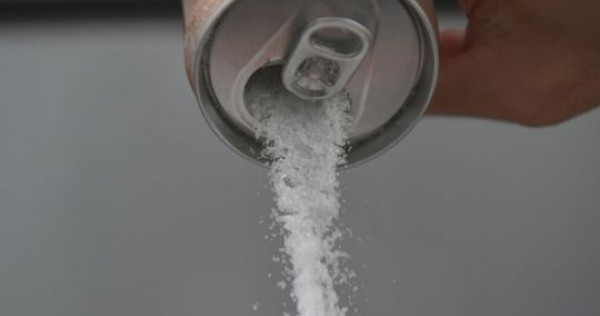
Singaporeans consume more than 1,500 teaspoons of sugar on average from pre-packaged sugar-sweetened beverages every year.

Coca-Cola, as well as MDI, which produces the Marigold and Vitagen brands, both said they have met MOH guidelines to reduce sugar content in their drinks to no more than 12 per cent, ahead of the 2020 deadline.

A PepsiCo spokesman said the brand has made “significant progress” on its drink portfolio, and is on track to meet the 2020 deadline. 

“We support the provision of clear labeling information to assist consumers in making informed choices. PepsiCo looks forward to further consultation on these measures to ensure they are practical, implementable and that they support the goal of improving public health,” added the spokesman. 

READ: MOH says there are ‘early indications’ that war against diabetes is producing results

READ: Sweeter than soda? The hidden sugars in bubble tea

NEED TO MONITOR LABELLING OF PRODUCTS

The Singapore Food Manufacturers Association (SFMA) noted that as more evidence links metabolic disease and diabetes to the overconsumption of calories, consumers are shying away from food products that are high in sugar. 

“So as a part of addressing the shifting global consumer behaviour to lower calories and (produce) healthier food products, local food manufacturers under the SFMA umbrella find it essential to reformulate in order to ride this wave of growth through product innovation by improving the nutritional value and reducing the caloric value,” said its director of commerce Jonathan Cheah. 

However, he raised concerns about how the new label requirement could lead to having different product labelling for different markets.

“If it is not aligned with their countries guidelines, manufacturers might need to produce another type of packaging for overseas exports, which adds up to costs,” Dr Cheah said. 

“And some products are very small, they might not have space to put the label on their primary packaging. They still need to add barcodes, nutrition information, allergen advice and so on.” 

Dr Cheah added that there is also a need monitor the import of drinks from overseas that do not have the necessary labels.

Speaking to reporters at the Singapore Health and Biomedical Congress on Thursday, Senior Minister of State for Health Edwin Tong stressed that MOH will work with the industry to make sure that the new measures are sustainable. 

He added that the authorities also did not want to impose a timeline on manufacturers and the advertising industry in case they could not deliver on targets. 

“My sense is that on the packaging, industry players are very keen to make sure that they don’t end up on the lower end of the spectrum. And to that extent, I think it’ll be effective in driving reformulation, together with incentives and grants that we will continue to have in working with them,” said Mr Tong. 

“I think the industry knows that in the longer term, high sugar content products are not going to be sustainable. The market will soon shift, if it’s not already gradually shifting.” 

Source link

Singapore part of five-nation ASEAN bid for 2034 World Cup

0

[ad_1]

SINGAPORE – Over two decades after the idea of a joint Asean bid for the World Cup was first mooted, the project has been given a fresh lease of life with Thailand’s Tourism and Sports Minister Phiphat Ratchakitprakarn announcing on Wednesday (Oct 9) they would be leading a joint bid to host the 2034 tournament.

The other four nations are Singapore, Indonesia, Malaysia and Vietnam, said a report in the Bangkok Post.

The proposal for a joint bid was agreed at the fifth Asean Ministerial Meeting on Sports in Manila on Wednesday.

Among the attendees at the week-long meeting were government and sports officials from the 11 nations and Japan, including representatives from Singapore’s Ministry of Culture, Community and Youth (MCCY).

In June, Thai Prime Minister Prayut Chan-o-cha made headlines in the region and set social media abuzz after he announced that South-east Asian countries would jointly bid to host football’s biggest extravaganza in 2034.

He made the declaration after meetings between leaders at the Asean Summit in Bangkok.

[ad_2]

Source link

Pig liver lovers beware: Similarities found between hepatitis E virus in humans, raw liver from markets

0

[ad_1]

SINGAPORE – Lovers of under-cooked pig liver could be at higher risk of hepatitis E virus (HEV) infection, as a new study has found similarities between a strain of the bug found in humans and that in raw pig liver bought from local markets.

The finding would be a concern for people with weak immune systems, as HEV infection is more serious for these people.

This is even as the study found that HEV infection among Singapore residents has risen significantly over the years.

Researchers at Singapore General Hospital (SGH) discovered that the HEV strain in three in four samples of infected patients’ blood has similar genetic features as the virus detected in three raw pork liver samples that were bought from local markets.

[ad_2]

Source link

Local singer fined for evading GST on goods she bought overseas to sell in Singapore

0

SINGAPORE: A local singer was fined S$30,600 on Friday (Oct 10) for evading tax on goods she had bought overseas and intended to sell in Singapore.

Nur Sarah Aqilah Sumathi, 35, pleaded guilty to two charges of fraudulent evasion of Goods and Services Tax (GST), with another five charges taken into consideration in sentencing.

If she does not pay the fine, she will have to serve 55 days’ jail in default.

Sarah, who is better known as Sarah Aqilah, paid S$10,000 upfront on Thursday and was given until Dec 10 to pay the rest.

The court heard that Sarah, who won reality singing competition Anugerah in 2009, was a personal shopper.

Singapore Customs began investigating her business activities of selling branded goods bought from overseas after receiving a tip-off.

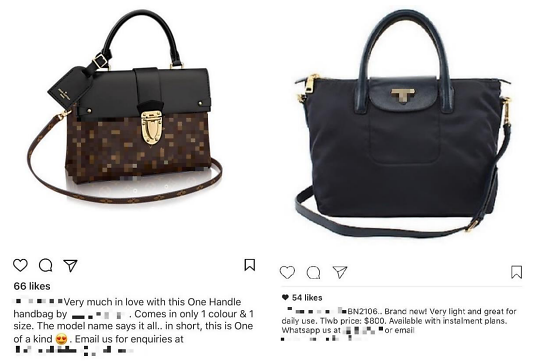
Its investigation found that Sarah travelled to Europe to buy branded goods such as handbags, wallets and shoes, and took these back to sell in Singapore without paying tax for them.

In 2017, she expanded her business and started to provide personal shopping and concierge services for her clients during her travels, via social media platforms.

She also did not declare these goods nor pay GST for them on returning to Singapore, said the Singapore Customs prosecutor.

Investigations found that Sarah did not declare 141 pieces of branded goods which she had bought overseas between June 2015 and November 2017.

These goods were worth more than S$205,980 in total, and she evaded about S$14,460 in tax, said Singapore Customs in a statement.

She was stopped by Customs officers on Jan 23 last year when returning from a trip overseas, and her purchased items were seized.

Sarah Aqilah goods

Two of the branded goods for sale on Sarah’s Instagram account. (Photo: Singapore Customs)

The prosecutor on Thursday asked for a fine of at least five times the duty evaded, noting that Sarah had made restitution of the full S$14,460 to Singapore Customs and had cooperated with the authorities. 

Defence lawyer Sofia Bakhash said her client was the director of BFF Avenue, a personal shopping service which was incorporated in January 2017.

“Sarah asserts that she had been law-abiding and a functioning member of society and that her commission of the offence was due to her ignorance of the law,” she said.

“She is by trade a personal shopper and her business thrives on her primary ability to purchase the designer items overseas at a discounted price,” said the lawyer.

Sarah’s services involved her travelling personally to the country of origin of the designer items requested by her customers and buying them directly.

She then travelled at least three times a year to fulfil the orders, and carried the purchases in her suitcase.

MINIMAL AMOUNT EVADED: DEFENCE

The lawyer said the amount of duty evaded in the proceeded charges was S$6,184, and “its minimal amount should be taken as a mitigating factor”.

She added that since January 2018, Sarah has obtained permits and made the necessary duty payments after appointing a shipping company in Singapore to act as a declaring agent for her item imports.

The lawyer urged the court to impose a fine that was not “too crushing”, taking into account that the profit she gained from the items was “not significant”.

She sought the lowest possible fine, saying it was “not a syndicated operation but rather a woman who was trying to earn a living through a means she knew would appeal to a certain demographic of people”.

The lawyer added that Sarah has “suffered some setbacks in her media appearances” after the incident was reported in the news, and “faces the possibility of losing that as a source of income”.

Her husband, a real estate agent, has also “suffered a cut due to his association with Sarah”.

Sarah, who has three young children, is also facing civil proceedings against her and has had to take out loans to finance the repayments of the undelivered items and GST.

“She is indeed remorseful for the ordeal and hopes to be able to put this behind her at the earliest possible juncture,” said the lawyer.

Singapore Customs said in a statement after the hearing that “it is the responsibility of all arriving travellers to make accurate and complete declaration of the dutiable and taxable items in their possession of duty and GST payment”.

Anyone found guilty of fraudulent evasion of GST can be fined up to 20 times the amount of evaded tax, jailed for up to two years, or both.

Source link

High-sugar drinks to carry unhealthy label on pack, ads to be banned

0

[ad_1]

SINGAPORE – The war on diabetes continues with a total ban on advertisements of packaged drinks with very high sugar content – making Singapore the first country in the world to do so.

Such drinks as well as medium-to-high sugar content drinks must also carry a label on the front of the pack to signal that it is unhealthy.

Drinks affected include those in bottles, cans and packs. It covers two- or three-in-one instant drinks, soft drinks, juices and cultured milk and yoghurt drinks.

When this comes into play and what exactly will be affected will be announced in 2020. Implementation is expected to take between one and four years.

Announcing this on Thursday (Oct 10), Senior Minister of State for Health Edwin Tong said these changes are designed to encourage people to make more informed choices and to get manufacturers to reduce the sugar content in packaged sugar-sweetened beverages, or SSBs.

[ad_2]

Source link

Checking in with Team Razer's Xian on the growth of esports in Singapore

0

[ad_1]

As one of Singapore’s most prominent esports athletes, Team Razer’s Xian has undoubtedly seen a lot.

The professional Street Fighter player shot to fame after taking the crown at EVO 2013 and is widely credited as a pioneer for the professional esports industry here in Singapore.

We recently sat down with the Street Fighter veteran, checking in with him on the exponential growth of local esports in the past year.

[ad_2]

Source link

Iconic video game creator Hideo Kojima expected to drop by Singapore in Death Stranding world tour

0

[ad_1]

Still confused as hell about what Death Stranding is all about (who isn’t)? 

You could probably bombard all your questions on the creator himself when he comes here — Hideo Kojima might be dropping by Singapore in the days before his latest epic is launched. 

The official Kojima Productions Twitter account announced that something called the Death Stranding World Tour will kick off on Oct 30 in Paris before making its way to London, Berlin, New York, San Francisco, Tokyo, Osaka, Singapore, Taipei and Seoul.

[ad_2]

Source link