SINGAPORE: On Sunday (Oct 20), the Sentosa Merlion closes for good, its fate sealed and its impending demolition happening in a matter of time.
Last month, when news broke that this 37m tall structure would soon be no more, there was a massive outpouring of grief over the loss of what many people regard as an iconic symbol of Singapore.
WHY THE SADNESS OVER SENTOSA MERLION’S DEMOLITION?
Call me unsentimental but I was initially genuinely surprised by this display of sadness. After all, the Merlion was literally created as a tourist gimmick.
In 1963, Fraser Brunner, curator of Van Kleef Aquarium, came up with this design by referencing two myths – Singapore’s supposed beginnings as a fishing village as well as the legend that Sang Nila Utama had sighted a lion on the island.
Artist’s impression of the Merlion Gateway Precinct. (Image: Sentosa Development Corporation)
The Singapore Tourism Board went on to commercialise the Merlion by using its image on souvenirs and by placing several statues at various points of interest around the country.
In 1995, when the Sentosa Merlion was built, some creative scribe spun a far-fetched yarn about how the Merlion would visit Sentosa to guard the island and to watch over the Central Business District.
It’s hard to imagine any pragmatic local subscribing to this hogwash, so if anything, I would have thought that travellers would have formed a stronger emotional bond to the Merlion than Singaporeans.
In addition, there is the matter of upkeep of this particular Merlion. I was most recently in Sentosa in March, where I happened to pass by the Merlion structure.
Visitors rest in front of a Merlion statue at Resorts World Sentosa in Singapore on Sep 25, 2019. (File photo: AFP/Roslan Rahman)
Its appearance was, quite frankly, rather shabby with a dirt-stained, unevenly coloured facade and tacky laser beams shooting out from its eyes. Singapore, I believe, has many interesting sights, but this outdated Merlion is not one of it.
AN ENDLESS STREAM OF DEMOLITIONS
This is not even the first time a landmark will be knocked down – and it likely will not be the last. In space-starved Singapore, the Government has typically adopted a practical view towards tearing down physical structures in order to make way for redevelopment.
We have lived through a seemingly endless stream of demolitions, including the old National Library, Queensway Cinema and very soon, Pearl Bank Apartments. Even old buildings that have been saved from the wrecking ball often get repurposed into something devoid of its contextual meaning.
For example, the former Beach Road Camp and the Non-Commissioned Officers’ (NCO) Club is now a hotel and F&B development.
In general, we mourn, we take photographs to preserve the memory and then we move on.
Pearl Bank Apartments. (Photo: Rachel Phua)
WHY WE NEED MONUMENTS
But despite all these rational reasons to remain level headed in the name of progress and development, it is apparent that the Merlion is not just any other old building to the public.
The symbol was created just two years prior to Singapore’s independence in 1965, which essentially makes it synonymous with the birth of this nation.
It is human nature to want to find ways to feel connected to our history and heritage and the Merlion, being a tourist icon, is naturally imbued with an intrinsic feel-good factor that makes it appealing. Like Japan’s Hachiko dog legend, the story of this mermaid-lion hybrid is uplifting and captures one’s imagination, regardless of race, language or religion.
Furthermore, as a relatively young nation, there are few physical spaces outside of a museum where people can gravitate towards to feel that sense of bonding and community. Just have a think about it – is there any location that comes to mind?
We do however seem to have a penchant for shiny, man-made monuments that showcase Singapore’s hard-earned transformation into a futuristic, ultra-modern city.
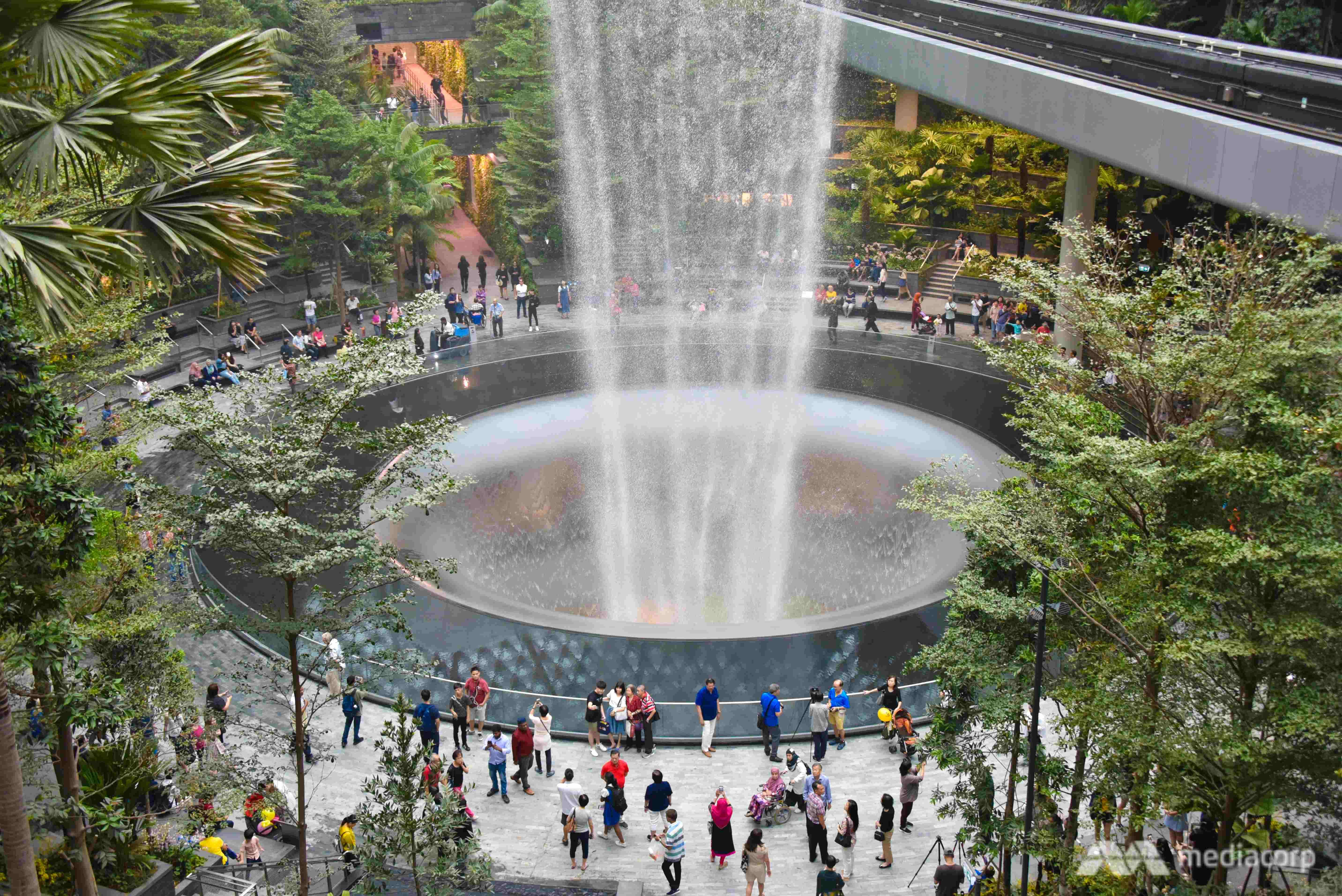
Take for instance, Jewel Changi Airport. With a jungle enclosed within an eye popping glass and steel structure that doubles up as a massive waterfall, Jewel is the perfect symbol of the country’s impressive triumph against the odds.
The 135,700 sqm complex was built on the site of the former Terminal 1 open air carpark. (Photo: Gaya Chandramohan)
Now that is an apt physical representation of the Singapore story, if there ever was one.
INTANGIBLE ICONS MATTER TOO
Still, beyond celebrating the present, there is a need for a space that allows us to reflect on our heritage and connect with our roots. Perhaps in the future, there may be a venue that will be preserved and widely accepted as a marker of Singapore’s history the way a man-made symbol like the Merlion is.
In the meantime, there are other options we can collectively take pride in. Intangible aspects of our culture, in particular, stand a good chance of surviving the country’s very practical use of physical space.
Our melting pot hawker scene immediately comes to mind. Singapore has already submitted the country’s hawker culture to UNESCO to be recognised as an intangible cultural heritage. It is equally essential for us locals to keep this alive and thriving by putting our money where our mouths are.
We already know how to do this – for starters, we could gripe less when hawkers have no choice but to implement marginal price hikes.
It is also worth making the effort to patronise stalls run by the next generation of young hawkers, not just to keep them going but so that we, as diners, are personally informed about how our local food scene is evolving.
More recently, an article on Orchard Road’s ice cream carts being slowly phased out shone the spotlight on the sad fact that this might be a dying trade.
This uniquely Singaporean style of serving ice cream sandwiched between wafers or bread has long been a quirky and refreshing treat that brings much needed character to the shopping strip.
It would be a pity to let this tradition die out, just because street hawker licenses have been discontinued. Because these elderly ice cream cart uncles are unable to transfer their licenses on to friends or family members who may be interested in taking over, time is running out for them.
Out of the 200 street hawkers who have chosen to sell ice-cream, just seven operate along Orchard Road. (Photo: Ang Hwee Min)
At least with the Merlion, there are six other statues to visit. But with the ice cream uncles, their time is limited.
It’s hard to tell if this policy will change, but just in case, I intend to get myself a multi-flavoured ice cream wafer the next time I’m in Orchard Road – and snap many pictures of it – just for old time’s sake.
Karen Tee is a freelance travel and lifestyle writer. Six years ago, people thought she was crazy to leave the security of her full-time job. Today, most want to know how she does it.
SINGAPORE: The Singapore Democratic Party (SDP) held what it called a pre-election rally at Hong Lim Park on Saturday (Oct 19), raising issues ranging from the cost of living to the impending GST hike and the need for more diverse voices in Parliament.
A main theme among the nine party members who spoke was how the ruling People’s Action Party (PAP) has not kept promises it made in the 2015 General Election.
“I will demonstrate to you and leave you in absolutely no doubt how the PAP says one thing before the elections and does another after the elections,” said SDP leader Chee Soon Juan, before going on to present examples.
Playing a short clip of Prime Minister Lee Hsien Loong at a 2015 election rally, Dr Chee said Mr Lee had promised that the elderly poor will live in peace and dignity.
The promise has not been kept, Dr Chee said. Among the numbers he cited were figures by the Samaritans of Singapore which showed that suicide rates among the elderly in 2017 were at an all-time high.
He also pointed to the increase in the cost of several items, including water.
Supporters gather at the Singapore Democratic Party “pre-election rally” on Oct 19, 2019. (Photo: Jalelah Abu Baker)
On the issue of foreign workers, Dr Chee raised what he said was a contradiction in comments made by the Government.
“Mr Lee assured the nation that we must carefully manage the inflow of foreign workers and ensure that they complement, rather than displace Singaporeans workers,” said the SDP secretary-general.
“If the Government had carefully managed the inflow of foreign workers as Mr Lee had assured us in 2003, why did Mr Tharman Shanmugaratnam contradict him by pointing out that dependence of foreign PMETs (professionals, managers, executive and technicians) has become unsustainable?”
As the final speaker at the five-hour event, Dr Chee said several times during his speech: “Trust is not what you say, it’s what you do.”
Newer SDP faces such as marketing and communications professional Min Cheong also took to the stage.
Marketing and communications professional Min Cheong speaks at the Singapore Democratic Party “pre-election rally” on Saturday, Oct 19, 2019. (Photo: Jalelah Abu Baker)
She brought up the issue of the influx of foreign PMETs amid an uncertain economic outlook and tight labour market.
“Our position isn’t that we want an economy that is overprotected in favour of Singaporeans or a society that is insular and intolerant,” she told the audience.
Nothing is wrong with introducing non-locals into a talent pool, especially given the highly intense interconnected global economy, which Singapore is a part of and benefits from, she added.
“But we do need to ensure that our workforce policies do not inadvertently disadvantage Singaporeans, and also don’t give rise to the impression that foreigners are edging Singaporeans out of roles,” she said.
Supporters stand around members of the media at the Singapore Democratic Party “pre-election rally” on Oct 19, 2019. (Photo: Jalelah Abu Baker)
NEED FOR OPPOSITION IN PARLIAMENT
The party’s chairman Paul Tambyah focused his speech on what he said was the lack of an independent Election Commission.
“The decisions on the constituencies are made by the highly qualified members of the election boundaries review committee, who in their day jobs report to the MTI (Ministry of Trade and Industry) minister, the MND (Ministry of National Development) minister, the Prime Minister and the Law Minister,” he said.
“All of them are PAP Central Executive Committee members. Surely this is not fair,” he added.
SDP secretary-general Paul Tambyah speaks at the “pre-election rally” on Oct 19, 2019. (Photo: Jalelah Abu Baker)
Dr Tambyah also called for “independent diverse voices” in Parliament, because it is where ministers are “held accountable” to the people of Singapore.
Entrepreneur Alfred Tan also spoke about the need for more opposition in Parliament.
“Do we hear robust debate over here?” he asked.
“If your representative (in Parliament) is of the same party as the Government, and even though he may voice a concern on your behalf, your elected MP will still be voting along party lines,” he said.
“You need more alternative voice in Parliament, so that your concerns can be heard, Bills robustly debated, and ministries asked to account for bad decisions.”
Entrepreneur Alfred Tan speaks at the “pre-election rally” on Saturday, Oct 19, 2019. (Photo: Jalelah Abu Baker)
According to SDP, about 2,000 people attended the event, which also featured a band performance, a bouncy castle and a light-up display.
The next General Election must be held by April 2021.
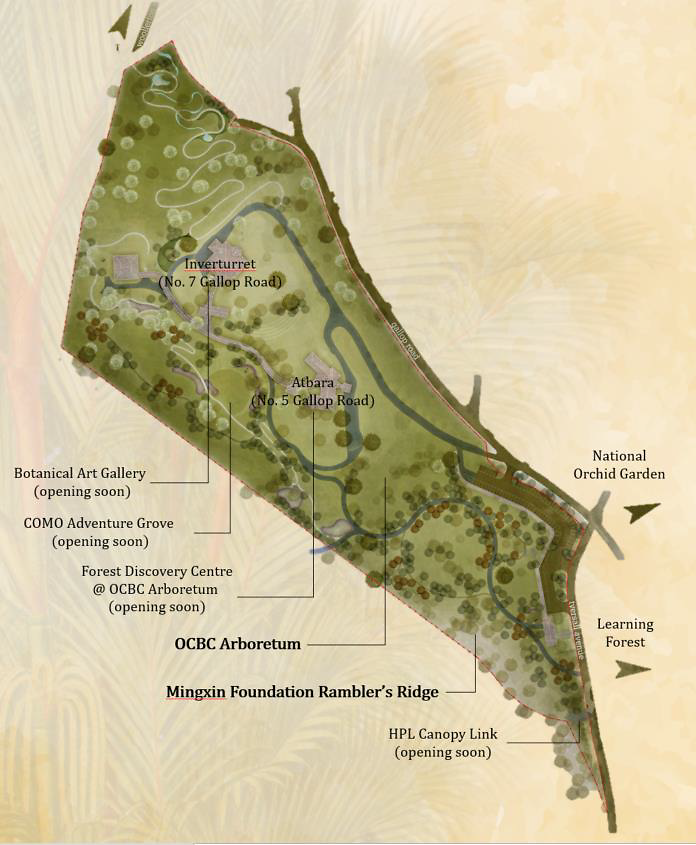
They are part of the 8ha Gallop extension – the largest expansion in the Gardens’ 160-year history.
Here are some highlights of the extension, with more attractions to open in 2020.
MINGXIN FOUNDATION RAMBLER’S RIDGE
This walking trail, which extends into the heart of the Gallop extension, draws inspiration from forest habitats on the tropical hills of Southeast Asia.
Mingxin Foundation Rambler’s Ridge. (Photo: NParks)
Visitors will be able to see unique plants such as the carnivorous Raffles’ Pitcher Plant and the Ant Plant.
Visitors will be able to view some unique plants, such as the Ant Plant, as they explore the Rambler’s Ridge. (Photo: Nparks)
Visitors will be able to view various unique plants, such as the Raffles’ Pitcher Plant, as they explore Rambler’s Ridge. (Photo: NParks)
For those who want a more adventurous experience, they can hike up the ridge-top trail, which leads to the highest point in the gardens at around 40m above sea level.
The National Parks Board opened the Mingxin Foundation Rambler’s Ridge on Saturday, Oct 19, 2019. (Image: NParks)
OCBC ARBORETUM
Described as a “living library of trees”, the arboretum is touted as the first of its kind in Southeast Asia which houses more than 2,000 specimens of over 200 species of dipterocarps – giant forest trees that an grow up to 80m tall.
The OCBC Arboretum is a touted as the first of its kind in Southeast Asia. (Photo: NParks)
It also uses an Internet of Things system to remotely and continuously monitor the trees and their environment as they grow.
The endangered dipterocarp trees are excellent for absorbing and storing carbon. Two thousand trees in the arboretum can store 80 million kg of carbon dioxide in their lifetimes, said the National Parks Board (NParks).
HPL CANOPY LINK
This is a200m-long barrier-free bridge that would allow visitors a sweeping view of the Gardens.
When it opens next year, it will also improve accessibility as it will connect visitors from the Learning Forest to the Gallop extension.
Artist impression of HPL canopy link, part of the planned Gallop extension to the Botanic Gardens. (Image: NParks)
COMO ADVENTURE GROVE
Also opening next year is Como Adventure Grove, a nature-inspired play area for children to learn about native flora and fauna.
“Children can swing, slide and climb on structures resembling parts of trees and fruits. These adaptive components will help introduce children to nature through play,” said NParks.
Artist impression of COMO Adventure Cove, part of the planned Gallop extension to the Botanic Gardens. (Image: NParks)
FOREST DISCOVERY CENTRE
The Forest Discovery Centre, which will open in 2020, will be housed in the oldest surviving colonial-era bungalow in Singapore.
It will feature interactive displays that allow visitors to learn about the ecology of Singapore’s forests and how they can be involved in NParks’ conservation efforts.
The centre will also conduct workshops and activities on forest ecology.
The Forest Discovery Centre will feature interactive displays that allow visitors to learn about the ecology of Singapore’s forests. (Image: NParks)
BOTANICAL ART GALLERY
This art gallery will also be housed within acolonial-era bungalow which was restored by the government in 2012.
Here, visitors can browse rare books and art from the Gardens’ collection. It is scheduled to open in 2020.
Artist impression of Botanical Art Gallery, part of the planned Gallop extension to the Botanic Gardens. (Image: NParks)
ACTIVITIES TO CELEBRATE NEW ATTRACTIONS
If you can’t wait to visit the new attractions, head down to the Singapore Botanic Gardens this weekend and the next, as NParks has organised a lineup of activities to mark the opening of the ridge-top hiking trail and arboretum.
For instance, there will be a concert by the NUS Wind Symphony at the Shaw Foundation Symphony Stage on Sunday (Oct 20). Highlights include familiar tunes from movies like Star Wars, My Neighbour Totoro, Aladdin and Frozen.
There will also be children’s craft activities and guided tours over the two weekends, as well as a screening of the movie Marnie’s World, an animation feature film about a smart cat and her quirky friends.
The full list of activities can be found on NParks’ website.
Visitors to the Botanic Gardens can now walk along a 350m-long hiking trail, taking them past the new highest point in the park — 40m above sea level.
They can also enjoy plants from habitats found in the tropical hills of Southeast Asia as they hike along the Mingxin Foundation Rambler’s Ridge, which opened on Saturday (Oct 19).
The ridge is part of the Gallop Extension, situated just beyond the western boundary of the Unesco World Heritage site. The 8ha extension is about the size of 11 football fields and brings the garden’s total area to 82ha.
The Gallop Extension is located in Gallop Road. Visitors can access it via a 200m bridge extending across Tyersall Avenue from the Learning Forest, starting next year.
SINGAPORE: Visitors to the Singapore Botanic Gardens can now walk on a ridge-top hiking trail which leads to the highest point in the gardens at around 40m above sea level.
Along the way, there are plants from habitats found in the tropical hills of Southeast Asia, including carnivorous plants like the Raffles’ Pitcher Plant.
The new trail, called the Mingxin Foundation Rambler’s Ridge, opened on Saturday (Oct 19) as part of the 8ha Gallop extension at the botanic gardens.
“The Gallop Extension, located along Gallop Road, will strengthen the buffer for Singapore’s first UNESCO World Heritage Site against urban development,” said the National Parks Board (NParks) in a media release.
Mingxin Foundation Rambler’s Ridge. (Photo: NParks)
Visitors will be able to view various unique plants, such as the Raffles’ Pitcher Plant, as they explore Rambler’s Ridge. (Photo: NParks)
Another new attraction which opened on Saturday is the OCBC Arboretum.
Described as a “living library of trees”, the arboretum is touted as the first of its kind in Southeast Asia which houses more than 2,000 specimens of over 200 species of dipterocarps – giant forest trees that an grow up to 80m tall.
An Internet of Things system is used to remotely and continuously monitor the trees and their environment as they grow.
The OCBC Arboretum is a touted as the first of its kind in Southeast Asia. (Photo: NParks)
At the opening on Saturday, Minister for National Development Lawrence Wong noted that when the Singapore Botanic Gardens was established 160 years ago, it had only 22ha of space.
With the Gallop extension, it will be almost four times larger at 82ha.
“I think all of us can be proud of how far the Gardens has come in the last 160 years,” said Mr Wong. “It has grown into a world-class botanical garden and a premier institution for research, conservation, and botany.”
Artist impression of OCBC arboretum, part of the planned Gallop extension to the Botanic Gardens. (Image: NParks)
More new features will open at the Gallop extension next year, including two conservation houses.
One of them is the Forest Discovery Centre, where visitors can learn about different forest habitats through exhibits, workshops, and activities on forest ecology.
The other is the Botanical Art Gallery, where visitors can browse rare books and art from the Gardens’ collection.
There will also be a nature-inspired play area for children, as well as a canopy link that was announced earlier this year.
Artist impression of COMO Adventure Cove, part of the planned Gallop extension to the Botanic Gardens. (Image: NParks)
NParks has planned a lineup of activities to mark the opening of the ridge and the arboretum.
Over this weekend and the next, there will be concerts, guided tours, a movie screening, children’s craft activities, as well as talks and demonstrations by botanical artists.
NAKHON RATCHASIMA, Thailand: It is an insect species almost no one in Singapore has heard of, and it grows to no longer than two inches.
But the fall armyworm is one hungry caterpillar that has devastated cornfields across Asia in a short time, threatening an agricultural disaster.
Corn is found in many things, including animal feed. So a corn shortage could mean higher prices of cereal, toothpaste, chicken and more.
In Thailand, the fall armyworm was first reported last year. And it has since spread to at least 50 of the 77 provinces — nearly two-thirds of the country.
“This pest isn’t native to Asia. So when it arrived in Asia, the farmers were caught unaware. They didn’t know what to do. So there was panic,” said Corteva Agriscience zonal biology leader (Asia-Pacific) Pampapathy Gurulingappa.
“The pest is so damaging it can eat all stages of the corn.”
Corn damaged by the fall armyworm.
To combat this armyworm, his company has deployed hundreds of agricultural experts across Asia, which is responsible for almost a third of the world’s corn supply.
The programme For Food’s Sake! finds out whether there is any way to stop this pest from causing more damage. (Watch the episode here.)
STRONG FLYERS, HUGE APPETITES
This crop devourer is the larvae of the fall armyworm moth. And in three years, it has devoured as much as US$3 billion (S$4.09 billion) worth of crops in Africa.
It got its name because it invades croplands en masse, like an army. And it is moving fast.
Within a year of being spotted in India — in July last year — this armyworm native to the Americas has spread to Sri Lanka, China and many parts of Southeast Asia, such as Malaysia, Indonesia and Thailand.
A ravaged cornfield.
The adult moths are strong flyers, generally covering more than 400 kilometres in one crop season. “They can fly about 100 km in a single night assisted by winds,” said Dr Gurulingappa. “That’s why they’re able to spread very fast.”
These pests also seem to thrive and reproduce faster in tropical regions, with the high humidity and temperatures. “The adults can lay, on average, around 1,600 eggs,” he added.
“In each of the egg masses, sometimes there’ll be 100 to 200 eggs. So you can imagine how fast the fall armyworm can spread.”
Since it was discovered in Thailand, the country’s leading maize research institute — Kasetsart University’s National Corn and Sorghum Research Centre — has been studying the fall armyworm.
Programme host Ming Tan (right) at the research institute.
One of the entomologists, Ms Sangkhae Nawanich, said not only can the armyworm cause damage at every stage of the corn, but it also can eat more than 80 varieties of crops, including rice, cabbage and fruits.
In the province of Nakhon Ratchasima, farmer Daeng Phumkokrak grumbled that for the first time in his 40 years of farming, his 40-day-old corn crop may not survive until harvest. Typically, his yield is around 15,000 kilogrammes of corn.
“(The armyworm) eats the crop from the top to the stem,” he said. “It affects about 90 per cent of the crops.”
One corn farmer said he has come across other pests before but never so many that can cause such damage. Another farmer added: “I’ve already used insecticide on some crops, but it isn’t working. I’ve no idea what to do.”
Corn farmer Daeng Phumkokrak.
COSTLY IMPLICATIONS
As many of the countries in the region are affected, “that’s immediately causing a supply disruption in corn, so that might increase the price”, pointed out Singapore Management University assistant professor of finance Aurobindo Ghosh.
And with corn being an important source of poultry feed, a dish like chicken rice may end up more expensive as the cost of chicken production goes up in future.
There might be “some substitutes” for corn, but perhaps at a higher cost, said Dr Ghosh. “So the best defence here is to try and prevent the pests from proliferating any more.”
To this end, Corteva Agriscience is teaching farmers how to manage the pest, although “it’s very difficult”, admitted Dr Gurulingappa, because the armyworm burrows deep inside the whorls of leaves and feeds from there.
But there can be more effective control if insecticide is applied the right way to reach the pest, he said.
As a potential solution, the company has also tested seed treatments to protect corn in its early stages, while other experts recommend introducing the armyworm’s natural enemies, such as ants, fungi or even a strain of virus.
For now, because the United States is the world’s top corn producer and exporter — with some soya bean farmers also switching to corn following Chinese tariffs on US soya beans — global supply remains unaffected.
But for how long? As Dr Gurulingappa warned, “The fall armyworm is here to stay (in Asia) and cause significant damage.”
Changi Airport’s latest attraction, Jewel, has attracted about 50 million visitors since it opened six months ago.
The figure, which includes repeat customers, has surpassed Jewel’s initial target of drawing 40 million to 50 million visitors yearly.
Since opening in April, Jewel has drawn international acclaim and become an icon Singaporeans are proud of, said Prime Minister Lee Hsien Loong at a ceremony to officially open the 135,700 sq m complex.
“Jewel has become one of the instantly recognisable icons of Singapore,” he said on Friday (Oct 18). “It resonates with Singaporeans because it reminds us that when we dream big and apply ourselves, nothing is impossible.”
PM Lee recounted how the original plan was to replace the old open-air carpark next to Terminal 1 that now houses Jewel, and increase the number of parking spaces.
The sole woman allegedly linked to the Orchard Towers killing burst into tears when told on Friday (Oct 18) that her murder charge has been reduced to assault.
Offenders convicted of assault can be jailed for up to two years and fined up to $5,000. Those convicted of murder can face the death sentence.
Natalie Siow Yu Zhen, 23, was one of seven people originally charged with the murder of 31-year-old Satheesh Noel Gobidass, who was attacked at 6.30am on July 2 and died in Tan Tock Seng Hospital about an hour later.
The other six people originally charged with murder are: Tan Hong Sheng, 22; Loo Boon Chong, 25; Tan Sen Yang, 28; as well as Joel Tan Yun Sheng, Chan Jia Xing and Ang Da Yuan, all 26. Their cases are pending.
SINGAPORE: Let me begin by visiting an era that was no less troubled or unsettled. That was the time of the Peloponnesian War – a violent and sustained conflict that eventually saw the fall of Athens and the end of the golden age of ancient Greece.
By the summer of 416 BC, the Delian League, headed by Athens, had already been engaged in protracted warfare with the Peloponnesian League, led by Sparta, for 15 years.
Throughout this time, the small but prosperous island of Melos in the Aegean Sea, roughly 110km east of mainland Greece, had remained strictly neutral. But their shared ethnicity with the Spartans, coupled with the imperialist ambitions of Athens, sufficed to trigger Athenian aggression.
Athens demanded that Melos join the Delian League and pay tribute to Athens, but Melos bravely – or perhaps foolishly – refused.
With that, the wrath of the Athenians descended on Melos and the Siege of Melos began. 3,400 men, including heavy infantry and mounted archers rained fire and fury onto the peoples of that island.
By winter, Melos had surrendered but this was not enough to quell the rage of the Athenians, who executed the adult men, enslaved the women and children, and took the island for themselves.
In his seminal work the History of the Peloponnesian Wars, the Athenian historian and military commander Thucydides powerfully dramatised the negotiations between the Athenian emissaries and the rulers of Melos, in an exchange known as the Melian Dialogue.
He described the ultimatum given by the Athenian envoys to the commissioners of Melos in these terms: “The strong do what they can and the weak suffer what they must!”
The message was clear: Justice was a lofty but ultimately irrelevant ideal in a political landscape dominated by the inequality of power.
Moving 2,400 years forward into a comparable landscape, we see the painting of an entirely different picture.
In November 1945, just a few months after the end of World War II, Justice Robert Jackson, then serving as lead prosecuting counsel, opened the Nuremberg Trials with these immortal words: “That four great nations, flushed with victory and stung with injury, stay the hand of vengeance and voluntarily submit their captive enemies to the judgment of the law is one of the most significant tributes that power has ever paid to reason.”
I suggest that the contrast between the declarations of Melos and Nuremberg speaks volumes about the progress that humanity has made. The former spoke of might as right, while the latter, of the subjugation of might to reason and justice.
The road from Melos to Nuremberg is a journey of faith in the law, indeed, in the rule of law. But that journey continues apace; and my thesis today is that for Singapore, the rule of law is not so much an aspirational ideal as it is an existential necessity.
My lecture today has three broad parts.
First, I will propose some basic premises on how the rule of law might be understood in the international context.
Second, I will discuss whether the rule of law truly exists in the international legal order, and deal with two critiques that are sometimes raised to suggest that it does not.
Third, I will explain my view that Singapore’s foreign policy as a small state is, and to a significant extent, has to be founded on the promotion and preservation of the international rule of law.
THE RULE OF LAW: WHAT EXACTLY IS IT?
To understand the place of the rule of law within the international legal order, we must first understand what the term means. The expression the “rule of law” is often used synonymously with “law” or “legality”, or even “justice”, but such definitions fail to capture its complexity and nuances.
Jurists and constitutional theorists have spilt much ink debating the precise scope and content of different conceptions of the rule of law, but the central idea is clear – the rule of law demands that all persons and entities, including states, be equally subject to rules which are publicly promulgated, equally enforced, and independently adjudicated.
If we were to review the historical origins of the rule of law, we will see that the concept was meant to be applied to states, in respect of matters falling within their legal systems, and in particular to address problems associated with an overly powerful centralised authority, so as to preserve space for individual autonomy even under the authority of the sovereign.
Thus, concepts such as the separation of powers, which is often regarded as central to the rule of law, exist comfortably within a vertical hierarchy involving a powerful sovereign.
But when we speak of the rule of law in the context of the international legal order – meaning the application of the concept between states – some change of perspective is necessary. There is no clear vertical hierarchy or sovereign to speak of.
The international legal order is premised on a different, and some might say the exact opposite, concern: That where authority is decentralised and atomistic, individual sovereign states are sometimes in a position to exert more autonomy than the common good can tolerate.
Here, the concern is not to prevent the overreach of the central authority in order to preserve the autonomy of the individual, but rather to curb the “excess” autonomy of individual states in order to preserve the international legal order, for the sake of the common good.
Writing in 1961, Professor William Bishop put forward an elegant summary of what the international rule of law entails. In his view, the international rule of law has the following components:
… reliance on law as opposed to arbitrary power in international relations; the substitution of settlement by law for settlement by force; and the realisation that law can and should be used as an instrumentality for the cooperative international furtherance of social aims, in such fashion as to preserve and promote the values of freedom and human dignity for individuals.
DOES THE RULE OF LAW EXIST ON THE INTERNATIONAL PLANE?
Professor Bishop’s definition is useful as far as it goes, but as with all definitions, it describes but does not prove. There remains considerable scepticism about whether the international rule of law, intelligible though it might be as a theoretical concept, actually exists.
Some scholars have argued that international law is “ultimately limited by power, politics and the rule of force”, and that the rule of law is a mere ideal, a “leitmotif in international relations”.
One scholar has memorably remarked that the rule of law seems so extraneous to the actual practice of international law, which is wrought and riven by realpolitik, that it may almost be likened to “an accidental tourist at a diplomatic conference”.
This scepticism typically stems from two critiques. First, it is said that international law is not really “law” in any meaningful sense because there is nothing on the international plane that corresponds to the coercive power that a state possesses over its citizens.
Second, even if international law were really “law” in some sense, it does not meaningfully affect state behaviour because there is no system for ensuring that states comply with international legal norms. Let me address both critiques in turn.
A. IS INTERNATIONAL LAW REALLY LAW?
The first critique is backed by what has been called the Austinian assumption, after the notable English legal theorist John Austin.
The argument proceeds in this manner: Laws are commands emanating from a sovereign and backed by the threat of enforcement using the sovereign’s organised might. Since such a sovereign does not exist on the international plane, international law cannot be law in any meaningful sense.
This command theory of law has been pervasively criticised for its oversimplification of law, and is no longer widely held. Professor H L A Hart, a leading legal philosopher, famously argued that the essence of law lies instead in the “internal aspect” of rules – that is, an attitude of acceptance in those who abide by them, and a reason for criticism of those who deviate from them.
In other words, it is the normativity of rules that is the defining quality of legal obligation. I will return to the critical issue of normativity later.
In addition, it is not clear that even domestic – much less international – law fulfils the Austinian criteria of “law” all the time.
Professor Roger Fisher has forcefully argued that much of domestic law too, does not depend upon the sovereign’s might. For example, in the critical context of proceedings for judicial review brought against the Government, one might argue that the Government complies with decisions that are not in its favour not because of any meaningful coercive force or power it possesses over itself, but rather because it chooses to comply with the law, or because it feels compelled to do so by the political pressures of the ballot box.
Even in cases involving private citizens, it has been pointed out that rules concerning matters such as contractual obligations are obeyed not because of the state’s coercive power but because they are perceived to be just and necessary for the orderly functioning of society.
I suggest that if we were briefly to survey the state of international compliance today, we would find that states, largely, do behave as if international law is truly “law”, notwithstanding the lack of a law-giving or coercive international sovereign.
This can be seen in the following ways: First, the sources of international law are well recognised; second, the rules governing the creation and effect of written legal norms such as treaties are widely accepted; and third, states generally do conduct their affairs according to the strictures of and the expectations inherent in international law.
Some have claimed that great powers do not comply with the rulings of international courts when it is not in their interests to do so, but quantitative and qualitative analysis has shown that final judgments of international courts do receive a great deal of deference and compliance, and that instances of outright defiance are few and far between.
It therefore appears that the oft-quoted observation of Professor Louis Henkin, a renowned scholar in international law, still holds true today – that “almost all nations observe almost all principles of international law … almost all of the time”.
Viewed in this light, despite the absence of a coercive sovereign, the critique that international law is without force is simply inconsistent with observable reality and must therefore be discarded.
Chief Justice Sundaresh Menon and Minister for Foreign Affairs Vivian Balakrishnan at the S Rajaratnam Lecture 2019. (Photo: Facebook / Singapore Ministry of Foreign Affairs)
B. THE INCREASING ENFORCEABILITY OF INTERNATIONAL LEGAL OBLIGATIONS
I turn to the second critique, which concerns the enforceability of international legal obligations. I believe that this critique – if it ever were true – surely can no longer stand today, because international obligations today are perhaps more enforceable than ever before.
I will illustrate this by focusing on just four different areas of comparatively recent legal development.
a) International courts and tribunals
First, the world has seen a multiplication of permanent and active international courts and tribunals, presided over by independent judges who apply procedural and substantive rules of international law.
While only a few such institutions existed as recently as 30 years ago, there are more than 20 international courts and tribunals today, ranging from the well-known International Court of Justice (“ICJ”) and the European Court of Human Rights to the administrative tribunals of international organisations such as the Asian Development Bank and NATO.
Not only are there more international courts today, these courts are also doing more. They have collectively seen a tenfold increase in their caseload and judicial output in recent decades, and that has led in turn to a growing and vibrant body of international law.
This is significant because as Judge of the ICJ Sir Hersch Lauterpacht observed in 1958, the “very existence of the [ICJ], in particular when coupled with the substantial measure of obligatory jurisdiction already conferred upon it, must tend to be a factor of importance in maintaining the rule of law”.
Moreover, the reach of these tribunals has also expanded over time. A striking example of this is the advisory opinion of the ICJ delivered in February this year, in which the Court held that the decolonisation of Mauritius in 1968 had not been lawfully completed because the UK had wrongfully detached the Chagos Islands from Mauritius.
Notably, the ICJ decided that it had jurisdiction to provide an advisory opinion on this matter, notwithstanding that opinions on bilateral disputes can typically only be issued with the consent of both parties, and such consent had not been given by the UK in this instance.
The ICJ side-stepped the problem by framing the issue as one pertaining to the “broader frame” of decolonisation rather than a territorial dispute, emphasising that the UN General Assembly has had a “long and consistent record in seeking to bring colonialism to an end”.
It has been observed that the ICJ’s reasoning evinces its increasing tendency to give precedence to multilateral interests over bilateral concerns, as it embraces its role as the UN’s “principal judicial organ”.
Although advisory opinions are not legally binding on states, they do carry considerable weight as a statement of the international legal position.
In the Chagos Islands case, the UN General Assembly welcomed the ICJ’s advisory opinion later in May, affirming in a resolution that “respect for the Court and its functions, including in the exercise of its advisory jurisdiction, is essential to … an international order based on the rule of law”.
The Peace Palace in The Hague, which houses the International Court of Justice. (Photo: AFP/Continental)
b) Privatisation of international law
Second, the enforceability of international legal obligations has been supported by the growing privatisation of international law.
This is reflected in both the increasing focus of international law on the rights and interests of individuals, reflected in such issues as dual nationality, consular assistance or the detention of foreigners, as well as the growing procedural capacity of individuals to hold states accountable for violations of international law, on matters extending from human rights to economic and social interests.
This increasing empowerment of individuals and enterprises on the international plane is most notable in the area of investor-state dispute settlement (“ISDS”), which allows foreign investors to bring claims directly against the host state, usually by way of arbitration.
ISDS mechanisms tend to be less cumbersome and more cost-effective than conventional state-to-state dispute resolution. That has fueled the growing popularity of ISDS: In the 15-year period from 1987 to 2002, some 100 claims were initiated in investor-state arbitrations, but in the decade that followed, a total of 568 claims were filed.
It is true that ISDS has faced increasing political pushback in recent years, arising primarily from the concern that tribunals are impinging on state sovereignty by deciding matters of domestic policy that ought to be reserved to national governments and courts.
At the same time, the UN Conference on Trade and Development has warned of deficiencies in ISDS, including its “skyrocket[ing]” costs, long timeframes, lack of control over arbitral procedures, and general concerns about the legitimacy of the process; and others have suggested that ISDS suffers from a “legitimacy crisis” because its outcomes are reached through a private and non-transparent process but affect matters of public interest such as the economy and the environment.
Doubts over the viability of ISDS came into sharp focus in the decision of the Court of Justice of the European Union (“CJEU”) in Achmea last year, which, some have suggested, marks the “beginning of the end” for ISDS in Europe.
In Achmea, the CJEU ruled that an arbitration clause in a bilateral investment treaty between the Netherlands and Slovakia was incompatible with EU law because the Treaty on the Functioning of the EU did not permit the removal of disputes concerning the application or interpretation of EU law from the EU’s judicial system.
Although it is too early to ascertain the full impact of Achmea, it now appears to be difficult to enforce ISDS awards before the EU’s domestic courts, and that is particularly unfortunate for European investors, who have been the most frequent users of ISDS.
While headwinds blow in the way of the continued growth of ISDS, there remain many who are committed to preserving its contribution to the maintenance of the international legal order.
Singapore, for one, has participated actively in the international dialogue to develop a fair, workable and cost-effective ISDS framework.
New ideas include the establishment of a body to hear appeals against decisions of arbitral tribunals, and even the replacement of investor-state arbitration with a permanent investment court so as to improve the consistency and correctness of decisions and guarantee the independence of adjudicators.
The global interest in ISDS has also led the UN Commission of International Trade Law to task one of its Working Groups to make recommendations on reform.
Despite its shortcomings, I believe that ISDS has the potential to prevent instances of more powerful states favouring their own nationals through diplomatic or military interventions in weaker host states.
In many ways, this embodies the very ideal of the rule of law. With suitable refinements, investment disputes will prove capable of resolution through fair, neutral and regulated processes, insulated from the influences of state power or corporate interests.
Members vote during a meeting of the United Nations Security Council about the situation in Crimea at U.N. Headquarters in the Manhattan borough of New York City, New York, U.S., Nov 26, 2018. (Photo: REUTERS/Carlo Allegri)
c) International sanctions
Third, enforcement may come in the form of sanctions that interrupt flows of trade and commerce or even sever diplomatic relations.
The UN Security Council is empowered by Article 41 of the UN Charter to decide the measures needed to give effect to its decisions, and to call upon members of the UN to apply those measures.
Over the past 50 years, the UN Security Council has established 30 sets of sanctions, amongst the most prominent of which are the near-total financial and trade embargo imposed on Ba’athist Iraq over the span of almost two decades, following its invasion of Kuwait in 1990, and the institution of nearly a dozen embargoes on North Korea, condemning its nuclear pursuits.
The justifiability and efficacy of sanctions are the subject of continued controversy.
Some have denounced economic sanctions as a “form of collective punishment that is in total contradiction to the basic principles of justice and human rights”.
While the sanctions against Iraq are generally regarded as having been effective in limiting the availability of arms to the regime, it is estimated that more than half a million Iraqi children died from malnutrition and disease as a result.
The effectiveness of sanctions can also be uneven. A study has shown that 56 countries violated UN sanctions against North Korea in 2018, whether deliberately or inadvertently.
Others argue that these sanctions have in fact done little to deter Pyongyang from its nuclear ambitions, conditioned as the country has become to the human costs of the sanctions.
Quite apart from their effectiveness in coercing or punishing targeted states, sanctions undoubtedly have an important communicative function. They remain a potent signal of the international community’s condemnation of norm violations and its willingness to act powerfully, but peacefully, to maintain the international rule of law.
d) Soft enforcement
Fourth, we are seeing an increase in what can be called “soft enforcement”, by which states review and critique the compliance of other states with their international law obligations.
Perhaps the best known of these mechanisms is the Universal Periodic Review (“UPR”) organised by the UN Human Rights Council. Every four years, states submit “national reports” declaring the actions they have taken to improve their human rights situations.
UN member states then pose questions and make recommendations to the state under review, and these are collated in an “outcome report”. At a subsequent review, the state has to give an account of the progress it has made in implementing those recommendations.
It is true that the UPR is a political process and that its recommendations are not legally binding. It should also be acknowledged that aside, possibly, from a core of rights that are widely accepted, there will be considerable differences of perspectives in a multi-polar and diverse world.
To take just one example, the debate in Europe on the use of headscarves by Muslim women would seem quite foreign to most of us in this part of the world.
Nonetheless, the UPR has been fairly credited for promoting the protection of human rights. Out of over 60,000 recommendations made over the past three UPR cycles, more than 70 per cent have been supported by the states under review.
The UPR process has even had the legal effect of building opinio juris – or consensus on norms of international law – in the field of international human rights.
Collective soft enforcement is also a key feature of treaties on environmental protection.
An example is the Montreal Protocol on Substances that Deplete the Ozone Layer, which has been ratified by no less than 197 states and hailed by the former UN Secretary-General Kofi Annan as “perhaps the single most successful international agreement to date”.
Such a demonstration of multilateralism is so very welcome, at a time when climate change and the environment present some of the gravest challenges facing humanity.
Central to the success of the Protocol has been its “noncompliance procedure”, which encourages compliance through the “collective reaction” of other contracting states and the “mobilisation of shame”, rather than confrontation and formal dispute settlement.
A state’s reasons for non-compliance are placed before a meeting of the other contracting states, which then decide how to assist the non-complying state to carry out its obligations.
This “encouragement-based approach” has been lauded as a “great step forward in strengthening … collective state compliance … [with] international environmental law”.
C. THE EXISTENCE OF THE INTERNATIONAL RULE OF LAW
Let me pause to draw these threads together and revisit the question I posed earlier: Does the international rule of law exist in any real or binding way today? Has the world retreated from its pledge in the preamble of the UN Charter to “establish conditions under which justice and respect for the obligations arising from treaties and other sources of international law can be maintained”?
I suggest that although there are moments when it has been greatly strained, sometimes almost to breaking point, the international rule of law remains alive today. I say this for three broad reasons.
First, the international rule of law is sustained by the rule of international law. I have explained that the body of international law has perhaps never been as comprehensive, accessible or vibrant as it is today, fed by the tributaries of various international courts and tribunals, and backed by multiple means and levels of enforcement.
The interconnectedness of the world today has fostered an unprecedented level of interdependence, with the consequence that no state can sustainably or meaningfully operate beyond the net of international obligations; nor can it suffer for long – at least not without immense cost – the weight of international sanctions.
A country that repeatedly repudiates and disrespects international law will also inevitably be labelled as a pariah and suffer the consequences of diplomatic isolation and global disapproval.
The second reason is this: The enforceability of international law has been promoted by its normative value. Law is an instrument for changing behaviour because it has an important constitutive effect. By shaping our conceptions of what is right and wrong, it moulds our identities and guides our preferences.
This means that it is in fact normativity that paves the way for enforcement, not the other way around. To put it another way, collective actions become effective when and because they are seen as being the right response.
James Brierly illustrates the point with the example of a police force, noting that, “it is not the existence of a police force that makes a system of law strong and respected, but the strength of the [system of] law that makes it possible for a police force to be effectively organised…”
This means that as long as a sufficiently large majority of the international community values and sustains the international rule of law, the normativity of international law will encourage the continued compliance of states.
As our former Foreign Minister Mr S Dhanabalan once said, “accepted legal prohibitions against the use of force … ensures that states can only resort to force with a bad conscience”.
The need to justify the use of force is itself a form of constraint, because no state wishes to be seen as a bandit roaming the highway of the international rule of law.
The field of international criminal justice, and the move towards what has been called the “end of impunity”, provides a sterling example of how normativity changes perspectives, influences behaviour and even drives enforcement.
One of Nuremberg’s enduring contributions to international criminal jurisprudence was its rejection of the notion, quite widely accepted until then, that individuals could not be put on trial for acts committed by states.
This was an untenable position because, as the tribunal remarked, “Crimes against international law are committed by men, not by abstract entities, and only by punishing individuals who commit such crimes can the provisions of international law be enforced”. That has paved the way for the indictments of such individuals as Jean Kambanda of Rwanda, Slobodan Milosevic of Yugoslavia and Augusto Pinochet of Chile.
And the third reason is this: Even when normativity fails, and the light of reason and friendship dims, we can turn to self-interest to sustain international peace and order.
The reality of a globalised world means that in the long run, it is in the best interests of all states, regardless of their size and swagger, to play by the rules.
Professor Harold Koh has observed that great powers that seek domination by might have historically become victims of “imperial overstretch”, “plagued by external debt, national exhaustion and internal dissension”.
The more effective use of power and strength is to influence and persuade by espousing the common values of international law, and thereby gaining legitimacy through “smart power”.
The inescapable reality is that outright unlawfulness will lead to catastrophe for all, in the form of destructive wars, reprisals without winners, and a trail of casualties. And so, the international rule of law emerges as a critical reality – a survival strategy for the vulnerable, an essential condition for those seeking to assert moral leadership, and the very fabric holding together an interdependent world.
But what happens in the moments when the international rule of law cracks, and the scales of principle and solidarity fall away? Even in a climate of general respect for the international rule of law, there will be times when powerful states decide that the balance of self-interest tilts in favour of aggression rather than peaceful co-existence and respect for the law.
When the Soviet Army invaded Afghanistan in December 1979, the world reeled from the flagrant violation of international law. The UN General Assembly passed a resolution at an emergency special session, deploring Soviet aggression and calling for a return to “respect [for] sovereignty, territorial integrity and political independence”.
Just a month before that, Iranian students took over the US Embassy in Tehran, marking the beginning of the Iran hostage crisis. The Iranian authorities, under the leadership of Supreme Leader Ayatollah Khomeini, supported the hostage-takers.
The US appealed to the ICJ for provisional measures and the ICJ ordered the immediate release of the hostages on the basis that there is “no more fundamental prerequisite for the conduct of relations between states than the inviolability of diplomatic envoys and embassies”.
Even so, it was not until 444 days later, with the passing of the Algiers Accords and a series of concessions by the US, that the hostages were finally released.
These and other moments through history reveal that the narrative of the international rule of law is not uninterrupted, just as domestic laws are sometimes breached.
But within these interregnums, the very existence of small states may hang in the balance. As Mr Rajaratnam said on the occasion of Singapore’s admission to the UN in 1965, “world peace is a necessary condition for the political and economic survival of small countries, like Singapore … because we have not the capacity to make war on anybody.”
How can small states preserve their sovereignty during these moments of anarchy? What kind of appeal can they make when more powerful states decide that the spoils of war are worth the price of aggression?
THE FOREIGN POLICY OF SMALL STATES: WHAT DOES ALL THIS MEAN FOR SINGAPORE?
This brings me to the final part of my lecture today and also to the present moment, when the world once again seems to be at a point of inflexion.
Recent years have seen a global revival of nationalism in the political landscapes of advanced economies. Politicians have campaigned and won on protectionist agendas which have then, at times, been translated into policy.
In its wake, some say we have seen something of a “gradual decay of the international order that emerged after World War II” and increasing disregard for the international rule of law, which seems susceptible to being subordinated to the vicissitudes of domestic politics.
Countries seem to adopt a zero-sum mentality in eschewing multilateral agreements as “shackles on sovereignty and a burden on economic growth”.
What does this “gradual decay of the international order” mean for small states such as ours? How should we navigate an increasingly polarised world order that seems more ready to resort to threats, trade wars, and tribalism?
I believe that the answer lies in five core principles that frame Singapore’s foreign policy. These were identified by the Minister for Foreign Affairs, Dr Vivian Balakrishnan, about two years ago in a speech to the MFA, and have also been points of emphasis throughout the lectures in the S Rajaratnam series. Let me take a moment to outline them.
The first principle is the need to sustain our successful and vibrant economy, because our international standing is founded in part on the policies that have made us prosperous and lent us relevance as a centre of trade and finance.
The Minister Mentor Mr Lee Kuan Yew observed at the beginning of his S Rajaratnam Lecture in 2009 that Singapore’s “economic imperative” is to ensure “that other countries have an interest in our continued survival and prosperity as a sovereign and independent nation”. Hence, an effective foreign policy must begin at home.
File photo of an SAF soldier demonstrating the camouflaging capabilities of the current pixelised uniform. (Photo: Singapore Ministry of Defence)
Second, we must maintain a strong and respected defence force that can deter potential hostility. At the 2012 S Rajaratnam Lecture, then Deputy Prime Minister Mr Teo Chee Hean remarked that diplomacy and defence in Singapore are “twins”, with the Singapore Armed Forces as the “final guarantor of our sovereignty”. In turn, our defence force must be backed by a society that is resilient, stable and united in the face of external threats.
Third, we must continue to expand our network of political and economic relationships. This involves being an active and contributing member of multilateral groups such as ASEAN, the Forum of Small States, and the Global Governance Group.
These fora provide a broader stage upon which we can advocate our interests, influence regional policies and, in this way, have a louder voice in the global marketplace. In the same vein, at a recent reception for members of the Forum of Small States, Prime Minister Mr Lee Hsien Loong spoke emphatically about the need for small states to “make common cause”, coming together to “amplify [their] influence in the world”.
Closely tied to this is the fourth principle, which is our promotion of an international legal order that respects reason rather than force. Over the years, we have done much good work in this sphere, ranging from our contributions to the UN Convention on the Law of the Sea in 1982 and the facilitation of key sections of the Paris Agreement on Climate Change in 2015, to our efforts in spearheading the recent Singapore Convention on Mediation.
The fifth and final principle is the need for consistency and credibility in our inter-state relationships, or being what the Foreign Minister called an “honest broker” in international affairs: An independent, non-aligned and constructive member of the international community that “cannot be bought, nor … bullied”.
That involves committing to principle, steadfastly adhering to our international obligations, and – as Professor Jayakumar pointed out in the 2010 S Rajaratnam Lecture – equally “insist[ing] that agreements entered into in good faith should be honoured” by others.
I suggest that all of these principles – relevance, defence, diplomacy, legality and consistency – are intimately associated with the rule of law, whether at the domestic or international level.
Our economic success is underpinned by a legal system that is fair, efficient and well-respected. The effectiveness of our national defence is founded on a society that is stable, orderly and law-abiding.
We interact with other states and participate in international organisations in a manner consistent with our international obligations and we expect other states to do the same. And the “strategic predictability” that underpins our credibility as a trusted and neutral voice is inextricable from our sustained loyalty to international law.
It is for all these reasons, and at all these various levels, that the pursuit of the rule of law lies at the very heart of our foreign policy.
The rule of law is and has been the lynchpin of our economic success and this has earned us the world’s respect. It is the ethical code that governs our conduct on the international stage. And it is the message that we take to an increasingly fractious and divided world that appears at times to be retreating from multilateralism.
I suggest that the rule of law is also the strategy that will sustain us in an age of interdependence. As I mentioned earlier, no state can afford to violate the rights of others without risking exclusion from the international community, or having its rights violated in the same way by some other state.
The best strategy for small states unable to directly defend themselves is to create the conditions that will best promote their survival – and that is the world of Nuremberg, not of Melos.
In the Melian Dialogue, the Melian commissioners appealed first to morality, examining whether the Athenians had “right on [their] side”. The Athenian envoys had little difficulty in admitting that what they had was might and not right. The Melians suggested they were favoured by the gods as “just men fighting against unjust”, but the Athenians countered that the gods would do just as the Athenians did, and “rule wherever they [could]”.
Finally, the Melians argued that the Spartans would come to their aid, as a people of “common blood”. The Athenian envoys countered that the Spartans would not risk defeat at the hands of the superior Athenian navy. Shocked by the Melians’ “great blindness of judgment”, the envoys returned to the army, which then fell upon Melos.
The moral of Melos is not bravery in the face of overwhelming odds, but the need to remain deeply conscious of geopolitical realities. To be fair, Melos faced a very different world order; and in a far less interconnected region dominated by two superpowers, a small island was bound to struggle.
Even so, the Melians’ mistake was perhaps to rely on fickle things – like the persistence of good relations, faith in good fortune, or the backing of a good neighbour.
Truth be told, small states can never survive on pious hope alone. Without might on their side, they must rely on their own wits and ingenuity.
As the Minister Mentor said in his lecture, “[f]riendship, in international relations, is not a function of goodwill or personal affection. … Small countries perform no vital or irreplaceable functions in the international system. Singapore has to continually reconstruct itself and keep its relevance to the world and to create political and economic space.”
Over the last 54 years, we have worked hard to carve out that relevance and that space by a considered strategy rooted in a sustained commitment to the rule of law, and it has served us well. But what of the future? I believe this same strategy must continue to guide us.
I suggest that across the passage of the years from the Peloponnesian War to the present, three mega-trends have shaped the world.
First, a world that was once parochial and insular has become hyper-connected and highly interdependent, and it rapidly continues to converge.
The second is the extraordinary advancement of human knowledge and, with it, our ever greater expertise in the science of destruction. The Second World War brought death on an unprecedented scale, effected by automatic rifles, gas chambers and aerial bombardments, and it culminated in the atom bomb.
During the Cold War, the development of second-strike capability in retaliation to a nuclear attack supported the strategy of Mutual Assured Destruction or just “MAD”.
The Battle of Baghdad in 2003 showcased the killing prowess of modern technology as computer-guided missiles brought the “shock and awe” of the Coalition attack to the living rooms of billions.
These two trends – the inescapable reality of interdependence and the ability of even a second tier power to annihilate its enemy – have led inevitably to the third and more recent, but no less obvious, trend, which is the increasing realisation of the need to regulate the behaviour of states through law.
Law alone provides a measure of assurance, of predictability and of order. In the final analysis, I suggest that fidelity to the law is the only acceptable solution.
The alternative is a descent into anarchy; and that, in a world that has become so interdependent and at the same time so able to inflict destruction on an incalculable scale, spells doom not only for small states but indeed for much of humanity.
CONCLUSION: STAYING THE COURES
Our future then lies not in the naïve tactic of tethering our fate to whoever we think is the strongest power, for that will mean reducing ourselves to the status of a vassal.
And in any case, history teaches us that what goes around,comes around. Merely a decade after the Siege of Melos, Athens was defeated by Sparta, though that was 10 years too late for the unfortunate Melians.
Rather, our future lies in intentionally, deliberately and continually carving out our space as a relevant, rational, and consistent partner in our international dealings and displaying an inerrant and insistent commitment to the international rule of law, even if this might prove at times to be inexpedient.
The long arc of history teaches us that a mighty power might be able to bully some of the rest of us most of the time, and most of the rest of us some of the time.
But when we find ourselves at the receiving end of such bullying, we should pull all the levers of our foreign policy strategy and remain confident that in today’s world, no power can bully all of us, all of the time.
The drama of Thucydides’ ancient Greece has long faded away, as have the passions of the Nuremberg Trials. We now inhabit a post-Nuremberg, Westphalian 21st Century.
The relative stability that we have enjoyed on the domestic and international front has been due in large part to the respect for the rule of law, but we cannot and must not take this for granted.
Against the challenges of our own age, I suggest that we must continue to hold ourselves out not only as faithful adherents to, but as staunch defenders of, this ideal.
Sundaresh Menon is the Chief Justice of Singapore.
SINGAPORE: A 61-year-old man was arrested on Friday (Oct 18) after he was suspected of using a fake S$10,000 Portrait Series note.
Police received a report on Thursday that the fake S$10,000 note was presented at a bank in Singapore.
The man had earlier deposited the note and his bank account was credited with its corresponding value, police said.
“Preliminary investigations revealed that the man had received the counterfeit note from an unknown foreign man who sought his assistance to deposit the note, in exchange for a monetary reward,” the police said in a news release.
The man will be charged on Saturday with using a counterfeit currency note as a genuine one. He faces a jail term of up to 20 years and a fine if convicted.
“The police take a serious view against any person who may be involved in using as genuine counterfeit currency notes and the perpetrators will be dealt with accordingly to the law,” the news release added.
The force said people should remain vigilant and examine any S$10,000 Portrait Series notes as they are not commonly available and in circulation.
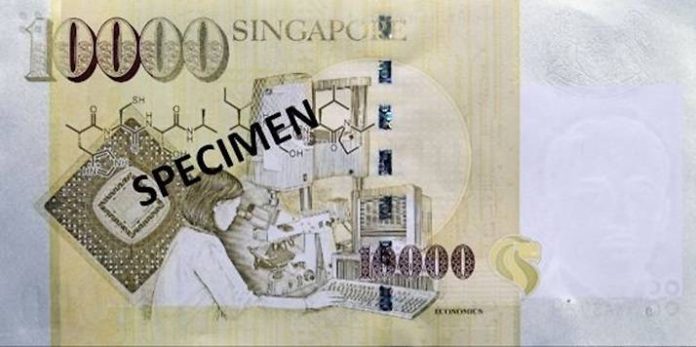
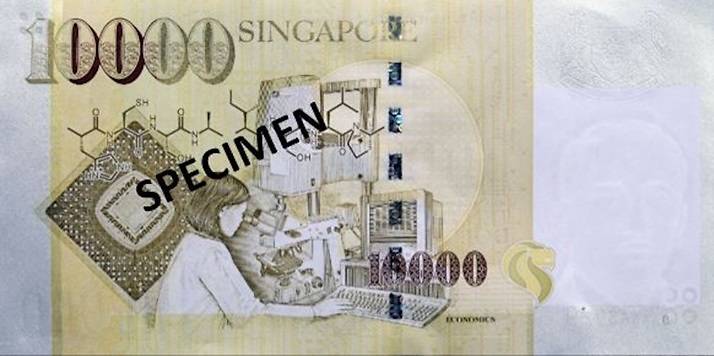
File photo of the back of a S$10,000 Portrait Series note. (Photo: Monetary Authority of Singapore)
Members of the public should also be wary of receiving fake notes, police said. If they do receive a counterfeit note, they should delay the person who presented the note and if possible, call 999.
People should note how the person looks like, and the description and number plate of any vehicle used.
“Limit the handling of the suspected counterfeit note and place it in a protective covering, such as an envelope, to prevent further tampering. Hand it over to the police immediately,” the force added.
Information on the security features of genuine Singapore currency can be found on the Monetary Authority of Singapore website.