Home Blog Page 633

Commentary: When memory fails in old age – the fight for independence, well-being shouldn’t be a lonely one

0

SINGAPORE: Mdm M*, 65, has been diabetic since her thirties. In her fifties, she suffered a stroke that left her wheelchair-bound and almost entirely dependent on her husband, 72-year-old Mr M.

Four years ago, however, Mr M began showing drastic changes in behaviour. Mdm M recounted the day her husband defecated while they were on a public bus and the occasions when he locked her out of their home for several hours.

His condition worsened. Mdm M began to fear for her own life after Mr M stopped administering her insulin injections. He even threatened to stab her with the syringe at one point.

Mdm M made a distress call to a community befriender who, in turn, contacted a community nurse.

READ: Commentary: Living with dementia, anguish and guilt plague families caring for loved ones

Within a week, the community nurse made a home visit and observed that Mr M seemed to be in a perpetual state of confusion. Mr M was subsequently diagnosed with moderate-stage dementia.

The same nurse referred Mdm M and Mr M to non-profit organisation Tsao Foundation, which enrolled them into a comprehensive dementia care system within two weeks.

In Mdm and Mr M’s case, an integrated ecosystem of community services and befrienders played a crucial role in promptly detecting and engaging them before they were subject to further jeopardy.

The couple now receives regular health checks and has access to a 24/7 helpline for their ad-hoc needs.

Tsao Foundation healthcare

A patient having his blood pressure checked at Tsao Foundation’s Community for a Successful Ageing clinic in Whampoa. (Photo: TODAY)

​​​​​​​

The system’s holistic approach to care also provides financial support and house cleaning services on a regular basis.

A TEAM THAT CARES FOR THOSE LIVING WITH DEMENTIA

Dementia affects one in 10 people aged 60 and above. The number of persons with dementia in Singapore will more than double to 103,000 people by 2030.

Family caregivers of persons living with dementia are also significantly more stressed and suffer more severe depressive symptoms and physical problems than other caregivers.

READ: Commentary: The hidden strength of those caring for loved ones with dementia

Being diagnosed with dementia can be challenging to both the person receiving the diagnosis and his or her family members.

Much must be done to guide, educate, coach and support persons with dementia, their families, and any other caregivers.

This is a complex task that requires communication and counselling skills, an extensive knowledge of community services and available resources, as well as expertise in clinical gerontology, geriatric medicine and behavioural health.

senior citizen in wheelchair, with caregiver - singapore file photo (1)

An elderly woman in a wheelchair, pushed by her caregiver. (Photo: Gaya Chandramohan)

Singapore’s healthcare system has not developed sufficiently to provide the comprehensive and user-centric support that persons newly diagnosed with dementia need.

However, there are shining models which have made a life-changing difference to many. In Whampoa, a Dementia Care System (DCS) has been implemented by Tsao Foundation to address this gap in service integration.

The DCS aims to achieve well-being for persons living with dementia such that they can continue to thrive while living in their community. The system also empowers caregivers to become more competent and confident in their care.

READ: Commentary: Opening earlier and more – some senior care centres in Taiwan take service to new levels

At the heart of the DCS is a multidisciplinary team comprising a nurse, a social work manager, and three Dementia Care Programme Assistants (DCPA), supported by a family physician experienced in geriatrics and dementia care.

These DCPAs are community aged-care workers who are especially skilled in working with those living with dementia. Through a comprehensive geriatric assessment, a progressive care plan would be designed and tailored to clients’ and caregivers’ needs, preferences and resources.

The DCS team meets regularly to discuss and update care plans to respond to improvements or deterioration in their clients’ situations.

BROKERING CARE PLANS

When Mdm L, aged 78, first enrolled into the DCS, she was non-communicative and reclusive.

To ease her into the care programme, the DCS team started her out on activities such as visual arts, poetry, and other worksheets before introducing more interactive and physical activities.

Elderly people exercise at a public park in Hanoi

(Photo: REUTERS/Kham)

After three months, her daughter reported that Mdm L had become more willing to socialise and showed significant improvement in her cognitive abilities.

The ability to exercise choice is important to the self-worth of persons with dementia. When Mdm K was diagnosed with dementia, she refused to attend the day centre as she felt she could be perceived as being “sick”.

The DCS team heard her. Instead of coaxing her to attend a day centre, they recommended home-based activities such as Chinese calligraphy and befriender visits.

READ: Missing items, temper tantrums and life shifts: One woman’s journey in caring for her mother-in-law with dementia

In addition, Mdm K’s family members were taught how to manage behavioural difficulties and create enjoyable and meaningful activities of therapeutic value.

Functioning like a broker, the DCS team connects families to services and agencies – inclusive of centre and home-based services – that match their needs, and more importantly, fulfil their desire to be cared for while living safely at home.

CARE FOR THE SENIOR CAREGIVER

Mr H, aged 84, struggles with his own health while caring for his 85-year-old wife who has dementia.

As he finds it difficult to read the labels, Mr H was often unsure about when and how much medication he should administer to his wife and himself.

READ: Commentary: Small things make a big difference in giving dementia patients the power of choice

To address this issue, the DCS team linked Mr H up with service providers who would monitor his medication compliance. According to Mr H, such assistance helped them avoid incidents of overdose.

The overall health and well-being of dementia family caregivers have a strong bearing on the quality of care they can provide. It is important that caregiver needs receive as much attention as the needs of those they care for.  

HOW THE COMMUNITY CAN PLAY A PART

Singapore is ramping up efforts to improve the living environment and community inclusion of persons with dementia and their caregivers.

Eight Dementia-Friendly Communities (DFCs) have been set up since 2016. In these communities, residents, shopkeepers, stall owners, students and police officers volunteer to attend training sessions to recognise common symptoms of dementia and understand how to assist persons with dementia.

According to the World Health Organization, dementia affects some 47.5 million people worldwide --

According to the World Health Organisation, dementia affects some 47.5 million people worldwide — with 7.7 million new cases every year (Photo: AFP/Sebastien Bozon)

Singaporeans live in a care landscape that is rapidly developing, with the growth of many services over a short span of time.

Navigating these services, however, remains a challenge as their availability does not always equate to access for people who need them the most.

Furthermore, health and social services need to integrate seamlessly for these to be more impactful, sustainable and user-friendly.

READ: She couldn’t help her dad – but now she’s helping other dementia patients with tech

Most persons living with dementia in Singapore reside at home. It is therefore important we ensure appropriate support is provided to them in terms of the quantity, quality, timing and location of services.

Community-based programmes such as the DCS facilitate independence, reduce social isolation and sustain their most important source of support – the caregivers – for as long as possible.

*The individuals in this commentary are participants of a study by Duke-NUS Centre for Ageing Research and Education (CARE), which seeks to evaluate the impact of the DCS in meeting the needs of persons living with dementia and their caregivers in the Whampoa community under the Tsao Foundation’s Community for Successful Ageing (ComSA) Initiative.

Suen Johan is a sociologist and Ad Maulod is an anthropologist. Both are Research Fellows at Duke-NUS Medical School’s Centre for Ageing Research and Education.
Source link

How you can survive a plane crash (it’s not as rare as you think)

0

SINGAPORE: Last year was one of the deadliest for the aviation industry in recent years.

The number of people killed in commercial plane crashes jumped by more than 10 times from 50 deaths in 2017 — aviation’s safest year on record — to 514 deaths last year, reported the International Civil Aviation Organisation (ICAO).

As the year end approaches, safety is always a concern for those getting ready for their holiday overseas.

But statistically speaking, the odds of dying as a plane passenger are low: 1 in 188,364, compared with 1 in 1,117 for drowning and 1 in 103 for a motor vehicle crash, based on 2017 United States census data.

And surviving a plane accident might not be as rare as you think. The European Transport Safety Council categorised 90 per cent of aircraft accidents as survivable in a study in 1996, and airline safety has since improved.

WATCH: How to survive/avoid being in a plane crash (3:00)

So here are eight things the programme Why It Matters found out about surviving or avoiding plane crashes. (Watch the episode here.)

1. LISTEN TO THE AIRCREW

About two and a half hours into Singapore Airlines flight SQ368 to Milan three years ago, there was a strong smell of jet fuel.

Then came the captain’s announcement that the plane was losing fuel and had to return to Changi Airport. Upon landing, its right wing burst into flames.

The Singapore Airlines flight SQ368 was on a Boeing 777, one of the safest airplanes in history.

The flight was on a Boeing 777, one of the safest airplanes in history.

Ex-crew member Siti Noor Mastura recalled that the cabin erupted into chaos as passengers started leaping from their seats and climbing over other passengers.

“One of the gentlemen came forward, yelling at me, “Open your door! Open your door!’” said the 29-year-old. But the captain made it clear that “no matter what you do, don’t open the doors”.

“He was in communication with the fire crew on the ground,” added Noor. And as the tarmac and the bottom of the plane were coated with fuel, “if we’d opened our doors, it would’ve been a disaster”.

She survived the accident along with the 222 passengers and other 18 crew members, thanks to the captain and the firefighters, who brought the blaze under control within five minutes of the engine catching fire.

Ex-crew member Siti Noor Mastura survived the accident on flight SQ368 to Milan three years ago.

Siti Noor Mastura.

2. KEEP THE SHADES UP

When the plane is taxiing, taking off or landing, the cabin crew would announce that the window shades are to be kept open.

There are several reasons for this, mainly to allow both the crew and passengers to see any danger outside the aircraft.

It allows passengers to quickly alert the crew members to developments such as fuel leaks, sparks in the wing area or fire in the engine, stated the Civil Aviation Authority of Singapore on its website.

With a view of the exterior, passengers would know what is happening outside during an emergency, “be able to better orientate themselves and keep clear of the danger”.

A photo taken from footage of the Singapore Airlines flight SQ368 accident in June 2016.

Photo taken from footage of the SQ368 accident.

3. BE AWARE DURING LANDING AND TAKE-OFF

When Boeing conducted a study of commercial plane accidents between 2008 and 2017, it found that 14 per cent of fatal accidents occurred during take-off and the initial climb.

That is when planes run into the danger of veering off the runway or colliding with things like a flock of birds.

Cruising accounted for 11 per cent of fatal accidents, which were largely a result of planes losing control.

The deadliest part of any flight, however, is the final approach and landing — when 49 per cent of fatal accidents happen, owing to hard landings or missing the runway.

Retired pilot Lim Khoy Hing explained that there is a lot of manoeuvring involved in landing a plane.

Captain Lim Khoy Hing, a retired Malaysian pilot, has logged over 25,000 flying hours.

Captain Lim Khoy Hing has logged over 25,000 flying hours.

“(Closer) to the ground, your reaction time would be reduced, especially when you’re landing,” he said. “With strong winds, it makes it more difficult.”

So being aware of what is going on during these times may just increase one’s chances of survival.

4. CHOOSE AIRPORTS WITH AUTO LANDING SYSTEM

The risk of a fatal accident occurring between the final approach and landing can be reduced if pilots are able to rely on automatic landing systems to ensure safe navigation.

One example is the Instrument Landing System, an assisted navigational aviation facility that provides guidance to pilots while the flight is approaching the runway.

The Instrument Landing System provides guidance to pilots when the flight is approaching the runway.

Such automation increases the reliability of landing and removes possibilities of human error. Not all airports, however, are equipped with an auto landing system, Lim pointed out.

“It’s very expensive to ensure that the airfield is complying with a low-visibility landing certification,” he said. “Airports with these auto landing facilities are usually in the European countries where there is a lot of fog and (where there’s) winter.”

Some airports like in Hong Kong, Japan and Singapore also have this facility. So while passengers do not get to cherry-pick their pilot, they can opt for airports equipped with such technology.

5. HOW SAFE ARE BUDGET AIRLINES?

When it comes to choosing airlines, passengers may have a nagging worry that something “budget” is not necessarily quality. Yet in just a decade, the seat capacity of low-cost carriers has more than quadrupled in the Asia-Pacific.

And in terms of safety, there is no difference between a low-cost carrier and a full-service carrier, as both must meet the same safety standards, said AirAsia Group’s head of safety Ling Liong Tien.

AirAsia Group’s head of safety Ling Liong Tien talks to Why It Matters in Kuala Lumpur.

Captain Ling Liong Tien.

Most airlines in the world are members of the ICAO, which provides a set of global standards to help with regulation in areas such as aviation safety, efficiency and security.

Budget airlines must also be certified by their country’s civil aviation authority before they are issued with an air operating certificate, added the captain. “So there’s no way any airline (can) take any shortcut.”

6. AVOID AIRLINES WITH PROBLEMS

Asian Aviation editor Matt Driskill recommends googling the airline first and looking beyond the International Air Transport Association (IATA) Operational Safety Audit certification. He cited the website airlineratings.com for the safety ratings of airlines.

For safety purposes, Asian Aviation editor Matt Driskill recommends googling the airline first.

Matt Driskill.

“They look at whether or not (the airlines) have had an accident in the last 10 years that caused fatalities. They look at the kind of fleet that they have … (and if) they have the latest equipment,” he said.

Personally he would “think twice about flying on any airline that’s having labour problems”.

“Not because a pilot’s going to intentionally crash a plane to make a point, but because … when (he’s) angry and trying to do a checklist, (his) mind is on a possible strike, and (he can) forget something on the checklist,” he explained.

“It leads to those kinds of problems. So that’s what you have to worry about.”

7. LISTEN TO THE SAFETY TALK

If there is one thing few people do, it is to read the safety guide or watch the safety demonstration.

If there is one thing few airline passengers do, it is to read the safety guide.

Passengers recall only 32 per cent of the key messages from standard pre-flight safety briefings, according to research published in the International Journal of Aviation Psychology.

But if a passenger wants to increase his chances of survival in an accident, then he must pay attention to this, said Blair Cowles, IATA’s regional director for Safety and Flight Operations (Asia-Pacific).

“And you can do other things; I’d leave my shoes on for take-off and landing, and that’s sound advice,” he added.

Blair Cowles is IATA’s regional director for Safety and Flight Operations (Asia-Pacific).

Blair Cowles.

As safety information may vary with different aircraft types, it is important to read the safety information card before every flight, the CAAS noted on its website. The location of emergency exits, for example, may differ.

8. BRACE FOR IMPACT

Should the worst happen, passengers need to assume the brace-for-impact position during an emergency landing.

This brace position reduces flailing and secondary-impact injuries by having passengers position their body (predominantly the head) against whatever they are most likely to be thrown against upon impact, Australia’s Civil Aviation Safety Authority explained in a safety bulletin.

One need not, however, become overly worried about air travel.

Why It Matters host Joshua Lim find outs if Singaporeans should be less blase about flying.

Why It Matters host Joshua Lim.

“Since 2009, we’ve gone from 2.5 billion journeys a year to well over four billion journeys a year. And yet in absolute terms, the number of accidents (and) the number of fatalities have continued to decrease,” said Cowles.

“If you hop on a plane right now, you’d have to fly every day for the next 241 years before you’re on a flight that is involved in an accident that has one fatality or more.”

Watch this episode here. Why It Matters is telecast every Monday at 9pm.

Source link

97-year-old Thomson fruit seller in viral post sees wave of kindness

0

SINGAPORE: Madam Teo Suan sat in her chair, along a condominium walkway in Thomson lined with tuition centres and cafes, her wares laid out on the ground next to her: A few bunches of bananas, two large papayas, a pineapple, heaps of ginger, and several sticks of tapioca, among others. 

As a potential customer – one of her first of the day – approached, her wizened face lit up with a grin.  

It was S$7 for the bananas or a mango, S$4.50 for a pineapple, S$11 for a papaya. Others might have bat an eyelid at those prices. But Mitchell Chan bought up everything she had for sale, for S$100. 

“I’m so proud of her,” he said. “She’s 97, and still out here. It can be a bit more expensive than Sheng Siong, but that’s not the point.

“The main point is about helping one another, and if I can pay S$100 and she can end her day earlier, why not?” 

thomson aunty 4

Customer Mitchell Chan bought up Mdm Teo’s remaining stock for S$100. 

Mr Chan’s visit was prompted by a post he had seen the day before, which had gone viral within hours of its posting on Friday by Facebook user Samuel Lee. The latter had called for people to support the woman he’d spotted selling fruits in the Thomson area. 

He described her as “97 years old, weak and fragile”, but still “makes an effort to come out every weekend with a grocery trolley full of fruits and vegetables”. 

The post has since received more than 11,000 shares, and comments from users who pledged to drop by and buy her fruits. 

thomson fruit seller 5

Mr Samuel Lee’s Facebook post. 

And indeed, Mr Chan’s gesture was merely one among many acts of kindness towards Mdm Teo that CNA Insider saw on Saturday. People responded despite Mr Lee noting, in an update to his post, that she was reportedly “well taken care of” and sold fruits simply because she wanted to. 

Even after her entire stock sold out within the first half-hour of her setting up shop, people came by to visit, wish her well, or present gifts of cash, drinks and food. 

“We don’t only help the poor, right?” wrote Mr Lee in his post. “Shouldn’t we just support the spirit in her and her willingness to be still wanting to earn money by herself at this age?” 

“Some say that she sells at a ridiculous price,” he added. “But remember, she won’t force you to buy. She will still give you that sweet smile of hers even if you reject.” 

Speaking to CNA Insider, Mr Lee said he was happy to learn that on Friday itself, within two hours of his post, she’d sold all her wares. “I was so glad to see empty boxes beside her, and (Mdm Teo) drinking the cup of coffee I bought for her.”

thomson aunty 7

Screengrab from Facebook post by user Ruide Tan. 

RECONNECTING WITH OLD REGULARS 

Mdm Teo was initially reluctant to talk when CNA Insider approached her. But she warmed up, confirming that she was indeed 97 years old, and had been selling fruits in the area for 37 years. 

She added that she used to rear pigs and chickens in a kampong, as well as plant sugar cane and bitter gourd. 

“It’s fun,” she said in Hokkien, in response to questions about why she was still selling fruits at her age. “It’s very hot at home, and down here, I can sell to people.” 

thomson fruit seller 3

Mdm Teo selling fruits by the road, also in the Thomson area, in a photo from 2015. 

She appeared to be losing her hearing and vision, and had trouble understanding what some of her customers said. She also seemed oblivious to her overnight fame from Mr Lee’s post. 

Beyond triggering the generosity of new customers, the post also helped Mdm Teo to reconnect with old regulars. 

One of them was Hu Peini, who used to live around the Thomson area, but now lives in Punggol. 

thomson aunty 6

Mdm Teo broke into a wide grin when she saw Ms Hu’s son. 

“The last time I saw her, she told me she was 91 or 92,” Ms Hu said. “From the photo, it looks like she’s aged a lot.” 

The packet of chicken rice and cash gift she handed to Mdm Teo brought an immediate smile to the granny’s face. And her smile grew even wider when she spotted the toddler in Ms Hu’s arms. 

Stroking the child’s leg with her gnarled hands, she asked him: “Have you eaten? Do you want to have some porridge?”   

Mdm Teo revealed that she herself has a big family, with “many kids, many grandchildren, and even seven great-grandchildren.” 

thomson fruit seller 1

Ms Hu Peini, her sister, husband and kids posing with Mdm Teo. 

Ms Hu said she had previously seen Mdm Teo selling fruits every day, but believes she has since reduced the number of days due to age. 

“She used to say that her fruits are from the hills … we know that she bought it from the supermarket, but it’s okay because we buy it from her willingly.” 

THIS IS WHAT SHE WANTS TO DO 

One of Mdm Teo’s neighbours, Jane Soh, noted that she has seen Mdm Teo selling her wares at different spots in the Thomson vicinity. 

To get to and from her home, she said, Mdm Teo would either take a taxi or walk and ask people to help her with her trolleys. “She wants to be independent,” the neighbour said. 

thomson aunty 5

Mdm Teo counting her money after selling off all her fruits. 

Mdm Teo’s son declined comment when CNA Insider visited her flat. 

When asked how she was going home, Mdm Teo said she had turned down an offer from her son to drive her home, preferring instead to walk. 

Ms Soh added that sometimes, she would help Mdm Teo carry things up to her flat. 

“She lives with her family … she has a big family,” she said. “I think she is quite okay (financially).

“This is really what she wants to do.”

Source link

ASEAN members need to strengthen economic integration, further liberalise trade: PM Lee

0

BANGKOK: In the face of a slowing global economy, Association of Southeast Asian Nations (ASEAN) members must “intensify” integration efforts and uphold a “free, open and rules-based” multilateral trading system, said Prime Minister Lee Hsien Loong on Saturday (Nov 2).

Speaking at the 35th ASEAN Summit plenary session, Mr Lee pointed out that the global economy has “weakened” since ASEAN last met in June. With populism gaining ground, support for globalisation and multilateralism continues to deteriorate, he added.

“Each ASEAN member state has our own domestic preoccupations. But this global backdrop has made it more urgent than ever for ASEAN to come together, to deepen cooperation among ourselves, in order to counter these unfavourable external trends, and to speak on issues that concern us with one voice,” Mr Lee said.

“On the economic front, we must intensify our integration efforts and uphold a free, open and rules-based multilateral trading system,” he added.

Having internally formed the ASEAN Community in 2015, member countries need to take the next step to fully implement the ASEAN Economic Blueprint 2025, and complete the “unfinished agenda”, said Mr Lee.

lee hsien loong in bangkok asean summit

Singapore Prime Minister Lee Hsien Loong in Bangkok for the ASEAN Summit on Nov 2, 2019. (Photo: Twitter/ASEAN2019TH)

ASEAN also needs to widen economic links with its partners and further “liberalise” trade with them, he added.

“A major outstanding initiative is the Regional Comprehensive Economic Partnership (RCEP),” said Mr Lee. “I am happy that RCEP negotiations have made significant progress, and look forward to discussing how we can complete them at the 3rd RCEP Summit on Monday.”

The trade deal involves the 10 ASEAN countries and its six trading partners – China, India, Japan, South Korea, Australia and New Zealand.

RCEP talks were officially launched in 2012 but have faced several delays. If agreed to, RCEP will form the largest trading bloc in the world – accounting for a third of global GDP.

READ: Concluding RCEP trade pact this year the ‘highest priority’

At the same time, ASEAN needs to continue exploring new areas for economic cooperation, added Mr Lee.

One such way is the ASEAN Smart Cities Network (ASCN), he pointed out.

pm lee in bangkok for asean summit

Singapore Prime Minister Lee Hsien Loong arrives at the plenary session of the 35th Association of Southeast Asian Nations (ASEAN) Summit in Bangkok on Nov 2, 2019. (AFP / Lillian SUWANRUMPHA)

An initiative spearheaded by Singapore, the network is envisioned as a collaborative platform where up to three cities per ASEAN country work towards a common goal of smart and sustainable urban development.

Cities include Singapore, Johor Bahru, Phuket, Yangon, Phnom Penh and Vientiane.

READ: 26 cities to pilot ASEAN Smart Cities Network

“The ASCN will enhance ASEAN’s proposition as a single digital market and generate new growth for our countries,” said Mr Lee.

“I am pleased that the ASCN has gained momentum since its launch last year during Singapore’s chairmanship. And I am happy that Thailand has hosted two ASCN meetings this year.

“As the ASCN shepherd, Singapore will work with member states to develop the network further, including of course with the next chairman, Vietnam.”

When it comes to the environment, Singapore also “firmly supports” multilateral solutions to issues such as climate change and transboundary pollution, said Mr Lee.

On its end, Singapore has put together a Climate Action Package, which offers capacity building courses in areas such as climate science and disaster risk mitigation, convened the second ASEAN Climate Change Partnership Conference, and hosted a meeting of the Intergovernmental Panel on Climate Change, Mr Lee highlighted.

READ: Singapore to help ASEAN better tackle climate change with new programme

To combat transboundary pollution, Singapore will also cooperate with fellow ASEAN Member States.

“Another recurring transboundary challenge, as we were reminded recently, is haze pollution,” said Mr Lee.

“We should fully implement the ASEAN Agreement on Transboundary Haze Pollution. Because by pooling our resources, we can deal with this serious problem more effectively.”

But, ASEAN can only make progress on these “economic and environmental priorities” if the region continues to enjoy peace and stability, pointed out Mr Lee.

“Singapore is pleased that ASEAN and China have completed the first reading of the Single Draft Negotiating Text of the Code of Conduct in the South China Sea,” he added.

As ASEAN and China move forward in negotiating the Code of Conduct, and managing the South China Sea issue, ASEAN should continue to reiterate its “shared principles” with regional partners, Mr Lee said.

These include respect for the freedom of navigation and overflight; self-restraint including non-militarisation; and peaceful resolution of disputes in accordance with international law, including the 1982 United Nations Convention on the Law of the Sea (UNCLOS).

Another issue of concern is the situation in Myanmar’s Rakhine State, said Mr Lee, calling it a “complex problem with both humanitarian and security dimensions”.

“ASEAN should continue to support efforts by all parties, including the Myanmar government, to work towards a comprehensive and durable solution,” added Mr Lee. “Commencement of repatriation on a safe, voluntary, and dignified basis should remain an immediate priority.”

Mr Lee will be in Bangkok until Monday (Nov 4) for the summit as well as to attend various meetings with regional and international counterparts.

Source link

Man who allegedly took upskirt videos dies near Little India after being detained by others

0

[ad_1]

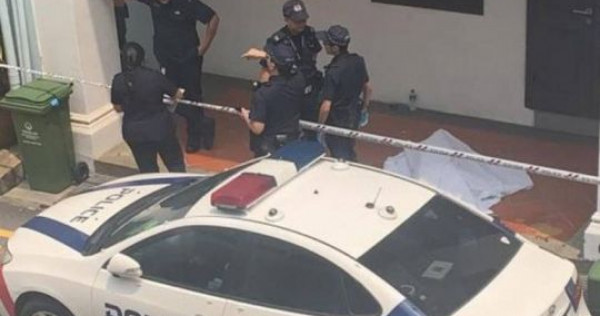
SINGAPORE – A 46-year-old man died on Friday (Nov 1) after he was detained by five members of the public for allegedly taking upskirt videos of a woman.

Police said they were alerted to the incident in Niven Road at about 12.45pm on Friday.

Preliminary investigations found that the 46-year-old man was suspected of taking upskirt videos of a woman at Little India MRT station, before he was detained by five members of the public in Niven Road.

When police officers arrived at the scene, the man was motionless and had no pulse, the police said.

Officers performed cardiopulmonary resuscitation on the man until paramedics from the Singapore Civil Defence Force arrived.

[ad_2]

Source link

House tour: A bright and spacious 3-bedroom HDB in Bishan

0

[ad_1]

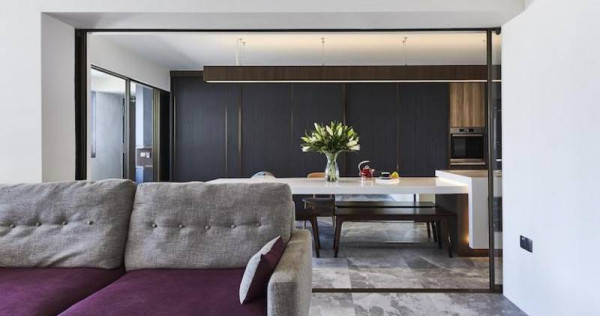
Once dingy with poor ventilation, this HDB executive flat underwent a $150,000 makeover (not including the $50,000 for the soft furnishings) that has transformed it into a bright and much bigger space.

PHOTO: Home & Decor

Taking centre stage is the dining section, now seamlessly incorporated into the kitchen.

Liew Kok Fong, founder-architect of Studio Super Safari took into account the couple’s passion for cooking and entertaining when designing the home and came up with this dream dining space-cum-kitchen.

“Stretching to 5m, the table is the longest I have ever designed! The island counter is around 2m and the table is three,” says Kok Fong.

The table also enhances the length of the 7m kitchen that stretches right into the wet kitchen.

[ad_2]

Source link

10 secret places that do not feel like Singapore to go on a special date

0

[ad_1]

Skip the typical dinner and movie combo, please.

Dates can be challenging. I mean, there are only so many movies and luxurious dinners you can go to with your other half before getting bored.

Still, let it not be said that Singapore is boring – far from it, if you look hard enough!

We do know it’s tough to come up with fresh ideas every week, so we’ve done the work for you.

Here’s a list of atypical date spots you can consider that will make you feel like you’re on a vacation with your partner. It’ll help you chalk up some brownie points too.

1. OPEN FARM COMMUNITY @ MINDEN ROAD

[ad_2]

Source link

77-year-old man dies after being knocked down by SMRT double-decker bus at Yishun junction

0

[ad_1]

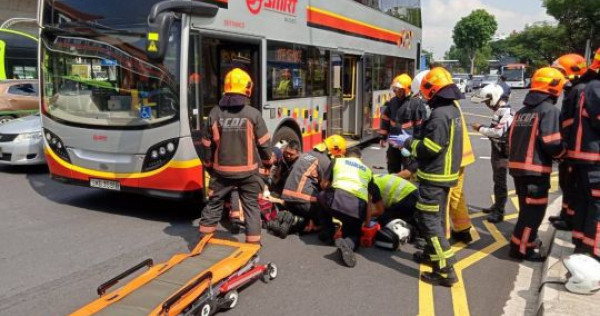
SINGAPORE – A 77-year-old man died in a road accident involving an SMRT bus in Yishun on Tuesday (Oct 29). The bus driver involved has been arrested.

The police said on Friday that the accident occurred around 10.10am at the junction of Yishun Avenue 5 and Avenue 2, in front of Northpoint City.

The elderly pedestrian was conscious when taken to Khoo Teck Puat Hospital, where he later died from his injuries.

The double-decker bus was making a turn at the junction when it hit the 77-year-old retiree, dragging him under the moving vehicle for around 4m to 5m, an eyewitness to the accident told Chinese evening daily Lianhe Wanbao. 

The eyewitness said the pedestrian was crossing the junction with a group of people but as he did not walk as fast, he had not finished crossing the road when the traffic light changed.

The 29-year-old bus driver was arrested for causing death by a negligent act, said police. SMRT said the driver has since been suspended from driving.

[ad_2]

Source link

Vice in the heartlands: 6 sex workers arrested in Woodlands

0

SINGAPORE: From the outside, there is nothing out of the ordinary about this ground-floor flat in Woodlands fronted by a cream door, which anyone could walk past and miss.

But step inside, and it is teeming with tell-tale signs of paid sex, much like a brothel.

The house is so dim that you look around for a light switch, only to realise that the lights are already turned on, but their glare has been intentionally muted.

In the living room, only one bulb from a chandelier casts a dim orange glow. In the rooms, the ceiling lights are spray-painted black.

Almost double the size of a four-room flat, the apartment is illegally partitioned to accommodate more rooms and business.

Anti vice raid photo 5

A plastic bag covers the lights of a room in an illegal brothel in Woodlands. (Photo: Hanidah Amin)

The living room is devoid of furniture, except for a dining table laden with sauces and dips and a half-drunk cup of juice. 

There are seven rooms, four of which were used for prostitution. Gold-plated numbers mark the doors, with revised numbers on post-its stuck beside them.

VICE ACTIVITIES IN HEARTLANDS

In one of the rooms, four women sit side by side under the watchful eye of a female police officer. 

They are all dressed up, but have their heads bowed after being caught in a vice raid on Oct 25.

Their faces cannot be captured, to keep their identities confidential. 

Anti vice raid photo 16

Packets of condoms in a drawer found during a raid at an illegal brothel on Oct 25, 2019. (Photo: Hanidah Amin)

They are among six foreign nationals who were arrested that day in two vice raids in Woodlands.

The women who were arrested appear to be part of a growing trend. The police have observed that vice activities are moving to residential estates, as operators use online platforms to advertise and solicit for clients.

A tour of the rooms gets confusing, as they start to look the same save for the colours of the bedsheets, which lay rumpled.

Anti vice raid photo 17

One of the rooms at an illegal brothel in Woodlands, taken in October 2019. (Photo: Hanidah Amin)

Used towels sit abandoned on the floor, mouthwash sit in cups, ready to give the parties involved an instant hit of freshness.

In one of the rooms, a drawer is left open, full of unopened condoms from a little-known brand. On the bed lies a pack of a candy-like assortment of pills, suspected to be sexual enhancement drugs.

Anti vice raid photo 8

Suspected sexual enhancement pills found within one of the rooms during the raid at an illegal brothel on Oct 25, 2019. (Photo: Hanidah Amin)

OCCUPANTS DID NOT MINGLE WITH OTHERS 

In another room, the smell of smoke is long gone, but a newly-opened gold pack of cigarettes is on the table, a plastic cup of an ashtray on the floor. It is half-filled with water and has seen a stick or two. 

Scrunched up clothes are strewn on the bed, as if they had been removed in a hurry.

When it is time for the women to leave the flat, one of them smiles as she is escorted by police officers to retrieve her luggage from another room, bound by cuffs to another woman.

Anti vice raid photo 3

Contraband cigarettes found among other items during the raid at an illegal brothel in Oct 2019. (Photo: Hanidah Amin)

There is laughter as they enter the police van, cuffed in pairs.

As they are led away, children and teenagers continue to play and giggle at a playground nearby.

READ: Sex work in Singapore: Will changes to the Women’s Charter be enough to tackle exploitation?

Neighbours CNA spoke to said the door to the flat was always closed, its occupants always shuttered in.

“We have block parties and block gatherings. We know one another. The owners come out to mingle, but that unit, they don’t leave their windows or doors open,” said financial consultant Barry Chua, 51.

Others said they noticed that the tenants were all women, and that they would sometimes roll luggage in and out.

A SECOND VICE RAID IN WOODLANDS

Earlier in the day, the police raided another unit in Woodlands – a four-room HDB flat on the fifth level, which turned up two suspects.

It looks like a typical home from the 80s – with a glass showcase displaying a ceramic Chinese lucky cat and pig figurines.

What sets it apart are two hand-written signs in Chinese. One, outside a room, says: “It’s late in the night so keep your volume down. Don’t disturb other people.” 

Anti vice raid photo 9

Sex workers who were arrested in an HDB flat in Woodlands during a raid on an illegal brothel on Oct 25, 2019. (Photo: Hanidah Amin)

The other, outside the kitchen where there is a toilet, reads: “Please, every beautiful woman, maintain the hygiene. Clean the hair off the floor after showers.”

The two suspects are in one of the rooms, and the condoms that were discovered are displayed on the bed along with a made-in-China lubricant. 

Pink lingerie hangs against a cupboard in the room. Inside the cupboard is a peek into other clothes the women wear, a white halter cropped top with sequins, a white t-shirt and a striped spaghetti-strap top.

chinese sign hdb illegal brothel

One of two signs seen inside an illegal brothel in Woodlands. (Photo: Jalelah Abu Baker)

The women are  handcuffed to each other and their belongings packed in luggage. They use their hair to cover their faces as the police lead them away.

The neighbourhood is quiet and there are not many onlookers, save for an elderly man who whips out his phone, and an elderly woman who has stopped to watch the commotion after putting out her bamboo poles of clothes to dry.

VICE ACTIVITIES MOVING TO HEARTLANDS: POLICE

“Vice syndicates and online sex workers are providing sexual services in the heartlands. This has caused significant inconvenience to residents and has affected their sense of safety and security,” said Deputy Assistant Commissioner of Police Deculan Goh.

chinese sign woodlands illegal brothel

One of two signs seen inside an illegal brothel in Woodlands. (Photo: Jalelah Abu Baker)

He warned that homeowners, tenants and property agents who knowingly let out their premises for vice activities will be prosecuted. Under the Women’s Charter. they may be fined up to A$3,000, jailed for up to three years, or both. 

READ: In pictures: 38 arrested for gambling, vice activities in police raids

The police urged property owners to perform identity checks and face-to-face interviews. If they are based overseas, they should get help in doing so, they said.

Those found acting as agents or pimps for vice activities will be prosecuted under the Women’s Charter and may be fined up to S$10,000 and jailed  for up to five years.

Source link

MP Louis Ng reveals the beautiful reason why there are horses in Yishun

0

[ad_1]

A horse sighted in a housing estate at Yishun Ring Road last month had the Internet abuzz with netizens speculating on what the animal was doing in the heartlands.

Nee Soon GRC MP Louis Ng told Stomp the horses are in Nee Soon East to provide therapy for children with special needs.

“We started discussions about this in January this year,” he said.

“We started this project so that we can help children with special needs living in Nee Soon East and also engage our seniors who are the volunteers for the programme.

“Ultimately, the project brings the community together through horses.”

In a Facebook post on Saturday morning (Nov 2), Mr Ng wrote: “They are actually rescued horses and they are here in Nee Soon East to rescue people.”

[ad_2]

Source link