Home Blog Page 631

Changi Airport to close Runway 2, planes to use Runway 3 from October 2020

0

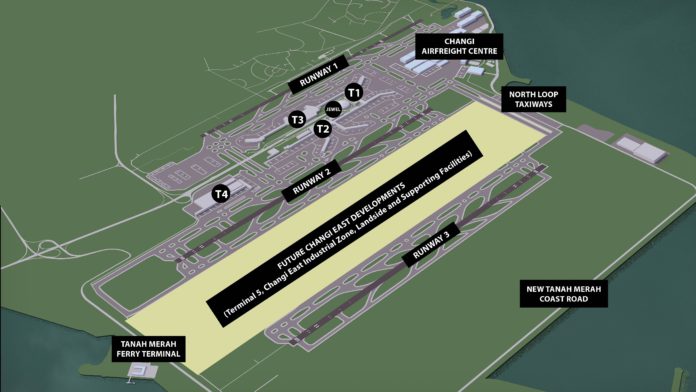
SINGAPORE: Changi Airport will operate using Runway 1 and Runway 3 from October next year in order to facilitate works for the airport’s fifth terminal and the Changi East Industrial Zone.

The airport will operate on these two runways from Oct 25 next year and passengers can expect a longer taxiing time for flights assigned to Runway 3, Changi Airport Group (CAG) said in a media release on Monday (Nov 4).

“To ensure the safety of flight operations, Runway 2 will be closed temporarily for the next phase of infrastructure works for the Changi East project.

“These works are needed to complete Changi Airport’s fifth terminal, the Changi East Industrial Zone and supporting facilities by the early 2030s, and to operationalise a three-runway system by the mid-2020s,” CAG added.

READ: Remaking Singapore: After Jewel, 5 other big projects set to raise the game

READ: Why Singapore needs Changi Airport Terminal 5, to fly higher
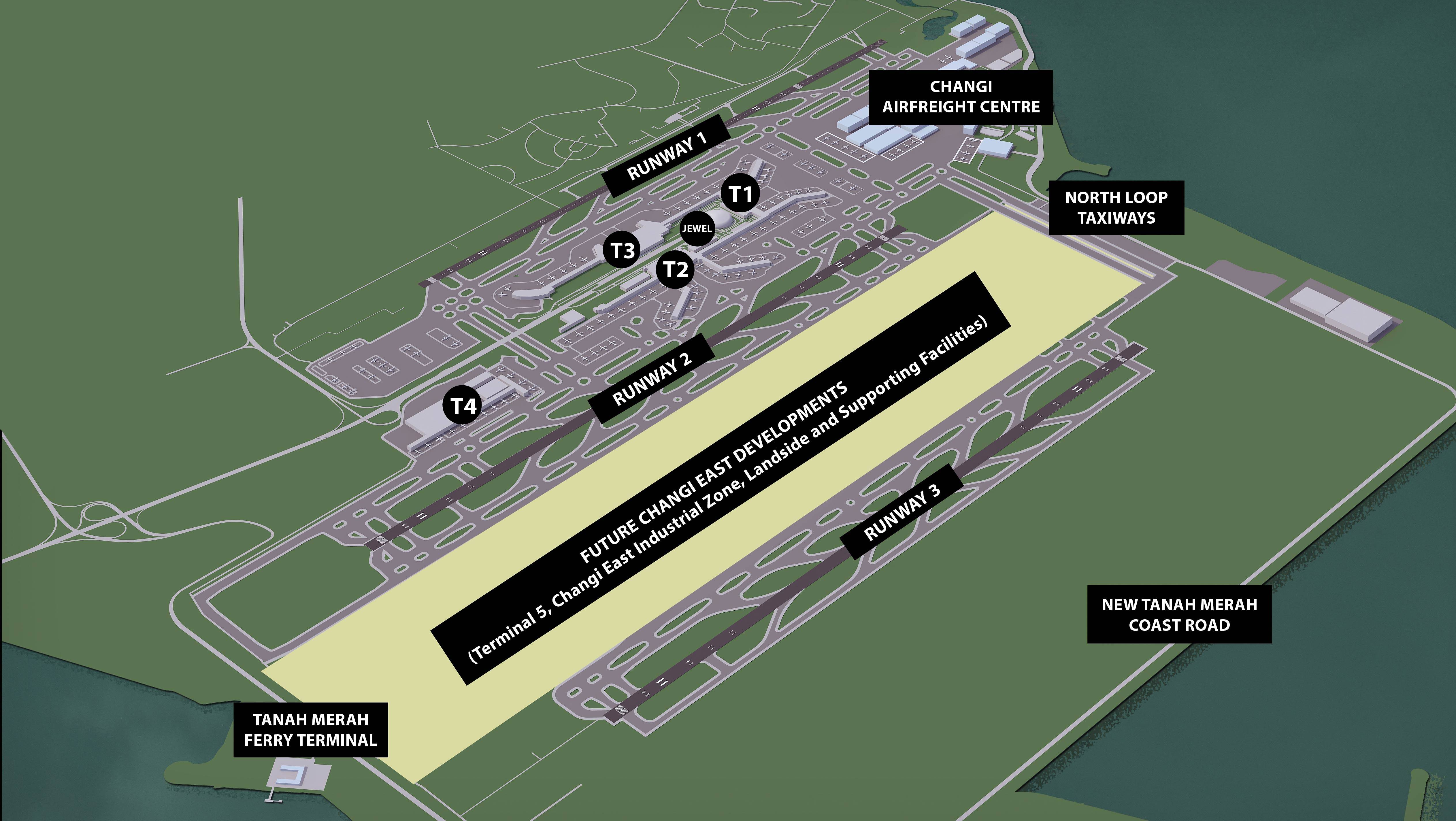
Layout of Changi Airport

This graphic depicts the layout of Changi Airport. (Image: Changi Airport Group)

CAG said that it will work closely with stakeholders including the Civil Aviation Authority of Singapore (CAAS), airlines and ground handlers to ensure a smooth and safe transition of runway operations at Changi.

The Changi East development, which spans 1,080ha, is Changi Airport’s biggest expansion project in more than three decades and is estimated to be completed in the 2030s.

The development includes Terminal 5 (T5), a three-runway system, the Changi East Industrial Zone, landside and aviation support facilities, as well as the construction of tunnels and other underground systems.

“The development will serve to secure Singapore’s air hub status and ensure its continued competitiveness and relevance,” CAG said on its website.

T5 is being built on 1,000ha of land, which is equivalent to the size of Tampines new town or 2.5 Marina Bays.

When completed, T5 will increase Changi’s annual capacity by 50 million passengers initially and up to 70 million if needed.

This means Changi could potentially serve 150 million passengers a year, compared with the current capacity of 82 million.

READ: Changi Airport adopts smart glasses, tech solutions to address challenges of Changi East project

READ: Building ahead of demand key for Changi Airport to keep up with competition: Khaw

T5 will also make use of renewable energy and have technologies such as automated check-in kiosks and bag drops.

The project, expected to cost tens of billions, will have a station serving it on the Thomson-East Coast Line (TEL). The completion of the Changi Southern Corridor project will also see a 3.5km cycling path connect to T5. 

Changi Airport’s cargo facilities, currently located at the Changi Airfreight Centre, will be expanded to the Changi East Industrial Zone. The zone will be developed for airfreight, air express and Maintenance, Repair and Operations activities.

“The existing third runway, previously used only by the military, will be extended from 2.75km to 4km to handle larger passenger aircraft, and converted for joint military-civilian use,” CAG had said.

Under the three-runway programme, almost 40km of new taxiways will also be built to connect the runway with the rest of Changi Airport.
Source link

1 dead, 1 injured in crane collapse at Novena construction site of new TTSH rehab hub

0

[ad_1]

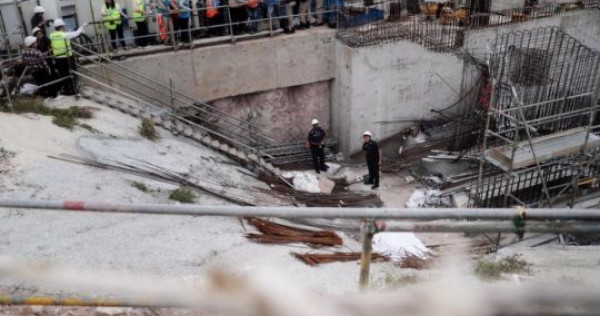
SINGAPORE – A worker died after a construction crane collapsed at a worksite in Novena on Monday (Nov 4).

Another injured worker was taken to Tan Tock Seng Hospital (TTSH).

The Singapore Civil Defence Force (SCDF) said it received a call for help at a construction site in Jalan Tan Tock Seng at about 8.50am.

“A boom of a tower crane had collapsed at the construction site and a man was pronounced dead at the scene by an SCDF paramedic,” the SCDF said.

“Another worker was taken to TTSH after the incident.”

The police said that a 28-year-old worker was found lying motionless and subsequently pronounced dead, and a 35-year-old worker was conscious when he was taken to hospital.

Workers at the site told The Straits Times that the dead man was an Indian national, and the injured worker, a Bangladeshi, was hurt in his leg.

[ad_2]

Source link

E-scooter ban on footpaths: 5 things you need to know

0

SINGAPORE: Electric scooters will be banned from footpaths in Singapore from Tuesday (Nov 5), Senior Minister of State for Transport Lam Pin Min announced in Parliament on Monday.

Mr Lam described it as a “difficult decision” but he added that it was “a necessary step” for the safety of pedestrians on public paths.

However, he stressed that this change “is not a complete ban of e-scooters”.

READ: E-scooters to be banned from Singapore’s footpaths starting Nov 5

Here is what you need to know on the latest announcement:

1. What happens if you’re caught riding an e-scooter on a footpath?

E-scooters will be banned from footpaths from Tuesday, but to allow riders to adjust to the new regulations, there will be an advisory period till the end of the year.

Until Dec 31, errant users will be given warnings.

From 2020, there will be a “zero-tolerance” approach taken, the Land Transport Authority (LTA) said.

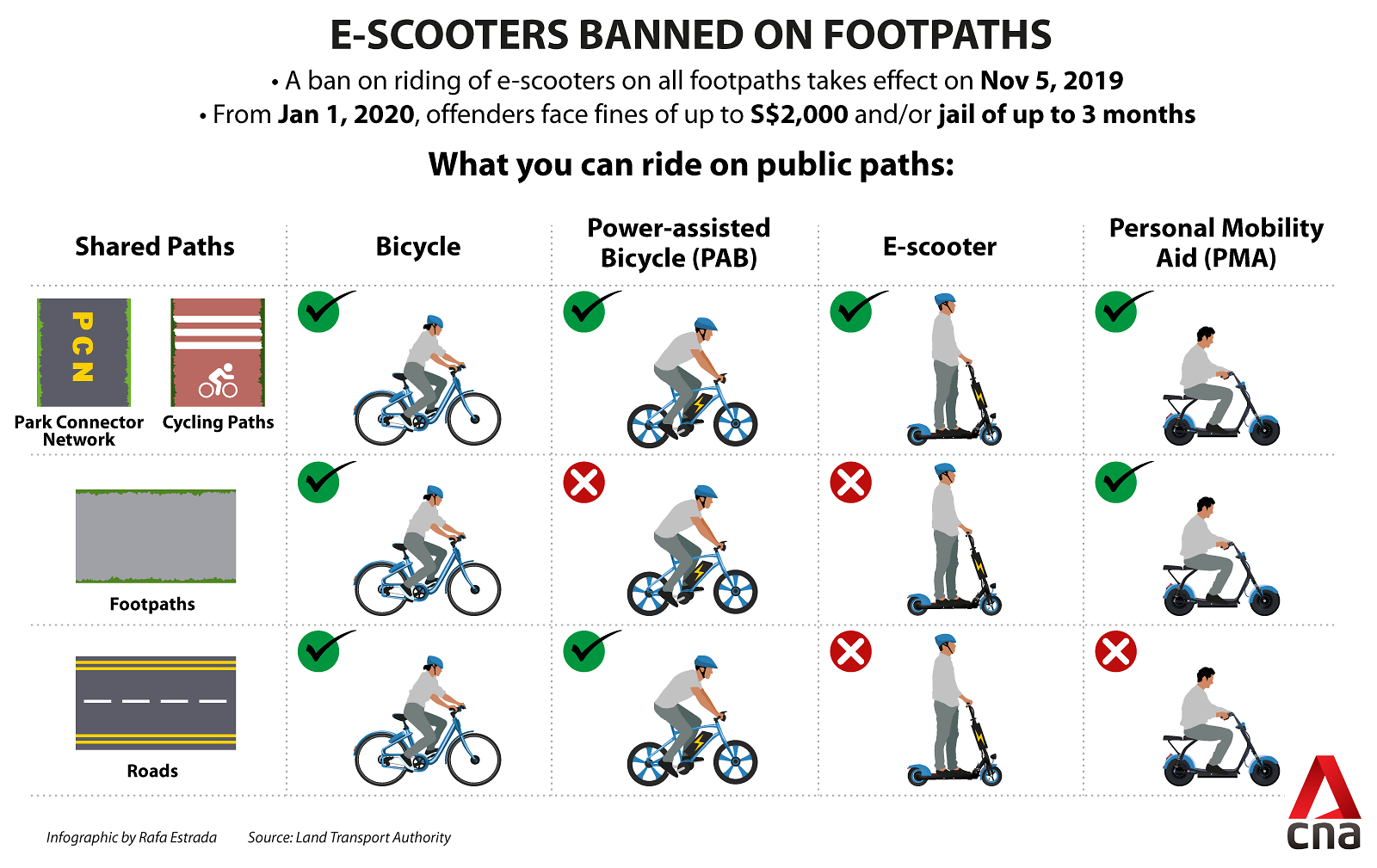
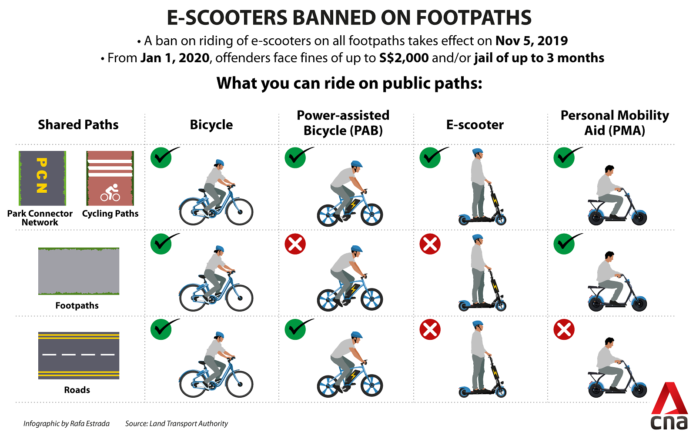
From Jan 1, 2020, those caught riding an e-scooter on footpaths will be liable for a fine up to S$2,000 and/or jail up to three months.

READ: Commentary: Can we co-exist with PMDs? Yes, but we need to take a different path

2. Where can you ride your e-scooter?

You can only ride your e-scooters on cycling paths and park connector networks. They remain banned on roads.

There will be dedicated cycling paths as well where e-scooters can still be used.

Several cycling path projects are nearing completion in major towns, according to LTA.

From next year, residents in Ang Mo Kio, Bishan, Bukit Panjang, Taman Jurong and Tampines will have greater active mobility connectivity as sections of cycling paths in these neighbourhoods will be completed, the authority added.

There are about 440km of such paths islandwide currently, and this is expected to gradually extend to a total of 750km by 2025 and triple by 2030.

By 2030, all HDB towns will have a cycling path network, LTA added.

3. Does this ban only apply to e-scooters?

For now, it’s just e-scooters. But by the first quarter of next year, other types of PMDs, such as hoverboards and electric unicycles, are also expected to be banned from footpaths.

The ban will not apply to bicycles or personal mobility aids such as motorised wheelchairs or mobility scooters, Dr Lam said in Parliament.

E-scooter banned on footpaths Singapore

READ: Commentary: Don’t complain about rules for bikes and PMDs until we’ve proven we can be responsible

READ: PMDs could be banned if rider behaviour does not improve: Janil Puthucheary

4. How will this affect other services using e-scooters?

On the food delivery sector, Dr Lam said less than 30 per cent of Deliveroo and FoodPanda riders use e-scooters. 

LTA will still work with such companies to help their riders switch to motorcycles or bicycles instead, he added.

PMD-sharing services will be affected too.

LTA will reject existing licence applications for PMD-sharing services, and no new applications for such licences will be accepted because of safety concerns.

5. Can I still dispose of non-compliant e-scooters?

LTA offered in September cash and free disposal of PMDs which do not meet new fire-safety standards.

The authorities are now extending the early disposal incentive scheme – where S$100 is given for the disposal of non-UL2272 compliant registered e-scooters –  to the end of the year. 

The UL2272 standard refers to a set of safety requirements which cover the electrical drive train system of PMDs, including the battery system. 

Of the 100,000 registered e-scooters, at least 80,000 are not UL2272-certified and cannot be used on all public paths from Jul 1, 2020, when all PMDs have to meet the safety certification, LTA said.

Source link

Ceiling leaks: What can I do?

0

[ad_1]

The issue of ceiling leaks dragging on for months and even years without being resolved due to uncooperative neighbours has been in the news recently, with Minister of National Development Khaw Boon Wan calling for more power to be given to the Housing Development Board (HDB) to enter flats to carry out repairs.

So what can you do if you are suffering from a ceiling leak? The situation differs depending on where you are staying.

HDB FLATS

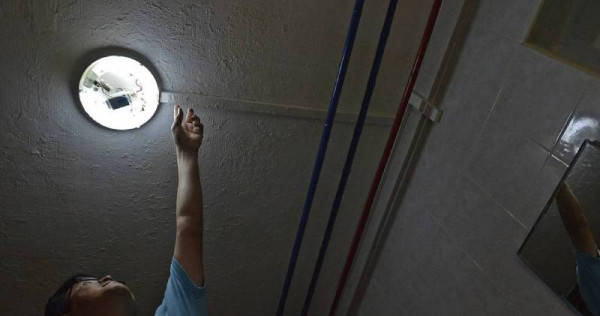
For HDB flats, the responsibility for maintaining the flats and fixing the leakages falls on both the upper and lower floor flats.

After informing HDB and/or Town Council, HDB will usually assist in the investigations to determine the source of the leak and to ensure that repairs needed are made.

In the case of ceiling leakage between the upper and lower floor flats, under the lease, the upper and lower floor flat owners are jointly responsible for the repair of the party structure (the floor slab between the flats).

This is according to the HDB Residents’ Handbook.

[ad_2]

Source link

Singapore students launch app for bookworms to borrow, lend, and discuss books

0

[ad_1]

Despite the prevalence of ebooks as well as various ebook apps and readers in the digital age, we still very much like physical books, no matter how bulky they are. Kindles just don’t stack as nicely as books on our shelves.  

It helps that the fresh whiff of paper, ink and glue in new books is so good that it might as well be crack. 

Lovers of good ol’ paper tomes would be glad to know that there’s a new homegrown app that acts as a social media network of sorts for fellow bookworms. 

A group of local students plugged their app — Hawkins Library — on Reddit yesterday (Nov 3), inviting feedback on the early beta version now out for download on the Apple App Store and Google Play

[ad_2]

Source link

E-scooters to be banned from Singapore footpaths from Nov 5

0

[ad_1]

SINGAPORE – Electric scooters will be banned from footpaths from Tuesday (Nov 5), in the latest and toughest measure yet to address safety concerns.

From now until the end of the year, the authorities will mainly issue warnings to errant riders, but a zero-tolerance approach will be taken from next year. Those caught flouting the rules can be fined up to $2,000 and/or jailed up to three months if convicted.

The ban means that e-scooters will be confined to only 440km of cycling paths islandwide, instead of the 5,500km of footpaths riders could use before.

Announcing the tougher stance, Senior Minister of State for Transport Lam Pin Min said in Parliament on Monday: “Over the last two years, we put in great efforts to promote the safe use of motorised personal mobility devices.

“Despite significant efforts, we continue to encounter errant riders who use non-compliant devices and ride dangerously.”

[ad_2]

Source link

Insurance agent on trial for bribing Indonesian embassy official over maid bonds

0

SINGAPORE: An insurance agent stood trial on Monday (Nov 4) for giving about S$103,000 worth of bribes in a scheme involving an Indonesian embassy official in return for accreditation to sell “lucrative” bonds for maids.

Insurers who received accreditation to sell the newly introduced bonds for Indonesian foreign domestic workers stood to gain from high premiums, the prosecution said.

James Yeo Siew Liang, 48, represented AIG Asia Pacific Insurance and Liberty Insurance when he allegedly took up an agreement with a man linked to the embassy to share commissions in return for accreditation to underwrite the performance bonds.

The man, 64-year-old former freelance translator Abdul Aziz Mohamed Hanib, is also on trial and had allegedly been tasked with finding insurers willing to share their commissions in return for accreditation by Indonesian embassy labour attache, Agus Ramdhany Machjumi.

A third man, 56-year-old Benjamin Chow Tuck Keong, who introduced the first two men to each other, is also on trial.

The corruption trial involving up to S$124,619 began on Monday (Nov 4), with the prosecution saying the arrangement was “clearly corrupt”.

Indo embassy trial

Abdul Aziz Mohamed Hanib (left) and Benjamin Chow Tuck Keong at the State Courts on Nov 21, 2018. (Photos: Koh Mui Fong/TODAY)

NEW BOND INTRODUCED WAS “LUCRATIVE BUSINESS” FOR INSURERS: PROSECUTION

The exchange of money for favouring certain insurance companies allegedly occurred after the Indonesian embassy in Singapore made it compulsory from Feb 1, 2018 for all local employers hiring maids from Indonesia to buy a performance bond.

On top of the S$5,000 security bond required by Singapore’s Manpower Ministry, employers pay about S$70 for a performance bond guarantee from either AIG or Liberty Insurance and they also have to sign a standard employment contract issued by the embassy. 

The embassy would use this bond for the foreign domestic worker (FDW) if local employers breached conditions. 

Employers would have pay up to the full sum of S$6,000 if they breach the conditions in the employment contract, such as not paying the maid’s salary on time. 

This the prosecution said was “clearly a lucrative business for general insurers if they received accreditation from the Indonesian embassy, as they could collect a S$70 premium for each performance bond issued in respect of an estimated 120,000 Indonesian FDWs in Singapore”. 

If a performance bond was called on, the insurers could seek reimbursement from the employers, and the insurers could pay their agents a “generous 45 per cent of the premiums earned for each performance bond”, said Deputy Public Prosecutors Alan Loh, Jasmin Kaur and Eric Hu.

This was “a win-win for insurers and their agents”, said the prosecution.

Agus, the Indonesian embassy labour attache, was in charge of giving out accreditation to insurers for the bonds. However, instead of doing so freely and openly to the 37 licensed general insurance companies in Singapore, he asked Aziz to look for those who would agree to give them a share of the premiums in exchange for accreditation.

Through intermediaries including Chow, Aziz found Yeo, who represented AIG Asia Pacific Insurance and Liberty Insurance.

Once Yeo agreed to share his commissions, both those firms were accredited by Agus to sell the performance bonds, said the prosecution in their opening statement.

AIG and Liberty sold more than 5,700 performance bonds between February and June 2018.

Yeo allegedly earned a total of S$124,619 from the sales in commissions. Acting on his own, without either firm’s knowledge, Yeo gave about S$103,250 of this figure to four different people involved in the scheme between March and June last year.

This includes about S$21,000 paid to Aziz over 10 occasions, S$71,000 to Agus over eight occasions, as well as S$5,300 each to Yong and another intermediary. He kept about S$21,000 in commission for himself.

“This arrangement was clearly corrupt. Agus and Aziz issued no receipts to James for the money they received,” said the prosecutors.

They added that payments were entirely in cash stuffed in “vomit bags” and envelopes, with no evidence that the embassy knew or approved of Agus receiving the share of commissions.

TOKIO MARINE INSURANCE AGENTS REJECTED BRIBE ARRANGEMENT

Aziz and Agus also asked insurance agents linked to Tokio Marine Insurance Singapore for a share of premiums in return to accreditation, but were rejected, with Tokio Marine receiving no accreditation from Agus.

The prosecution will be relying on confessions recorded by the Corrupt Practices Investigation Bureau (CPIB) to prove the charges against Yeo and Aziz.

They will make use of Chow’s CPIB statements and Whatsapp messages to prove that he had intentionally aided Aziz in seeking bribes for Agus.

The defence will argue that the payments Yeo made to Aziz and Agus were legitimate Corporate Social Responsibility contributions for welfare activities, and that the embassy approved the payments.

Aziz is represented by Wong Thai Yong and Andre Darius Jumabhoy from Peter Low & Choo, while Yeo is defended by lawyer Chia Boon Teck and Chow is represented by Favian Kang, also from Peter Low & Choo.

CPIB had said in a statement in November last year when the men were charged that the Indonesian embassy was not complicit in the corruption offences.

It also said that there was no evidence to suggest that AIG or Liberty Insurance were complicit in the offences.

The trial continues.

The penalties for taking or giving a bribe are a maximum five-year jail term, a fine of up to S$100,000, or both.

Source link

33 hurt as bus overturns in northern France

0

[ad_1]

LILLE, France – Thirty-three people were injured on Sunday (Nov 3), four seriously, when a bus travelling between Paris and London overturned in northern France while turning off a busy motorway, police said.

The Flixbus vehicle toppled on its side around midday local time as it took an exit from the A1 motorway, France’s busiest route, a police statement said.

There were 33 people on board, of whom 29 sustained light injuries and four were seriously wounded. Some of the injured were foreign nationals.

The statement did not say whether the bus was bound for London or for Paris.

Rescue teams from the police, fire brigade, and ambulance service rushed to the scene. The motorway exit has been closed, the statement said.

[ad_2]

Source link

1 dead after crane collapses at construction site of new TTSH rehab facility

0

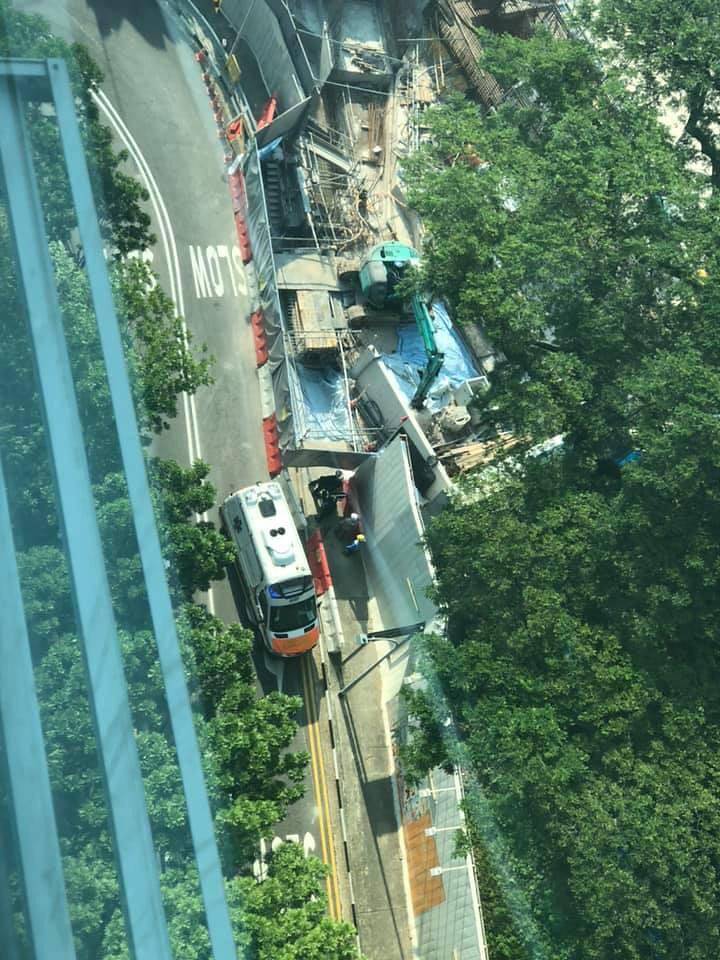
SINGAPORE: One worker was killed and another injured after a crane collapsed on Monday (Nov 4) at the construction site of a new rehab facility under Tan Tock Seng Hospital.

The Singapore Civil Service Force (SCDF) said it received a call for help at a construction site in Jalan Tan Tock Seng in Novena at about 8.50am.

“The boom of a tower crane had collapsed at the construction site. One man was pronounced dead at the scene by an SCDF paramedic,” it said.

construction site worker death nov 4

One worker died after part of a crane collapsed at a construction site in Novena. (Photo: Try Sutrisno Foo)

crane collapse nov 4

The site of a crane collapse on Nov 4, 2019 that left one worker dead. (Photo: Try Sutrisno Foo)

Another man was taken to Tan Tock Seng Hospital after the incident, it added.

When CNA’s reporter arrived at the scene, the boom of the tower crane – roughly the height of a 10-storey building – had collapsed and was bent at an angle. 

close up of bent crane arm

A close-up of the boom of a crane after it collapsed at a Novena construction site. (Photo: Daniel Tan)

authorities at construction site

Emergency responders at a construction site in Novena where a crane collapsed on Nov 4, 2019. (Photo: Daniel Tan)

The worksite is the location of Tan Tock Seng Hospital’s new Integrated Care Hub, which will house a 500-bed rehabilitative facility. The hub, which is expected to open in 2022, will be part of the 17-hectare HealthCity Novena, slated to be Singapore’s largest healthcare complex.

Source link

Call out racism both online and offline: Panel on impact of social media

0

[ad_1]

SINGAPORE – The silent majority can help douse the fire sparked by comments on social media, especially when the comments go overboard or touch on sensitive issues such as race.

Panelists at a talk on the impact of social media on race relations on Sunday (Nov 3) urged more people to call out racist comments posted online.

Letting such comments go unchallenged might lead to more people thinking that racism is allowed, or worse, allow hatred to be hardened into norms, said the panelists at the talk held at the National University of Singapore (NUS).

Adjunct Associate Professor Adrian Heng, a social media expert at NUS, said: “We aren’t going to change the world overnight, but we can start looking at our own circles and take proactive steps.”

He raised the recent example of how a video on Facebook, showing a resident of a condominium here scolding a security guard for charging his guests a fee of $10 for parking after 11pm on Deepavali, had sparked racist vitriol online.

Netizens called for the man, identified as Erramalli Ramesh, to be sent away, on top of other hateful remarks.

[ad_2]

Source link