SINGAPORE: It was necessary to issue a correction order to opposition party member Brad Bowyer as he had been spreading misconceptions that public funds were being mismanaged, Second Minister for Finance Indranee Rajah said on Monday (Dec 2).
“Misperceptions and misconceptions exist when they are actively proliferated,” she said, noting this is one of the reasons why the Protection from Online Falsehoods and Manipulation Act (POFMA) is necessary.
Speaking on CNA938’s morning show Asia First, Ms Indranee said there were three false statements in Mr Bowyer’s post, with the first being the implication that the Government controls the investment decisions made by Temasek and GIC.
This is untrue because these decisions are made by the investment teams, who are professionals with expertise in the area, she stated.
“What the Government’s role is, is to appoint the relevant boards, and to make sure that GIC and Temasek act within their mandate.”
Minister in the Prime Minister’s Office Indranee Rajah speaking on CNA938 on Dec 2, 2019. (Photo: Jeremy Long)
The second falsehood had to do with the now-cancelled Amaravati project, a joint project between Singapore and Andhra Pradesh to develop a new capital city for the southern Indian state.
Mr Bowyer’s two assertions – that a “substantial part” of the S$4 billion invested in Andhra Pradesh went into the Amaravati project and that the funds had been poorly invested by Government-linked companies (GLCs) and related parties – were both untrue, said Ms Indranee.
She noted the Singapore consortium involved in the Amaravati project had publicly stated the only costs incurred were those relating to design services – an amount in the low millions, not billions.
Furthermore it was not just GLCs and related parties that had invested, but other Singapore companies as well, she added.
The last false statement by Mr Bowyer was that Temasek had invested in the debt-ridden parent company of a steakhouse chain run by Turkish restaurateur Nusret Gokce, better known as Salt Bae.
Ms Indranee noted this is incorrect as the restaurants are owned by a company called D.ream International BV – which Temasek has invested in – while the company that is reportedly in financial difficulty is Dogus Holding, one of D.ream International BV’s shareholders.
It was necessary for these three statements to be corrected as, taken together, they give the “overall impression” that public funds are being mismanaged by Temasek and GIC, under the direction of the Government, she said.
“That’s actually not true, because basically Temasek and GIC, together with MAS (Monetary Authority of Singapore), actually contribute about 20 per cent of our revenues to our national budget,” she said, noting Temasek’s portfolio has tripled from S$100 billion in 2002 to more than S$300 billion today.
“Contrary to the impression created, public funds are being managed carefully and prudently for the public good. And that’s why it was necessary to issue the correction direction,” she said.
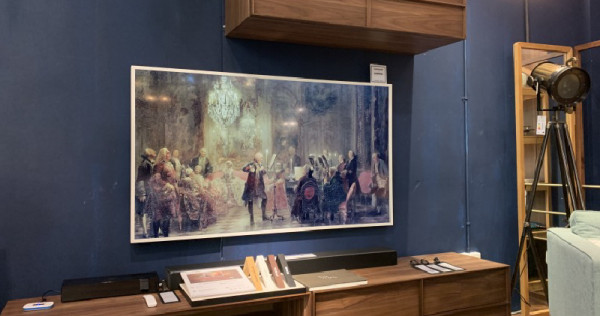
A memorandum of understanding signed today between Samsung Electronics Singapore and Singapore based furniture brand Commune has opened the way for there to be a merging of art and technology on Samsung premium The Frame and The Serif QLED televisions.
The exclusive partnership is a first-of-its-kind for both Samsung and Commune and it is hoped that it will give consumers more options to elevate their home decor and living spaces.
It makes Commune the first non-electronics authorised retailer for selected Samsung TVs including The Frame and The Serif.
The Frame
Available in 55-inch and 65-inch sizes, The Frame comes with interchangeable bezels in a variety of colour options to allow customers the opportunity to choose what best suits them and their art.
If she could, baker and trainer Chye Hui Fun would never let her apprentices leave her side.
The pastry chef at Metta Cafe works with those with special needs, preparing these young adults with not just technical but life skills that would make them employable to other companies.
“Actually for every student that goes out (to work), it’s hard for me to let go. I’ll constantly worry if they are able to adapt. After all, we will not be so hard on them here,” shared the 42-year-old.
With Metta Cafe since its inception, Hui Fun has seen countless graduates from Metta School pass through the gates.
The cafe was established in 2014 to provide F&B vocational training for graduates from Metta’s special-education school who have mild intellectual disabilities and/or autism.
There, Hui Fun teaches students basic skills, from mixing flour and weighing dough, to more complex tasks such as churning out pie cups.
It’s a job that poses some level of difficulty for her young apprentices, not least because of the limitations they face, including sensory sensitivity and social skills.
SINGAPORE: A man who had admitted in October to raping a drunk teenager at the foot of a block in Pasir Ris after a sex-themed Truth or Dare game now wants to retract his plea of guilt.
He also has not paid his lawyers Marcus Tai and Roy Sze, who told the high court on Monday (Dec 2) that they will be discharging themselves from the case.
The 19-year-old accused man, who cannot be named to protect the identity of the 15-year-old girl, had pleaded guilty on Oct 31 to raping the girl.
After doing so in the early hours of Oct 17, 2017, at the foot of Block 557, Pasir Ris Street 51, he helped his friend and co-accused, who failed in his attempt.
Screengrab from Google Street View of Block 557, Pasir Ris Street 51.
Deputy Public Prosecutor Winston Man told the court that the case was meant for sentencing on Monday, but the defence said the accused had told them on Monday morning that he intends to retract his plea of guilt.
“His further instructions are that he intends to appoint counsel for this purpose and to enter a defence subsequently,” said Mr Tai. “Unfortunately, I have to inform this court that we have not been paid for this matter.”
The accused had written a letter to the judge, but the prosecution said what he wrote in it did not amount to a defence.
“Technically speaking, he has not satisfied the legal threshold to convince your honour to retract the plea,” said the prosecutor.
He said while the man seeks a new set of defence lawyers, the prosecution would allow the plea of guilt to stand, as there are currently “no valid grounds to retract” it.
He said all the safeguards had been observed when he had pleaded guilty – with the meaning of his plea explained to him, defence counsel representing him and with the accused repeatedly asked if he understood his plea.
At the time, the accused had asked for an adjournment of sentencing only to attend to his grandmother, who was in poor health, said the prosecutor.
Justice Audrey Lim granted the defence their request to discharge themselves, and also gave the accused one month to engage new lawyers.
The penalty for rape is a maximum 20 years’ jail, a fine, or caning. The case of the second co-accused, who had wanted to rape the victim as well, is pending.
Price Guarantee Procedures programme helps patients to make informed decisions on common medical procedures.
The thought of being wheeled into surgery is often unnerving. What makes the experience even more daunting is not knowing how much the medical bills will amount to.
Parkway Pantai understands the anxiety that many patients have over their medical costs.
To address this concern, the private healthcare provider has come up with a new Price Guarantee Programme (PGP) for selected procedures at its four Singapore hospitals: Gleneagles, Mount Elizabeth, Mount Elizabeth Novena and Parkway East.
More efforts are being made to get Singaporeans on board the Smart Nation journey, and this includes a tie-up between the Government and the National Trades Union Congress to equip workers with the skills and knowledge for the digital economy.
Deputy Prime Minister and Minister for Finance Heng Swee Keat said the tie-up would help Singaporeans upgrade and “level up”.
“This is a journey that involves all of us. Whether you are young or old, technology is reshaping the way we live, work and play,” he said when he announced the signing of the memorandum of understanding between the NTUC and the Smart Nation and Digital Government Office (SNDGO).
He was speaking at the inaugural Smart Nation & U event at Downtown East on Saturday (Nov 30).
The need for Singapore to progress together is important, said Mr Heng, as this will help mitigate against the possibility of a new “digital divide” between those who do and do not know how to use technology.
SINGAPORE – The National Anthem “Majulah Singapura” (meaning Onward Singapore) will be updated as part of celebrations to mark the 60th anniversary of Singapore’s national symbols.
The new version is a rendition by the Singapore Symphony Orchestra, Minister for Culture, Community and Youth Grace Fu said on Sunday morning (Dec 1).
It will be revealed on Tuesday as part of a commemoration ceremony for the 60th anniversary of the Anthem, the national flag and the state crest, Ms Fu said on the sidelines of the One Community Fiesta family sports carnival held at Jurong Lake Gardens.
This will be the first update to the National Anthem since the current version was recorded in 2001.
It was composed in 1958 by the late Zubir Said. After Singapore attained self-governance in 1959, the song was adapted slightly and introduced as Singapore’s National Anthem on Dec 3, 1959.
Ms Fu said the adoption of the national symbols that year was an important moment for Singapore as a young nation, and the symbols are an anchor of Singaporeans’ national identity.
SINGAPORE: Like a bolt from the blue, the Nov 4 announcement by the Government that electric scooters would be banned from footpaths the very next day caught many people off guard. A ban on other personal mobility devices (PMDs) will be rolled out progressively by the first quarter of next year.
The ban came amid a rise in errant behaviour and incidents involving e-scooters or other PMDs. Between Jan 1 and Sep 30, there had been three fatalities.
Many pedestrians gave the thumbs up for the ban while e-scooter users were wringing their hands over the loss of a convenient and cheap means of transport — and a potential big drop in earnings for food delivery riders.
In the immediate aftermath, scores of food delivery riders turned up at the meet-the-people and dialogue sessions held by Members of Parliament to vent their frustrations and unhappiness.
The abruptness of the PMD ban — announced less than 24 hours before it set in — was stark, with riders and industry insiders saying that it left riders with little room to react. (Photo: TODAY/ Raj Nadarajan)
To allay their anxiety, the Government, along with three major food delivery firms, announced a S$7 million e-scooter trade-in grant to help food delivery riders switch to other vehicles.
For PMD retailers, the impact has been swift and heavy: Sales of e-scooters have plunged to zero for some of them in recent weeks, as they mull over ways to get rid of their stockpiles.
For others such as pedestrians, food delivery riders and people who use PMDs for daily commute, they are still adjusting to life after the ban.
By and large, pedestrians interviewed, some of whom had their own stories to tell of close shaves with speeding riders, were glad: They no longer need to approach footpaths with trepidation, or look over their shoulders nervously — sometimes with young kids in tow — while walking on pavements.
Nevertheless, they could still see some errant riders zipping around illegally on footpaths, and they could not wait for the start of next year when the Land Transport Authority (LTA) takes a “zero-tolerance” approach.
There is an “advisory period” currently in place until the end of the year, where warnings would be given out to offenders but the LTA reserves the right to enforce the rules for more serious cases.
Meanwhile, in spite of their misgivings about the ban, some food delivery riders have started to switch to alternate modes of transport, be it bicycles or electric bicycles. The adjustment has come with its own set of challenges, they said, such as fewer deliveries in a day, fitness issues and safety concerns.
Those who have stuck to their e-scooters have found themselves taking a longer time to fulfil orders should they choose to stick to park connecters and bicycle paths. Some are nevertheless taking their chances by playing a cat-and-mouse game with the authorities — using footpaths in the evenings to make deliveries in the hope that they would not be caught.
Those caught riding an e-scooter on footpaths risk being fined up to S$2,000 and/or jailed up to three months, and the LTA carries out enforcement action regularly including during the evenings.
Given the inevitable clampdown, the food delivery riders are under no illusion that they can continue to skirt the ban come the new year, and some have decided to search for new jobs.
For those who had depended on e-scooters for their daily commutes, the impact has been less drastic compared with food delivery riders. Nevertheless, it has resulted in longer travel times to their workplaces and increased travel costs.
PEDESTRIANS FEEL SAFER NOW
These days, 58-year-old Loy Chit See no longer feels bothered or stressed when he takes his children out for walks at the weekend. The same could not be said before the ban, when e-scooters could be seen everywhere in his Serangoon estate.
“I nearly got knocked down once, the guy just sped past and I couldn’t believe it,” said the father of two children aged seven and ten. “The stress becomes high … When I walk (my children) to NEX (shopping mall), I have to be extra careful.”
After the ban, Mr Loy said the number of e-scooters he sees in his neighbourhood has dropped significantly.
An e-scooter on a footpath in Singapore. (File photo: AFP/Roslan Rahman)
Like Mr Loy, many of the 16 pedestrians we spoke to across e-scooter “hotspots” such as Punggol, Choa Chu Kang, Yishun and Serangoon, welcome the ban.
Punggol resident Ng Cheow Yong, 76, said e-scooters in his estate typically move at frightening speeds. As he walks while running errands, he worries that given his advanced age, he will be unable to react when an e-scooter approaches from behind.
Mr Ng said that he is less stressed now that there are fewer e-scooters. He sees about one or two on his walks, unlike before when about five or six riders would speed past him.
When asked if he thought food delivery riders were having it tough, Mr Ng disagreed. “It’s fair that these food delivery riders have to find alternative arrangements, as long as the pedestrians are kept safe. If they were to continue riding, then where should we walk?”
A Punggol resident, who wanted to be known only as Mrs Tay, agreed that the ban had resulted in fewer e-scooters plying her estate, but said her family would only feel safe six months down the road, when the full impact of the ban could be felt.
The 32-year-old said she still sees some e-scooter riders flouting the law by riding on footpaths.
Mrs Tay, who has a three-year-old daughter and a newborn son, added: “We see that our neighbours all have kids, and they’re all playing in the playground, learning to walk or are crawling. And then there are PMDs zooming all around through the playground … it’s quite stressful and scary. We want to co-exist, but it’s quite difficult.”
Still, some felt that a ban was too drastic a step and pedestrians have a part to play too.
Punggol resident Carene Law, who has three children aged 3 to 9 years old, saw it as her own responsibility to keep her kids safe.
Punggol resident Ms Carene Law with two of her children, aged eight and nine. She is indifferent to the ban as she believes it is a parents’ responsibility to keep close watch of their children. (Photo: TODAY/Justin Ong)
“It is my responsibility to take care of my kids. I will ask my kids to just look around, when you see anything just keep to one side,” Ms Law said.
Agreeing that parents should keep a close watch on their children, Yishun resident Marina Rahim, a mother of two, said that she frequently sees pedestrians with their eyes trained on their phones, totally unaware of their surroundings.
“We, as pedestrians walking, have to be alert. Sometimes the PMDs, they speed, but sometimes they will also alert us with a signal and all … both parties should share the blame (should an accident occur).”
Retiree Tham Ah Ngjoon, 78, who frequently rides her bicycle around Choa Chu Kang while on errands, said that she keeps a lookout for the e-scooters that traverse her area, but is not afraid of them.
78-year-old retiree Tham Ah Ngjoon is not afraid of e-scooters at her Choa Chu Kang estate. As she rides her bicycle, she makes sure to look out for e-scooter riders from afar. (Photo: TODAY/Justin Ong)
“When they come riding towards me from afar, I make sure to stick to one side of the pavement, and they will signal and slow down as well most of the time,” the Choa Chu Kang resident of over 30 years said in Mandarin.
“Some are reckless, especially the younger riders. But most are mindful.”
FOOD DELIVERY RIDERS: EARNINGS FALL BUT SOME FIND A WAY
As early as February, 34-year-old Muhammad Imran had seen the writing on the wall. At that time, there had been an increase in accidents involving PMDs on footpaths, and calls of a ban were growing louder.
The part-time food delivery rider thus decided to switch to riding a bicycle. But for Mr Imran, who was obese at that time and weighed 120kg, it was difficult to adjust initially.
“When I first started, I would only do two orders, and then I would be extremely (tired) … I was not fit at all.” Back then, he would only earn about S$10 a day before throwing in the towel.
Things only started to improve after he had cycled for four to five months. Today, Mr Imran is able to deliver 25 orders a day on his bicycle, and is earning as much as when he was riding his e-scooter — about S$130 a day. He has also gotten fitter, having lost more than 30kg.
He reckoned that it would take an average e-scooter rider about three months to get used to the new mode of transport.
“Riders should give themselves some time, and think of it as a way to increase your fitness and also to help you to be (healthier compared) to those who are just riding around on e-scooters.”
However, among the 11 food delivery riders we spoke to, most bemoaned the lack of time to adjust to the new situation due to the suddenness of the ban.
With the ban, e-scooters are now confined to bicycle tracks, paths shared by pedestrians and cyclists, and park connectors. Electric bicycles, however, may be used on roads, while bicycles are allowed on footpaths and roads.
File photo of food delivery riders. (Photo: TODAY/Najeer Yusof)
Riders who had switched to riding bicycles generally said their earnings had dropped by about half.
Part-time delivery rider Cindy Goh, who is in her 30s, said most of her deliveries require her to ride for about 2 to 3km. Once, she had to cycle for more than 4km.
“I rode until I was half-dead,” she said of her longest ride to date. “Not that I was riding very slowly, but whenever there was a steep slope, I had to dismount my bicycle and push.”
Ms Goh, who does deliveries around Jurong Point shopping mall, said she often had to cancel orders from the Nanyang Technological University, due to its distant proximity and high slopes on the campus grounds. She used to be able to deliver to those areas on her e-scooter.
While Ms Goh used to deliver more than 10 orders a day on her e-scooter and earned about S$50, she can only do half the amount on her bicycle, and earns about S$25.
For riders who have stuck to using their e-scooters, their earnings have also taken a hit.
Ms Sarah Alatas, 22, said she now makes it a point to take longer routes that have park connectors or bicycle paths. She would dismount and push her e-scooter on footpaths. If the delivery route comprises primarily of footpaths, she would decline the order.
Due to these difficulties, she has seen a drop in her earnings. While she used to earn S$150 a day from deliveries, the amount has fallen to S$50. She has since taken up an extra job as a security guard at night to supplement her income, and works 14-hour days to make ends meet.
She said: “When they banned (e-scooters on footpaths), it changed my entire career path. I was looking to do food delivery full-time, but now I have no choice but to (juggle two jobs).”
Man riding a personal mobility device (PMD) on a pedestrian footpath in Singapore. (File photo: Gaya Chandramohan)
A full-time food delivery rider who only wanted to be known as Ms Ikah said she has stopped using her e-scooter to do deliveries in the day. However, she continues to flout the ban at night in the hope that there is less chance of her getting caught.
“I normally start (making deliveries) after 7pm, and work until the last order at 2am,” said the 29-year-old, who is a single mother supporting three young children.
By doing this, her working hours have shortened and while she used to earn S$70 a day, she is now making half the amount.
She acknowledges that the current situation is untenable. Come January, she will be looking for a new job. “A part-time job, any day job will do,” she said.
Asked why she did not consider applying for the trade-in grant, she cited safety concerns about riding an e-bike on the roads.
Many riders interviewed said they have applied for the trade-in grant, and are waiting to confirm their e-bike orders.
Mr Jim Hon, a full-time food delivery rider, had spent the past week riding an e-bike which he had already owned before the ban. For the first few days, Mr Hon rode his e-bike on some footpaths due to safety concerns, even though this was against the law.
“The cars and motorbikes are moving much faster than me, and unless I can travel as fast as them, I will not feel safe on the roads,” he said. “I can be very experienced, but if someone on the road makes a mistake, any brush (by another vehicle) could be fatal.”
The 37-year-old, who previously delivered food on an e-scooter, said that riding an e-bike comes with its own challenges.
“You need to think about the direction of the traffic,” he said. “You need to turn one big round (to follow the flow of traffic), even though you know that just across the street is your location to send your order. Unless you’re as fast as a motorbike, you will incur a delay.”
HOW OTHER E-SCOOTER USERS ARE ADAPTING
For Mr Mohammad Subhan, the ride from his Pasir Ris home to his workplace at Marina South Pier used to take one hour with an e-scooter. His route to work — which he estimates to consist of footpaths for about a third of the journey, with the rest being either park connectors or bicycle paths — has taken half an hour longer since the ban.
PMD riders near Hougang. (Photo: Aqil Haziq Mahmud)
The part-time operations manager of a boat charter service now either slows down when he rides on footpaths, or dismounts his e-scooter to push it.
The 47-year-old does not mind the hassle since he could save a few dollars on public transport daily.
“To me (this is time for) a slow ride, to relax, to get out of the house early … If I take a feeder bus, and then the MRT, it will be S$4 gone,” he said.
For Mr Mohammad Fadil, a technical officer at SMRT’s Kim Chuan Depot, his commute from his Bedok Reservoir home to his workplace at Tai Seng takes him about 45 minutes by bus. This is 15 minutes slower than when he travels by e-scooter.
Following the ban, the 37-year-old now skips his usual breakfast and lunch haunts, which he would stop by previously on his way to work riding his e-scooter. In the past few weeks, he has been having his meals at his workplace canteen instead.
In his spare time, Mr Fadil does charity work with a group called B2K Crew, which he had formed with his friends. They used to ride e-scooters together and help clean up flats occupied by the elderly or lower income families in various Housing and Development Board estates.
The e-scooters were convenient for getting cleaning supplies on the go and for the group members to quickly get to different locations. Now, they no longer use these devices as much as before.
“We have two more charity events to go to, and I don’t know if we are going to scoot there, or (use a ride-sharing service) to get there,” said Mr Fadil.
For those working in less accessible locations, e-scooters used to be a convenient way to avoid the squeeze in feeder buses.
Mr Mahadi Md Johari, a housekeeper at a nursing home, previously rode his e-scooter from his circuit road home to his workplace at Serangoon Gardens.
Now, he takes a bus from his home, before switching to a feeder bus. A trip that used to take about 25 minutes by e-scooter now takes almost twice as long. He also has to fork out S$3.50 a day in transport fares to get to work.
“I have no choice, maybe I will try to get an e-bike, but it’s still not as convenient as an e-scooter, because you need to ride on the road,” he said.
Mr Mahadi lamented that the actions of some black sheep have caused the authorities to enact a ban — to the chagrin of responsible users. “Now everyone has to pay for it,” he said.
SINGAPORE: As a child, Huang Wei Long liked to tinker with his action figures and reconfigure their battery parts. When he grew older, he moved on to keyboards and audio parts, even building his own speakers.
He enrolled in the School of Computing at the National University of Singapore (NUS), which he said was a natural next step.
Before he graduated in 2017, Mr Huang had already secured a job as a software developer with a startup called Shentilium Technologies. He still applied to about 10 companies, “just to learn what the market is like”, he said. Three to five offers came in, including one from Facebook and another from IBM.
But he chose to stick with the startup, knowing it would provide more opportunities to be “experimental” and try on various roles within the company.
He has since moved on and is now a software engineer at Cynopsis Solutions. The 24-year-old said he earns a monthly salary of “between S$5,000 and S$6,000”.
Mr Huang is one of the many university graduates that have secured jobs in Singapore’s growing technology sector as the government sees through its plans to digitalise the entire country through its Smart Nation drive launched in 2014. To that end, businesses have been encouraged to adopt new technologies through the 23 Industry Transformation Maps rolled out since 2016.
And according to the 2018 Infocomm Media Manpower Survey, demand for infocomm professionals – which hit 202,600 in 2017 – is expected to grow by another 28,500 by 2020. Already, there were 13,200 infocomm job vacancies in 2017.
To meet the growing demand for these professionals, local universities have in recent years expanded their intake of students studying computing-related courses. Latest figures released by the Ministry of Education (MOE) showed the intake for information technology courses across the six autonomous universities had increased by close to 800 in four years, from 1,244 in 2015 to 2,039 in 2018.
While intake has gone up, technology companies and industry experts CNA spoke to said it will still not be enough to meet their manpower needs, particularly in areas such as software development, cybersecurity and artificial intelligence. To plug the labour gap, these companies have had to hire from overseas or open offices abroad.
To plug the labour gap, technology companies have hired from overseas or open offices abroad. (Photo: Rachel Phua)
Darius Cheung, the founder of property portal 99.co, said that the increased intake size will not “even make a dent” in meeting demand for tech talent. For him, there has been “no other solution” but to “actively recruit” from overseas, he said.
Many companies also open offices overseas, in countries such as Vietnam where wages are lower, and move some of the web development and technical support work over, said Chia Hock Lai, the president of the Singapore Fintech Association.
But the cost of managing a team remotely can run up, and finding workers with the necessary calibre is another challenge.
“Most would prefer to hire locally if possible,” Mr Chia said, “(but) the supply is not there”.
Unable to rely solely on new hires, companies have also ramped up on training their staff in technical knowledge, said Shinjika Shukla, an associate director of technology practice at recruitment agency Michael Page Singapore. In the present world of rapid technological disruptions, “upskilling and reskilling is non-negotiable”, she said.
For example, banks are sending their non-technical staff to learn programming languages like Python. Last year, the Financial Times reported that JPMorgan Chase made it compulsory for new investment bankers and asset managers to take coding lessons.
However, Ms Shukla noted that the bigger, well-known technology firms – think Facebook or Google – will have it easier when it comes to meeting their headcounts, as they are able to attract workers who are excited by their brand names.
Renzo Taal, the Asia senior vice president of software giant Salesforce, which has 35,000 employees worldwide, said in an e-mail interview with CNA that it has “not had any issues in securing talent and building a strong team here”.
“Singapore offers easy access to talent, as a result of its strong education system, proximity to large Asian markets and progressive regulatory policies,” said Mr Taal.
NON-TECH ENTRANTS
While the technology space continues to face a labour crunch, there are signs that it could ease as it attracts entrants from other fields.
Take Mr Huang’s colleague Henry Hee, for instance. After graduating from NUS’ Industrial & Systems Engineering programme last year, Mr Hee, 27, applied to join Cynopsis as a software engineer, despite offers from organisations where he did his internship, he said.
Engineering graduate Henry Hee switched gears and joined a startup as a software engineer. (Photo: Rachel Phua)
The “exciting nature of the jobs” in the technology field and “opportunity to create new things” attracted him, while the pay and career prospects were “icing on the cake”.
Alfred Tang, 29, was working as an analyst at a video game company while studying part-time for his masters in finance at Kaplan. But just a year after he received his degree in 2018, he went back to school, knowing his growing interest in technology would pay off.
Mr Tang enrolled in General Assembly’s three-month-long Data Science immersive course this May, and secured a spot as a data science intern at foodtech startup Ai Palatte.
There is also a Professional Conversion Programme (PCP) for mid-career workers to join the infocomm technology sector offered by Workforce Singapore. The programme equips professionals keen to enter the industry but lack the relevant experience and skills by undergoing training and job placements.
According to Workforce Singapore’s director of creative & professional services division Selena Huynh, since 2016, more than 800 have taken up infocomm technology PCPs. Digital marketing and data analytics roles are some of the more popular ones among the jobseekers.
In response to CNA’s queries on how the country can boost the number of professionals in the infocomm industry, the Infocomm Media Development Authority (IMDA) said “the most important part of our tech development strategy is to nurture our local talent pool”.
The ministry pointed to the TechSkills Accelerator (TeSA) initiative, which was launched at the 2016 Budget. Training courses for professionals interested or already in the industry, including the PCP form part of the wide-ranging initiative.
Between April 2016 and September 2019, under the initiative, more than 93,000 training places have been taken up or committed, and over 5,000 companies have used it to upskill their existing workforce or employing trained local individuals in ICT, IMDA said. Outside of the TeSA initiative, scholarships for tech-related studies are also offered, it added.
But industry experts said the tech labour crunch will not affect Singapore’s position as Asia’s technology capital.
Singapore has other advantages like its well-developed IT infrastructure, business-friendly environment and reputation as the gateway to Asia, said Mr Chia, while the startups will just “source for the necessary talents elsewhere”.
SINGAPORE: It has been a challenging year for the global economy and particularly hard for countries that are trade-dependent and deeply integrated into global supply chains.
Singapore’s small, open economy is a prime example of an externally-oriented economy that had a rather demanding year, with its annual output on track to grow by only 0.5 per cent in 2019.
There are several intertwined factors that have contributed to the global growth slowdown and have weighed on Singapore’s trade-related sectors.
Over the course of the year, the trade conflict between the US and China escalated more than what was anticipated at the beginning of the year.
In the early months of 2019, the economist consensus did not foresee a scenario where tariffs would be raised multiple times followed by retaliatory measures. We simply expected rationality to prevail and for the trade dispute to be maintained at less harmful levels.
Nevertheless, trade policy surprises ended up being the main unforeseen external shock that weakened the global economy in 2019.
Global economic activity has slowed and trade volumes have collapsed due to the US-China trade conflict and its ripple effects through tightly integrated supply chains.
Tariffs and persistent trade-related uncertainties not only led to contracting trade, but also adversely impacted confidence and business investment.
Workers at a manufacturing facility in Singapore. (Photo: AFP/Roslan Rahman)
Muted export sector activity together with softer capital investment has translated to weaker real GDP growth around the world.
CHINA’s STRUCTURAL SHIFTS
Softer global demand and trade have put additional downward pressure on China, which has already been on a slowing growth trajectory.
The Chinese economy is gradually transitioning to a new phase of economic development in which activity is increasingly powered by consumer spending and the services sector instead of fixed investment and the industrial sector, which can be volatile.
The structural change is leading to somewhat slower — yet better quality — real GDP growth over the coming years.
China’s weaker growth dynamics is one of the key reasons behind another trend that is adversely impacting exporters, particularly in Asia; the global downturn in the electronics sector.
The sector’s recessionary conditions have been further amplified by a longer replacement cycle of smartphones, making it difficult for Asian semiconductor exporters to manage production lines.
FILE PHOTO: A researcher plants a semiconductor on an interface board during a research work to design and develop a semiconductor product at Tsinghua Unigroup research centre in Beijing, China, February 29, 2016. REUTERS/Kim Kyung-Hoon
THE IMPACT ON SINGAPORE
The aforementioned entwined developments — the US-China trade dispute, weaker global and Chinese economic growth, and the electronics sector downturn — have jointly impacted Singapore.
Declining trade and muted global demand have created a challenging economic environment for Singapore.
The country’s export sector is a key engine of growth, with exports of goods and services being equivalent to 176 per cent of GDP in 2018, one of the highest in the world.
Moreover, softer Chinese demand has had an adverse impact as China is one of Singapore’s main export destinations; Hong Kong and mainland China combined is the destination for over a quarter of Singapore’s shipments abroad equivalent to over 20 per cent of Singapore’s annual GDP.
In addition, Singapore is highly integrated into the regional supply chains, with intermediate goods accounting for more than half of its total exports.
Singapore Maritime Week draws members of the international maritime community for conferences and events that reflect the vibrancy and diversity of the city-state as a global hub port. Photo: Shutterstock
Finally, the global electronics sector recession is adding to Singapore’s challenges.
Electronics is the biggest component of Singapore’s exports. Integrated circuits alone account for almost 40 per cent of Singapore’s total exports.
The trade-related turmoil and elevated uncertainties triggered an increasingly broad-based monetary easing bias around the world, Singapore included, marking another development not anticipated by many at the beginning of the year.
Indeed, central banks globally have acted rather decisively in order to prevent weaker confidence from fully translating into postponed investment, hiring decisions and delayed consumer spending.
Meanwhile, monetary policymakers are increasingly calling for simultaneous fiscal policy action by governments to complement the monetary stimulus efforts.
FILE PHOTO: A view of the Monetary Authority of Singapore’s headquarters in Singapore June 28, 2017.REUTERS/Darren Whiteside
Indeed, higher public outlays will likely provide additional support to the global economy as we move into 2020.
LOOKING FORWARD TO 2020
Determined action by policymakers in various countries to support the economy is unquestionably a welcome development.
Unfortunately, though, Asian authorities have only limited ability to influence the trajectory of regional economic growth as the key driver of the outlook is external in nature — policy decisions coming from the White House.
As we approach 2020, a key risk to the economic outlook is a major policy surprise, or rather a policy misstep, that could potentially lead to a broad-based loss of confidence, higher risk aversion, tighter liquidity, and a broadly based market correction.
While it is difficult to determine what that surprise would be (hence it is a surprise!), it could take the form of a broadening of US protectionism toward other countries, perhaps through auto import tariffs; geopolitical turmoil; or a domestic US policy shock related to the ongoing impeachment inquiry.
Indeed, as we enter into 2020, the only certainty continues to be elevated uncertainty.
Tuuli McCully is Head of Asia-Pacific Economics at Scotiabank.


.jpg "Parkway-Pantai-PGP-1.jpg")