SINGAPORE – Private companies thinking of taking a cue from the civil service on year-end bonuses might want to think again, the Singapore National Employers Federation (SNEF) advised on Tuesday (Dec 10).
SNEF said it had received questions from employers in the private sector after the Public Service Division (PSD) last week announced a 0.1 month annual variable component (AVC) plus an additional one-off lump sum payment of $250 to $1,500 for all civil servants below superscale grade, and just a one-off payment of $400 for senior civil servants in the superscale grades.
The federation, a trade union of employers from over 3,300 companies, noted that performance has varied across sectors, and advised fellow employers to take their cue from the National Wages Council’s (NWC) guidelines that wage increases be sustainable and fair.
“SNEF believes employers will be responsible and urges them to be guided by the NWC recommendations, and in particular, to take into account their company performance when they decide on their company bonus,” it said.
Alvin Ng Liang Dong, 32, was convicted of one charge each for dishonest misappropriation of property, committing a rash act and communicating threatening and insulting words.
Another two charges, for harassment and computer misuse, were taken into consideration.
He was fined a total of $5,000 yesterday for the offences.
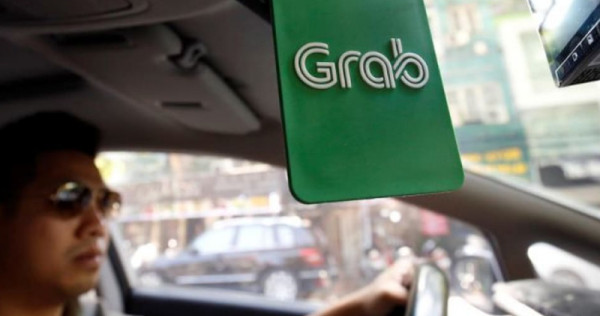
On Sept 9, 2017, a passenger left her phone in the back seat of Ng’s car. He found and used it to give himself a five-star rating before throwing it away at a petrol kiosk.
He did so as he believed it was a waste of time to return it since Grab would not compensate him.
He was found out after the passenger used another phone to check her Grab account and saw the five-star rating.
As she was not the one who gave the rating, she suspected Ng had done so and reported the matter to Grab and the police.
In his statement to the police on June 26 last year, he admitted he lied to Grab that he did not find the phone.
He also admitted to disposing of the phone due to his laziness.
SINGAPORE: Calling for blood donors – Singapore’s stock for all blood groups, in particular type O blood, has fallen to low levels.
The amount of type O blood in stock is currently only half of what is needed, said the Singapore Red Cross and Health Sciences Authority (HSA) on Wednesday (Dec 11).
“Being the universal blood group, group O blood is required during emergencies when patients’ blood groups are unknown.”
Nearly half of patients in Singapore have group O blood and can only receive similar blood, they added.
To raise the national blood stock to healthy levels again, 1,500 people with type O blood, 750 with type A and 750 with type B are needed to donate blood over the next three weeks.
“This will ensure that we have enough blood to support patients’ transfusion needs and medical emergencies in Singapore,” said the Singapore Red Cross and HSA.
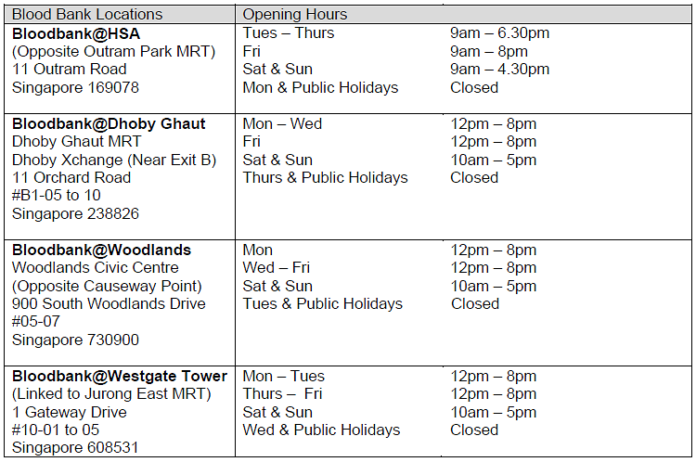
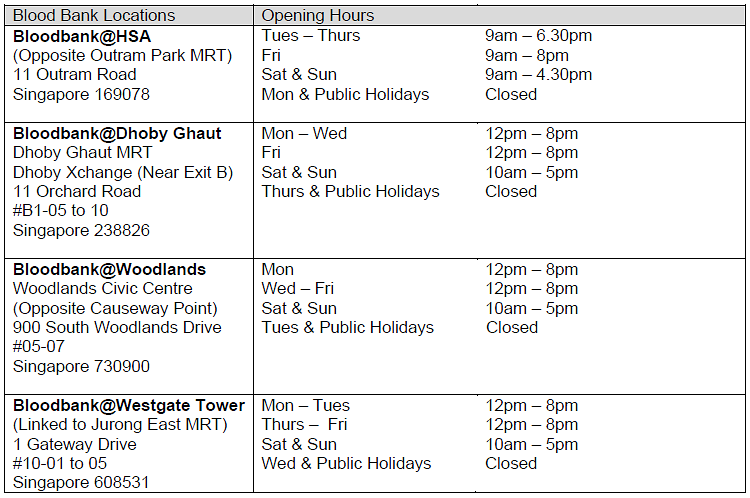
Donors can go to Bloodbank@HSA, Bloodbank@Dhoby Ghaut, Bloodbank@Woodlands or Bloodbank@Westgate Tower.
Locations and opening hours of blood banks in Singapore. (Source: HSA, Singapore Red Cross)
Donors have to be healthy, aged between 16 and 60, and weigh at least 45kg. Those who have not made a donation in the past 12 weeks are also encouraged to donate.
Donors are advised to eat a light meal and drink plenty of fluids before a donation. They should also make sure that they have adequate rest the night before and on the day of donation.
Those aged 16 or 17 who would like to donate are required to bring a signed parental consent form. The form can be found on www.hsa.gov.sg/parent_consent.
Those who have not donated blood before in Singapore can visit www.hsa.gov.sg/donor_criteria or call 6220 0183 for more information or to make an appointment for blood donation.
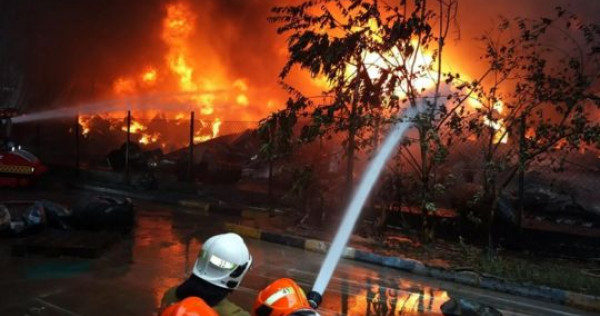
SINGAPORE – A fire at an industrial waste management site saw the Singapore Civil Defence Force (SCDF) deploy 32 emergency vehicles and 80 firefighters on Wednesday morning (Dec 11), with firefighting operations ongoing at the time of writing.
No injuries have been reported as of about 8.15am, about two hours after the SCDF was alerted to the fire at No. 48 Tuas Crescent, where Unifine Star Petrochemical is located.
In two Facebook posts, the SCDF said the fire was “raging at the premises and was spreading along the drains” when its officers arrived at the scene. The blaze was large enough for SCDF to also send in an Unmanned Aerial Vehicle to conduct aerial monitoring.
Eight jets and two Unmanned Firefighting Machines are also being used.
The SCDF advised members of the public to stay away from the area for now, although the fire has been confined to the Unifine Star premises, SCDF added.
Unifine Star deals with toxic industrial waste, such as oil and chemicals, collecting, disposing and recycling them for other use.
SINGAPORE: Singapore’s President Halimah Yacob and German Chancellor Angela Merkel reaffirmed bilateral ties between the two countries as they met on Tuesday (Dec 10) in Berlin.
During the meeting at the Federal Chancellary, they also welcomed the implementation of the EU-Singapore free trade agreement, Mdm Halimah said in a Facebook post.
She added that this will further strengthen the strong economic links between Singapore and Germany.
Mdm Halimah also met German Federal President Frank-Walter Steinmeier, who last visited Singapore in November 2017.
Mr Steinmeier hosted her to a state banquet at the Schloss Bellevue, his official residence.
“Singapore and Germany have always enjoyed a strong, substantive and multifaceted partnership because of our shared strategic interests. I hope that we can continue to build on this friendship in the years to come,” Mdm Halimah said.
Singapore President Halimah Yacob with German Federal President Frank-Walter Steinmeier during the inspection of the Guard of Honour contingent. (Photo: MCI)
She also met the governing mayor of Berlin, Mr Michael Muller, two months they first met when he visited Singapore in October.
“We continued our earlier discussions on how our two sides can deepen cooperation in areas such as trade, defence and education. I look forward to deepening the existing ties between our two countries in the years ahead,” she said.
The meetings were part of President Halimah’s five-day visit to Germany from Dec 9 to Dec 13.
Skye Lee Shi Jia, who turned 18 yesterday, was sentenced to six months of supervised probation and ordered to perform 100 hours of community service for crashing into a 55-year-old woman while riding his non-compliant e-scooter.
He was convicted last month for one charge of causing hurt by negligent act. Another charge for riding the non-compliant device on a footpath was taken into consideration.
Lee, who was then 16 and working part-time as a pizza delivery man, was riding along a footpath near Block 137 Teck Whye Lane at about 6pm, while the victim was walking on a nearby footpath.
Despite the speed limit then being 15kmh for e-scooters, he was travelling at about 20kmh when he collided with the woman at a junction.
The woman fell and knocked her head, causing her to bleed. She was taken to hospital and found to have a laceration on her head that required three stitches.
Lee made full restitution for her medical costs of about $490.
His e-scooter, which was later impounded, was found to have a width of 74cm, exceeding the limit of 70cm.
SINGAPORE: A fire broke out at a building in Tuas Crescent on Wednesday morning (Dec 11).
The Singapore Civil Defence Force (SCDF) said it was alerted to the fire at 48 Tuas Crescent at around 6am.
“Upon SCDF’s arrival, the fire was raging at the premises and was spreading along the drains,” it said in a Facebook post.
SCDF was alerted to the fire at around 6am on Dec 11, 2019. (Photo: Facebook/Vino Angelina)
SCDF added that its firefighters were fighting the blaze with eight water jets.
In an initial Facebook post at around 6.40am, SCDF said it was at the scene conducting firefighting operations.
SGSecure mobile app users, M1, StarHub and SingTel mobile subscribers within the immediate vicinity of the fire would have received an advisory message urging members of public to stay away from the area, SCDF added.
A fire broke out at 48 Tuas Crescent on Dec 11, 2019. (Photo: Facebook/Tin Myo Aung)
A fire broke out at 48 Tuas Crescent on Dec 11, 2019. (Photo: Facebook/Vino Angelina)
Photos and videos of the fire on social media show plumes of thick black smoke rising from the blaze.
Unifine Star Petrochemical, a toxic industrial waste collector, is the company located at the address.
SINGAPORE: A novel containing vulgarities has stirred up controversy this week, when it became an item for a local secondary school’s extended reading programme.
A Facebook group called Singaporeans Defending Marriage and Family denounced the book for its “foul and blasphemous language” and claimed it violates Singapore’s racial and religious harmony laws.
These allegations prompted a response from the Ministry of Education, which pointed to the book’s literary merit and espousal of positive values, and emphasised that teachers have closely guided students in the reading of the text within its particular social context and the drawing of positive lessons.
News of the Ministry’s reply provoked a bigger storm on social media where some netizens questioned if such a move has normalised the use of swear words and opened up the door to the degradation of society.
But cooler heads have prevailed where even more highlighted the impossibility of sheltering our children and lauded the novel’s tale.
WHAT IS SO OBJECTIONABLE ABOUT THE BOOK?
What exactly do these parents find objectionable about the book? It is hard to imagine that this award-winning piece of literary work would be removed simply because some Singaporeans have reservations.
Authored by Mark Haddon, The Curious Incident of the Dog in the Night-time is narrated in the first-person perspective by protagonist Christopher Boone, a 15-year-old boy on the autism spectrum.
File photo of secondary school students in Singapore.
The story begins with Christopher investigating the death of his neighbour’s dog and reveals Christopher’s struggles and difficulties in interpreting the world around him.
Yet the book has been criticised for the use of swear words and the lead character’s claiming that there is no God and no life after death, among other things.
It is not surprising that some parents have concerns over the curricular material their children are exposed to in school.
For instance, they may not wish their children to be exposed to the coarser side of human existence through reading, for instance, about domestic violence or racial discrimination.
They may also not like the idea of their children learning about ideas, such as abortion or contraception, that may not cohere with their own beliefs and values.
Their fears and concerns have, however, to be balanced against the educational intentions that the Ministry of Education and school teachers have in mind when exposing students to such literary texts, whether as part of regular classroom lessons or as part of extended reading programmes.
Instead of being so quick to pull the trigger because a superficial reading of the book reveals vulgarities, is it not worth looking at an educational material for its learning value?
Exposure to the world is an incredibly important process of education, and in this case, appreciation of the subject of autism, living on the spectrum and coping with parental divorce.
(Photo: Unsplash/Wang Xi)
At the same time, there is value in exposing students, with the help of expert guidance, to the contentious or less savoury aspects of life, in order that they might better develop an informed personal response and moral compass.
Furthermore, in a world increasingly interlinked culturally, politically and economically, and one where social media are exposing all of us to a bewildering array of messages, it is important for our students to develop the ability to think critically about what they are reading.
Amid talk of teaching students to value diversity and cross-cultural competence, it would appear that books such as this might prove helpful in this regard.
Reading a variety of literary texts with learning value (including the subject of the current controversy) enables students to broaden their awareness of how people from around the world grapple with the reality of human existence.
Critical reading under the guidance of a skilled teacher will not only enable students to develop empathy and global awareness, but also challenge them to clarify their own values, beliefs and biases.
Students will be able to consider multiple perspectives as they read a variety of text genres and consider other people’s interpretations of these texts.
File photo of children’s section at library@harbourfront. (Photo: Cheryl Lin)
DON’T SHY AWAY FROM READING
After all, 15-year-old Singapore students are already reading less today, compared to 2009, according to the 2018 PISA study.
Reading is such a vital skill that our children need to do more of. This is a challenge the Ministry recognises. It said it would “partner parents and schools to encourage students to read more widely and for leisure” last week on the back of the news.
From a linguistic perspective, reading literary texts will help develop a greater sensitivity of the subtleties involved in using the English language in a variety of contexts.
Besides considering the educational goals behind encouraging students to read a wide variety of texts, the Ministry of Education has to balance the differing perspectives of parents.
How does it respond when it is caught between the views of parents who find some texts objectionable because of the subject matter or the language used, on the one hand, and those parents who respectfully accord teachers the professional autonomy to select texts carefully and guide students through the interpretation of these texts and the discovery of learning points, on the other?
To what extent should parents be able to determine what kind of texts their children read in school, even when the choice of these texts is supposedly made in the wider educational interests of their children?
There are a few key perspectives to consider in this controversy: The parents’ concerns over what their children are learning, the Ministry of Education’s macro-level learning goals for students, teachers’ professional autonomy in designing and implementing their teaching and learning programmes – and students’ reactions to what they are supposed to be learning.
The Ministry of Education building. (File photo: Ngau Kai Yan)
The last of these four perspectives is very often the least-often heard, and it would therefore be interesting to find out what students think of this particular text.
SOME PERSPECTIVE
This particular episode is symptomatic of the numerous curriculum controversies that continue to erupt around the world.
These include the inclusion of sexuality education and what form it ought to take and the debate between creationism and evolution in biology classes.
It ought to stimulate healthy debate over vital questions such as what is taught to schoolchildren, how it ought to be taught to them, and who determines what is included or excluded.
This debate is often heated as it concerns the shaping of values, attitudes and beliefs of students. More often than not, it reveals the values parents themselves have and whether they practise what they counsel.
For those outraged by calls to take the book off the list, it’s worth calming down and remembering that the Ministry had decided against it.
After all, the book is about compassion and empathy, and the same should be demonstrated when speaking to those calling for its removal.
For those calling for its removal, it’s worth slowing down and remembering that requesting for the book to be removed without having read the book in its entirety and considered the book’s greater educational value beyond the bits they find personally objectionable, is effectively, judging a book by its cover.
Jason Tan is associate professor at the National Institute of Education.
SINGAPORE: She recently bought a shirt in a shop, using mobile wallet DBS PayLah! That was when Tan Wen Hui found out that getting one’s money back — after a botched funds transfer — may not be so straightforward.
She had keyed in the wrong mobile number, sending the money to the wrong person. “I started to panic,” she recalled. “I didn’t bother to check (the number) because … I just wanted a very fast transaction.”
The 21-year-old contacted the bank, but it was unable to help her. So she messaged the recipient instead. “The person … was very nice. He actually PayLah! me back the amount,” she said. “The person could’ve just ignored my message.”
She was lucky to get her money back.
Digital wallets are the second-most popular e-commerce payment method in Singapore, after credit and debit cards. But in terms of consumer protection, they may be one of the worst, as the programme Why It Matters finds out. (Watch this episode here.)
WHOSE MONEY IS IT?
There are as many as 23 ways to e-pay in Singapore, such as via GrabPay and UOB Mighty.
Seven in 10 Singaporeans use a digital wallet, according to business consultancy McKinsey and Co. And digital wallets account for 14 per cent of all e-commerce transactions here, representing sales of S$680 million, JP Morgan reported this year.
There are more than a million transactions a month on DBS PayLah!, for example. But if one transfers money wrongly to another account holder, the payer is advised to contact the recipient directly.
DBS senior vice-president (Consumer Payments and Platforms) Tri Arini Melati explained that the bank cannot reverse such transactions instantly, as it needs to seek the recipient’s consent.
DBS Bank’s e-wallet PayLah! (Photo: DBS)
“We aren’t able to … take the monies,” she said. “And we won’t be able to determine whether the case is really a wrong transfer.”
The payer, however, can see the mobile number that was wrongly typed in, she noted. “You can contact the recipient. And you’d be surprised that they’d acknowledge it and return your money.”
The incidence of wrong transfers is very low, she added, citing the fewer than 0.001 per cent who reach out to DBS for more help to contact the recipients.
But what if the recipient refuses to return the money? Loh Kia Meng, chief operating officer of law firm Dentons Rodyk, said the money still legally belongs to the payer.
“You can take action against him to take back what’s rightfully yours,” he said. And anybody with the intention to use money that is not theirs could be jailed for up to two years and/or fined.
So long as the notification is sent to you, whether you threw it away (or) didn’t read it … you’re deemed to have had notice of it.
In such cases, the payer can make a police report or sue the other party.
THE LEAST PROTECTION
When it comes to refunds, the process is relatively straightforward and instantaneous if consumers had paid via credit card, PayPal or even PayLah! as demonstrated by Thomas Po, co-founder of online grocer Zairyo, which accepts a range of e-payment methods.
File photo: Reuters/Thomas White
But it gets trickier if there is a dispute between the retailer and the consumer.
A credit card user can ask the issuing bank for a chargeback, which is a reversal of the payment. If the card provider decides in the buyer’s favour, he gets the full sum back from the retailer.
If he used PayPal, he could dispute the transaction in his PayPal account.
For example, if an item does not arrive or is “significantly different” from how it was described, “all you have to do is let PayPal know”, said its Asia-Pacific head of information security, Phoram Mehta.
“PayPal’s anti-fraud capabilities, artificial intelligence and people (would) investigate that case and … are able to refund you,” added the man whose job it is to ensure that users are not defrauded of their money.
File photo: Reuters/Thomas White
For those who use mobile wallets, however, getting a refund when there is a dispute is not so easy.
“It’s (at) the mercy of the merchant to decide whether or not to refund the customers. It’s (a matter of) goodwill,” said Po.
FOR LOW-VALUE USE
But even as more consumers are using e-wallets, the number of online complaints from payers making wrong transfers has decreased, said Mark Cheng from financial portal MoneySmart.
This is because consumers have become more familiar with these payment platforms, which have also evolved over time, for example with the availability of peer-to-peer funds transfer service PayNow.
“People can now transfer bank-to-bank much more easily,” he pointed out. “In the past, you (had to) put in a whole string of digits … nine to 10, I think.
“I used to stare at my phone and scrutinise the numbers to make sure that I was keying (them) in correctly.”
The interface of a banking app when transferring money to a recipient registered with PayNow. Customers must also key in a one-time password before the transaction will go through.
While the rise of mobile wallets has raised questions about the need for some kind of protection system for such peer-to peer transactions, this would have cost implications, said EY global emerging markets fintech leader Varun Mittal.
“If you’re offering protection where a customer could say, ‘I didn’t do this transaction’, then you need to have a mechanism to service that request,” he said. “So either the merchant … or the consumer needs to pay.”
Mobile wallets are primarily focused on high-frequency, low-value use cases, such as food purchases, he cited. “The mobile wallet’s premise is that (and) not … let’s say, S$5,000 transactions. So that’s not what they’re designed for,” he added.
Watch the episode here. Why It Matters is telecast every Monday at 9pm.