A woman who was filmed by a pervert while using a toilet cubicle is now terrified of public toilets.
She said she now checks every public toilet first, and will not use a cubicle if the neighbouring ones are occupied. And she tries to get someone to accompany her out of fear that a man might follow her into the toilet.
“I feel guilty that I have to trouble those around me, and angry that I have to feel fear when I did nothing wrong. No one should have to feel this way,” she said in a four-page letter to explain how the incident has affected her life.
The letter was submitted to the District Court, where Hoon Qi Tong, 25, was yesterday sentenced to a short detention order (SDO) of two weeks after pleading guilty to one charge of insulting the woman’s modesty.
A charge for criminal trespass was taken into consideration.
An SDO is a short jail term without a criminal record.
Hoon, then a Singapore Management University student, was interning in an office in downtown Singapore when he took an upskirt video of a female colleague in August 2017.
SINGAPORE: On Thursday (Dec 19), Singapore’s National Heritage Board (NHB) launched its 19th heritage trail, this time in Pasir Ris in a bid to showcase the neighbourhood’s coastal and natural features.
The self-guided tour runs 14km long, but can be broken into three thematic routes: Beachfront history and nature, recreation sites and architecture.
Each route takes between an hour to 90 minutes to complete by foot.
Here are five hidden gems that tell the little-known history of this tranquil seaside town.
A RIVER WITH A SPICY HISTORY
Together with Sungei Tampines, Sungei Api Api is one of the two rivers that intersect Pasir Ris, lined by mangrove trees as the brackish waters allow the shrubs to thrive.
Sungei Api Api today, as seen from Pasir Ris Park. (Photo: Marcus Mark Ramos)
During the kampung days, people in Pasir Ris turned to the river for fish, prawn and crab.
Villagers would often come to the river to catch shrimps and prawns, and turn them into local condiments such as cincalok (fermented shrimp sauce) and belacan (fermented shrimp paste).
Some residents would also sell these to neighbours or visitors.
Within Pasir Ris Park is a six-hectare mangrove forest that visitors can walk through via the boardwalk. (Photo: Marcus Mark Ramos)
Mangrove timber would meanwhile be turned into boats, tools and charcoal.
The river is currently flanked by rows of HDB flats. The apartment blocks have marine-themed features embedded, such as lighthouse-shaped turrets or windows framed by clam-shaped features.
D’Best Fishing Pond in Pasir Ris Town Park welcomes about 8,000 human visitors every month, and a few otter ones. (Photo: Marcus Mark Ramos)
SINGAPORE’S ONLY COMMERCIAL SALTWATER FISHING POND
Fancy catching your own snapper or pomfret for dinner? You can, at D’Best Fishing at Pasir Ris Town Park.
The 24-hour outdoor hangout sits on the site of the former Golden Palace Holiday Resort and sees around 8,000 visitors a month.
Established in 1967, the mixed-use lodging was the go-to holiday spot in Pasir Ris for locals in the 1960s and 1970s, with a nightclub, restaurants, chalets and Chinese-style pavilions that dotted its pond.
However, profitability concerns and internal conflict weighed on the resort, which closed down in 1971.
Andy Tay, who co-runs D’Best Fishing, Singapore’s only commercial saltwater fishing pond. (Photo: Marcus Mark Ramos)
Today, the pond is co-run by a sprightly otter-loving man, Mr Andy Tay.
He likes otters so much that three years ago he ordered customised carbon fibre statues of otters from Malaysia. There are now 13 of these statues “floating” around the pond.
Never mind that his beloved animals come over and eat up his primary sources of income when they cannot find food in their spot at Pasir Ris Park. It is “charity”, he joked.
HOLIDAY FLATS FOR THE MASSES
Staycations in Pasir Ris were once only available to Singapore’s upper-class during the colonial period since 1890.
Elite landowners would build seaside bungalows along the beach, where they got a view over the Johor Strait, in order to escape the hustle and bustle of the city.
The former People’s Association Holiday Flats. (Photo: National Heritage Board)
Some of the well-known businessmen that owned waterfront properties here in the colonial era include Joseph Aaron Elias, whose 12-bedroom bungalow was later converted into the Pasir Ris Hotel in 1952, and movie mogul Run Run Shaw.
The bungalows were often located within a wider estate of plantations and workers’ quarters. Some of these workers also built kampung houses around the area, which led to a thriving village life in Pasir Ris.
Recreational trends shifted with the opening of the People’s Association Holiday Flats at Pasir Ris Park in 1973.
People could rent a two-room flat for S$7 a day and a three-room unit for S$10. This gave the average Singaporean affordable seaside vacation options, NHB wrote in a guide for the Pasir Ris heritage trail.
VINTAGE PLAYGROUNDS
Toa Payoh has its dragon-shaped playground and Pasir Ris has an elephant one.
Located near the northern end of Pasir Ris Park, the elephant playground is within a privately owned chalet complex that once belonged to the Telecommunications Authority of Singapore (Telcoms).
The bumboat playground near Elias Mall was built in the 1980s by the Housing and Development Board (HDB). (Photo: National Heritage Board)
The former statutory board built eight chalets in 1975 and they were available to Telcoms staff at subsidised rates.
It was common in the 1970s and 1980s for government agencies and companies to build holiday accommodation as a form of staff welfare, the guidebook stated.
Another iconic old school playground is the bumboat one at Elias Mall, which was built in the 1980s by the Housing and Development Board (HDB).
It is part of the agency’s mosaic series of playgrounds, known for its terrazzo tiles, geometric lines and designs based on Asian cultures, animals, trades and food.
Bumboats were used to transport goods in the past.
A PEEK INTO TIBETAN CULTURE
Nestled in a housing area is Sakya Tenphel Ling, one of the first Tibetan Buddhist temples in Southeast Asia.
Sakya Tenphel Ling is one of the first Tibetan Buddhist temples in Southeast Asia. (Photo: Marcus Mark Ramos)
It was established in 1995, with its architecture and design modelled after a Tibetan monastery.
Ms Regine Wong, a representative of the temple, pointed out some replicated features: Parasols with the key Tibetan colours of blue, red, white, yellow and green hang prominently in the temple, while the dung-chen or Tibetan long horn, is used during ceremonial rituals.
Parasols with the key Tibetan colours of blue, red, white, yellow and green hang prominently in the temple. (Photo: Marcus Mark Ramos)
The temple is a short walk away from other religious sites, including the Masjid Al-Istighfar, whose design was inspired by the “Blue Mosque” in Istanbul, and the Loyang Tua Pek Kong Temple, which houses deities from Taoism, Hinduism and Buddhism.
Masjid Al-Istighfar’s design is inspired by the Sultan Ahmed Mosque, better known as the “Blue Mosque” in Istanbul. (Photo: Marcus Mark Ramos)
Bethesda Pasir Ris Mission Church and Pentecost Methodist Church are both also within walking distance. The latter, which was founded to reach out to the Peranakans in the 1930s, still holds services in Baba Malay.
On the multi-religious aspect of the heritage trail, Ms Wong said that it creates a “beautiful experience for everybody” and creates the opportunity for people to “learn how to embrace all our friends”.
A student from Nanyang Polytechnic took upskirt photos of six women and hid the photos in a secret app in his phone.
Yesterday, Chiang Wei Sheng, 19, pleaded guilty to three counts of insulting the modesty of a woman.
Another three similar charges were taken into consideration.
Chiang was finally caught on April 9 when he was taking upskirt photos of a woman at Sembawang MRT Station.
The court heard that at about 8.30am that day, he saw the 28-year-old victim wearing a pink dress and stood behind her while going up the escalator.
While he was taking upskirt photos of her, she felt something brush against her inner thigh and turned around to see Chiang with his phone under her dress.
After he was confronted, Chiang admitted what he had done and was arrested.
His phone, which was seized, was also found to contain upskirt photos of five other unknown women.
He had taken the photos previously from Sept 2018 to April this year, and stored them in a secret application to hide the photos.
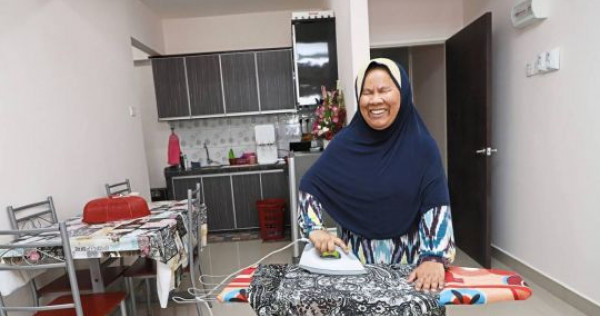
GEORGE TOWN – Born blind and abandoned at birth, Esah Hussin epitomises the adage that anything is possible with grit and determination.
The telemarketing officer, 42, has just moved into her newly bought low-medium-cost apartment in Tanjung Tokong which she bought for RM72,500 (S$23,730) in cash.
She had saved the money for 19 years, setting aside at least RM500 from her monthly salary working as a file assembler and telemarketing officer over the years.
In Malaysia, flats costing below RM100,000 are usually labelled low or medium cost apartments, and sold to those with limited family incomes.
“I am happy and contented with what I have today,” Ms Esah said. “I just moved into the unit and some of my friends and colleagues came over for a mini house-warming party.”
She added at her house on Monday (Dec 16): “I am still getting used to my new place and living alone.
“Many people supported and motivated me along the way and I am glad that I did not let them down.”
Ms Esah first applied to buy a low-medium-cost apartment in 2014 but the form was misplaced.
SINGAPORE – A man repeatedly submitted forged polytechnic certificates to the Singapore Institute of Management (SIM) University – which was later renamed Singapore University of Social Sciences (SUSS) – as he wanted to gain a place to study there.
Singaporean Kieffer Tay Kai Xian, 24, was fined $5,500 on Thursday (Dec 19) after pleading guilty to a forgery charge.
Three other similar charges were considered during sentencing.
The court heard that Tay was so “desperate” to study finance at SIM University that he altered his Temasek Polytechnic academic transcript by editing his cumulative grade point average from 1.76 to 2.76.
He thought that doing so would increase his chances of gaining admission into the university.
Around September 2016, he submitted the forged transcript in his application. The university’s management conducted a check and rejected his application after finding out that the transcript had been doctored.
Undeterred, Tay continued committing similar offences the following year, when SIM University was renamed SUSS and became an autonomous university under the Ministry of Education.
SINGAPORE: To an onlooker, Alex (not his real name) would appear to be a fussy eater with a preference for smaller, more frequent meals.
But he does not have a choice.
Without a stomach, he never feels hungry and has to eat at appropriate intervals while at the same time being careful not to overeat.
The 37-year-old consulting engineer had his stomach removed in May 2015 after a genetic test showed he had a gene mutation that meant a high chance of getting a hereditary cancer. Alex, who is from the United Kingdom and a Permanent Resident here, did the test at the National Cancer Centre Singapore (NCCS) in 2014.
He had earlier found out that his family has a history of a genetic mutation that leads to a high risk of lobular breast cancer and diffuse gastric cancer, a type of stomach cancer.
Alex witnessed his paternal uncle die within six months of being diagnosed with diffuse gastric cancer. He also lost his aunt to lobular breast cancer.
It is not a certainty that he will get diffuse gastric cancer, although he was told by doctors that if he has the mutation, there is an 80 per cent chance he will get the disease.
“When the result of the test came out positive, I was just kind of resigned to it. I mean, I knew it was coming,” he said.
The alternative was a “death sentence”, so opting for surgery to remove his stomach was an “easy” decision, he added.
Alex had also seen the positive effects of the surgery on his brother who had his stomach removed in 2014 after testing positive for the mutation. He said the surgery did not affect his brother’s quality of life.
“He has done a 100-mile (161km) run without a stomach. And he’s done 24-hour sailing races,” Alex said.
Alex himself leads a healthy and active life, squeezing in a game of squash when he can.
“I didn’t want to be put in the position of ‘oh, we found your cancer and you have three months left’. What’s that, it’s nothing right?” he told CNA.
It proved to be the right decision. A biopsy on his stomach showed he already had early stage gastric cancer.
Dr Wong Siew Wei, a consultant medical oncologist at The Cancer Centre, said that hereditary diffuse gastric cancer is “highly aggressive, presents late and carries a poor prognosis”.
The lifetime risk of diffuse-type gastric cancer for carriers of gene mutation from families with hereditary diffuse gastric cancer is estimated to be 70 per cent for males and 56 per cent for females, Dr Wong said.
He said that this particular hereditary cancer is hard to detect at an early stage as the cancer is located beneath healthy-looking stomach lining.
Patients with early stomach cancers typically show very little symptoms or experience non-specific symptoms such as fatigue, bloating and indigestion, he added.
MANAGING MEALS POST-SURGERY
Alex was back at work 10 weeks after his surgery, which included five days recuperating in Singapore General Hospital.
Living without a stomach required some adjustments, he said. Because he never feels hungry, Alex must remember to eat.
“When I get distracted. I can go eight hours without eating anything and never feel hungry, until I start to feel faint. I have to mentally manage my food,” he said.
It has also affected his weight. Alex, who is 1.81m tall, weighed 85kg before his operation and was 66kg at his lowest, after a bout of food poisoning.
He weighs about 73kg now and tries to maintain it,but he also has to be careful not to overeat. Doing so will cause him to feel an intense pain about 20 minutes after his meal. In the years since his surgery, he has learnt not to do that, he said.
Without a stomach to act as a storage space, Alex can only either eat or drink at any one time – about two-thirds of a main course or 250ml of water. He also has to forgo the dairy-based desserts that he loves, he said.
Eating these desserts would mean rushing to the toilet. He also has to watch his sugar intake. It makes him perspire profusely even in an air-conditioned room if taken in excessive amounts, he said.
Alex takes the changes he has had to make in his stride and even manages some humour.
“When people who don’t know about my surgery ask me to eat more, I tell them ‘I don’t have the stomach for that’,” he quipped.
WHO SHOULD GO FOR TESTING
Dr Joanne Ngeow, head of Cancer Genetic Service and senior consultant medical oncologist at NCCS, said that 5 to 10 per cent of all cases of cancer are caused by genetic factors which result in the development of hereditary cancer. When a person carries a faulty copy of a cancer gene, this could lead to a higher chance compared to others for them to develop certain cancers, she added.
“In a family where there are multiple people with cancer, anyone who has been diagnosed with cancer should consider genetic testing,” Dr Ngeow said.
Someone who developed cancer below the age of 50, has two or more types of cancers or has rare cancers should also consider such testing, she added.
Others who should go include those who have “bilateral” cancers, meaning the disease occurs in both of a pair of organs – both ovaries or both kidneys – at the same time.
If a faulty gene has not been identified in the family, genetic testing is usually first done on a family member who has been diagnosed with cancer. This is because the chance of finding a faulty gene is higher in them than other unaffected family members, NCCS said.
Alex with his daughter. There is a 50 per cent chance he passed on a gene mutation to her. (Photo: Alex)
“The results (can) come back as positive, meaning that we found the reason why they develop cancer. It can be negative, meaning that we didn’t find the genetic change. Or it can come back as uncertain, meaning that we found a change. It may or may not be what’s giving rise to the fact that they had developed cancer,” Dr Ngeow said.
In explaining why these groups of people should go for such testing, Dr Ngeow said: “It’s about taking charge of your own narrative.”
Using an analogy, she said: “If there is a big pothole in front of your car and you turn on the lights, you see the pothole, you know how to avoid certain things, as opposed to, when you don’t turn on the lights – you don’t know that the pothole may be there.”
“It’s very important before anyone who does genetic testing that they actually go for what we call a pre-test counselling session with one of our genetic counsellors,” she said
Genetic testing is usually done through a blood test, but can be done with a saliva sample as well. The cost ranges from about S$500 to S$1,000, she said. She added that NCCS offers financial subsidies on a case-by-case basis.
UNMET NEEDS IN LOOKING AFTER PATIENTS WITH CANCER RISK
While the NCCS has set up support groups for patients who are at risk of cancer, Dr Ngeow said there are “many” unmet needs in helping look after these patients.
Currently, people like Alex can opt for risk-reducing surgery, like removing a body part, which is the easiest way to manage the cancer risk.
Dr Ngeow said she hopes to do more for these patients. This includes identifying new and alternative ways of preventing and detecting hereditary cancers, and minimising the need for risk-reducing surgery for patients if possible.
“This is an area that requires more research, but lacks the necessary funding. Modifying lifestyle factors, that may increase or decrease their cancer risk, have yet to be identified,” she said.
She added that there is not enough manpower to take care of such patients as well.
“There are very few people trained specifically in this, we don’t have enough genetic counsellors,” she said.
Alex, who is married with a two-year-old daughter, wants her to be tested too as there is a 50 per cent chance he would have passed on the mutation to her.
But this would be done when she is about 30 years old as the gene mutation in his family happens at a later stage in life, he said.
My daughter will be 30 in 2047. That’s a long time in medicine, let’s give medical science the best chance,” he said.
LONDON: The British Grand Prix at Silverstone had the biggest crowd of the 21-round 2019 Formula One season, data provided by promoters showed on Thursday (Dec 19), with more spectators than ever attending races.
Formula One said in a statement that three races saw a weekend attendance of more than 300,000, with Silverstone leading on 351,000, ahead of Mexico (345,694) and the Australian season-opener in Melbourne (324,100).
General view of a Union Jack flag being carried out on to the track by service personnel before the British Grand Prix at Silverstone Circuit. (REUTERS/John Sibley/File Photo)
A weekend in Formula One runs from Friday practice to Sunday’s race.
The Liberty Media-owned sport said more than four million (4,164,948) people attended at least one of the races, an increase of 1.75 per cent on 2018 when there were also a record-equalling 21 rounds.
The 2019 growth in attendances was despite Japan’s Suzuka circuit having to remain closed on the Saturday due to a typhoon.
The average attendance per race was 202,146. A total of eight races had weekend crowds of more than 200,000.
Formula One said the Canadian Grand Prix in Montreal reported the biggest year-on-year rise, with an increase of 14.69 per cent.
Canada will have two race drivers next year in Lance Stroll, who drives for Canadian-owned Racing Point, and Williams’ Nicholas Latifi.
The data provided by promoters also showed the Sunday-only attendance accounted for 1.77 million, a rise of 4per cent compared to 2018.
Silverstone – a home race for Mercedes’ six times world champion Lewis Hamilton and most of the 10 teams – topped the race day crowd with 141,000.
Mercedes’ Lewis Hamilton celebrates with the crowd after winning the British Grand Prix at Silverstone Circuit on Jul 14, 2019. (REUTERS/Matthew Childs/File Photo)
Mexico City came second with 138,435, ahead of the US Grand Prix in Austin, Texas, on 128,000, and Singapore with 115,240 spectators.
The Chinese Grand Prix in Shanghai, which marked the 1,000th championship grand prix, reported a 30 per cent race day increase on the previous year.
Formula One said some of the race day figures had been extrapolated from the total weekend numbers.
“We are delighted to see that over four million fans joined us at our 21 races, beating the attendance figures for last year, including a record-breaking Italian Grand Prix weekend attendance with 200,000 spectators,” said Formula One managing director Sean Bratches.
Next year will see a record 22 races, with Germany no longer on the calendar but Vietnamese and Dutch races joining and expecting big crowds.
SINGAPORE: The recently concluded Southeast Asian (SEA) Games got me thinking about the issue of Singapore’s national sport.
Do we have one? If so, what is it?
I guess it depends on what a national sport is in the first place and what purpose it serves. Let’s explore some plausible definitions.
WHAT IS A NATIONAL SPORT?
Online definitions talk about how a national sport “is considered to be an intrinsic part of the culture of a nation”. That’s a decent starting point – but can it be developed?
On further thought, I drew up a few more possibilities.
What if the “national” aspect of the national sport meant that it had to identify closely with the characteristics of a nation?
Or should it be one which the country is particularly good at, with athletes competing and winning at all levels so often that it elicits national pride?
CULTURE OF A NATION
Based on that first definition of a national sport, I fail to identify a sport inherent to Singapore’s local culture, whatever that may be.
Maybe if I were still in primary school I would hazard chapteh as a possibility considering it is synonymous with Singapore’s blended culture. The first trace of a sport involving the kicking of a feathered object comes from ancient China, whereas the name of chapteh itself is said to have Malay and Hokkien roots.
A group of seniors playing the traditional game of chapteh in Singapore. Photo taken from the Singapore Chapteh Facebook page.
But who plays chapteh outside of school anymore? Is it even part of the culture outside of school let alone of the entire nation? For that matter, I don’t even think primary school students in this decade consider chapteh a recess-time preoccupation that we from the 1980s and 1990s did.
Moreover, chapteh has become more of an exhibition of our heritage than a sport where there is competitive participation.
MAKING A SPLASH
What about the third criteria above of international success?
Singapore’s sporting history has in the past shown success in fields like athletics, bowling, table-tennis, squash and even wushu. But recent results in these sports have been met with mixed success at best.
Similarly, Singapore has been particularly good in some key water sports – swimming, water-polo and sailing – having won international honours in them for years and dominating the region.
More recent history shows swimming has something of an edge over the other two sports.
The national men’s water-polo team, which had been the region’s best for 54 consecutive years, settled for bronze medal at these SEA Games.
In sailing too, Singapore’s haul of six medals was half that of its previous SEA Games outing in 2017. This year, it won only one gold, compared to four previously, placing it third overall among five countries that participated in the sport at these Games.
Swimming, on the other hand, was Singapore’s best performing sport at these Games with its 23-gold medal haul matching its previous best at the 2015 edition of the Games.
Swim king Joseph Schooling acknowledges fans
Add to that swimming has produced our only Olympic gold medal courtesy of Joseph Schooling’s 100-metre butterfly stroke in 2016 and arguably Singapore’s swimmers have been our most successful athletes as far as winning goes.
Clearly, if success were the sole determinant of national pride, swimming would be our national sport.
Interestingly, swimming could also meet our second criteria of being associated with the characteristics of a nation. One could argue a water-sport such as swimming ties in nicely with our identity as a coastal island-state.
A SINGAPORE BLEND
The thing is if the question of our national sport had been posed to me in the past – certainly before this year’s edition of the SEA Games – I would have answered, in a heartbeat, football.
Now, particularly after the national football team’s dismal performance during the Games, I am not so sure.
Singapore loses to Vietnam 1-0 at SEA Games 2019. (Photo: SNOC)
But, what if instead of neatly fitting into one of these requirements, the criteria to be Singapore’s national sport is, like many things Singaporean, a strange but fitting concoction of these elements?
What if Singapore’s national sport is one that should permeate widely in society and not by how many gold medals we won? After all, a national sport should be easily accessible, enjoyed by most of society, if not all, and has the widest following.
A COMMON MAN’S GAME
The interest that football enjoys in Singapore still dwarfs most sports, both in terms of mass participation and mass spectatorship.
More Singaporeans have shifted their focus to international football than the local league or national teams. But ask around and many would be able to reasonably articulate the rules of the game and a large number would also be able to rattle off prominent figures and developments in the world of football.
Fans supporting Singapore’s national football team
From a spectatorship perspective, even till now, decent crowds watch the national football team play. In a match against Uzbekistan in October, 12,547 turned up to watch Singapore play.
On the contrary, many Singaporeans would struggle to name swimmers beyond the few household names or list key events and developments in the sport. We like swimming but we only tune in periodically when our national swimmers are participating in large sporting events.
In terms of participation, football is also popular among a large section of Singaporeans. Competitively, there are professional, corporate, semi-professional and amateur leagues along with school teams.
Swimming, on the other hand, is contested by a very small pool of clubs and swimmers. Only a handful of schools are seriously competitive in swimming and have their own swimming facilities.
We might have a sports school and inter-school competitions at the primary and secondary school levels, but we do not have a competitive varsity league in swimming that can spur our best swimmers forward at their most crucial development stage, a reason why Schooling had moved to the US to study and train.
On the other hand, football is also accessible and is widely known as the common man’s game around the world.
Football games are often the rallying sport for most interschool competition, even at the junior college level.
Students playing football. (Photo: Ngau Kai Yan)
Recreationally, there are more than 50 free football pitches to be used in Singapore and countless other stadiums and schools where one can have a kick-about. Though there are 26 affordable public swimming pools in Singapore, most other pools are in private clubs or condominiums, limiting access.
Many of us will remember kicking around empty water bottles into makeshift goal posts at our HDB void decks when younger. But it is not as if we can jump into our neighbourhood canals for a swim.
UNITING FORCE
But even with a smaller talent pool, less competition and participation rates, fewer facilities and access to the sport, the fact that swimming returns Singapore so much success is remarkable and cannot be ignored.
But it is still not what football is to Singapore.
It is still not enough of a uniting force that brings people together regardless of ethnic, economic or social backgrounds. It is still not enough of a draw to get tens of thousands of Singaporeans to make their way to the National Stadium to get behind their country. It is still not a natural topic of conversation at coffee-shops, over lunch or as fodder for friendly banter among friends.
Perhaps, there may come a time when success does matter. If Singapore continues its dismal run on the football pitch, its popularity may suffer.
For now, despite its shortcomings on the field, football remains Singapore’s national sport for its ubiquity and ability to bring people together.
Perhaps someday eSports may become both that culturally uniting factor among future generations of Singaporeans and one that wins the country many accolades.
Until then, football is here to roost.
Malminderjit Singh is editor at CNA Digital News, Commentary section.
Yes, yes, it’s been weeks since the cringe-grenade of a reality show called Singapore Social exploded onto our screens, but the topic of how we love to hate-watch all eight episodes still lingers in our conversations.
But when even expats think the Netflix series is not doing the country any favours, you know that something’s wrong with Singapore Social.
Georgia Carney, a Singapore-based British YouTuber, certainly had a lot of things to say about the show. Together with her British boyfriend Justin, they’ve been living and working here for the past five years and are more or less familiar with how it all works in Singapore.
Georgia, for example, is well-versed in the art of chope-ing, while Justin has learnt how to be a typically aggro Singaporean driver. Both think that paying $8 for chicken rice at Newton Food Centre is an utter travesty (editor’s note: it very much is).
They also had some thoughts on Singapore Social after watching just the first episode, which they expressed in a YouTube vlog last week. Spoiler alert: they think that it’s trash.
This gives a whole new meaning to the term “daylight robbery”.
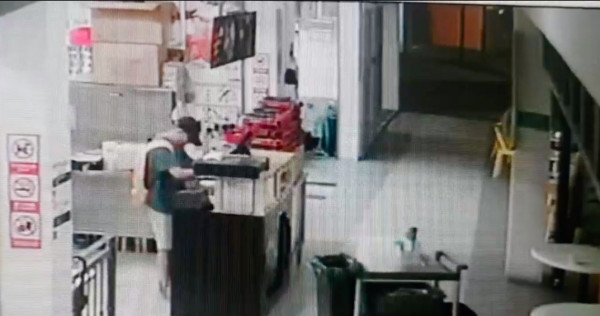
A self-proclaimed handyman sauntered up to a coffee shop in Sembawang and walked away with an entire cash register and other equipment which he stuffed into his bag in plain view during the wee hours of Dec 16.
The 25-year-old owner of Flying Wok was left dumbstruck when he turned up to work that very morning only to find his counter devoid of the cash register, Nets terminal and a modem. The counter also showed traces of being ransacked, he told Lianhe Wanbao.
“There was $300 worth of coins inside the register. Along with the missing electronics, all of which need to be replaced, it’s about $10,000 in damages.”
The stall, which closes at 10.30pm daily, is located in Yong Li Coffee Station, a 24-hour coffee shop.