As we welcome a decade of new beginnings, we concurrently herald the Lunar Year of the Rat.
A year of prosperity and good fortune is best rung in with parties galore, and while you already know about the best restaurants to host your New Year’s feast, nothing beats a reunion dinner in the comfort of your own home.
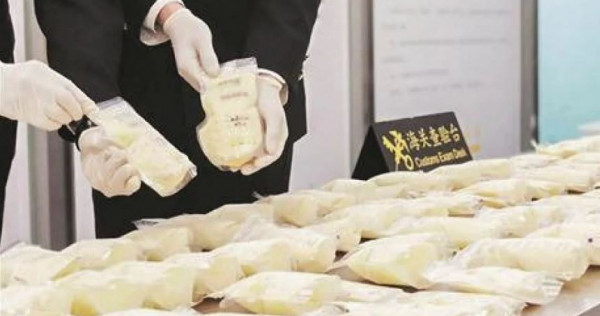
Customs officers in southeast China have confiscated and destroyed 23kg of frozen breast milk from a Chinese woman returning from Singapore, according to local media.
The frozen breast milk had been stored in 89 plastic bags, labelled with times and dates, and was discovered as the woman went through customs at the Quanzhou Jinjiang International Airport in Fujian province, Quanzhou Evening News reported on Friday.
It was not the first such case in the province, but local authorities said the amount of frozen breast milk confiscated was the most they had come across in recent years.
The woman, who was not identified, told customs officers the frozen breast milk was for her own baby but could not explain its source, the report said. She had failed to go through the necessary steps that were required in advance for quarantine approval, according to the customs officers.
The woman arrived in Quanzhou on flight MU238 from Singapore on Friday last week. Officers discovered the breast milk in a large insulated bag when it was passed through an X-ray machine during customs clearance.
SINGAPORE – Two people who travelled to Wuhan have been diagnosed with pneumonia, said the Ministry of Health (MOH) on Friday evening (Jan 17).
They are a 64-year-old male Chinese national and a 61-year-old female Singapore resident.
“Both cases have been admitted for further assessment and treatment, and isolated as a precautionary measure,” a ministry spokesman said. “They are in stable condition.”
The two people did not visit the seafood wholesale market in Huanan, from where the new bug is thought to have emerged.
Investigations are ongoing to establish whether their illnesses are linked to the Wuhan disease cluster, MOH said.
These two cases bring the total number of people in Singapore who have been suspected of having the Wuhan virus to five.
The first two were a three-year-old girl and a 26-year-old man, both of whom were Chinese nationals. They had visited Wuhan – the capital of central China’s Hubei province – but subsequently were tested negative for the virus.
As Asians, it is customary to be superstitious about everything, and Chinese New Year is no different. You’ll be surprised by the number of Chinese New Year superstitions we have!
While logic rules, and not all of these customs are practised today, it still is a fascinating list, this! 🙂
#1. AVOID BLACK AND WHITE
Yup, Chinese New Year (CNY) is about colour and all things bright (and red!). Wearing black and white is traditionally associated with mourning, so avoid wearing them, especially on the first day of CNY.
#2. DON’T SWEEP UNTIL DAY 5
Finish up all your cleaning before CNY. For sweeping and taking out the trash on New Year’s Day symbolises sweeping away your fortunes. Gulp.
On the bright side, less housework during CNY holidays? 😉
#3. DON’T WASH/CUT YOUR HAIR
“Head” is associated with “beginning” in Chinese. So you are advised not to wash/cut your hair on the first 2 days of the New Year, if you want a good start.
#4. LEAVE ALL THE DOORS AND WINDOWS OPEN ON CNY DAY 1
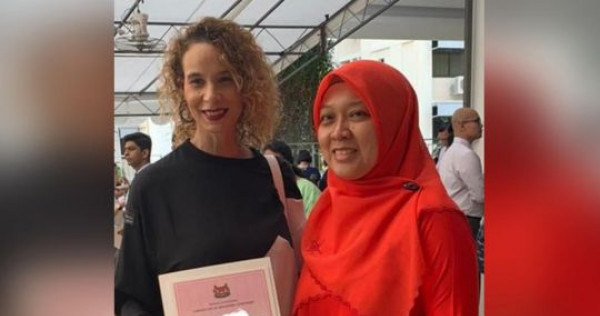
SINGAPORE – One of Singapore’s most well-known celebrities, South Africa-born model Wendy Jacobs, has taken up Singapore citizenship.
The 46-year-old, alongside about 200 other new citizens, received her certificate and pink NRIC on Sunday (Jan 12) at the Ang Mo Kio GRC and Sengkang West SMC Citizenship Ceremony.
Ms Jacobs, who underwent an operation to remove a brain tumour in June 2012, has lived here for 24 years and is married to Singapore football icon Fandi Ahmad, 57. The couple have five children.
In a Facebook post, Dr Intan Azura Mokhtar, an MP for Ang Mo Kio GRC, wrote: “I am glad Ms Wendy decided to take up Singapore citizenship.
“She has contributed much to Singapore, not just as a wife and mother, but also through her past work in the modelling and entertainment industry, stints as emcee and host for events, as well as teaching personal and corporate gourmet etiquette at ITE College Central for a period of time.
We’re well into 2020 but one Grab driver seems to be living in the last century — at least according to her archaic standards of how a couple should behave.
Disgruntled passenger Kohji Toh, 31, took to Facebook on Jan 15 to recount his bizarre experience onboard a Grab ride where the driver accused him and his wife of being intimate after she leaned on his shoulder, even going so far as to call the police.
According to Toh, he and his wife were on a GrabCar heading to an appointment at Defu Lane when his wife suddenly felt unwell.
His wife, who was suffering from a headache at the time, wanted to hug his arm and lean on his shoulder. But the driver had other ideas.
Warning the couple to “behave”, she requested for Toh to switch seats so that he would be separated from his wife.
“I told her this is my wife and we are legally married so what’s wrong for her to hug my arm and sleep on my shoulder,'” he wrote. “She still have the cheek to tell me this against the law and that she can call police for this [sic].”
SINGAPORE: According to Gartner’s Hype Cycle concept, emerging technology innovations that attract lots of attention often fail to live up to their initial promise.
A crash happens and eventually, a less hyped-up but more sustainable wave emerges.
The bike-sharing industry in Singapore may be experiencing this second wave as new companies emerge out of the initial wreckage of bankruptcies and abandoned operations.
With the exit of the first wave of the players, the market has consolidated to three players – SG Bike, Anywheel, and Moov Technology.
What is different this time? All three are homegrown companies with a direct stake in seeing their model succeed on home soil.
Initial signs also suggest this second wave of companies has learnt from the mistakes of the first wave.
The regulatory landscape is also favourable with encouraging conditions that enable long-term growth.
LITTLE NETWORK EFFECT
Previous bike-sharing business models were based on creating and rapidly growing the network of users.
However, unlike a highly scalable platform business model powered by data, such as Facebook or Netflix, there are operations and costs involved with maintaining a tangible asset network of bikes.
The bulk of operating costs are physical and localised, making scaling up the business more difficult compared to a tech platform with a pure digital play, even though overhead costs can be spread out.
(Photo: Kenneth Lim)
At its peak, there were more than 200,000 shared bicycles.
Today, the number of licensed bicycles allowed by the Land Transport Authority is more manageable at 45,000.
What has also changed is the drop in unit cost since licensing fees per bike have been halved. The earlier each bike reaches its cost break-even point, the lower the potential for losses stemming from damages and repairs.
STARTING SMALL
Two of the three current players have said that they are looking at a careful town-by-town expansion approach in specific neighbourhoods like Holland-Bukit Timah and Punggol.
This is sensible because each bike has a natural limitation to how far it can travel. The most frequent commuter is likely to ride a bike to connect to a main MRT arterial line or trunk services at a bus stop.
Hence, for operators to determine the optimal cluster of bikes and users in each specific area makes for prudent strategy.
The utilisation of each bike could increase substantially given the smaller pool of bikes within each intended area of coverage, and a higher ratio of potential customers per bike.
Starting slow will also allow companies to first understand customer behaviour and requirements, thereby allocating resources more efficiently.
BROADER RANGE OF OFFERINGS, BETTER POSITIONED POST E-SCOOTER FOOTPATH BAN
The second wave of bike-sharing companies has a wider selection of vehicle choices that also include e-bikes and personal mobility devices (PMDs), allowing them to cater to varied customer segments.
Bike-sharing start-up Moov Technology has been granted in-principle approval for a full licence to operate up to 10,000 bicycles, said LTA on Oct 14, 2019.
The growing market for e-commerce food delivery in the recent two years has created potential new demand for bike-sharing solutions, especially with the e-scooter footpath ban, which may be expanded to include all motorised PMDs under proposed amendments to the Active Mobility Act.
As the market for bike-sharing matures, bike-sharing companies could evolve to embrace a business-to-business model, creating partnership and acquisition opportunities.
This is already in the case for more mature markets. Ride-sharing company Lyft in the US, and Didi in China, have acquired bike sharing companies to broaden their transportation offerings.
In China, bike sharing has been linked to e-payments, food delivery, and location-based advertising.
With these factors in place, the new wave of bike-sharing companies would have a higher chance of success. Nonetheless, challenges remain in the execution of the business model.
CHALLENGES TO THE BIKE-SHARING BUSINESS
However, challenges remain in executing a successful bike-sharing business model.
Shared bikes still have to be parked at designated areas meaning the offered mobility is not door-to-door. Consumers’ usage rates would depend on the location of these designated areas.
SG Bike co-founder and chief operating officer Sean Tay with some of the shared-bikes it took over from Mobike in Punggol, where it is beginning to roll out its newly expanded fleet. (Photo: Zhaki Abdullah)
To improve accessibility, a limited number of unused motorcycle parking lots in industrial, commercial and residential areas could be opened up to bicycles.
Bike-sharing companies will also have to operate in denser areas to strike a better balance between supply and demand, to reduce the cost of repositioning bicycles.
Another challenge lies in scaling up. Bike-sharing involves ownership of the asset by the operator, and leasing it out in short pockets of time.
This is no different from the rental of office space or other properties, where increasing asset utilisation is key to profitability. Each cluster of operations is also fairly independent.
The cost of damage to bikes is difficult to recoup, given that few charge deposits, probably as a way to build up market acceptance and adoption first, and given consumer aversion after oBike exited the market with these deposits.
While it remains to be seen whether bike-sharing can succeed this time round, the signs that this second wave of companies are aware of the potential challenges and working to address them are promising.
As with personal mobility devices, bicycles in developed cities have become part of urban transportation options, helping to integrate public transportation with the first and last mile commute, and complementing other forms of first- and last-mile travel.
Ofo bike-sharing bicycles are pictured in Singapore. (Photo: REUTERS/Edgar Su/Files)
Bike-sharing in Singapore may not be the next unicorn sector that reaps billions in valuation, but may yet end up a sustainable business with profitable companies, given the new regulations coupled with the gradual approach companies are taking.
Perhaps the key limiting factor to growth is how much cycling can be done end-to-end when someone mounts a bike.
Goh Puay Guan is an associate professor in the Analytics & Operations Department at the National University of Singapore (NUS) Business School. The opinions expressed are those of the writer and do not represent the views and opinions of NUS.
SINGAPORE: I am delighted to join you this evening for the Annual, in fact the first, Public Service Leadership Dinner. It is the first time we are bringing together both the Administrative Service as well as the Public Service Leadership Programme, the PSLP.
Collectively, you represent the leadership of the public sector. Tonight, I wish to speak on two related themes.
First, building a deeper and more diverse public service leadership corps, to cope with our changing operating environment; and second, how the public service should work with the political leadership to deliver good government for Singapore.
A CHANGING OPERATING ENVIRONMENT
Let me begin with transforming the public service leadership. We know that our operating environment is becoming more complex. Externally, the global outlook is increasingly uncertain. Domestically, our economy is more mature and less buoyant.
We face major issues like economic restructuring, a shrinking workforce, and demographic changes. Technology is rapidly changing the world that we know and in particular, social media has changed the public discourse.
Even small groups can have loud voices, and it is not always clear who is the true face behind each voice. So it is difficult to determine what public sentiment really is, and even harder to build a democratic consensus.
All this has made the task of government bigger, more complex and more multifaceted.
Each piece of the puzzle requires deeper and more substantive expertise and knowledge to figure out, and dealing with the entire puzzle – putting all the pieces together – requires more integrated efforts across different parts of the government machinery, as well as reaching beyond the civil service to work together with the citizenry and with civil society.
Fortunately, Singapore has a high quality, competent, and committed public service that is up to the task.
This is a major reason why we have made good progress in many areas – whether it is solving our water issues, improving our preschools, or defending ourselves against new threats like cyberattacks and terrorism, just to cite a few.
In all these areas and many more, you have kept policies current, executed changes smoothly, and involved Singaporeans in the process. In so doing, you have made a major difference to the lives of Singaporeans, and thank you for your dedication and effort.
BUILDING DEEP EXPERTISE AND DIVERSITY IN THE PUBLIC SERVICE LEADERSHIP
But looking ahead, to deal with new challenges, the public service must transform itself, and build new capabilities. You have embarked on a major drive to become more “lean, agile and digital”; I fully support this effort.
As public sector leaders, it is your collective duty to lead this transformation and make it happen. Traditionally, we have relied heavily on the Administrative Service to lead public sector organisations and drive change from the top, and there are good reasons for this.
Administrative Service officers (AOs) are trained to see strategic, whole-of-government perspectives and to work across domains. They marshal resources from different parts of the government to pre-empt and solve problems.
They are posted across different ministries, always bringing to bear objective analyses and new perspectives. They strive to bring about needed changes and to keep the service up to date and refreshed.
On the whole, the Administrative Service has been a great strength of our system, but there is a downside too to this AO-driven model because AOs do not have sufficient time to develop deep domain expertise like the officers in the professional services.
In this new operating environment, facing far more complex challenges, we need to build up deeper domain expertise, and hence we need to recalibrate the balance.
One important move is to develop a broader base of leaders beyond the Administrative Service. The public service leadership needs to possess, collectively, deeper expertise in key domains – be it education, health care, urban planning, communications, or foreign policy.
It needs first rate talent and leaders in all these professional areas to institutionalise deep competence and capabilities within our public sector organisations. These officers can then partner and complement the AOs, as part of the larger collective public sector leadership.
This is why we set up the Public Service Leadership Programme some years ago. The PSLP creates multiple job structures and career pathways, so that officers can rise up in professional roles and reach apex positions in their own fields, and not just go through the Administrative Service route.
It enables us to develop and reward such talent systematically and competitively, recognising their contributions and their value, and entrust them with significant leadership responsibilities.
Whether you are the Director of Medical Services, or the Director-General of Education, or the Chief Planner, the Accountant-General, or Chief of Government Communications, we can be sure that the person is of high quality, and is able to lead other competent professionals in his or her field with credibility.
Then, the public service as a whole will have strong functional capabilities, knowledge and leadership and then the public service will benefit from a wide range of competencies, experiences and perspectives.
More officers can achieve their career aspirations, as they improve our public services and change Singapore for the better in their respective fields. This will make for a more balanced and resilient system.
In this system, a cadre of high quality AOs remains critical because if we only have domain experts and specialists, the public service will not instinctively think of or operate with a national or whole-of-government perspective. We need outstanding AOs too, to ensure that we do not lose sight of this strategic perspective.
The job requirements of AOs are as exacting as those for specialist domain officers, but in a different way. It is not good enough for an AO merely to be a coordinator, or even a good writer of staff and Cabinet papers.
AOs must also possess some domain expertise and master the substance of the issues they are dealing with, and they need experience not just in designing policies but also implementing them, and doing frontline work engaging citizens.
Ideally they should have had some international exposure as well, then not only will they bring value to the organisation, but they can command the respect of domain colleagues and specialists whom they work with or lead.
How does this actually work in practice? I think the Ministry of Education (MOE) is a good example. The Ministry consists of strong cadres of both AOs as well as education professionals. The two Permanent Secretaries and the Director-General of Education work hand in hand with one another.
Similarly, the policy wing and the professional wing in MOE work closely together. The policy and professional perspectives do not always produce the same view on issues and this can lead to disagreements and tensions.
The Ministry of Education building. (File photo: Ngau Kai Yan)
But the tension has to be managed, and it can be a constructive tension, provided there are good, capable officers on both sides doing high quality work with mutual respect for each other, then each side appreciates the other’s perspective and takes it into account. This way, they collectively come to the best possible recommendation to their Minister, or for major decisions to the Cabinet.
This conception of a collective public service leadership with AOs and PSLPs working together, depending on each other and maximising each other’s strengths, is more of a network than a hierarchy. And this is the reason why we have brought everyone together tonight, at our Annual Public Service Leadership Dinner.
To be able to take this more holistic view and instinctively see issues from multiple perspectives, the public service leadership as a whole needs a broader diversity of experiences, temperaments and mindsets.
This starts with making the public service leadership more permeable, in three ways.
First, more permeable at the entry point, by more deliberately selecting and recruiting public service leaders for diversity. The Public Service Commission (PSC) has started doing this in recent years.
When interviewing scholarship applicants, the panel looks beyond intellectual acumen and good character, to give weight to whole person qualities and unique backgrounds and experiences.
Second, we need to be more permeable between different schemes and services. PSLP officers who demonstrate strong whole-of-government perspectives and application and have the aptitude to work in different domains should be brought into the Administrative Service.
Correspondingly, AOs who show the potential or interest to develop deeper expertise in a professional area should be encouraged to join the PSLP. To some extent, this already happens today, but more officers moving across schemes will reinforce the idea of a collaborative network and a collective leadership.
Third, we need to be more permeable between the public and private sector at the mid-career level. Mid-career entrants to the public service bring with them expertise that we lack, especially direct experience of how the private sector operates and what it takes to win business and to make a bottom line.
But we have not been very successful in mid-career recruitment. This is not for the lack of trying, but often it fails to work out because the gulf in culture and mission between the private and public sectors is just too deep.
It is not easy at all for someone to join the public sector mid-career because when they first come in they will almost by definition lack the knowledge and instincts that take many years to build.
But it is precisely this freshness of perspective that makes mid-career entrants valuable to us – because they can, when it works out, see with fresh eyes what we have long taken for granted, and ask some basic questions why that should be so.
We should not make mid-career entrants conform to what we already are, we do not need another person who is just like us. Instead, we should help them to settle in, integrate and win the trust of the group while retaining their unique experiences and differences, and making an extra effort to take in their ideas and perspectives.
I am glad the public service leadership is doing more to recruit mid-career entrants and to help them assimilate, and I encourage you to keep up this effort.
A diversity of background and experience will sensitise public sector leaders to the issues and concerns of different segments of the population.
Our policies can affect small or niche groups in major ways – needy households, businesses in particular sectors, the labour movement, industry associations, or nature groups. If we are not careful, we may overlook or fail to hear them, because they do not have the loudest voice or may be otherwise disadvantaged.
To help build this ground understanding, we have posted young public service leaders to the People’s Association, Social Service Offices and the unions, and to private companies like Shell and SingTel, and even to new economy companies and start-ups like Shopee and Lazada.
The Social Service Office in Punggol. (Photo: Wendy Wong)
Some civil servants also attend citizen engagement sessions and Meet-the-People sessions as part of their milestone courses, to observe the issues Singaporeans face on the ground. These are invaluable exposure opportunities, and we should do more of them.
POLITICS AND POLICY
A high quality public service leadership is critical, but it is not by itself sufficient. For Singapore to succeed, the public service needs to work hand in hand with a first class political leadership.
Some people argue that since we have a capable civil service to keep things working, Singapore is already in good hands. Hence, we need not be so stringent in our expectations of political leaders – expectations of capability, of mastery of their portfolios, of the experience they bring to the job – and we can even survive a bad election or a bad government, because the civil service is there.
But I believe this is totally misguided. Leadership does matter, and political leaders play a specific, vital role in any country, but especially in our system of government.
First, Ministers are responsible for getting the politics right, just as the civil service is primarily responsible for policy. Ministers have to win the people’s mandate, sense the public mood, set the strategic direction for the country, and persuade the public on this direction and the policies to get there, including unpopular ones.
Policies always exist within a political context; they do not happen in a vacuum. If the country’s politics is divided and fractious, or if political leaders are well-meaning but mediocre, a competent civil service may be able to keep the country going on autopilot for some time.
But the civil service under these circumstances cannot launch major policy initiatives, set new directions, or mobilise the population to mount a national response to major challenges.
You see this in many other governments, like the United Kingdom (UK) or Hong Kong, or even in the US, where urgent actions that everyone agrees is necessary – non-partisan actions, like upgrading the country’s ageing infrastructure – cannot be taken because of deep political divisions.
In Singapore, the public service has been effective precisely because we have the political climate and political leaders who support and enable the public service to operate in a rational, efficient, and systematic way.
We have the luxury of looking beyond the short term, identifying future opportunities, and solving longer term problems like climate change with the full confidence that we can fund and carry out the plans.
We have the wherewithal to build up and restructure our organisations to deal with these problems and opportunities. We have committed the political capital to bring in the talent we need, and to pay them properly.
We can sustain organisations like Temasek and GIC – they are deliberately created as companies rather than government departments, to afford them a greater degree of autonomy; they are insulated from political pressures and bureaucratic interference, to give them the space to make sound investment decisions.
The logo of Singapore’s sovereign wealth fund GIC seen at its office lobby. (Photo: GIC)
It works not only because we have the right organisational structure, but because we have the political will to do things the right way and see things through and we have built up the right culture and values in the civil service; so officers appointed know their role and know what is the right thing for them to do.
This arrangement has enabled us to steward and build up our reserves and has greatly benefitted our people. It is an arrangement unique to Singapore; it puzzles others studying us – they come, they look, they see our organisational charts, they ask many questions.
Eventually they may understand how we make it work, but they will have great difficulty doing the same in a different political environment. But in Singapore, all this is possible, and it is possible only because of the stable, well-functioning political system that we have created, inherited, and maintained.
Secondly, just as public service leaders must understand the political context, Ministers on their part must master their ministries and the policies they are accountable for. Ministers must have their hearts in the right place, with a passion to serve and a concern for the welfare of the people. That is sine qua non – taken for granted.
But a Minister is not a non-executive Chairman who just provides strategic guidance to his Ministry or Permanent Secretary. In Singapore, Ministers are expected to be hands-on, executive leaders. They are intimately involved in developing policies, exploring alternatives, proposing solutions, and making the final decisions.
This is true not just of the specific Minister in charge of a particular portfolio but of the whole Cabinet too, when it comes to a major policy decision put up by one of the Ministries. This is how we have done it – whether it is upgrading train reliability, designing medical services for the elderly, building up digital government and a smart nation, or managing sensitive foreign relations.
Ultimately, even if Ministers are diligent and well-intentioned, if they are not quite up to the mark or unable to play their roles properly, the public service will not function well.
Decisions will be delayed or fudged, wrong decisions will be taken, officers will be unable to get things done – they will try to find roundabout ways to get around the direct command structure – enterprising and idealistic officers will become frustrated and disillusioned.
Some will leave, making things worse. Maintaining an outstanding public service will itself be in jeopardy. The quality of government will go down, and it will take years to recover, if that is at all possible.
Thankfully, our system has worked quite well so far but we must continue to get capable, committed people to enter politics, to hold political appointments, to maintain the quality of Ministers, the political leadership, to be up to their responsibilities to lead and to work with the public service.
That is vital to maintaining the quality of government that Singaporeans have become used to.
The relationship between the political leadership and the public service, which is non-political, is a crucial but a delicate one. We have not gone down the route of the UK or of Australia. These countries have brought in political advisers and appointees to do the work that their “apolitical” civil servants do not want to do or cannot be trusted to do, or are not to do because they have drawn the line sharply between the Ministers and the civil service.
Boris Johnson’s chief adviser is Dominic Cummings. He is a political appointee himself, and he has made it clear that he believes that the UK civil service is subverting his government and Brexit. He has publicly lambasted the civil service as dysfunctional and incompetent, and vowed to turn things upside down.
His harsh criticism is perhaps not totally baseless – the UK civil service has a reputation for knowing their jobs, but also for being bureaucratic and insufficiently responsive to political direction. Yes Minister was an excellent parody, still good one generation after the books were written and the series was made; but it was an excellent parody because it was plausible enough to strike a chord.
But the split between the political and public service leadership has not produced happy results. The civil service is undermined, and the policymaking process fails to deliver results for the nation.
In Singapore, public service leaders must not become involved in political activities. In fact, the Minister’s job is to insulate the public service officials from political interference and to enable them to carry out their duties without fear or favour, when a matter could become politically controversial.
But the public service has to be fundamentally aligned with the elected government. Public service leaders must be sensitive to the political context, and must share the fundamental values and priorities of the political leadership; senior public service leaders must work extremely closely with the elected leaders.
Only then can the political leaders and the public service together give effect to the will of the people, deliver on the expectations and aspirations of Singaporeans, and do what is best for Singapore.
It is a fine balance – for the public service to be neutral and non-political, insulated from the hurly-burly of party politics, and yet politically sensitive and responsive to the nation’s priorities and aspirations. But this is inherent in the role of a public sector leader.
In the next few years, Singapore will see a transition of political leadership. The 4G leaders will work in a different style. Younger Singaporeans want to be part of the solution – they want the Government to deliver policies with them and not just for them.
The 4G leaders are working on the SGTogether movement to co-create policies with Singaporeans, and the public service is supporting this effort. This is a good platform for the 4G leaders to establish their own standing and bonds with Singaporeans and also with the public service.
But one thing cannot change – the fundamental alignment, the close working relationship, and the mutual trust between the ministers and civil servants.
I am confident that the 4G political leaders and the public service leadership, particularly at senior levels, share the same fundamental values, which include meritocracy, clean government, multi-racialism, inclusive development, and economic growth, among others, and also the conviction that an outstanding government is a vital differentiator for Singapore, and that Singapore has to be exceptional to thrive.
I hope these values will endure beyond the next political generation, and continue to be upheld by successive generations of political leaders in Singapore.
THE FORMULA THAT HAS WORKED FOR MANY YEARS
Our policies have succeeded and they have benefitted all Singaporeans, because we have an elected Government which has the sense of mission, the competence and the integrity to work for the broad interests of Singaporeans.
But also because the elected Government has been supported by a high-quality public service, with a strong ethos of service that appreciates our national context, and that the civil servants are proud to belong to.
This formula has worked well for Singapore for many years. We must do all we can to maintain this happy state of affairs where the public service continues to reinvent itself to meet the evolving needs and expectations and Singaporeans, and the political leadership and the public sector leadership continue working closely together to take our nation forward, stably and steadily.
If we do this, then Singapore can continue to be an exceptional nation, and can endure for many decades to come.
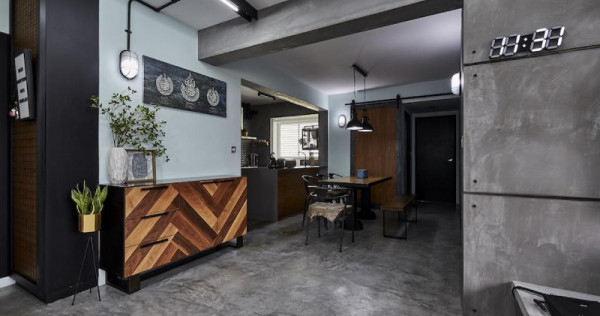
The design of this 3Gen flat showcases the perfect balance between an industrial aesthetic and splashes of colours.
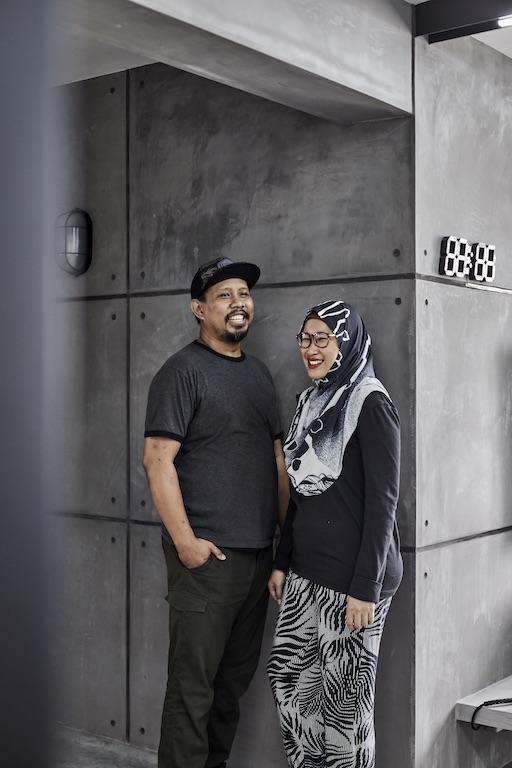
For Irwan Bin Abu Satamin, the raw, “cold” vibe of an industrial interior was something he’d always wanted in his home. His wife Noraini Binte Misnawi preferred a less sterile look with colours for a calming, cosy ambience.
PHOTO: Home & Decor
With these requests in mind, Landren Lim, founder and creative director of Mesh Werk Studio, designed a home with industrial-style elements, as well as light blue and mint-hued walls, and some wood-tone finishes.
“We wanted our home to feel spacious,” shares the couple.
Many walls, including the one separating the kitchen from the dining room, and that between the living room and what is now the cats’ room, were hacked to achieve a bright and airy feel in the home.
SINGAPORE: He can’t speak properly, but Eugene’s* doleful eyes say it all. He wants more cake.
The little boy climbs onto Alan Tan, or “daddy’s” lap, stretches out his arms for the box of kueh right at the tip of his hands. Mr Tan, with his hands on Eugene’s waist, pulls him back gently. He doesn’t chide the child or raise his voice.
Ever since Mr Tan and his wife Elizabeth Choo, learnt of Eugene’s conditions, they vowed to be the most patient and gentle they could with him.
The three-year-old is one of 92 children with developmental needs out of 542 foster children in Singapore as of June 2019, according to data from the Ministry of Social and Family Development (MSF). While the ratio of foster children with developmental needs has remained at about 15 per cent over the last three years, MSF said it can be challenging to place them in foster care because they may require higher levels of care and commitment.
Eugene was diagnosed with global developmental delay in 2017 and autism in May 2019. “We feel sad seeing this child go through so many hurdles,” Mr Tan said.
“FELT LIKE THIS WAS FATED”
Mr Tan and Mdm Choo, 46 and 47 respectively, first heard about fostering in 2010. Mdm Choo’s interest was piqued after she listened to an interview with a foster family over the radio. She told her husband, but they shelved the idea. They weren’t feeling up to the task yet.
Four years later, Mr Tan was volunteering at the then-Canossaville Children’s Home when he was told about the local fostering scheme.
Foster parents Alan Tan and Elizabeth Choo decided to foster knowing they could help vulnerable children through the programme. (Photo: Rachel Phua).
Mr Tan broached the topic with his wife. This time, they went ahead. In 2015, they began the application process, and underwent foster care training in 2016. They brought Eugene home in September that year.
MSF said that details about Eugene’s background cannot be revealed to protect his identity, but they shared that children are put up for foster care either because they have been abused, neglected or abandoned. In other cases, their parents are unable to care for them due to imprisonment, physical or mental illness, or one or both parents are dead.
A week before they brought Eugene home, Mr Tan and Mdm Choo spent a few hours every day at KK Women’s and Children’s Hospital, studying how the nurses fed him, changed him, bathed him. The boy was born three months early with breathing difficulties. They had to learn to be extra careful with him.
It was love at first sight. “When we met him in the hospital, we felt like this was fated.” Mdm Choo gushed. “When you carry a child, sometimes they would feel uncomfortable or keep fidgeting. But (Eugene) very calmly fell asleep in my arms.”
“We were very excited to see him,” Mr Tan added. He cracks a smile. “The other thing is somehow he resembles me a bit … the nurse mistook me for the dad.”
DISCOVERING HE HAD SPECIAL NEEDS
Taking care of Eugene gave the married couple of 19 years a new lease of life, even if it meant a life throwing them curveballs. It wasn’t the 3am alarms to feed Eugene as much as his subsequent hospital admissions due to complications resulting from being born premature.
When Eugene turned a year and a half old, the couple filled up a questionnaire during one of their regular reviews at the paediatrician. He had not been meeting milestones for a typical 18-month-old, such as not being able to take off his clothes or understand simple commands.
He was diagnosed with GDD, an intellectual disability where a child under five is significantly delayed in two or more areas of development, including their motor skills and language abilities.
The couple’s friends also pointed out on multiple occasions that Eugene wasn’t making eye contact in his interactions with people. A psychologist at KK Women’s and Children’s Hospital diagnosed Eugene with autism during a medical review in 2019.
Discovering Eugene’s conditions brought on heartache after heartache for his foster parents. Instead of giving up, Eugene’s conditions “triggered us to give better and more support.” Mr Tan said.
“This boy really needs lots and lots of care.”
Friends and family have also been nothing but caring, organising playdates and offering to look after Eugene when the couple needed a respite. On weekends at his grandparents, he gets his fair share of his favourite food – roasted pumpkin, broccoli and carrots.
Given Eugene’s conditions, she and her husband realised they had to raise him differently from children without special needs, Mdm Choo said.
“For example, if you have to tell a child (without special needs) something three times, with him you probably have to tell it 10 times. He might still not get it sometimes.”
Mdm Choo said that Eugene has a photographic memory – he is able to match the puzzle pieces in the right sequence after doing it once. (Photo: Rachel Phua).
The Tans try to work around Eugene’s visual and auditory learning style, Mdm Choo said. They have three of the same high chairs – one in their flat, and one each in their parents’ homes – so that they can drill into Eugene where he should sit come mealtime.
Dinners are no longer spent in front of the television as well. The family sits at the dining table to set a good example, otherwise “he will copy you”, said Mr Tan.
Whether it is brushing their teeth or showering, parent and child have to do it together. Mdm Choo even used to sing songs that described the activities they were doing, given Eugene’s fondness for music.
Shyly, she warbles out one of the tunes: “This is the way I brush my teeth.”
EXTRA HELP FOR SPECIAL NEEDS CHILDREN
Under the MSF fostering scheme, each family is assigned a foster care officer. Those looking after children with special needs also receive a higher fostering allowance to help defray the cost of raising the child.
MSF provides the foster parents with a monthly allowance S$1,114 for every child with special needs fostered. A child without special needs receives $936. The allowance helps to defray the daily expenses of the child such as food, clothing, education and tuition.
The most common causes of lacerations include children falling down and hitting hard objects, or colliding with other children. (Photo: Unsplash/Alaric Sim)
Foster children are also given priority access and maximum subsidies for the ministry’s disability services and schemes, and a medical fee exemption card is issued to cover the child’s medical expenses at polyclinics and government hospitals, the ministry said.
Besides the usual courses for foster parents to-be, which includes learning how trauma impacts children and the importance of attachment, Mr Tan and Mdm Choo also attended courses conducted by the Social Service Institute on how to care for children with special needs in September and October last year.
THE GIFT OF AFFECTION
For the past seven months, Eugene has been attending special education school. While he still needs to improve his motor skills – he can’t tear a piece of paper or blow a candle out – he has learnt to put on his own shorts and socks now and count to a hundred.
He can express some emotions as well, even if he doesn’t know many words.
“Baby cry” is his way of saying he is upset, said Mr Tan.
And when he’s happy, it’s just “happy”, but with much smiling and dancing, Mdm Choo added.
File photo of two-year-old children. (Photo: AFP/Eric Cabanis)
Eugene has also become more affectionate, to his foster parents’ delight. Mdm Choo recalls one night in June after she came home from dinner. She walked into her room, and Eugene, after a hug, called out “mummy”.
Two months ago, when Mr Tan was playing with Eugene, the boy suddenly stood up and walked towards him and said “I love you”.
Mdm Choo’s face lit up as she described these encounters. “Wah, for him to show affection on his own.”
WANTING TO “HELP MORE CHILDREN”
Three and a half years with Eugene has brought Mr Tan and Mdm Choo, who have no biological children of their own, unprecedented joy. But they are also aware of the inevitable.
The ultimate goal of fostering is for the children to be reunited with their natural parents, MSF said. While under foster care, the children are allowed to regularly meet up with their natural parents.
Eugene meets his natural parents once every two months, said the Tans. He calls them “mama” and “papa”.
Foster parents bring the child to an agreed meeting place – usually at MSF or a family service centre – and leaves him or her to spend some time alone with their biological parents.
Mr Tan and Mdm Choo say they are ready for Eugene to eventually reintegrate with his birth family, even if it will be a bittersweet farewell.
In fact, they chose fostering instead of adoption because they felt this could “help more children”, Mdm Choo said.
For now, they will stick to one as they are still learning how to manage Eugene and his disabilities, but Mr Tan said they are open to welcoming others in the future.
Parent and child at a playground in Punggol. (Photo: Gaya Chandramohan)
Most children in vulnerable circumstances who are not under foster care will be placed under residential care in homes such as the Boys’ Town and Muhammadiyah Welfare Home.
MSF said that placing vulnerable children, especially those with development needs, into residential care is the last resort.
If a child with special needs is placed into one of these homes, it will ensure the home’s structure and programmes suit the child and the staff are trained to care for children with special needs, the ministry said.
As of June 2019, there were 659 children in residential care, said MSF. About 10 per cent of them have developmental needs.
Beyond the satisfaction finally becoming parents has brought them, Mr Tan and Mdm Choo say they have come to appreciate people of all abilities.
“Initially, we asked why this happened to him. Why can’t he be a normal child,” said Mdm Choo. “But we’ve come to accept the fact that everyone is born differently.”
“In fact, this compels us love him even more (because) he deserves a lot of love from us”.
*The name of the foster child in this story has been changed to protect his identity.



.jpg "grabpda2-1.jpg")