Home Blog Page 4637

This is Home, truly, for HIV kids

0

Three medical students from S’pore write book and raise funds for Chennai orphanage

They were three first-year medical students who had set their sights on Project Naadi, an overseas community project which included a stay at an orphanage for children with HIV in Chennai, India.

All three faced one stumbling block: disapproving mothers filled with misgivings because they did not want their children exposed to the virus which causes Aids.

Fuelling their parents’ paranoia was ignorance about how HIV is spread.

Miss Elampirai Elangovan sums it up for Mr Yang Kaymond and Miss Nadia Sim when she says: “My mother was not supportive of the trip at all. But she is a mother; I guess her instinct is to protect.”

It took a lot of persuasion and, in Miss Sim’s case, negotiation, before they could go.

The trip changed the trio’s lives.

What they saw and experienced at Shelter Home – set up by a man who juggles a few jobs to look after 43 abandoned children with HIV – in 2012 moved them so much they have gone back on two more occasions.

On their last trip in 2014, they spent 10 days talking to the founder, caretakers and children at the shelter.

With the help of a few friends, they wove these accounts into a book, Happy Long Life To You. A supportive mentor lent them nearly $6,000 to have the book printed and distributed.

The three medical students, now in their fourth year at the Yong Loo Lin School of Medicine at the National University of Singapore, hope to use the proceeds from the book sales for Shelter Home.

They also want to highlight the stigma and discrimination against HIV patients by celebrating the strength and selflessness of founder Solomon Raj and main caretaker Uma Kumar, a village girl who contracted HIV after she was tricked and coerced into prostitution. Her story makes up a big chunk of the book.

“What Uma went through, what she had to do to become what she is today, her strength and her beliefs sum up what Shelter Home is about. It is about the light at the end of the tunnel,” says Miss Sim, 23.

Bright, articulate and brimming with youthful zeal and conviction, the trio signed up for Project Naadi in 2012, intrigued by its slogan: To see the unseen, to touch the untouched and hear the unheard.

Entirely led by student volunteers, the project started five years ago by working with rural communities and marginalised groups – from gypsies to lepers and those with HIV – in India. Three years ago, it came into the fold of Seeds of Nation, an outfit started by doctors supporting community work in India, China, Nepal and Thailand.

The second of three children of a former IT manager and a housewife, Mr Yang says he had at least half a dozen community projects to choose from as a first-year medical student.

“I went to some of the trip briefings. They usually conducted interviews to weed out applicants. I found that rationale a bit skewed. Project Naadi didn’t require interviews. The leaders feel that if you have the heart to serve, no one has the right to tell you that you can’t do it. I agree,” says the 24-year-old, whose two siblings are also in university.

Nodding her head vigorously, Miss Sim adds: “Some of the interviews I went to were strange. They asked me questions like ‘Would you rather be a spoon or a fork?’

“I was thinking to myself, ‘What sort of OCIP does that?'” says the only child of a retired engineer and a housewife. OCIP stands for overseas community involvement programme.

Unlike the other two, Miss Elangovan, 23, was not new to OCIPs, having gone on several during her years in Raffles Girls’ School and Raffles Junior College.

“Those trips were more educational and a lot of time was devoted to exploring the environment. I wanted to see if it stayed true to its intent for participants to form a relationship with strangers,” says the eldest of three children of a news vendor and a housewife.

While she and Mr Yang were not too worried about interacting with children with HIV, Miss Sim lets on that she was fearful in the beginning.

“I heard seniors saying that if you have a wound, you have to dress it properly. I even heard stories of people using duct tape. I was like ‘Oh my god, oh my god’ because I have many cuts all over,” she says, as her two friends break into peals of laughter.

More than 40 people, including students from other faculties, went on that first trip to Tamil Nadu in 2012. Before arriving at Shelter Home where they spent three days, they worked with and taught village children and visited a shelter for those suffering from leprosy.

The denizens of Shelter Home moved them for several reasons.

All the children are HIV-positive, and are in the home because they have lost their parents to the disease or have been abandoned because of their condition.

Before arriving at the shelter, one little girl was so sick from tuberculosis that she coughed up blood all over the hospital floor when she was taken there. Her grandfather, who had been looking after her, had difficulty walking and could not get her the anti-retroviral medication that she needed.

Miss Elangovan says: “They look like normal kids and talk like normal kids. But they know they are not like normal kids. They are very aware they have HIV and will run far away from you if they get a cut. It’s sad because six-year-olds should not be like this.”

All three agree that the home is exceptionally run, with a nurturing and loving atmosphere.

It is also why they find Mr Raj, 48, hugely inspirational.

His parents, both teachers, wanted their only son to pursue medicine but he left Hyderabad for Chennai to study theology instead.

He first thought of adopting a special needs or HIV-positive child when he and his school principal wife remained childless after eight years of marriage.

But before he could act on the idea, his wife conceived. The guilt of not adopting, however, bugged him. So when a friend rang him up and told him about Arputharaj, a dying child who had seen six HIV-related deaths in his family, he could not say no.

To keep Arputharaj company, Mr Raj, who has two children of his own, adopted another HIV-positive child. News spread and soon people were knocking on his door, asking him to save other HIV-positive children.

Miss Elangovan says: “It left him thinking, ‘Why not? What makes this kid more or less deserving than the next one? I’m just going to do my best.'”

That was how Shelter Home started in 2006. It has not been an easy undertaking and Mr Raj – who teaches theology and sits on the boards of a couple of non-governmental organisations – often has to dig into his own pockets to keep his shelter going.

The three medical students feel that he could not have picked a better person to run the shelter than Ms Kumar, affectionately nicknamed Amma by the children she looks after.

Her parents died in an accident when she was very young, leaving her and two sisters in the charge of her grandparents.

Because she wanted to feed the family and craved the education she never had for her siblings, she believed two agents who went to her village promising jobs at a sewing factory in Mumbai.

She was sold to a brothel instead and contracted HIV not long after.

The brothel mistress threw her out and Ms Kumar went through hell – illness, abuse and ostracisation by her family and her village – before she ended up in a shelter in Chennai.

Her diligence and her loving nature saved her, and she wound up in Shelter Home where she is now protective mother hen to nearly 40 children. The 31-year-old is now married to a fellow caretaker at the shelter and gave birth to a healthy baby girl last year.

Mr Yang says: “Three days there was enough for me to know I wanted to come back.”

Their decision to volunteer at Shelter Home the next year did not go down well with their mothers, especially Miss Sim’s.

“She lost it. I’m an only child and she sheltered me like crazy. When she saw pictures of me with one of the kids, she asked me why I was so close to the child,” she says, adding that her father, however, was very supportive of what she did.

She was, however, insistent about returning.

“Before the first trip, I was asked to write down what I wanted to achieve from the trip. I wrote down that I wanted to learn how to love and care for a stranger. I got that.”

Miss Sim adds: “The children in the shelter really behaved like a family. It was such a beautiful thing to see, considering their backgrounds. Some had parents who didn’t want them.”

The idea of writing a book to raise funds came after their second trip in 2013. They wanted to do something more meaningful beyond washing cars and selling newspapers.

Their mentor, Dr Chua Ying Xian, a public health physician, encouraged the idea, even sponsoring their air tickets for them to go back to Shelter Home to do their interviews. He even lent them the $5,900 needed to get the book produced.

Happy Long Life To You comprises nine chapters. The trio wrote one chapter each and roped in five of their friends to write the remaining chapters.

“We worked out the structure and the chapters and came up with pointers for every writer to follow,” says Miss Elangovan.

It took nearly two years to complete the book, published by Ethos.

Miss Sim says with a grin: “My mother came around. She is very proud now that the book is out. She has been sending it to all her friends.”

The three friends hope to raise enough funds for Mr Raj to buy a plot of land not far from the shelter.

Mr Yang explains: “Right now, under Indian law, those who are 18 and above cannot live in the shelter. Uncle Solomon hopes to buy the land so that he can house the older kids and give them technical training.”

Like his two friends, he says he has learnt much from Mr Raj and Ms Kumar.

“My multiple returns to Shelter Home have become less of an OCIP for I have found a home in Shelter.

“I have personally witnessed the unfortunate stigma against individuals living with HIV. With my pen, I hope to lend a voice to the underprivileged.”

kimhoh@sph.com.sg


This article was first published on March 6, 2016.
Get a copy of The Straits Times or go to straitstimes.com for more stories.

Image: 
Publication Date: 
Monday, March 7, 2016 – 06:30
Keywords: 
Send to mobile app: 
Source: 


Story Type: 
Others

Source link

Hello, my name is Abcde

0

Millennial parents are creating tongue-twisting names for their children

When 24-year-old Rachel Siu was looking for a name for her son, she went to Greek mythology for inspiration, searching through names of gods and emperors for something “bold and different”.

The mass communications student’s online search led her to the Greek god of flowers, Dianthus, whose spelling she modified to Dyanthus for a twist. She, her husband and son currently live in Perth, where she is studying.

The name is supposed to be pronounced Dee-an-thus.

“But most people mistakenly call him Die-an-thus,” she says. “His grandparents and my husband’s Chinese-speaking side of the family also prefer to call him Chengkai, which is his Chinese name.”

The two-year-old boy is also having a little trouble saying his own name, but his mother has no regrets.

“His name is a conversation starter and I’m sure he will grow up to appreciate it. Rest assured, I’m going to name my future kids something unique as well,” she says.

For many millennial parents, “unique” is the magic word when it comes to naming their children.

Drawing inspiration from diverse sources such as the hit HBO fantasy series Game Of Thrones and popular celebrities, and freely mixing up the spelling to create tongue-twisting, phonetics- defying new words, these parents want a name that no other kid would share in the playground.

So goodbye to John and Jane, and hello to Matz, Ckash, Zoen, Zeremy and Abcde (pronounced Ab-si-dee) – which are not typographical errors, but the tricky names that Ms Sherlyn Chan, 28, a teacher at enrichment centre The Learning Lab, has encountered in her young students.

Having worked for five years now, she is used to these creative new names.

“Some names are trickier to pronounce and I usually double- check with the child to make sure I get it right,” she says. “But ulti- mately, these are also the names that leave an impression. I guess that’s why parents give their kids such unique names in the first place – they want their children to stand out.”

More people around the world are giving unconventional names to their babies. In a report about millennial mums released by Goldman Sachs last May, research showed that fewer babies are being given “popular” and “traditional” names.

In 1940, the top five male baby names accounted for 20 per cent of all male babies born in the United States. In 2014, that figure dropped to four per cent.

The report attributes the change to “greater diversity among parents” and an “appetite for more differentiated and unique brands”.

Some parents adopt “special” names wholesale.

Ms Rosemary Chiang, 31, a personal assistant, decided to name her son Rhaego (pronounced Rah-he-go) after a Game Of Thrones character because she was drawn to the warrior-like strength of Rhaego’s mother, Daenerys Targaryen, on the show.

“Prince Rhaego does not survive long on the show, but that doesn’t really matter to me because I’m not superstitious at all,” she says. “I was more intrigued by how unique the name was and the fact that on the show, he was the son of my two favourite characters. That was quite special to me.”

Other parents choose to modify a traditional name by changing a letter or two because, well, a Rozze by any other spelling would smell just as sweet.

For four-month-old Zyeaad (pronounced Zi-yad), his housewife mother Farah Tan says she was drawn to the Arabic name Ziyad, which means abundance.

“To keep things interesting, we changed the spelling to Zyeaad so that it looks unique,” she says.

Despite a parent’s best intentions though, children do not always love their special names.

University student Annastassha Evangelis Dodwell, 20, whose name was inspired by the name Anastasia and supermodel Linda Evangelista, remembers disliking her name immensely as a child and asking often to have it changed.

“I’ve grown to love my name now, but I really didn’t when I was younger. Not only was it difficult for people to pronounce, I also thought it was just too long and troublesome to write,” she says. Her father is Sinhalese and her mother is of Malay-Chinese parentage.

Digital marketer Ailsa Khee, 28, was sick of people mauling her name with weird pronunciations, so she asked her friends and colleagues to call her by her Chinese name, Hui Jia.

Her name is of Scottish origins and pronounced A-li-cia. She says: “People stumble over my name 99 per cent of the time, often calling me Elsa or Ali-sah. There have been so many variations of my name that I’ve lost count.”

Still, some children have owned their stand-out names with pride.

Take musician and actor Zephyr Khambatta, 28, who says that his consonant-heavy name has given him a slight edge in the cut-throat entertainment industry. That said, his name is at least a real word: Zephyr (pronunced “zair-fur”) means gentle breeze.

He says: “I am so used to correcting people’s pronunciation of my name.

“But as a musician and actor, I see the benefits of having a unique name and surname. People remember me and my work, thanks to my name. It has become synonymous with my personal brand.”

avarma@sph.com.sg


This article was first published on March 6, 2016.
Get a copy of The Straits Times or go to straitstimes.com for more stories.


Image: 
Category: 
Publication Date: 
Monday, March 7, 2016 – 06:30
Send to mobile app: 
Source: 


Story Type: 
Others

Source link

Secluded school believed to be home to ISIS supporters

0

SCHOOL STANDS OUT

Pondok Pesantren Ibnu Mas’ud is tucked deep in the hills near Mount Salak, an eroded volcano in Indonesia, not far from Bogor city in West Java province.

The pesantren, or Islamic boarding school, in Sukajaya village is not on many maps. It is accessible only by a steep mountain dirt trail barely wide enough for a small car or pick-up truck.

Locals, however, know it well because of its white-washed perimeter walls and the wrought-iron gate that secures a handful of buildings in the compound.

Ibnu Mas’ud was in the cross hairs of Indonesia’s counter-terrorism forces after the Jan 14 attack in Jakarta, purportedly due to its ties to jailed cleric and radical ideologue Aman Abdurrahman. He was said to have ordered the terror attack from Nusakambangan prison.

Heavily armed commandos from Detachment 88 – also known as Densus 88, the Indonesian police’s elite counter-terrorism unit – raided the complex the day after the siege on the capital.

The police did not say if anyone was arrested during that operation.

However, researchers from the Centre for Radicalism and Deradicalisation Studies now believe the school is home to many supporters of the Middle Eastern terror group Islamic State in Iraq and Syria (ISIS). At least a dozen of them have travelled to Syria to join elements of the group.

Three members of its staff and a teenage student were stopped in Singapore and sent home on Feb 21.

They “were deported to Indonesia after investigations revealed they had plans to make their way to Syria to fight for ISIS”, said Singapore’s Ministry of Home Affairs two days later.

However, Mukhlis Khoirur Rofiq, 22, his brother Muhammad Mufid Murtadho, 15, Risno, 27, and Untung Sugema Mardjuk, 48, were released on Feb 24.

All four were questioned by Densus 88, but they could not be detained further because, under the country’s anti-terror laws, they did not commit any offence.

The Sunday Times visited Ibnu Mas’ud last week and met Mr Jumadi, a staff member who said he handles the school’s community relations. Mr Jumadi, who goes by a single name, confirmed that the four were from Ibnu Mas’ud, but claims he was not aware of their plan to travel to Syria. He said they were in Singapore and Malaysia to “jalan jalan” or go on a tour.

When asked if they have been radicalised, he said: “If they are radicals, the authorities would not have let them go, and I also don’t believe they wanted to join ISIS.”

Mr Jumadi, however, also said the four have since been expelled from the school. He earlier claimed they have not returned since they left in mid-February.

He also refused to explain why they were kicked out and declined to answer when asked about the school’s leadership and funding.

He said the curriculum at Ibnu Mas’ud covers basic mathematics, the Quran and the Hadith, a collection of sayings of Prophet Muhammad. Mr Jumadi added that the co-ed school has 180 boarders between five and 15 years old.

It can take in 80 more students once the construction of a new block is completed.

When The Sunday Times arrived at the school last week, afternoon prayers were in full swing in what looked like a newly built mushola, or small mosque, within its grounds.

The school’s concrete complex was in stark contrast to the rest of the village, which is mainly comprised of rickety wooden houses.

There was a Honda Jazz hatchback and a pick-up truck – both spanking new – parked in the compound guarded by a young watchman who registered all visitors.

Ibnu Mas’ud stands out in the community not only because it is relatively well constructed and new – it was built in 2012 – but also because all its boarders and staff are from out of town, said Mr Ajud, head of residents’ affairs in Sukajaya village, which has a population of about 10,600.

“The pesantren is not open to locals, but neither are any of the parents here keen to send their children to the school because it does not follow a formal education system,” he said.

There also seems to be a high turnover of teachers at the school, added Mr Ajud, who oversees the registration of newcomers in the village.

“Since it was established, 98 teachers from East Java, Central Java and all over have come and gone,” he said.

Village officials like Mr Ajud and Mr Udin Leo, who is in charge of civil security in Sukajaya, have long been suspicious of Ibnu Mas’ud and its adult occupants.

Mr Udin said he had tried to block the school’s construction years earlier after its founders refused to answer some questions on its teachings and leadership.

He said he is not surprised that people from the school are linked to terrorism.

“I know this villager named Acong who did time in prison for burglary,” Mr Udin recalled.

“Three years ago, when Acong and I were walking by the school, someone from the inside called out to him.

“When I asked him later how they knew each other, Acong said they were together in prison and the man who called out to him from Ibnu Mas’ud was a convicted bomb-maker.”

tkchan@sph.com.sg

wahyudis@sph.com.sg


This article was first published on March 6, 2016.
Get a copy of The Straits Times or go to straitstimes.com for more stories.

Image: 
Category: 
Publication Date: 
Monday, March 7, 2016 – 03:00
Send to mobile app: 
Source: 


Story Type: 
Others

Source link

Japanese actor Watanabe returns to Broadway after cancer surgery

0

Image: 
Publication Date: 
Sunday, March 6, 2016 – 15:35
Send to mobile app: 
Source: 


Story Type: 
Others

Source link

When marriages end: No hiding now for deadbeat dads

0

Appointment of maintenance record officers seen as big help for ex-wives

Men who refuse to pay their former wives maintenance will now face more pressure to do so.

The Sunday Times looks at the roles maintenance record officers empowered by changes to the law might play, as well as stepped-up protection for vulnerable women in crisis situations, and what more needs to be done.

GETTING DEFAULTERS TO PAY UP

The law was last strengthened in 2011, to better enforce maintenance orders by giving the courts the option of imposing more sanctions on defaulters. But the Government recognises that the problem is a hard one to eradicate.

Enter maintenance record officers, introduced in the latest round of changes. These officers can get information on parties’ finances. This will help the courts identify recalcitrant defaulters and impose harsher penalties against them.

Since 2011, the number of applications to get former spouses to pay up has fallen slightly, but remains high. In 2011, there were 2,979 such applications. This number fell by about 7 per cent – or 226 cases – to 2,753 last year. The majority of these cases were filed by former wives. The rest include women who are still married and their children.

The defaulters’ recalcitrance often stems from deep-seated anger and bitter acrimony, say family lawyers who deal with such cases.

Lawyer Malathi Das, president of the Singapore Council of Women’s Organisations, says it is sometimes a tit-for-tat tactic against wives who deny access to the children. “Or it could be that the children don’t want to see their fathers, and the men blame the wives for that and refuse to give maintenance,” she adds.

Lawyer Tan Siew Kim says: “It’s sad that some men think that they are ‘teaching their wives a lesson’ by deliberately withholding and refusing to pay maintenance.”

These men completely ignore the fact that maintenance is for their children – including for their essentials such as school fees, food and medicine – and that their act of “punishing” their wives will affect the lives of their children, she adds.

Some go to great lengths to avoid paying maintenance, with some men quitting their jobs to avoid paying, says Ms Das.

Ms Tan says she has seen men deliberately transfer all their shares in their businesses to their siblings and relatives and downgrade from director to manager, even slashing their declared income from five figures to around $2,000 – to avoid paying adequate maintenance.

The move to appoint maintenance record officers takes aim at these defaulters by reducing the burden of proof of women to show their husbands’ or former husbands’ finances.

This sends a very strong signal that the authorities are very serious about enforcing maintenance payments, says Ms Das.

It also saves the women agonising trips to the courts every few months to get the men to pay up.

Lawyers suggest that the Government go a step further and allow defaulting men’s wages to be taken to pay their maintenance.

For example, a portion of their monthly salary can be mandated to be set aside like Central Provident Fund savings, says lawyer Gloria James-Civetta. Currently, a woman has to wait for her former husband to default on payments.

MORE PROTECTION FOR WOMEN

Separately, Parliament also passed changes that aim to better protect victims of family violence.

Some raised questions about the implementation, such as how to decide that someone is a “fit individual” to care for the victim.

The changes passed include allowing the Ministry of Social and Family Development’s director of social welfare to place vulnerable females under 21 in the care of “fit individuals”, and allowing married or formerly married people under 21 to apply for personal protection orders (PPOs), instead of requiring others to apply for it on their behalf.

Regarding the first change, Social and Family Development Minister Tan Chuan-Jin explained that this was a new community- based care option, in addition to existing options of residential facilities and shelters.

MPs and welfare groups were concerned about the “overly vague, broad and open-ended” powers given to the director to detain a girl against her will.

For instance, one clause in the new law reads: “Where a girl has been detained in a place of safety, or committed to the care of a fit individual, at the request of the girl’s lawful guardian, the girl may be detained or committed for such period as the director determines is necessary for the girl’s rehabilitation, despite any request made by the girl’s lawful guardian for the girl’s early release.”

Nee Soon GRC MP Louis Ng said in Parliament on Monday: “It is problematic that girls can be detained against their will when they have not committed any criminal offences, and in fact are in vulnerable situations.”

Ms Jolene Tan, programmes and communications senior manager at the Association of Women for Action and Research (Aware), says: “It is troubling that our response to girls in vulnerable situations is to provide for their open-ended detention against their will, rather than offering adequate options for support that they can voluntarily access.”

In response to Mr Ng, Mr Tan said: “All cases which come to the attention of the director are thoroughly investigated. A girl will be admitted to a place of safety only if the director is satisfied it will be in her best interests.”

When Mr Ng asked if the decision to detain is made solely by the director or a team, Mr Tan’s reply was: “The director would be advised by the staff and that’s the approach we’re taking for this.”

Mr Ng tells The Sunday Times that he was informed later that the decision will be reviewed every six months by a committee.

PROTECTING VICTIMS OF VIOLENCE

Another change is to allow married or formerly married people under 21 to apply for PPOs for themselves and their children. Previously, a parent or guardian had to apply for this on their behalf.

But experts called for the criteria to apply to be extended further, noting that everyone under 21 should be allowed to apply if they are victims of violence.

Mr Ng and Aware’s Ms Tan also want the application criteria to be extended to victims of domestic violence, not just victims of family violence. Ms Tan says: “It should be possible for not just live-in partners, but also tenants or domestic workers, to obtain PPOs against anyone in their household.”

goyshiyi@sph.com.sg

charyong@sph.com.sg


This article was first published on March 6, 2016.
Get a copy of The Straits Times or go to straitstimes.com for more stories.

Image: 
Publication Date: 
Sunday, March 6, 2016 – 21:00
Send to mobile app: 
Source: 


Story Type: 
Others

Source link

When marriages end: Should more men be allowed to seek maintenance?

0

Last year, Justice Choo Han Teck heard the request of a 48-year-old regional sales manager seeking $120,000 in alimony from her former husband, a 47-year-old senior prison officer.

She earned slightly more than him. But under Singapore’s maintenance laws, which allowed only women and not men to apply for maintenance from their former spouses, she was eligible to seek maintenance from him.

Taking aim at this, Justice Choo questioned the right of every woman to seek maintenance regardless of circumstances.

This “unalloyed right” spoke to “patronising gestures” in the Women’s Charter that “belie deep chauvinistic thinking”, he said in his judgment.

The case resurfaced as an example cited in Parliament last week during a debate about gender equality in maintenance laws, as one of several changes to the Women’s Charter.

With the changes to the law passed last Monday, men can now apply for maintenance. But, unlike women, they can seek maintenance only if they are incapacitated – that is, unable to support themselves whether due to illness or disability.

A small group of MPs – four of the 10 who spoke – called for this to go further and for maintenance to be based on need, not gender.

But their opponents countered that their call for gender neutrality comes in a society where the man is still expected to be the main breadwinner in many households.

Additionally, broadening the law to allow more men to claim maintenance might be a double whammy for ex-wives already struggling to provide for themselves and their children, they said.

THE CASE TO INCLUDE MORE MEN

Non-Constituency MP Daniel Goh argued that in the spirit of gender equality, all ex-husbands should be allowed to apply for maintenance. He pointed out that the call for this was first raised back in 1996.

But the Government’s position has remained that it is the duty of a husband to maintain the wife.

Minister for Social and Family Development Tan Chuan-Jin reiterated this on Monday when he said: “Our society is not quite ready for gender neutrality in spousal maintenance.”

But Dr Goh disagreed: “This is a double irony since the Women’s Charter was enacted regardless of whether traditional polygamous society was ready for the modern nuclear family.”

He was referring to the Women’s Charter’s outlawing in 1961 of poly- gamy outside Muslim marriages.

“Gender equality was enshrined in the charter despite tradition or the readiness of society,” he added. MPs and observers also cited the trend of more men staying at home to look after their kids these days, with wives going out to work.

In 2014, 10,200 male Singaporeans and permanent residents cited “family responsibilities”, such as childcare, care-giving to family members and housework, as the main reason for not working – triple the number from 2006.

Of these, 1,600 cited childcare as the main reason for being out of the workforce. This was more than double the number in 2006.

Given their sacrifices for the family, Marine Parade GRC MP Seah Kian Peng said: “When it comes to recompense, men should not be unjustly denied.”

Ms Jolene Tan, programmes and communications senior manager at the Association of Women for Action and Research, agreed as married individuals who take on domestic and caregiving work make economic sacrifices which boost their spouse’s earning power.

“These effects last even if the marriage ends. Spousal maintenance is only fair in such cases, regardless of gender,” she said.

REASONS FOR THE CHANGE

The criteria for a divorced man to qualify are very strict, so only a very small pool of men will benefit. Only a man who is incapacitated before or during the course of the marriage, unable to earn a livelihood and unable to support himself, can claim maintenance.

He must also be unable to support himself at the time when the maintenance application is heard.

East Coast GRC MP Jessica Tan said she had seen several cases during her Meet-the-People Sessions of wives leaving their husbands after they were diagnosed with serious illnesses like cancer – leaving the men with no way to support themselves.

Lawyer Koh Tien Hua of Harry Elias Partnership said the change in the law will benefit those husbands in genuine need. “This is not ‘window dressing’ or merely symbolic as it addresses a real concern of a spouse who is incapacitated and has no possibility of earning an income,” he said.

NOT ALL MEN EQUALLY DESERVING

Five of lawyer Gloria James- Civetta’s previous clients have already called her to ask what will happen to them as their aged ex-spouses are ill.

These are women whose husbands are penniless after being cheated out of their savings, having left them for younger, foreign women, she told The Sunday Times.

These women are now worried that their broke exes will now unfairly pursue them for maintenance.

MPs in Parliament spoke of this double whammy for women already struggling to support their families.

Mr Tan himself acknowledged this concern, but said that the courts will look at all the facts of each case.

Just because a man is eligible to claim maintenance does not mean he will get it, he added.

Another argument against extending qualifying maintenance to more men is that the reality is that the burden of child-rearing and caregiving in Singapore falls primarily on women.

The growing group of house husbands is still a small minority.

The 10,200 Singaporean men who cited family responsibilities as the main reason for not working in 2014 must be compared to the 190,900 women who in the same year cited the same reason for not being in the labour force.

“While many Singaporean women have made good progress over time, this has not been uniform across all groups of women,” said Jurong GRC MP and family lawyer Rahayu Mahzam in Parliament.

“At this juncture, there is still some way to go in developing parity of financial status between men and women, especially across various income levels.”

Others also argue that alimony should not be taken as an entitlement, whether for men or women.

Mr Koh said: “Maintenance for wives is not a free pass to be paid a ‘salary’ from the spouse.

“The law still encourages a wife to seek gainful employment where possible and the courts are enjoined to take into account earning capacity.”

As such, the amendment is a pragmatic one, and does not signal a sweeping fundamental change in principle towards gender equality in maintenance laws – yet. As Mr Tan noted: “While attitudes may be gradually shifting towards gender neutrality, it’s best to not rush and force the pace.”


This article was first published on March 6, 2016.
Get a copy of The Straits Times or go to straitstimes.com for more stories.

Image: 
Publication Date: 
Sunday, March 6, 2016 – 21:00
Send to mobile app: 
Source: 


Story Type: 
Others

Source link

When marriages end: Protecting children caught in divorce

0

When couples split up, their children’s welfare can get lost amid the feuding. Insight looks at a law change aimed at addressing this problem.

A young girl, caught in the middle of her parents’ divorce, was told by her paternal grandmother that if she really loved her dad, she should stop thinking of her mum.

“The little girl grieved over this, but hid it from her dad and grandmother. She didn’t want to disappoint them,” Social and Family Development Minister Tan Chuan-Jin said last Monday in Parliament.

He was making the case for changes to the law to better protect children caught up in divorce.

In a key amendment to the Women’s Charter, couples who want to split up, and who cannot agree on matters such as co-parenting plans, will have to attend a mandatory parenting programme – even before filing for a divorce.

Currently, parents of under-21s must attend compulsory mediation and counselling only after filing for divorce, under the 2011 amendments to the Women’s Charter.

The new programme involves a two-hour session with a counsellor. To start later this year, it is initially for parents with at least one child under 14, but will later be extended to those with a child under 21.

But is a pre-divorce parenting programme really necessary? Some observers worry this makes the divorce process more onerous, and poses yet another hurdle for abuse victims desperately seeking to exit ugly marriages.

FOCUS ON THE CHILD

Latest figures show that in 2014, marriages hit a five-decade high of 28,407, while there were 7,307 divorces and annulments.

Divorces are becoming more common among recent cohorts, said Mr Tan, and that was one of the social trends that led his ministry to make the latest review of the Women’s Charter.

By the 10th year of marriage, 16.1 per cent of those who married in 2003 had their marriages dissolved, double that of 1987.

Court figures also show that there were 6,017 divorce cases in 2014, a 45 per cent rise from 2000.

Among the cases in 2014, half of the couples wanting to split had at least one child younger than 21 at the time of divorce.

Research shows children can get depressed when their parents split. There are also repercussions on society. A local study in 2000 found 54 per cent of male juvenile offenders had divorced parents.

The Women’s Charter, enacted in 1961, has been changed a few times to improve the well-being of children of divorcing parents.

Since 1997, such couples have had to file a parenting plan which includes arrangements on custody, access to the child, and provisions for the child’s education needs.

But most couples seemed unable to agree on the parenting plan at the point of filing for divorce.

Then, from 2011, parents were required to go for mediation and counselling after filing for divorce.

Among the 2,000-plus couples who went for this from 2012 to 2014, four in five couples could agree on parenting plans.

MORE AWARENESS, EARLIER

But even then, the situation is not ideal, said Mr Tan last Monday.

This view was echoed by counsellors and family lawyers, including Jurong GRC MP and family lawyer Rahayu Mahzam. “Most times, the parties are too caught up in their emotions to be able to think rationally. They are angry and hurt. It is important to put them in the right state of mind before they begin divorce proceedings,” she said.

Principal counsellor Larry Lai of Focus on the Family Singapore agreed. He said: “Some feuding couples assume that by breaking up, they will spare their children the pain of their frequent disputes.

“But the children’s opinions are seldom sought; the couples have neither know-how nor ability to ascertain their children’s reality.”

Having the parenting session pre- rather than post-divorce helps the children’s needs come to the surface as early as possible, he said.

Lawyer Leslie Foong of Lawhub said having the session pre-divorce compels parents to consider the effects on children – not just after, but also during the divorce process.

One key topic to be covered in the pre-divorce parenting session is how best to break the news of divorce to the children, noted Ms Cindy Loh, programme head of Care Corner Centre for Co-Parenting.

“This is currently addressed in post-divorce counselling, but should be moved upstream for it to be more effective,” she said.

Lawyer Koh Tien Hua of Harry Elias Partnership said the parenting session can also help couples be more aware of issues relating to singlehood and single parenthood.

“With the knowledge on hand, they should be able to make a considered and informed decision as to whether to proceed with the divorce, and be able to manage their expectations,” he said.

But as the session is for parents who disagree on divorce matters, lawyer Rajan Chettiar suggested that the session be conducted by qualified mediators. “They can help couples resolve their parenting and divorce issues amicably,” he said.

FOCUS ON ABUSED SPOUSE?

But experts, and at least two MPs, have raised concerns that the pre-divorce parenting session could delay divorce proceedings, which need to be expedited in some cases.

Nee Soon GRC MP Louis Ng called for special consideration for cases of domestic violence. Usually the abused spouse wants out, the abusive spouse resists, and both cannot agree on divorce matters, he said in Parliament. “The abused spouse could end up being trapped in a legally perpetuated situation of domestic violence. This will not be in the interest of the child as there may also be child abuse,” he said.

This view is echoed by lawyer Gloria James of Gloria James-Civetta & Co – who has had at least 20 clients asking to file for divorce before the changes kick in, to avoid the chore of having to attend the sessions.

“Many divorce matters are filed on the basis of one party’s unreasonable behaviour. For those filing on this ground, divorce acts as a way out of an abusive marriage,” she said.

There may be some leeway in such cases, as hinted at when Mr Tan responded to Mr Ng’s point in Parliament.

Mr Tan said: “Where it is beneficial to the family and child for divorce proceedings to be expedited, (the clause) empowers the courts to allow divorce proceedings to continue even when the parent has not completed the programme.”

Experts say steps should be taken to make it easier and more desirable for people to attend.

This is important, given the rise in cross-border marriages, said lawyer Michelle Woodworth of RHTLaw Taylor Wessing.

Mrs Chang-Goh Song Eng, head of Reach Counselling, said: “Explain the need for this, that even if the marriage doesn’t work, this could better help the child.”

goyshiyi@sph.com.sg


This article was first published on March 6, 2016.
Get a copy of The Straits Times or go to straitstimes.com for more stories.

Image: 
Publication Date: 
Sunday, March 6, 2016 – 21:00
Send to mobile app: 
Source: 


Story Type: 
Others

Source link

China's economy will 'absolutely not' experience hard landing: state planner

0

BEIJING – China’s economy isn’t headed for a hard landing and isn’t dragging on the global economy, China’s top economic planner said on Sunday, but uncertainty and instability in the global economy do pose a risk to the country’s growth.

China on Saturday acknowledged it faced tough challenges but said it would keep its economy expanding at least 6.5 per cent on average over the next five years while pushing hard to create more jobs and restructure state-owned enterprises.

“China will absolutely not experience a hard landing,” Xu Shaoshi, head of the National Development and Reform Commission (NDRC), told reporters at a briefing. “These predictions of a hard landing are destined to come to nothing.”

China’s economy grew 6.9 per cent in 2015. While that rate was the slowest in a quarter of a century, the pace was still relatively fast among major economies, Beijing says. China has set a growth target of 6.5 per cent to 7 per cent for this year.

The state of the world’s second-biggest economy and Beijing’s ability to manage it were key talking points at a Group of 20 finance ministers and central bankers in Shanghai last month.

Premier Li Keqiang says China has the confidence to handle the complexities both at home and abroad while pressing ahead with reforms.

“In general, I think China’s economy performance has stayed at a reasonable range (since 2015),” Xu said, adding that the Chinese economy shouldn’t be viewed through traditional perspectives.

“First, we should look from the angle that the economy has entered the ‘new normal’ period,” he said, in which growth rates have shifted and the economy’s growth engines are changing towards services from investment.

In the run-up to parliament, Beijing has flagged major job losses in the country’s bloated coal and steel industries. But plans to reduce industrial over-capacity were unlikely to result in large-scale layoffs, Xu said.

Economic growth will create more jobs and help offset the impact of capacity cuts, he said.

China also plans to launch several mixed ownership pilot programs in the oil, natural gas and rail sectors, Xu said, part of the most far-reaching reforms of its sprawling and inefficient state sector in two decades.

In September last year, China issued guidance on reforming state-owned enterprises, including the introduction of so-called mixed ownership of state firms.

China has about 150,000 state-owned enterprises, managing more than 100 trillion yuan ($15 trillion) in assets and employing over 30 million people, according to the official Xinhua news agency.

Nonetheless, the broader world economy poses challenges to China this year, Xu said.

“First, we estimate the slow recovery and low growth rates in the world’s economy will continue for a period of time,” he said. “Also we could not overlook the risks from unstable (global) financial markets, falling prices of commodities and risks of geopolitics.”

Image: 
Category: 
Publication Date: 
Sunday, March 6, 2016 – 15:12
Keywords: 
Send to mobile app: 
Source: 


Story Type: 
Others

Source link

China's Xi won't allow Taiwan to be 'split' off again

0

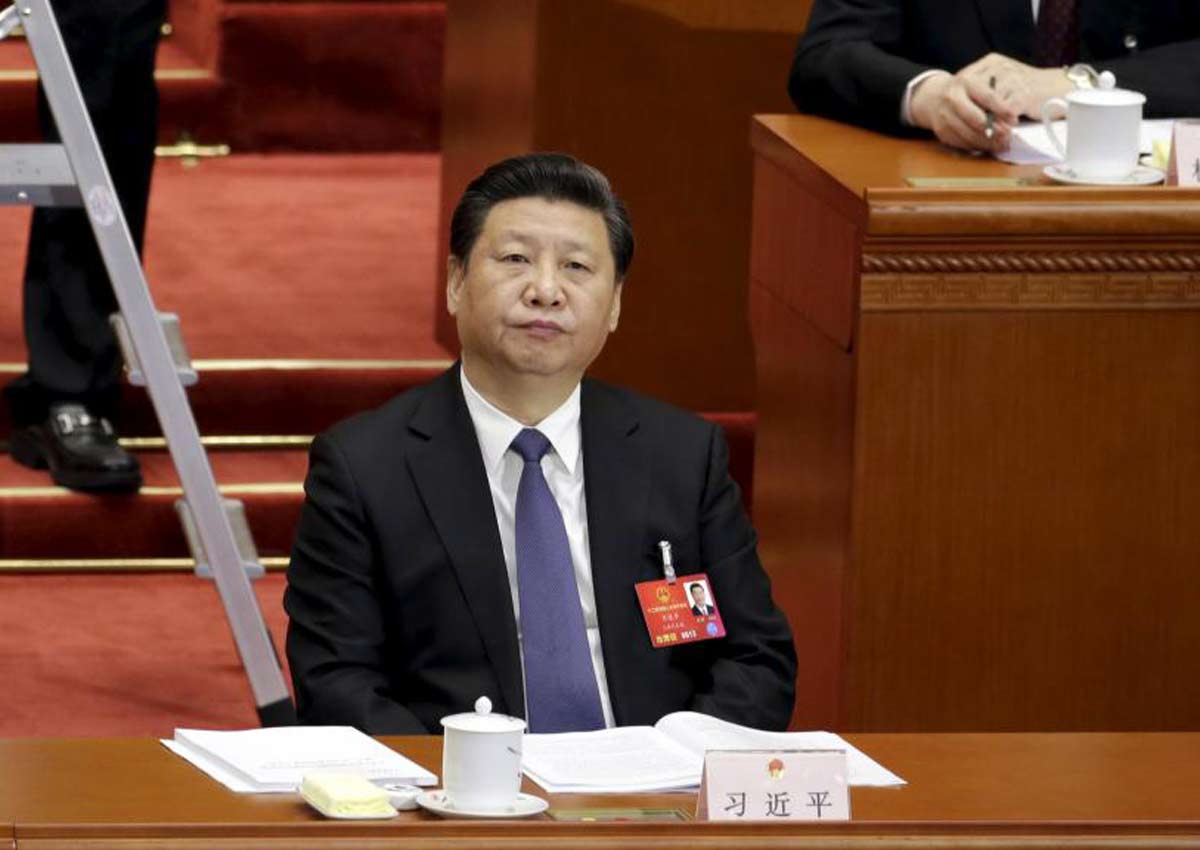
BEIJING – China will never allow the tragedy of Taiwan being “split” off from the rest of the country to happen again, state media on Sunday quoted President Xi Jinping as saying, offering a strong warning to the island against any moves towards independence.

China considers self-ruled and democratic Taiwan a wayward province, to be brought under its control by force if necessary. Defeated Nationalist forces fled to Taiwan in 1949 after the Chinese civil war.

Beijing has repeatedly warned against any moves towards independence since January’s landslide win by Tsai Ing-wen and her Democratic Progressive Party (DPP) in Taiwan’s presidential and parliamentary elections.

Meeting with Shanghai delegates to the annual meeting of parliament, Xi made apparent reference to the Qing dynasty’s loss of Taiwan to Japan in 1895, who then ruled the island as a colony until the end of World War Two.

“We will resolutely contain ‘Taiwan independence’ secessionist activities in any form, safeguard the country’s sovereignty and territorial integrity, and never allow the historical tragedy of the nation being split to happen again,” Xi said.

“This is the common wish and firm will of all Chinese people. It is also our solemn commitment and our responsibility to history and the people,” he added.

Tsai has said she would maintain peace with China, and Chinese state-run media have also noted her pledges to maintain the “status quo” with China.

Without making direct mention of Tsai, who assumes office in May, Xi said Beijing’s policy towards Taiwan was clear and consistent and “will not change along with the change in Taiwan’s political situation”.

“Compatriots from both sides of the Taiwan Strait are expecting the peaceful development of cross-Strait relations, and we should not disappoint them,” he added.

Many in China are deeply suspicious of Tsai.

Speaking on Sunday at a meeting on sidelines of parliament, Lin Xianshun, a Chinese military officer who defected from Taiwan in 1989, said she was a “schemer” who wanted to have the benefits of good economic ties with China at the same time as coveting Taiwan’s independence.

The past eight years have been marked by calm between China and Taiwan, after the election of the China-friendly Ma Ying-jeou as president in 2008 and his subsequent re-election.

Ma signed a series of key economic deals with Beijing and held a landmark meeting with Xi in November in neutral Singapore.

But a controversial trade pact has languished in the island’s parliament after protests in 2014 over trade dealings with Beijing.

Xi said both sides should deepen economic and social integration, and enhance the “sense of a community of common destiny.”

Image: 
Category: 
Publication Date: 
Sunday, March 6, 2016 – 15:04
Send to mobile app: 
Source: 


Story Type: 
Others

Source link

'Silly error' landed Singapore ex-unionist in Aussie jail

0

He was duped into carrying 2.2kg of ‘Ice’ in suitcase from Shanghai to Perth in 2014

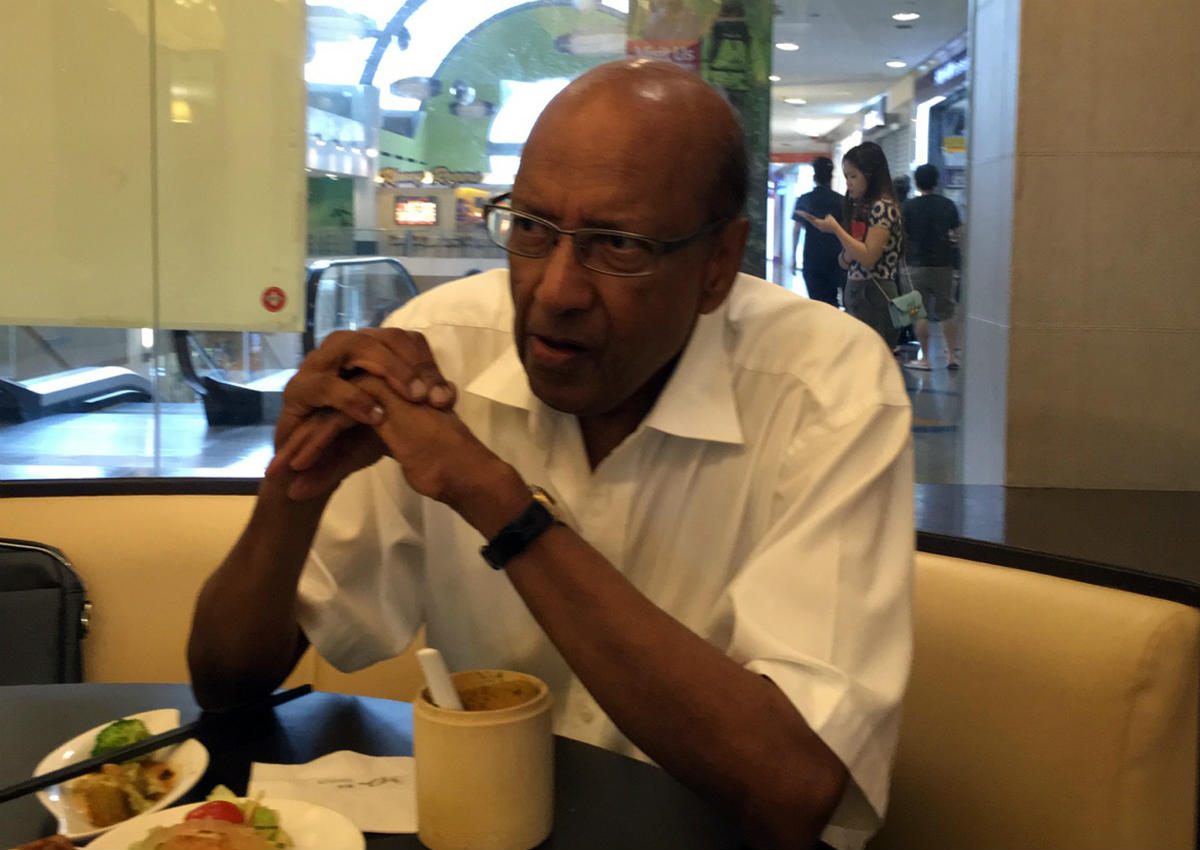
When inmates came across Singaporean V. Jayakody during his 19 months in remand in Australian prisons, many would stop and ask: “You don’t look like a criminal, you don’t talk like a criminal, so why are you here?”

The 76-year-old former executive secretary of the Singapore Port Workers Union said: “I told them that I had made a stupid mistake.”

His “mistake” was being duped into carrying 2.2kg of methylamphetamine – or “Ice” – in the lining of a suitcase from Shanghai to Perth in July 2014.

It saw him go through two criminal trials before he was finally cleared last month of bringing up to $6 million worth of the drug into Western Australia.

The first trial last year ended with a hung jury. “Somehow, I had the strength and confidence to get out of this because I was innocent,” he told The Sunday Times last week in his first interview since being released.

It emerged that online scammers had duped Mr Jayakody into carrying the suitcase. Prosecutors accepted that he was not a pusher or drug mule but had argued he had been reckless on the matter of checking whether there was an illicit substance in the suitcase. He was acquitted after a five-day retrial.

He told the court he had checked the suitcase in Shanghai and found nothing suspicious.

Expert evidence delivered in court also pointed out that the illicit material was concealed well enough to evade detection by the naked eye.

Mr Jayakody told The Sunday Times he was given the suitcase by a Chinese-speaking African in Shanghai, on behalf of a man who he believed was going to invest $7 million in his trading company in Singapore. He was told the case was to be given to a family friend.

“The suitcase contained ladies’ and babies’ clothes,” he said. “I thought if they were (to be passed) from one family to another, there was nothing wrong.”

His “cheerful” look on landing in Perth soon vanished when X-ray scanners detected the drugs in the suitcase that he was due to retrieve from the conveyor belt.

On meeting Customs officers, he became “flustered and angry” when he realised he may have been set up. “I suffered a temporary loss of memory, it was a shock to me,” he said. “I have always been law-abiding. I was really distraught and some of my answers to the officers’ questions were silly, ridiculous.”

Upon arrest, he was remanded for seven months at Hakea prison some 19km from Perth, before being moved to the maximum-security Casuarina Prison about 90 minutes’ drive from the city.

Treated well by the officers and inmates alike, he lauded the jail’s high standards of upkeep, medical treatment and physical facilities.

“I was quite confident nothing would go wrong,” he said. “I just had to go through the process.”

He read more than 50 books, ranging from the Bible to those on former Cuban leader Fidel Castro and former US president Bill Clinton, and learnt about inmate life.

One cell mate recounted graphic details of his crime – killing his wife in their home and then his best friend, all because he was “high” on drugs.

“They are not dirty people, they were very nice to me and behaved well. They respected me, (were) quite decent and nobody gave me any trouble.

“Life in prison is a fertile ground for knowledge and understanding of different cultures. The prison is not what you see in the movies.”

When the jury announced the “not guilty” verdict last month, what went through his mind was the fairness of the Australian system. “I didn’t react openly, I was just stunned. My family members were there, some of them were crying.”

He praised the Canberra-based Ministry of Foreign Affairs counsellor Kevin Liew for supplying the bridging documents for him to leave for Singapore the next day, as his passport had expired.

“The experience brought the family closer,” said Mr Jayakody. “During the trial, I broke down when my son testified in court as one of the character referees. It showed how much he loved me.”

He also expressed admiration for the support shown by his daughter-in-law and her mother, who also acted as character referees.

He said the two trials added up to some A$200,000 (S$204,500) in legal bills and his Sydney-based son sold his home to help settle costs.

“The experience made me a better man and my faith in God has strengthened.

“There will also be some members of the extended family who will not believe I am innocent despite the strong evidence in my favour and I have to live with that. “

vijayan@sph.com.sg


This article was first published on March 6, 2016.
Get a copy of The Straits Times or go to straitstimes.com for more stories.
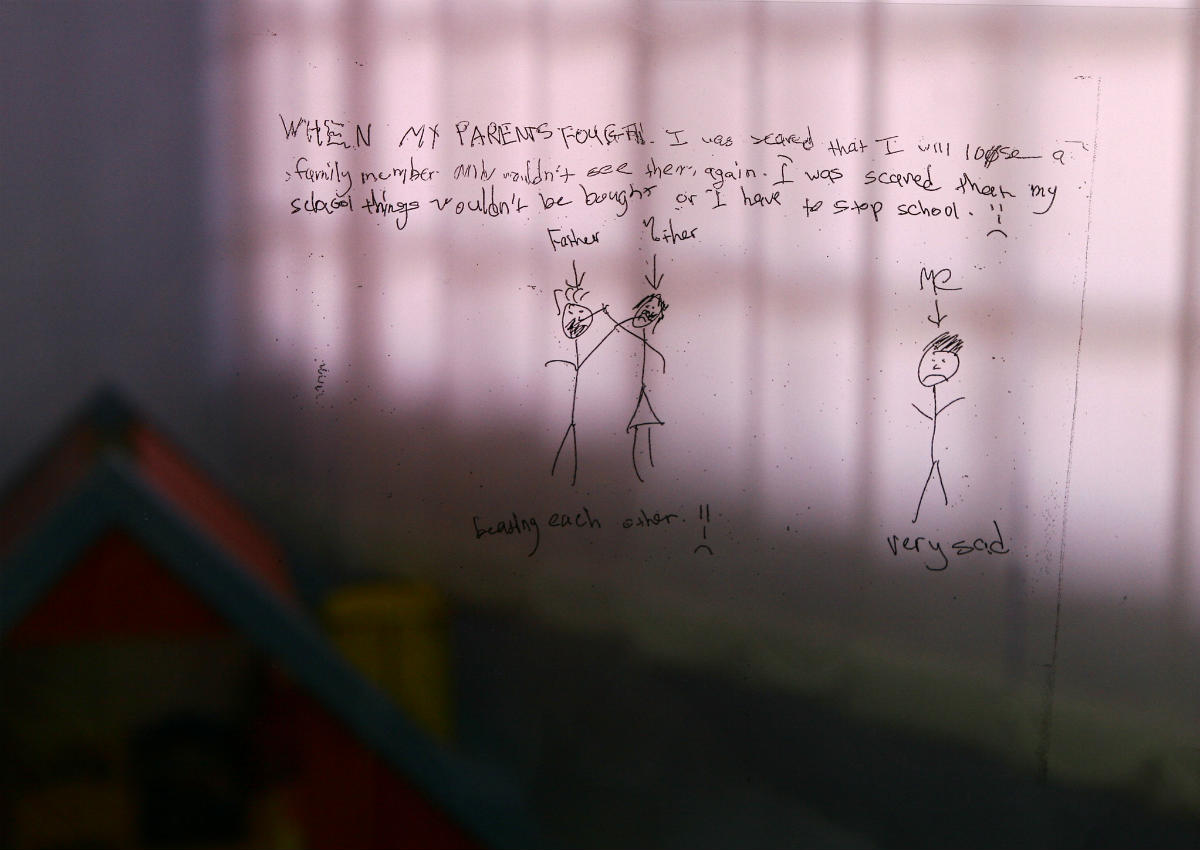
Image: 
Category: 
Publication Date: 
Sunday, March 6, 2016 – 17:00
Send to mobile app: 
Source: 


Story Type: 
Others

Source link