Home Blog Page 4632

Overseas push critical for growth

0

Singapore – INSTITUTIONAL and policy support will be crucial in helping smaller firms here take on big boys elsewhere, as Singapore digs deeper into the global economy.

The outcome of this will in turn determine Singapore’s success in reshaping its economy, said observers The Business Times spoke to.

“If you want to be really competitive in this global economy, you have to have services,” said Deborah Elms of the Asian Trade Centre. “So that means you have to push your domestic firms to be competitive in the wider market.”

Mega trade pacts and arrangements are starting to appear on Singapore’s economic horizon.

The Trans-Pacific Partnership (TPP) Agreement was recently signed in early February. It brings together 12 economies, including Singapore, from both sides of the Pacific Ocean, and accounts for about 40 per cent of global GDP. It now awaits ratification from signatories.

Nearer to home, the ASEAN Economic Community (AEC) was established on Dec 31 last year. More of a regional commitment than a trade pact, it aims to create a single market for the free flow of goods and services, capital and labour among the ten ASEAN members.

At the same time, Singapore is hoping to formalise the Regional Comprehensive Economic Partnership (RCEP), which involves 16 economies in the Asia-Pacific region.

These developments come at a time when the Committee on the Future Economy, a high-level body chaired by Finance Minister Heng Swee Keat, is looking at how Singapore can chart the future of its economy.

Internationalisation is one of the main thrusts that the committee will look into, Mr Heng said previously, as Singapore’s trade-reliant economy seeks out new growth areas.

Therefore, the web of trade pacts is important in helping Singapore make the best out of current global economic realities as it repositions its economy, said CIMB Private Bank economist Song Seng Wun.

“On a macro-economic level, we can’t plan as much as we did before in the last century,” he said. “So these trade arrangements give us a landscape that is flexible enough to allow businesses to decide what they want to do.”

As such, Singapore has to take a deep look at what it is good at, as compared to regional neighbours, and reshape its economy to tap on that advantage, said Sanchita Basu Das of the ASEAN Studies Centre at the Iseas-Yusof Ishak Institute.

As she put it, Singapore’s proposition in relation to its neighbours is this: “I have limited capacity, why don’t you offer the market space, and I provide you with the high technology, advance financial markets, and resources for research and development?”

But she noted that not all companies here, especially smaller ones, are able to make sense of all the trade agreements in the works.

To address this, the government may want to bring in specialised consulting expertise in the different industries to help firms wishing to internationalise make the best out of the trade pacts, suggested Ms Basu Das.

Trade associations and chambers of commerce can also help in this respect, she added.

Dr Elms called for more policy support to help smaller firms sharpen their competitive edge. Infrastructure for trade finance and payments, for example, can be improved so that firms can internationalise faster.

She also said more effective feedback channels may be needed so that the government will be in tune with what firms need to tap into market opportunities overseas.

However, the main onus is upon firms to ensure that they themselves are up to speed with the global economy’s demands, said Mr Song.

While businesses and the government can be more proactive in communicating with each other, companies must take charge of their own destiny.

“Firms shouldn’t be spoon-fed,” said Mr Song. “They should be hungry enough so that they can make it on their own on the world stage.”

This story is part of an ongoing BT series on Singapore’s future economy.

soonwl@sph.com.sg


This article was first published on March 7, 2016.
Get The Business Times for more stories.

Image: 
Publication Date: 
Monday, March 7, 2016 – 10:29
Send to mobile app: 
Source: 


Story Type: 
Others

Source link

MBMS mahu dekati umum guna media social

0

MENGHUBUNGKAN masyarakat kepada pelbagai kegiatan bahasa Melayu di Singapura menerusi wadah media sosial – itulah antara strategi Majlis Bahasa Melayu Singapura (MBMS) bagi memantapkan lagi penggunaan bahasa Melayu di sini.

Pengerusi baru MBMS, Profesor Madya Muhammad Faishal Ibrahim, berkata demikian semasa membentangkan hala tuju majlis itu memandang ke hadapan.

“MBMS percaya bahawa dengan perkongsian maklumat secara lebih kerap di pelbagai wadah, peserta akan dapat menghubungi penganjur kegiatan dengan lebih baik.

“MBMS akan menguar-uarkan kegiatan mingguan yang berlaku di Singapura melalui pelbagai platform seperti Facebook, Instagram dan laman MBMS,” katanya.

Dr Faishal mengambil alih jawatan itu daripada Encik Masagos Zulkifli Masagos Mohamad, yang memegang jawatan pengerusi sejak 2012, lewat tahun lalu. Beliau turut mendedahkan strategi selanjutnya bagi MBMS yang merangkumi empat teras iaitu memangkin, menghubung, memperkukuh dan memperdalam.

Menjelaskan strategi itu, beliau berkata MBMS akan menjadi pemangkin kegiatan bahasa, sastera dan budaya di Singapura, dengan kerjasama badan Melayu, Jawatankuasa Eksekutif Kegiatan Melayu (MAEC), Taman Warisan Melayu dan agensi pemerintah.

Tambahnya, MBMS akan mengenal pasti kegiatan utama yang dijalankan badan itu setiap tahun, seperti Bahas 4PM dan Pesta Budaya, agar dapat memberi lebih banyak sokongan supaya masyarakat umum lebih menyedari kehadiran.

Selain itu, MBMS akan memperkukuh usaha mengenal pasti aktivis muda yang dapat menjadi pelapis pergerakan bahasa, sastera dan budaya Melayu pada masa depan.

Menyentuh tentang kegiatan bagi peserta yang mempunyai keperluan khusus, Dr Faishal berkata MBMS akan mempertingkat kegiatan sedemikian demi menyediakan wadah bagi mereka yang mahu memperdalam dan meningkatkan pengetahuan.

“MBMS berharap dengan usaha berterusan, masyarakat penutur bahasa Melayu di Singapura akan selesa menggunakan bahasa Melayu.

“Ini boleh menghubungkan kita dengan warisan bahasa dan budaya Melayu kita,” kata Dr Faishal.


This article was first published on March 7, 2016.
Go to beritaharian.sg for more stories.

Image: 
Category: 
Publication Date: 
Monday, March 7, 2016 – 05:00
Send to mobile app: 
Source: 


Story Type: 
Others

Source link

Preserving records for 100 years

0

Approving supplies of meat for troops was among some of the everyday issues Commandant of Singapore Sir William Farquhar had to deal with in the1820s.

In a Jan 15, 1823 letter to a storekeeper called Captain W. Flint, Farquhar gave the nod for “salt pork” to be purchased for troops although there was still salt beef. This was so that the troops would “as usual have a regular change of diet”, he wrote.

“I would recommend in future that particular attention be paid to preserve an equal proportion of each in store as far as practicable.”

The handwritten correspondence offering insight into how the colony was run is one of more than 10 million records in the repository of National Archives of Singapore (NAS).

Established in 1968 with just 15,000 records, its archives have grown over the years to include government file records, photos, maps, building plans, posters and audio and video recordings.

NAS oral history centre’s deputy director Julia Chee said it is in a better position to boost growth in all areas of its collections after it became an institution under the National Library Board in 2012.

About 80 staff work across key departments such as audio visual archives, the oral history centre and records management at NAS’ headquarters in Canning Rise, once the home of Anglo-Chinese School.

NAS gave The Straits Times a peek into their operations.

ORAL HISTORY CENTRE

The oral history centre now has 22,000 hours of recording – from 18,000 five years ago.

There are 30 ongoing projects, said oral history specialist Mark Wong. They include topics such as the Japanese Occupation in Singapore, the history of the public service and vanishing trades.

There are 300 interviews under the Japanese Occupation and Prisoners-of-War projects. Interviews usually take place in the three recording studios at NAS’ headquarters.

Over several sessions, the specialists encourage interviewees to share stories and anecdotes.

One of Mr Wong’s interviewees, Major (retired) Foong Fook Kay, talked about how his father, a sergeant in the Strait Settlements Volunteer Force, had reported to a registration centre during the Japanese Occupation and had passed through safely, only to have someone calling out his name.

He was moved to another section and was never seen again. Major Foong believed that his father had been betrayed by his comrade.

Candidates for the oral history centre are usually sourced by word of mouth. Mr Wong said: “We usually get older interviewees. By then, it’s been a life well-lived. The interviewees are usually proud to share their experiences.”

AUDIO VISUAL ARCHIVES

On the fifth floor of the NAS building is the sound and moving image laboratory.

It is home to a range of film, video and audio equipment from different eras that are needed for audio-visual preservation and the digitisation of obsolete analogue formats to digital files.

Devices include open reel and audio cassette players, and vinyl and shellac record players, as well as film cleaning equipment and film scanner.

The department has digitised more than 40,000 of 100,000 recordings that are at risk of loss. Of these, 37,000 can be viewed at the archive’s reading room – the rest are upon request.

Highlights include footage of the 1966 Grand Prix in Thomson and a 1940 Peranakan wedding shot on 16mm film.

The team has five more years to complete the digitisation of nationally and historically significant audio-visual content. It also records present-day events, such as daily prime time news broadcasts on Singapore’s free to air channels.

NAS will be hosting a three-day joint technical symposium starting today. About 200 international archivists will gather to exchange notes on developments in the field of preservation. It is held in partnership with the South East Asia-Pacific Audiovisual Archive Association. This is the first time the event will be held in Singapore and Asia since its inception in 1983.

Senior assistant director Phang Lai Tee said this was testament to the progress made by NAS.

ARCHIVES CONSERVATION LABORATORY

Behind closed doors in the heart of the civic district, a team of six NAS staff painstakingly piece together records dating back to 1800.

Among their duties – to reconstruct brittle maps, stem the growth of mould and mildew and save records from ink corrosion.

So far, they have conserved and restored 975 volumes or over 40 per cent of the Straits Settlements records in NAS’ repository.

The lab started mechanising its processes in 1981 to improve and speed up the conservation of records. They developed their own leaf machine, hydraulic press, encapsulation device and a polyester film storage system. They also have their own book binding and stitching operations.

Assistant conservator and acting supervisor at the laboratory, Mr Chng Yak Hock, said: “The aim is to restore records so that they can be preserved for about 100 years.”

VOLUNTEERS’ PAINSTAKING EFFORTS IN TRANSCRIBING WORK

Eyes squinting at the screen, Ms Vandana Aggarwal, 53, deciphers a cursive, handwritten Straits Settlement record.

Since last March, the freelance writer has single-handedly transcribed about 2,700 records, or 20 per cent of the 15,000 Raffles administration-era records, on the National Archives of Singapore’s (NAS) Citizens Archivist Project.

Ms Vandana, former vice-principal of the Global Indian International School in Balestier, takes about 20 minutes to transcribe a page. Sometimes she stumbles on the letters “f” and “t”, which can be easily confused.

NAS is harnessing the power of crowdsourcing on the Citizens Archivist website, in its race to transcribe a million of these records by 2019 – the 200th anniversary of Raffles’ landing in Singapore.

More than 9,000 of these pages have been transcribed while another 1,600 old photographs have been described by the community so far.

More than 250 volunteers have contributed to the project. NAS said it welcomes more people to volunteer their time to transcribe and describe these documents.

The pull factor for volunteers such as Ms Vandana is the chance to be one of the first to decipher and record these documents for posterity. She said: “I’m always on the portal. It’s a special feeling to be involved in ensuring such important information is not lost in time.

“I’m very fond of history. This process has made Singapore very real for me. When I see a certain road, I can link it to the historical person it is named after.”

NAS will be hosting an appreciation dinner on March 17 at its 1 Canning Rise headquarters to thank volunteers such as Ms Vandana.

The NAS team had initially tried using handwriting recognition software to do the transcriptions, but were thwarted by their elaborate cursive penmanship. NAS realised the public could pool their collective wisdom to make sense of the materials. This would also speed up the transcription process. Similar efforts by archives in countries such as the United States and Australia have been successful.

Assistant archivist Abigail Huang, 29, said she was impressed by the community’s effort and dedication. Ms Huang said: “I think it’s amazing how people have contributed to the portal and done further research to verify names and places, to be certain of what they are transcribing.”

melodyz@sph.com.sg


This article was first published on March 7, 2016.
Get a copy of The Straits Times or go to straitstimes.com for more stories.

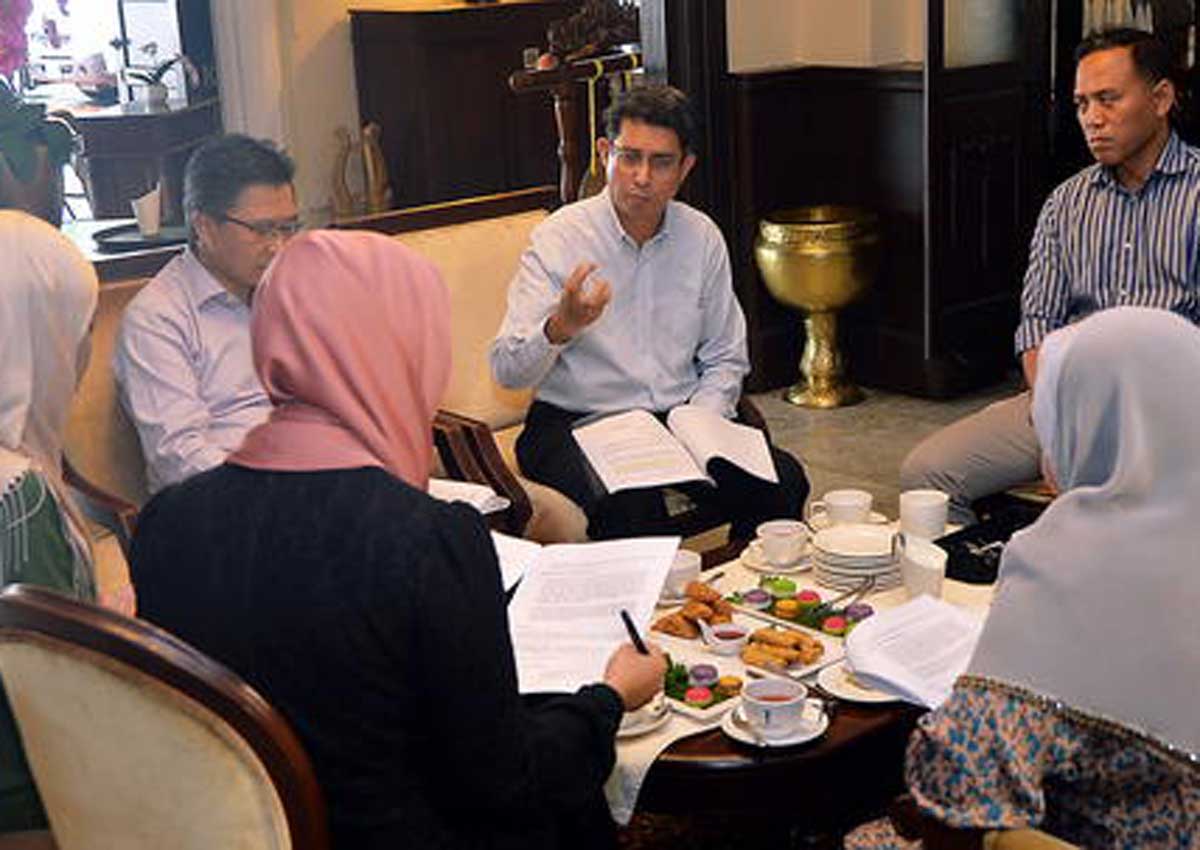
Image: 
Category: 
Publication Date: 
Monday, March 7, 2016 – 10:29
Send to mobile app: 
Source: 


Story Type: 
Others

Source link

Mission: To build a national identity

0

Being a Singaporean is more than just about knowing and enjoying food.

Being a Singaporean is to respect other races and religions, to care for others, and to understand the history and culture of Singapore.

Striving for this national identity is a mission of Minister for Culture, Community and Youth Grace Fu, who mapped out the journey towards it at a media conference last Wednesday.

One of the first steps in getting there is to move beyond the usual discussions of the best eats in town, and talk more about Singapore’s culture and heritage, she said.

People should ask one another: “Have you seen our artists’ work in the National Gallery? Have you seen our disabled athletes perform on the world stage?

“Have you seen our performers put up a great cultural show of our unique brand of local music?”

This new approach is an uphill task, and Ms Fu wants the change to start at a young age.

More schools will be encouraged to take their students on field trips to the National Gallery and other art institutions, she said, adding that the relevant agencies are working out the plans for it.

The students’ museum trips also need to be more meaningful, with explanations of the artefacts and artwork presented in simpler ways for the young to understand and relate to.

“If we can educate Singaporeans more about our history, culture and heritage, our understanding of who we are as a people will deepen.

“And if Singaporeans can bet- ter understand themselves as a people, their pride in being Singaporean will increase over time,” she said.

In the two-hour interview, Ms Fu also set out another broad goal: To build a caring society in Singapore.

Traditional faultlines between racial groups and religious communities still exist, she said.

But new divides have emerged in today’s society, including those between the rich and the poor, foreigners and locals, and conservatives and liberals.

“These are divides that we are watching quite carefully. Any of these can cause tensions in society,” said Ms Fu.

Part of her job will be to find ways to bring together people from the different races, values and communities.

One way is to encourage volunteerism in the corporate world, she said.

Her ministry will look at how it can support companies that organise volunteering programmes to serve the community, she added.

Students already volunteer under school programmes, but more can be done to encourage young working adults to spend their time helping the less fortunate.

Another way involves getting Singaporeans to rely less on the Government to fix their problems, and get themselves to step up more often.

Ms Fu said: “If I have an idea of what to do, how about rallying my friends to participate in it? If I think that more can be done to educate cyclists on road etiquette, how about I lead a cyclist group to do something about it?” she said.

This requires Singaporeans to move beyond seeing the Government as the leader, and themselves as the followers, said Ms Fu.

“We need to have a a model where citizens feel that they can get together and participate in the decision-making,” she said.

Her ministry and agencies will do their part to widen the pool of people who participate in government-organised dialogues, she said.

“We want to avoid preaching to the converted. We want to reach out to new groups that are not so familiar with our processes.”

Ms Fu acknowledged that the journey towards nation-building was not easy, and would take time.

“It is not going to be something to be done over five years. It took us 50 years to reach where we are today,” she said.

There would also be no tangible indicators of success, such as museum attendance figures.

But, she said: “If I am able to make Singaporeans feel more strongly and better about themselves as a people and about Singapore as a country, then I would have succeeded as a minister.”


This article was first published on March 7, 2016.
Get a copy of The Straits Times or go to straitstimes.com for more stories.
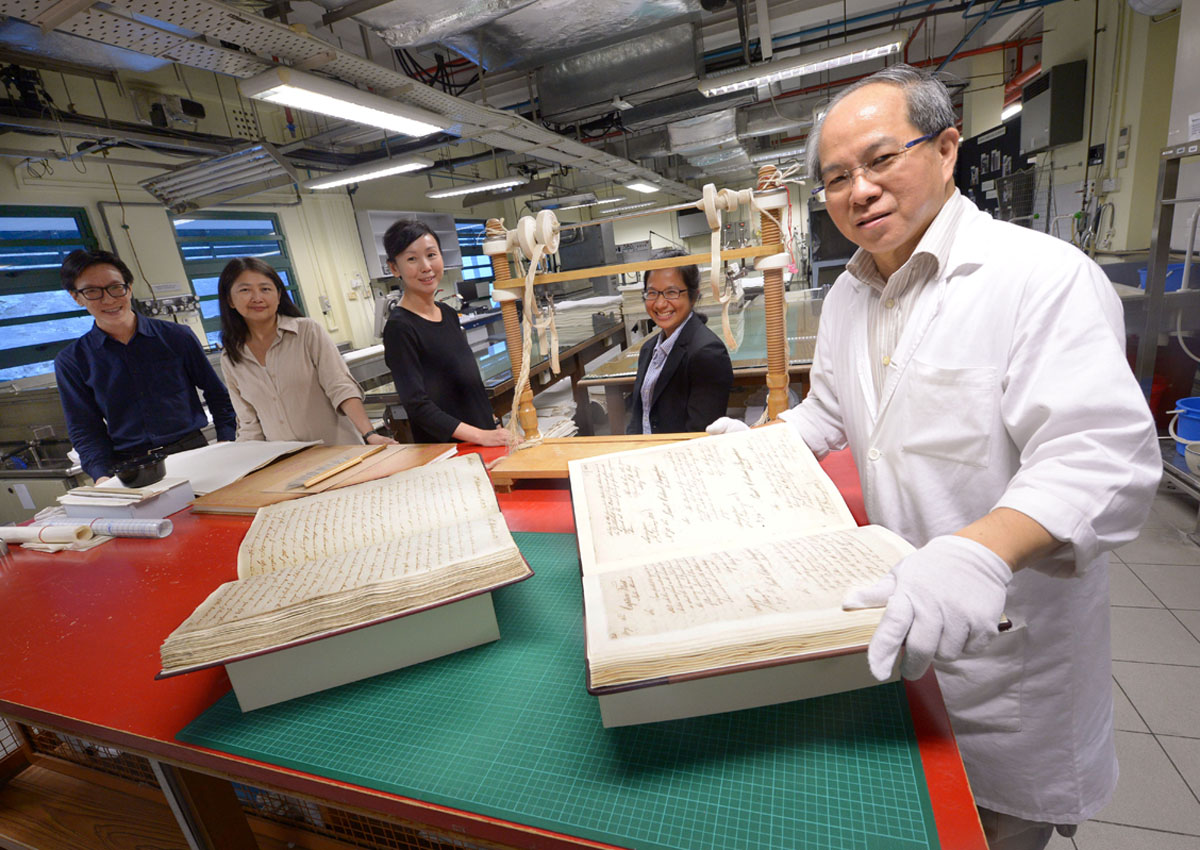
Image: 
Category: 
Publication Date: 
Monday, March 7, 2016 – 10:29
Send to mobile app: 
Source: 


Story Type: 
Others

Source link

Former The Real Singapore editors return to court for sedition trial

0

Ai Takagi, 23, and husband Yang Kaiheng, 27, each face seven charges under the Sedition Act for publishing articles which “promote feelings of ill-will and hostility between different classes of the population of Singapore”.

Source link

NParks invites companies to design upcoming Jurong Lake Gardens

0

March 07, 2016 10:06 AM

SINGAPORE – Visitors to the upcoming Jurong Lake Gardens (JLG) could look forward to community gardens, a rich biodiversity and sustainable measures such as water saving designs.


Source link

North Korea threatens pre-emptive nuclear strikes on South Korea and US

0

SEOUL – North Korea has threatened “indiscriminate” nuclear strikes against South Korea and the US mainland, as the two allies prepared to kick off large-scale joint military drills on Monday (March 7).

The threat to carry out what it described as a “pre-emptive nuclear strike of justice” was made in a statement by the North’s powerful National Defence Commission, citing the Supreme Command of the Korean People’s Army (KPA).

It came just days after leader Kim Jong Un ordered the country’s nuclear arsenal to be placed on standby for use “at any moment,” in response to tough new UN sanctions imposed over the North’s fourth nuclear test in January and last month’s long-range rocket launch.

Pyongyang has issued dire warnings of nuclear attack in the past, usually during periods of elevated military tensions on the divided Korean peninsula.

While the North is known to have a small stockpile of nuclear warheads, experts are divided about its ability to mount them on a working missile delivery system.

The National Defence Commission described the annual South Korea-US military exercises as “undisguised nuclear war drills” that threatened the North’s national sovereignty, and vowed an all-out offensive in response to “even the slightest military action.”

“The indiscriminate nuclear strike… will clearly show those keen on aggression and war, the military mettle of (North Korea),” said the statement published by the North’s official KCNA news agency.

Under a military plan ratified by the North Korean leadership, any strike would not just target operational theatres on the Korean peninsula, but also US bases on the mainland and in the rest of the Asia-Pacific region.

“If we push the buttons to annihilate the enemies even right now, all bases of provocations will be reduced to seas in flames and ashes in a moment,” it added.

Despite a pair of successful long-range rocket launches, North Korea is largely believed to be years away from developing a genuine inter-continental ballistic missile (ICBM) capable of reaching the US mainland.

The annual exercises slated to begin on Monday – called “Foal Eagle” and “Key Resolve” – last for weeks and involve tens of thousands of US and South Korean troops.

Pyongyang has long condemned the drills as provocative rehearsals for invasion, while Seoul and Washington insist they are purely defensive in nature.

Tensions have surged on the Korean peninsula since the North’s nuclear test on Jan 6 and February’s rocket launch, which was seen as a disguised ballistic missile test.

A UN Security Council resolution adopted last week laid out the toughest sanctions imposed on Pyongyang to date over its nuclear weapons programme and will, if implemented effectively, apply significant economic pressure on Mr Kim’s regime.

It breaks new ground by targeting specific sectors key to the North Korean economy and seeking to undermine the North’s use of, and access to, international transport systems.

Pyongyang has rejected the sanctions as “unfair, illicit and immoral” and vowed to keep building its nuclear arsenal.

The National Defence Commission said the US and its allies had failed to realise how the “outrageous” sanctions made “this land boil like a crucible of battle”.

Image: 
Category: 
Publication Date: 
Monday, March 7, 2016 – 09:33
Send to mobile app: 
Source: 


Story Type: 
Others

Source link

Bryan Cranston becomes a talking panda in Kung Fu Panda 3

0

The world’s most recognised panda is back for his third legendary adventures of awesomeness, and this time, Po, has two epic issues to tackle before finally fulfilling his destiny of being the Dragon Warrior.

When Po’s father…

Source link

Rugby-Fiji hit back to beat Australia in Vegas sevens

0

Reigning World Series champions Fiji fought back from a 15-0 halftime deficit with a scintillating display of counter-attacking rugby to beat Australia 21-15 in the final of the Las Vegas Sevens on Sunday.

Their second tournament win of the season sent Fiji clear at the top of the series standings and was a timely boost for the Pacific Island nation, where last month Cyclone Winston left at least 42 people dead and more than 62,000 homeless.

On a blustery day at Sam Boyd Stadium, Australia dominated territorially right from the start and Sam Myers capped off a wave of attacks when he crossed the line from the left to put his team in front.

Fiji were left short-handed after a dangerous tip tackle and the Wallabies took full advantage as first Ed Jenkins powered down the left wing to score and then Cameron Clark cut through to follow suit to establish a halftime lead of 15-0.

Playing into the wind, the Fijians finally put points on the board when Kitione Taliga, off the bench, ran the entire length of the field to score under the posts.

As the Fijians built much-needed momentum, Teliga scored again after another brilliant counter-attack to reduce the deficit to 15-14.

Australia seemed set for another score soon after but Wallaby flyhalf Quade Cooper lost possession just short of the try line and Fiji were once again ruthless on the counter attack as Savenaca Rawaca stormed down the right to make it 21-15. “One week after the cyclone struck, we went back into camp and all the players said we were going to play,” said Man of the Match Osea Kolinisau. “I reminded the boys this week that we needed to remember the people back home who were victims … that we needed to give them something to be happy about after all the devastation.” Fiji earlier overcame hosts the United States 21-14 in the first semi-final before Australia beat three-time USA Sevens champions South Africa 14-12 in a see-sawing encounter.

South Africa, who paid a steep price for some dirty play against Australia in the last four, outclassed the US 21-10 in the third-place playoff.

Fiji lead the series with 91 points, five points clear of South Africa with New Zealand third on 82 after the fifth stop on the 10-tournament circuit.

The World Series is providing a showcase for sevens as it prepares for its debut at the Olympics in Rio de Janeiro in August.

Image: 
Category: 
Publication Date: 
Monday, March 7, 2016 – 09:15
Keywords: 
Send to mobile app: 
Source: 


Story Type: 
Others

Source link

K-pop star Hyeri in hospital with meningitis

0

SEOUL – GIRL’S Day’s Hyeri was hospitalised with meningitis yesterday, according to her management agency.

The K-pop starlet was rushed to the emergency room yesterday morning due to a high fever, cold symptoms and a severe headache, said Dream T Entertainment.

The doctor diagnosed her with meningitis, an inflammation of the protective membranes covering the brain and the spinal cord.

Hyeri is expected to be hospitalised for several days, her agency added. She was scheduled to undergo medical examinations yesterday at a university hospital in northern Seoul.

The 21-year-old has cancelled all work activities for now due to her health condition. Further changes might be made to her work schedule if the results turn out to be worse than expected.

Her agency said: “We appreciate all the concern and worry about Hyeri. We will do our best to help her make a speedy recovery.”

Hyeri’s popularity has been rising lately, following her appearance in the drama series Reply 1988, which had high viewership ratings.

Image: 
Category: 
Publication Date: 
Monday, March 7, 2016 – 08:51
Send to mobile app: 
Source: 


Story Type: 
Others

Source link