Home Blog Page 4611

Takashimaya Baby Fair 9 Mar – 27 Apr 2016 | SINGPromos.com

0

Takashimaya Baby Fair starts today – check out some of the offers now

Takashimaya Baby Fair 9 Mar – 27 Apr 2016 | SINGPromos.com

Takashimaya will be having a Baby Fair from 9 Mar to 27 Apr 2016. Find all you need for Mama and Baby at the Baby Fair, Takashimaya Square, B2! Think Baby’s first set of wheels, cosy duvets, colourful toys and more.

Source

Challenging year ahead for tourism industry

0

Growth in the tourism industry is likely to slow to a crawl this year as tourists tighten their belts ahead of a weakening global economy.

The Singapore dollar is also likely to stay strong against regional currencies, further deterring regional tourists from raising their spending.

All this will add up to a challenging year for the sector, said the Singapore Tourism Board.

“Global economic growth may be hampered by the slower growth momentum of the Chinese and United States economies, as well as uncertainties such as the ongoing reforms in China and the impact of the normalisation of the US monetary conditions,” it said.

“Increasing regional competition will also pose challenges to Singapore’s tourism sector.”

Last year, visitor arrivals inched up 0.9 per cent year on year to 15.2 million but tourism spending fell 6.8 per cent to $22 billion. This is below the long-established target – set in 2004 – of 17 million visitors and $30 billion in tourism receipts by 2015.

The main reason for the fall was fewer business travellers and less spending per person .

Depreciating currencies of top source markets like Indonesia, Malaysia and Australia also contributed significantly to lower arrivals and spending.

This year, STB forecasts tourism receipts to grow by zero to 2 per cent to be in the range of $22 billion to $22.4 billion. Visitor arrivals are expected to be between 15.2 million and 15.7 million, a growth of zero to 3 per cent.

Analysts said these challenges are not new and there has to be a concerted effort to rethink Singapore’s proposition as a tourist destination.

Apart from exploring new visitor markets, such as secondary cities in China and India, Singapore should consider how it can better market its local heritage and culture to attract repeat visitors, said Ngee Ann Polytechnic’s senior tourism lecturer Michael Chiam.

Mr Kevin Cheong, chairman of the Association of Singapore Attractions, said attractions here need to emphasise diversity, uniqueness and authenticity.

Attractions will have to work together to attract visitors to Singapore, he added.

Singapore faces competition from other destinations such as Malaysia, Thailand and Australia, which have relatively weaker currencies.

He added: “Due to these competitive market forces, industry players will be forced to review our pricing structures downwards to stay in the game.”

At least one tourist agrees. Ms Andrea Sander, 31, a tourist from Norway who was in Singapore last week, said she found the food in hawker centres value for money, but is holding back from spending on other items.

“I’m not here to buy clothing and other things, but for the food and experience. Everything else is as expensive as it is in Norway,” she said.

Additional reporting by Alexis Ong


This article was first published on March 9, 2016.
Get a copy of The Straits Times or go to straitstimes.com for more stories.
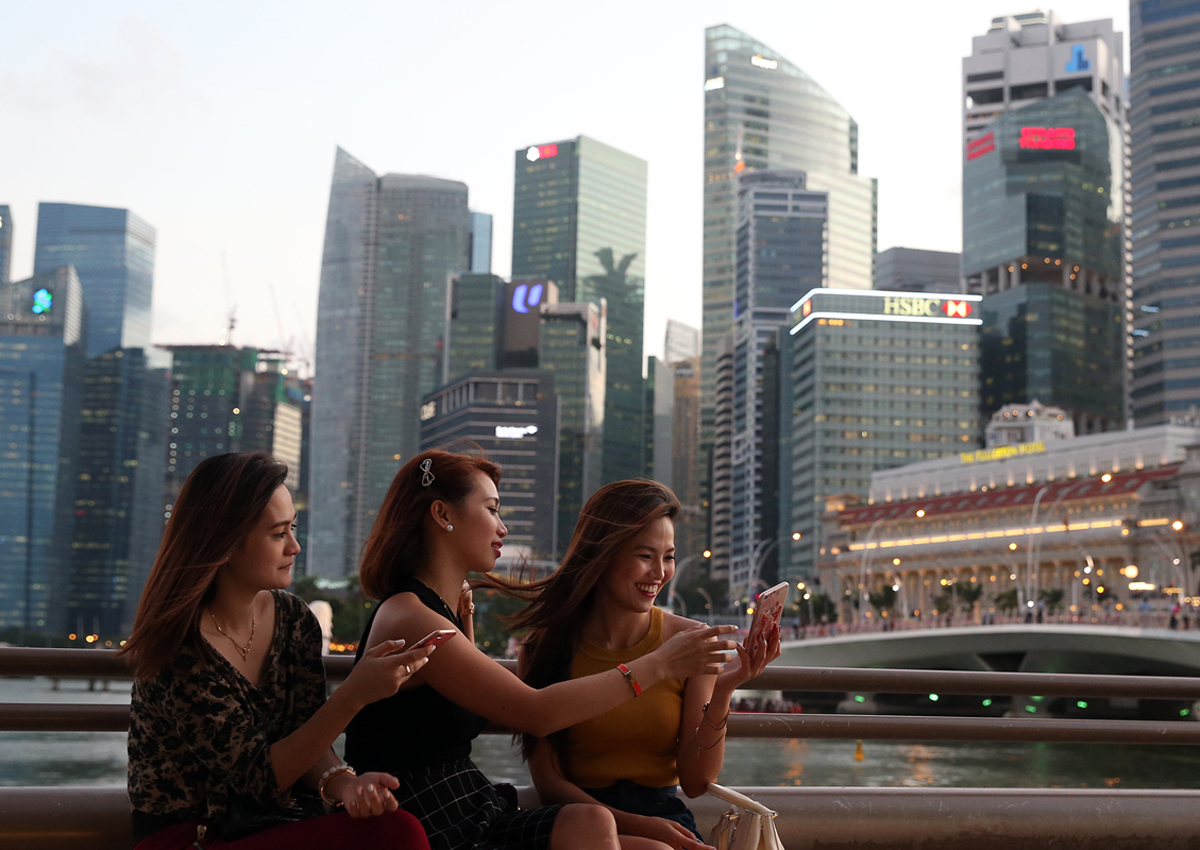

Image: 
Category: 
Publication Date: 
Wednesday, March 9, 2016 – 17:00
Send to mobile app: 
Source: 


Story Type: 
Others

Source link

Clouds over Indonesia obscure total eclipse of the sun for many

0

PALEMBANG, Indonesia – A solar eclipse enthralled Indonesia on Wednesday but clouds spoiled the view for many skywatchers in the east of the archipelago, the only part of the country that had the opportunity to see it in totality.

In Palembang city on the western island of Sumatra where the total eclipse should have been visible, cloudy skies and smog obscured the view for many of the thousands of people who gathered outside shortly after daybreak. “It was very annoying that we couldn’t see the sun properly,” said David Pratama, 18, as jeers of disappointment rose up in the crowd around him as the sun moved behind the moon.

A partial eclipse of the sun was visible to millions in Australia, parts of Southeast Asia and the Pacific, but only people in a small band of Indonesia had the opportunity to see the moon perfectly silhouetted by the sun.

In the capital, Jakarta, hundreds of residents and school children flocked to city’s planetarium where special viewing glasses were handed out to see the partial eclipse. “We are very excited because it’s our first time seeing something like this,” said Santi who brought along her five-year old daughter to watch as the eclipse briefly dimmed the skies.

Indonesia last saw a total eclipse in 1983 and it will be 33 years until the next one, according to the meteorological agency.

The world’s next total solar eclipse will occur in August 2017 and be visible in the United States, according to NASA.

The rare astronomical phenomenon drew thousands of tourists to Southeast Asia’s biggest economy, which is hoping to double its foreign tourist arrivals to 20 million by 2019.

A solar eclipse happens when the moon casts a shadow on the earth as it passes between the earth and the sun. A partial eclipse, more frequent than total eclipses, is when the earth passes within the penumbra of the moon.

(Additional reporting by Randy Fabi in Jakarta; Editing by Robert Birsel)

Image: 
Category: 
Publication Date: 
Wednesday, March 9, 2016 – 12:23
Send to mobile app: 
Source: 


Story Type: 
Others

Source link

New documents give rare insight into Mr OCBC

0

In 1942, Mr Tan Chin Tuan – then managing director of the Oversea-Chinese Banking Corporation (OCBC) – was asked to re-establish the bank outside of Japanese control in Burma.

Mr Tan, later known as “Mr OCBC”, succeeded – but only three years later, in Bombay, India.

He first went to Batavia (now Jakarta), then tried to travel to India by boat, but instead found himself in Perth, Australia. Four other ships had set sail for India from Batavia but his was the only one that made it safely to land, albeit in Perth.

In 1943, Mr Tan finally arrived in India, but the bank was registered there only in 1945, due to missing documents.

This story was among dozens of personal anecdotes revealed in the late banker and philanthropist’s private papers, which were handed over by the Tan Chin Tuan Foundation to the Institute of Southeast Asian Studies (Iseas)-Yusof Ishak Institute yesterday. The papers will be made available to the public – in digital form – in the next three months.

While there are several books about Mr Tan, who was known to be a private person, they have focused on his corporate career as a banker.

More than 31,000 documents of nearly 54,000 pages were handed over. These were digitised over six months at a cost of $32,500.

His private papers add to those of more than 20 others such as Mr S. Rajaratnam, a founding father of independent Singapore.

Said Mr Pitt Kuan Wah, 58, head of the Iseas library: “I never thought that such a serious banker would have such interesting hobbies.”

Mr Tan reserved Sundays for family, friends – and mahjong. He also enjoyed tending to his orchids, fishes, birds and race horses.

He would send orchids that he cultivated personally to friends and business associates. Many notable men, including Mr Kan Tong Po, founder of the Bank of East Asia, and Hong Kong movie mogul Run Run Shaw, sent him thank-you notes for the orchids received.

The papers also revealed his little-known philanthropic acts. For instance, in 1962, he paid the university fees of $700 for a student called Miss Chong, whom he knew only from her letters. He had, at the time, asked that this be kept confidential, fearing that it “may well embarrass the young lady”.

Mr Pitt said the papers are not only valuable sources of information about Mr Tan but also of the Singapore and Malaysia of his lifetime.

Mr Tan’s granddaughter, Ms Chew Gek Hiang, 52, said: “My grandfather always felt there was a duty to educate everybody, and if these papers can be of some use then, it could be a part of his legacy.”

domteojy@sph.com.sg


This article was first published on March 9, 2016.
Get a copy of The Straits Times or go to straitstimes.com for more stories.

Image: 
Category: 
Publication Date: 
Wednesday, March 9, 2016 – 17:00
Send to mobile app: 
Source: 


Story Type: 
Others

Source link

After sibling, 'Matrix' co-director comes out as transgender: report

0

Los Angeles – “Matrix” co-director Andy Wachowski came out on Tuesday as transgender, giving her new name as Lilly, two years after directing partner and sister Lana made the same announcement.

The 48-year-old made a statement to Chicago-based LGBT publication the Windy City Times, it reported, after she was approached by a reporter from British newspaper The Daily Mail.

“Sex change shocker – Wachowski brothers now sisters!!!,” ran the headline of the filmmaker’s statement sent to the Times.

“There’s the headline I’ve been waiting for this past year,” Wachowski wrote, recounting how several news outfits had threatened to out her against her will this past year.

She said she was prompted to act after being approached at home this week by a reporter from the London-based Daily Mail.

“He proceeded to explain… that I really had to sit down with him tomorrow or the next day or next week so that I could have my picture taken and tell my story which was so inspirational,” Wachowski said.

“Being transgender is not easy. We live in a majority-enforced gender binary world,” she said.

“This means when you’re transgender you have to face the hard reality of living the rest of your life in a world that is openly hostile to you.” Wachowksi confirmed that she had “transitioned” but didn’t specifically mention gender reassignment surgery.

“I knew at some point I would have to come out publicly,” she said. “I just wanted – needed some time to get my head right, to feel comfortable. But apparently I don’t get to decide this.” Wachowski’s sister Lana, 50, publicly embraced her gender switch from Larry for the first time in 2012.

Her sex change had long been rumored but never confirmed, as she had previously avoided interviews and publicity tours by insisting on no-press clauses in her film contracts.

A New Yorker article revealed that Larry separated from his then wife while shooting the last two installments of “The Matrix” trilogy after suffering from anxiety and depression over a long period.

In 2009, Larry divorced, began living as transgendered Lana, and eventually married another woman.

The Wachowskis made their first film together in 1996 but they are best known for the three Matrix movies starring Keanu Reeves, which netted more than $1.5 billion (s$2.08 billion) worldwide.

Their back catalogue also includes “Cloud Atlas,” last year’s “Jupiter Ascending” and, as producers and writers, “V for Vendetta.” GLAAD, formerly the Gay and Lesbian Alliance Against Defamation, said in a statement it was “thrilled” Lilly Wachowski had come out but added that she should not have been “forced to disclose her transgender identity before she was ready to do so.”

Image: 
Category: 
Publication Date: 
Wednesday, March 9, 2016 – 12:12
Send to mobile app: 
Source: 


Story Type: 
Others

Source link

From wedding to anti-piracy mission

0

A week after getting married, most people would likely be on their honeymoon, and not in the Gulf of Aden fighting pirates.

But Major Siswi Herlini, 31, is not most people. In 2010, barely seven days after she took her vows, she joined a Singapore Armed Forces (SAF) mission overseas.

As an assistant operations officer, she helped launch helicopters for surveillance work for four months and stood ready to help merchant ships in distress.

Her husband, a former navy man, was supportive of her job then as he is now, she said.

She spoke to The Straits Times by phone in a recent interview to mark International Women’s Day yesterday.

She said: “It was very exciting because we would receive mayday calls from merchant vessels and we would go investigate.

“Pirates planning to attack would usually abort their plans after seeing our helicopters and ships.”

Now the commanding officer of the patrol vessel RSS Resilience, she is one of about 1,500 uniformed women in the SAF.

The number of women in the SAF has grown over the years.

When Third Warrant Officer (3WO) Lee Jia Yan, 32, enlisted almost 10 years ago, there were only two other women on basic military training. But this year’s January intake saw 74 women enlist.

Both women cited a dislike for desk-bound jobs as a reason for joining the SAF.

3WO Lee said: “At the end of my third year in polytechnic, there was this internship that affirmed that I was not suitable for a desk-bound job, and I wanted adventure.”

She is now an armoured engineer trainer and, last year, drove a tank as part of the National Day Parade celebrations.

Both women noted that the SAF is doing more to accommodate servicewomen as more of them join.

Maj Siswi gave birth to her son about a year ago and was given the choice of a shore-based post allowing her to go home every day, or a ship post. Changi Naval Base was also recently provided with a breastfeeding room.

3WO Lee is married with no children. She appreciates that the SAF has seen the need for different-sized gear for women and has since extended its range of S, M and L sizes to include XS.

Both women said that while a servicewoman’s life is tough, it is one they have never regretted.

3WO Lee remembers a tough warfighter course, in which she struggled in the final 32km march with an extra 20kg load.

“My coursemates didn’t look down on me as a female but helped and motivated me… It’s not something the outside world can offer.”

sheryll@sph.com.sg

domteojy@sph.com.sg


This article was first published on March 9, 2016.
Get a copy of The Straits Times or go to straitstimes.com for more stories.
Image: 
Category: 
Publication Date: 
Wednesday, March 9, 2016 – 17:00
Send to mobile app: 
Source: 


Story Type: 
Others

Source link

Taiwan sees increasing militarisation in South China Sea

0

TAIPEI – In rare public comment on territorial disputes in the South China Sea, Taiwan’s defence ministry warned on Wednesday that countries in the region were spending more on bolstering their military strength as tension in the area increased.

Taiwan’s claim to the South China Sea reflects that of mainland China, with both staking their territorial assertions on maps Chinese Nationalists drew up when they ruled the country before fleeing to Taiwan in 1949.

But Taiwan has stayed relatively low-key on the issue unlike mainland China, which has been backing up its claims with the construction of ports and airstrips on remote islands in the disputed waters. “Neighbouring countries have increased their military budgets and weapons procurement and are adjusting some of their military deployments and conducting joint drills at sea,” Taiwan Defence Minister Kao Kuang-chi told parliament as he presented it with his ministry’s latest defence report.

Brunei, Malaysia, the Philippines and Vietnam also have overlapping claims to parts of the energy-rich waters through which more than US$5 trillion (S$6.9 trillion) of maritime trade passes each year.

Last month, Taiwan’s defence ministry cautioned “interested parties” to refrain from taking unilateral measures that would increase tension in the area, after it confirmed Chinese forces had deployed surface-to-air missiles on a tiny island in the South China Sea.

The ministry said in its report that Taiwan continued to pay attention to the modernization of China’s military, which reflected its determination “to protect its core interest”.

Beijing considers Taiwan one of its core interest and sees the island as a wayward province to be taken back by force if necessary.

Image: 
Category: 
Publication Date: 
Wednesday, March 9, 2016 – 12:07
Keywords: 
Send to mobile app: 
Source: 


Story Type: 
Others

Source link

NTU expands elite engineering course

0

It is an annual affair. Results are released and top A-level science students shun engineering and pick medicine, business or computingbecause of high salaries in these fields.

But engineering is fighting back. Leading the charge is the elite Renaissance Engineering Programme (REP), launched in 2011 at Nanyang Technological University (NTU).

In the past few years, the REP was oversubscribed by seven times. This year, it aims to take in up to 70 students, up from 60 last year.

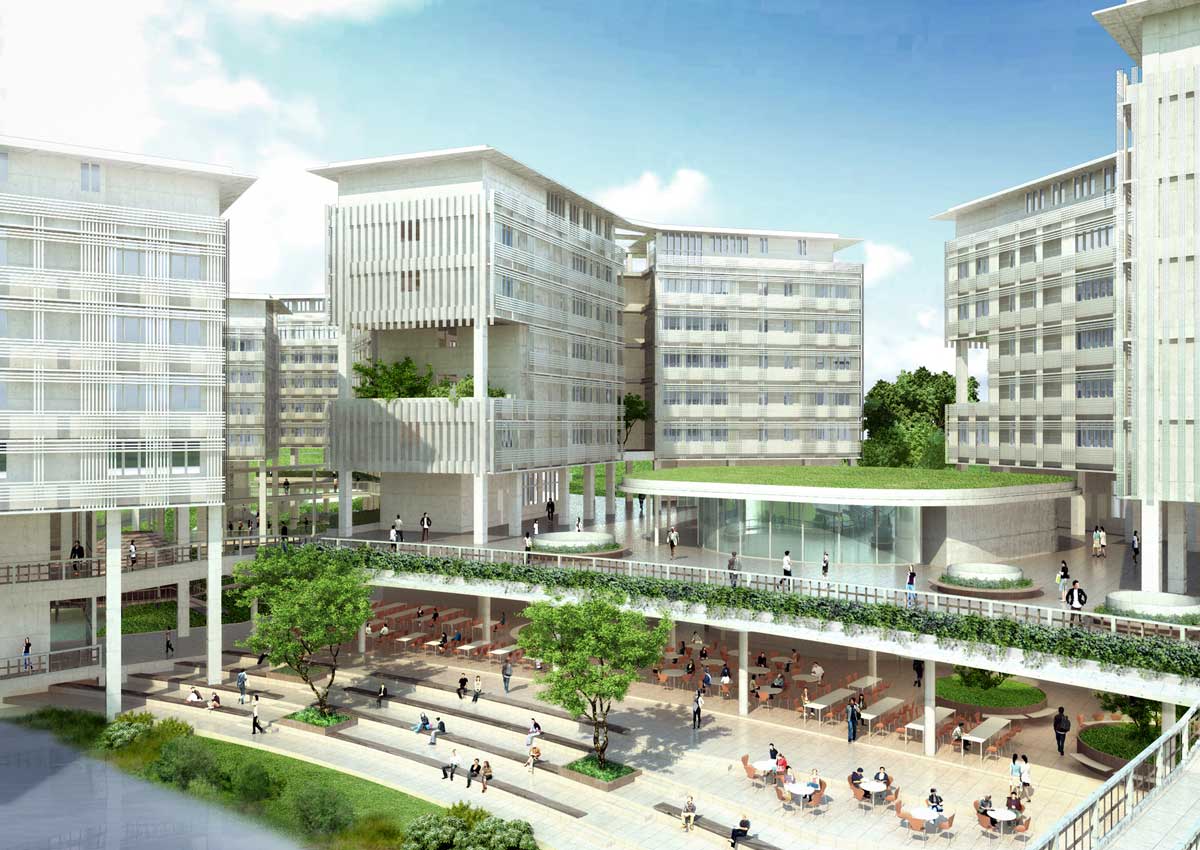
The REP combines engineering with business and liberal arts, and students spend a year at one of two partner universities – University of California, Berkeley or Imperial College London – before interning at companies abroad.

In the case of Berkeley, students intern with companies in Silicon Valley. Those heading for London work in companies such as Rolls Royce.

Now, NTU is upping the REP’s appeal by tying up with another leading engineering school – Northwestern University in Chicago, Illinois.

Students who choose to do a year there will take the design certificate course from the renowned Segal Design Institute.

Working in team-based, cross-disciplinary settings, students focus on innovative design processes to solve real problems for real clients. The course ends with each student generating a design portfolio that is presented at a Segal Design Expo. They go on to work in start-ups and companies in the United States.

NTU provost Freddy Boey said Northwestern is known for engineering design, and NTU has also set up a joint institute with it to research the areas of disease diagnostics and targeted drug delivery methods.

He said it is important for NTU graduates to have global exposure, as it will “teach them to operate in different countries and cultures”.

As the world’s largest single-campus engineering facility turning out about 3,000 graduates a year, NTU, he added, is aiming to bring the excitement back to the discipline.

Prof Boey, a materials engineer known for many inventions including the world’s smallest heart pump, said: “Sadly, students and parents still think of engineers as repairmen.

“But when the students go to Silicon Valley and UK, they see for themselves that engineers are inventors and creators. A degree in engineering can lead to interesting careers.”

He said Gen Y students want courses that are interesting and expose them to different areas so they can pick and choose. They also want to travel and have varied experiences. The REP has elements of all that.

Materials engineer Gan Chee Lip, who heads REP, said that with three partners, the programme offers more choices to students.

“Those interested in technopreneurship can head for Berkeley. Those interested in areas such as aerospace engineering can go to Imperial… Now, we have Northwestern for those interested in design,” he said.

REP student Cyndi Teh, 21, a second-year mechanical engineering student, hopes to be in the first batch at Northwestern this year.

She said: “I am really interested in product design – how to create products that people will love, that evoke feelings. “


This article was first published on March 9, 2016.
Get a copy of The Straits Times or go to straitstimes.com for more stories.

Image: 
Publication Date: 
Wednesday, March 9, 2016 – 14:00
Keywords: 
Send to mobile app: 
Source: 


Story Type: 
Others

Source link

Malaysia to have automated clearance of motorcyclists at Causeway, Second Link

0

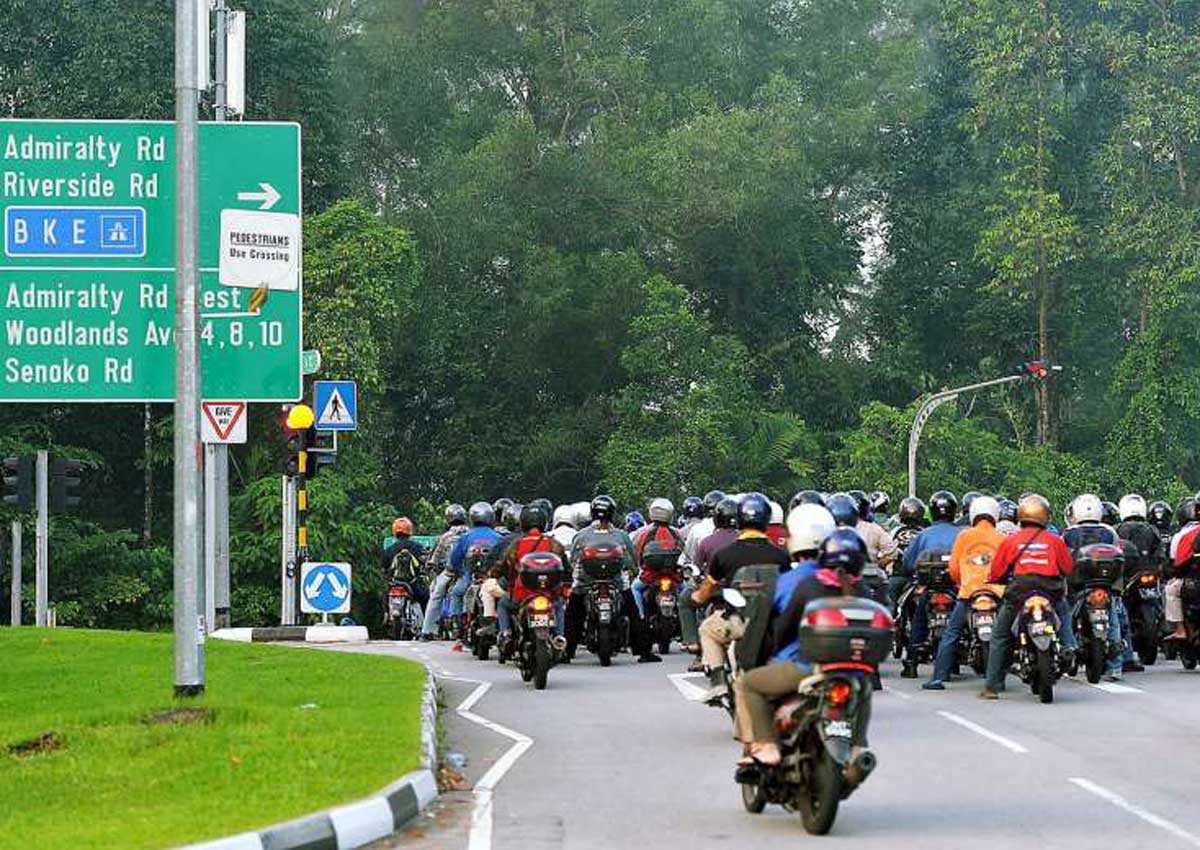
SINGAPORE – Motorcyclists will have an easier time entering and exiting Johor Baru, as Malaysia plans to implement automated immigration clearance facilities at both the Causeway and Second Link.

It will have 100 M-BIKE lanes at the Causeway and 50 lanes at the Second Link for bikers and pillion riders to scan their passports, a joint statement issued by both countries said.

No timeframe was given for when this will be ready.

But the system is similar to that used by Singapore’s Immigration and Checkpoints Authority (ICA) known as BIKES II – where riders at Woodlands and Tuas checkpoints can scan thumbprints and have passports verified by a machine at 164 counters by end-2016.

These facilities are one of several measures to strengthen transport connectivity that officials from both sides discussed when they met in Singapore on Tuesday for the 12th Malaysia-Singapore Joint Ministerial Committee Meeting for Iskandar Malaysia.

The meeting marks the 10th year of collaboration since the committee was set up in 2007 to look at how both neighbours can work together in the economic zone in South Johor.

Coordinating Minister for Infrastructure Khaw Boon Wan, who is also Transport Minister, co-chaired the meeting with Malaysia’s Minister in the Prime Minister’s Department Abdul Wahid Omar.

Also present were Johor Menteri Besar Khaled Nordin and Singapore National Development Minister Lawrence Wong, and senior officials from both countries.

The committee also discussed the progress of the Kuala Lumpur-Singapore High Speed Rail project and the Rapid Transit System (RTS) Link.

On the high speed rail project, officials noted that “discussions on the commercial, regulatory, security and technical issues are ongoing”.

The work group overseeing the project recently completed a request for information exercise on the project’s commercial model and procurement approach.

The committee also “discussed preparations towards the conclusion of a bilateral agreement between the two countries”, and pledged to implement the project “expeditiously, bearing in mind its scale and complexity”.

It also welcomed Malaysia’s confirmation that Bukit Chagar in Johor Baru will be the terminus location for the RTS that will be linked to Woodlands North MRT station.

The RTS is now in the second phase of a joint engineering study, and the committee said it “looked forward to its commencement”.

Officials also discussed tie-ups in industrial co-operation, tourism and the environment.


This article was first published on March 9, 2016.
Get a copy of The Straits Times or go to straitstimes.com for more stories.

Image: 
Category: 
Publication Date: 
Wednesday, March 9, 2016 – 11:45
Send to mobile app: 
Source: 


Story Type: 
Others

Source link

Historic olympic award for trio

0

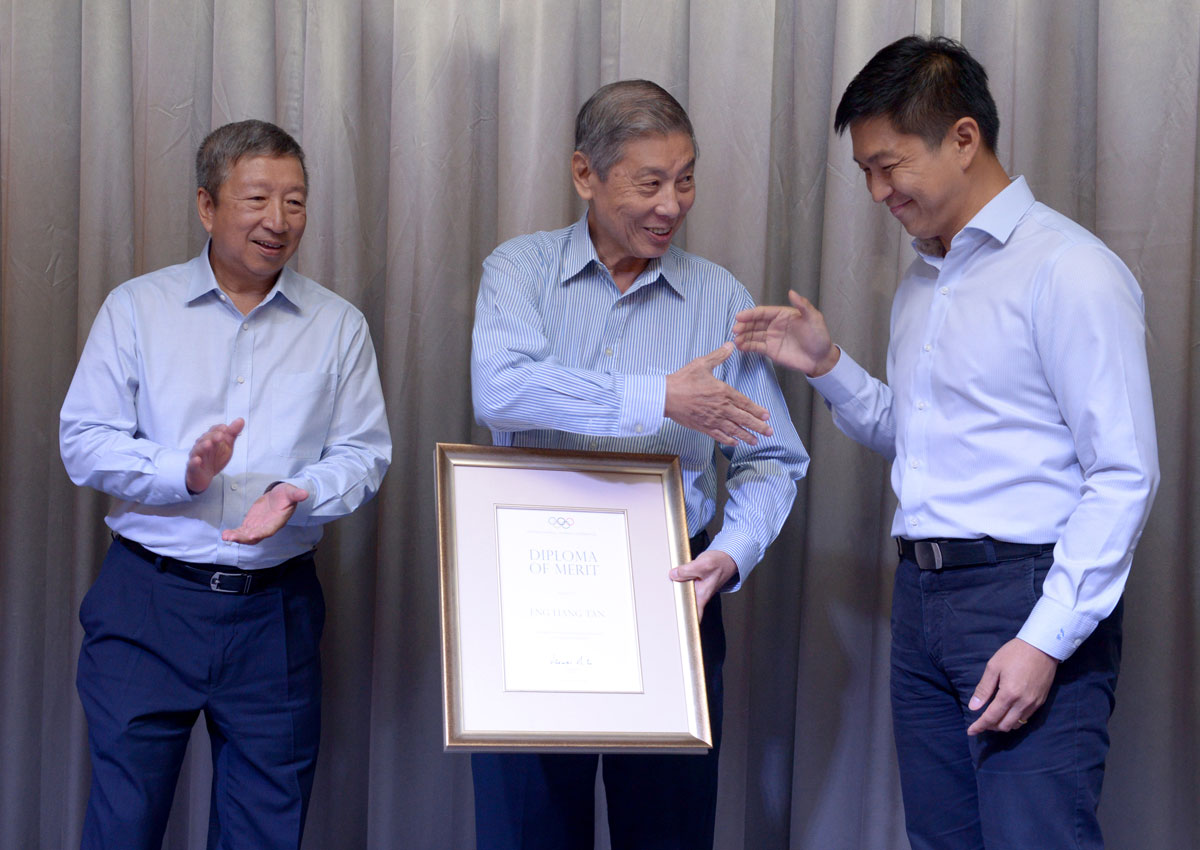
It has been 56 years since Tan Howe Liang won Singapore’s first Olympic medal. Yesterday, the 83-year-old was again honoured by the International Olympic Committee (IOC), which conferred the IOC Diploma of Merit on the former weightlifter.

Tan, along with Singapore National Olympic Council (SNOC) secretary-general Chris Chan and vice-president Dr Tan Eng Liang, received the award last night for contributions to the Olympic movement.

They are the first Singaporeans to receive the award, which was presented by SNOC president Tan Chuan-Jin and Singapore’s IOC member Ng Ser Miang.

Ng said the award recognised the contributions of each recipient to the growth of sport in Singapore. He pointed out that Tan’s Olympic silver medal still inspires aspiring athletes today.

Tan was accompanied by his wife last night at the ceremony at Faber Peak Singapore, and the former weightlifter was approached by younger athletes, including 16-year-old shooter Martina Lindsay Veloso, to autograph a commemorative Olympic book.

Said Ng: “Howe Liang is an icon and he continues to inspire.

“With the Rio (de Janeiro) Games coming up, people like Howe Liang will be an inspiration for all the Singapore athletes. As we progress, we learn to appreciate (his achievement) more.”

Minister for Social and Family Development Tan said in his speech: “Often, we seek inspiration from figures in sport, from people whose hearts are in sport not for expedient reasons or for personal benefit, but for all the priceless values that sport upholds.

“Howe Liang, Eng Liang and Chris have demonstrated these values through their commitment to sports.”

Chan has been SNOC secretary-general since 2002. The 66-year-old former vice-president of the Olympic Council of Asia is responsible for the day-to-day running of the SNOC.

The SNOC is in charge of selecting athletes to the Olympics as well as the Asian, Commonwealth and SEA Games.

Dr Tan has served as SNOC’s vice-president since 1991. Having played water polo at the 1956 Olympics, he said his love for sports kept him committed to his role as an administrator after he retired from the pool.

The 79-year-old, who received the IOC Olympic Movement Unity Trophy in 1995, said: “It’s the love in wanting to do something for sports in Singapore.”

This is not the first time that Singapore has received recognition from the IOC. Since 1986, 30 IOC awards have been handed out.

ActiveSG, Sport Singapore’s national programme for sports, was awarded the IOC Sport and Innovation Trophy for its efforts to encourage Singaporeans to take up sports.

chiazya@sph.com.sg


This article was first published on March 9, 2016.
Get a copy of The Straits Times or go to straitstimes.com for more stories.

Image: 
Category: 
Publication Date: 
Thursday, March 10, 2016 – 02:00
Keywords: 
Send to mobile app: 
Source: 


Story Type: 
Others

Source link