* Higher fuel prices could help lift freight rates –
Shanghai broker
* Brazil-China rates could climb on more Vale fixtures –
Singapore broker
By Keith Wallis
SINGAPORE, March 10 – Freight rates for capesize
bulk carriers on key Asian routes are likely to…
Source link
Asia Dry Bulk-Capesize rates to stay flat as rally runs out of steam
Chinese couple sells 18-day-old daughter to buy iPhone and motorbike

A young couple were convicted of selling their 18-day-old daughter via an instant messaging service so they could afford to buy a smartphone and a motorcycle.
According to the Shanghaiist, the couple who are both 19 and hail from the Fujian province in China, began a relationship in 2013. However, they were unable to get married as they were deemed underage by Chinese law.
When the girl, Xiaomei, became pregnant and gave birth to their daughter in 2014, the young father, A Duan, suggested that they sell their child as he considered the infant a burden.
Xiaomei reportedly did not agree with this but consented after she turned to her A Duan’s father for help and he said that sons are preferred over daughters.
The Shanghaiist also reported that A Duan sold their infant via QQ, an instant messaging platform, for 23,000 yuan (S$4,877), which he used to buy an iPhone and a motorbike.
Xiaomei allegedly broke up with him after the incident. A Duan subsequently turned himself in to the local police in June last year after threatening her that he would do so if she refused to be in a relationship with him.
NDTV also quoted Xiaomei as saying that she had been adopted herself and that she did not know that selling her daughter was “illegal”.
A Duan reportedly received a three-year prison sentence while Xiaomei received a suspended two-year sentence.
Late last year, a Malaysian girl was “sold” by her father, who was a suspected drug addict, to a couple in Singapore for $4,000.
Angie Tiong was subsequently reunited with her uncle in Johor Bahru last month.
Couple gave ‘hongbao’ to father of adopted Malaysian girl
Click on thumbnail to view photos. Source:
Sin Chew Daily/ANN, China Press, The Straits Times, The Star/ANN, Yap Yeen Min









prabukm@sph.com.sg
Image:

Publication Date:
Thursday, March 10, 2016 – 15:24
Keywords:
Send to mobile app:
Source:
Story Type:
Rewritten Story
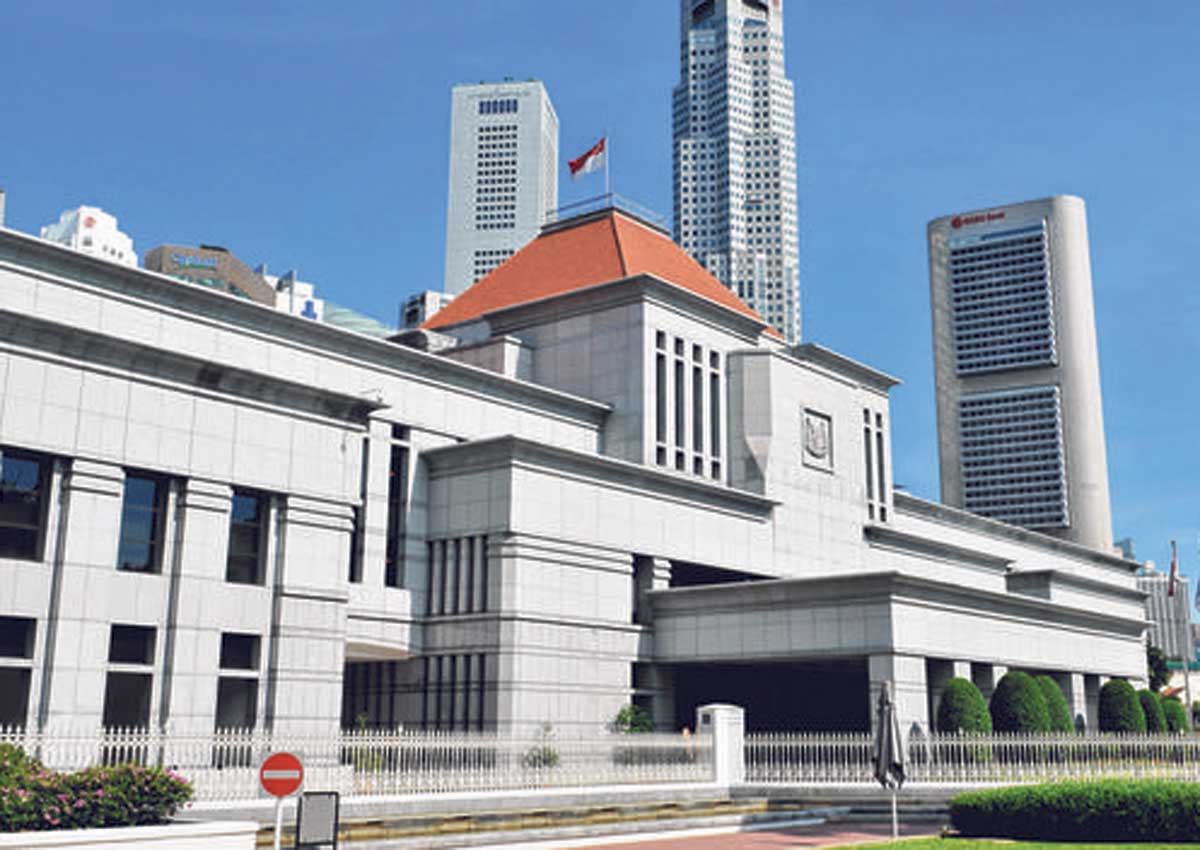
Man who threatened to blow up Parliament House and attack police officer's family jailed

SINGAPORE – After having five bottles of beer at a Geylang coffeeshop, a 31-year-old construction worker from China called the police hotline and threatened to cause an explosion at Parliament House.
He also threatened to attack the family of the police staff sergeant who was speaking to him, if he was not put through to the Istana.
On Wednesday (March 9), Zhang Quanfu was jailed for 28 weeks after he admitted to two charges under the Telecommunications Act.
The court heard that Zhang went drinking with two friends in Lorong 27 Geylang at about 3pm on July 19 last year.
At 5.39pm, he left his friends and called the police emergency hotline from a mobile phone.
Speaking in Mandarin, he told the police: “I will let the Parliament building explode immediately.”
A senior staff sergeant tried to keep Zhang talking on the line while he dispatched multiple police officers at the same time.
While the officer was still talking to him, Zhang used another mobile phone to call the 999 hotline again at 5.52pm.
This time, he said: “I immediately, want you to get me a line through to the Prime Minister’s home, do you believe, I will wipe out (your) whole family immediately.”
Zhang also told the staff sergeant, who took the second call, that he was in between Lorong 24 Geylang and Lorong 26 Geylang, and was dressed in a white T-shirt and jeans.
He also gave his name to the police, before hanging up at 6.04pm.
Another police sergeant called him back, to keep him on the line, while police officers were dispatched to Geylang.
A police corporal spotted Zhang there at 6.19pm. He was using his mobile phone and reeking of alcohol.
Zhang ignored the policeman when he was asked for his particulars.
The officer took the phone away from him and spoke directly to the sergeant on the other line, who confirmed that Zhang had made the 999 calls.
He was taken to Bedok Police Division Headquarters and arrested later that day. His blood sample found a high level of ethanol – 139mg per 100ml of blood.
Deputy Public Prosecutor Ryan David Lim told the court: “In actuality, the accused had no intention to cause any building to explode, and had no means of creating a bomb or any other explosive device.
“As a result of the accused’s actions, several police resources were dispatched and others were asked to increase patrols at sensitive locations and to heighten vigilance.”
In mitigation, Zhang said he was deeply remorseful and that his family back home was very worried about him. He pleaded for a light sentence so that he could go home as soon as possible and be reunited with his family.
The maximum punishment for transmitting a false message which contains a reference to an explosion is seven years jail and a $50,000 fine.
The maximum penalty for transmitting a false message is three years’ jail and a $10,000 fine.
Correction note: An earlier version of this article stated that Zhang had threatened to attack the Prime Minister’s family. This is an incorrect translation of his message in Mandarin. We are sorry for the error.
This article was first published on March 9, 2016.
Get a copy of The Straits Times or go to straitstimes.com for more stories.
Image:
Publication Date:
Thursday, March 10, 2016 – 15:58
Keywords:
Send to mobile app:
Source:
Story Type:
Others
Fewer injured at work, but more workplace deaths in 2015
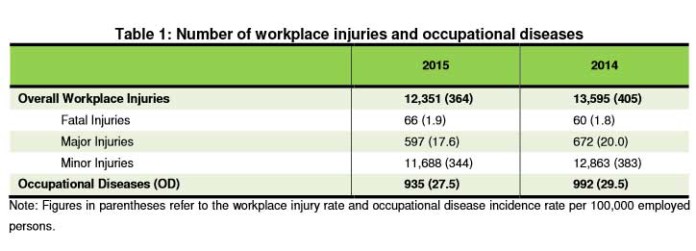
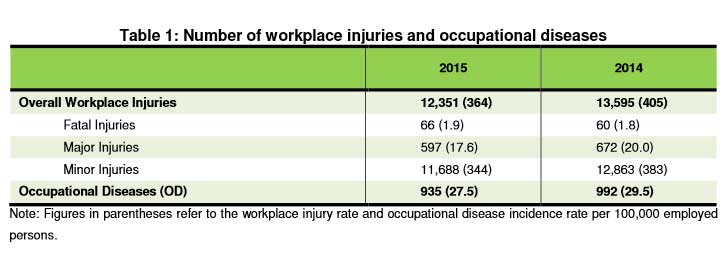
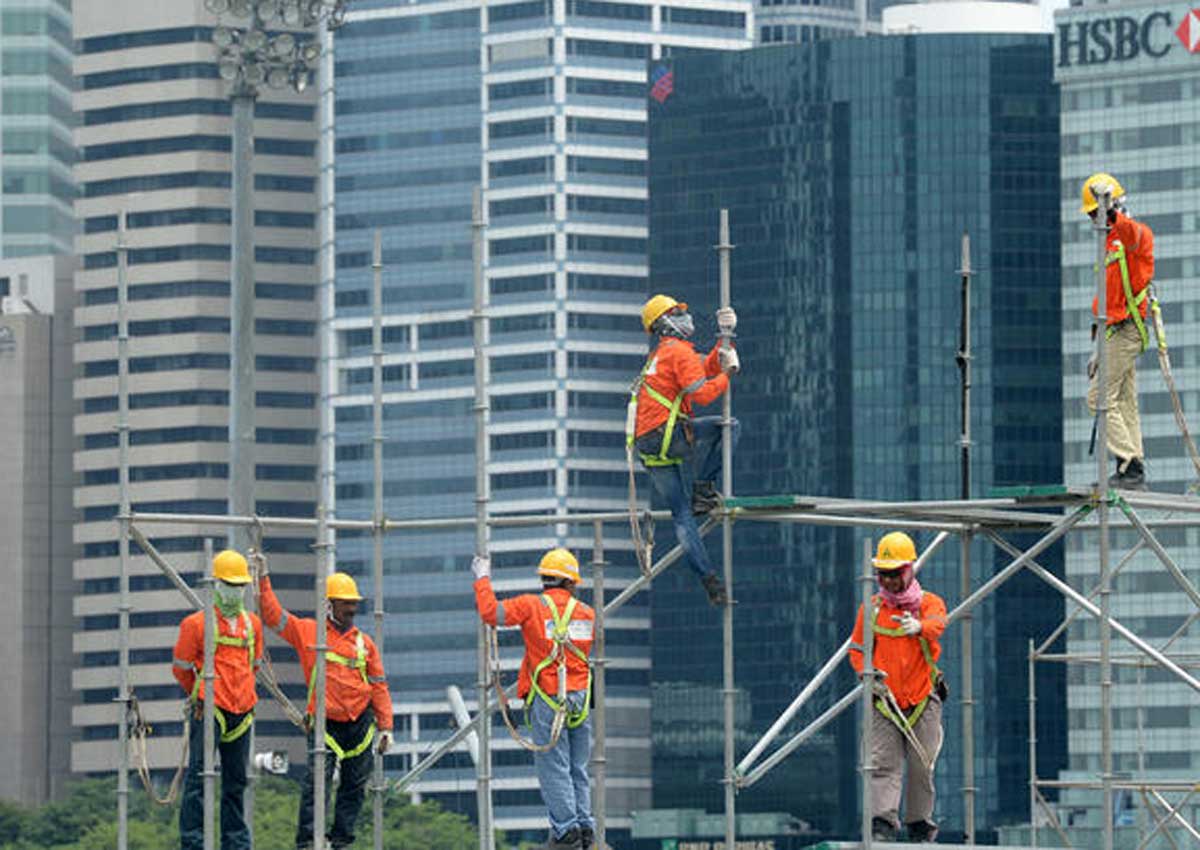
SINGAPORE – A total of 66 workers died at their workplace last year, six more than the number that was recorded in 2014.
However, fewer workplace injuries and occupational diseases were recorded in 2015 compared to the year before, according to figures released by the Workplace Safety and Health (WSH) Institute on Wednesday (Mar 10).
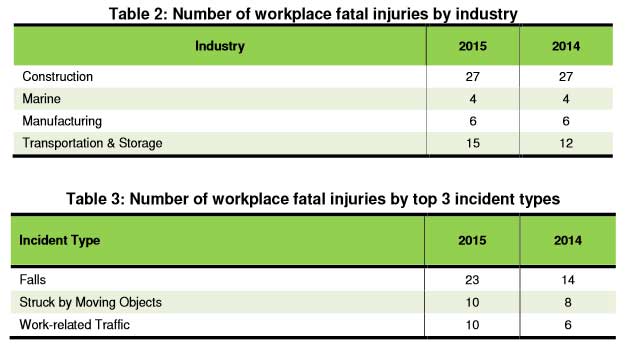
The majority of all workplace deaths last year occurred in the construction, marine and manufacturing sectors, which accounted for 37 fatalities. There were a further 15 deaths in the transportation and storage industry. The other deaths were recorded in areas such as telecommunications and food & beverage service activities.
Falls was the leading cause of death with a total of 23 fatalities. This was followed by the 10 deaths where employees were struck by moving objects and another 10 deaths caused by work-related traffic.
Other causes of death included those related to cranes, and cases from the marine, construction, manufacturing and logistics & transport sectors.
Despite the increase in fatalities, the number of non-fatal injuries at work declined from 13,535 in 2014 to 12,285 last year.
Occupational disease cases also fell to 932 cases in 2015, 60 fewer the year before.
Noise-induced deafness remained the most common type of occupational disease suffered by workers, while last year also saw a significant 65 per cent increase in occupational skin diseases due to an outbreak of skin rashes at a construction site.
Dr Gan Siok Lin, executive director of the WSH Institute, said: “We are particularly concerned about the increase in number of fatalities and dangerous occurences in 2015.”
She added that this trend had continued into the new year, with nine workplace fatalities in January alone.
Dr Gan also urged companies to check their existing work practices regularly and systematically so that they would be able to recognise workplace safety and health risks at all levels.
seanyap@sph.com.sg
Image:
Publication Date:
Thursday, March 10, 2016 – 14:15
Keywords:
Send to mobile app:
Source:
Story Type:
Others
12 injured in three-vehicle accident along AYE

March 10, 2016 3:24 PM
SINGAPORE – Twelve people were injured in a serious accident along the Ayer Rajah Expressway (AYE) on Thursday (March 10) morning.


Probation for teen, thanks to good NS conduct
A teenager who admitted having sex with a “drunk and vulnerable” schoolgirl has been placed on probation by a district judge, who took the unusual step after taking into account his commendable conduct since starting national service (NS) in January.
Ong Jack Hong was 17 when he met the Secondary 2 student, then aged 14, at a pub belonging to her boyfriend’s mother. The girl was drinking by herself.
Ong and his friends chatted her up and later, he approached her as she left the toilet of the bar at Golden Mile Complex. He carried her to a stairwell and they had consensual sex behind a closed door in December 2014.
Two months later, the girl told a nurse what had happened when she went for an unrelated medical check-up at KK Women and Children’s Hospital.
Deputy Public Prosecutor Eunice Lau argued that Ong should have been sentenced to reformative training, pointing out he had taken advantage of a vulnerable and drunk victim.
WongPartnership lawyer Ng Shi Yang, defending Ong under the Criminal Legal Aid Scheme, said he was only 17 at the time of the offence which occurred in the “heat of passion” and he was not a “sexual predator”.
He called for Ong, now 18, to be placed on probation. Ong had previously undergone probation in 2012 for causing mischief by fire.
However, District Judge Mathew Joseph considered the testimonial of Ong’s army commander, who said Ong had “so much potential” that the army could help him fulfil. The judge noted the “strong and positive words” and the testimonials vindicated a probation officer’s report that NS “could provide the much needed structure to instil discipline and readjust his lifestyle”.
The probation officer had assessed that Ong was motivated to improve his circumstances and excel in life.
The support from the army showed it was “prepared to guide him in his efforts to turn around his life”, the judge wrote in judgment grounds on Monday.
Ong had learnt his lesson from these proceedings. Strong support from Ong’s father, who is suffering from cancer, also had a “positive effect on him and raised his hopes for the future”. The judge said: “The court does not wish to see such positive hopes dashed or a more deterrent sentence imposed than is necessary.”
Making clear rehabilitation took precedence, he sentenced Ong to 24 months’ probation with conditions and 200 hours of community service.
To ensure judicial oversight and that Ong’s progress is monitored, the judge ordered his case to be reviewed at the Progress Accountability Court in June, and at further periodic intervals as decided by the court. Prosecutors are appealing against the sentence. Ong could have been jailed for up to 10 years or fined, or sentenced to both.
vijayan@sph.com.sg
This article was first published on March 10, 2016.
Get a copy of The Straits Times or go to straitstimes.com for more stories.
Image:

Publication Date:
Thursday, March 10, 2016 – 14:43
Send to mobile app:
Source:
Story Type:
Others
Policy change 'unlikely to affect hiring by law firms
While the National University of Singapore (NUS) law school’s honours policy revision will heighten the competition for Singapore students from British law schools seeking jobs here, the move is unlikely to affect law firms’ hiring policies.
It is estimated that there are now more than 950 students across 19 British universities who can potentially qualify for the Singapore Bar, according to the London-based United Kingdom Singapore Law Students’ Society (UKSLSS).
NUS Law School announced on Monday that it will double the number of first class honours degrees to 10 per cent of each cohort and raise the numbers given second class (upper) honours from 50 per cent to between 65 and 68 per cent.
“The move in a way ‘ups the ante’ for the competing Singaporean law grads from the UK,” said Rajah & Tann partner Paul Tan.
He praised the NUS Law School’s move to increase the numbers, given the higher number of first class honours given out by peer institutions like Oxford and Cambridge.
UKSLSS president Aakash Sardana called the decision “equitable, principled and sound,” adding: “This change does not do much to prosper or harm either group’s employment prospects. We look forward to fair competition with Singapore law school graduates.
“Employers have proven themselves to be sensitive to and competent at recognising different assessment standards and methods, be it across universities or jurisdiction.”
Mr Aakash noted that degree classifications “are no longer a trump card in recruitment” but are one of the factors considered.
Harry Elias Partnership lawyer Justin Chia, who is on the firm’s recruitment committee, said Singaporean law graduates from foreign universities with good results will have the same employment prospects as peers from local universities.
” The type of law which law graduates practise, whether they are from a local or foreign university, is largely dependent on their interests as well as the requirements of their respective employers,” he said.
Sharing a similar approach, Global Law Alliance senior director Niru Pillai said the firm pays same starting salaries regardless of whether they graduate here or abroad.
Director David Ang of HR firm Human Capital Singapore believes law graduates with first class honours from British universities fare generally on the same level as their counterparts here but those “from second-tier UK universities have a tougher time”.
“They have trouble finding internships,” he said. “Some 60 to 70 per cent of those who studied in foreign universities were able to find internships. As it is already difficult to secure an internship, it comes as no surprise that they will encounter some difficulties landing a job upon graduation. In addition, the graduates from the second-tier foreign universities are unlikely to be paid very well during their internships and face stiff competition in job search.”
Mr Aakash said the UKSLSS has boosted its partnership with international firms, while working predominantly with Singapore law firms. It is also working with Contact Singapore more closely to connect members to a “myriad of non-law graduate opportunities”. Contact Singapore is an alliance of the Economic Development Board and Manpower Ministry to encourage Singaporeans overseas to work, invest and live here.
vijayan@sph.com.sg
kenggene@sph.com.sg
This article was first publisheda on March 10, 2016.
Get a copy of The Straits Times or go to straitstimes.com for more stories.
Image:
Blurb:
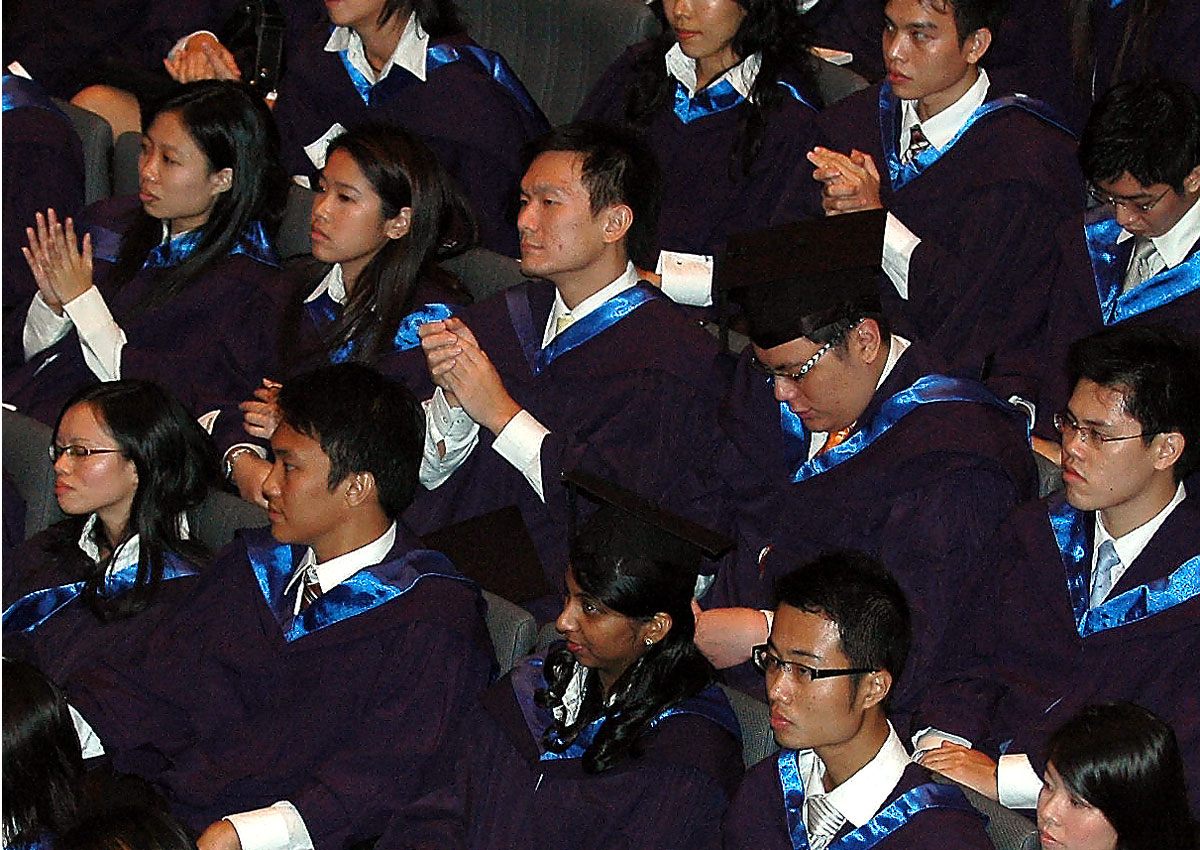
But NUS law school's honours policy revision will raise the competition level, say experts. -The Straits Times
Publication Date:
Friday, March 11, 2016 – 06:00
Keywords:
Send to mobile app:
Source:
Story Type:
Others
Beijing moots charity law to fight poverty
China wants to boost its limp charity sector, as part of its grand plan to eliminate poverty within five years. The details of a proposed charity law that would boost donations in one of the world’s least giving nations were presented to the National People’s Congress (NPC), China’s Parliament, yesterday.
“Formulating a charity law… makes contributions to achieving the goal of building a moderately prosperous society in all respects,” said NPC standing committee vice-chairman Li Jianguo. Building a “moderately prosperous society” has been a key recurring theme in this year’s NPC annual meeting.
The government wants to achieve this and lift 70 million people out of poverty by 2020. With the draft law, it has signalled that it sees charity as a potential driver.
The Bill was presented at a session where lawmakers also reviewed the NPC’s work last year, with senior Chinese leader and NPC chief Zhang Dejiang defending a controversial national security law China enacted last year.
While the sweeping law was criticised over fears that it could quash dissent and force foreign companies to turn over intellectual property, Mr Zhang said the law “defines national security in the context of China’s conditions and realities”.
“In the face of a grave and complex situation in the fight against terrorism both at home and abroad, it is of crucial importance that China intensifies its anti-terrorism initiatives,” he said.
He added that the NPC had resolved, or was slated to resolve, 80 per cent of the 8,200 suggestions and criticisms it received during last year’s NPC session.
Looking at the year ahead, Mr Zhang said the NPC will hold a new round of elections at the township and county levels across the country, during which more than 900 million voters are expected to directly elect 2.5 million representatives to local people’s congresses.
But much of the attention yesterday was on charity, which Mr Li said is “indispensable in the fight against poverty”.
The authorities are hopeful the law will rebuild the trust the Chinese have towards charities, following controversies that have hit the sector, such as the case of blogger Guo Meimei, who falsely claimed to work for China’s Red Cross then openly flaunted her wealth and extravagant lifestyle on social media.
Another obstacle is that China’s charitable groups must be affiliated with a government unit, which fuels suspicion from the public.
“Donations are often funnelled back to local governments, with little transparency about how the funds are used,” Beijing-based economist Hu Xingdou told The Straits Times. The new law would scrap the requirement of linking charities with a government organisation.
The current law has resulted in China being the second-least charitable country in the world, above only Burundi, according to a survey by London-based Charitable Aid Foundation last year. Chinese citizens donated just US$16 billion (S$22.1 billion) in 2014, or less than 0.2 per cent of its annual GDP.
The new law will force charities to make available to the public their annual work reports and financial statements. It also seeks to promote volunteerism. “The Chinese are by nature kind and charitable people,” said Dr Hu. “If this law is carried out well, there could be a lot of potential in alleviating poverty.”
chengwee@sph.com.sg
This article was first publisheda on March 10, 2016.
Get a copy of The Straits Times or go to straitstimes.com for more stories.
Image:

Publication Date:
Friday, March 11, 2016 – 03:00
Keywords:
Send to mobile app:
Source:
Story Type:
Others
Commercial vehicle COE costliest
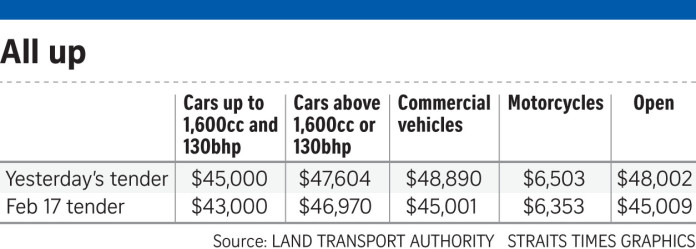
In a rare turn of events, the certificate of entitlement (COE) price for vans, buses and trucks ended higher than both car premiums at the latest tender yesterday.
COE prices for cars up to 1,600cc and 130bhp rose by 4.7 per cent to close at $45,000. Those for cars above 1,600cc or 130bhp rose by 1.3 per cent to finish at $47,604.
COE premiums for commercial vehicles, however, sprinted ahead to close 8.6 per cent higher at $48,890 – a seven-month high.
The last time this figure ended higher than both car premiums was in 2009, when an oversupply of the latter depressed prices.
Open COE prices climbed 6.6 per cent to close at $48,002. And motorbike premiums rose by 2.4 per cent to end at $6,503 – identical to the premium in February’s first tender.
Mr Ron Lim, general manager of Nissan agent Tan Chong Motor, said the latest set of results was fuelled by a sizeable cut in COE supply for commercial vehicles.
In the February-April quota period, there is a 33 per cent shrinkage in commercial vehicle COE supply. This is because more vehicle owners are subscribing to the Early Turnover Scheme (ETS), which offers incentives to owners to replace their old models with new, less polluting ones. Car COE supply, however, rises by 21 per cent.
“When the quota was rolled out, it was the Chinese New Year period,” Mr Lim said. “Most businesses were not looking at replacing their vehicles then.”
But now, they are flocking to showrooms. “Even though 60 per cent of buyers go for ETS, the COE quota is too small for the remaining 40 per cent,” he said.
Mr Lim, however, does not expect commercial vehicle COE premiums to rise much further.
One outcome of the freak results is that “Open COE can now be used for more categories”, he said.
Open COEs usually end up almost exclusively for bigger cars.
Motor traders said a huge order backlog is keeping big-car COEs buoyant, while aggressive pricing and new model launches – such as the new Hyundai Elantra, which starts from below $93,000 – are fuelling interest in smaller cars.
But Mr Lim said bidding remains restrained. “No one wants to see COE going too high and demand drying up again,” he noted.
This article was first published on March 10, 2016.
Get a copy of The Straits Times or go to straitstimes.com for more stories.
Image:

Publication Date:
Thursday, March 10, 2016 – 14:43
Keywords:
Send to mobile app:
Source:
Story Type:
Others
Singapore, India researchers discover new frog species in India’s wastelands
The frog has been named Microhyla laterite after its habitat to draw attention to the ecological importance of the area.
Source link


