March 14, 2016 12:46 PM
SINGAPORE – A new drug has been approved which has been shown to reduce the risk of cardiovascular death, as well as hospitalisation for patients with chronic heart failure.
March 14, 2016 12:46 PM
SINGAPORE – A new drug has been approved which has been shown to reduce the risk of cardiovascular death, as well as hospitalisation for patients with chronic heart failure.
The Ministry of Foreign Affairs (MFA) said on Monday (March 14) that no Singaporeans were affected by the car bomb attack which shook Turkey’s capital on Sunday.
According to the ministry, Singapore’s embassy in Ankara has contacted all registered Singaporeans and ascertained their safety.
AFP reported that the attack killed at least 34 people, and injured another 125.
The blast took place at a bus stop and reduced numerous nearby vehicles to charred husks.
A MFA spokesman said: “Singapore strongly condemns the car bomb attack in central Ankara which has resulted in the loss of many lives with dozens more injured.”
“We extend our condolences to the bereaved families and wish those injured a speedy recovery,” he added.
Singaporeans who require consular assistance should contact the embassy or the 24-hour MFA Duty Office at:
Embassy of the Republic of Singapore in Ankara
Tel: + 90 530 066 7311
Email: singemb_ank@mfa.sg
MFA Duty Office
Tel: +65 6379 8800 / 8855 (24-hour hotline)
Email: mfa_duty_officer@mfa.gov.sg
minlee@sph.com.sg

The slowing economy might be dampening demand for luxury goods, but home owners are still willing to pay top dollar for unique furnishings, retail experts said.
Homes are prized possessions here, so proud owners will spend to doll them up, even if they are becoming more selective about bigger-budget items, said Assistant Professor Elison Lim of the Nanyang Business School at Nanyang Technological University (NTU).
“They are increasingly looking for pieces with stories or personal meanings that they connect with,” she said about shoppers who have the spending power for mid-range to high-end home products.
But stores whose products are not perceived as being exclusive could be hit by such changing tastes, retail experts said.
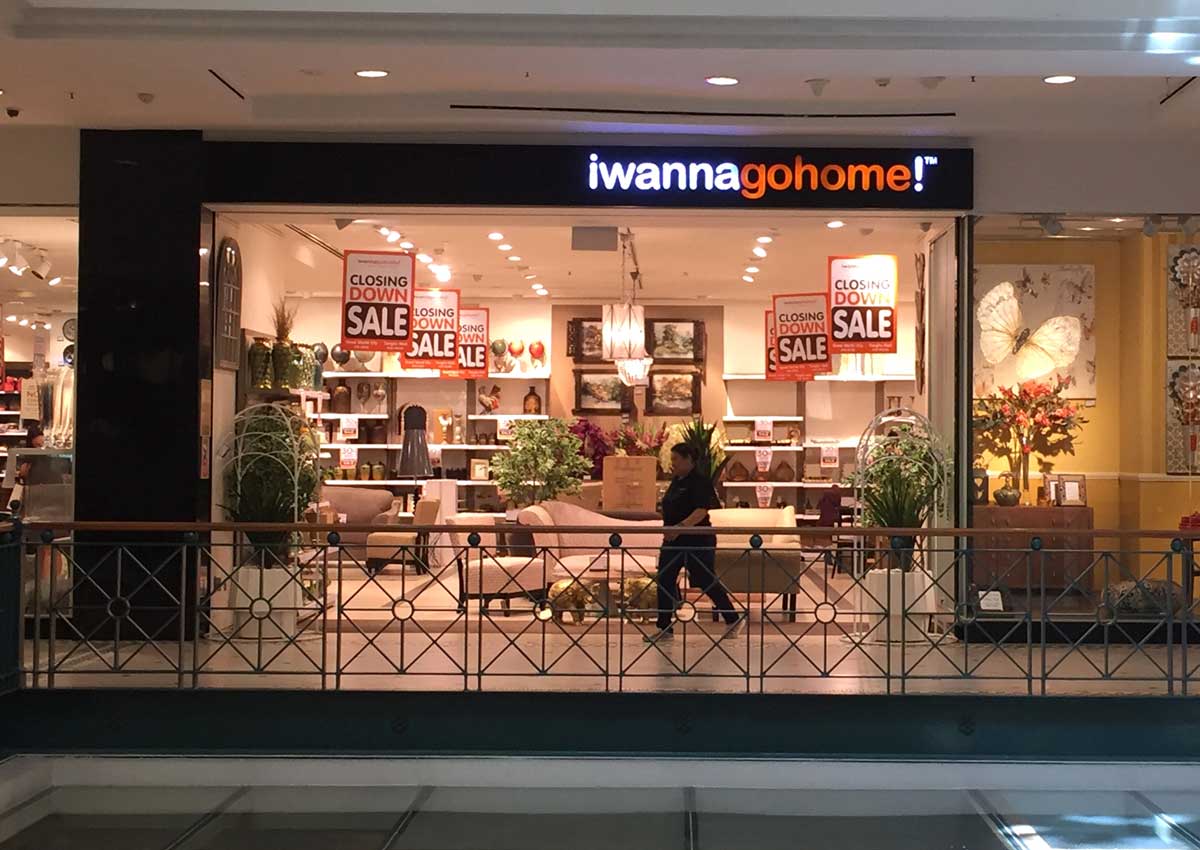
Lifestyle and home accessories retailer iwannagohome, which observers said falls into this category, told The Straits Times last month that it would close its two stores at the end of May. It announced a closing down sale at its Tanglin Mall and Great World City outlets on its Facebook page on Feb 19.
A spokesman for lifestyle group Gill Capital, which started the brand in 2007, said it is bringing in new concepts, but declined to elaborate. It also runs franchises for H&M and Candylicious in Singapore.
On Gill Capital’s website, iwannagohome is described as a concept brand that sources affordable luxury home fashion from around the world.
Mr Amos Tan, a marketing and retail lecturer at Singapore Polytechnic, noted that the brand sources its products rather than creates its own, so brand loyalty would be difficult to build because consumers could easily find the same or similar items online, at lower prices.
Several mid-range to high-end homeware retailers said business is still fine, as they have made efforts to meet evolving consumer needs.
Home accessories retailer Molecule, which has two concept showrooms at Great World City, registered slower but stable sales last year.
Senior manager Steven Goh said the company keeps a close watch on regional property markets to help it optimise merchandise planning. It also adjusts offerings and prices during slow periods such as the current one.
He noted that more customers are getting “design-savvy and house-proud”, and are willing to spend on home decor.
Multi-label store Naiise, which sells lifestyle and homeware goods, started as an online retailer in 2013. It now has five brick-and-mortar outlets, including a flagship store at Central mall in Clarke Quay. Its revenue last year was four times higher than in 2014.
Founder Dennis Tay said that, even though online shopping is convenient, “there remains strong demand for a highly personal shopping experience that offers more than familiar household brands”.
Around 70 per cent of Naiise’s products are by local designers, and include offerings such as a kueh-shaped cushion and a handmade bamboo ladder with a shelf attachment.
Singapore Polytechnic’s Mr Tan said today’s consumers are well-educated and care about the shopping experience.
“If you’re talking about mid-range to high-end, it’s not enough to just be a shop that looks good and sells products. You have to tell a story and sell an experience.
“If you want people to part with that kind of money,” he said, you need to appeal to their emotions.
tiffanyt@sph.com.sg

This article was first published on March 14, 2016.
Get a copy of The Straits Times or go to straitstimes.com for more stories.

Jackson Lim Hou Peng and his Vietnamese girlfriend were on drugs when he smothered her to death after she physically and verbally abused him.
Source link
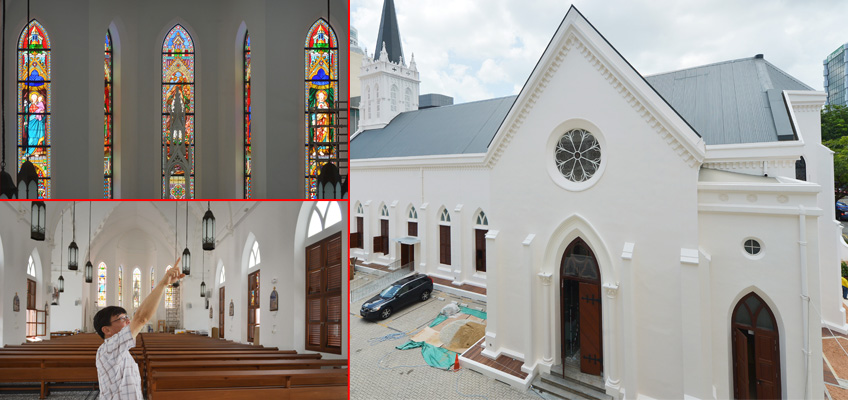
The bell of the 146-year-old Church of Saints Peter and Paul is ringing once again – filling the historic civic district with its rounded chime.
It follows a year of silence after the once-crumbling Catholic church underwent an $8 million year-long restoration that has transformed it into a gleaming national monument.
The effort involved fixing its corroded ceiling and termite-infested roof structure; restoring its 1900s teak pews and stained glass windows with the aid of Italian craftsmen and reinstating a high altar shipped in from a church in the United States.
The building at 225A Queen Street has also been equipped with air-conditioning.
It is slated to reopen for worship on Sunday, which falls on Palm Sunday. An official dedication ceremony will be conducted on June 29 by Archbishop William Goh.
Parish priest John Chua, who consulted old photos of the structure for the recent restoration, said the project was timely as there had been safety concerns about the widespread damage that had developed over the years.
The issues included cracks in the walls and floors, a ceiling that leaked, beams that were full of termites, and doors that had shifted out of their frames.
A major challenge was fixing the roof according to its original style, said Father John, adding: “Because no welding was allowed, about 1,000 holes were drilled into the wooden roof structure to secure it with bolts and nuts, as per the original design of the church.”
Chemicals were also pumped into the perimeter of the church’s walls, which will infuse into its bricks over time to address years of water seepage.
The church, which has been credited with the growth of the Chinese Catholic community in Singapore, was gazetted as a national monument in 2003.
The National Heritage Board’s Preservation of Sites and Monuments division awarded the church a $1.2 million grant for the restoration project. The neo-French Gothic building features elements of Chinese architecture, such as lotus plasterwork on its exterior columns, as well as French floor tiles within the sanctuary.
Father John said he is eager to welcome people back. He added: “The concept of restoration is both physical and spiritual. The church itself is a living entity which is restoring itself spiritually alongside its physical transformation.”
In the interim, its 1,700 parishioners have been attending weekend services under a tent at the church’s open-air carpark.
Father John said: “A couple of people even fainted because of the unbearable heat. Surprisingly, attendance did not dwindle.”
The restored church, which can seat 450 people, will be holding five weekend masses each week.
Father John said the church is not just for Catholics. “We’re right smack in the middle of an arts and cultural centre,” he said.
“Anyone who comes by will get to enjoy or appreciate its architecture – a unique combination of French, English colonial and Chinese stylings which also reflects the culturally rich and diverse history of Singapore.”
melodyz@sph.com.sg

This article was first published on March 14, 2016.
Get a copy of The Straits Times or go to straitstimes.com for more stories.


Early yesterday morning, a small contingent from the Singapore Democratic Party (SDP) turned up for a walkabout in Bukit Batok.
It comes as no surprise that the opposition party has so quickly staked its claim for the constituency that is headed for a by-election after the shock resignation of People’s Action Party MP David Ong over an alleged affair.
Not only is Bukit Batok the party’s old stomping ground, but the upcoming by-election could also be its best chance to emerge from two decades in the political wilderness. It was once the top dog in Singapore’s opposition scene, wining three seats in the 1991 General Election. But infighting saw the party lose its seats in one term, and it has not had a presence in Parliament since 1997.
During last September’s general election, it had come back fighting, but still fell far short of winning any of the 11 seats it contested.
The upcoming by-election in Bukit Batok is thus seen by the SDP as its best chance of re-entering the House. For starters, the party has a history of contesting the area and is the opposition party with the strongest presence there. Besides last year’s polls, it contested Bukit Batok in 1988 and in 1991, getting over 48 per cent of the votes before the seat was absorbed into a GRC.
Bukit Batok also has about 27,000 voters and will not require the daunting levels of logistics needed to contest a GRC.
On the party’s side is also the much-touted by-election effect – what observers see as voters being more willing to elect an opposition candidate because the ruling party is in no danger of losing power.
Some say this by-election effect played a part in the Workers’ Party’s (WP) victory in the 2013 Punggol East by-election, triggered by the resignation of then Speaker Michael Palmer.
There are parallels in both situations. Like Mr Ong, Mr Palmer had admitted to an affair.
Both areas are also newly carved out single seats, barely warmed by the resigning MPs after a recent general election.
Punggol East had been hived out in the 2011 election, and Mr Palmer won it in a three-cornered fight. He resigned a year later. Likewise, Bukit Batok was just carved out in the last election, where Mr Ong also won in a three-cornered fight.
The SDP says it has not decided who to field, but the choice of candidate could be key to determining the party’s chances.
If former teacher Sadasivam Veriyah – who stood against Mr Ong last year – is picked again, the party must be confident that its groundwork in the six months after the polls has been solid enough to improve on his 26.4 per cent performance.
Party chief Chee Soon Juan has also not ruled himself out.
He had pulled in the crowds at his rallies last year, but it did not translate into votes at the ballot box, and his GRC team polled 33.4 per cent in Holland-Bukit Timah.
If he runs, it would mean the SDP is keeping faith that his more moderate image in recent years will win over voters.
But fielding another candidate will help dispel criticism from certain quarters that the SDP revolves around Dr Chee.
One possibility is National University of Singapore medical professor Paul Tambyah, a recognised infectious diseases expert who does not have the historical baggage of Dr Chee’s numerous run-ins with the law that makes some older voters wary of electing him.
For now, the most immediate task for the SDP would be to dive into the retail politics of house visits. Bukit Batok is seen as an uphill battle for the opposition as it is in the west, which has given the PAP handsome margins of victories in the past few general elections.
The SDP will have to comb the constituency thoroughly to raise its chances of winning.
It will also have to play its cards right to clear the field of other opposition parties to ensure it gets to contest the PAP one-on-one.
On this count, the continued silence of the WP – the only opposition party with MPs – must be especially worrying for the SDP.
In 2013, the SDP declared its intention to contest in Punggol East, encroaching on WP ground, before ultimately backing down.
If the WP does contest Bukit Batok to settle scores, the SDP will find its attempt to regain a foothold in the House undone by the party it ceded its opposition crown to, even before the by- election begins.
ziliang@sph.com.sg

This article was first published on March 14, 2016.
Get a copy of The Straits Times or go to straitstimes.com for more stories.


Bangkok – Eight people died and seven were injured when they accidentally triggered a fire extinguisher system in the headquarters of a major Thai bank, releasing a suffocating cloud of chemicals, officials said Monday.
The accident occurred late Sunday night in the basement of the Siam Commercial Bank (SCB), one of the country’s largest financial institutions.
SCB said contractors had been working to improve the building’s chemical fire extinguishers but mistakenly set off the system, releasing chemicals that likely caused oxygen levels to plummet.
“The work may have triggered (the) Pyrogen aerosol which, once it works, will decrease oxygen, that could cause people’s injuries and death,” the bank said in a statement.
Pyrogen manufactures a type of aerosol fire extinguisher that is used in places where putting out a fire with water would damage documents or electrical equipment.
On its website the company says its aerosol does not deplete oxygen. But it also advises against using it in occupied rooms and says “accidental exposure should be limited to five minutes”.
Bangkok’s Erawan emergency medical centre said five people were killed at the scene while three died in hospital.
Seven workers were injured and remained in hospital, the centre added.
“SCB would like to express its sympathy to those injured and killed,” the bank said in its statement, adding it was cooperating with police.
The bank said the rest of the building was not affected and was open for business.

Bukit Batok MP David Ong had to step down after he admitted to a personal indiscretion as the People’s Action Party (PAP) has standards to uphold, party Whip Chan Chun Sing said yesterday.
“We have taken very decisive action from the time we knew of this very unfortunate incident,” he said.
“At this point, our focus is on the residents of Bukit Batok – to make sure we continue to serve the residents and maintain the high standards that residents and Singaporeans have come to expect from the PAP.”
Mr Chan, who is Minister in the Prime Minister’s Office and secretary-general of the National Trades Union Congress (NTUC), was speaking to reporters at a Chingay event in Tanjong Pagar GRC.
He was asked, among other things, about how the PAP views an MP’s personal conduct and its impact on his constituency work.
Mr Ong, 54, is said to have had an extramarital affair with a married woman, a grassroots activist in his constituency.
In a statement on Mr Ong’s resignation last Saturday, Prime Minister Lee Hsien Loong had said it was in the best interest of the constituents, the party and Mr Ong’s family.
PM Lee also said that a by-election will be called “in due course” in Bukit Batok.
Last night, Mr Chan said the PAP acknowledged that Mr Ong and his team “served the residents to the best of their abilities”.
“But there are standards that the party also wants to uphold, and we have been consistent all this while,” he added.
When asked about the PAP’s candidate selection process, given that Mr Ong’s resignation comes six months after the September 2015 General Election, Mr Chan said there is always room for improvement.
“As a system, we must never be complacent. We must make sure that we continue to keep our eyes and ears on the ground and make sure we check our blind spots constantly,” he said.
He added that while the PAP aims to minimise such incidents, equally important is how the party reacts when faced with such wrongdoing.
“Circumstances themselves will not necessarily define us – how we respond to circumstances will define us. We want to do the right thing for the residents, for the country. That is what people have come to expect of us,” he said.
Mr Chan said this was also why the PAP moved quickly to make sure residents are taken care of by appointing Jurong GRC MP Desmond Lee as the PAP branch chairman in Bukit Batok, as well as adviser to its grassroots organisations.
Party activists and MPs from the adjacent divisions will also chip in to help, Mr Chan added.
He declined to comment on the timing of the by-election to fill the seat, who will be fielded or on opposition interest in the seat.
He said the focus should be on serving the residents at the local level, as well as keeping an eye on national challenges such as economic and security issues.
“The economy is slowing down. We have the latent security challenges. There are many things we have to focus on in building the infrastructure for the next lap,” he said.
Mr Chan added that he was sure PM Lee will pick an appropriate date for the by-election, taking into account national priorities that the country has to grapple with.
He did not specify when the PAP got wind of Mr Ong’s problems, saying only that the party acted “in a very short time”.
Mr Chan also hoped that the children involved in this episode will not be affected, and urged the media to be mindful of this.
He said: “Whatever the adults do, we should try our very best to never harm the children’s interest.”
ziliang@sph.com.sg

This article was first published on March 14, 2016.
Get a copy of The Straits Times or go to straitstimes.com for more stories.



SINGAPORE – Blogger Roy Ngerng will pay S$100 a month for five years, and S$1,000 a month subsequently in damages awarded to Prime Minister Lee Hsien Loong for defamation until the full sum of S$150,000 is paid.

In a hearing on Monday morning (March 14) to…
Source link
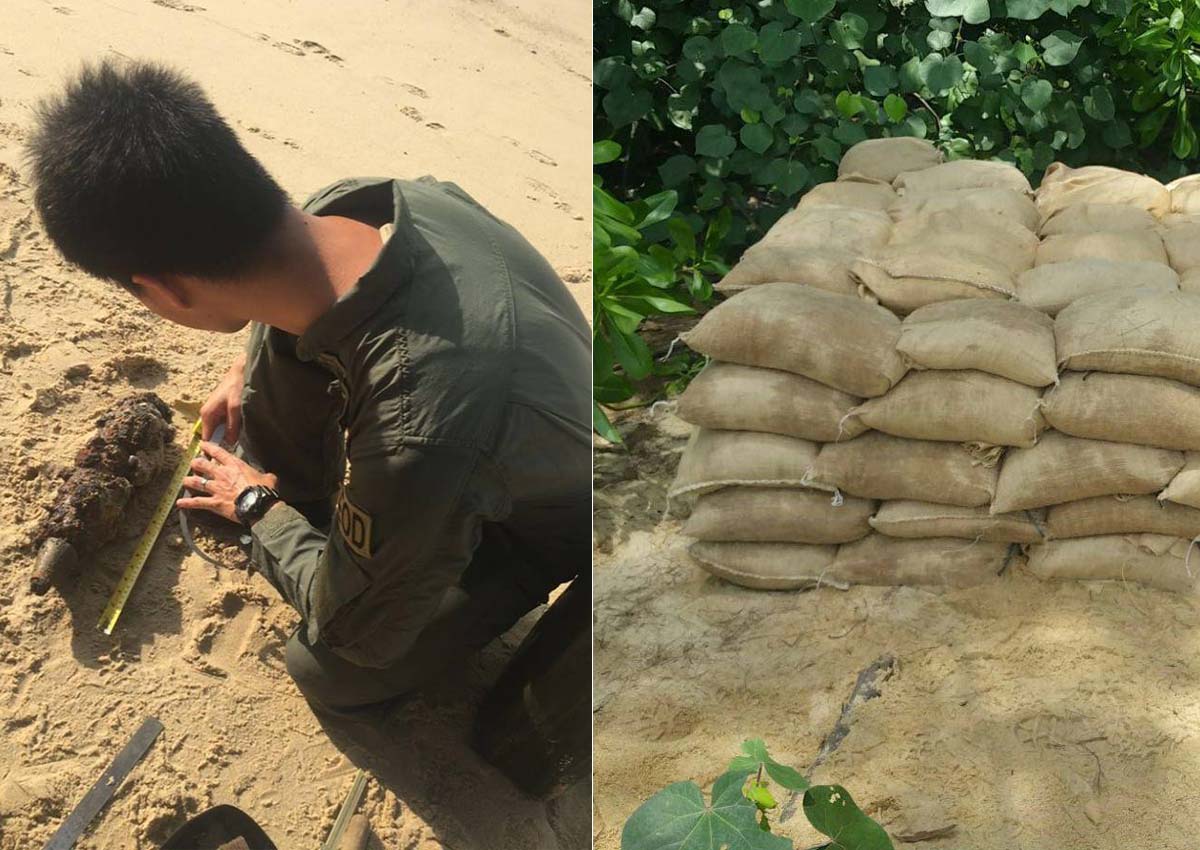
Singapore Armed Forces (SAF) said on Sunday (March 13) its explosive ordnance disposal team had safely detonated a suspected war relic found at East Coast Park.

In a Facebook post, the Singapore Army shared that the war relic was found to be a 25 pound (11.3kg) projectile.
It was safely disposed on the site on Sunday afternoon.
SAF added: “Kudos to the EOD for always being operationally ready and keeping us safe!”
Earlier this morning, our SAF Explosive Ordnance Disposal (EOD) team was activated when a suspected war relic was found…
Posted by The Singapore Army on Sunday, March 13, 2016
According to The Straits Times, a total of nine war relics have been found and safely detonated by the Singapore Army since the start of the year.
Seven of them were discovered at a construction site near Changi Airport Terminal 2, a 155m projectile was found in a construction site at Changi Coast, and a 105mm British projectile was discovered in Sengkang West.
minlee@sph.com.sg