Home Blog Page 4552

School transfers fair, more transparent with new guideline

0

Secondary schools were directed to stop taking in transfer students who do not meet the cut-off point, to make the schools transfer process more transparent and fair, said Acting Education Minister (Schools) Ng Chee Meng in Parliament yesterday.

The previous practice allowed schools to take in transfer students based on factors such as performance in co-curricular activities and connections to the school, noted Mr Ng.

He said this was not “entirely fair or transparent” to those students who were not posted to the schools despite having a similar or higher Primary School Leaving Examination (PSLE) score.

“This new guideline… is to ensure, and assure parents and students, that the system for appeals and transfers is transparent, objective and fair to all students,” he said, explaining the rationale behind it.

Under the rule put in place last November, secondary schools are no longer allowed to take in transfer students whose PSLE T-scores do not meet the school’s cut-off, except in special circumstances.

Mr Ng said many transfer appeals that schools receive are from students who fell short of the cut-off.

These appeals typically cited factors such as good performance in co-curricular activities, connections to the school and proximity to a student’s home. Allowing transfers based on these factors will mean that these take precedence over the PSLE T-score, he said.

He added that the Ministry of Education (MOE) had received feedback from some parents who were unhappy as they felt the old transfer process “was not sufficiently fair and transparent”.

After reviewing the feedback, MOE decided it would be better to have a simpler system, where only students who meet the school’s cut-off will have their transfer appeals considered, he said.

Mr Ng said 95 per cent of students are posted to a school of their choice, and 90 per cent to a school from their top three choices.

Since the change, more than 800 students have successfully transferred to another school, he added.

Most of these students met the school’s cut-off point, and those who did not had appealed “on the basis of medical, special needs or exceptional circumstances”.

Asked to elaborate on these cases, Mr Ng gave an example of a student who has a congenital problem requiring her bladder to be cleaned every four hours. Her appeal to transfer to a secondary school near her home was successful, although she did not meet the cut-off point.

Mr Ng was responding to Dr Lim Wee Kiak (Sembawang GRC), who asked about the change and said some parents had complained that the rule was not announced earlier.

Many students found out about the change only through online forums, or when their transfer requests were rejected.

Mr Ng acknowledged the MOE “could have done better” in communicating the rule, and said it would learn from the experience.

Mr Lim Biow Chuan (Mountbatten) asked if the MOE, which has moved away from focusing on scores, is now backtracking.

Mr Ng said the ministry has not changed its philosophy. He added that the schools admission system recognises students’ non-academic talents through schemes such as the Direct School Admission, which allows schools to admit students before the PSLE using criteria such as talent in sports or the arts.

“It would be better to maintain a system that is seen to be fair, transparent and meritocratic,” he said.

leepearl@sph.com.sg


This article was first published on March 15, 2016.
Get a copy of The Straits Times or go to straitstimes.com for more stories.

Image: 
Publication Date: 
Tuesday, March 15, 2016 – 17:00
Send to mobile app: 
Source: 


Story Type: 
Others

Source link

Married man accused of raping minor 'attempted suicide'

0

A 45-year-old man, who faces multiple charges of sexually abusing a girl when she was between 11 and 13 years old, supposedly tried to take his own life, the High Court heard yesterday.

The case was scheduled to be heard yesterday morning but the man, who was out on bail of $70,000, did not turn up.

In the afternoon, his wife told the court that he had tried to commit suicide by locking himself in a room at home, burning charcoal and inhaling the fumes.

She told the court that when she found out what he had tried to do, she took him to the Institute of Mental Health but was advised to seek medical treatment at the nearest hospital for inhalation of fumes.

“He is still in the emergency ward for testing and scanning,” she said.

The case was adjourned to a date to be fixed.

The man, a managing director, cannot be named to protect the identity of the girl, who is now 14 years old. It is understood that she is his son’s former girlfriend.

He faces a total of 17 charges – five for statutory rape, 10 for sexual penetration of a minor, one for sexual exploitation of a child and one for criminal intimidation.

The man allegedly engaged in various sex acts with the girl between December 2012 and June 2014, including consensual sex at Copthorne King’s Hotel, Village Hotel Changi, and on the rooftop of a condominium.

Under the law, sex with a girl under 14 – with or without her consent – is considered rape.

On five occasions between March 2013 and November 2013, the man also allegedly engaged in sex acts with the girl in his car at Pasir Ris Park.

In December 2013, he allegedly asked the girl, who was then 12, to take photos of herself naked and in various poses and to send the pictures to him.

In mid-2014, the man allegedly threatened to post her photos online.

On each charge of rape and sexual penetration, the man faces up to 20 years in jail as well as caning or a fine.

The punishment for sexual exploitation is a fine of up to $10,000 or jail of up to five years or both.

Criminal intimidation carries a jail term of up to two years or a fine, or both.


This article was first published on March 15, 2016.
Get a copy of The Straits Times or go to straitstimes.com for more stories.

Image: 
Publication Date: 
Tuesday, March 15, 2016 – 14:00
Send to mobile app: 
Source: 


Story Type: 
Others

Source link

Land Transport Authority appoints new chairman

0

The Ministry of Transport announced on Tuesday (March 15) that Mr Alan Chan Heng Loon will be appointed as chairman of the Land Transport Authority (LTA) from April 1.

He succeeds Mr Michael Lim Choo San who has held the position for the past 14 years.

Mr Chan who has been the chief executive officer of Singapore Press Holdings (SPH) since Jan 1, 2003, is also a member of the Public Service Commission and a director of Business China. He chaired the Council that revised the Code of Corporate Governance in 2012.

Before joining SPH, Mr Chan was an administrative officer in the Civil Service. His previous appointments included Permanent Secretary of the Ministry of Transport, Deputy Secretary of the Ministry of Foreign Affairs and Principal Private Secretary to then-Senior Minister Lee Kuan Yew.

MOT said: “Mr Chan’s extensive leadership experience will offer LTA invaluable guidance in the future development of land transport in Singapore.”

The ministry also thanked outgoing chairman Mr Lim for his contributions to LTA, and said that many key land transport strategies were launched and implemented under his stewardship.

They include the launch of the Land Transport Master Plan in 2008, rail projects that expanded Singapore’s rail network to cover more than 200km island-wide, as well as the launch of the Bus Service Enhancement Programme that increased bus capacity and bus service levels.

minlee@sph.com.sg

Image: 
Category: 
Publication Date: 
Tuesday, March 15, 2016 – 11:33
Send to mobile app: 
Source: 


Story Type: 
Rewritten Story

Source link

Teen's death: Schools assess suicide risk but not for every police case

0

When the police turn up at a school seeking a student for investigations, school staff will check on the student’s emotional and physical well-being, but will not conduct a suicide risk assessment in every case, Acting Education Minister (Schools) Ng Chee Meng said in Parliament yesterday.

Instead, such assessments are done only for those students who show signs of serious emotional distress or are known to have mental health issues, he added in response to questions from two MPs.

“We do not conduct a suicide risk assessment for every case as such screening may add distress or confusion to some students, especially for those who have not even contemplated suicide,” said Mr Ng.

Yesterday, Non-Constituency MP Daniel Goh had asked if schools assess students in police probes for suicide risk.

In January, secondary school student Benjamin Lim was found dead at the foot of his block, hours after he was taken from his school by the police and questioned over a molest case. Mr Ng and Law and Home Affairs Minister K. Shanmugam had delivered ministerial statements on the 14-year-old’s death when the House sat earlier this month.

Mr Ng said yesterday that all school counsellors are trained to assess students for suicide risk, and consider factors such as a student’s personal circumstances and medical status. The counsellors also check if the student has attempted suicide in the past, and ask the student if he plans to take his life.

But the minister cautioned that such assessments are not foolproof, “given the dynamic psychological state of a child”.

“Subsequent developments that occur after the assessment can also alter the risk profile of the student,” Mr Ng added.

He said it is more important to consistently monitor and support the student, adding that schools and parents have to work together.

Teachers and counsellors will look out for the student before and during questioning at the school, after the student returns home from the police station, and when the student returns to school, he said

Likewise, parents must give greater attention to support their child during this period, he added.

He reiterated that the Ministry of Education is taking part in the review of police procedures involving minors, which the police had announced following Benjamin’s death.

Depending on the review, the ministry is open to the possibility of having school counsellors act as appropriate adults, Mr Ng said.

Currently, appropriate adults sit in when the police take statements from people with intellectual or mental disabilities.

Mr Ng also outlined the training that teachers and counsellors go through, in response to Dr Fatimah Lateef (Marine Parade GRC), who asked how schools support students with mental health issues.

He said teachers are trained to keep an eye out for students who show distress signals and talk to them, among other things.

Students who need more support are referred to school counsellors, who all have professional qualifications in counselling, said Mr Ng.

The more severe cases are referred to medical professionals.

He said these systems were developed in consultation with mental health experts, including Dr Daniel Fung of the Institute of Mental Health.

“Our schools take the psychological and mental well-being of our students very seriously,” said Mr Ng.


This article was first published on March 15, 2016.
Get a copy of The Straits Times or go to straitstimes.com for more stories.

Image: 
Category: 
Publication Date: 
Tuesday, March 15, 2016 – 14:00
Send to mobile app: 
Source: 


Story Type: 
Others

Source link

A whale of an exhibit

0

The latest attraction at the Lee Kong Chian Natural History Museum – the skeleton of a whale found floating in Singapore waters off Jurong – goes on display from today.

Visitors can get close to the skeleton and see it “eye to eye” – it is displayed in a diving pose with its skull just 1m off the floor.

This is unlike most museum whale skeletons, which are usually hung horizontally near the ceiling.

“We wanted to give the whale a natural pose in a limited space,” said museum conservator Kate Pocklington, who was one of five researchers at the museum involved in preserving the skeleton.

The skeleton of the adult female sperm whale takes pride of place in the mammals section of the museum at the National University of Singapore.

The carcass of the 10.6m-long whale was discovered floating off Jurong Island on July 10 last year – the first time the marine mammal has been spotted in Singapore waters.

Museum scientists say it is likely to have died after being hit by a ship, as its dorsal hindquarters had a large wound. Broken backbones were also found below the injury.

It was nicknamed Jubi Lee by museum staff, as it was found during the nation’s Golden Jubilee year.

“As an older Singaporean, I am overjoyed by the return of a whale to our natural history museum,” said Ambassador-at-large Tommy Koh, who was at the official launch of the whale exhibit last night.

The skeleton of a 13m-long Indian fin whale was shown at the old National Museum from 1907 to 1974 before it was given to Malaysia.

“Jubi Lee is even better than the whale we gave away because it was found in our waters, because it belongs to a species seldom found in our waters, and because the skeleton is in perfect order,” he added.

The museum’s head, Professor Peter Ng, told The Straits Times it was rare for the whale skeleton to be preserved and mounted in just eight months.

“In most countries, the carcass is buried, allowed to rot, and only after several years is the skeleton excavated… We have expedited the process through very hard work – no mean feat. And it did not come cheap.”

The museum has raised around $1.3 million for scientific and educational efforts related to the sperm whale carcass. Half of it went to setting up the exhibit, while the other half will be used for marine biodiversity education and research.

Besides marvelling at the size of Jubi Lee, visitors can learn more about its biology, the threats it faced, and how it was discovered.

Plastic cups and bags found in its gut, for instance, will be on display.

Educator Mary Lim, 38, who was at last night’s event, said it could teach children about the value of fossils. Her son, Elijah, seven, said of the plastic found in the whale’s gut: “It is disgusting and sad that the whale ate them, they look dirty.”

Tickets to Lee Kong Chian Natural History Museum can be bought at the door – at $16 for adult Singapore residents, and $9 for children. For more details, go to lkcnhm.nus.edu.sg.

audreyt@sph.com.sg


This article was first published on March 15, 2016.
Get a copy of The Straits Times or go to straitstimes.com for more stories.
Image: 
Category: 
Publication Date: 
Tuesday, March 15, 2016 – 14:00
Send to mobile app: 
Source: 


Story Type: 
Others

Source link

MP Louis Ng: Why I'm all for tobacco display ban

0

He threw away his last packet of cigarettes when he landed in Orlando, Florida, where he was going for a conference in Disneyland.

Nee Soon GRC MP Louis Ng regretted it right away, as he would be at the theme park for a week and it did not sell any cigarettes.

But it was this spur-of-the-moment decision in 2013 that eventually helped the smoker of 17 years to quit for good.

Mr Ng, 37, shared his personal story in Parliament yesterday as he expressed his support for an amendment to the Tobacco Bill that will control the sale and advertisement of tobacco products.

He told The New Paper yesterday: “I started out of curiosity in the second year of junior college and I had been trying to quit for the longest time. I eventually managed to quit four months before the birth of my daughter, who is now two.”

In Parliament yesterday, Mr Ng described the difficulties he faced while trying to quit, such as trying to avoid places that sold cigarettes.

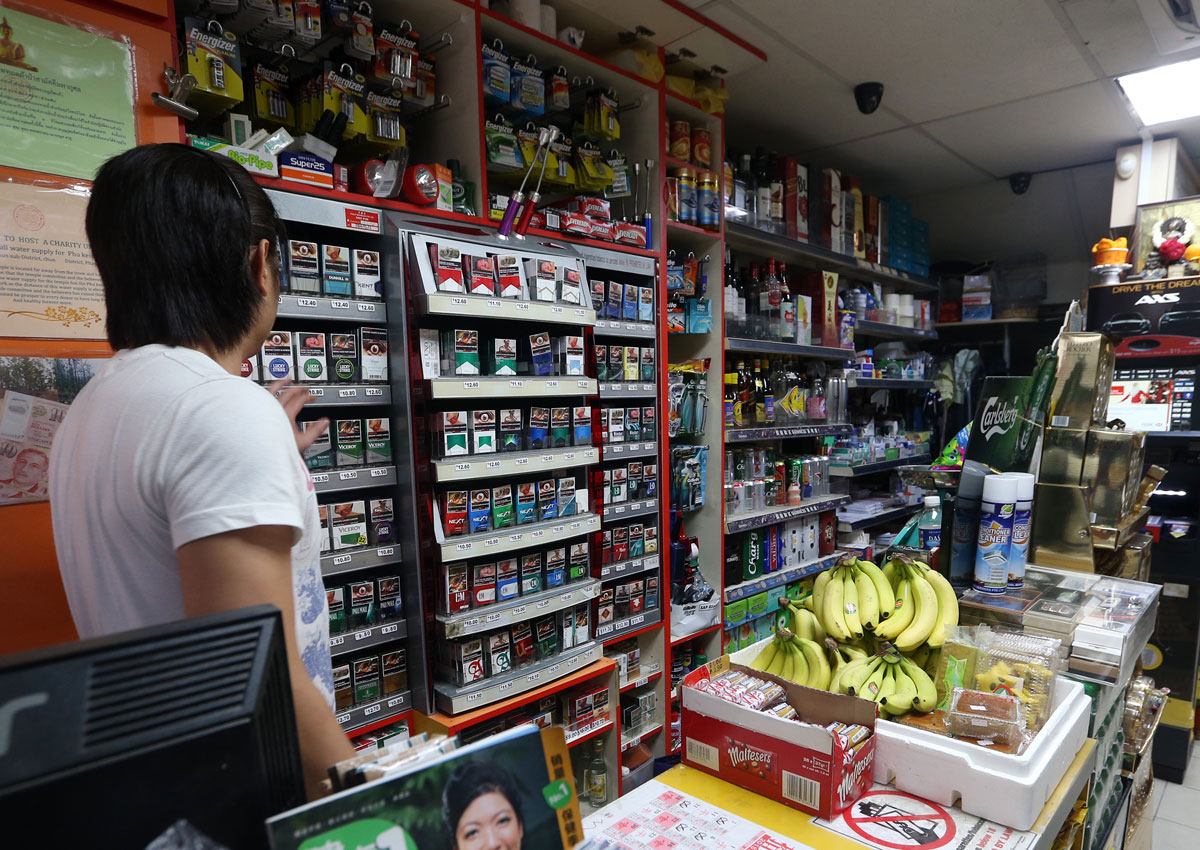
This is why he supports the Bill, which was passed yesterday, that will introduce the point-of-sale display ban of tobacco products.

He said: “This will not only help people who are trying to quit but also possibly reduce the number of people who are enticed to start smoking.”

The Bill will also address new regulatory challenges posed by the tobacco industry, such as e-cigarettes and online advertising. (See report above.)

Dr Amy Khor, Senior Minister of State for Health In Singapore, told the House that about six Singaporeans die prematurely from smoking-related diseases each day.

Smoking rates have fallen over the years, from 18.3 per cent in 1992, to an all-time low of 12.6 per cent in 2004.

But in recent years, the prevalence has crept up to 13.3 per cent in 2013.

While supporting the Bill, several MPs urged the Ministry of Health to take it one step further by raising the minimum age of smoking from the current 18 to 21.

SMOKING BAN?

Mr Ng, who started smoking when he was about 18, supported raising the minimum age. He cited research from the World Health Organisation that shows that people who do not pick up smoking before the age of 21 are unlikely to ever start smoking.

Jurong GRC MP Tan Wu Meng called for the Ministry to consider a Tobacco-Free Generation policy, which means that anyone born after a certain date should not be allowed to buy tobacco.

Dr Tan, an oncologist, said: “I remember a patient who could not stop smoking even though he had been diagnosed with smoking-related disease, and had young children at home breathing his second-hand smoke.

“So while it is important to help existing smokers to quit, the greatest battle is upstream: for the hearts and minds of our children and youth, to make sure they never start smoking in the first place.”

Dr Khor said that raising the minimum age is being considered as part of the ongoing public consultation on further enhancements to Singapore’s tobacco control measures.

But she explained that a cohort ban would be easy to circumvent, and enforcement will be challenging and resource-intensive.

Dr Khor said: “The Ministry of Health is familiar with this proposal, and has given it a lot of thought. Our concerns are the significant practical difficulties and risks in implementing and enforcing such a ban; and it may not result in the desired reduction in smoking rates.”

linheng@sph.com.sg


This article was first published on March 15, 2016.
Get The New Paper for more stories.

Image: 
Category: 
Blurb: 
MP Louis Ng tells of struggle to quit smoking, supports amendment to Tobacco Bill. -The New Paper
Publication Date: 
Tuesday, March 15, 2016 – 14:00
Send to mobile app: 
Source: 


Story Type: 
Others

Source link

Redundancies rise amid economic slowdown; unemployment remains low: latest MOM stats

0

March 15, 2016 11:27 AM

SINGAPORE – More workers lost their jobs last year amid weaker economic conditions, although unemployment remained low.


Source link

Ekin Cheng wants female robot, for research

0

In new sci-fi romantic comedy iGirl, Hong Kong actor Ekin Cheng’s love-starved character stumbles across a website selling life-like female robots to satisfy male needs.

After purchasing one on impulse, his customised robot 001 arrives at his door step – in the form of sexy Hong Kong actress-model Chrissie Chau – calling him “Master” and ready to do anything Cheng commands.

As The New Paper found out, the 48-year-old wouldn’t mind the presence of artificial intelligence lingering around his house for real.

But the robot has to resemble a certain 30-year-old co-star.

In a phone interview from Hong Kong yesterday with local reporters to promote iGirl, Cheng, who is married, said with a laugh: “Well, if I am given an iGirl robot in real life, I don’t mind keeping it if it looks just like Chrissie!”

When asked if he intends to keep the robot “as a girlfriend or a maid”, he brushed it aside, saying: “No, I’m just interested in technology and doing research.” iGirl, rated PG13 and also starring Lam Chi-chung, Dominic Ho and Connie Man, opens here on Thursday.

Cheng added that his wife, Hong Kong actress Yoyo Mung, 42, will not mind sharing space with a robot. They have no children.

“She is not as interested in tech-y stuff as me,” he said.

“That said, should there be a male version of the iGirl robot. I don’t mind if Yoyo gets one to try it out.”

In the movie, Chau, a sex symbol in Hong Kong cinema for her pictorial spreads in men’s magazines like FHM and GQ, makes her grand entrance in the buff.

Cheng said: “That particular scene was re-shot. Initially, when her character first appears, Chrissie wore clothes, but our director (Kan Jia Wei) changed it to her being naked at the suggestion of (veteran Hong Kong film-maker) Andrew Lau.”

He added: “Of course when we re-shot it, Chrissie wasn’t really naked. Her bits were covered.

“It wasn’t really embarrassing, Chrissie was quite collected throughout the scene. Nobody had to leave the film set, there was no need for a closed set.”

INTIMATE

iGirl features a couple of intimate scenes between Cheng and Chau.

“This is the second time Chrissie and I are playing lovers, the first time was in (2014’s) Break Up 100,” he said.

“Our chemistry has definitely got better.”

Does he feel that his character fulfilled every guy’s secret fantasy of having a female robot at one’s beck and call?

Cheng said: “I don’t think so, but our movie does reflect a real-life sentiment, which is the fact that women today are a lot stronger than men.

“When women become stronger, more men would hide in their bedrooms and harbour desires for a significant other who is gentler and more demure.”

Cheng does not know if in the near future, iGirl robots – or their male equivalent – will become a reality, but he feels that robots being part of our lives “might not be a tragedy”.

“I’m quite a fan of new technology,” he said.

“I feel that robots can be very useful. For example, when it comes to looking after elderly folk and making job processes easier for humans.”

keeyunt@sph.com.sg


This article was first published on March 15, 2016.
Get The New Paper for more stories.

Image: 
Category: 
Publication Date: 
Wednesday, March 16, 2016 – 01:00
Keywords: 
Send to mobile app: 
Source: 


Story Type: 
Others

Source link

Doctor suspended for selling cough syrup to gangsters

0

Dr Benny Cheng, who was practicing at Clifford Dispensary Jurong, pleaded guilty to selling 60,000ml of Dhasedyl cough syrup to three Malaysian gangsters who were not his patients. 

Source link

Hotel New World rescuers dug with their bare hands

0

It was nearly midnight on March 15, 1986 when Ms Helen Tan was carried out of the rubble, her body wrapped in a blanket.

At about 11.25am that day, the building she was in had collapsed, trapping 50 people and ultimately claiming the lives of 33, in what was to be one of the worst disasters in post-war Singapore.

Better known as Hotel New World, the Lian Yak Building at the junction of Owen and Serangoon roads housed a bank on the first level and a nightclub on its second level. The other four levels were occupied by the 67-room hotel.

It was reduced to rubble within a minute on a Saturday afternoon.

More than 500 personnel from the police, Singapore Civil Defence Force (SCDF), the now defunct Singapore Fire Service (SFS), and Singapore Armed Forces took part in a five-day rescue operation that saved 17 people including Ms Tan.

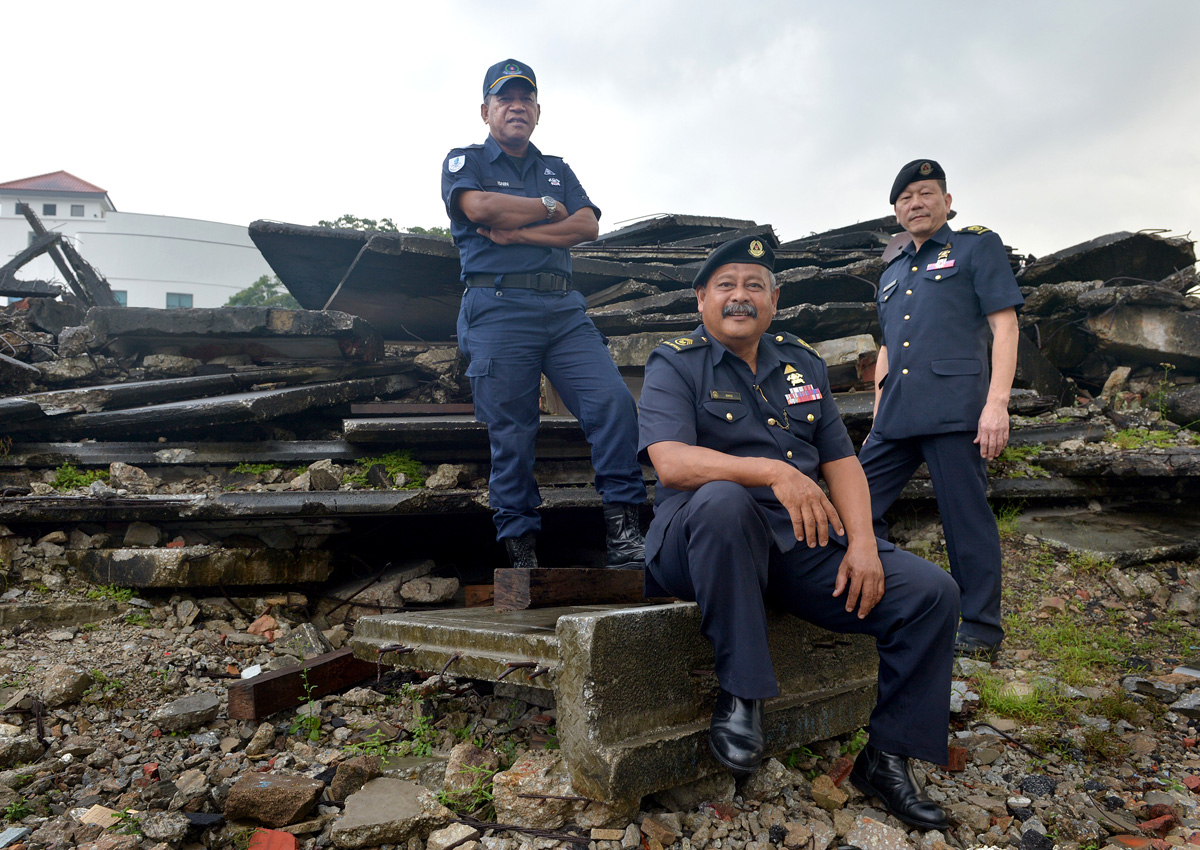
She had SCDF Senior Warrant Officers (SWO) Jimmy Tan, Mohd Salleh Ali and Isnin Ghani to thank.

Then in their 20s, they were firemen in the SFS’ MRT task force, and had undergone rescue training in the MRT tunnels that were under construction.

The training came in handy, they told The Straits Times yesterday on the eve of the tragedy’s 30th anniversary, but what they lacked was equipment.

After hearing Ms Tan’s cries for help, “we had to use our bare hands and emergency tools to dig a tunnel through 6m to 8m to reach her”, said SWO Tan, 58.

They took turns to crawl through the narrow passageway, struggling to breathe through the thick dust and hoping that the tunnel would not collapse on them.

A basin that separated the rescuers from Ms Tan then had to be chipped away with a small hammer before she was finally freed.

Nine survivors were rescued on the first day, and Ms Tan was the last that day.

On Wednesday morning, after several tests using a noise detector found no signs of life, the rescue operations were called off.

Madam Chua Kim Choo was the last to be rescued, after being trapped for 83 hours, or more than three days.

Rescuers worked until Saturday to recover the remaining bodies.

“Once we heard the order to stand down, we were relieved. Our bodies also started to feel the ache,” said SWO Salleh, 58.

Investigations later found that the building had collapsed due to structural faults and shoddy construction, as well as strain from new installations on the roof.

Following the tragedy, more frequent spot checks on buildings were put in place, as well as legislation to enforce stricter maintenance checks.

The Government also merged the Singapore Fire Service and the Singapore Civil Defence Force in 1989, to ensure better coordination for rescue work, especially during disasters.

The three officers were among 94 people presented awards by then President Wee Kim Wee.

“Sometimes the juniors will ask what’s this triangle badge,” said SWO Tan, pointing to his uniform.

“I tell them it’s a rescue badge for Hotel New World. We try to share our experience with them, so they can learn.”

tiffanyt@sph.com.sg


This article was first published on March 15, 2016.
Get a copy of The Straits Times or go to straitstimes.com for more stories.
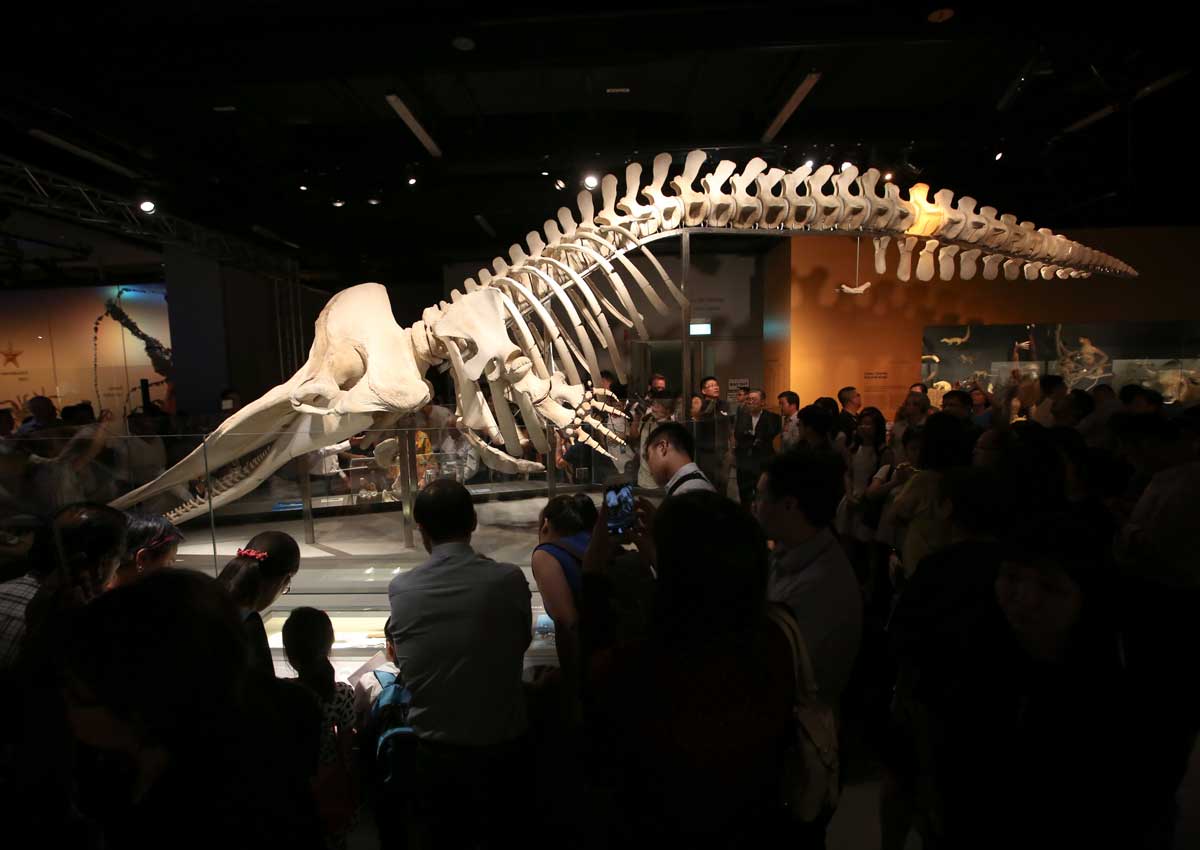
Image: 
Category: 
Publication Date: 
Tuesday, March 15, 2016 – 10:56
Keywords: 
Send to mobile app: 
Source: 


Story Type: 
Others

Source link