TRIPLE 9 is a flawed but interesting take on the heist movie, helmed by a director known for paring everything down to minimalist essentials.
A gang of robbers, headed by Michael (Chiwetel Ejiofor), are forced to make one more raid at the behest of the Russian mafia, led by dowager Irina (Kate Winslet). To give themselves a cop-free window of time, they decide to execute a “triple 9”, code for an officer casualty, as a diversion.
Australian director John Hillcoat favours movies about hard men slogging away at difficult jobs (Lawless, 2012; The Road, 2009; The Proposition, 2005) so this is right up his alley. It’s the most plot-driven one he’s done but he dishes out the twists coherently and with style.
The problems occur first with casting. Winslet is clearly having fun as the ice queen Irina, but in a movie coated in street grittiness, her Bond-villainess vibe sticks out and not in a good way. Irina might as well be stroking a cat on her lap when she give orders.
Also, the story asks that you believe that police divisions act like schoolyard mobs, rushing over pell-mell when one of their own is down, or that a few of their own could moonlight as bank robbers.
For all its structural problems, there is enough style here to warrant a pass, once you get past Winslet’s impressions of a Tzarina gone bad.
Four Singaporeans have been arrested under the Internal Security Act for engaging or intending to take part in violence abroad.
But in a departure from the script of previous terror-related arrests, none of the four had planned to join the Islamic State in Iraq and Syria (ISIS) and one had actually hoped to fight against it.
Wang Yuandongyi, 23, was detained for his efforts to join a Kurdish militia that is battling ISIS.
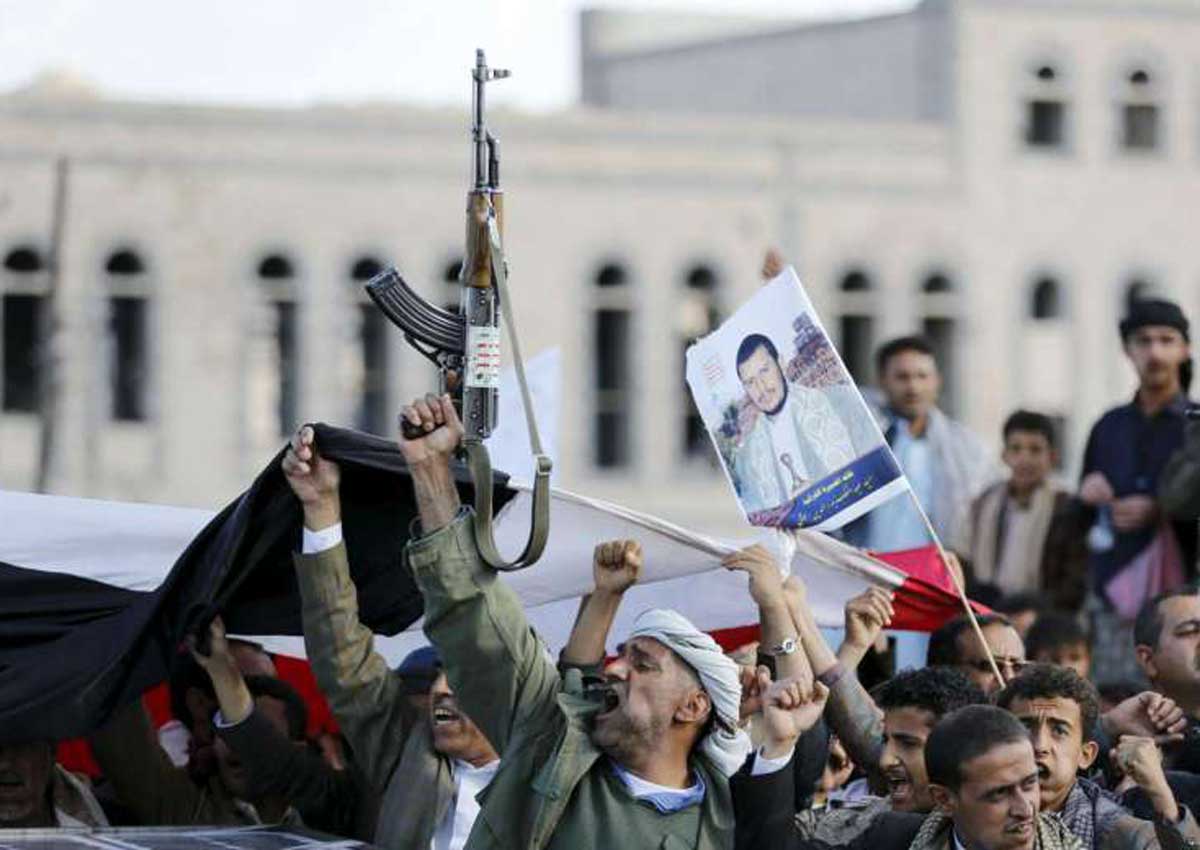
The other three were involved in Yemen’s armed sectarian conflict.
The Ministry of Home Affairs said Mohammad Razif Yahya, 27, and Amiruddin Sawir, 53, were detained in August last year for voluntarily fighting in Yemen while at a religious institution there.
Mohamed Mohideen Mohamed Jais, 25, had done armed sentry duties in Yemen and was placed under a Restriction Order (RO) this month, which limits his activities.
Wang’s case, meanwhile, is the first known one of its kind. He left Singapore in January for a third country, and intended to make his way to Turkey and Syria to join a Kurdish militia fighting ISIS.
Wang is a naturalised Singaporean of China origin. He came here as a child and went to school here. He also completed national service and became a citizen in 2014.
He took along Singapore Armed Forces-issued military gear, such as his uniform and boots, which he planned to use on the battlefield.
The ministry said yesterday that Wang began to empathise with the plight of the Kurds in Syria and started detesting ISIS late last year.
He was also looking to escape personal setbacks such as his debt from a failed business venture.
Last December, he got in touch with a Kurdish militia group online and discussed possible travel routes.
Wang’s plans were thwarted when someone reported him to the authorities. At Singapore’s request, he was located by the third country’s officials and sent back. He was placed on an RO this month.
“The Government takes a stern view against anyone who supports, promotes, undertakes or makes preparations to undertake armed violence, regardless of how they rationalise such violence ideologically, or where the violence takes place,” said the ministry.
It noted that even though Wang was not driven by ideology, the fact remains that he intended to engage in an armed conflict overseas.
“Geography does not mask the fact that such individuals would have demonstrated a dangerous tendency to support the use of violence,” the ministry added.
“Their involvement in overseas conflicts can also jeopardise Singapore’s national interests.”
The ministry noted that Razif had begun studying at a religious institution in Yemen in January 2010, and Amiruddin went there in July 2013.
The two signed up for armed sentry duties against possible attacks by Houthi rebels, who are Shi’ites.
Razif went through sniper training, and was armed with an AK-47 assault rifle and a Dragunov sniper rifle. Amiruddin was equipped with an AK-47 rifle. Both of them were involved in fighting the Houthis.
“They demonstrated a readiness to use violence to pursue their religious cause. As such, they are assessed to pose a security threat to Singapore,” the ministry added.
As for Mohideen, he did armed sentry duties while studying in Yemen from 2009 to early 2011.
While he did not use his arms, he “understood that he had to return fire using the AK-47 assigned to him, with the aim to kill if there was an incursion by the Houthis”.
While some might question the need to stop people who take up arms against rebels and ISIS, security analyst Susan Sim said the Government’s stand is clear.
“You cannot take up arms on behalf of any group, for any cause,” she said. “Once a person gets used to the idea of killing to achieve objectives he has decided for himself, what’s to stop him from doing the same thing in Singapore?”
This article was first published on March 17, 2016. Get a copy of The Straits Times or go to straitstimes.com for more stories.
TWO public notices threatening a fine of $1,000 for parking bicycles outside a gate of Punggol MRT station have shooed away cyclists but some people wonder why the fine has to be set so high.
The two notices from SBS Transit were displayed on railings outside the station’s gate located closest to Waterway Point shopping mall, reported Chinese evening newspaper Shin Min Daily yesterday.
“A bicycle costs only about $200 and so $50 should be good enough for a fine,” a national serviceman told Shin Min at the station. He added: “$1,000 could get a person a few bicycles.”
Calling the fine “excessive”, a cyclist who did not want to be named said it was “unjust” as there were not enough parking spaces around the station to accommodate the high number of bicycles.
“There are many cyclists in this area. Often, one has to simply take up any space available,” he pointed out.
But a 40-year-old man, who wants to be known only as Mr Tan, believes a fine of $1,000 would effectively deter cyclists from obstructing the gate.
“Two to three weeks after the notices appeared, cyclists have been less unruly and the situation has improved,” he noted.
Tammy Tan, SBS Transit’s senior vice-president for corporate communications, told Shin Min that the Rapid Transit System Act stipulates that all bicycles must be parked in designated spaces.
Anyone found to have removed or destroyed a fine ticket issued to an illegally parked bicycle will be liable for a fine of $1,000, she said.
PRIVATE-CAR hire drivers operating under Uber and GrabCar may soon be required to have a vocational licence, under regulations expected to be announced next month.
A proposed training programme, at least 10 hours long – shorter than the 60-hour taxi driver vocational licence (TDVL) course – is being considered by authorities for these private chauffeurs, sources said.
The licensing requirement, which follows a review that started in October, is expected to be announced by the Ministry of Transport next month, during the Budget debate.
There will be a “phase-in” period to allow drivers time to go for the vocational course, said industry sources, who requested anonymity. It is estimated that there are tens of thousands of private-car hire drivers in Singapore.
Course credits attained during the proposed vocational training could also be used for the TDVL, should the drivers want to become cabbies.
Besides vocational licensing, sources said authorities are also mulling over clearer demarcation of cars being used to pick up passengers. This could be through decals pasted on these vehicles to identify them.
Asked about the upcoming regulations, the Land Transport Authority (LTA) said only that “more details will be made known in the coming weeks”.
With a regulatory framework, Singapore will join countries such as the Philippines and Australia in making efforts to legalise an industry that has come under heat for allegedly competing unfairly with taxis.
Head of Grab Singapore, Lim Kell Jay, said vocational licensing can serve as an “added assurance” to commuters that drivers and trips are of standard. He added that the company does its own screening, such as background checks and in-person registration.
Uber’s general manager in Singapore, Warren Tseng, said he was “hopeful of a positive outcome” to the review, to ensure drivers could continue to have flexible work opportunities and commuters, reliable transportation options.
Private-car hire driver James Koh, 53, said if vocational licences become a requirement, part-timers may find it a hassle and stop driving.
“We have been operating for so long without problems, I find it strange that we need to have a licence now,” he added.
National University of Singapore transport researcher Lee Der Horng, however, said regulations benefit private-car hire services by legalising them.
PAY-TV consumers will soon be given the choice of shorter, 12-month contracts for packages or bundles.
They will also be able to cancel their contracts early without paying a penalty if the service provider increases subscription fees or removes important content.
These are some of the changes recommended to the Media Market Conduct Code that the Media Development Authority announced yesterday to guard against unfair pay-TV practices.
The changes, which are expected to take effect next month, address three areas of consumer concerns: unilateral contract changes, forced upgrades of non pay-TV services and lack of awareness of the contracts’ terms and conditions.
The proposed changes will make it possible for consumers to exit their contracts within 30 days of the operators making changes to pricing or programming.
This applies to increased subscription fees or “material” content being removed – especially if it is a factor in persuading consumers to sign up for pay-TV, such as English Premier League coverage.
Consumers will also get the option of a shorter, one-year contract period.
Housewife Maria Tan, 48, said the shorter contract period will give her greater flexibility in her choice of channels. “This way, I won’t have to spend money on another year if I decide to stop watching channels in the package,” she added.
These changes follow a public consultation held from September to November 2014 with pay-TV operators, content providers, consumer and industry associations, and members of the public.
The last time changes were made to the Code for pay-TV consumer protection was in 2011, when early-termination charges were pro-rated to the time left on the contract.
Under new proposals, pay-TV operators will also not be allowed to force subscribers to upgrade non pay-TV services, such as Internet broadband or phone service contracts, to make changes to pay-TV services.
Consumers will also be better informed as operators will be required to provide them with a critical information summary that highlights important terms and conditions clearly and accurately. The operators will also need to send a written copy of the contract and summary within 14 days of contracting to them.
Operators will also have to obtain consumers’ consent to continue with any trial or complimentary service before they can start charging, as opposed to automatically charging them if they fail to opt out.
Pay-TV operators here say they are reviewing how to implement these changes into their offerings.
A StarHub spokesman said: “We are studying the decision and are reviewing the implementation issues it may raise.”
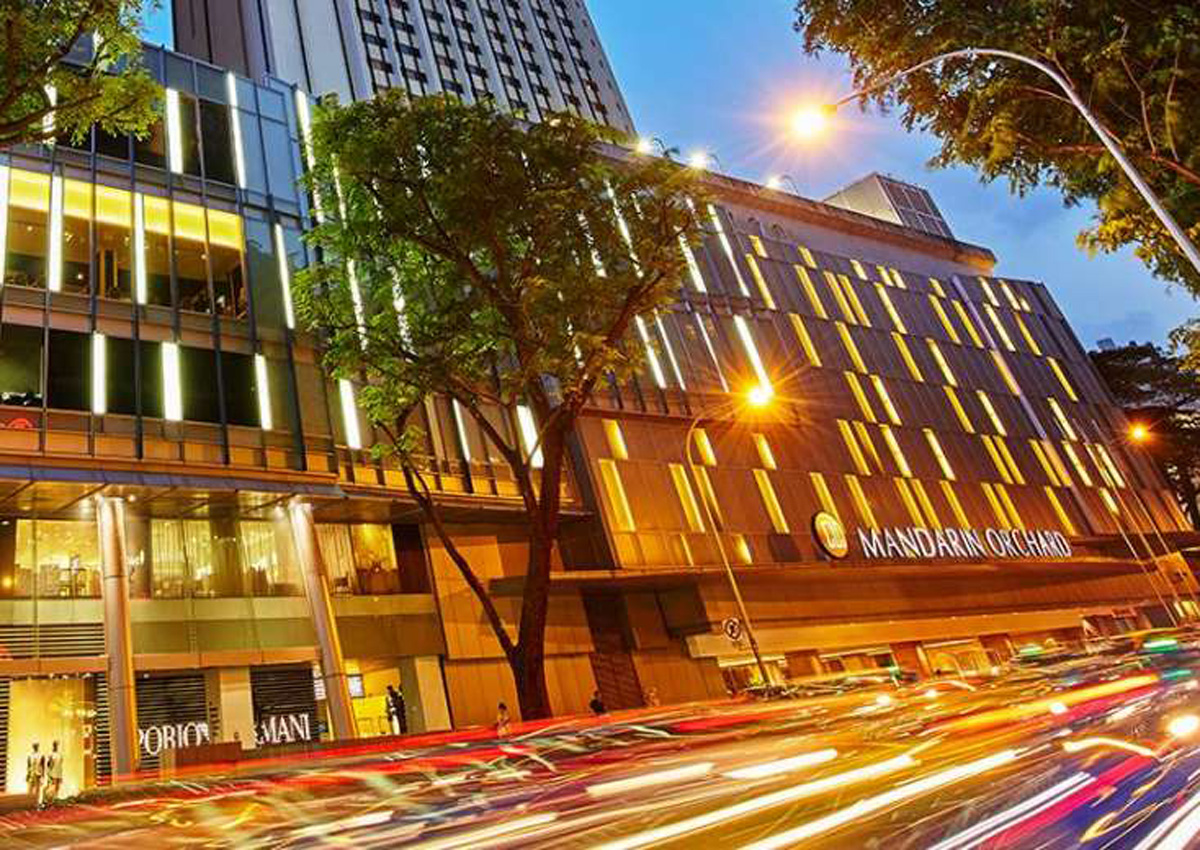
ABOUT 350 hotel guests had to be evacuated after a fire broke out in a sixth-floor kitchen at Mandarin Orchard on Tuesday night.
The Singapore Civil Defence Force (SCDF) said it was alerted to the fire at around 11.40pm.
The fire, which involved the contents in the kitchen, was put out using two water jets within 30 minutes.
A 69-year-old man suffered injuries to his left arm, as well as minor head injuries, and was taken to Singapore General Hospital, SCDF added.
Another four guests were treated by paramedics for minor injuries at the scene. They declined to be sent to hospital.
A spokesman for Mandarin Orchard said one of its staff had discovered the fire at about 11.30pm.
The hotel’s in-house Company Emergency Response Team (Cert) attempted to contain the fire while waiting for the SCDF personnel to arrive.
Hotel guests were evacuated to the nearby *Scape before help from the SCDF arrived, the spokesman said.
They were escorted back to their respective floors in the hotel by about 1.20am, after the premises were deemed safe by the authorities.
The spokesman said the hotel was in contact with its injured guest and was rendering the necessary assistance.
“Ensuring the safety and security of our guests and employees are top priority for us… meanwhile, we remain in close coordination with all involved agencies as they continue further into their investigations.”
SCDF is still investigating the cause of the fire.
Noble Group is in advanced talks to raise a large unsecured loan from banks that will help repay its debt maturing in May, the loss-making commodity trader’s head of treasury said, a move that could help it win back investor confidence.
SEOUL – North Korea’s supreme court sentenced American student Otto Warmbier, who was arrested while visiting the country, to 15 years of hard labour on Wednesday for crimes against the state, a punishment Washington condemned as politically motivated.
The US State Department called the sentence “unduly harsh” and White House spokesman Josh Earnest said it was “increasingly clear” that North Korea sought to use US citizens as pawns to pursue a political agenda.
Warmbier, a 21-year-old University of Virginia student, was detained in January for trying to steal an item bearing a propaganda slogan from his hotel in Pyongyang, North Korean media said previously.
“The accused confessed to the serious offence against the DPRK he had committed, pursuant to the US government’s hostile policy toward it, in a bid to impair the unity of its people after entering it as a tourist,” the state-controlled KCNA news agency reported, using the acronym for the Democratic People’s Republic of Korea.
Japan’s Kyodo news agency published a picture of Warmbier being led from the courtroom by two guards, with his head bowed, but visibly distressed.
State Department spokesman Mark Toner called on North Korea to pardon Warmbier, a student from Wyoming, Ohio, and release him immediately on humanitarian grounds.
Speaking at a regular news briefing in Washington, Toner said the case underscored the risks associated with travel to North Korea, and added: “The Department of State strongly recommends against all travel by US citizens to North Korea.”
Toner said a representative of the Swedish embassy, which looks after US affairs in North Korea, had visited Warmbier in prison and was present at the sentencing.
“We’re going to remain in very close coordination with the Swedes on this matter. It’s my understanding that he was in reasonable health,” Toner said.
The United States has no diplomatic relations with North Korea, a country with which it remains technically at war after the 1950-53 Korean War ended in an armistice rather than a peace treaty.
Related Coverage › State Department urges North Korea to pardon, release US student
Human Rights Watch also condemned the sentence. “North Korea’s sentencing of Otto Warmbier to 15 years hard labour for a college-style prank is outrageous and shocking, and should not be permitted to stand,” Phil Robertson, deputy director of HRW’s Asia division, said in an emailed statement.
Warmbier’s defence attorney said the gravity of his crime was such that he would not be able to pay even with his death but proposed to the court a sentence reduced from the prosecution’s request of a life sentence, KCNA said.
Last month, Warmbier told a media conference in Pyongyang that his crime was “very severe and pre-planned.”
Warmbier’s parents could not immediately be reached.
A spokesman for the University of Virginia said the school was in touch with Warmbier’s family, but declined further comment. Warmbier majors in economics with a minor in global sustainability, according to his social media profiles.
Warmbier was at the end of a five-day New Year’s group tour of North Korea when he was delayed at airport immigration before being taken away by officials, according to the tour operator that had arranged the trip.
Warmbier’s sentencing comes as North Korea is increasingly isolated over its nuclear weapons programme. This month the UN Security Council imposed tough new resolutions month following a North Korea nuclear test in January and a long-range rocket launch last month.
On Wednesday, President Barack Obama issued an executive order imposing “robust new sanctions” on North Korea after its Jan. 6 nuclear test and Feb. 7 rocket launch that used ballistic missile technology, the White House said.
North Korean leader Kim Jong Un said this week that the country would soon test a nuclear warhead and ballistic missiles capable of carrying nuclear warheads, in what would be a direct violation of UN resolutions.
North Korea has a long history of detaining foreigners and has used jailed Americans in the past to extract high-profile visits from the United States.
North Korea is also holding a Korean-Canadian Christian pastor it sentenced to hard labour for life in December for subversion, a Korean-American and three South Koreans.
It has previously handed down lengthy sentences to foreigners before freeing them.
In 2014, North Korea released three detained Americans.
Ohio Governor John Kasich, who is also a Republican presidential candidate, called on North Korea to release Warmbier, saying his detention was completely unjustified.
Former New Mexico Governor Bill Richardson, who had previously travelled to North Korea, met the North’s ambassador to the United Nations on Tuesday to press for Warmbier’s release, the New York Times reported.
“I urged the humanitarian release of Otto, and they agreed to convey our request,” Richardson was quoted as saying.
While most tourists to North Korea are from China, roughly 6,000 Westerners visit annually, although the United States and Canada advise against it. Most visitors are curious about life in the reclusive state and ignore critics who say their dollars prop up a repressive system.
US student sentenced to 15 years hard labour for stealing propaganda banner in N Korea
Click on thumbnail to view photos. Source:
REUTERS/Kyodo, REUTERS/KCNA/Files, AFP PHOTO / KCNA / KCNA VIA KNS
SINGAPORE – The Republic’s non-oil domestic exports (NODX) beat economists’ estimates to expand for February, reversing from the previous three straight months of contraction due to growth in both electronic and non-electronic exports. NODX increased 2.1 per…
SINGAPOREANS who are single and ready to explore becoming attached can take a page from South Korea’s vibrant dating scene and embrace dating agencies, said Senior Minister of State Josephine Teo.
Singles in Singapore tend to be shy about getting help to date or look for a partner, even when they cannot find someone themselves.
But Koreans are generally open about dating and are more willing to approach commercial agencies, said Mrs Teo, who oversees population matters and is on a week-long trip to South Korea and Denmark to study how each country encourages marriage and parenthood.
“Single Koreans may be discreet in not openly advertising the fact but, if asked, they won’t deny it either,” she said in a Facebook post yesterday at the end of the South Korean leg of her trip.
“Starting early, proactively reaching out to meet new friends, openness to getting help, and having a relaxed attitude all seem to be the essential ingredients to enjoyable and successful dating. Can this style of dating help more Singaporean singles, perhaps?”
Mrs Teo, who had been in South Korea since Sunday, visits Denmark next.
Singaporeans and Koreans are marrying later in life which has contributed to the low birth rates in both countries.
In 2014, Singapore had a total fertility rate of 1.25 while Korea’s figure was 1.21 that same year. By encouraging dating, the hope is that more singles will pair up, tie the knot and eventually have children.
One way of doing so is through dating agencies, an industry which is well-established in Korea.
Its more than 1,000 dating agencies are found mostly in the capital Seoul, and it is not uncommon for parents to sign their single children up at these places.
The largest agency, Duo, offers specialised services such as professional dating coaches and “couple managers”, who counsel couples working on their relationship or who want to get married.
More than 32,000 people have been married after meeting up through Duo since it began operating in the mid-1990s.
Mrs Teo visited Duo’s headquarters in the glitzy Gangnam neighbourhood, which was made popular by Korean hip-hop artiste Psy’s 2012 hit song, Gangnam Style.
Making reference to this, Mrs Teo said in her Facebook post: “Dating ‘Gangnam style’ may be deliberate but still fairly cheerful and relaxed, and very often aided by family, friends or professionals.”
One agency success story which Mrs Teo cited in her post is that of newlywed Kim Minhye, 34, who is pursuing her PhD in sociology at the National University of Singapore and shuttles back and forth between Korea and Singapore.
“I was very much into work and studying, and at some point it just wasn’t enough,” Ms Kim said of her decision to sign up with a dating agency in Korea about two years ago.
After uploading her profile, she was matched with a bespectacled engineer who is four years older than her.
Recounting how her Singaporean colleagues reacted when she told them that she met her husband through a dating agency, Ms Kim told reporters here: “Everybody looked at me really, really surprised. They said it’s highly stigmatised in Singapore.”
“In Korea, the stigma is still there but not as much.
“Practically, there are no other ways to meet people so we accept it.”