Home Blog Page 4517

N. Korea releases CCTV footage of US student stealing banner

0

SEOUL – North Korea has released CCTV images showing American student Otto Warmbier removing a political banner from a wall in a hotel — a “crime” that saw him sentenced to 15 years hard labour.

The brief CCTV clip, taken in a staff-only area of the Yanggakdo International Hotel in Pyongyang, was submitted as evidence during Warmbier’s trial on Wednesday.

The United States has accused the North of using Warmbier as a political pawn and condemned the sentence as way out of proportion to what amounted to little more than a misdemeanour.

The grainy, black-and-white footage showed the 21-year-old student from the University of Virginia removing the metre-long, mounted poster from the wall and laying it on the ground.

The banner carried a slogan in bold white lettering on a red background. Part of the banner was blanked out at the trial, but it appeared to read: “Let us strongly arm ourselves with Kim Jong-il’s patriotism.”

The CCTV images, released late Thursday, did not show exactly what Warmbier did after taking it down, and it was unclear if he attempted to take the poster out of the country.

Warmbier was arrested at the airport as he was leaving the country with a tour group on January 2.

Four days later, North Korea conducted its fourth nuclear test and experts say the resulting surge in military tensions and the adoption of tough new UN sanctions were probably behind the harsh sentence.

In the past, North Korea has used the detention of US citizens to obtain high-profile visits from the likes of former US presidents Jimmy Carter and Bill Clinton in order to secure their release.

Image: 
Category: 
Publication Date: 
Friday, March 18, 2016 – 13:31
Keywords: 
Send to mobile app: 
Source: 


Story Type: 
Others

Source link

World's first Pele shrine shines in war-torn Ukraine

0

Lugansk, Ukraine – In the heart of an eastern Ukrainian city shaken by echoes of guns stands the world’s first shrine to football legend Pele that miraculously survived nearly two years of war.

The creator of the unlikely Lugansk museum — painted in Brazilian gold and green and adorned by a bronze statue of Pele and a giant football at its front door — is a humble 55-year-old balding man who follows his hero’s example by never lighting up a cigarette or drinking alcohol.

“Family, football and Pele. That is my life,” says museum founder Nikolai Khudobin as he sits surrounded by dozens of tributes to the football great.

“I have never even tasted beer because Pele leads a healthy lifestyle. And that is what inspired me,” says Khudobin.

Football’s governing body FIFA recognised Khudobin’s creation as the world’s first museum dedicated to the man widely regarded as the 20th century’s greatest player.

It opened during Ukraine’s co-hosting of the European Championship in 2012 but has been closed for the past two years owing to conflict between Ukraine and pro-Russian separatists.

The Brazilian city of Santos where Pele began his career aged 15 built its own exhibition to its local hero two years later.

“When my museum opened, the Brazilian ambassador hugged me and started crying,” Khudobin recalls.

“He could not believe that, in distant Lugansk, Pele could be so well-loved.”

Even more remarkable is that the museum has managed to withstand the brunt of one of Europe’s most brutal conflicts since the 1990s Balkans wars and which has left nearly 9,200 people dead.

Lugansk is the centre of one of two industrial regions whose main swathes the rebels took over and defended with tanks and powerful multiple-missile launchers.

“The museum has not been open since the war began. Shells kept exploding and flying all over the place. I was really scared that something might smash the museum,” Khudobin admits.

“But I believe that Pele is the god of football and that this place is holy — it is a sanctuary of football.”

The small building was never once hit.

The 75-year-old Pele may be best known to younger fans as a global football ambassador with a heart-warming smile.

But to older generations Pele embodies the world’s most popular game — a dazzling entertainer who changed the way football is played while leading his national squad to three breathtaking World Cups between 1958 and 1970.

Pele’s 1281 goals in 1363 matches saw Guinness World Records recognise him as football’s most prolific scorer.

Then Brazilian president Janio Quadros proclaimed him a “national treasure” in 1961.

Unique momentoes to all those achievements line the walls and litter the tables of Khudobin’s two-room museum.

There is an autographed 1958 photo of Pele that went up to Russia’s former space station Mir in the 1980s.

One table displays a golden watch Pele gave former Soviet Union defender Valentin Afonin.

Dozens of stamps and flags are accompanied by a signed banner of Pele and Soviet goalkeeper Lev Yashin — winner of the 1963 Ballon d’Or prize awarded to Europe’s best player.

“I swapped my bicycle for a photo of Pele in a magazine,” Khudobin recalls.

“That was 40 years ago, and I have been collecting ever since.”

Khudobin says he not only had the honour to meet Pele on three occasions but also to get a haircut by his idol’s personal barber in Brazil.

But his big dream of bringing Pele to Lugansk was shattered by the sudden outbreak of the lingering war.

A far greater tragedy struck Khudobin when his wife died of natural causes in the midst of the sudden turmoil.

“We went through school together and she always supported my hobby. I still have not recovered from the grief,” Khudobin says.

Another shock came when Khudobin was detained for three days by the city’s new pro-Russian masters.

“I am not a poor man and they wanted to steal my property. They were demanding that I hand over the papers to my apartment.”

Khudobin recalls that at one point his captors put a gun to his head and threatened to shoot him.

“But then they found out who I was and got frightened by all the publicity my death would bring.

“Pele saved my life.”
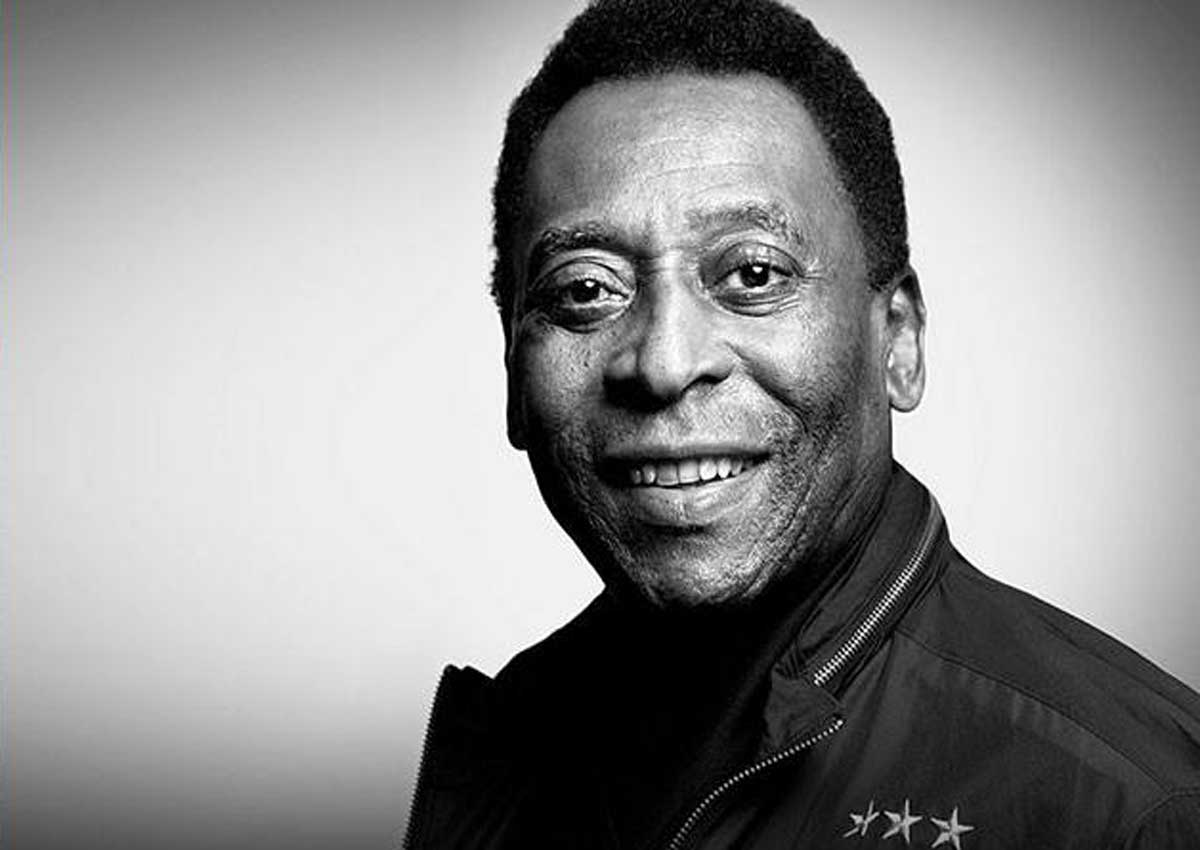
Image: 
Category: 
Publication Date: 
Friday, March 18, 2016 – 12:56
Keywords: 
Send to mobile app: 
Source: 


Story Type: 
Others

Source link

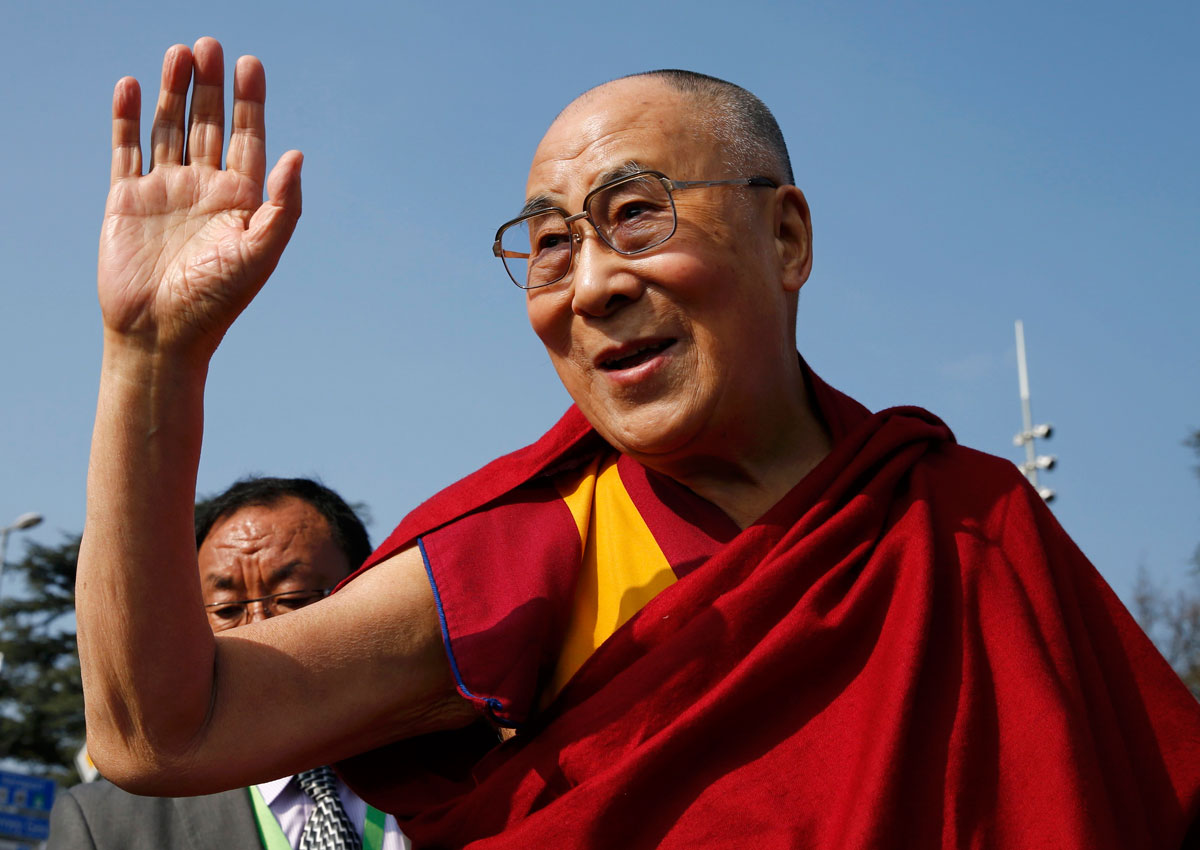
Exiled Tibetans to elect leader to sustain Dalai Lama legacy

0

Tens of thousands of exiled Tibetans across India and overseas will vote on Sunday to elect a political leader, hoping the democratic exercise will help sustain their struggle to secure complete autonomy for Chinese-ruled Tibet.

The second election of its kind follows a decision by the Dalai Lama, the 80-year-old Nobel Peace Laureate, to relinquish his political authority and vest it in a democratic system that could outlive him.

Concern about the globetrotting spiritual leader’s health, after his admission to a US hospital this year for treatment, has reinforced the importance of the vote to keeping the issue of Tibet alive.

The “Sikyong”, or elected leader, will be solely responsible for political and diplomatic decisions, as the charismatic monk steps back from the limelight amid uncertainty over how his successor will be chosen.

Tibetan Buddhism holds that the soul of a senior lama is reincarnated in the body of a child after he dies. China says it must sign off on the reincarnation of the Dalai Lama, who fled into exile in 1959 after a failed uprising.

“Even if China tries to select the next Dalai Lama, the Tibetans will continue to have an elected leader who is outside the Communist Party’s grip,” said P.D. Mukherji, professor of Chinese studies at Jawaharlal Nehru University in New Delhi.

The contest will decide who leads the parliament of the Central Tibetan Administration (CTA) in Dharamsala, a town in India’s Himalayan foothills where a community of Tibetans lives in exile with the Dalai Lama.

“China will see that CTA is going to stay here for a long time and the Tibetan freedom struggle will be here for a long time,” incumbent Lobsang Sangay, who is seeking re-election, told Reuters.

Exiled Tibetans consider the CTA to be their legitimate government, but no country recognises it. China has lobbied to sideline the Dalai Lama from the international circuit, although he did address an audience in Geneva last week despite those efforts.

FREEDOM STRUGGLE

The elected leader will have to rally global support for Tibet’s campaign for freedom, strengthen ties with India and discourage self-immolation by refugees when protesting against Beijing’s ironclad control of the Himalayan region.

This month, a Tibetan schoolboy died in India after setting himself on fire to protest against Chinese rule in Tibet.

Sangay and his opponent, Penpa Tsering, both favour the “middle way” propagated by the Dalai Lama for more than 50 years that advocates non-violence while seeking autonomy for Tibet.

Representatives of the Dalai Lama held several rounds of talks with China up to 2010, but formal dialogue stalled amid leadership changes in Beijing and a security crackdown in Tibet.

One candidate who called for independence from China lost in preliminary elections held in 2015, as voters felt that opposition to Beijing would only undercut international support for, and weaken the economic condition of, exiled Tibetans.

Asked to comment on the leadership election, Chinese foreign ministry spokesman Lu Kang said Beijing did not recognise the “so-called government in exile”.

“We hope that any country, especially those which want to have good relations with China, (does) not provide any convenience or platform to any so-called Tibet independence activities of anti-China separatists,” Lu told a news briefing.

Image: 
Category: 
Publication Date: 
Friday, March 18, 2016 – 12:55
Keywords: 
Send to mobile app: 
Source: 


Story Type: 
Others

Source link

Chinese columnist travelling from Beijing goes missing – lawyer

0

BEIJING – A well-known Chinese columnist has gone missing after warning former colleagues of the danger of re-publishing an open letter calling for President Xi Jinping to resign, the journalist’s lawyer said on Thursday.

Jia Jia, who writes a regular column for Tencent Online, went missing late on Tuesday, around the time he was scheduled to board a flight from Beijing to Hong Kong, his lawyer, Yan Xin, told Reuters.

Before his scheduled departure, Jia had told friends that he believed something could happen to him after he had warned former colleagues about re-publishing the letter, Yan said.

Yan said Jia had told him that he had cautioned Ouyang Hongliang, a former colleague and an editor at the Watching news agency, after Watching had re-posted the letter.

Yan said Jia, a frequent commentator on political and social affairs, had told him that he had no connection to the letter, which was signed by a “loyal Communist party member”.

The letter was seen by Reuters on a cached page on Watching’s website. It could not be found on Watching when Reuters checked on Thursday. Reuters was also unable to reach Ouyang for comment.

The letter also circulated on Chinese social media including the WeChat messaging app before authorities apparently took it down.

Jia had planned to fly to Hong Kong, where he was sometimes based, to renew his work permit there, Yan said. Jia was due to give a lecture on the media at the Chinese University of Hong Kong on Thursday.

Family members and friends have not been able to reach him since, said Yan, who is based in Beijing.

Tencent Online did not immediately respond to a Reuters request for comment on Jia’s whereabouts.

It was unclear whether or not Jia has been taken into custody. Beijing law enforcement authorities could not be reached for comment.

His apparent disappearance comes amid mystery over five Hong Kong booksellers who dealt in gossipy books about Chinese leaders, and went missing only to resurface in Chinese custody.

President Xi has embarked on an unprecedented effort to clamp down on the Internet and censor opinions that do not fall in line with those of Communist Party leaders, including by imposing tougher penalties for “spreading rumours” via social media.

In a separate case, the Science and Technology Daily, the official newspaper of the Ministry of Science and Technology, on Wednesday published a rare rebuke of authorities’ threats against freedom of the press.

The writer of the piece, Zhang Gailun, said a government official had issued a threat for focusing on “negative issues”.

“I’ve written down your press card number. Be careful or the relevant departments will nab you,” Zhang cited the unidentified official, a delegate to the Chinese parliament’s largely ceremonial advisory body, as saying.

China sees its state-owned press as an extension of government authority and public mention of such exchanges is exceedingly rare.

Image: 
Category: 
Publication Date: 
Friday, March 18, 2016 – 12:46
Send to mobile app: 
Source: 


Story Type: 
Others

Source link

Former child star Shirley Temple's rare blue diamond ring to be auctioned

0

A rare blue diamond ring belonging to the late Shirley Temple, one of Hollywood’s most famous child actors, is going up for auction starting at $25 million (S$33 million), auctioneer Sotheby’s said Thursday.

The 9.54-carat Fancy Deep Blue diamond ring was purchased by Temple’s father for $7,210 in 1940 around the time of the actress’ 12th birthday, Sotheby’s said.

The ring will be auctioned on April 19 as part of Sotheby’s Magnificent Jewels sale, and is estimated to be valued between $25 million and $35 million.

Temple won legions of fans as a bouncy, curly-haired young star in 1930s movies such as “Bright Eyes”, “Heidi” and “Curly Top.” The child actress went on to forge a second career as ambassador Shirley Temple Black and died at the age of 85 in 2014.

Her family previously auctioned off a selection of Temple’s costumes, scripts and a dress she wore at the 1935 Oscars.

Image: 
Category: 
Publication Date: 
Friday, March 18, 2016 – 12:49
Send to mobile app: 
Source: 


Story Type: 
Others

Source link

NUS partners local firm to launch seaweed-based drink

0

The bottled drink is based on eucheuma, a type of seaweed that is associated with various health benefits such as being high in dietary fibre and antioxidants, according to NUS scientists and food manufacturer Y G C Group. 

Source link

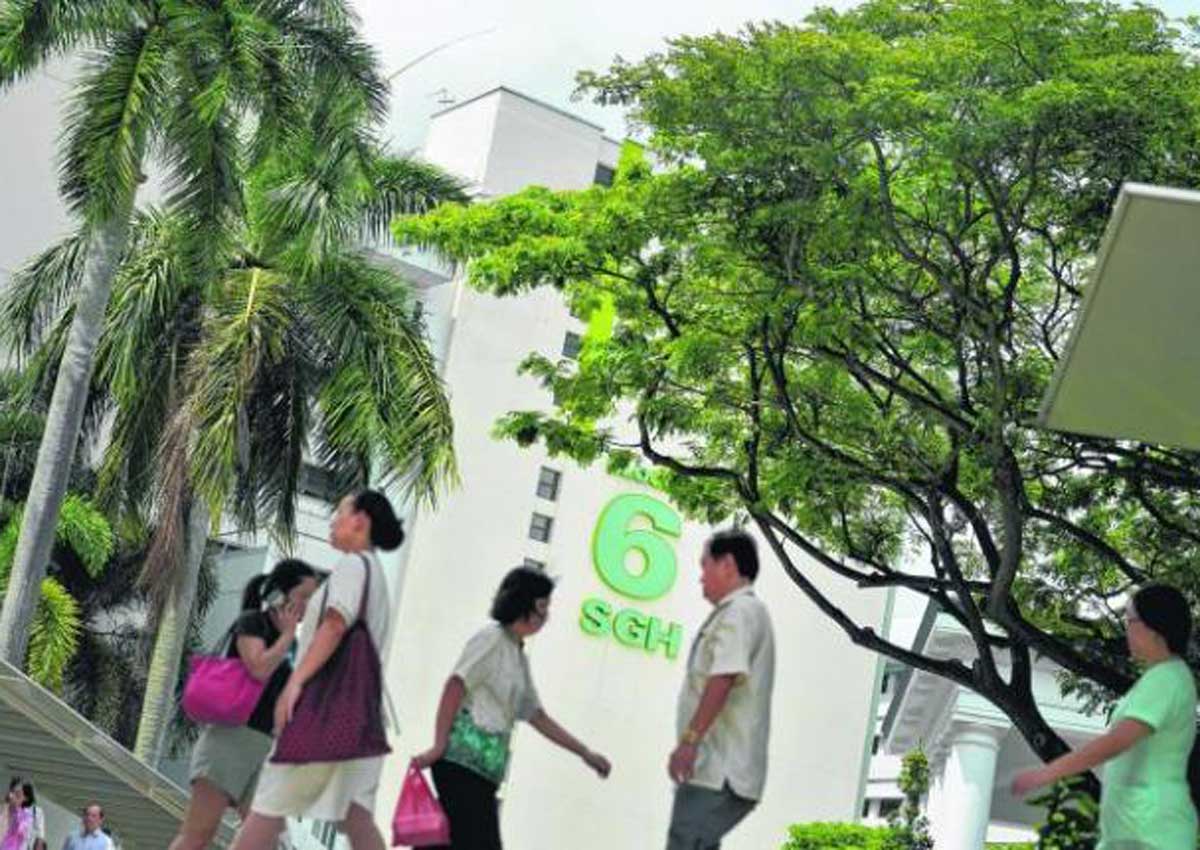
SGH hepatitis C outbreak: 16 staff disciplined

0

Image: 
Publication Date: 
Friday, March 18, 2016 – 12:33
Send to mobile app: 
Source: 


Story Type: 
Others

Source link

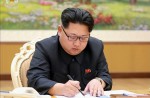
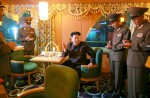
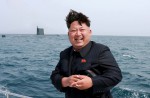
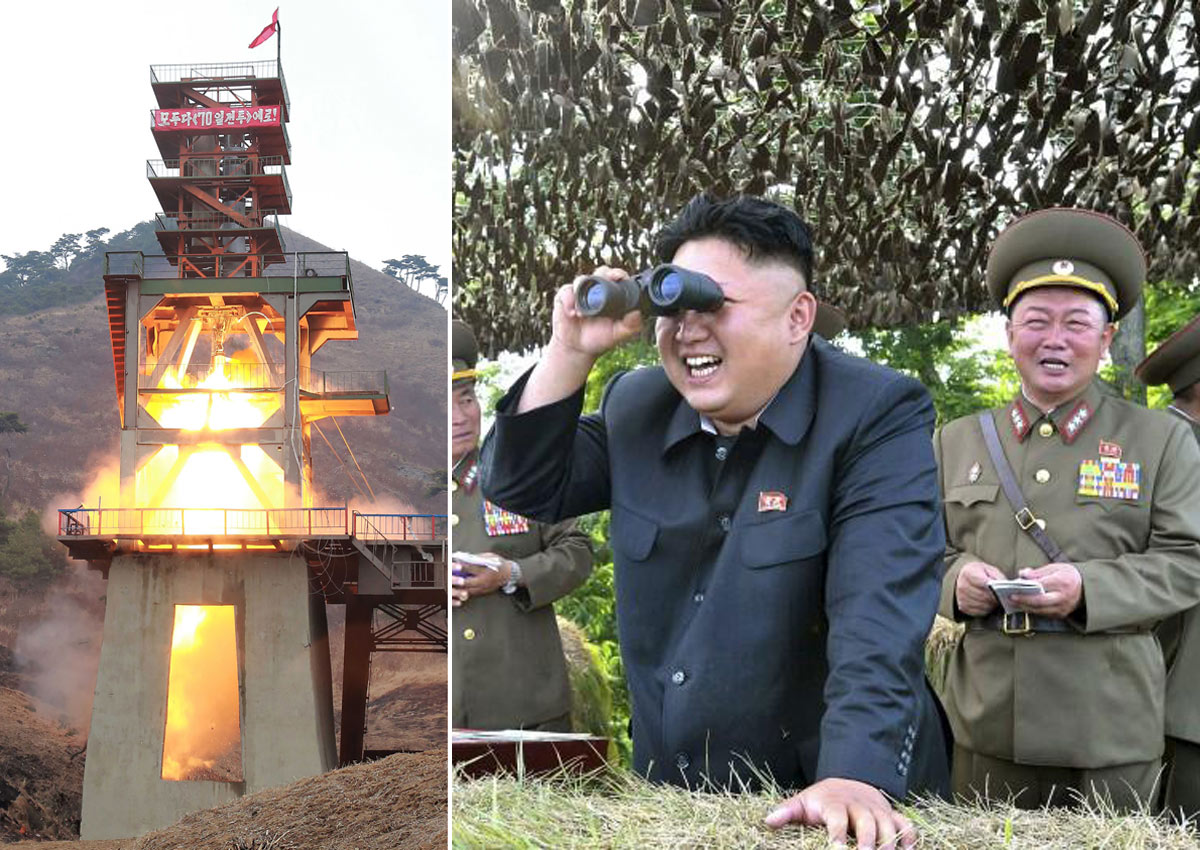
N. Korea test fires two mid-range ballistic missiles

0

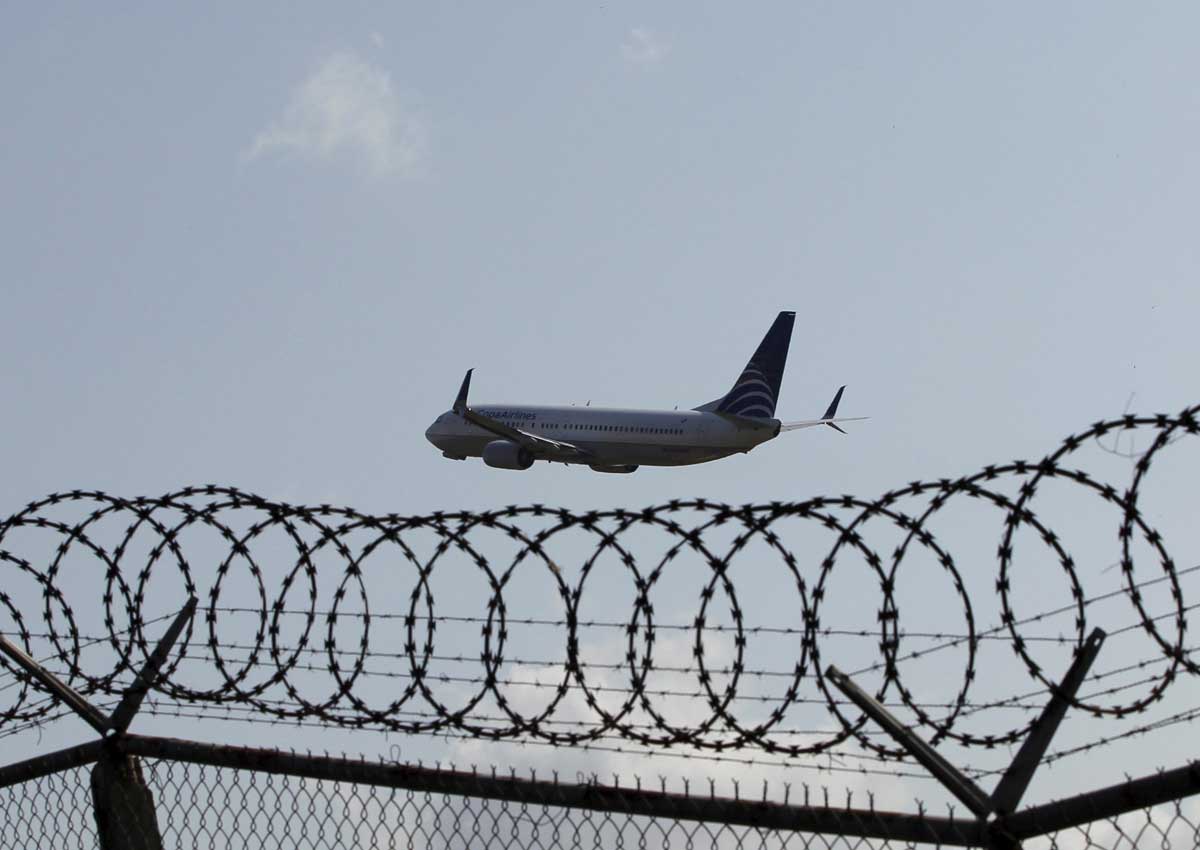
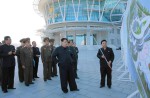
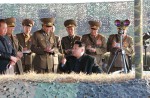
Seoul – North Korea test fired two medium-range ballistic missiles on Friday, just days after leader Kim Jong-Un promised a series of nuclear warhead tests and missile launches amid surging military tensions.

Friction on the divided Korean peninsula has deepened since the North carried out its fourth nuclear test on January 6, followed a month later by a long-range rocket launch that was widely seen as a disguised ballistic missile test.

US defence officials said they had tracked two launches — both believed to be medium-range Rodong missiles fired from road-mobile launch vehicles.

The Rodong is a scaled-up Scud variant with a maximum range of around 1,300 kilometres (800 miles).

South Korean military officials said the first missile was launched from Sukchon in the country’s southwest at 5:55 am (2055 GMT Thursday) and flew 800 kilometres before splashing down in the East Sea (Sea of Japan).

The second, fired about 20 minutes later, disappeared off radar early into its flight.

They came a day after US President Barack Obama signed an order implementing tough sanctions adopted earlier this month against North Korea by the UN Security Council, as well as fresh unilateral US measures.

For the past two weeks, Pyongyang has maintained a daily barrage of nuclear strike threats against both Seoul and Washington, ostensibly over ongoing, large-scale South Korea-US military drills that the North sees as provocative rehearsals for invasion.

To register its anger at the joint exercises, the North fired two short-range missiles into the East Sea on March 10.

A few days later, Kim Jong-Un announced that a nuclear warhead explosion test and firings of “several kinds” of ballistic missiles would be carried out “in a short time”.

South Korea’s defence ministry said Friday’s launches were clearly the result of Kim’s order.

“North Korea appears to be speeding up test launches to advance its nuclear capabilities,” said ministry spokesman Moon Sang-Gyun.

Calling the move a direct challenge to the UN Security Council and the international community, Moon said the South’s military stood ready to respond immediately to any North Korean threat to national security.

Existing UN sanctions ban North Korea from the use of any ballistic missile test, although short-range launches tend to go unpunished.

A Rodong test is more provocative, given its greater range, which makes it capable of hitting most of Japan.

The last Rodong test was in March 2014, when two of the missiles were fired into the East Sea.

Japanese Prime Minister Shinzo Abe condemned the launch and said his government would coordinate its response with the US, South Korea and other nations concerned.

“We are taking full and necessary measures for alert and surveillance activity so that we can deal with any and all situations,” he said, after earlier ordering an assessment on the safety of shipping in the splashdown zone.

The US State Department issued a statement calling on Pyongyang to refrain from any actions that could “further raise tensions.”

While North Korea is known to have a small stockpile of nuclear weapons, its ability to deliver them accurately to a chosen target on the tip of a ballistic missile has been a subject of heated debate.

There are numerous question marks over the North’s weapons delivery systems, with many experts believing it is still years from developing a working inter-continental ballistic missile (ICBM) that could strike the continental United States.

Kim’s announcement of further tests on Tuesday came as he monitored a simulated test of the warhead re-entry technology required for such a long-range nuclear attack.

The test was a complete success, state media said, and provided a “sure guarantee” of the warhead’s ability to withstand the intense heat and vibration of re-entering the earth’s atmosphere.

South Korea said it doubted the North had mastered re-entry technology, although it was less sceptical a few days before when Kim said it had miniaturised a nuclear warhead that could fit on a missile.

Earlier this week, South Korean President Park Geun-Hye said North Korea’s endless threats and provocative behaviour reflected a “sense of crisis” in Pyongyang at its increasing diplomatic and economic isolation.

Image: 
Category: 
Publication Date: 
Friday, March 18, 2016 – 12:26
Send to mobile app: 
Source: 


Story Type: 
Others

Source link

Zimbebwean official exposes Kelong King's attempt to fix games in S Africa

0

Roughly two months after his early release from a five-year prison term for match fixing in the United Kingdom, convicted match fixer Chann Sankaran appears to be back in the game.

Chann, a 35-year-old Singaporean, has been accused of being part of a syndicate that attempted to fix football matches in the South Africa Premier League in February.

The allegations emerged recently after former Zimbabwe Football Association (Zifa) chief executive officer, Ms Henrietta Rushwaya, exposed the kelong activities to the Zimbabwean media.

She said Chann was working on behalf of convicted match fixer Wilson Raj Perumal.

The New Paper has now acquired exclusive material including photos, recordings, an affidavit and WhatsApp exchanges on the alleged kelong attempts.

Photographs show Chann at a hotel lobby in Johannesburg and at a stadium.

Ms Rushwaya told TNP on Tuesday that she was contacted by Wilson Raj in early January.

They knew each other from when Ms Rushwaya was implicated in a kelong scandal involving Zimbabwean footballers. She was pardoned by Zifa in January.

He had asked her to go to South Africa to allegedly discuss fixing matches in the South Africa Premier League. She said she went along with the match fixers’ plans to “show the world how this racket works”.

She told TNP: “I have lots of empirical evidence to prove my case. Wilson (Raj) did not come to South Africa but he sent emissaries to represent him.”

One of them was Chann, who lost no time in making his offer, sending her WhatsApp messages when she arrived in Johannesburg in mid-February.

A screengrab of the messages he sent showed: “Total cost is 15k US…7 (thousand dollars goes to the goal) keeper, 5 (thousand dollars goes to the) players, the rest 3 (thousand dollars), coach and you share 1.5k each.”

The alleged match fixers’ targets were Pretoria University v Free State Stars, Kaizer Chiefs v Polokwane, and Bidvest Wits v Pretoria University.

RIGGING

Ms Rushwaya eventually met two Hungarian men and Chann to discuss assisting the trio in rigging the matches by paying off Zimbabwean footballers in the South African teams.

But unknown to them, Ms Rushwaya had alerted Mr Terry Steans, an ex-Fifa investigator she could trust. In a signed affidavit dated March 13, Mr Steans confirmed this and said he was occasionally updated by Ms Rushwaya.

Mr Steans, 61, said: “She (Ms Rushwaya) wanted to know what action, if any, she could take.”
Checks with betting sources revealed all three matches were offered by Asian bookmakers. However, the fixes did not go ahead.

When Ms Rushwaya asked if she should stay longer in South Africa, Chann messaged her: “ask Wilson”.

She said the fixers had paid for her hotel stays and flights.

On Wednesday evening, Chann, who is believed to have been released from jail in December 2015, sent an e-mail to this reporter.

TNP had first written to Wilson Raj via e-mail, asking him about the allegations made by Ms Rushwaya.

The e-mail reply, supposedly from Chann, said: “All I can say at this point of time is that I was present in South Africa during the period. I was funded by some local businessmen to travel to South Africa pertaining to some business matters.”
Chann, whose whereabouts are unknown, declined to reveal the nature of the business.

Wilson Raj, who is now residing in Hungary, had also allegedly told Ms Rushwaya in January to meet his associates in South Africa to discuss fixing matches at the Rio Olympic tournament in Brazil this year.

Despite her notifying Mr Steans, Ms Rushwaya’s motives for the sting still came under scrutiny.

On March 14, Zimbabwe’s The Herald reported that Zifa president Philip Chiyangwa had questioned Ms Rushwaya’s motives for exposing the kelong attempts and not alerting the Zimbabwean authorities. He said it was a violation of Fifa regulations.

She told TNP: “This case was non-Zimbabwe related… It had bearing on the South African league. Hence my decision to report it in South Africa.”
zaihan@sph.com.sg


This article was first published on March 18, 2016.
Get The New Paper for more stories.

Image: 
Category: 
Publication Date: 
Saturday, March 19, 2016 – 04:00
Send to mobile app: 
Source: 


Story Type: 
Others

Source link

Mentally ill mother jailed 5 years for pushing son to his death

0

A 43-year-old woman was jailed five years on Friday (March 18) for killing her son by pushing him from their seventh-storey Tampines flat in September 2014.

The woman pleaded guilty to one count of culpable homicide not…

Source link