 SINGAPORE – Over 1,000 Punggol residents attended the constituency’s inaugural Waterway Day on Sunday morning (March 20), where they also came together to mark the one-year death anniversary of Singapore’s founding Prime Minister Lee Kuan Yew.
The event –…
Source link
Punggol residents attend first Waterway Day and mark the passing of Mr Lee Kuan Yew
Korean stars reap rewards of hallyu drama success

Behind the glory of hallyu dramas are the star-studded casts.
After garnering attention abroad in Korean dramas — mainly other Asian countries including China and Japan — stars quickly jump into dramas and variety shows there
Overseas endorsements, and fan meetings follow, consolidating their positions, as well as the prominent status of hallyu.
Starting with the unexpected success of the KBS2 TV drama series “Winter Sonata” which aired on Japanese satellite channel BS2 in 2003, the drama’s protagonists Bae Yong-joon and Choi Ji-woo enjoyed a meteoric rise as the first hallyu drama stars.
Lee Young-ae, who starred in MBC TV drama “Jewel in the Palace” the following year, replicated the two stars’ success, keeping hallyu alive.
The SBS hit drama “My Love from the Star” which recorded 2 billion views on Chinese video platform iQIYI in 2014, set a milestone for hallyu dramas.
Kim Soo-hyun, until then best known for KBS2 series “Dream High,” MBC fusion historical drama “Moon Embracing the Sun,” and webtoon-based film “Secretly, Greatly,” became active in China after the international success of “My Love from the Star,” where he played the male lead Do Min-joon.
Kim has appeared in local variety shows in China including Jiangsu TV’s “The Brain” and “Bring You To The Stars” in 2014 and Sohu TV’s “Stars From Korea.” In 2014, Kim was also reported to have set a new record by signing 35 endorsements deals, 16 of them in China.
Park Hae-jin, another male lead of “My Love from the Star,” has built up a career as a hallyu star in a slow and steady way, unlike his contemporaries. Even before the SBS drama became popular in China, Park had appeared in Chinese TV dramas starting in 2011 including Hunan TV’s “Another Kind of Splendid Life,” Xi An TV’s “Loves Relativity,” in “Secret Society of men — Friends” which aired on four Chinese channels including Zhejiang TV and Dongfang TV last year, and Guangdong TV’s “Far Away Love” this year.
Park also played the male lead in the tvN drama series “Cheese in the Trap” this year, which will be released on Chinese websites Youku and Tudou this summer. He was reported to have signed endorsements with 15 advertisers this year, estimated to be worth 11 billion won in total.
Meanwhile, the hottest hallyu rookie Song Joong-ki is enjoying popularity in China as KBS2 TV drama series “Descendants of the Sun” is being broadcast simultaneously in China on iQIYI.
Song, who debuted in the film “A Frozen Flower” in 2008, shot to stardom in 2010 with KBS2 fusion historical drama “Sungkyunkwan Scandal.”
While carving out his position as an entertainer by appearing on SBS variety show “Running Man” from 2010 to 2011 and on KBS music programme “Music Bank” as an MC from 2009 to 2010, Song continued to build up his acting career.
After serving in the military, from 2013-2015, Song made a strong comeback with “Descendants of the Sun,” which has made him the hottest star of the moment.
The KBS2 TV drama hit 400 million cumulative views on iQIYI, out-performing “My Love from the Star.” It will also begin airing on the Japanese cable channel Elsei Gekijou in June.
Image:

Publication Date:
Sunday, March 20, 2016 – 10:40
Keywords:
Send to mobile app:
Source:
Story Type:
Others
Korean dramas credited for tourist pull
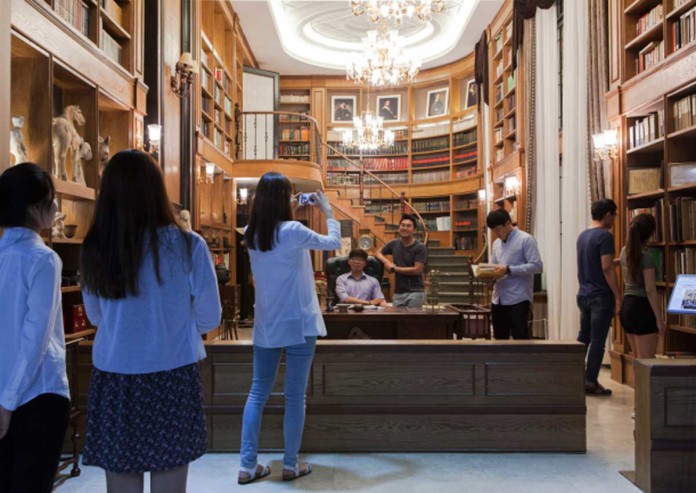
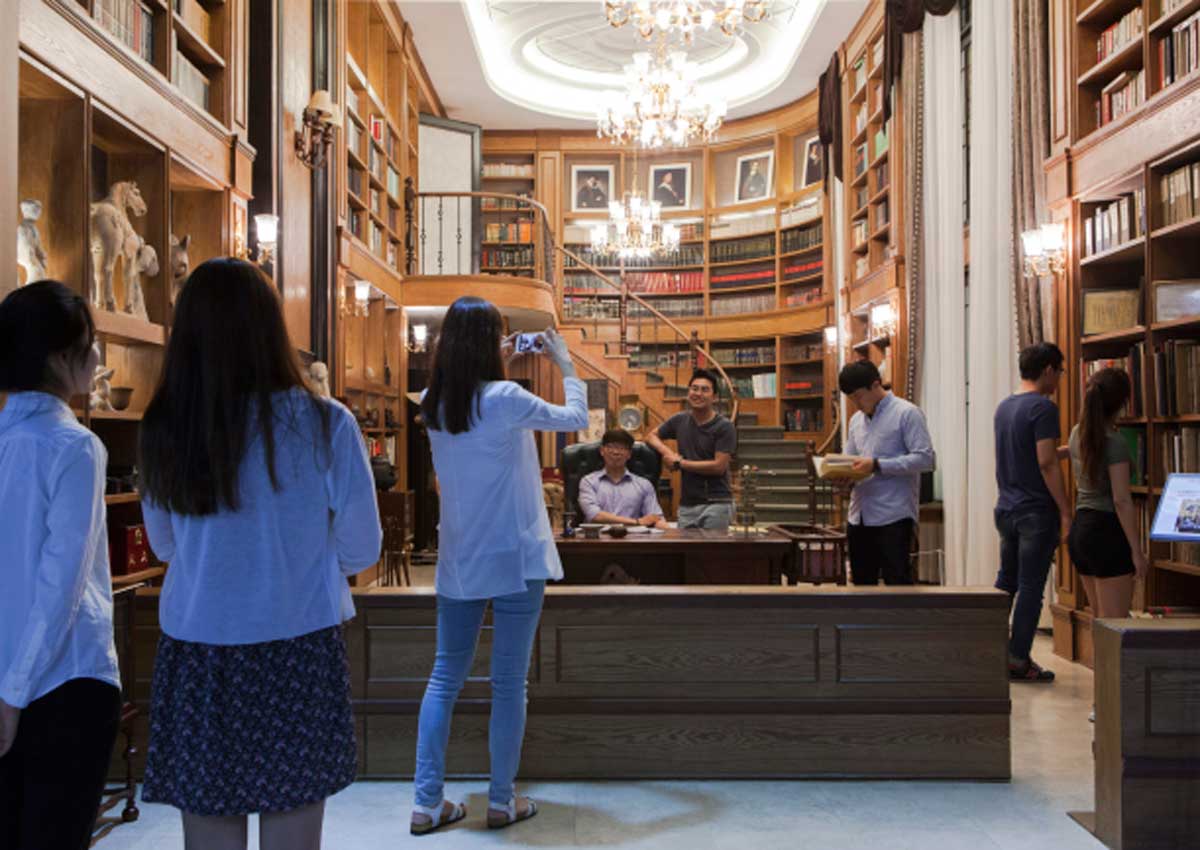
As worldwide interest in Korean entertainment and content continues its global thrust, the city of Seoul is starting to see an influx in “hallyu-based” tourism, leading to the establishment of Korean drama-inspired tourist guides to assist die-hard fans in tracking down the filming locations of their favourite Korean dramas.
“Not long ago, something strange happened on a cold winter day in China — fried chicken and beer starting selling like hotcakes,” reads VisitSeoul’s Hallyu Tourist Guide.
“The merchants found this strange, because the combination of beer and fried chicken was not common in China.”
“What triggered the occurrence? The airing of ‘My Love From the Star,'” it reads.
“The Korean lifestyle is being introduced to the world through television series, starting trends and causing a stir outside of Korea. More people are travelling to Korea out of their love of Korean television shows.”
A handful of local dramas have enjoyed so much popularity around the world, especially Asia, that they have been credited with enticing viewers to travel to Korea to see the culture and filming locations firsthand.
The growing Korean TV drama fever has led to the establishment of “Hallyu Tours.”
There are now several published guides that map out the filming locations of popular TV shows such as “My Love From the Star,” “We Got Married,” “The Heirs,” “Doctor Stranger” and “Running Man.”
With much thanks to online video streaming sites such as DramaFever — a video streaming website owned by Warner Bros that offers on-demand streaming of mostly movies and TV shows with subtitles — and Netflix, which recently established its presence in Korea, both newer and older K-dramas are continuing to seep onto TV and computer screens throughout the world.
According to the Contents Power Index, which is measured by the number of searches on search engines and follower rankings of the TV shows that air on major broadcasting networks, the country’s three highest ranking shows of last year were KBS2’s “The Producers” — no surprise considering it stars hallyu power king Kim Soo-hyun — followed by SBS’ “The Girl Who Sees Smells” and “Pinocchio.”
Following the tremendous success of “My Love From the Star,” particularly in China, Kim’s follow-up TV drama “The Producers,” which was considered the country’s first-ever “variety drama,” went on to sell its broadcasting rights in China for more than $2.4 million (S$3.2 million).
However, along with the rise of newer and more popular K-drama series, classic dramas from years ago are still proving to be some of the biggest driving forces behind the popularity of locally produced shows, especially among international fans.
Last year, the Korea Creative Content Agency released a poll announcing the most popular Korean TV shows of all-time to be: “Jewel in the Palace,” “Winter Sonata,” “My Love From the Star,” “Autumn in My Heart” and reality TV show “Running Man” — all of which had tremendous followings outside the peninsula.
For some international K-drama fans, their love affair with shows can be traced back over years, with TV productions that are to this day widely considered to be some of the pillars of the local drama industry.
“I’ve watched ‘Boys over Flowers’ and ‘Coffee Prince’ because they were super popular and I wanted to see what all the hoopla was about,” said 28-year-old American Kayla Vilardi, whose interest in Korean culture started nearly 10 years ago.
“K-dramas are so dramatically different from anything you would see on American TV. K-dramas seem to be a cool insight into Korean pop culture,” she added, noting that her go-to move for learning about the latest in Korean TV is to surf around DramaFever.
Vilardi was first introduced to Korean pop culture after befriending a Korean via an online pen pal site — a friendship that continues nearly a decade later.
Vilardi was instantly hooked to all things Korean, from the music to TV, leading her to decide to come to Korea for the first time as a study abroad student at Korea University in 2009 — her first time overseas.
And one of many to-dos that was on her Korea agenda was to visit the coffee shop that appeared on one of her favourite shows, “Coffee Prince.”
Since then her love of Korean Entertainment only deepened and her fandom quickly trickled down to her younger sister, Meghan.
“When Kayla went to Seoul to study she really showed me how amazing it can be to be somewhere new,” said the younger Vilardi, who is currently preparing to work as an English teacher in Seoul. “I loved hearing about all the experiences she was having.”
After opening her eyes to a new world of entertainment, Meghan Vilardi has since enjoyed watching a number of popular Korean TV dramas, including “Boys Over Flowers,” “Secret Garden,” “Lie to Me” and “Protect the Boss.”
“US dramas are annoying and I never watch them because they’re all raunchy and formulaic. K-dramas like to play around with reality,” Meghan said noting that she typically enjoys a drama if she finds the male lead to be a strong and attractive character.
“Korean dramas will actually have guys who know when they want the girl and actually go for it.”
“US shows are just about drama and being all up on each other, but Korean dramas get crazy and it’s fantastic,” she added.
Image:
Publication Date:
Sunday, March 20, 2016 – 10:34
Keywords:
Send to mobile app:
Source:
Story Type:
Others
Li Bingbing: Change personal habits for Earth's health

Every day, every person on this planet makes many decisions. From the moment we wake up to the time we fall asleep, we make choices that range from what we will wear to how we will get to work and where we will shop.
More than a dozen of these decisions are about food: what to eat, where to buy food and how to cook it.
Today, as people all over the world get ready to show their commitment to the health of the planet by turning off their lights for one hour, it has become even more important for us to realise how each of these decisions can have a huge impact on the world we share.
The need for this is as clear as the air we want in our cities. Within the next 35 years there will be an extra 1.5 billion people to feed, each with his/her own dream and aspiration.
By 2030, humanity will need the equivalent of two Earths to support itself. This is clearly not viable in a world where climate change will make it even harder for the natural world to provide for our needs.
It is tempting to ignore these problems, partly because we feel that one person cannot make a difference.
But we are not alone in this world, and individual action forms part of a greater whole. As Xunzi, the famous Confucian philosopher, once said: “No river or sea can be formed without the streams.”
But how can we make our individual streams flow the way they should? A large part of the answer lies in making wise decisions about the things we do every day.
For example, we can think about how and what we eat. I was shocked to learn that it takes more than 16,000 liters of precious water to produce just 1 kilogram of beef.
Most of the forests we chop down are destroyed to make way for animal agriculture, which makes meat production the leading cause of species and biodiversity loss.
And, as if this wasn’t bad enough, the meat industry accounts for almost one-fifth of all the man-made greenhouse gas emissions that drive climate change.
So, something as simple as eating less meat can help save two of the world’s most precious resources – our water and our forests – while combating climate change.
We also need to be better at conserving food. Every year, humans throw away about one-third of all the food we produce – about 1.3 billion tons.
This is particularly horrifying when you think of the millions of people who don’t have enough to eat. By shopping smartly, planning our meals and creatively using our leftovers we can prevent this shocking waste of food, and save money too.
Another way of saving money and the environment is to replace the light bulbs in our homes and offices with more energy-efficient ones. If everyone on the planet did this tomorrow, we’d stop the equivalent of 138 coal-fired power stations from spewing out harmful carbon dioxide into the atmosphere every year.
With China’s electric car market set to more than double in 2016, we can also think about buying an electric car when it’s time to trade our old one. Or we can choose to ride to work on a bicycle, use public transport or share a ride to work.
Each day here in China we face the consequences of failing to make these simple, educated choices: we are reminded of this failure every time the government issues a smog alert and every time our children can’t go to school because of the harmful air pollution.
For our health and well-being, the cost of failing to act is as damaging as the smog that shrouds our cities.
Confucius taught us frugality and thriftiness, and these two principles need to be in our minds whenever we go out shopping – we need to use our financial and natural resources wisely as “Green Consumers”.
When we need to buy new appliances and goods – be it a washing machine, refrigerator, car, cosmetics or electronics – we need to buy ones that carry the government’s eco-label.
By making these small, smart and simple changes to the way we live, we can start to enjoy better health, a better environment and a better bank balance.
Today, as the world marks Earth Hour, we must realise that making the world a better place isn’t just about switching off our lights for a short time.
It’s about changing the way we live; it’s about changing the way we consume so that the billions of decisions we make collectively don’t destroy the planet but help to protect it instead.
By setting our hearts right and by cultivating our personal life, we can put the world in order.
This is not only about being kind to future generations; it’s about being kind to ourselves and our communities today.
The author is a goodwill ambassador of the United Nations Environment Programme.
Image:

Category:
Publication Date:
Sunday, March 20, 2016 – 10:28
Send to mobile app:
Source:
Story Type:
Others
Dr Chee to run in Bukit Batok by-election

SINGAPORE – Dr Chee Soon Juan of the Singapore Democratic Party (SDP) has announced that he will contest the upcoming by-election in Bukit Batok, capping a week where he visibly stepped up his presence in the ward following the shock resignation of its…
Source link
Tennis: Djokovic stops Nadal to reach Indian Wells final
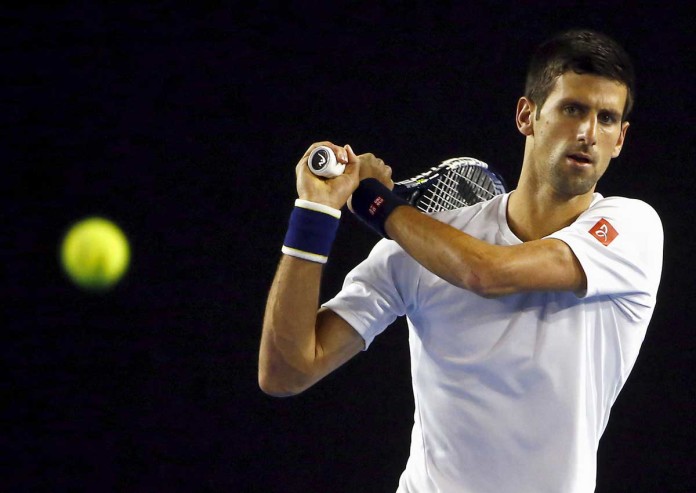
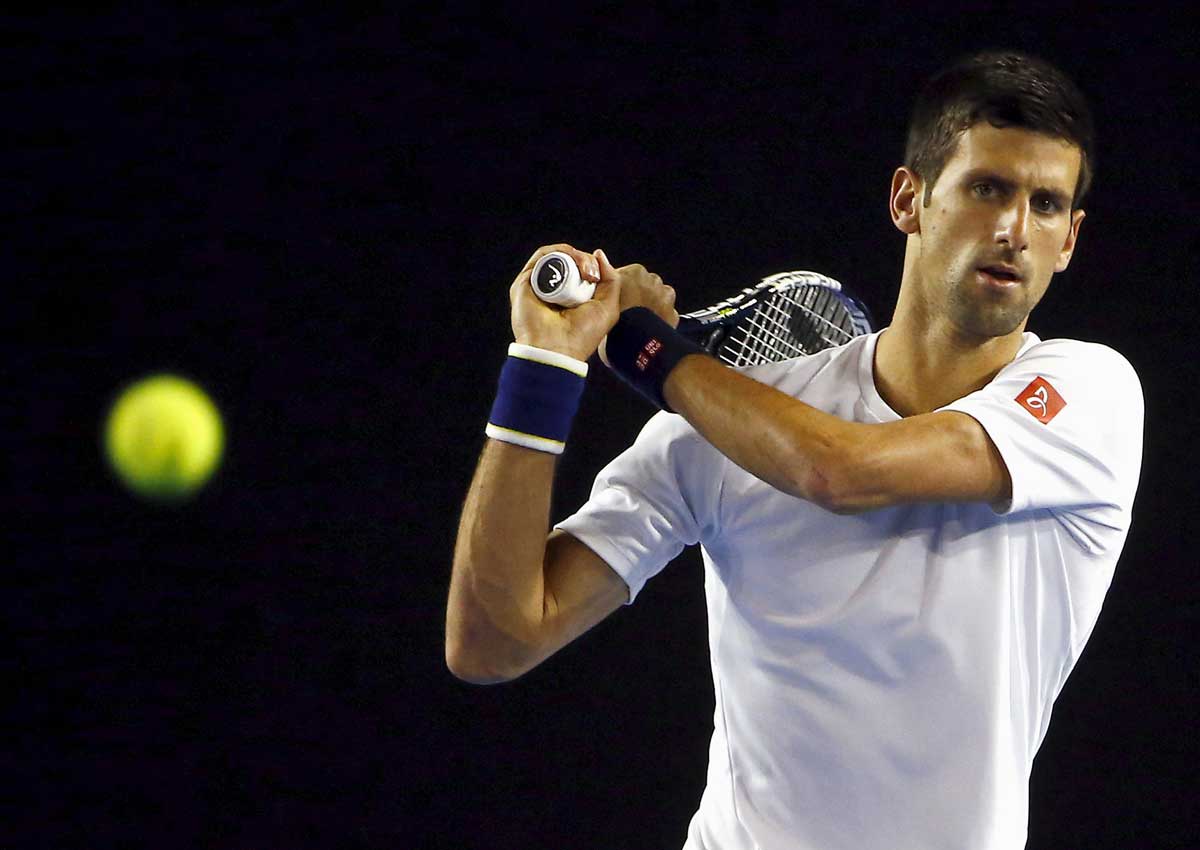
Novak Djokovic toppled a resurgent Rafael Nadal in straight sets Saturday and to reach the final of the Indian Wells ATP Masters, where he’ll be seeking a third straight and record fifth overall title.
The 28-year-old world number one from Serbia was the heavy favourite coming into the joint ATP and WTA Tour event and he showed why as he dispatched long time rival and nine-time French Open champion Nadal 7-6 (7/5), 6-2.
Djokovic improved to 21-1 this season and will square off in Sunday’s final against Canadian Milos Raonic, who beat Belgian David Goffin 6-3, 3-6, 6-3 in the other semi-final.
The women’s final is also on Sunday with Serena Williams vying for her first Indian Wells title since 2001 when she takes on former champion Victoria Azarenka.
Djokovic showed why he has been so dominant at Indian Wells, the hardcourt tournament in the California desert that he hopes this year will be a stepping stone to his first French Open title and a career Grand Slam.
Djokovic beat Roger Federer in three sets in the title match here the past two years, and now aims to surpass the record of four Indian Wells titles he shares with the Swiss.
Nadal, who will turn 30 in June, is also a multiple champion here having won three times in 2007, 2009 and 2013.
But the Spaniard had to work a lot harder to hold his serve for much of Saturday’s one hour, 58 minute match, spending almost twice as long as Djokovic in his service games.
Djokovic blasted just two aces but hammered 23 winners compared to 12 winners for Nadal.
Nevertheless Nadal’s solid Indian Wells effort allayed some of the fears raised by the 14-time Grand Slam champion’s first-round exit at the Australian Open.
The 25-year-old Raonic stormed into his 17th career ATP final by overpowering Belgian 15th seed Goffin.
Raonic, who is going through a makeover under the tutelage of new coach Carlos Moya, blasted 10 aces in the two-hour match to help counter 35 unforced errors.
“I lost my way a little in the second set, but in the third I stuck to my identity,” Raonic said.
Raonic roared through the first set in 34 minutes but struggled in the second with his serve as he tried to increase speed without sacrificing other components of his game.
“I feel even when I am not playing my best I am able to find the answers,” said Raonic.
“I am definitely able to play at a higher level this year and when a crisis occurs during a match I can find the solutions better.” Raonic, known for dominating opponents with his booming serve, has added more variety to his serve and his backhand shots as he put Goffin away with early breaks in the first and third sets.
He credits former world number one Moya with helping him add more variety to his game and those improvements are just now becoming evident following a six-week layoff due to a torn thigh muscle.
The injury flared up in his five-set semi-final loss to Andy Murray at the Australian Open and Raonic was unable to play in the Davis Cup earlier this month when Canada was crushed 5-0 by France.
Raonic reached his first final since winning at Brisbane in January. He improved to 14-1 on the season.
The Canadian blasted 39 winners to 22 for Goffin and won 81 per cent of his first serve points. He clocked one serve in the opening set at 146 mph (234 Km/h), the fastest of the tournament.
Raonic avenged a three-set loss to Goffin in the quarter-finals at Basel in 2014, the only other time the two have met.
Goffin became the first player in the tournament to take a set off Raonic when he won the second.
Image:
Publication Date:
Sunday, March 20, 2016 – 09:27
Send to mobile app:
Source:
Story Type:
Others
SDP's Chee Soon Juan to contest Bukit Batok by-election
The single-member seat was declared vacant after Mr David Ong resigned from the post and the People’s Action Party on Mar 12, citing “personal indiscretion”.
Source link
More support for couples who marry below age 25
The Ministry of Social and Family Development will enhance support for couples who marry below the age of 25, Associate Professor Muhammad Faishal Ibrahim, the ministry’s Parliamentary Secretary, said yesterday.
Speaking at the annual Marriage Convention held at the Suntec Singapore Convention and Exhibition Centre, he said the help will include “group marriage education programmes, one-to-one marriage assessments and post-marriage support groups”.
The parliamentary secretary said the ministry recognises that younger couples may need more support than older counterparts, and added that there has been an overwhelming response to complimentary 12-hour marriage preparation workshops.
Results from a poll of more than 1,200 married people by Families For Life, a group that champions strong families, were also released yesterday.
They showed that 59 per cent of respondents think it is important for couples to attend marriage preparation programmes.
The findings also showed that balancing family and work was considered the most important issue.
The other main issues were “keeping the spark alive” and managing finances.
Mr Hairol Nizam Ibrahim, 40, and his wife, Ms Norhafizah Abdul Aziz, 33, said it is hard to divide their time between their jobs as civil servants, studying part-time and spending time with their three young children and parents.
Ms Norhafizah said: “We have a movie night on Friday. It’s almost compulsory. The children look forward to it, they remind us.”

This article was first published on March 20, 2016.
Get a copy of The Straits Times or go to straitstimes.com for more stories.
Image:

Publication Date:
Sunday, March 20, 2016 – 09:07
Keywords:
Send to mobile app:
Source:
Story Type:
Others
ST Now, News As It Happens – March 20, 2016

March 20, 2016 6:48 AM
Welcome to ST Now, News As It Happens. We will keep you updated on the latest happenings in Singapore and beyond. If there is something you want to share with us, please drop us a note via email at stshare@sph.com.sg or reach us on Facebook and Twitter @STcom. Here’s a recap of what happened earlier.


Secrets to being happy from 'Singapore's happiest person'
Are we happy in Singapore?
Depending on which poll or index you refer to, we can be pretty schizophrenic, veering dramatically between happy and unhappy.
For instance, Singapore was recently ranked 22nd out of 157…
Source link


