SINGAPORE – Air New Zealand confirmed on Wednesday (March 4) a case of the new coronavirus on a Feb 25 flight from Singapore to Auckland.
“The customer travelled from Singapore to Auckland on flight NZ283 on 25 February, then flew from Auckland to Palmerston North on flight NZ5103 on 2 March, returning to Auckland on NZ8114 the same day,” the airline said in a travel alert posted on its website.
“We are working closely with the Ministry of Health and Government agencies to identify and proactively contact customers who travelled on the Singapore service and the two regional flights.”
The female patient was returning from a holiday in northern Italy – which has seen a spike in infections – and was in isolation at home, according to New Zealand media.
Air New Zealand Chief Medical Officer Doctor Ben Johnston said the airline had anticipated and planned for the scenario and had a robust process to manage its response, according to Airlineratings.com, an airline safety and product rating review website.
It has been described as the main door to the digital spaces that can be opened from within homes and small businesses, but many people are oblivious to the risks as they use weak passwords for their Wi-Fi routers.
To ensure better protection, Senior Minister of State for Communications and Information Janil Puthucheary announced yesterday that the Cyber Security Agency of Singapore will roll out a cyber-security labelling scheme for home routers and smart home hubs.
PROVISIONS
The labels, which will indicate the security provisions present in the smart devices, will be stuck on Wi-Fi routers and smart home hubs to begin with, to help buyers better judge their exposure to cyber risks.
Speaking during the debate on his ministry’s budget allocation in Parliament yesterday, Dr Janil said: “The scheme will raise consumer awareness of more secure products and aims to encourage manufacturers to adopt additional cyber-security safeguards.”
The labelling scheme will be extended to more Internet of Things (IoT) or connected devices to help users.
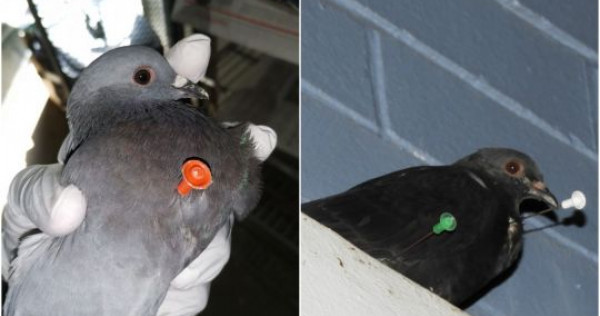
SINGAPORE – The National Parks Board’s Animal and Veterinary Service (AVS) is looking into an incident in which blow darts were allegedly used on two pigeons, and urged the public to help with investigations by sharing any relevant photo or video evidence with it.
The suspected case of bird cruelty was first reported by the Animal Concerns Research and Education Society (Acres) in a Facebook post on Monday (March 2), after the animal welfare group received a report from a member of the public at Block 864 Jurong West Street 81.
The caller had rescued a pigeon with a dart on its body, Acres said. Its officers at the scene also found a pigeon that had two darts on its body, but it flew away before they could attend to the bird.
Acres said that it was an “act of cruelty and violence to put the innocent birds through pain and suffering” and added that the possession of the blow darts and similar items or their sale online “should be strictly regulated considering the pain they can cause to any animal or human” if used on them.
SINGAPORE: It started as it often does – someone approaching you as you make your way to the MRT station. Asking innocuously if you are a Christian or if you’d like to know more or meet someone who can help deepen your understanding of the faith.
For Fiona*, whose name has been changed to protect her identity, it was this exact scenario that eventually saw her going for meetings with a group linked to the Shincheonji Church of Jesus the Temple of the Tabernacle of the Testimony (SCJ).
The Korean church has been at the centre of a storm in South Korea because it has registered at least half of all COVID-19 infections there.
Last Friday (Feb 28), MHA revealed that the church had a local chapter and is investigating its activities here.
The local university graduate, who is wary of giving her age, is in her 20s. She says she met two men at Dhoby Ghaut station one Sunday afternoon in late December last year. They told her they were collecting information for research about Christians in Singapore. They sounded authentic and so Fiona, a Christian herself, decided to accept their invitation to meet.
When Fiona told her friends about the encounter, they suggested that she take someone along with her. So her mother agreed to go with her for the first meeting on January 11.
During the course of their conversations, a man who called himself a pastor, dropped hints that he would like both Fiona and her mum to study the Bible with him.
“He made it sound as if I didn’t know the (Bible) well enough,” Fiona said, so she agreed and dropped him a text a week later to arrange for lessons. And thus began her involvement with the church where she began attending regular meetings, without her mum.
It was only on Monday (Mar 2) morning, after her dad sent her a news report about the Shincheonji Church, that Fiona realised what she had gotten herself into.
Reading the report, she found exact descriptions of activities she had experienced.
“(The students) are not allowed to exchange contacts, they are not allowed to bring their notes home, they are taught that deception and lies to do God’s will are okay,” Fiona said as her eyes widened. “And these three things were like, ‘oh my God, it’s what I’ve been taught’.”
South Korean health officials spray disinfectant in front of the Daegu branch of the Shincheonji Church of Jesus in an attempt to combat the COVID-19 coronavirus outbreak AFP/Jung Yeon-je
BEHIND THE SHINCHEONJI CHURCH
Fiona’s account parallels what the Ministry of Home Affairs (MHA) said of the group’s actions.
On Friday (Feb 28), the ministry announced that it was investigating the unregistered local chapter of the SCJ, a South Korean religious group that has been linked to the COVID-19 cluster in Daegu.
SCJ teaches that it is acceptable to use deceit and lies if it serves God’s purposes, said MHA in its media release. Members are also not allowed to contact one another, verify teachings with other churches, or inform families of their teachings.
The religious group has also been using front entities to target Christian youths and young members, while requiring them to comply strictly with instructions to conceal the local existence of the group and their involvement with it, MHA said.
Founded by South Korean national Lee Man-hee in 1984, the group has attracted accusations of being a cult in several countries due to its unorthodox teachings, MHA said. The leader claims to be the second coming of Christ, who would bring 144,000 people to Heaven with him on the Day of Judgement.
“He has also claimed to be the only person who can interpret the Bible, and SCJ allegedly regards all other churches and pastors as belonging to Satan,” the ministry said.
The religious group has more than 1,000 churches in South Korea and more than 240,000 members worldwide.
MHA believes there are fewer than 100 members in the local chapter, comprising both locals and foreigners.
Fiona began having one-on-one lessons with the pastor from mid-January. They usually met at food courts or fast food restaurants in City Hall or around neighbourhoods in the East. After their fifth meeting, she was asked to move to a group class with the rest of his students. Lessons would be held over the course of four months.
By Feb 10, she started classes with eight other people. The group met for two hours every Monday, Wednesday and Friday morning at an office space inside an industrial building in Marymount.
There were no signboards that indicated the church’s name, but Fiona did not think it was odd, assuming it was just a temporary space the group was renting for a few months to hold their activities.
Each class started off with them singing a Christian worship song, followed by prayers, then a lecture for an hour and a half – they often delved into the parables in the Bible – before ending off the session with discussions.
Shincheonji — a secretive religious group in South Korea — proclaims its founder has donned the mantle of Jesus Christ and will take 144,000 people with him to heaven on the day of judgement AFP/Jung Yeon-je
During these lessons, Fiona and her classmates found themselves confronting several unorthodox practices.
They were allowed to take notes but not allowed to take them home. Instead, the teachers kept their notebooks and only passed them out before each lesson. They were instructed not to disclose to anyone what they went through during these lessons. Bringing someone new to class was not allowed, as was asking fellow students how they got to know about these classes.
The teachers told the students that if they discussed what they learnt outside of the setting, it could jeopardise their understanding of the doctrine, Fiona recalled.
Then there were beliefs that raised suspicion: Followers have a “hidden knowledge” secret to others, and that it is perfectly fine to lie if it is done “in God’s will”. During one lesson, she was told to come up with a list of excuses to tell others if they asked her what she was doing with the group.
Fiona says she did not confide in anyone about what she was asked to do.
“I was uncomfortable but I agreed because they convinced me that what I was doing is God’s will and that in order to continue learning, I had to protect myself and my family and friends from being used to hinder me (from my faith),’’ she said.
SAVED BY A NEWS REPORT
Despite these red flags, Fiona kept going for the thrice-weekly gatherings. The teachers seemed genuine and sincere. She was also at a stage in her life where she wanted to know what “my purpose in life is”, she said.
Fiona, who recently graduated, was ready to hold off looking for a full-time job in order to attend all the weekday sessions when news about the Church’s activities broke amid the COVID-19 situation.
After reading the report her dad sent, Fiona went online to read what former members from other countries had written about the church. Their experiences corroborated with hers. Confronted with these facts, she broke down and cried, overwhelmed by her feelings of betrayal and disappointment.
“I felt betrayed,” Fiona said of her anger towards the leaders. She had trusted the instructors – to the point of sharing her personal struggles with one of them.
She was also disappointed about the way she felt she was misled and yet, immensely relieved that she found out more about the group early into her involvement.
The religious group has suspended meetings on grounds of the coronavirus and because one of the teachers has to attend to “something urgent”, said Fiona. But she is never going back.
“I was searching for answers to Christianity and they seemed to have a lot of knowledge and the answers,’’ said Fiona. “I did find the practices abnormal but I continued because I trusted them – I trusted they were true servants of God.”
“I am hoping that by sharing in detail … my story will warn others to question the sources of what they believe in.’’
SINGAPORE: It started as it often does – someone approaching you as you make your way to the MRT station. Asking innocuously if you are a Christian or if you’d like to know more or meet someone who can help deepen your understanding of the faith.
For Fiona*, whose name has been changed to protect her identity, it was this exact scenario that eventually saw her going for meetings with a group linked to the Shincheonji Church of Jesus the Temple of the Tabernacle of the Testimony (SCJ).
The Korean church has been at the centre of a storm in South Korea because it has registered at least half of all COVID-19 infections there.
Last Friday (Feb 28), MHA revealed that the church had a local chapter and is investigating its activities here.
The local university graduate, who is wary of giving her age, is in her 20s. She says she met two men at Dhoby Ghaut station one Sunday afternoon in late December last year. They told her they were collecting information for research about Christians in Singapore. They sounded authentic and so Fiona, a Christian herself, decided to accept their invitation to meet.
When Fiona told her friends about the encounter, they suggested that she take someone along with her. So her mother agreed to go with her for the first meeting on January 11.
During the course of their conversations, a man who called himself a pastor, dropped hints that he would like both Fiona and her mum to study the Bible with him.
“He made it sound as if I didn’t know the (Bible) well enough,” Fiona said, so she agreed and dropped him a text a week later to arrange for lessons. And thus began her involvement with the church where she began attending regular meetings, without her mum.
It was only on Monday (Mar 2) morning, after her dad sent her a news report about the Shincheonji Church, that Fiona realised what she had gotten herself into.
Reading the report, she found exact descriptions of activities she had experienced.
“(The students) are not allowed to exchange contacts, they are not allowed to bring their notes home, they are taught that deception and lies to do God’s will are okay,” Fiona said as her eyes widened. “And these three things were like, ‘oh my God, it’s what I’ve been taught’.”
South Korean health officials spray disinfectant in front of the Daegu branch of the Shincheonji Church of Jesus in an attempt to combat the COVID-19 coronavirus outbreak AFP/Jung Yeon-je
BEHIND THE SHINCHEONJI CHURCH
Fiona’s account parallels what the Ministry of Home Affairs (MHA) said of the group’s actions.
On Friday (Feb 28), the ministry announced that it was investigating the unregistered local chapter of the SCJ, a South Korean religious group that has been linked to the COVID-19 cluster in Daegu.
SCJ teaches that it is acceptable to use deceit and lies if it serves God’s purposes, said MHA in its media release. Members are also not allowed to contact one another, verify teachings with other churches, or inform families of their teachings.
The religious group has also been using front entities to target Christian youths and young members, while requiring them to comply strictly with instructions to conceal the local existence of the group and their involvement with it, MHA said.
Founded by South Korean national Lee Man-hee in 1984, the group has attracted accusations of being a cult in several countries due to its unorthodox teachings, MHA said. The leader claims to be the second coming of Christ, who would bring 144,000 people to Heaven with him on the Day of Judgement.
“He has also claimed to be the only person who can interpret the Bible, and SCJ allegedly regards all other churches and pastors as belonging to Satan,” the ministry said.
The religious group has more than 1,000 churches in South Korea and more than 240,000 members worldwide.
MHA believes there are fewer than 100 members in the local chapter, comprising both locals and foreigners.
Fiona began having one-on-one lessons with the pastor from mid-January. They usually met at food courts or fast food restaurants in City Hall or around neighbourhoods in the East. After their fifth meeting, she was asked to move to a group class with the rest of his students. Lessons would be held over the course of four months.
By Feb 10, she started classes with eight other people. The group met for two hours every Monday, Wednesday and Friday morning at an office space inside an industrial building in Marymount.
There were no signboards that indicated the church’s name, but Fiona did not think it was odd, assuming it was just a temporary space the group was renting for a few months to hold their activities.
Each class started off with them singing a Christian worship song, followed by prayers, then a lecture for an hour and a half – they often delved into the parables in the Bible – before ending off the session with discussions.
Shincheonji — a secretive religious group in South Korea — proclaims its founder has donned the mantle of Jesus Christ and will take 144,000 people with him to heaven on the day of judgement AFP/Jung Yeon-je
During these lessons, Fiona and her classmates found themselves confronting several unorthodox practices.
They were allowed to take notes but not allowed to take them home. Instead, the teachers kept their notebooks and only passed them out before each lesson. They were instructed not to disclose to anyone what they went through during these lessons. Bringing someone new to class was not allowed, as was asking fellow students how they got to know about these classes.
The teachers told the students that if they discussed what they learnt outside of the setting, it could jeopardise their understanding of the doctrine, Fiona recalled.
Then there were beliefs that raised suspicion: Followers have a “hidden knowledge” secret to others, and that it is perfectly fine to lie if it is done “in God’s will”. During one lesson, she was told to come up with a list of excuses to tell others if they asked her what she was doing with the group.
Fiona says she did not confide in anyone about what she was asked to do.
“I was uncomfortable but I agreed because they convinced me that what I was doing is God’s will and that in order to continue learning, I had to protect myself and my family and friends from being used to hinder me (from my faith),’’ she said.
SAVED BY A NEWS REPORT
Despite these red flags, Fiona kept going for the thrice-weekly gatherings. The teachers seemed genuine and sincere. She was also at a stage in her life where she wanted to know what “my purpose in life is”, she said.
Fiona, who recently graduated, was ready to hold off looking for a full-time job in order to attend all the weekday sessions when news about the Church’s activities broke amid the COVID-19 situation.
After reading the report her dad sent, Fiona went online to read what former members from other countries had written about the church. Their experiences corroborated with hers. Confronted with these facts, she broke down and cried, overwhelmed by her feelings of betrayal and disappointment.
“I felt betrayed,” Fiona said of her anger towards the leaders. She had trusted the instructors – to the point of sharing her personal struggles with one of them.
She was also disappointed about the way she felt she was misled and yet, immensely relieved that she found out more about the group early into her involvement.
The religious group has suspended meetings on grounds of the coronavirus and because one of the teachers has to attend to “something urgent”, said Fiona. But she is never going back.
“I was searching for answers to Christianity and they seemed to have a lot of knowledge and the answers,’’ said Fiona. “I did find the practices abnormal but I continued because I trusted them – I trusted they were true servants of God.”
“I am hoping that by sharing in detail … my story will warn others to question the sources of what they believe in.’’
SINGAPORE: The recent viral video of a suicidal nine-year-old Australian boy crying his heart out because he was teased in school drew an international outpouring of support.
In the livestreamed video, Quaden Bayles, born with a condition commonly known as dwarfism, sobbed as his mother narrated how he had been teased, how she felt inadequate in building his resilience towards such treatment, and wishing that their community could be more inclusive.
Like many others, my heart went out to Quaden for the rejection that he must have felt, every time he met someone who did not know how to respond appropriately to his physical condition.
EMPOWERING OUR CHILDREN
Many parents would have faced similar situations where our children come home crying.
We parents know how dire the consequences of such bullying can be.
Bullied victims are between two to nine times more likely to consider suicide according to a study by Yale University. A study in Britain also found that at least half of suicides among young people are related to bullying.
As parents, we might not always be able to shield our children from teasing and bullying, but we could certainly build their sense of personal resilience by affirming them, and making them feel more secure in who they are and how much they are loved.
There are several measures that parents can take to better prepare themselves to handle such situations and empower their children to deal with bullying.
RESILIENCE BEGINS AT HOME
First, inevitably starts with the home environment.
In the eyes of every parent, his or her child is precious, and Quaden is no different in that regard.
But it is also the responsibility of parents to create a safe and conducive environment at home where tough conversations, facilitated by trust, can happen. If children feel unconditionally loved and accepted, they may be able to talk about such episodes more openly.
Research has shown that meeting such basic needs would also facilitate the holistic development of children, and helps them build character to see them through tough times.
Renowned British doctor and television presenter Robert Winston explained in a 2016 paper for the London Journal of Primary Care that strong parental support starts from when children are infants and that “without a good initial bond, children are less likely to grow up to become happy, independent and resilient adults”.
A supportive environment at home where children feel at ease with confiding in their parents is a key ingredient to addressing bullying in school. (Photo: Alvin Chong)
Apart from demonstrating love, empathy and affirmation, parents also should engage in emotion-coaching to act as role models to show how adversity can be overcome.
They are never too young for such positive experiences.
EQUIPPING PARENTS
But dealing with such issues may not come naturally to most parents. After all, there is a fine line between helicopter parenting and parenting that leads from the front.
That moment when his mother saw him being teased in the gymnasium, and not knowing how to intervene as he also mouthed to her not to, is a scene that many parents could relate to.
Playground politics quite often leads to teasing and bullying, and it is sometimes easier for parents to intervene in instances of outright bullying, but less so in the case of what appears as “harmless” teasing.
That is where, as parents, we need to have open and frequent communication with our children so that we can not only equip them with the necessary skills to deal with such situations but also so that they can tell us when they want us to intervene.
For instance do you ask your child about their day to gauge what their experiences have been? Does your child know how to convey feelings of fear or bad experiences to you on their own? Do you yourself convey how your day went, as a form of role modelling?
For example, we could share with our children how our day went by highlighting the parts that made us glad, sad, mad or scared. By using emotive words, we help our children build a vocabulary to articulate how they feel, and role-model how we manage our emotions in a healthy manner.
In Singapore, we are fortunate to have several platforms that help parents with such skills. The Centre for Fathering (CFF) conducts weekly fathering workshops to empower fathers to strengthen their relationships in the home and address contemporary issues that children face in their growing years.
The Centre for Fathering logo
Fathers are equipped to become more involved, consistent, aware and nurturing in their fathering competencies. And a strong emphasis is also made to form father groups throughout Singapore that provides fathers with timely support.
Through the national Dads for Life movement, many fathers of children with special needs started getting together to create friendship and share experiences. They volunteered their time and resources with CFF to mobilise other fathers and families in similar situations,
IT REALLY TAKES A VILLAGE
A major thrust for these initiatives is that we recognise that parents need support too in addressing bullying. It is okay to admit that parenting might not come naturally.
Having a community of peers for support, and evidence-based techniques to strengthen parenting competencies can empower parents and build emotionally stronger kids.
And it would certainly help if there was a good partnership between parents and school leaders to address such issues.
As for the rest of us in the community and support-network, providing adequate and appropriate responses and support is key.
In Quaden’s case for instance, it was encouraging to see the outpouring of support he received from everyone who viewed the video, including affirmation from celebrities like Hugh Jackman, who committed to being his friend.
And the amount of sponsorships his family received to bring him to Disneyland and to travel the globe was astounding.
While such outpouring of international support would no doubt have made Quaden feel better supported, one can’t help wonder if a portion of those funds raised could instead be used to sponsor appropriate therapy and support for him.
This would strengthen his resilience as he navigates the ideation phase during adolescence, in view of his emotional sensitivity.
Regardless, as the adage goes, it takes a village to raise our children together, and we require all hands on deck as we address raising the next generation of our nation.
Bryan Tan is the CEO of Dads for Life and the Centre for Fathering. Formerly a senior officer with the Singapore Armed Forces, he made a mid-career switch to the social service sector to serve fathers and the “fatherless” in our nation.
SINGAPORE: Two new cases of COVID-19 have been confirmed in Singapore, said the Ministry of Health (MOH) on Tuesday (Mar 3), bringing the total number of cases in the country to 110.
One of the new cases is linked to the cluster at Wizlearn Technologies, which now has 14 confirmed cases.
Contact tracing is underway for the other case to establish any links to previous cases or travel history to affected countries or regions, said MOH in the release.
No patients were discharged on Tuesday.To date, a total of 78 cases have fully recovered and have been discharged from hospital.
Of the 32 patients who are still in hospital, most are stable or improving. Seven are in critical condition in the intensive care unit, said MOH.
Case 109 is a 70-year-old Singaporean man who has no recent travel history to other affected countries and regions, said MOH.
He is currently warded in an isolation room at the Singapore General Hospital (SGH).
MOH said that prior to hospital admission, he had gone to work at Fish Mart Sakuraya at 154 West Coast Road, but had not served customers or handled food. He lives at Everton Park.
He reported onset of symptoms on Feb 25 and sought treatment at a general practitioner (GP) clinic on Feb 27 and Feb 28.
When he went to SGH on Feb 29, he was immediately isolated. Test results confirmed COVID-19 infection on Mar 2 afternoon.
CASE 110
Case 110 is a 33-year-old Singaporean man who is linked to the cluster at Wizlearn Technologies.
He is currently warded in an isolation room at the National Centre for Infectious Diseases.
has no recent travel history to affected countries and regions.
UPDATES ON PREVIOUS CASES
MOH also provided additional information on a previously confirmed case.
CASE 108
Case 108, a 34-year-old female Filipino national, is a domestic helper employed by Case 101, a 61-year-old Singaporean man who lives at Bukit Batok Street 31. She and Case 102 work in the same household.
She reported onset of symptoms on Feb 25. She went to Ng Teng Fong General Hospital on Feb 28 and was immediately isolated. She tested positive on Mar 2 morning.
Prior to hospital admission, she had gone to a dental clinic. She lives at Bukit Batok Street 24.
As of Mar 3 at noon, MOH has identified 3,173 close contacts who have been quarantined. Of these, 336 are currently quarantined, and 2,837 have completed their quarantine.
WIDER TRAVEL RESTRICTIONS
Singapore on Tuesday announced that it will block entry and transit for new visitors who travelled to Iran, northern Italy or South Korea within the last 14 days.
Minister for National Development Lawrence Wong also warned of the need to be prepared for “new spikes” in COVID-19 cases in Singapore.
The measure, which takes effect on Wednesday, is among the additional precautions Singapore is taking to help reduce the risk of imported cases.
15 QUARANTINED IN BATAM AFTER CONTACT WITH SINGAPORE PATIENTS
Fifteen people in Batam were put under quarantine after coming in close contact with three visitors from Singapore who were diagnosed with COVID-19, according to Indonesian authorities on Monday.
The three visitors from Singapore have been identified as Case 101, Case 103 and Case 104. They tested positive on Sunday.
More than 3,100 people worldwide have died from the illness, with the World Health Organization voicing concern about the spread of COVID-19 outside China, where it originated.
On Monday, the United States reported its sixth death.
Andorra, the Czech Republic, Indonesia, Jordan, Latvia, Portugal, Tunisia and Saudi Arabia were among countries that recently confirmed their first cases, along with Senegal, which became the second sub-Saharan African country to do so.
The outbreak has raised fears for the world economy, with the OECD slashing its global growth forecast by half a percentage point to 2.4 per cent, the worst performance since the 2008 financial crisis.
Amidst Covid-19 concerns (and us being in the year 2020 and all), Nanyang Technological University’s (NTU) open house has gone digital this year.
What caught the attention of netizens, however, was neither the campus facilities nor the school’s courses. It was a Facebook post showing off the NTU dorms.
The post, uploaded on Feb 28 as a leadup to the actual open house, featured several posh-looking refurbished dorm rooms.
From the modern Scandinavian theme in Hall 5 to lush botanical aesthetics over at Hall 1 and 2, the rooms looked as though they belonged in an Ikea catalogue.
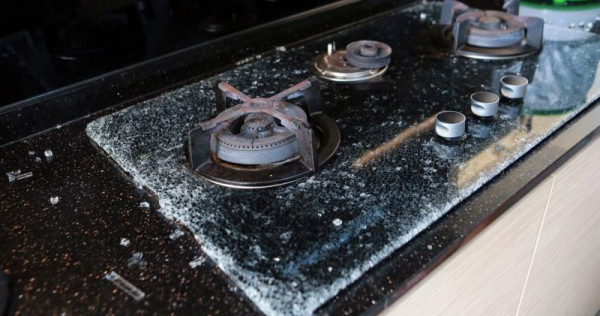
“Fortunately, my children were not in the kitchen when the glass shattered. My 12-year-old often helps with cooking, and my younger son goes to the kitchen quite frequently.”
Her family had purchased the glass-top stove in Feb 2017 and started using it in April when they moved into their new home.
“The salesman told me that the stove could last 10 years, but this happened after slightly over two years,” her husband said.
The homeowner then contacted the stove distributor on the same day and arranged for a check on the home appliance.