Home Blog Page 4454

Thais to fund first phase of Thailand-China railway project

0

BANGKOK – Thailand on Thursday said it would fund the construction of the first phase of railway line from the Thai-Laos border to the Gulf of Thailand that China and Thailand had agreed to partner.

The project is part of China’s efforts to expand infrastructure in Southeast Asia. China has ambitious infrastructure plans for the region to build rail links from Kunming in its southwest through Laos to Thailand.

Thai Transport Minister Arkhom Termpittayapaisith said earlier this month that China and Thailand were still negotiating a 60:40 shareholding plan for the proposed 845 kms (525 miles) line which would run from the Thai-Laos border to the Gulf of Thailand. China has put the project cost at 560 billion baht ($15.87 billion).

Deputy government spokesman Major General Weerachon Sukhontapatipak said on Thursday that Thailand would fund the project’s first phase, or part of the track from Nakhon Ratchasima province, northeast of Bangkok, to the Thai capital. “Early stage construction will be the line Bangkok – Kaeng Khoi – Nakon Ratchasima. Thailand will invest in all of it by itself,” Weerachon told reporters. “Both governments have agreed this project will take place under this administration.” China’s rail ambitions have taken hold elsewhere.

Neighbouring Laos in December marked a groundbreaking ceremony in Vientiane for a line from Kunming to Vientiane.

In October China piped rival Japan to sign a high-speed rail deal with Indonesia worth $5.1 billion.

But the project, a 150 kms (93 miles) line which would connect the Indonesian capital Jakarta with the mountain-fringed city of Bandung, has run into problems with the suspension of construction just days after a groundbreaking ceremony.

Image: 
Category: 
Publication Date: 
Thursday, March 24, 2016 – 15:39
Keywords: 
Send to mobile app: 
Source: 


Story Type: 
Others

Source link

K-pop girl groups lash out against prostitution rumours

0

While a list of female celebrities allegedly involved in prostitution has been circulating for the past week, some of those named — including a number of K-pop girl group singers — are vehemently protesting the rumours in an unprecedented string of public statements.

Last Saturday, Yubin of girl group Wonder Girls issued a statement via her agency, JYP Entertainment, calling the rumours “completely false” and vowing to take legal action against those circulating the list. Subin of girl group Dal Shabet followed suit the next day. On Monday, Yang Ji-won of girl group Spica also released a statement decrying the rumours, as did actresses Kang So-ra, Nam Bo-ra and Shin Se-kyung, who each released a statement the same day.

The immediate and aggressive response by the stars appears to be prompted in part by the impact the rumours may have on their global fans, as K-pop entertainers are increasingly reaching out overseas.

“Dal Shabet performed in Japan last week, and is scheduled to appear in Taiwan next week,” a public relations representative for Happy Face Entertainment, the girl group’s label, told The Korea Herald in a phone interview Wednesday. “(The list) may not spread as quickly abroad as in Korea, but we are still worried how it might affect our overseas activities if it were to reach global fans.”

Another major concern was the lightning speed at which the list spread through messenger apps and social media, said the representative, who wished to be identified only by her surname, Kim.

“The list reached so many people and the real names of all the celebrities were revealed so openly,” said Kim. “People began to take it for granted that the rumours were true, when they are absolutely false. That’s why we decided to react aggressively.”

The list in question features the names of 10 female entertainers — including actresses, singers and trainees — and the fees they allegedly receive for engaging in prostitution. The list began circulating after two brokers were arrested last month on charges of arranging prostitution deals between Korean female entertainers and clients abroad.

Prosecutors subsequently began an investigation of four entertainers alleged to have been involved in the prostitution scheme run by the two arrested brokers. Among the investigated was a well-known singer who confessed to receiving some 35 million won (US$30,100 or S$41,200) in return for providing sex to a Korean-American businessman and an unnamed member of a K-pop girl group.

“The list began to spread around the time these events took place,” said an entertainment industry insider who wished to remain anonymous. “That timing has caused many to think that those on the list are guilty, which is extremely unfair.”

“These types of rumours are fatal for female girl group members, which is why we reacted immediately.” the source added.

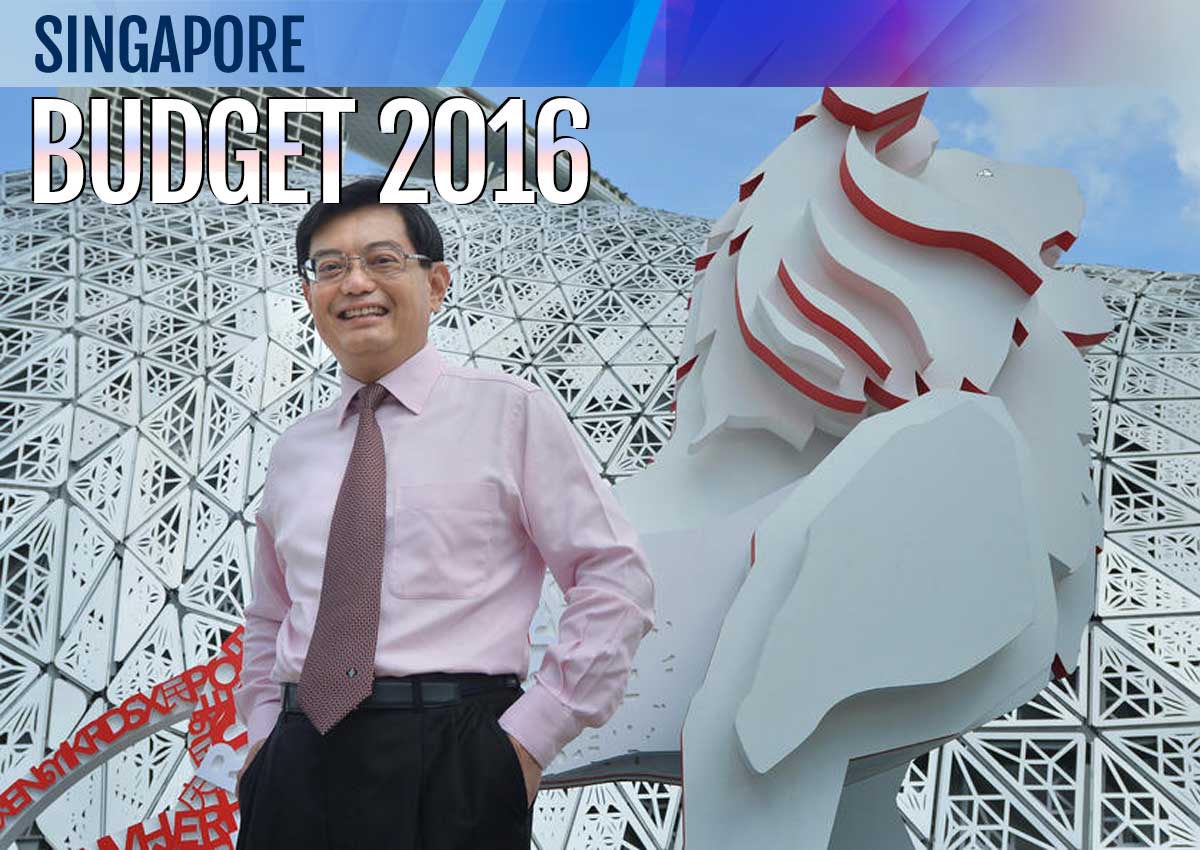
Image: 
Category: 
Publication Date: 
Thursday, March 24, 2016 – 15:13
Send to mobile app: 
Source: 


Story Type: 
Others

Source link

Finance Minister Heng Swee Keat unveils Budget 2016

0

Image: 
Publication Date: 
Thursday, March 24, 2016 – 15:14
Keywords: 
Send to mobile app: 
Source: 


Rotator Headline: 
Finance Minister Heng Swee Keat unveils Budget 2016: Follow AsiaOne's live updates
Rotator Image: 
Story Type: 
Others

Source link

Grieving best friend of dead SMRT staff: 'I couldn't think'

0

It happened so quickly, he barely had enough time to get out of the way of the oncoming train.

But when Mr Muhammad Hatin Kamil looked up again, he could only watch as his best friend and SMRT colleague Nasrulhudin Najumudin…

Source link

New workbook for students on what Lee stood for launched

0

Stories of Mr Lee Kuan Yew’s courage, tenacity and even his frugality are now told in a new book for secondary school students, titled LKY: Follow That Rainbow, Go Ride It.

The workbook was launched at Bendemeer Secondary School yesterday, on the first anniversary of the founding Prime Minister’s death.

The 64-page Straits Times Press publication is developed by The Straits Times Schools team and sponsored by Mapletree Investments and Singapore Power.

A total of 200,000 copies will be distributed to all secondary schools.

Sakethivell Ahrumugam, 14, one of the first to get a copy, found the design of the book appealing.

“The typography really attracted me. The contrast between the colourful cover and the black and white pictures also gives it a really nostalgic feel,” said the Secondary 2 student at Bendemeer.

Senior Minister of State Josephine Teo, who launched the book, was struck by the poignant content.

She said the articles, such as one about Mr Lee’s simple taste in clothes, made her recall her own interactions with him.

She recounted speaking with Mr Lee on a trip to Australia in 2007, when she had asked him why he was still carrying a briefcase from the 1970s.

Mr Lee replied matter-of-factly: “It still works.”

His frugality was but one of many values that the workbook, which covers Mr Lee’s life from 1923 to 2015, hopes to inspire in students.

Targeted at teenagers aged 12 to 18, it comprises newspaper articles, historical photographs and motivating activities structured around four values Mr Lee embodied: idealism, courage, resilience and tenacity.

The author, Ms Debra Ann Francisco – a former teacher and a correspondent specialising in news in education at The Straits Times – chose a value-centred approach as she hoped readers would discover these values in their own lives.

“I believe that teenagers have much to learn from how Mr Lee lived his life. The activities I created in the workbook aim to get students to dream big and set realistic goals in order to chase their own rainbows.”

She shared the activities with 39 Secondary 2 students at Bendemeer, getting them to set goals they hope to realise in five, 10, or 20 years, an exercise that showed the importance of having a road map.

This is the second book inspired by Mr Lee that ST Press has produced for a young audience. The first book, What’s Inside The Red Box, was published in December last year and is for children aged three to seven.

clementy@sph.com.sg


This article was first published on March 24, 2016.
Get a copy of The Straits Times or go to straitstimes.com for more stories.

Image: 
Category: 
Publication Date: 
Thursday, March 24, 2016 – 17:00
Send to mobile app: 
Source: 


Story Type: 
Others

Source link

Parliamentarians, Old Guard leaders pay tribute to Mr Lee

0

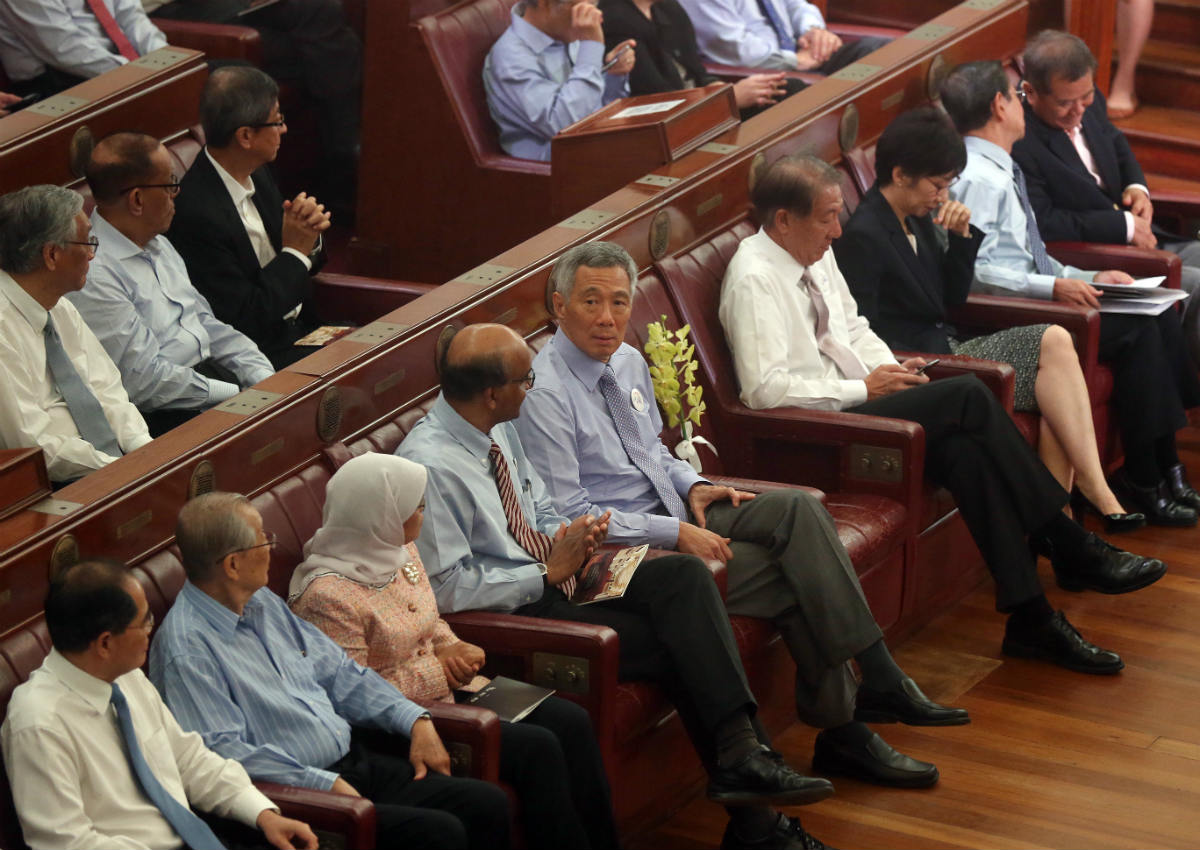
The Chamber of the Old Parliament House was where the late Mr Lee Kuan Yew delivered some of his most fiery speeches, and where some of the country’s landmark laws were passed.

Yesterday, past and present parliamentarians filled the historic hall of the building, now called The Arts House, to pay tribute to Singapore’s founding Prime Minister on the first anniversary of his death.

They included Old Guard leaders Ong Pang Boon and Jek Yuen Thong, current Cabinet ministers, Workers’ Party chief Low Thia Khiang, and former MP and presidential candidate Tan Cheng Bock.

A spray of yellow hybrid orchids named Aranda Lee Kuan Yew was aptly placed on the seat Mr Lee had occupied – a bittersweet reminder of his long years building up Singapore.

Leader of the House Grace Fu, in her opening address at the remembrance ceremony, said the history of Parliament would be incomplete without a mention of the late Mr Lee, the country’s first Prime Minister from 1959 to 1990.

“His abiding vision of Singapore as a multiracial nation ensured that the protection of minority rights and representation were enshrined in our Constitution,” said Ms Fu, who is the Minister for Culture, Community and Youth.

“Mr Lee’s personal leadership helped set the tone and shaped the Parliament that we know today.”

Mr Lee was 31 years old when he won the seat of Tanjong Pagar in Singapore’s Legislative Assembly election in 1955. He was the constituency’s MP until he died last year at age 91.

Mr Abdullah Tarmugi, former Speaker of Parliament and former Cabinet minister, became emotional as he recounted his memories of Mr Lee.

Mr Abdullah, who entered Parliament after the 1984 General Election, recalled that he was both proud to be speaking in Parliament, and nervous as he worried about what Mr Lee thought of him.

“When I spoke, I was looking at the ceiling, at the Speaker… to avoid (Mr Lee’s) gaze.”

He said that at an earlier lunch with Mr Lee, the late prime minister could sense he was intimidated by his presence.

“He was extra calm and gentle… He wanted me to be myself, do what was right”, he added, and “not pander to what others thought of, or wanted me, to be”.

Former deputy prime minister Wong Kan Seng, a former Leader of the House who was first elected to Parliament in 1984, said Mr Lee was always frank and open with his views. Mr Lee also paid attention to things big and small, he added.

“In one of the lunches I had with him as a new minister in the 1980s, he explained that ministers should drive so they could see the road condition for themselves.”

When plans were made to build a new Parliament building as the old one was no longer adequate, Mr Lee reminded Mr Wong, who was then the Leader of the House, not to build a grandiose monument.

“Taking this sound advice, we built a new functional Parliament House in proportion to our prudent approach to public spending,” said Mr Wong.

Earlier at The Arts House, Prime Minister Lee Hsien Loong opened a permanent exhibition titled The Parliament In Singapore History.

It traces chronologically the history and milestones of the building, and of Singapore’s Parliament.

The exhibition will be opened to the public from today until May 29.

leepearl@sph.com.sg


This article was first published on March 24, 2016.
Get a copy of The Straits Times or go to straitstimes.com for more stories.

Image: 
Category: 
Publication Date: 
Thursday, March 24, 2016 – 17:00
Send to mobile app: 
Source: 


Story Type: 
Others

Source link

Spin bowlers dominate

0

IT WAS a good pitch at Mohali, not damp, not a raging turner, not a slow, spongy surface where the ball has a cup of tea before it reaches the batsman.

No, it was a surface on which New Zealand had made 180 after looking like they could reach 190.

It was a pitch on which Pakistan had made 65 in five and a half overs before losing a wicket.

There were memories of England’s run chase at the Wankhede against South Africa being whispered about.

Then New Zealand turned to spin.

Given their history, even given Dan Vettori, that is a bit like the Kirana gharana turning to rap for its audience.

It worked. And worked dramatically.

Like it has throughout this World T20. From that point Mitchell Santner and Ish Sodhi bowled 7 overs and took 3-40. Pakistan’s runaway train ground to a crawl. On a surface that was good for batting.

At the Wankhede, in that dramatic England run chase where 11.69 runs were made per over, Imran Tahir bowled 4 overs for 28.

Afghanistan’s brightest star is not a rotund wicket keeper but a chubby faced leg spinner called Rashid Khan. The highest-ranked West Indian bowler is Samuel Badree and he doesn’t run in from many paces and hurl the ball fast.

On more than one occasion, England have turned to Adil Rashid and Moeen Ali and Sri Lanka have had to relook at the crafty Rangana Herath.

Australia have thrown up Adam Zampa of whom a lot will be heard in the years to come. And we aren’t even talking about India where spin bowling is always top of the mind and a crisis call away.

It isn’t about leg spin bowling alone because Ravichandran Ashwin is the best in his category, Bangladesh still turn to Shakib Al Hasan all the time and the West Indies have started using Suleiman Benn who looks as much like a classical spinner as some of us do pro boxers!

Mohammad Nabi is as good as anyone going and I suspect a couple of Aussie selectors are wondering if Nathan Lyon should have been here.

I think the reason the slower spinners have been so successful is a reflection on how batsmen play the 120 ball game.

The easiest ball to hit is the straight line ball, one that you pick off the hand and line up to hit back where it came from. If it is fast enough, you don’t even have to adjust your shot.

So anything that causes the flow of the bat swing to change, maybe a ball that arrives slower than expected, or a ball that curves or turns away, presents a challenge.

That is why good swing bowlers do well though sometimes the conditions defeat them.

The seamer has virtually gone out of T20 because the tracks don’t seem to allow it (hence the migration to the old-fashioned cutter that saw its zenith on matting wickets).

That leaves the yorker, still the supreme delivery but one that extracts a heavy price if even marginally fuller or shorter, and the ball that turns.

Interestingly, once the attacking approach of T20 dies away and patience becomes an allowable virtue, many of these spinners struggle to take wickets.

Imran Tahir and Samuel Badree are excellent examples of fine bowlers who are more valuable in T20 than in Test cricket.

It suggests that when batsmen defend, don’t throw caution to the wind and instead nudge the ball for runs, the danger dissipates dramatically.

The batsmen is no longer giving the bowler the opportunity to get him out and the bowler needs to have a wider repertoire.

So you see, the crafty guys of our game haven’t just survived in this power version of cricket but have actually flowered.

And it often leads me to wonder why the rarest form of spin in our game, the left hand chinaman bowler isn’t being sighted.

At 45, Brad Hogg is still sought after by an IPL franchise and there is much curiosity around Kuldeep Yadav. Maybe turning the ball into a right hander is thought of as dangerous given mid-wicket is the go-to area of shot making but a good googly (Tahir’s stock ball against the left hander) should be handy. And there are enough left- handers going around.

The next World T20 is, sadly, four years away (though it won’t surprise me if that changes soon!) and maybe we will be including another kind of spinner in that article! Unless of course, the big bullies, the batsmen with clubs, have adjusted and taken the lead in this perpetually fascinating contest between bat and ball.

tabla@sph.com.sg


Get a copy of tabla! for more stories.

Image: 
Category: 
Publication Date: 
Friday, March 25, 2016 – 04:00
Keywords: 
Send to mobile app: 
Source: 


Story Type: 
Others

Source link

Budget 2016: SMEs on the lookout for financial incentives

0

Singapore’s small and medium-sized enterprises (SMEs) are taking a hit from China’s economic slowdown and many are hoping to receive financial help from thegovernment’s 2016 budget, due later Thursday.

Finance Minister Heng Swee Keat has said that this year’s budget will have a “strong focus on the economy,” fueling expectations that new measures would be geared toward boosting economic growth and helping local companies increase revenues.

That would be good news for companies such as Berlitz Offshore & Marine Group, which has seen revenue shrink due to a dearth of new orders amid the decline in oil prices. The privately-owned business, which mainly charters vessels for offshore construction activities, saw charter rates drop by as much as half in the past year, with revenue declining by more than 20 per cent.

Berlitz’s CEO Chan Kern Miang has some clear ideas about what his business needs from the budget: “I would like to see the government giving financial assistance, because right now, the banks are very scared of lending, especially to those in the oil and gas sector.”

Manufacturers are also feeling the pain from external headwinds. The sector, which makes up a fifth of Singapore’s economy, experienced a 5.2 per cent decline last year, compared with a 2.7 per cent expansion in 2014, according to a report by the Ministry of Trade and Industry Singapore.

John Cheng, who runs his family’s sugar manufacturing business, Cheng Yew Heng Candy Factory, said that he has noticed an as much as 30 per cent slump in customer sales this quarter compared with a year earlier. But the 34 year-old owner is still keen on investing in automation to raise productivity.

“What I think is lacking right now is the additional boost in terms of funding. The government gives up to a 70 per cent subsidy on project costs, so the other 30 per cent, we actually need to fund that,” he said.

“But for us to do so in this economic climate, we actually need a lot of cash flow so we hope the government can ease on tax, give us tax rebates or tax reliefs so that can encourage companies to embark on this kind of innovation,” he said.

Boosting productivity

Hopes that the government will help out small businesses aren’t just a pipedream.

According to Richard Jerram, Chief Economist at the Bank of Singapore, SMEs could be getting some incentives in this year’s Budget, targeted at helping companies increase output.

“In an economy where there is a persistent labour market squeeze, high productivity growth is obviously one way of overcoming tight labour market conditions, so you would expect to see subsidies to try to perhaps adopt more technology or to increase the skills of the existing labour force,” Jerram said.

The city-state has a population of only around 5.5 million people, with around 20 per cent expected to be over the age of 65 by 2030. A recent backlash against immigration has slowed the inflow of foreigners to supplement the working population. That’s put the squeeze on companies’ hiring plans.

But despite the government’s aggressive push to restructure the economy, productivity growth – measured by the value added per worker – remained sluggish at negative 0.1 per cent last year. That compares with the national target of 2 to 3 per cent growth annually.

However, Berlitz’s Chan feels it’s more important to focus on getting past short-term challenges as opposed investing in technology for returns over the long haul.

“You talk about how to improve operations of a vessel, adding more technical gadgets; I really doubt how helpful that is for SMEs. Even if it is helpful, the SMEs are more concerned about what is in store for them in the present, the survival mode,” Chan said.

Seeking growth beyond Singapore

The annual budget comes at a challenging time for the economy. Just last week, private economists polled by the Monetary Authority of Singapore trimmed their growth expectations for the city to 1.9 per cent this year, compared with December’s forecast of 2.2 per cent.

Even though both Berlitz and Cheng Yew Heng Candy Factory told CNBC that the government’s policies have significantly helped SMEs grow their business, they were also concerned over limited room for domestic growth, and the need to expand aboard.

“The Singapore market is really small. I think more can be done in terms of collaborations between foreign and local companies and government agencies can help with establishing the right connections and partnerships,” Cheng said.

But Berlitz’s Chan said that the challenge is not being adequately informed about the various measures that are available.

“If you want to expand overseas, the government has various schemes to help you, but I just wonder how many SMEs know about these schemes and how to apply,” he said.

<img src="http://www.asiaone.com/html/images/logos/CNBC_resized.jpg" border="0"

Image: 
Publication Date: 
Thursday, March 24, 2016 – 14:28
Send to mobile app: 
Source: 


Story Type: 
Others

Source link

Grab $10 Off GrabCar Airport Rides Promo Code 24 Mar – 18 Apr 2016

0

Get $10 off your GrabCar ride to/fro Changi Airport!

Grab $10 Off GrabCar Airport Rides Promo Code 24 Mar – 18 Apr 2016

Flying can be stressful, expensive and exhausting – but it doesn’t have to be. Get $10 off your GrabCar ride. Trip must start OR end at Changi Airport

Source

NSF death: Delay in officers' promotions amounted to half their annual salary

0

SINGAPORE – The delays in the promotions for the two Singapore Armed Forces (SAF) officers involved in the death of Private Dominique Sarron Lee was significant, with the monetary costs amounting “to about half of their total annual salaries”, said Defence…

Source link