March 25, 2016 5:18 PM
SINGAPORE – A total of 18 dogs found within two days were likely abandoned by one owner, animal welfare activist Derrick Tan told The Straits Times on Friday (March 25).

March 25, 2016 5:18 PM
SINGAPORE – A total of 18 dogs found within two days were likely abandoned by one owner, animal welfare activist Derrick Tan told The Straits Times on Friday (March 25).

March 25, 2016 5:05 PM
SINGAPORE – An online fundraising campaign has collected more than $30,000 in just over two days for the families of the two SMRT trainees killed on the tracks near Pasir Ris MRT station on Tuesday.
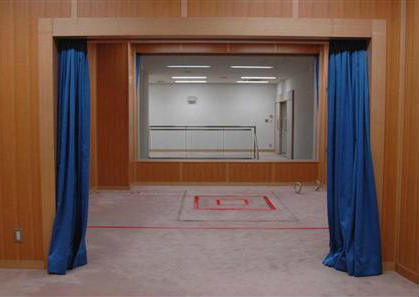
TOKYO – Japan executed two death row prisoners on Friday, the justice ministry said, dismissing calls from international rights groups to end capital punishment.
Convicted murderers Yasutoshi Kamata and Junko Yoshida were executed by hanging, bringing the total number of people put to death since Prime Minister Shinzo Abe came to power in 2012 to 16.
Yoshida, 56, killed two men in the late 1990s as part of a plot to obtain insurance money, the justice ministry said. She is the fifth woman to be executed in more than 60 years.
Kamata, 75, was convicted of murdering four women between 1985 and 1994 – and a nine-year-old girl who started screaming as he tried to sexually abuse her.
Justice Minister Mitsuhide Iwaki, who authorised the executions, said they had committed “extremely heinous” crimes that “took the precious lives of the victims for very selfish reasons”.
Japan and the United States are the only wealthy democracies that still use capital punishment, and rights group Amnesty International said Tokyo’s decision was a step backwards.
“The execution of two death-row inmates is extremely deplorable, and goes against the global trend for abolishing capital punishment,” said Hideki Wakabayashi, its Japan secretary general.
“Despite the fact that about 140 countries in the world have already abandoned or have stopped executions for more than a decade, the Japanese government is turning its back on the trend,” he told AFP.
The death penalty has overwhelming public support in Japan, according to surveys, despite repeated protests from European governments and human rights groups.
Advocacy groups say Japan’s system is cruel because inmates can wait for their executions for many years in solitary confinement and are only told of their impending death a few hours ahead of time.
Iwaki, who authorised the executions, defended the executions, saying the death sentence is a “grave punishment” that “requires careful implementation”.
“At the same time, in a country ruled by law, enforcement of a court verdict has to be carried out with strict fairness,” he told reporters.
In December, Japan executed two death row prisoners, including for the first time someone sentenced to death after a trial involving a jury.
Those sparked criticism by the European Union, which called the death penalty “cruel and inhuman” and demanded Japan impose a moratorium on executions.
Wakabayashi also said Tokyo should be “severely criticised” for carrying out the executions just ahead of the Group of Seven summit due to be held in Japan in late May.
Japan in 2009 launched a jury system in which citizens deliberate with professional judges in a bid to boost the role of the citizenry in the judicial process.
SINGAPORE – The Singapore Armed Forces (SAF) will conduct military exercises in various parts of Singapore from 8am on Mon, Mar 28 Mar, to 8am on Mon, Apr 4.
These areas include Seletar, Marsiling, Jalan Bahar, Neo Tiew, Lim Chu Kang, Jalan Kwok Min, Tuas, Upper Jurong, Hong Kah, Ama Keng, Bedok Jetty, Kranji, Lentor, Simpang, Sembawang, and Mandai.
Blanks and thunderflashes will be used.
SAF (Army) will conduct Live Firing Exercises in Pasir Laba (SAFTI) Live Firing Area from 8am on Mon, Mar 28, to 8am on Mon, Apr 4.
Sea vessels and crafts sailing through the Western Johor Straits during these times are to keep within the 75m Navigable Sea Lane and not to stray into the Live Firing Boundary.
Live ammunition and flares will be used.
The public are advised not to be alarmed and to keep clear of these areas.
The Republic of Singapore Air Force (RSAF) will be conducting Live Firing exercises around Pulau Sudong, Pulau Pawai and Pulau Senang from Mon, Mar 28 to Mon, Apr 1, daily from 7am to 11pm, and on Sat, Apr 2, from 8am to 1pm.
Flares will be released during the night firing.
The islands of Pulau Sudong, Pulau Senang and Pulau Pawai are proclaimed manoeuvring and firing grounds.
The public are advised to keep clear of these islands and to stay clear of the prohibited waters off Changi Naval Base and Tuas Naval Base.
spanaech@sph.com.sg
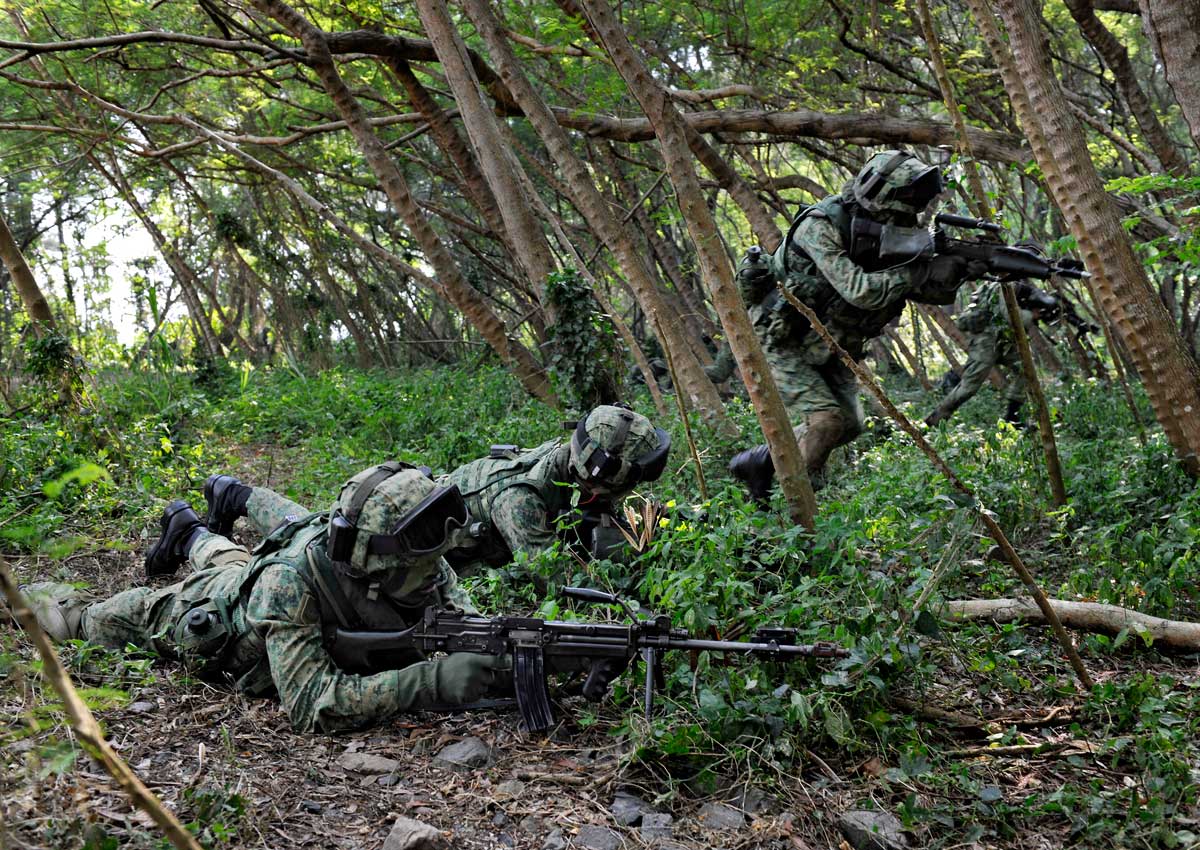
SINGAPORE – The Singapore Armed Forces (SAF) will conduct military exercises in various parts of Singapore from 8am on Mon, Mar 28 Mar, to 8am on Mon, Apr 4.
These areas include Seletar, Marsiling, Jalan Bahar, Neo Tiew, Lim Chu Kang, Jalan Kwok Min, Tuas, Upper Jurong, Hong Kah, Ama Keng, Bedok Jetty, Kranji, Lentor, Simpang, Sembawang, and Mandai.
Blanks and thunderflashes will be used.
SAF (Army) will conduct Live Firing Exercises in Pasir Laba (SAFTI) Live Firing Area from 8am on Mon, Mar 28, to 8am on Mon, Apr 4.
Sea vessels and crafts sailing through the Western Johor Straits during these times are to keep within the 75m Navigable Sea Lane and not to stray into the Live Firing Boundary.
Live ammunition and flares will be used.
The public are advised not to be alarmed and to keep clear of these areas.
The Republic of Singapore Air Force (RSAF) will be conducting Live Firing exercises around Pulau Sudong, Pulau Pawai and Pulau Senang from Mon, Mar 28 to Mon, Apr 1, daily from 7am to 11pm, and on Sat, Apr 2, from 8am to 1pm.
Flares will be released during the night firing.
The islands of Pulau Sudong, Pulau Senang and Pulau Pawai are proclaimed manoeuvring and firing grounds.
The public are advised to keep clear of these islands and to stay clear of the prohibited waters off Changi Naval Base and Tuas Naval Base.
spanaech@sph.com.sg

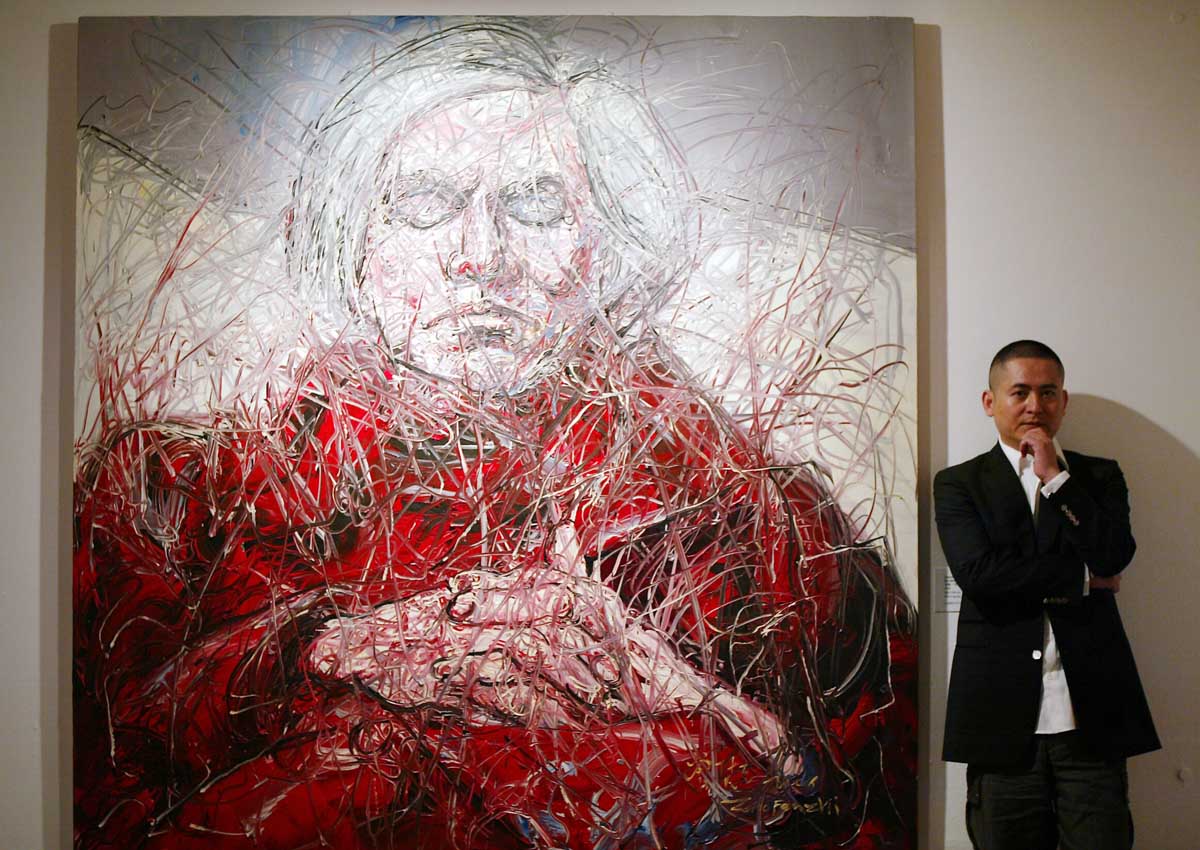
Beijing – The Chinese art market plummeted last year, with auction sales of living artists’ works falling by 45 per cent as slowing growth and a corruption crackdown under President Xi Jinping took their toll, a survey said Thursday.
By far the most valuable artist was ink painter Cui Ruzhuo, 72, who is known for his large-scale traditional landscapes, said wealth publisher the Hurun Report, which collated auction results for the 100 most lucrative Chinese artists.
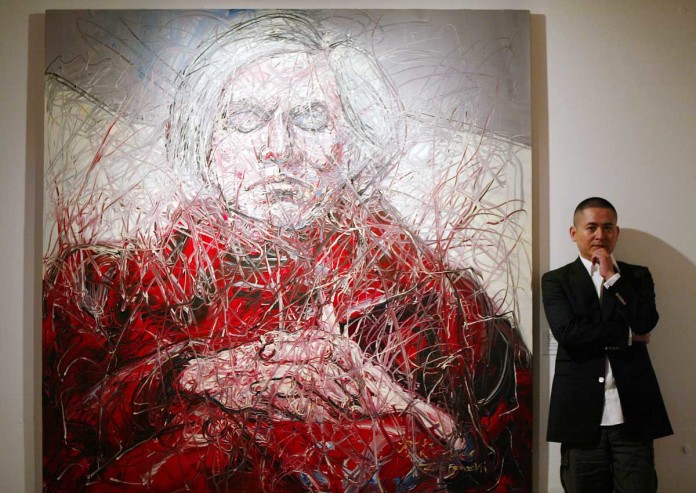
Cui’s works fetched $120.4 million (S$165.1 million), it said, far ahead of second-placed oil painter Zeng Fanzhi, who saw his sales value crash by 62 per cent.
There were no figures to indicate whether the average price of individual works had decreased.
“A heady mix of the continued anti-corruption campaign, which has put a stop to gifting art to government officers, and a slowdown in the economy have combined to see both sales and the number of top works at auction pretty much halve,” said Hurun Report chairman Rupert Hoogewerf.
Growth in the world’s second-largest economy slowed to its weakest in a quarter of a century last year at 6.9 per cent, a far cry from the double-digit boom years of the past.
Even so, greater China surpassed the US last year to become home to the largest population of billionaires in the world, Hurun said in a previous report – indicating an increase in the pool of potential super-wealthy art collectors.
The 100 artists’ auction sales totalled $565 million.
Only three artists on the list were women. They included Chen Peiqiu, age 94, at number 16.
A surprising new entry was Jack Ma, CEO of internet giant Alibaba, whose inclusion came courtesy of a collaborative painting he executed with Zeng Fanzhi that sold at Sotheby’s in Hong Kong for $5.3 million.
Cui was one of just eight artists who saw an increase in sales, with his revenues up 69 per cent from 2014.
He made headlines last April when an eight-panelled snowy mountainscape of his sold for $30 million at Poly Auction in Hong Kong – the highest ever by a living Asian artist.
At the same auction the year before, another of his landscapes that sold for $3.7 million was mistaken for rubbish and thrown out by cleaners, with Cui telling the Wall Street Journal: “I believe it was an accident.”
Though many believe China’s art market has been overheated in recent years, Cui told fellow artists that it was a national imperative to increase the value of their work.
“Our current downturn and backwardness shouldn’t discourage us; we artists should unite together and for the sake of our art market and our nation walk out towards the world, hand in hand, striving ardently together,” he said.
Huang Jiannan, a self-taught artist ranked seventh on Hurun’s list, saw the auction value of his works drop by 45 per cent last year, but he shrugged off the loss.
“These statistics measure the flow of my works in the market – it has nothing to do with me. I don’t get the money from these sales directly,” he told AFP.
He pointed to a Mao pin on his lapel.
“I worship Mao Zedong.” Huang’s auction sales totalled $13.1 million last year, according to Hurun.
Critics such as Xie Chunyan believe that focusing on auction values is a poor judge of Chinese artists’ worth: “Just because this little British guy Hoogewerf says he wants to find a common standard to measure things 1, 2, 3 doesn’t mean that this is the best method.”
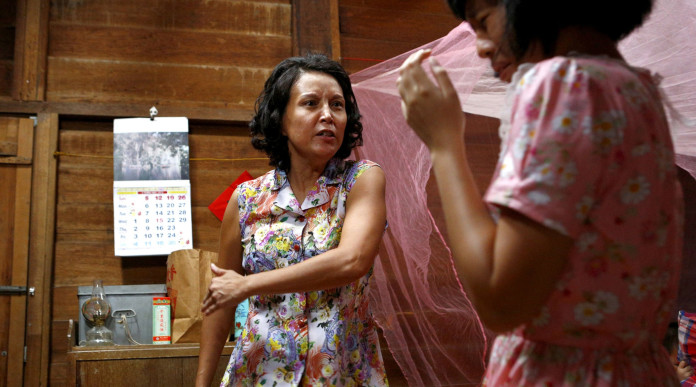
Don’t be surprised if you feel a little nauseated midway through new movie Long Long Time Ago 2, directed by Jack Neo (right).
The sequel to the nostalgic and heartfelt Long Long Time Ago, which opened here last month, is set in a Singapore kampung in the late 1960s and features a gag-worthy close-up shot of a huge pile of human faeces.
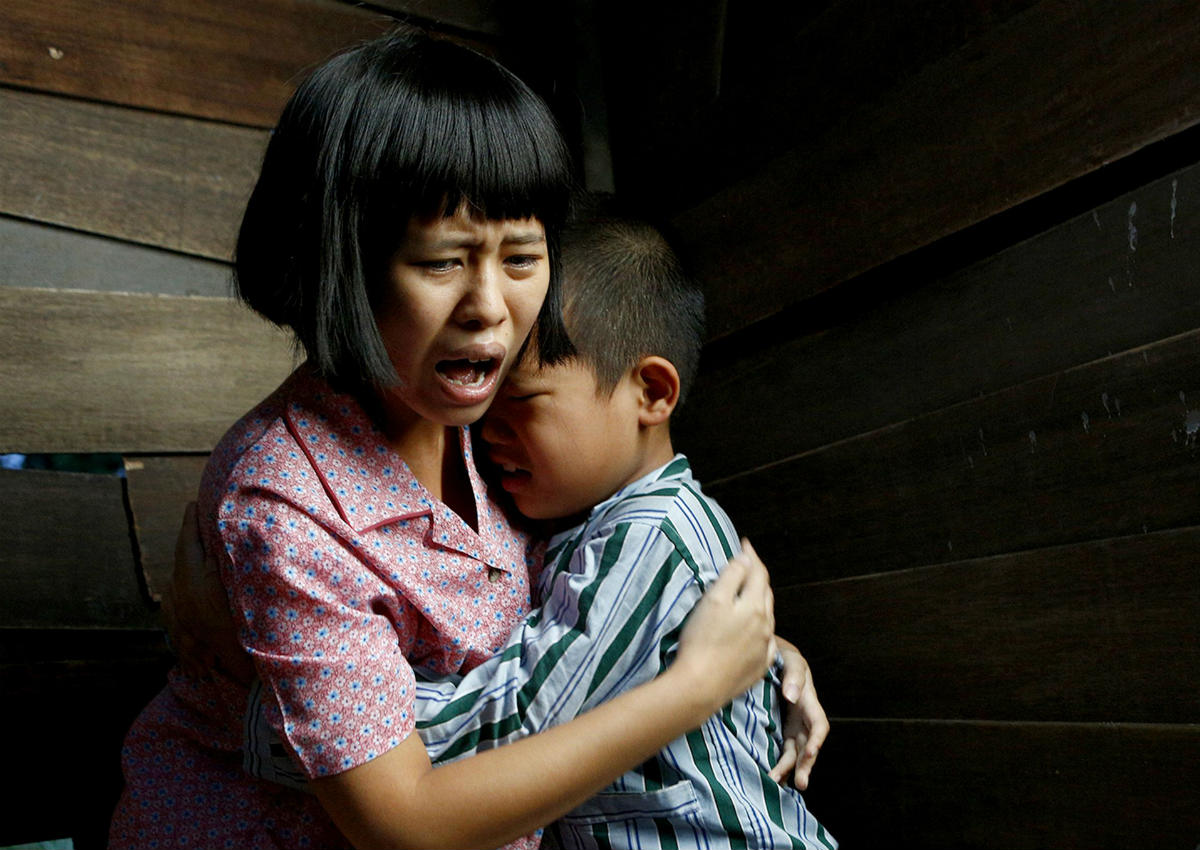
In the two-second scene, the youngest son of Aileen Tan’s character finds himself stuck in the village’s filthy wooden toilet.
Frightened, the eight-year-old boy cries for help. His teen sister Ah Ting, played by rookie actress Cynthia Kuang, dashes out of the house, steps on all the poop and manages to extricate him.
Neo told The New Paper yesterday at the new movie’s press conference that his art direction team had initial reservations about including the close-up shot.
They had suggested he take it out “as it was very gross”.
“I declined very firmly,” said the 56-year-old veteran film-maker in Mandarin.
“I was adamant about showing the audience what our kampung toilets were truly like in the 1960s.
“The conditions back then were really as bad as what was portrayed in the movie – just a hole in the ground that leads to a mountain of stale faeces which nobody clears, or worse.”
Neo, who grew up in a kampung, said: “It’s very hard for the youngsters of today to imagine how dilapidated and dirty our kampung toilets were. They have to see it for themselves.”
He said he was aware what he is showing on the big screen “is not beautiful”.
“Of course it’s not pretty, but it’s part of Singapore’s history,” he explained.
CHILDHOOD MEMORIES
“It forms a chunk of my childhood memories. Why should I hide it?
“When we do scenes like that, it’s not to crack silly jokes, or to purposely ignite controversy and grab attention. We just want to be as realistic as possible.”
The crude conditions of the toilet also helped to emphasise the “selflessness of older siblings”, said Neo.
“Cynthia Kuang’s character couldn’t care less about her feet being dirty – she just wanted to quickly save her brother.
“I wanted to highlight how simple, yet touching, the love between siblings could be,” he said.
Long Long Time Ago 2, which is rated PG13 and opens here next Thursday, continues the story of Long Long Time Ago.
Zhao Di (Tan), a widow, has to manage her father’s farm while dealing with her bad-tempered younger brother (Mark Lee), all amid the government’s plans to acquire their kampung land for urban development.
When TNP described Neo’s depiction of the kampung toilet in the movie to local retiree Madam Tan Toh, 71, who spent her younger years living in a kampung in Lorong Ah Soo, she said it “resembled exactly” the one she remembers.
“The toilet we used was made out of pieces of wood… It’s dirty and there will be lots of worms crawling around the faeces,” she recalled.
“Nobody clears the faeces, it’d be ‘re-used’ to grow vegetables.”
Another seemingly unnecessary but equally eye-popping scene in Long Long Time Ago 2 is a brief shot of Tan’s armpit hair when her character, wearing a sleeveless blouse, raises her arms to tie her hair while working at a coal mine.
Neo said: “It’s definitely unsightly in today’s context, but not in the 1960s.
“When I was studying, I remember vividly that none of my female teachers shaved their armpits and all of us students just felt that it was the norm.
“So for this movie, I wanted to show that it was very natural for women in that era to have unshaven armpits.
“Similar to the toilet scene, it’s something young Singaporeans of today might find hard to imagine, but it was real.”
I was adamant about showing the audience what our kampung toilets were truly like in the 1960s. The conditions back then were really as bad as what was portrayed in the movie – just a hole in the ground that leads to a mountain of stale faeces which nobody clears, or worse.
– Director Jack Neo
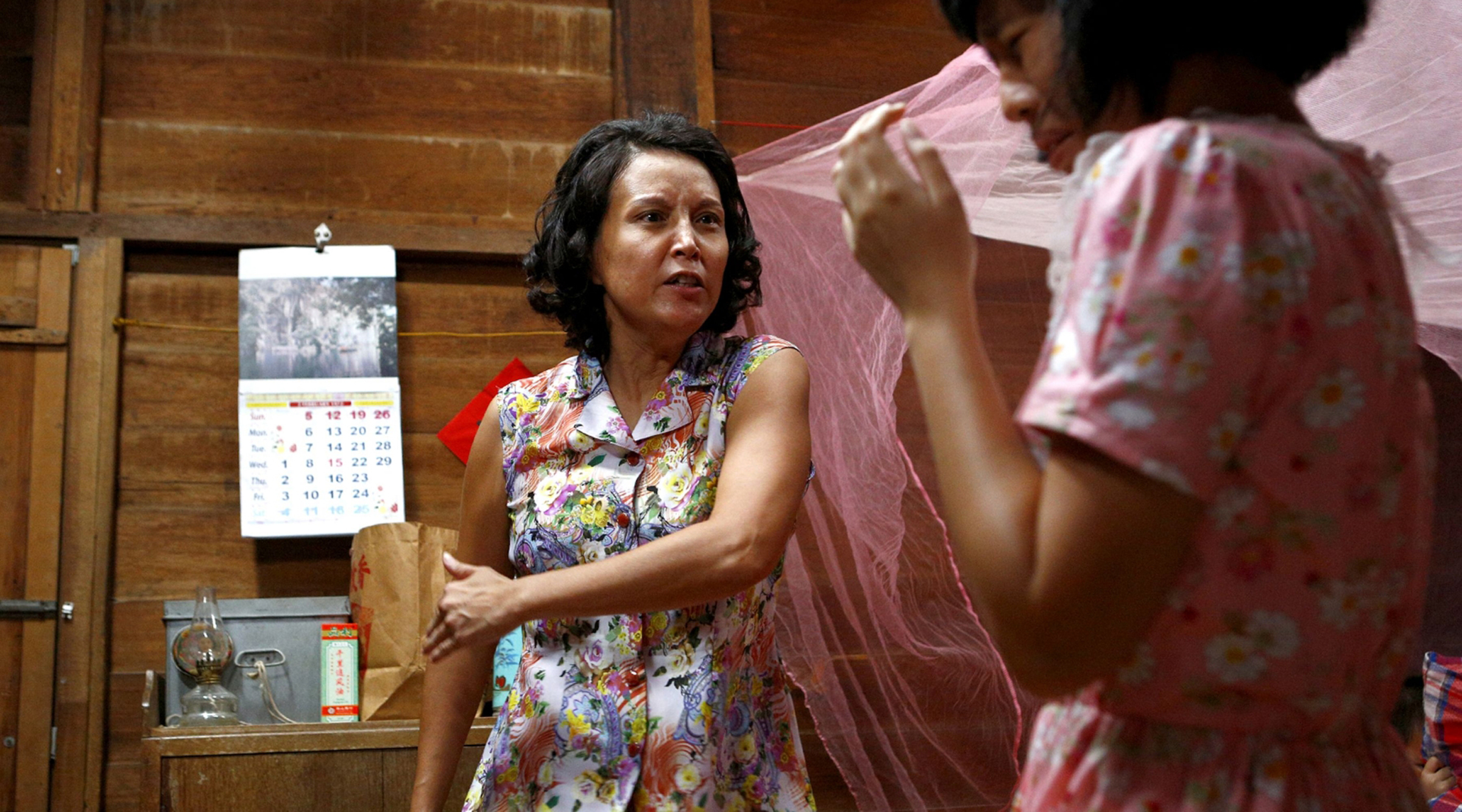 CO-STARS: (Above) Cynthia Kuang plays Ah Ting in Long Long Time Ago 2. (Below) Aileen Tan plays her mother
FAECES FAKE BUT FILMING WAS REALISTIC
It is only her first movie and she has to act with “faeces” – lots of it.
Thankfully, for freelance rookie actress Cynthia Kuang, 21, the human faeces she had to step on for Long Long Time Ago 2 was fake.
According to director Jack Neo, it was created using “artificial materials” and is “completely odourless”. Kuang told The New Paper that even though she “could not smell a thing” during filming, it was easy to get into her character as “the poop looked really real”.
“When I was reading the script, I was already looking forward to doing that scene,” she said with a smile.
“On our filming day, it rained, which just made the whole scenario even more realistic. I could feel sticky textures beneath my feet,” she said.
METHOD ACTING
Veteran TV actress Aileen Tan, 49, also had no issues briefly flashing her armpit hair on the big screen.
“The minute we started filming our kampung scenes in Ipoh, (Neo) told me not to shave my armpits,” she said.
“I had no problems with that, I believe in method acting.
“In fact, throughout our two months in Ipoh, I was in character even when the cameras stopped rolling. I became quieter and wasn’t as bubbly as before.
“Plus, that scene wasn’t gross or anything. It was just a reflection of the particular era we were depicting. It kind of reminded me of Tang Wei in Lust, Caution.”
In acclaimed Taiwanese director Ang Lee’s 2007 erotic thriller set in late-1930s Shanghai, Chinese actress Tang showed off her unshaven armpits during a sizzling sex scene with Hong Kong co-star Tony Leung.
keeyunt@sph.com.sg

This article was first published on March 25, 2016.
Get The New Paper for more stories.

Shanghai – China’s central bank said Friday that firms involved in Internet finance had set up an industry association, as authorities try to get a handle on the rapidly growing but weakly regulated sector.
The group will seek to “self-regulate” the industry at a time of growing risk from Internet financing, according to a transcript of a speech by a People’s Bank of China (PBoC) official at the opening ceremony.
Its establishment followed revelations last month that a well-known peer-to-peer (P2P) lending firm called Ezubao had bilked 900,000 investors out of $7.6 billion (S$10.4 billion) in what a company executive called a “Ponzi scheme”.
The Shanghai-based industry association groups online payment providers, P2P lenders and other Internet finance entities, PBoC deputy governor Pan Gongsheng said, according to the transcript posted on the central bank website.
“We must fully understand that Internet financing institutions lack familiarity with risk,” Pan said.
He added many were unaware of the need to abide by regulations, protect consumer rights, oppose money laundering or combat financing for terrorism.
“Industry self-regulation is beneficial and strongly supports administrative supervision,” he said.
Members of the new industry group include major banks and financial firms, as well as P2P lenders and retailers with online sales, reports said, among them Bank of China and P2P giant Lufax, which is linked to financial Ping An Insurance Group.
China has nearly 2,600 platforms described as P2P businesses, according to industry website www.wdzj.com, with transactions valued at around $150 billion last year.
Online and mobile payment services are dominated by e-commerce giant Alibaba, with nearly three-quarters of the market, followed by Tencent – operator of the popular messaging app WeChat – which has some 17 per cent, according to Beijing-based BigData Research.
But Tencent is keen to expand in the area while US technology giant Apple recently entered the market by launching Apple Pay.
Pan said Internet financing could boost efficiency, lower costs and introduce more channels of funding.
Small, private firms especially have looked online for financing as many are shut out of the state-dominated banking system.


Los Angeles – US comedian and actor Garry Shandling, best known for his late-night talk show series “The Larry Sanders Show” and his quirky sitcom “It’s Garry Shandling’s Show,” died on Thursday at age 66.
Los Angeles police said paramedics were called to the comedian’s home and he was rushed to the hospital where he was pronounced dead.
The celebrity website TMZ said he had suffered a heart attack.
The Chicago-born Shandling had a short stint in advertising before he moved to show business, writing for shows including “Welcome Back, Kotter” and “Sanford and Son.” He was a favourite of Johnny Carson on “The Tonight Show,” even filling in as a guest host during Carson’s absence.
But he gained cult fame for “It’s Garry Shandling’s Show,” a comic, behind-the-scenes take which was broadcast on Showtime about a fictional talk show. It was nominated for four Emmys and ran from 1986 to 1990.
His second critically-acclaimed show – “The Larry Sanders Show” – ran on HBO from 1992-1998 and was said to have a lasting impact on TV comedy. In it, he played a self-obsessed late-night TV host with a show-biz life. He won an Emmy for that show in 1998 for best writing.
Tributes poured in for the comedian after news of his death.
“Goodbye Garry Shandling thank you for your kindness and your generosity and for making me laugh so damn much,” comedian Amy Schumer tweeted.
“Garry Shandling was as kind and generous as he was funny and that is saying a lot,” tweeted Jimmy Kimmel, one of America’s top late-night comedians.


Go ahead and give her firearms and fight scenes, but when it comes to babies, Rui En would rather say no.
The 35-year-old local actress has acted with babies on her TV shows and judging by accounts of her past experiences, the poor infants may not have been the only ones bawling on set.
In an interview with The New Paper yesterday at the lensing ceremony of Channel 8 cop drama C.L.I.F. 4, Rui En said frankly: “Three things I don’t like working with are babies, animals and calefare (bit-part actors). (Babies) do what they want to do. They do not care that the camera is rolling, so it can be difficult.”
But it is a challenge she will have to undertake for C.L.I.F. 4, in which she reprises her role as Criminal Investigation Department officer Huang Zhijie, whose husband is fellow cop Wei Lantian (Li Nanxing).
In the fourth season, which premieres on Sept 6 at 9pm, the pair play parents to a four-month-old infant. Rui En said of her character: “She has her responsibilities at work and has to handle motherhood.
“It will be interesting to portray the struggle of work-life balance and how to deal with the fatigue… (but she’s still) very professional.
“I have complete respect and admiration for mums.”
RHYTHM
On reuniting with Li, 51, after playing a couple since C.L.I.F.’s second season, Rui En said: “We work very well together.
“Even if we have not worked together for a while, it is not difficult to get back (into) the rhythm.”
But what she is looking forward to the most in the new season is filming a fight scene with a female opponent who has martial arts experience.
She said: “I haven’t done an action scene in so long. But my dance background should help.”
Fans will be able to catch Rui En at the Star Awards next month. The two-part awards show will be shown live on Channel 8 at 5.30pm on April 17 and at 7pm on April 24.
This year, she is nominated in three categories: Best Actress (The Dream Makers 2), Favourite Female Character (The Dream Makers 2) and Favourite Onscreen Couple (with Qi Yuwu in The Dream Makers 2 and with Shaun Chen in The Journey: Our Homeland).
When asked about her chances, she said she does not think too much about them. But she is honoured to receive the All-Time Favourite Artiste award, which is given to those who have won the Top 10 Most Popular Female or Male Artiste award 10 times, and she called the award a “milestone of blood, sweat and tears”.
Although her “black face” at last year’s Star Awards Show 1 inadvertently stole the show and made headlines, she denied that the incident will make her more self-conscious at this year’s ceremony.
She said in her usual nonchalant manner: “I’m just gonna be myself.”
(Babies) do what they want to do. They do not care that the camera is rolling, so it can be difficult.
– Rui En, on the challenge of working with babies on set

YA HUI ON TARGET WITH NEW ROLE
For a newbie on a cop show, local actress Ya Hui has surprisingly remarkable marksmanship.
During her first firearms training session for C.L.I.F. 4, she shot her target with a pistol 19 out of 20 times, she said with pride.
However, this proficiency did not come immediately to the 28-year-old.
Her co-star, Li Nanxing, had fired the first shot and it was so loud that even with the protective gear covering her ears, it was a shock to Ya Hui.
“It was beyond my imagination,” she told The New Paper yesterday.
But her instructor managed to calm her down.
Ya Hui (left) plays police investigator Wang Shishi, who gets caught in a love triangle with her roommate Cai Yanqi (Mei Xin) and fellow police officer Chen Yu (Zhang Yaodong).
HAPPY
Ya Hui said: “I’m happy to be able to act as a police officer for the first time. Shishi is positive and outgoing, but when it comes to work, she’s serious and smart.
“I hope more women will join the police force… I think they can do it well.”
Ya Hui, who has enjoyed a breakout year, has, for the first time, been nominated for Best Actress at the Star Awards next month for her role as lovable wonton noodle hawker Hong Jinzhi in 118.
She said that because she is filming another series, I Want To Be A Star, she has no time to worry too much about the results.
“Getting the award or not depends on the judges. I put my best effort in my work and I’ve done my part. It is a huge encouragement to work even harder for future projects,” she said.
danchim@sph.com.sg
This article was first published on March 25, 2016.
Get The New Paper for more stories.