Home Blog Page 4412

What goes on in the House?

0

Singapore has an international reputation as a country where there is strong rule of law. Singaporeans are also known as a law-abiding bunch, and there is even the Singlish phrase “law by law” to describe the tendency here to meticulously follow the rules.

But where do these laws come from in the first place?

Parliament is where the laws of the land are proposed, debated and approved. However, the House, as the august chamber is referred to, performs other important functions as well in holding the Government accountable for its actions and spending.

UNDER ONE ROOF

Members of Parliament are elected at general elections that take place every five years or so. There are currently 89 seats for elected MPs, of which 82 are held by the ruling People’s Action Party and six by the opposition Workers’ Party. One seat is currently vacant after the sudden resignation of a PAP MP earlier this month.

Singapore’s parliamentary framework, adopted from Britain and known as the Westminster system, has evolved over the years to include other categories of MPs.

Nine nominated MPs, or NMPs, were named two weeks ago for a 21/2-year term. They were picked from 41 applicants by a parliamentary committee made up of MPs. Because NMPs usually represent different segments of society – such as the arts and business communities – and do not belong to any political party, they contribute non-partisan views.

Another category of MPs are opposition candidates who lost at the polls but scored the highest percentage of votes among the non-ruling party candidates who did not get elected.

Because they do not officially represent any constituency, they are called non-constituency MPs (NCMPs).

The NCMP scheme guarantees at least nine opposition members in the House. This means that if fewer than nine opposition candidates are elected at the polls, the rest will be made up by NCMPs. There are now three NCMPs in Parliament.

With 100 people under one roof, the House needs a hierarchy to function and keep the business of the day flowing.

The key roles in Parliament are:

Speaker of Parliament: The Speaker presides over parliamentary sittings and enforces the rules that guide debates. It is a position that is filled at the start of every new term of Parliament. The current Speaker, Madam Halimah Yacob, is from the PAP. The Speaker traditionally remains fair and impartial to all MPs regardless of party affiliation as the position is almost like that of an umpire. Part of the job involves making sure that MPs do not stray too far off the topic of debate and also keep within their allocated time limit when speaking. Madam Halimah, an MP since 2001, is the first woman to hold the position of Speaker of Parliament.

Leader of the House: If a Parliament sitting is like a long meeting, then the Leader sets the agenda and the order of business that goes through the House. Culture, Community and Youth Minister Grace Fu is the current Leader. She oversees the legislative priorities of the Government, mapping out the laws that it wants passed during its term in power. Ms Fu is also in charge of technical and procedural matters, such as extending the duration of parliamentary sittings or the time allocated to a speaker so that he or she can make a longer speech.

Party Whip: This colourful term comes from hunting, where animals that stray out of line are driven back into the pack with a whip. Hence, the Whip is the disciplinarian who ensures the party’s MPs vote according to the party’s position. As the PAP is the ruling party, the Party Whip, Mr Chan Chun Sing, is also the Government Whip. Occasionally, he may “lift the whip” so that MPs can vote according to their conscience instead of toeing the party line. Mr Chan, who is Minister in the Prime Minister’s Office and secretary-general of the National Trades Union Congress, also lists the number of speakers for each agenda item at a sitting of Parliament and estimates the time needed to complete debates so that proceedings run smoothly. The WP, the only opposition party with MPs, has the same system. Secretary-general and Aljunied GRC MP Low Thia Khiang is its Party Whip.

RULE OF LAW

We know that laws are passed in Parliament. But how are laws actually made?

A draft of a law, called a Bill, goes through three phases, or readings, before it is passed as an Act of Parliament and recognised as law.

A Bill is first introduced and given a First Reading without debate. Though Bills are usually introduced by a minister, any MP can do so by putting up a Private Member’s Bill.

At the next sitting of Parliament, the minister or MP who proposed the Bill makes opening remarks about the purpose of the Bill and later wraps up the debate by responding to and allaying concerns that fellow MPs have about certain aspects.

If MPs feel that the Bill benefits Singapore, they will vote to give it a Second Reading. This allows the Bill to be discussed by MPs in the House, raising questions on it for the minister to answer. Following a general debate, MPs form a committee to scrutinise the details in the Bill. This committee could be made up there and then by those who are present in Parliament or by a committee that is set up separately to examine the Bill in detail.

When the Bill is before the committee, those who support the Bill in principle but disagree with part of it can propose amendments to its sections and clauses.

The Bill is then presented again in Parliament for a Third Reading, after which it is passed into law.

A large number of Bills do not need amendments after the Second Reading. In those cases, the Bills pass through the committee stage, which is followed almost immediately by a Third Reading.

QUESTION AND ANSWER

Another fundamental role of MPs is to raise questions – on policy, municipal and other issues – that ministers must answer.

These questions cover the gamut of government responsibilities and are wide-ranging, and can include immigration policies, national service obligations, healthcare benefits and estate cleanliness.

MPs often have queries with regard to issues that are in the public eye. For example, earlier this month, numerous MPs asked about the suicide of a teenager hours after he was questioned by the police over a molestation case.

This prompted ministerial statements from Home Affairs Minister K. Shanmugam and Acting Education Minister (Schools) Ng Chee Meng on the protocols of the police and schools when minors are involved in police investigations.

HOLDING THE PURSE STRINGS

Last Thursday, Finance Minister Heng Swee Keat delivered the Budget statement – his first since being appointed to the post in October last year.

The annual Budget speech reviews Singapore’s economy and outlines the economic policies for the coming year.

It is followed by at least two days of debate over the broad principles of the Government’s economic goals set out in the Budget.

Parliament then examines the estimates of each ministry’s spending plans for the year. Over seven to 10 days, ministers have to outline, explain and justify the cost of their ministries’ policies.

The passing of the Budget by Parliament authorises the Government to withdraw the necessary monies to fund spending on the projects, services and other areas that it had outlined.

ziliang@sph.com.sg


This article was first published on March 28, 2016.
Get a copy of The Straits Times or go to straitstimes.com for more stories.
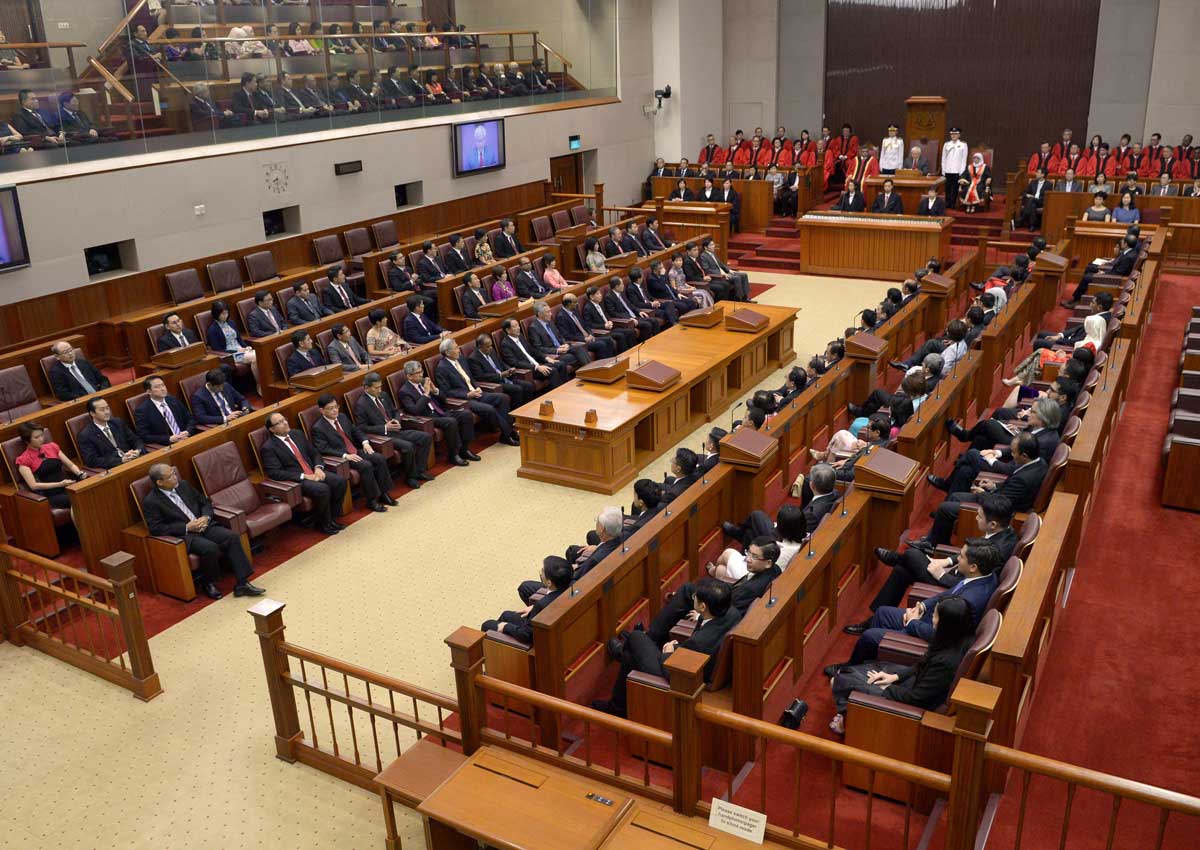
Image: 
Category: 
Publication Date: 
Tuesday, March 29, 2016 – 06:30
Send to mobile app: 
Source: 


Story Type: 
Others

Source link

TRS sedition trial continues

0

The husband of former The Real Singapore (TRS) editor Ai Takagi turned up in court for his sedition trial on Monday…

Source link

Former TRS editor faces 7 charges of sedition

0

SINGAPORE – One of the alleged editors behind the defunct sociopolitical site The Real Singapore (TRS) was back in the State Courts on Monday (March 28) to claim trial for seven charges under the Sedition Act.

Yang Kaiheng, 27, originally faced eight…

Source link

Elva Hsiao reportedly dating Tom Cruise lookalike after break-up with S'porean boyfriend

0

Singer Elva Hsiao is in love again after nursing her wound of breaking up with Singaporean businessman Elroy Cheo in the middle of last year.

Taiwan media reported last week that her new rumoured beau is a Tom Cruise look-alike named Michael. According to reports, Michael, joined Hsiao’s fashion label Carry Me as the general manager and consultant in the beginning of this year.

They drew closer to one another after working together in the business.

Micheal, who is reportedly 40 years old and fluent in Mandarin, used to study in Taiwan in his youth. They were introduced to each other by Hsiao’s friend, fashionista and socialite Janet Yang, who wanted to shake off Hsiao’s blues after she parted ways with Cheo, reported Apple Daily.

Michael, who holds a master’s degree from a business school in Los Angeles, is also Yang’s ex-classmate.

Rumours of the singer’s new romance began to spread after Hsiao’s night out with Michael and a female friend. While the 36-year-old was seen chatting with her female friend, eyewitnesses noticed that he was transfixed on her the whole night.

When quizzed by the media about her new relationship, Hsiao reportedly said she has become more “cautious’ after what happened to her.

“Nothing is certain for now,” replied Hsiao, who had expressed her desire to get hitched even after her break-up with Cheo.

Ex-boyfriend Cheo has apparently given his blessings, “hoping that everything goes well for Elva, and I’m happy for them”, according to Apple Daily.

Friends of the singer have kept mum about her new beau but noted that she is now focusing on her new album and expanding her Carry Me fashion business in China.

chenj@sph.com.sg

Image: 
Category: 
Publication Date: 
Monday, March 28, 2016 – 13:23
Keywords: 
Send to mobile app: 
Source: 


Rotator Image: 
Story Type: 
Rewritten Story

Source link

SUTD grads get higher salaries compared to peers: Survey

0

SINGAPORE – The inaugural batch of graduates from the Singapore University of Technology and Design (SUTD) received higher starting salaries compared to their peers. However, fewer of them found full-time employment within six months of completing their…

Source link

Former TRS editor Yang Kaiheng to face 7 charges of sedition

0

Yang, 27, is accused of using The Real Singapore website to “maliciously exploit racial and xenophobic faultlines” via seven seditious posts, which targeted foreigners from the Philippines, India and China.

Source link

Gaming technology to be used more in healthcare industry

0

SINGAPORE – Finding out which type of cooking oil or meat is best for your health may soon be a matter of playing a supermarket simulation game on your phone.
The game, part of an application prototype called Kan-Cheong for Health, is an example of how gaming…

Source link

Property players fret over absence of relief

0

The absence of any measures in Budget 2016 to help the beleaguered property sector was greeted with an air of resignation among industry players, and disappointment by some home owners hoping to buy an investment property.

These come even though the Government had earlier flagged that it is premature to lift cooling measures on residential transactions.

Singaporean small-business owner Leena Ganesan, 41, and her Singapore permanent resident husband were disappointed that one particular measure, the additional buyer’s stamp duty (ABSD), was not relaxed.

The couple live in a landed cluster home in Bukit Timah which Ms Ganesan bought for $3.05 million four years ago, and were looking to invest in a two- bedroom condominium unit.

“We have put our investment plan on hold now for two years. If we don’t see anything moving in the next one year, we may invest in India instead,” Ms Ganesan told The Straits Times yesterday.

Analysts said investors such as Ms Ganesan would have helped to perk up the lacklustre property sector slightly had the Government decided to ease some measures.

A lift in buying activity in the real estate sector will also have some positive spillover effect on property-related businesses.

PropNex chief executive Ismail Gafoor said: “It will have some spin-offs in other areas: contractors, banks, property agents, furniture retailers. If foreigners come to view properties here, then the tourism sector may also benefit.”

EL Development managing director Lim Yew Soon noted that the boost in sales from the recalibration of cooling measures would also “encourage developers to channel cash flow back to Singapore”.

“The market is slow, so you see investors and developers investing overseas. There is an outflow of funds from Singapore,” he said.

Developers have repeatedly lobbied the Government to tweak cooling measures implemented in the past few years which have weakened demand for new homes. New home sales came in at over 7,000 units in each of the past two years, about half of 14,948 units in 2013.

MCC Land managing director Tan Zhiyong said: “The market continues to be saddled with a large number of unsold units, which further depresses current rentals and also adds significant pressure on developers.”

There were 5,736 uncompleted private homes that were launched and not sold as at the fourth quarter of last year, based on figures from the Urban Redevelopment Authority. All in, there were 23,271 uncompleted units in the pipeline that were yet to be sold as at end-December last year.

The vacancy rate of private homes hit a 10-year high of 8.1 per cent in the fourth quarter of last year, and Century 21 chief executive Ku Swee Yong had hoped the Budget would address this issue.

Said Mr Ku: “Perhaps agencies like the Economic Development Board can find ways to bring more foreign companies to Singapore. This will drive demand for rental of homes, as well as commercial and industrial properties.”

However, DBS Bank economist Irvin Seah believes the Government made the right call as the drop in property prices had not been significant, amid an environment where interest rates are still low.

“Any unwinding at this juncture would be premature and (may) lead to higher leverages, which could pose an issue for the banking system going forward,” he added.

Private home prices fell 3.7 per cent last year, after declining 4 per cent in the year before.

wongsy@sph.com.sg


This article was first published on March 28, 2016.
Get a copy of The Straits Times or go to straitstimes.com for more stories.

Image: 
Publication Date: 
Monday, March 28, 2016 – 14:00
Send to mobile app: 
Source: 


Story Type: 
Others

Source link

Belgian cyclist Demoitie dies after motorbike smash

0

Lille, France – Belgian cyclist Antoine Demoitie has died after he was struck by a motorbike following a fall during the Gent-Wevelgem race in Belgium on Sunday, police said.

The 25-year-old, a member of Belgium’s second-division team Wanty-Gobert, fell around 150km into the race in Sainte-Marie-Cappel, northern France.

He was then hit by a motorbike while on the ground, before being transported to a hospital in Lille where he succumbed to his injuries.

“The rider died. An inquiry is under way to determine the circumstances,” said Frederic Evrard, spokesman for the Nord-Pas-de-Calais regional gendarmerie in France.

The cyclist’s team earlier said Demoitie was in a “serious condition” in the hospital’s intensive care unit.

“His wife and his family are at his side,” the team wrote on Twitter.

The Gent-Wevelgem cobbled classic lived up to its gruelling reputation on Sunday, with riders battling strong winds as they tackled 10 climbs over a 243km route.

Former Belgian national champion Jens Debusschere was also hospitalised after he sustained a concussion following a heavy crash, his Lotto-Soudal team said.

The race, which includes two ascents of the hills of Kemmelberg, was won by Slovakia’s Peter Sagan.

A number of accidents have struck the sport this year, including the death of young hope Romain Guyot.

The 23-year-old Frenchman died in March when he was hit by a truck at a crossroads in the west of the country.

In January, six racers from the Giant-Alpecin team, including German John Degenkolb and French Warren Barguil, were injured in a collision with a car during a training ride south of Valencia.

Image: 
Category: 
Publication Date: 
Monday, March 28, 2016 – 12:37
Keywords: 
Send to mobile app: 
Source: 


Story Type: 
Others

Source link

Old PAP ties going strong in 'Makan Club'

0

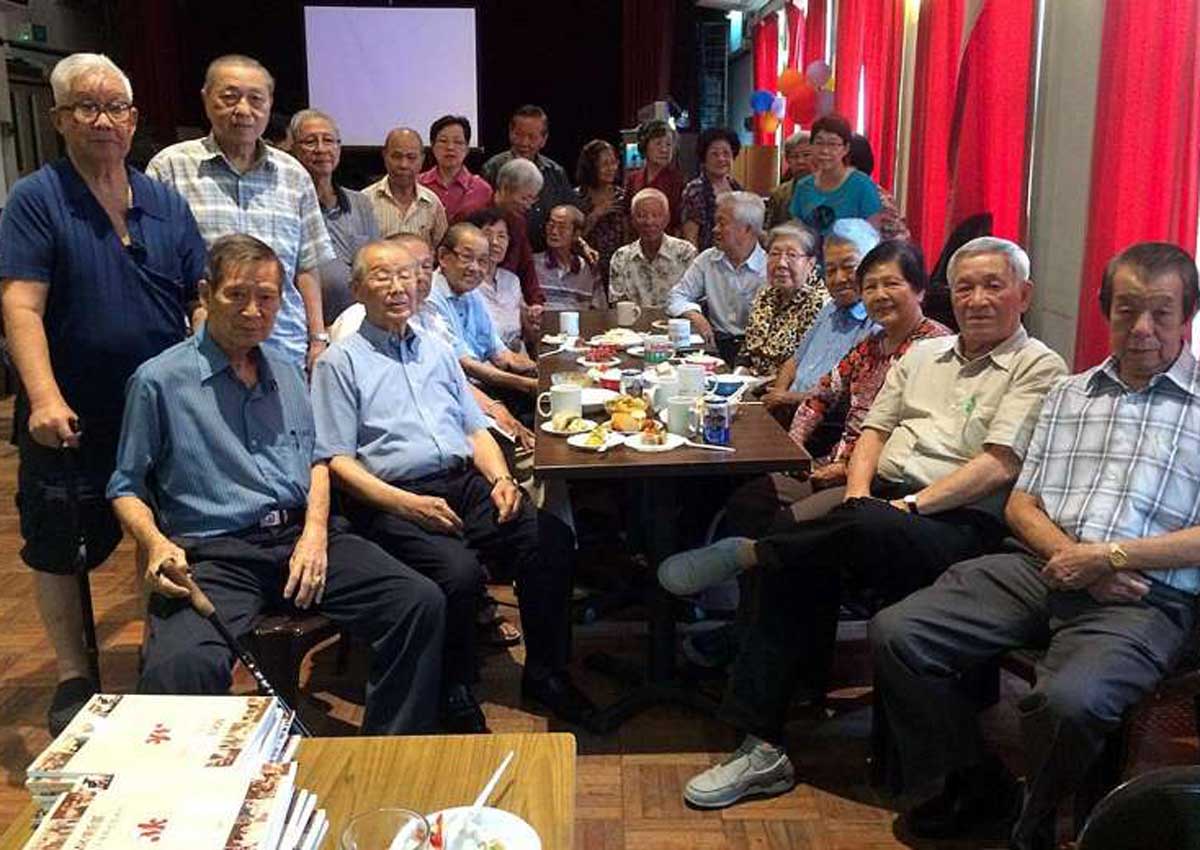
They are in their late 70s and 80s, but a group of People’s Action Party (PAP) stalwarts and founding members are keeping their comradeship alive in a social club formed more than three decades ago.

The MK Club, founded by old guard minister Ong Pang Boon, his late wife Chan Choy Siong, former senior parliamentary secretary Chan Chee Seng as well as former legislative assemblywoman Hoe Puay Choo and 40 other pioneer activists – mostly from the PAP’s former Tanjong Pagar branch – marked its 35th year at the Centre of Activity and Recreation for Elders (Care) in Hong Lim Complex last week.

More than 30 of them attended a lunch celebration at Care’s auditorium on March 20, held at the same time as the club’s annual general meeting.

They also had an advance celebration of Mr Ong’s 87th birthday, which is today, before the start of the meeting. Mr Ong, the last surviving member of the PAP’s first Cabinet, was the party’s founding organising secretary.

He became home affairs minister when the party swept into power after its landslide victory in the 1959 general election, winning 43 of the 51 seats in the then Legislative Assembly.

He held several other ministerial portfolios later, including education, labour and environment, before retiring from politics in 1984.

He explained that MK Club had its origins in an informal group formed by party members at the then headquarters and Tanjong Pagar branch in Neil Road in 1956, two years after the PAP was formed.

“After we finished work every night at the party HQ, a group of us would go for supper at food stalls in Chinatown nearby and that was how the group was started,” Mr Ong told The Straits Times.

Madam Hoe, 87, the club’s president since 2008, added: “We were all young, in our early 20s, and enjoyed those makan sessions very much.”

She left the PAP to join the now-defunct Barisan Sosialis, a left-wing group that broke away from the party, in 1961.

Madam Hoe said the club chose to remain low profile as it is a non-political group.

Members also included those who left to join the United People’s Party set up by the late Mr Ong Eng Guan, a former PAP leader and minister.

Former club vice-president Chang Weng Fai, 77, said they decided to register the group officially as a club in 1981 as they wanted it to be more organised, keep proper accounts and spell out its programmes clearly.

At its height in the early 1990s, it had more than 100 members. Their activities included excursions and festive celebrations, and coming together to enjoy food – which now happens only once or twice a year.

Membership has dropped to around 50 today. “We meet more at members’ funeral wakes than at our own meetings nowadays, sometimes a few times within the same year,” said Mr Ong.

As for the club’s name, former party activist and novelist Chong Fun Liam, 85, better known by his pen name Tian Liu, said in the 2009 book on the PAP, Men In White, that the group originally wanted to register itself as the Merdeka Club.

But the name, which meant independence in Malay, was not approved as it had political connotations.

So they simply used MK and called it the Makan Club whenever people asked what the initials stood for. After all, makan, or eating in Malay, was and still is one of its main activities, he explained.

Mr Chan, 85, the club’s adviser along with Mr Ong, said he is glad the club is still around after all these years.

“I try to attend all its functions and activities though I am in a wheelchair… because it meant a lot to us as PAP founding members to still be connected today irrespective of our ideologies,” he said.


This article was first published on March 28, 2016.
Get a copy of The Straits Times or go to straitstimes.com for more stories.

Image: 
Category: 
Publication Date: 
Monday, March 28, 2016 – 17:00
Send to mobile app: 
Source: 


Story Type: 
Others

Source link