Home Blog Page 439

Coronavirus: 'No touch' policy for Philippine President Duterte

0

[ad_1]

MANILA – Well-wishers will not be allowed to touch Philippines President Rodrigo Duterte under new measures announced on Monday (March 9) by his security detail as the deadly coronavirus spreads in the country.

At 74, Mr Duterte is in a vulnerable age group for the virus, which has proven particularly harmful in older people with pre-existing health conditions.

“The PSG (Presidential Security Group) will implement a no-touch policy between the president and the public,” group commander Jesus Durante said in a statement.

“Personalities who are expected to get near (him) will be thoroughly screened,” he added.

Philippine authorities announced on Monday that the virus is spreading locally and that testing has revealed 20 cases since February – half of them diagnosed on Monday.

Mr Duterte, the oldest person elected as the country’s president, has previously discussed his health during public appearances.

He has detailed migraines, cancer testing and myasthenia gravis, a condition that causes muscle weakness.

[ad_2]

Source link

NUS student nabbed, two spy cameras found in female toilets

0

[ad_1]

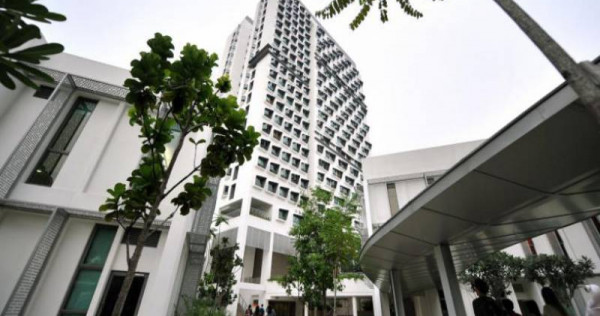
A 24-year-old National University of Singapore (NUS) student has been arrested for criminal trespass and suspected voyeurism after he was caught by campus security inside a female toilet at a residential college.

Preliminary investigations by the police revealed that the man had allegedly entered the female toilet to install a hidden camera disguised as a smoke detector.

Police also found another similar device inside another female toilet on the same floor.

The student has been suspended with immediate effect and is barred from entering all campus premises, NUS said in a statement to the media.

A circular, which was sent out to student residents at the College of Alice and Peter Tan (Capt), said the male “trespasser” did not stay there.

He had allegedly installed the devices on the 12th storey of the residential college, an all-girls level. The police have since removed both devices and investigations are ongoing.

Capt staff members are reaching out to affected students to offer support and assistance, said the university.

[ad_2]

Source link

2 coronavirus patients test positive for dengue despite not having the mosquito-borne disease

0

[ad_1]

SINGAPORE – Two Covid-19 patients in Singapore who tested positive for dengue were found later to not have the mosquito-borne disease.

One was a 57-year-old woman, who was said to be the first patient in Singapore to have contracted both the coronavirus and dengue. The other is a man, also aged 57.

These details were disclosed in a paper published in The Lancet medical journal last week (March 4), authored by a group of doctors from the National University Health System, Ng Teng Fong General Hospital, polyclinics and the Environmental Health Institute.

The doctors said the two cases highlighted the importance of recognising false-positive dengue results in patients with Covid-19. Those with dengue typically have a fever and a rash, but unlike Covid-19 patients, they do not have such respiratory symptoms as a runny nose, cough or sore throat.

“Failing to consider Covid-19 because of a positive dengue rapid test result has serious implications not only for the patient but also for public health,” said the authors.

[ad_2]

Source link

Commentary: Please don’t shout ‘coronavirus’ at people

0

LIVERPOOL: I’ve lived and worked in Liverpool for two years now. But this week, I received my first rather random, racially-motivated slur.

I was at a cemetery, taking my students on a field trip, when we encountered a group of teenagers. One started gesturing, and as she walked past, made eye contact and yelled “coronavirus!” at me.

My colleague who was with me was horrified, but I tried to shrug it off. Should I have set those young ones straight? Maybe, but the headline “Middle-aged lecturer chased around cemetery by 13-year old schoolchildren” would not do any favours to my street cred.

The prevalence of COVID-19 has sparked a steady stream of stories around the world of Asian (and Asian-looking) individuals being subjected to verbal harassment, differentiated treatment and even physical assault. 

Most recently, police in London are looking into a case of a Singaporean student allegedly assaulted after confronting a group of teenagers who targeted him with COVID-19 taunts.

READ: Two teenagers arrested over assault on Singaporean student in London

READ: Commentary: Protecting public health is key in novel coronavirus fight but we must also tackle xenophobia

For every story that makes the news, there are a multitude of others that remain unreported.

That it took this long to happen to me in Liverpool actually shows the kindness, generosity and hospitality of individuals in the Northwest of England. Wherever I have gone, I have been treated no differently. Indeed, when teaching, it was heartening to see local and international students happily interacting without fear.

WHY STIGMATISING ARISES

So why do people shun, taunt or attack others in times of crises? Some will argue that the acts are irrational, that we are psychologically reacting. Others will point to our primordial instinct to stay alive and away from anything that might kill us.

In the current climate, many attribute such behaviour to racism and xenophobia, and there is certainly some truth to this. Individuals are being targeted, segregated and marginalised based on their ethnic appearance. 

To the perpetrators, it does not matter if one is Chinese, Japanese, Korean or Vietnamese. Anybody who even remotely resembles “Chinese” in their eyes is fair game for insults and assaults.

London coronavirus

A woman wears a protective face mask as she travels on a London tube train carriage at Bank Underground station in central London on Mar 3, 2020. (Photo: AFP)

Even then, let’s not forget that in the past few weeks, anyone even remotely connected to the virus has also been subjected to similar behaviour – nurses, ambulance drivers, even students in the uniform of a junior college where COVID-19 was detected have been shunned in Singapore.

So while racism and xenophobia explain some behaviour, it is important for us to understand the intersections of other factors that can help us to explain what we are witnessing on an everyday basis.

THIS HAS HAPPENED BEFORE

To do this, we need to go further back than SARS. It is tempting to draw parallels to how society behaved during the SARS outbreak, but another epidemic in the 1980s has, in the words of sociologist Professor Deborah Lupton who studies healthcare issues, social resonance.

When the world first encountered HIV and AIDS, no one knew how it was transmitted, how it emerged, who was most susceptible, and worst of all, how to treat it. 

In some parts of the world, many of the first patients stricken by HIV and AIDS were shunned by both family and medical professionals, who were uncertain whether or not they might be infected by the mystery illness.

READ: Commentary: Stigma and shame hold Malaysians back from seeking help for STIs

The sociologist Richard Kearl documented the various ways in which homosexual individuals, particularly men, were discriminated against in the United States. 

These included company and government policies barring them from being hired in some sectors, refusal of treatment, and laws criminalising and marginalising homosexual men.

Those brave enough to care for the dying described horrific and painful scenes, made all the worse by stigmatising actions. In other words, the world’s fearful engagement with HIV and AIDS was not just something that people spontaneously developed – it was also socially forged and nurtured through a powerful mix of media, rumours and policies.

FEAR OF LOSING CONTROL OVER ONE’S DEATH

Kearl’s case study of the AIDS epidemic was used as a way to explain how death, or the fear of death, has had an impact on soceity. In a previous commentary, I explained how modern society has done much to sequester itself away from death – hiring professionals to deal with our dead, protesting against hospice locations, refusing to talk about death, and so on.

Many parallels can be drawn with COVID-19, where we engage in various acts that give us some comfort when confronting an uncertain future.

READ: Commentary: Singaporeans queued for toilet paper and instant noodles – there is no shame in that

A man stocks up with 150 rolls of toilet paper at a store in Los Angeles

A man stocks up with 150 rolls of toilet paper at a store in Los Angeles AFP/Mark RALSTON

Modern society’s entanglements with technology also mean that we give ourselves the illusion of control over death – that we can and should have a say in how, when and where we die. Exercising such control takes many forms – from something as simple as doing up a will, to obsessively monitoring our health stats, to freezing our bodies after death (yes, go look it up).

So when we perceive that such control is taken away from us, in this case a virus that does not discriminate – we do everything we can to wrest back control.

To date, this includes toilet paper hoarding, using up our colleagues’ hand sanitiser gel, or in the case of the men who allegedly attacked Jonathan Mok, stigmatisation of and violence against individuals who we think will pass the virus to us.

Let’s be clear – offering a sociological explanation for such behaviour does not in any way justify or condone acts of verbal or physical violence. Just because one is afraid, does not give one license to treat others poorly.

READ: Commentary: COVID-19 – when social media and chat groups complicate crisis communication

READ: ‘I am not a virus’: France’s Asian community pushes back over xenophobia

I am also not alluding to the idea that all poor behaviour stems from our fear of losing control, or because social processes manipulate us into doing it. Some individuals will choose to do bad things, and this pandemic is simply one more excuse to hate.

Instead, what I see here is a moral choice for the majority of us. When we feel afraid, we should see this is an opportunity to resist that social media, gossip-mongering fuelled fear that makes us want to do things we will almost certainly regret down the road.

Instead of hiding, hoarding or hating, this is the time to show what it truly means to be human.  

Many others – doctors, nurses, cleaners, have rushed headlong towards danger, and it is up to the rest of us to support them in any way that we can.

And please don’t shout “coronavirus!” at another human being.

Terence Heng is a senior lecturer in Sociology at the University of Liverpool, UK, where he is also an associate at the Centre for Architecture and the Visual Arts.

Source link

Facebook IWD #EachForEqual Liveathon

0


Facebook IWD #EachForEqual Liveathon
from Wednesday, March 18, 2020 at 11:00 AM to Wednesday, March 18, 2020 at 2:00 PM

To be announced

Singapore, Singapore, Singapore

Source link

LG's updated gram notebooks are coming to Singapore on March 9

0

[ad_1]

Earlier this year, LG showed off its updated gram notebooks at CES 2020.

Not much has changed all the design front, all the notebooks remain wonderfully light.

The big change is on the inside as they will be powered by Intel’s newest 10th generation Ice Lake processors.

The other major update is that all will feature USB-C Thunderbolt 3 ports. In the last generation, only the gram 17 came with Thunderbolt 3 support so this update is much welcomed.

All models can also be equipped with up to 24GB of memory and will come with dual M.2 SSD slots for easy storage upgradeability.

The larger gram 15 and 17 notebooks will also come with larger batteries – up from 72Wh to 80Wh.

Finally, the gram 14, 15, and 17 will be available in Singapore from March 9 at major retailers like Challenger, Courts, and Best Denki, and each model will be available in two configurations.

Here are the configurations and their prices:

LG GRAM 14 CONFIGURATIONS

[ad_2]

Source link

Used masks littering public areas draw ire of Singaporeans

0

[ad_1]

In the face of the Covid-19 outbreak that has sickened over 100,000 people globally, many people now don a surgical mask as a means of protection when they head outside.

The disposal of their used masks, however, leaves much to be desired.

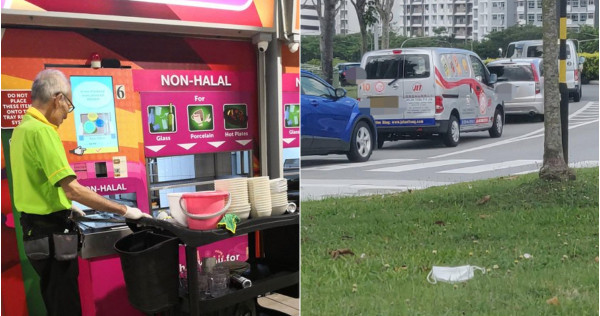
Over the past few weeks, photos of used masks mindlessly discarded around Singapore have roused much ire from netizens.

How difficult is it to just throw them away properly in a rubbish bin?” a Stomp reader commented.

https://www.instagram.com/p/B8GTL0fBqPd/[/embed]

A cleaner working at Marsiling Lane Food Centre told the Lianhe Wanbao’s reporters on Saturday (March 7) of similar observations.

[ad_2]

Source link

Coronavirus: SIA cabin crew to wear surgical masks on board as safety precaution

0

[ad_1]

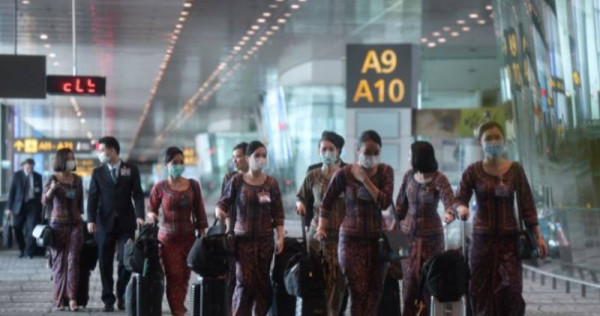
SINGAPORE – Cabin crew on Singapore Airlines (SIA) are now required to wear surgical masks on board, with the measure kicking in last Saturday (March 7).

This comes amid recent developments in the past week.

It emerged last Wednesday that a woman who was later found to be infected with the coronavirus had travelled on an SIA flight from Milan to Singapore on Feb 24.

Following that, the Ministry of Health said last Friday that an SIA steward was found to be infected with the coronavirus.

He is believed to be an imported case, and had last flown on an SIA return flight from Paris in late February.

SIA previously said that while it has surgical masks on its planes, wearing the masks is voluntary for its crew.

According to a circular sent out last Friday seen by The Straits Times, SIA told crew members that wearing the surgical mask is now mandatory, “given the recent developments”, without elaborating.

The circular said: “Do note that you will not be penalised for temporary removal of your mask. Please put your mask back on as soon as possible after its removal.”

[ad_2]

Source link

Grab disinfects Marina One offices after employee tests positive for Covid-19

0

[ad_1]

A Grab employee in Singapore has been diagnosed with Covid-19, the ride-hailing company confirmed.

The employee tested positive on March 7 and is currently receiving treatment in the hospital, a spokesperson told AsiaOne on March 9.

Prior to this, the employee was based at Grab’s corporate office at Marina One West Tower and did not handle daily operations on their frontline premise.

The announcement follows reports of a staff member working at Facebook’s office in the same building was diagnosed with the Covid-19 on March 6. 

Grab said that all levels of its offices at Marina One were immediately closed for deep cleaning and disinfecting in accordance with the authorities’ guidelines.

[ad_2]

Source link

Singapore reports 10 new COVID-19 cases; 6 linked to SAFRA Jurong cluster, including a 5-year-old

0

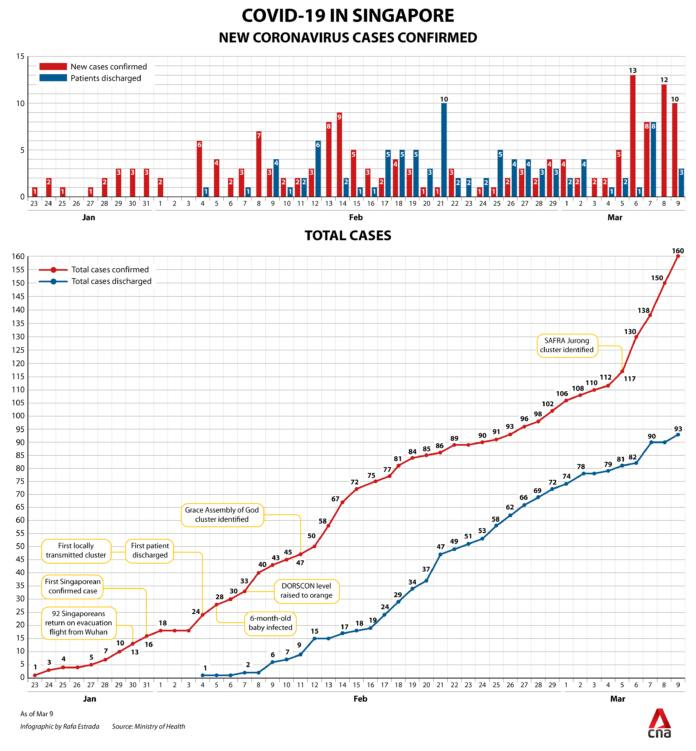
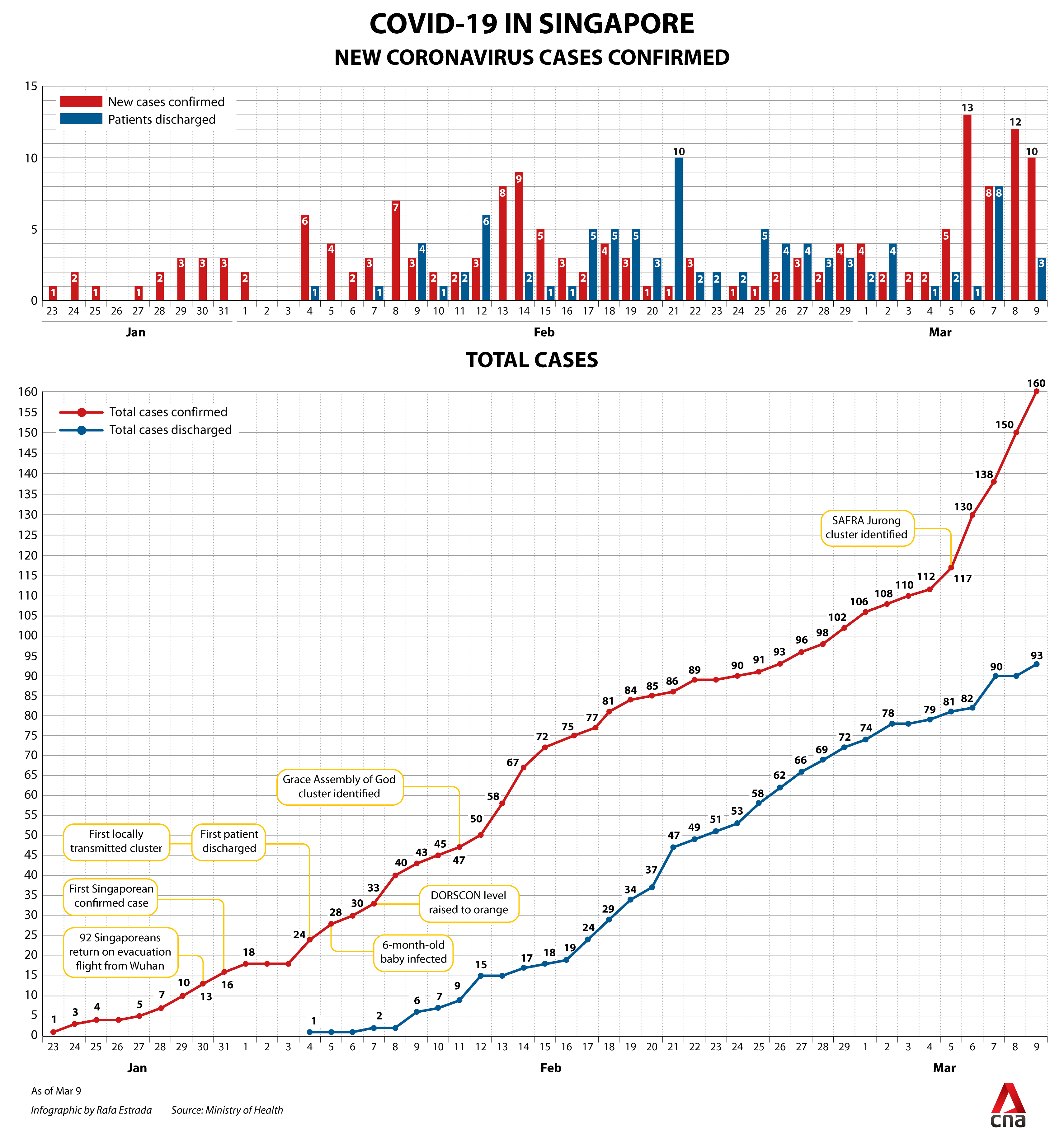
SINGAPORE: Ten new cases of COVID-19 were confirmed in Singapore on Monday (Mar 9), including six linked to the SAFRA Jurong cluster.

The cluster, which involved a private dinner function held at the Joy Garden restaurant in SAFRA Jurong on Feb 15, now has a total of 36 cases, said the Ministry of Health (MOH). 

Of the new cases, one is linked to the cluster at The Life Church and Mission Singapore, while the other three are imported cases. 

The latest infections bring Singapore’s total number of COVID-19 cases to 160.

Three more patients were also discharged, MOH said in the release. 

To date, a total of 93 cases have fully recovered from the infection and have been discharged from hospital. 

Of the 67 confirmed cases who are still in hospital, most are stable or improving, MOH said. Ten are in critical condition in the intensive care unit.

COVID-19 GFX Mar 9

Explore our interactive: All the COVID-19 cases in Singapore and the clusters and links between them

SHORT-TERM VISIT PASS HOLDERS TO PAY FOR OWN TREATMENT

MOH in the release also announced that from Mar 7, foreigners who are short-term visit pass holders who seek treatment for COVID-19 in Singapore will need to pay for their treatment.

“In view of the rising number of COVID-19 infections globally, and the expected rise in the number of confirmed cases in Singapore, we will need to prioritise the resources at our public hospitals,” said the ministry. 

MOH added that it will continue to waive COVID-19 testing fees for all short-term visit pass holders as part of public health measures to identify and initiate contact tracing for confirmed cases who may have been infectious while in Singapore.

The government will continue to pay for the COVID-19 testing fees and hospital bill in full for Singapore residents and long term pass holders who are admitted to public hospitals for COVID-19.

NEW CASES 

CASE 151

Case 151 is a 51-year-old male Singaporean man who has no recent travel history to affected countries and regions. He is a contact of Cases 66 and 91, and is linked to the cluster at The Life Church and Missions Singapore.

He reported onset of symptoms on Feb 4 and had sought treatment at a general practitioner (GP) clinic on Feb 5 and Feb 13, and at Yishun Polyclinic on Feb 8 and Feb 13. 

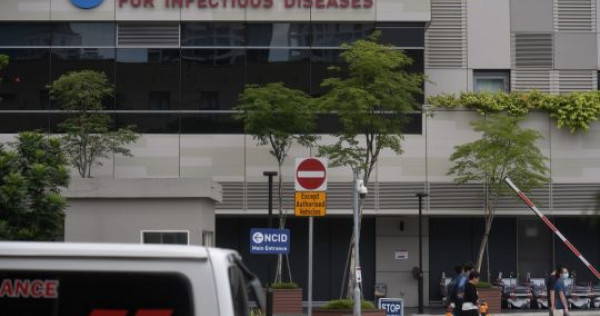
As he had been identified to have attended the Chinese New Year gathering at Mei Hwan Drive on Jan 25, he was referred by MOH to the National Centre for Infectious Diseases (NCID) on Feb 22 even though he had recovered by then. 

Subsequent serological test results on Mar 8 afternoon confirmed that he had an earlier COVID-19 infection. He stays at Yishun Ring Road.

CASE 152 

Case 152 is an imported case involving a 65-year-old Indonesian man who arrived in Singapore on Mar 7. 

He reported onset of symptoms Feb 28 while he was in Indonesia, and had sought treatment at a hospital in Jakarta on Mar 2. He presented at Singapore General Hospital (SGH) on Mar 7 and subsequent test results confirmed COVID-19 infection on Mar 8 afternoon.

He is currently warded in an isolation room at SGH.

CASE 153

Case 153 is likely to be an imported case involving a 65-year-old Singaporean woman who had been in Indonesia from Feb 25 to Feb 28.  

She reported that while she was in Indonesia, she had visited her sister who had pneumonia.

She reported onset of symptoms on Mar 3 and had sought treatment at Choa Chu Kang Polyclinic on the same day and on Mar 7. 

She presented at the emergency department at SGH on Mar 7, and subsequent test results confirmed COVID-19 infection on Mar 8 afternoon. 

Prior to hospital admission, she had mostly stayed at her home at Jalan Teck Whye. She is currently warded in an isolation room at SGH.

READ: Some activities at 7 CCs and 8 RCs suspended over links to SAFRA Jurong COVID-19 cluster

CASE 154 

Case 154 is an imported case involving a 52-year-old British man. 

He arrived in Singapore on Mar 6 and was confirmed to have COVID-19 infection on Mar 9 morning and is currently warded in an isolation room at NCID.

CASE 155 

Case 155 is a 47-year-old Malaysian woman who is a Singapore Work Pass holder, and who has no recent travel history to affected countries and regions. 

She was confirmed to have COVID-19 infection on Mar 9 morning and is currently warded in an isolation room at NCID. 

She is a contact of Case 128, and is linked to the cluster involving the private dinner function at SAFRA Jurong.

CASE 156

Case 156 is a 50-year-old woman who is a Singapore Permanent Resident. 

She has no recent travel history to affected countries and regions and is linked to the cluster involving the private dinner function at SAFRA Jurong.

She is currently warded in an isolation room at NCID. 

CASE 157 

Case 157 is a 54-year-old woman who is a Singapore Permanent Resident. She has no recent travel history to affected countries and regions. 

She was confirmed to have COVID-19 infection on Mar 9 morning, and is currently warded in an isolation room at NCID. She is a contact of Case 137, and is linked to the cluster involving the private dinner function at SAFRA Jurong.

CASE 158

Case 158 is a 53-year-old Singaporean woman who has no recent travel history to affected countries and regions. 

She was confirmed to have COVID-19 infection on Mar 9 morning, and is currently warded in an isolation room at Ng Teng Fong General Hospital (NTFGH). She is linked to the cluster involving the private dinner function at SAFRA Jurong.

READ: SAFRA Punggol gym disinfected, closed after COVID-19 patient used facility

CASE 159

Case 159 is a 59-year-old Singaporean man who has no recent travel history to affected countries and regions. 

He was confirmed to have COVID-19 infection on Mar 9 morning, and is currently warded in an isolation room at NTFGH. He is linked to the cluster involving the private dinner function at SAFRA Jurong.

CASE 160

Case 160 is a five-year-old Singaporean boy who has no recent travel history to affected countries and regions. 

He was confirmed to have COVID-19 infection on Mar 9 morning, and is currently warded in an isolation room at KK Women’s and Children’s Hospital. 

He is a family member of Case 145, and is linked to the cluster involving the private dinner function at SAFRA Jurong.

UPDATES ON PREVIOUS CASES

MOH also gave updates on cases 145 to 150, which were all announced on Sunday. 

CASE 145 

Case 145 is a 67-year-old Singaporean woman who has no recent travel history to affected countries and regions. She is currently warded in an isolation room at NCID. 

She is a contact of Case 134, and is linked to the cluster involving the private dinner function at SAFRA Jurong. She reported onset of symptoms on Feb 29, and had sought treatment at a GP clinic on Mar 3 and Mar 6. 

She was referred to NCID on Mar 7. Subsequent test results confirmed COVID-19 infection on Mar 8 morning. Prior to hospital admission, she had visited a shop at 16 Teck Whye Lane. She stays at Teck Whye Lane.

CASE 146 

Case 146 is a 64-year-old Singaporean woman who has no recent travel history to affected countries and regions. 

She is currently warded in an isolation room at NCID. She is a contact of Case 134, and is linked to the cluster involving the private dinner function at SAFRA Jurong. 

She reported onset of symptoms on Mar 4, and had sought treatment at a GP clinic on Mar 5. She presented at NCID on Mar 7, and subsequent test results confirmed COVID-19 infection on Mar 8 morning. Prior to hospital admission, she mostly stayed at her home in the Yio Chu Kang Road area.

CASE 147 

Case 147 is an imported case involving a 64-year-old Indonesian man who arrived in Singapore on Mar 7. He is currently warded in an isolation room at NCID.

He reported onset of symptoms on Mar 3 while he was in Indonesia. He had a fever when he arrived at Seletar Airport, and underwent a COVID-19 swab test at the checkpoint. 

He was then taken to NCID by ambulance on Mar 7 at night, and subsequent test results confirmed COVID-19 infection the next morning. Prior to hospitalisation, he mostly stayed at his rental apartment in the Oxley Road area.

READ: How police helped find missing link between COVID-19 church clusters in a day

CASE 148 

Case 148 is a 67-year-old Singaporean woman who had been in Indonesia from Feb 11 to Feb 14. She is currently warded in an isolation room at NCID. She is a contact of Case 107, and is linked to the cluster involving the private dinner function at SAFRA Jurong.

She reported onset of symptoms on Feb 24. As she had been identified as a contact of Case 107, she was referred by MOH to NCID on Mar 2. 

Subsequent test results confirmed COVID-19 infection on Mar 8 morning. Prior to hospital admission, she had visited Marina Bay Sands Casino. She stays at Jalan Lim Tai See.

CASE 149 

Case 149 is a 62-year-old Singaporean man who has no recent travel history to affected countries and regions. 

He is currently warded in an isolation room at NCID and is linked to the cluster involving the private dinner function at SAFRA Jurong.

He reported onset of symptoms on Feb 23 and had sought treatment at a GP clinic on Mar 7. He was taken to Tan Tock Seng Hospital in an ambulance on Mar 7, and subsequent test results confirmed COVID-19 infection the next morning. 

Prior to hospital admission, he had gone for singing classes at various community clubs and residents’ committees. He also visited Tong Whye Temple Senior Citizen Club. He stays at Jurong East Street 32.

CASE 150 

Case 150 is a 53-year-old woman who is a Singapore Permanent Resident. She has no recent travel history to affected countries and regions and is currently warded in an isolation room at NCID. 

She is a contact of Cases 115 and 134, and is linked to the cluster involving the private dinner function at SAFRA Jurong. She reported onset of symptoms on Feb 29. 

As she had been identified to be a contact of Cases 115 and 134, she was referred by MOH to NCID on Mar 7, and subsequent test results confirmed COVID-19 infection the next morning.  

Prior to hospital admission, she had gone for singing classes and other activities at Nanyang Community Club. She stays at Jurong West Street 64.

READ: Commentary: COVID-19 – time for businesses and workers to have the guts to embrace the new normal

CRUISE SHIP TO DISEMBARK IN SINGAPORE

Passengers of a cruise ship will undergo health checks when they disembark in Singapore on Tuesday, said the Maritime and Port Authority of Singapore (MPA) and Singapore Tourism Board (STB) on Monday. 

The Costa Fortuna cruise ship will dock in Singapore as part of a scheduled call after it was turned away from other ports on its itinerary in Thailand and Malaysia. 

Costa Fortuna, which has a home port in Singapore, has declared that none of its passengers currently aboard the ship have a fever or other symptoms of respiratory illness.

READ: Costa Fortuna cruise passengers to undergo health checks when disembarking in Singapore

READ: SIA cabin crew to wear face masks on flights as a ‘precautionary measure’ amid COVID-19 concerns

On Monday, national carrier Singapore Airlines said that its cabin crew have been asked to wear face masks on flights

This was a temporary “precautionary measure” to “minimise the risks for both its customers and staff”, it said. 

In light of the outbreak, SIA flights have also been affected. Key affected destinations include Frankfurt, Jakarta, London, Los Angeles, Mumbai, Paris, Seoul, Sydney and Tokyo, the airline previously said.

BOOKMARK THIS: Our comprehensive coverage of the novel coronavirus and its developments

Download our app or subscribe to our Telegram channel for the latest updates on the coronavirus outbreak: https://cna.asia/telegram 

Source link