April 04, 2016 10:34 AM
SINGAPORE – Security officer Koh Weng Onn, 48, was charged in court on Monday (April 4) with causing hurt and committing a rash act on three Madrasah students last Friday (April 1).
April 04, 2016 10:34 AM
SINGAPORE – Security officer Koh Weng Onn, 48, was charged in court on Monday (April 4) with causing hurt and committing a rash act on three Madrasah students last Friday (April 1).
The brightest stars shone at The Huntsman: Winter’s War Asia premiere on Sunday (April 3) night as Hollywood’s A-listers heated up the red carpet at Universal Studios Singapore in Resorts World Sentosa.
First to hit the red carpet around 7pm was the movie’s director Cedric Nicolas-Troyan, followed by the stunning Charlize Theron who reprises her role as the evil Queen Ravenna.
The loudest screams were for Australian heart-throb Chris Hemsworth, who plays Eric the Huntsman.
American actress Jessica Chastain also graced the red carpet. She plays Sara the warrior, who is Eric’s wife.
All four took their time walking down the red carpet for about an hour, signing autographs for adoring fans and taking selfies with them.







Student Nur Athira, 22, says: “It was a good experience to see these big Hollywood stars. I didn’t watch the first movie but now I’ll definitely catch it and watch The Huntsman.”
Miss Sng Kai Lin and Miss Amanda Ong, both 19-year-old students, managed to get shots of the stars.
Miss Sng, who took a selfie with Hemsworth, says: “We started queuing from 4.30pm. I like Jessica and am glad she is part of the new movie. The first one gave a new perspective to the Snow White fairytale so I’m looking forward to The Huntsman.”
The Huntsman: Winter’s War opens in Singapore on April 14. It is the prequel to the 2012 movie Snow White and the Huntsman.

This article was first published on April 3, 2016.
Get a copy of The Straits Times or go to straitstimes.com for more stories.

 SINGAPORE – A 48-year-old man was charged in court on Monday (April 4) morning for alleged assaults on three madrasah students last Friday.
Koh Weng Onn, a security officer, is accused of attacking three female students aged 14 to 16, within one minute of…
Source link
90-minute discussion between leaders has diffused difficulties arising from issues related to South China Sea, foreign minister says
President Xi Jinping’s meeting with US President Barack Obama has helped to alleviate tensions at a time when some countries have been playing up the South China Sea issue, Foreign Minister Wang Yi said.
The meeting, which took place on Thursday on the sidelines of the Nuclear Security Summit in Washington, was closely watched by the international community because many countries are pessimistic about the current state of Sino-US ties, he said.
“The Americans have said that they will not take sides (in the South China Sea issue), so it should not be a problem for the China-US relationship,” Wang said.
The relationship should not be affected by historical problems between China and some US allies, and the positive dialogue between the two leaders has reassured the international community, he added.
During the 90-minute meeting, Xi and Obama discussed a range of issues, including economic policies, co-operation on nuclear security, maritime issues and the stability of the Korean Peninsula. The two leaders agreed to deepen co-operation and manage differences of opinion to expand common interests. It was the only bilateral meeting arranged by Obama’s team during the summit.
Xi acknowledged that China and the US have disputes and differing views on some subjects, and said both sides should respect each other’s concerns and seek solutions through dialogue.
Wang said: “We are confident about the steady development of the China-US relationship this year, and that will continue smoothly into the next term (when a new president is elected in the US).”
Climate change was once a stumbling block for Sino-US relations, but the two countries are now working together to bring the Paris Agreement on climate change issues into force as soon as possible. The two countries have also boosted co-operation on cybersecurity issues, he said.
On Thursday, China and the US, two of the world’s leading nuclear powers, issued a joint statement about co-operation on nuclear security. The two countries jointly built the Center of Excellence on Nuclear Security in Beijing, the largest of its kind in the Asia-Pacific region, which opened in March.
Chen Kai, secretary-general of the China Arms Control and Disarmament Association, said the statement was very “inspiring” for maintaining global nuclear security, and would help the international community reach greater consensus on improving the handling of nuclear terrorism.
Foreign Minister Wang said Xi’s attendance at the summit indicated that China attaches great importance to nuclear security and reflected China’s willingness to promote global security governance.
During the summit, Xi spoke about ways of strengthening the international nuclear security system, including the strengthening of political commitment, national responsibility, international co-operation and the culture of nuclear security.
Ahead of the summit, Xi paid a state visit to the Czech Republic from Monday to Wednesday. The three-day trip was the first time that a Chinese president had visited the Czech Republic, or its predecessor Czechoslovakia, since the People’s Republic of China was founded in 1949.
The two countries have agreed to elevate their bilateral relations to the level of a “strategic partnership”, which Wang said was the most significant political achievement of Xi’s visit to the country.
The historic visit will be seen as “a milestone” in Sino-Czech relations, and it will give greater impetus to China-European co-operation, he said.

The cast of The Huntsman: Winter’s War burned up the red carpet at Universal Studios Singapore and for Chastain, the trip to the island saw her savouring her favourite fruit, durian.
Source link
April 04, 2016 9:00 AM
SINGAPORE – Well known local model-club DJ Tenashar and her boyfriend, Mr Thorsten Nolte, are wanted by the Central Narcotics Bureau (CNB) for failing to report back after they were arrested for drug-related offences last October.
NIGHT markets, also known as pasar malam, are being squeezed out of available operating spaces as town centres build amenities on empty plots of land.
Industry insiders told Chinese daily Lianhe Wanbao in a report yesterday that most night markets here are held at town centres, near MRT stations or wherever there is high human traffic.
However, in recent years, they said, developments and new amenities in town centres have cut available operating venues for night markets by about 30 per cent.
Alan Toh, who heads the Trade Fair Merchants’ Association of Singapore, pointed to the spot beside Paya Lebar MRT Station, a previously empty area where night markets could be held, but now houses a shopping mall.
Jimmy, a night-market contractor with more than 10 years’ experience, said there used to be a plot of land beside Choa Chu Kang MRT Station where a large-scale night market would be held at least once a year.
It is now used for community club projects.
Night markets are no longer held at Marine Parade and Bedok town centres due to construction at the former and a mall at the latter, he added.
Jimmy estimated that venues for night markets have thus been reduced by about 30 per cent, with the number of night markets halved in the past three years from five or six a month in 2013 to two or three now.
“Not many night-market customers shop online so the effect of online shopping is not that stark on us now, but we cannot be sure if there will be other more adverse effects in the future,” he said.
A former vendor, who declined to be named, noted that rental for night-market stalls has gone up along with bidding prices by contractors.
He had sold foodstuffs at night markets for eight years.
“I joined (the industry) in 2006 and gave up in 2014.
“Stall rental had doubled in eight years, it was not easy to deal with,” he said.
A stall with three tables used to cost $80-$100 in rental per day but this rose to $150-$200.
Mr Toh pointed out that it was hard to hire stall assistants, and elderly stall vendors are likely to quit because of this.
“If you hire a local, even if you pay $100 a day, you are likely not to find someone, because the hours for night markets are long, from 10am to midnight, and it can be very hot.”
He added: “We hope that the authorities can appoint specific venues for night markets to operate so that Singapore’s night markets can be like Taiwan’s, with their own distinct features.”
myp@sph.com.sg

Get MyPaper for more stories.

WHETHER Singapore makes it to SG100 will depend on whether people feel they have a sense of national identity as one people and a shared obligation to help one another – in particular, the less well off, Minister in the Prime Minister’s Office Chan Chun Sing said yesterday.
He cautioned against going the way of other countries that are well-endowed but where people quibble over resources.
Speaking at a dialogue with youth leaders at the end of a visit to Geylang Serai ward, Mr Chan addressed questions that participants had submitted and voted on through their smartphones.
The top-ranked question asked why youths should want to stay in Singapore till SG100, when the cost of living is high.
Mr Chan, who is also labour chief and deputy chairman of the People’s Association, sought to differentiate between a “transactional” national identity that hinges purely on the benefits of citizenship and a citizenry committed to Singapore “even when the chips are down”.
“Is your staying in Singapore conditional on certain factors, particularly material or otherwise? Is it contingent on certain conditions being met?” he asked the audience of more than 200 at the dialogue at the Lifelong Learning Institute in Paya Lebar.
“What if somebody else can give you better, cheaper cost of living? What if there is a serious recession in the next few years and you cannot find the jobs you like?
“Your answer to that question will decide whether we have an SG100,” he said.
Mr Chan held up the 1965 generation of Singaporeans who stayed here “in spite of”, who chose to throw in their lot with Singapore and work to create a successful country at a time when the nation’s continued sovereignty was itself uncertain.
“If enough of us stay here in spite of, then don’t worry about SG100 – even SG1000, we will be here,” he said. “But if the majority of us are here only because of what the country can give us, then we will be in a very different position.”
How cohesive Singapore can remain as a society will also depend on whether people have a mindset of trying to maximise what they can get from the state, or if they accept that there are others who need more help, he added.
“We don’t want to end up in a situation like some other places where, even when you have resources to share, people fight over the resources,” he said.
The dialogue with youths came at the end of Mr Chan’s ministerial visit to Geylang Serai ward in Marine Parade GRC, where he spoke to residents at Haig Road Food Centre and met community and religious leaders at Khadijah mosque for a closed-door dialogue.
Such visits are held monthly and Mr Chan’s was the first ministerial visit – meant to help younger ministers get a better sense of issues on the ground – since last year’s general election.
yanliang@sph.com.sg
Get MyPaper for more stories.
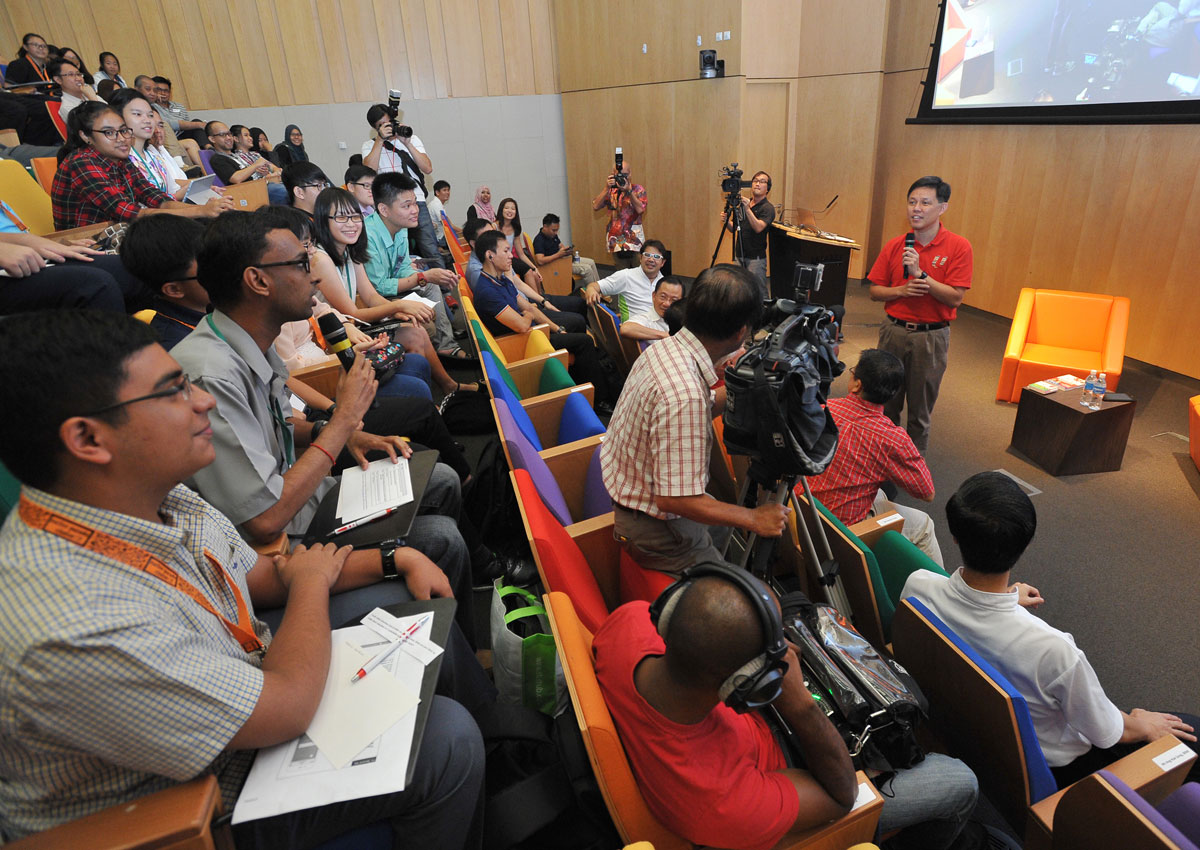
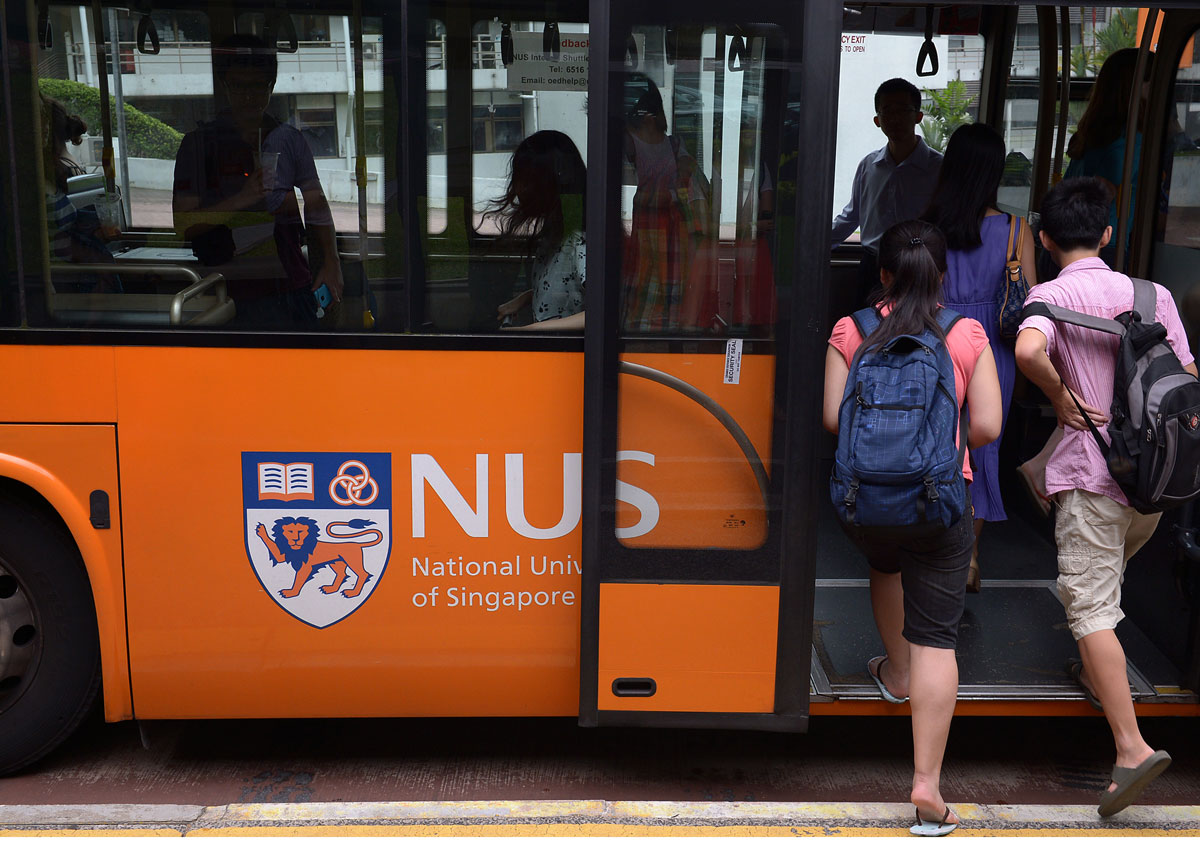
THE National University of Singapore (NUS) cast a wider net last year to admit students through a scheme that looks at talent and not just grades.
It interviewed a record 1,600 students last year under the discretionary admission scheme, where students who fall short of the entry score for a course are considered on attributes such as leadership or entrepreneurial skills or talent in the arts and sports.
NUS admitted 670 of them – 10 per cent of the 2015 cohort and the maximum allowed by the Ministry of Education (MOE) under the scheme. The year before, it interviewed 1,200 students and took in 600 under the scheme.
All local universities have discretionary admission schemes.
In January, MOE said tertiary institutions will place greater emphasis on holistic selection practices for admissions. MOE officials had also signalled that there is room to admit more students through the discretionary admission scheme.
In an interview with The Straits Times, NUS’ vice-provost for undergraduate education Bernard Tan stressed, however, that applicants considered through the discretionary process still need good grades. He said: “At the end of the day, we have to be sure that they will be able to take the rigours of a degree programme. Generally, they are only short of a few points.”
He explained why NUS was giving more students a chance to be considered under the scheme.
“Academic grades can only tell you so much about a student,” he said. “Through the personal essays and interviews we use for the discretionary admission process, we are able to better assess their interests and aptitude for a particular field. Or if they have a talent, such as in the arts or sports, that will add to the vibrancy of the NUS student body,” he added.
He said admitting as much as 10 per cent of the places through the discretionary scheme has helped the university inject more diversity into its student body.
While NUS did not provide figures, the increased diversity is evident in its most competitive faculties such as law and medicine. These have in recent years accepted more students from polytechnics and students from a wider range of junior colleges.
Professor Tan said students benefit: “Being exposed to people with different perspectives not only enhances their education but also prepares them for working life, which often requires them to relate to a diverse group of people.”
Industrial design student Jon Chan Hao, 23, who secured a place through the discretionary admission scheme, said he is glad that NUS has such a scheme.
His grades were not good enough but he got a place by writing about his strengths in co-curricular activities, especially canoeing, he added.
sandra@sph.com.sg
Get MyPaper for more stories.
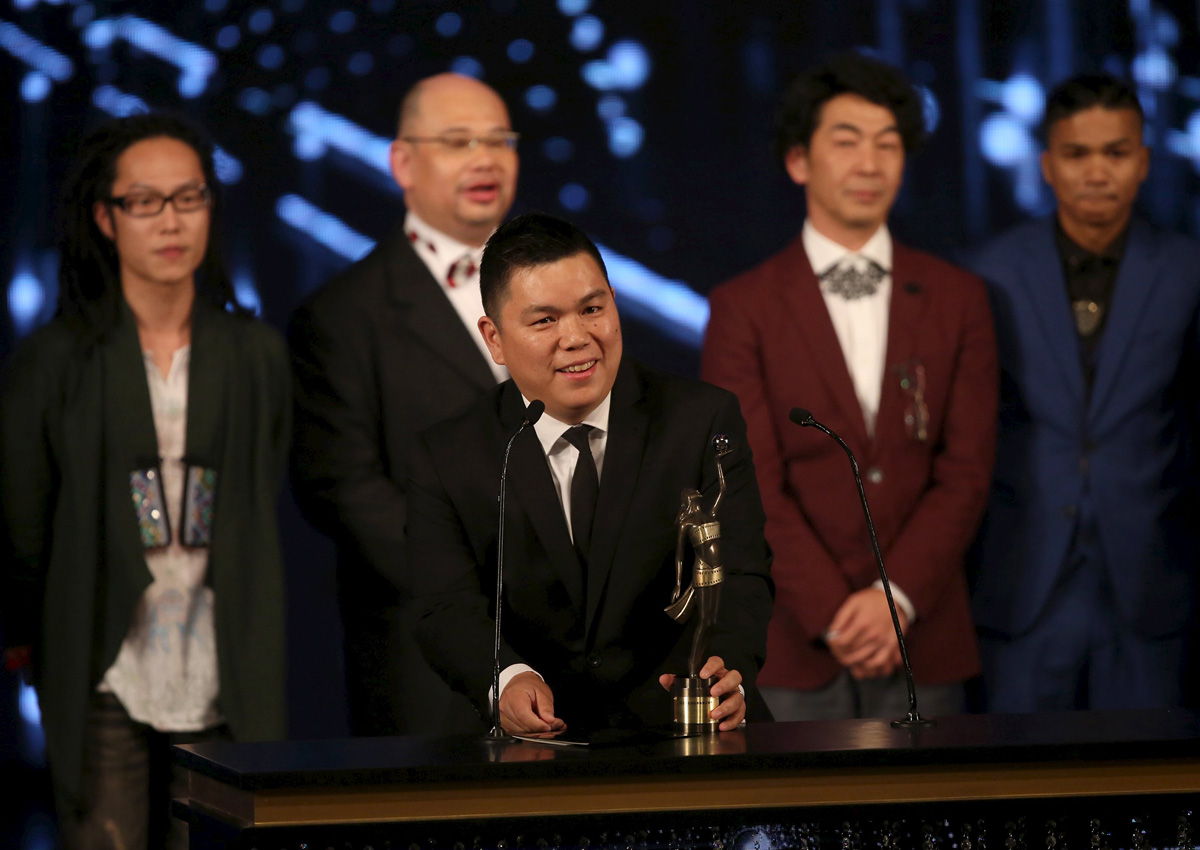
HONG KONG – A controversial movie about the future of Hong Kong won the top prize at the city’s film awards Sunday, after being a local box office hit but antagonising Beijing over its portrayal of the semi-autonomous territory in 2025.
“Ten Years” scooped the “Best Film” prize at the Hong Kong Film Awards, following a short cinema release that was widely believed to have been curtailed for political reasons.
The film is made up of a series of five vignettes that tap residents’ worst fears for the future of the southern Chinese city as Beijing’s grip tightens.
The film had only a short general release, while some cinemas refused to screen it altogether, and it raised heckles on the mainland with China’s state-run Global Times newspaper describing it as “totally absurd” and a “virus of the mind”.
“The meaning of this prize is that it shows Hong Kong still has hope. It reminds us that we could have courage to be creative. I would like to thank everyone who has watched it,” said the film’s producer Andrew Choi after the awards ceremony.
Major China-based TV channels pulled out from broadcasting the awards on the mainland, with the nomination of “Ten Years” widely believed to be the reason.













































But one of the film’s directors, Ng Ka-leung, told reporters that he was not concerned by Beijing’s opinion, only what his fellow Hong Kongers thought of the film.
“If you ask me what Beijing might feel towards us, I would say it doesn’t really matter. The movie was made for Hong Kong people. We are open-minded to anyone who likes it or not. We just hope that Hong Kong people can share our feelings. We would like people to think about the future of Hong Kong,” he said.
The chairman of the Hong Kong Film Awards Derek Yee acknowledged the controversy that has arisen from the film’s nomination.
“President Roosevelt said one thing: the only thing we have to fear is fear itself,” Yee said before announcing the winner of the “Best Film” category.
Since its release at the end of December, the movie, made for just HK$500,000 ($64,000), has earned an unexpected HK$6 million, but its run stopped when it was still playing to packed theatres.
On Friday thousands flocked to watch the film at various community screenings across the city, as the buzz around the movie continued long after its cinema release ended.
The five part film, each directed by different people, examine different elements of a future Hong Kong, where there is growing anxiety that Beijing is eroding the freedoms enshrined in the 1997 handover deal between Britain and China.
In one, young children in military uniforms prowl the street looking for subversive behaviour, another shows the erosion of the local language Cantonese.
In the final short, a protester self-immolates outside the British consulate – a scene that moved many viewers to tears.
Hong Kong cop thriller “Port of Call” also won big at the film awards, scooping seven prizes including best actor for singer Aaron Kwok and best actress for newcomer Jessie Li.
Best Film: Ten Years
Best Actor: Aaron Kwok (Port Of Call)
Best Actress: Jessie Li (Port Of Call)
Best Director: Tsui Hark (The Taking Of Tiger Mountain)
Best Screenplay: Philip Yung Tsz Kwong (Port Of Call)
Best Supporting Actor: Michael Ning (Port Of Call)
Best Supporting Actress: Elaine Jin (Port Of Call)
Best New Performer: Michael Ning (Port Of Call)
Best Cinematography: Christopher Doyle (Port Of Call)
Best Film Editing: Cheung Ka Fai (Ip Man 3)
Best Art Direction: William Chang Suk Ping, Yau Wai Ming (Office)
Best Costume and Make Up Design: Yee Chung Man (Monster Hunt)
Best Action Choreography: Li Chung Chi (SPL 2: A Time For Consequences)
Best Sound Design: Kinson Tsang, George Lee Yiu Keung, Yiu Chun Hin (The Taking Of Tiger Mountain)
Best Visual Effects: Jason Snell, Ellen Poon, Tang Bingbing (Monster Hunt)
Best New Director: Raman Hui (Monster Hunt)
Best Original Film Score: Dayu Lo, Chan Fai Young (Office)
Best Original Film Song: We Almost Fly (She Remembers, He Forgets)
Best Film From the Mainland and Taiwan: The Assassin