Home Blog Page 4321

Mumbai schoolboy's child labour project gets a national platform

0

MUMBAI – It began as a school project, became a citywide campaign, and is now a national social media campaign aimed at getting communities to address child labour in India.

Kunaal Bhargava, 17, a student at the American School in Mumbai, picked child labour for a classroom project. He approached Salaam Baalak Trust, a charity that works with street children, for help with material.

The Mumbai police were so impressed with the poster campaign he created that it was adapted for billboards across the city earlier this year.

This week, a citizen engagement platform LocalCircles, which connects its more than 1 million members in discussions on governance and other matters of public interest, created a discussion group on child labour to seek input on the issue. “Child labour is an issue I think about a lot, as these are kids as old as me, younger than me, working instead of going to school like me,” said Bhargava. “We encounter it every day, so getting the community involved is an effective way to check child labour,” he told the Thomson Reuters Foundation.

There are 5.7 million Indian child workers aged between five and 17, out of 168 million globally, according to the International Labour Organization.

More than half are in agriculture, toiling in cotton, sugarcane and rice paddy fields, and over a quarter work in manufacturing, embroidering clothes, weaving carpets or making match sticks. Kids also work in restaurants and hotels, washing dishes and chopping vegetables, and in middle-class homes.

The Indian government wants to amend a three-decade-old law which bans children under 14 from working in 18 hazardous occupations and 65 processes including mining, gem cutting, cement manufacture and hand looms.

However, children who help their family or family businesses are permitted to work outside school hours, and those in entertainment or sports can also work, provided it does not affect their studies.

Members of the LocalCircles group can, in addition to offering suggestions, post pictures and report instances of child labour that the police and NGOs can act on, said founder Sachin Taparia. “This platform is more effective than a hotline – how many people will actually remember the number or think to call when they see a child worker in a tea stall or begging on the street?” he said. “Whereas people are so comfortable taking pictures and posting on social media, and this facilitates that,” he said.

Suggestions from the discussion group so far include stricter punishment for employers of child workers and training programmes for such children, so they can learn skills which could be used to earn an income when they are older.

Poor reintegration of rescued child workers leaves them vulnerable to being trafficked and made to work again, a report by Harvard University’s FXB Center for Health and Human Rights said last month.

The LocalCircles group for child labour is managed by the Indian Police Foundation, a think tank comprising police officials, bureaucrats and civil society leaders.

Community policing has already played a role in fighting child labour and human trafficking, Taparia said, citing police raids on illegal brothels in Delhi and Gurgaon as a result of information given by members of LocalCircles discussion groups. “The police, the NGOs – we are all doing our bit to check child labour, and having citizens involved will only help create more awareness and rescue more child workers,” said Pravin Patil, a deputy commissioner of police in Mumbai.

Image: 
Category: 
Publication Date: 
Wednesday, April 6, 2016 – 10:50
Send to mobile app: 
Source: 


Hermes ID: 
2 195 059
Hermes ID String: 
VLINDIA6
Hermes Author: 
GRONGLOH
Story Type: 
Others

Source link

MPs call for more help for working mums

0

Working mums could do with more help from the Government as they juggle their responsibilities at home and in the office, said MPs.

While they welcomed the measures in this year’s Budget to support young parents and families, 10 of the 25 MPs who spoke in Parliament yesterday had a slew of suggestions on ways to give them a boost.

Some want more childcare spaces for infants and a directory to match parents and nannies, while others want greater promotion of flexible work arrangements.

“Some working mothers, who are professionals, managers or executives in multinational companies, tell me that whenever a woman becomes pregnant, her career progression or promotion can be held back for one year,” said Ms Tin Pei Ling (MacPherson).

Added Nominated MP (NMP) and veteran unionist K Thanaletchimi: “Women should not be fearful of sacrificing their careers for a family.”

More infantcare facilities could be opened or expanded to give parents peace of mind that their babies would be looked after whenever they work late, said several MPs.

With a directory of nannies, parents could also leave the children in their care, suggested Ms Tin and Mr Gan Thiam Poh (Ang Mo Kio GRC).

Ms Tin said the Government could create an official directory online for parents to find potential caregivers in the neighbourhood.

Mr Gan said nannies’ hours tend to be more flexible, which would be helpful for parents who work shifts or long hours.

For mothers of newborns returning to work after maternity leave, more flexible work arrangements would help, said MPs.

Mr Christopher de Souza (Holland-Bukit Timah GRC) suggested that the Government come up with a law that gives working mums another eight weeks of either flexible work or no-pay leave, after the end of their 16 weeks of maternity leave.

“This way, more mothers can return to the workforce and increase their family income without compromising on their family life,” he said, adding that it could mean working from home or shorter work weeks.

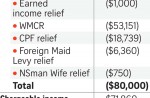
High-earning mums had four MPs championing their cause, following the introduction of a personal income tax relief cap of $80,000 in the Budget. They wanted to know the reason for the cap, which they said would hit these mums the hardest.

Ms Joan Pereira (Tanjong Pagar GRC) asked for it to be lifted for widowed or divorced mothers, as they tend to face more challenges like raising their children themselves.

Ms Tin, Mr Louis Ng (Nee Soon GRC) and Ms Lee Bee Wah (Nee Soon GRC) said working mums were upset at what the move signifies. “They feel singled out as their male contemporaries are generally unaffected,” said Ms Tin.

“Some wonder if this signals that senior job roles are not for mothers or that mothers should not have higher career aspirations.”

Ms Lee added that while the cap is expected to add $100 million a year in revenue, this should not come at the cost of driving high-income mothers out of the workforce, or reducing the number of children they add to the future workforce.

NMP Kuik Shiao-Yin, however, was critical of mothers who held such a view. She called for a change in this mindset “among some mums in the 1 per cent when they discovered they cannot claim tax relief above $80,000 anymore”.

The additional revenue, she noted, would support greater social spending.

Children of unwed parents should be included in upcoming schemes to give kids from less well-off families a leg up, argued four MPs as they called for the qualifying criteria of two schemes to be clarified.

These were the KidStart programme for young children who need support, and the Child Development Account First Step grant in which parents can receive $3,000 from the Government to use for their children’s healthcare and childcare, without first having to deposit $3,000.

Children of unwed parents have the same needs as their peers whose parents are married, said Mr Faisal Manap (Aljunied GRC) and Non-Constituency MP Dennis Tan.

“They should not be treated differently because of something their parents did,” said Mr Faisal.

charyong@sph.com.sg


This article was first published on April 6, 2016.
Get a copy of The Straits Times or go to straitstimes.com for more stories.

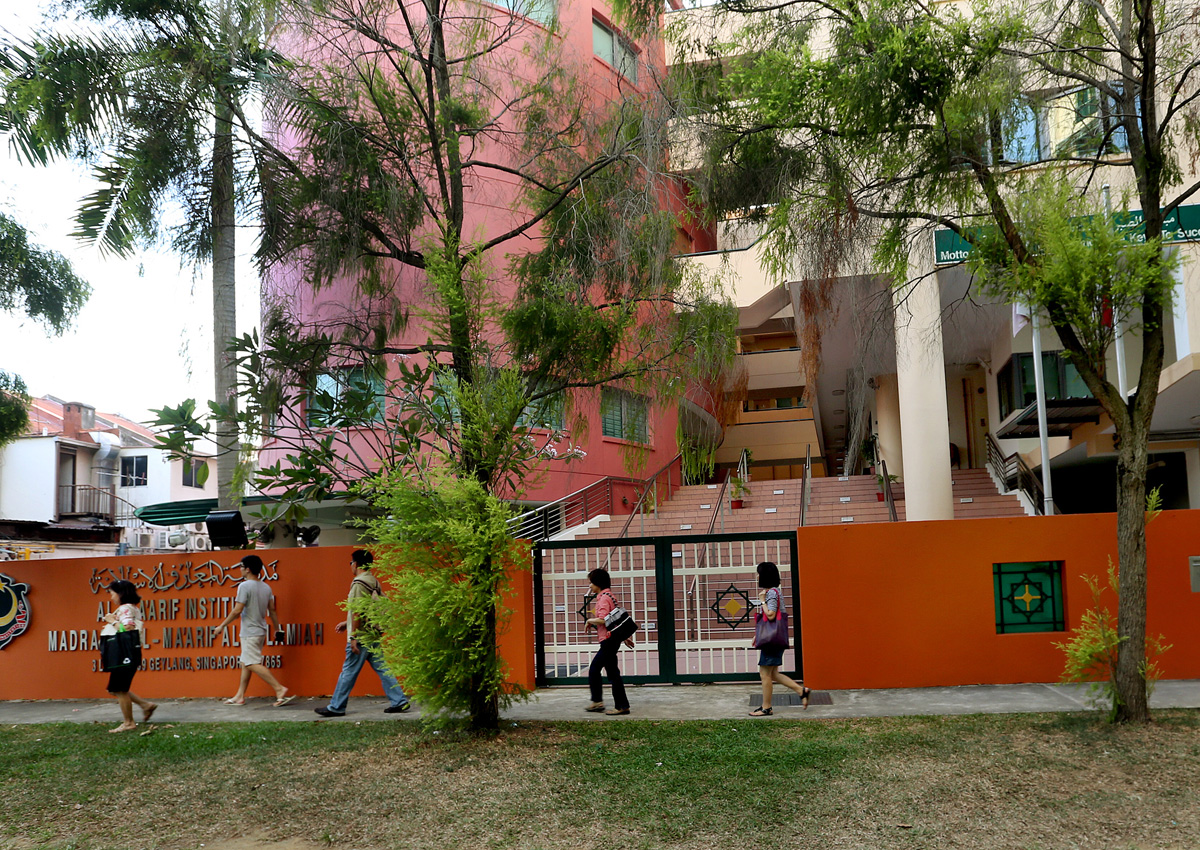
Image: 
Category: 
Publication Date: 
Wednesday, April 6, 2016 – 10:43
Send to mobile app: 
Source: 


Story Type: 
Others

Source link

Madrasah students in alleged attack are 'calm'

0

The three female madrasah students who were allegedly attacked last week are “very steady and calm”, said Minister for Social and Family Development Tan Chuan-Jin yesterday in a Facebook post.

He visited the three students and staff at Madrasah Al-Maarif Al-Islamiah yesterday morning with Dr Fatimah Lateef, a Member of Parliament for Marine Parade GRC, where the full-time Islamic religious school is located.

Mr Tan said the three students were “smiling as we chatted.

“They understood the circumstances surrounding the incident and that the police would be investigating thoroughly. There would probably be a mental health assessment as well,” wrote Mr Tan, who is also an MP for Marine Parade GRC.

“We encouraged the girls to speak up and approach their teachers if they need help,” he said, adding that the madrasah’s management and teachers have been very understanding and supportive.

on Facebook

I am dismayed to hear of the attack towards 3 madrasah students. This is totally unacceptable. We should never tolerate…

Posted by Yaacob Ibrahim on Saturday, April 2, 2016

Security officer Koh Weng Onn, 48, had allegedly attacked the three students, aged 14 to 16, in separate incidents near Paya Lebar MRT station last Friday.

Koh was arrested the next day and charged on Monday in what court papers say was a “racially aggravated” act.

In the first charge, Koh is accused of hurting a 16-year-old teen by kicking her on the right thigh along Paya Lebar Road at 7.22am last Friday.

on Facebook

I have been told of three Madrasah students being physically attacked today in a public place. At this point, the…

Posted by K Shanmugam Sc on Friday, April 1, 2016

In the second charge, he is said to have swung a plastic bag containing a filled 1.5-litre water bottle at a 14-year-old girl as she was walking along the footpath.

The third charge accuses him of hurting another 14-year-old girl on an escalator at 7.24am at the Paya Lebar Circle Line MRT station.

on Facebook

I am glad to see that the police have swiftly arrested the suspect who attacked 3 madrasah students on Friday. As a…

Posted by Teo Chee Hean on Saturday, April 2, 2016

The attacks prompted government and community leaders of all races to stress that racially motivated acts of violence will not be condoned.

Last Saturday, Deputy Prime Minister Teo Chee Hean said: “As a society, we should stand together against all forms of violence against innocent persons, especially if there may be racial or religious undertones.”

Koh has been remanded for psychiatric observation until the next mention of the case on April 18.

xueqiang@sph.com.sg


This article was first published on April 6, 2016.
Get a copy of The Straits Times or go to straitstimes.com for more stories.
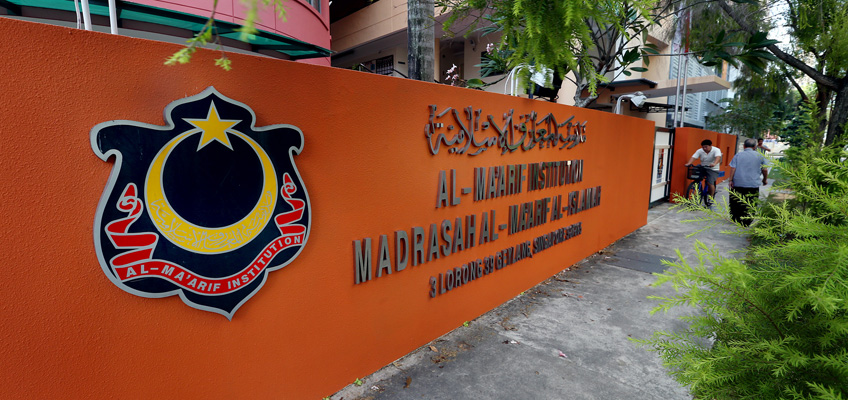
Image: 
Category: 
Publication Date: 
Wednesday, April 6, 2016 – 10:36
Keywords: 
Send to mobile app: 
Source: 


Rotator Image: 
Story Type: 
Others

Source link

Beyonce says she's not 'anti-police'

0

New York – Pop superstar Beyonce has rejected criticism that her new activism is “anti-police,” saying she is tired of being assigned labels.

Beyonce caused a stir in February with her new song “Formation,” whose video was heavy in imagery from the Black Lives Matter protest movement including a scene in which police raise their hands up as if under arrest.

“I’m an artist, and I think the most powerful art is usually misunderstood. But anyone who perceives my message as anti-police is completely mistaken,” she said in an interview with Elle magazine that came out Tuesday.

“I have so much admiration and respect for officers and the families of officers who sacrifice themselves to keep us safe. But let’s be clear: I am against police brutality and injustice.

Those are two separate things,” she said.

Beyonce suggested that the criticism was a case of attacking the messenger, calling the video a celebration of Black History Month and of feelings “there long before a video and long before me.”

A police group and a number of conservative commentators said they were offended by the song, which musically marked Beyonce’s biggest foray into the Southern hip-hop style of bounce.

Former New York mayor Rudy Giuliani, known for his tough-on-crime stance, said it was “outrageous” that Beyonce performed “Formation” during halftime at the Super Bowl – American football’s title match which is the most-watched US television event of the year.

But Beyonce also won praise from activists who said that the pop star – who along with her husband, rap mogul Jay-Z, is worth an estimated $1 billion – was using her fame for social good.

Beyonce has long described herself as a feminist but said in the interview that a better term might be “humanist” as she was concerned with all inequality, noting for example her work for Global Citizen which fights extreme poverty in the developing world.

“I don’t want calling myself a feminist to make it feel like that’s my one priority, over racism or sexism or anything else.

“I’m just exhausted by labels and tired of being boxed in,” she said.

Beyonce, who gives few in-depth interviews, spoke to Elle for the launch of her Ivy Park line of athletic attire for women.

Image: 
Category: 
Publication Date: 
Wednesday, April 6, 2016 – 10:32
Keywords: 
Send to mobile app: 
Source: 


Story Type: 
Others

Source link

Day 2 of Budget debate turns focus to people

0

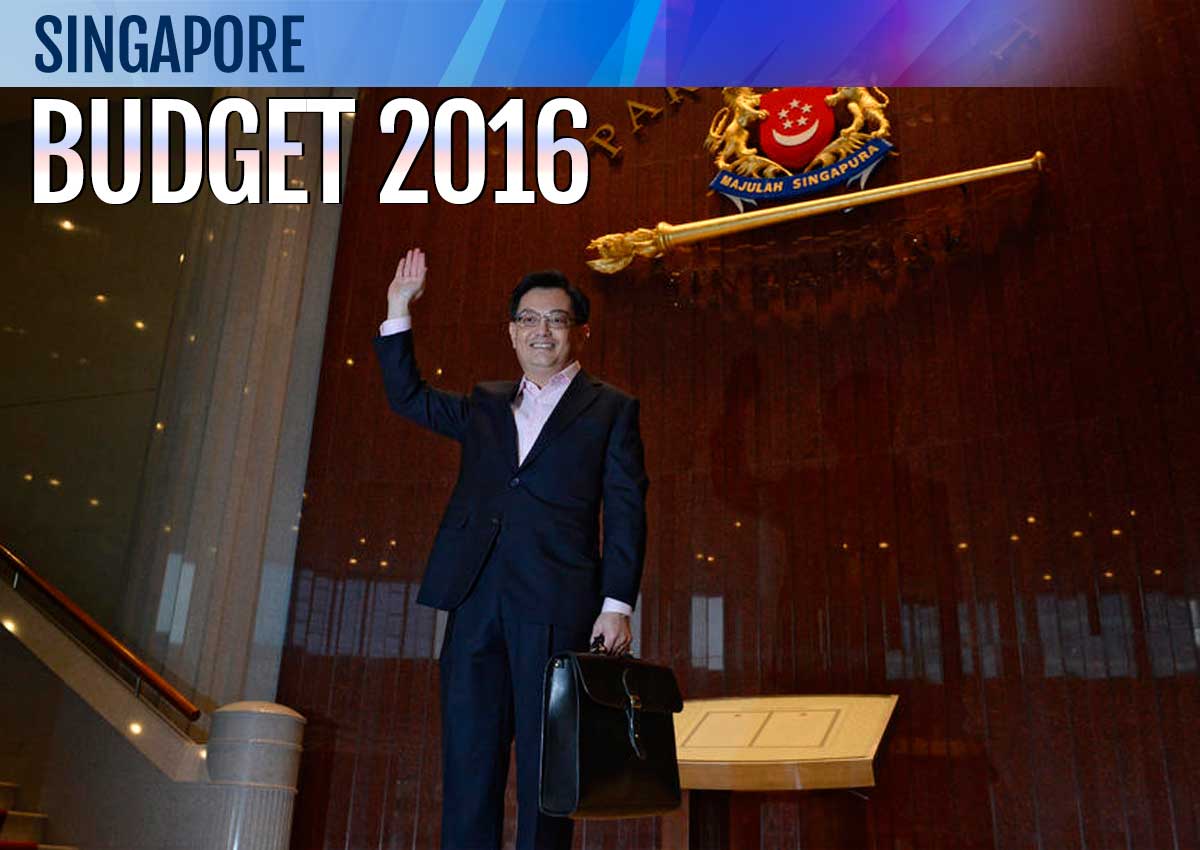
After an opening day focused on numbers and measures for companies amid a challenging economy, yesterday’s Parliament debate resounded with stories of people who were helped but also hurt by policy.

On the second day of debate on the Government’s Budget for the new financial year, many of the 25 MPs who spoke filled their speeches with anecdotes and focused on the human aspect when discussing hard policy questions.

Singapore’s economic transformation remained a major topic, but suggestions now focused more on mindsets than metrics.

Ms Denise Phua (Jalan Besar GRC) suggested that firms and workers could be profiled by ability, attitude and vision, so support could be tailored for each group.

Ms Lee Bee Wah (Nee Soon GRC) and Mr Lim Biow Chuan (Mountbatten) zeroed in on human obstacles to change. Both called for small and medium-sized firms to get help in navigating the complexities of government grants, so that they do not need to approach consultants.

Even in suggesting concrete measures to help workers, MPs stressed the importance of mindsets.

Labour MP Zainal Sapari (Pasir Ris-Punggol GRC) noted that service buyers in contract-based, low-income industries such as cleaning and security must have the right mindset if workers are to benefit.

Buyers should adopt performance-based rather than headcount-based contracts, to give service providers an incentive to improve productivity, he said.

Workers’ Party MP Muhamad Faisal Abdul Manap (Aljunied GRC) was concerned about the potential human impact of Budget initiatives such as incentives for automation, saying these could cause job losses.

Nominated MP K. Thanaletchimi, a National Trades Union Congress central committee member, raised the need for not just training grants, but also psychological support for workers changing careers.

Hard policy aside, some MPs also looked at softer cultural issues.

NMP Azmoon Ahmad shared how his father would dismantle parts of his Vespa scooter engine for him to clean.

It sparked his inquisitiveness and got him interested in innovation, which he said ought to be nurtured from a young age.

NMP Kok Heng Leun spoke on the importance of art, while fellow NMP Kuik Shiao-Yin identified two “cultural roadblocks to transformation” – fear and scarcity thinking. Ms Kuik said the fear-based “kiasu” culture does not drive people to create value, and scarcity thinking encourages selfishness rather than care.

MPs also picked up on the theme of resilience from Finance Minister Heng Swee Keat’s Budget speech on March 24. Non-Constituency MP Dennis Tan suggested encouraging young people to join certain co-curricular activities such as uniformed groups to foster resilience.

Mr Darryl David (Ang Mo Kio GRC) applauded the focus on outdoor adventure education, sharing his own experience with taking his children to a tree-top adventure course.

He was one of many MPs who related real-life tales, from stories of mature workers successfully changing careers, to residents’ demands at Meet-the-People Sessions.

No ministers spoke yesterday. Today, Mr Heng will respond to MPs’ comments when the Budget debate continues. MPs will then vote to approve the Budget.

This will be followed by debate in the Committee of Supply, in which MPs file “cuts” that give them time to speak on each ministry’s spending plans.

janiceh@sph.com.sg


This article was first published on April 6, 2016.
Get a copy of The Straits Times or go to straitstimes.com for more stories.

Image: 
Category: 
Publication Date: 
Wednesday, April 6, 2016 – 09:29
Keywords: 
Send to mobile app: 
Source: 


Story Type: 
Others

Source link

Bollywood studios eye profits at last as India goes smartphone mad

0

MUMBAI – India’s all-singing, all-dancing movie hits capture the attention of hundreds of millions of fans – but they generate precious little in box office profits for the world’s largest cinema industry.

Now, with smartphone sales booming and India preparing for nationwide 4G Internet access, India’s film and TV industry hopes the ease of tapping your phone for the latest release will generate profits at last, overcoming the problems of woefully few cinemas and rampant piracy.

India has about 10,000 cinema screens across a country of 1.3 billion – 8 for every million people, compared with 120 in the United States and 30 in China, according to digital film distribution network UFO Moviez.

That low density means that for most Indians, pirated content is the only way to see movies, costing the industry some 30 per cent of potential annual gross collections.

“Even if we can manage to get a small fraction of the people to pay on their phones, you are looking at a market that can potentially become bigger than the box office,” said Girish Johar, head of revenue at Essel Vision Production, part of Zee Entertainment Enterprises, one of India’s largest media groups.

The profit boost for studios will in large part be driven by the rush for local-language content from platforms like Netflix Inc, which launched in India this year and is aggressively adding to its Hindi-language catalogue.

Homegrown rivals, though keen to forge partnerships with online streaming companies, are introducing their own platforms, a new revenue stream for production firms that earn little from either cinemas or DVD sales.

And the numbers add up.

Seven out of 10 Indians watch at least one online video a month, and in the next three years nearly 90 per cent of all Internet data in India is expected to be used towards streaming movies and television.

PAYING UP

Key to the boom is cheap, fast, mobile broadband nationwide, which this year promises to bring millions online, even outside big cities.

That means better viewing – and easier payment.

India’s cash-rich Reliance Industries is expected to roll out one of the world’s largest 4G networks this year when it launches its Jio mobile network.

To keep up, incumbent players Bharti Airtel, Vodafone India and Idea Cellular are cutting Internet charges and building out their own high-speed data networks.

The results are good already for providers like YouTube, which says Indian usage has soared, outpacing global peers, thanks to mobile traffic which more than doubled last year.

“Traditional film and TV content still continues to drive massive watch time while studio-made songs, movies and clips continue to be some of the most popular content nationwide,”said Gautam Anand, YouTube’s Asia Pacific director of operations.

LIGHTS, CAMERA … CASH!

The hope is that cheap, convenient content, perhaps 25 rupees (37 US cents) for a movie streamed to your phone, will make piracy redundant.

Of course, getting cash out of the consumer remains a challenge, and subscription is an untested model.

“In the US, everybody has been paying for content but in India people don’t pay as easily,” said Gaurav Gandhi, chief operating officer of Viacom18, a venture between US group Viacom and Reliance.

Indians feel they pay for data, so the content should be free, he says.

But the growing use of phones as credit cards, to pay for small purchases, will help.

So too, say industry insiders, will unique content.

“We have to come up with our own model and a large part of that would rest in creating unique content for online,” said Radhika Kapoor, head of content Fox Star studios India that runs the Hotstar streaming platform.

Others argue the secret will be ad-driven content, that can be provided free. Indeed, getting users to stay loyal to one platform to leverage subscription revenue might be challenging, but getting advertisers interested is not.

Global advertising spends on digital media is likely to grow to 36 per cent by 2020 compared with 21 per cent in 2010, and consultancy Deloitte’s Hemant Joshi says India will lead the trend with digital ad spending likely to grow more than 400 per cent to 354 billion rupees ($5.3 billion) in the next five years.

“We have seen that advertisers get better reach through mobiles in India simply because there are more phones than TV screens,” Joshi says.

“That will only multiply.”

Image: 
Category: 
Publication Date: 
Wednesday, April 6, 2016 – 10:24
Send to mobile app: 
Source: 


Story Type: 
Others

Source link

China's ex-military leader to be prosecuted on corruption charge

0

Guo Boxiong, a former senior military leader, will be charged with corruption, China announced on Tuesday while pressing ahead with its anti-graft campaign.

Investigations by military prosecutors found that Guo, who was vice-chairman of the powerful Central Military Commission before retiring in 2012, collected bribes for arranging promotions for others, Xinhua News Agency said.

Guo’s case is being handed over for prosecution now that the investigation is completed, Xinhua said.

The military procuratorate said that the amount of bribes Guo is charged with taking was “huge”, although it didn’t release the amount, and it said the 74-year-old had confessed during the investigation.

A commentary on the Chinese Ministry of Defence website said on Tuesday that the military must take the necessary steps to build discipline and remove internal malaise. The practice of military law and discipline should be “merciless”, it said.

Guo was expelled from the Communist Party of China in July.

Under the Chinese Criminal Procedure Law, military prosecutors will hand over the case to the country’s military court. Authorities will deal with Guo’s family members and others implicated in the case without tolerance, said a statement from the military procuratorate.

Guo’s son, Guo Zhenggang, who was a major general, was put under investigation for corruption in February last year.

Since March last year, dozens of military officials have been exposed for allegedly violating discipline and laws, as part of the country’s drive in recent years to root out corruption in the military.

Xu Caihou, another senior military official who served with Guo as vice-chairman of the Central Military Commission, was probed in March 2014 for allegedly taking “massive” bribes. Xu died of bladder cancer in March last year.

President Xi Jinping has made it a key goal to weed out corruption in the military. A number of high-level corruption cases have since been exposed.

In August, after Guo was put under investigation, Defence Minister Chang Wanquan pledged intensified efforts to run the army with “strict discipline and in line with the law”.

Image: 
Category: 
Publication Date: 
Wednesday, April 6, 2016 – 10:24
Send to mobile app: 
Source: 


Story Type: 
Others

Source link

LinkedIn opens data centre in S’pore, its first outside US

0

SINGAPORE – Professional networking platform LinkedIn on Wednesday (April 6) unveiled its new data centre in Singapore, its first outside the United States.
The new centre, which went online in last month, occupies a 23,500 sq ft (2,183 sq m) lot in Jurong,…

Source link

Former Myanmar president 'becomes a monk': State media

0

Yangon – The retired junta general who steered Myanmar’s last five years of reforms has temporarily become a monk, according to state media, days after he ceded power to a new government led by Aung San Suu Kyi’s pro-democracy party.

Pictures widely shared on social media showed a shaven-headed Thein Sein wearing his trademark spectacles and draped in the deep maroon robes of the Buddhist clergy.

Myanmar language state newspaper Myanma Alinn said he had entered a monastery in the central town of Pyin Oo Lwin on Monday for a five day stint, taking the monk title “U Thandidamma”.

“Those close to U Thein Sein said he will practice meditation during a temporary monkhood of about five days,” the paper said.

It added that he had promised Buddhist elders he would be ordained as a monk once he finished his role as president.

Spending periods in the monkhood is common for Buddhist men in Myanmar, where young boys are expected to spend at least three days as novices in monasteries during their childhood.

Thein Sein, a former junta general, led Myanmar’s quasi-civilian transitional government through five stunning years of reform, as the nation opened up to the world after decades of repressive and isolating army rule.

Only a few years earlier the junta led a violent crackdown on largely monk-led protests that were dubbed the “Saffron Revolution”.

The unobtrusive 70-year-old handed power to Suu Kyi and her proxy president Htin Kyaw last week.

While not in parliament he is expected to continue to lead his army-backed party, now in opposition after Suu Kyi’s party won landmark November polls in a landslide.

Image: 
Category: 
Publication Date: 
Wednesday, April 6, 2016 – 10:08
Send to mobile app: 
Source: 


Story Type: 
Others

Source link