Home Blog Page 4306

China was largest market for Panama Papers law firm: ICIJ

0

Beijing – Nearly a third of the business of Mossack Fonseca, the law firm at the centre of the Panama Papers scandal, came from its offices in Hong Kong and China, reports say, making the Asian giant its biggest market.

Shell companies incorporated through the Hong Kong and China offices of the Panamanian law firm accounted for 29 per cent of its global active companies, according to the International Consortium of Investigative Journalists (ICIJ), which co-ordinated a year-long investigation into a trove of 11.5 million documents.

The investigation found that relatives of at least eight current or former members of China’s Politburo Standing Committee, the ruling party’s most powerful body, have been implicated in the use of offshore companies.

Such vehicles are not illegal in themselves and can be used for legitimate business needs. But they commonly feature in corruption cases, when they can be used to secretly move ill-gotten gains abroad.

Under President Xi Jinping, Beijing has launched a much-publicised anti-graft drive but has not instituted systemic reforms such as public declarations of assets.

Xi’s brother-in-law and family members of two current members of the Politburo Standing Committee (PSC), Zhang Gaoli and Liu Yunshan, have offshore holdings, ICIJ reported.

Relatives of past PSC members Jia Qinglin, once the fourth-ranked leader in China, Li Peng, who led the Tiananmen Square crackdown, Hu Yaobang, ex vice-president Zeng Qinghong, and Tian Jiyun were named by the Guardian, which took part in the investigation.

The documents also named movie star Jackie Chan, billionaire heiress Kelly Zong Fuli, and shopping-mall magnate Shen Guojun.

Chinese media have largely avoided reporting on the leaks and social media have been scrubbed of references to them, with foreign news broadcasters such as the BBC blacked out when they report on the issue.

Mossack Fonseca has offices in eight Chinese cities including Hong Kong, its website showed, more than any other country.

Its locations in China include the major financial centres of Shanghai and Shenzhen, as well as port cities Qingdao and Dalian, and lesser-known provincial capitals such as Shandong’s Jinan and Hangzhou in Zhejiang, along with Ningbo, also in the eastern province.

In a statement, Mossack Fonseca denied any wrongdoing and said it has always complied with relevant laws and regulations.

Image: 
Category: 
Publication Date: 
Thursday, April 7, 2016 – 14:54
Send to mobile app: 
Source: 


Story Type: 
Others

Source link

Plugging loophole in personal income tax relief long overdue

0

LET us call a spade a spade. With higher incomes among the wealthy, the six-figure tax reliefs claimable by high-income mothers from the Working Mother’s Child Relief (WMCR) has become a significant tax loophole that needed to be fixed in the 2016 Budget.

In the debate about whether the new S$80,000 personal relief income cap is fair for high-income working mothers, the focus should not be on the women alone, who deserve plaudits for their achievements. Rather, society should examine the family unit behind the high-income mother. Successful, well-educated, high-income women are more likely to meet and fall in love with well-educated, high-income men. This pattern of assortative mating – people marrying others like themselves – is getting more pronounced over time.

High-income families, with their six-figure tax reliefs, get to enjoy tens of thousands of dollars of extra tax savings compared to ordinary families every year. These monies were, in all likelihood, funnelled into enrichment activities for their already-privileged children: tuition to enter the Gifted Education Programme, extra sports and arts lessons to qualify them for Direct School Admission exercises into the Integrated Programmes at elite junior colleges. The savings would have been used to send children to overseas universities if they could not get into local ones.

The children were also likely helped along by an internship at a bulge-bracket investment bank or top-tier law firm, because mummy’s colleague or daddy’s golf buddy offered it to them. Fresh in the workforce, they meet and fall in love with other successful, well-educated young people. And if the happy couple wants to buy a place, daddy and mummy on both sides are all too happy to chip in for the District 9-10-11 condominium down payment.

The odds are already stacked in favour of the wealthy in terms of getting ahead in life. So it will be churlish for those earning S$150,000 and above a year – at least the 88th percentile of taxpayers based on 2014 tax data – to complain bitterly of unfairness. This is the income above which working mothers will be affected by the new tax relief cap. Those at the borderline have to pay a few hundred to a few thousand dollars more. At the other extreme, those with many children and earning S$300,000 and above (96th percentile and up) might see their tax bill increase by S$20,000.

Unfortunately, there are those who would argue against making Singapore’s tax system more progressive. Singapore’s baby drive is being harmed, they moan. Working mothers are being discriminated against. It is strange that people who have been arguing, for years, that tax breaks do not make a difference to whether women have children, are suddenly claiming the opposite. Lamentably, even those who are not affected directly by the tax relief cap are drawn into thinking they are somehow wronged, when the government is only trying to put a wrong situation right.

Parents would of course always want the best for their children. And for high-income households running tight on finances because of property and healthcare commitments, every cent counts. Households where the woman is the main breadwinner will also feel the pinch. But some perspective is surely needed, especially by individuals making a six-digit income a year.

Few Singaporeans will see that kind of money in their lifetimes. Paying a bit more tax will not hurt.


This article was first published on April 7, 2016.
Get The Business Times for more stories.

Image: 
Publication Date: 
Thursday, April 7, 2016 – 14:58
Send to mobile app: 
Source: 


Story Type: 
Others

Source link

Majority of auxiliary police officers are Singaporeans

0

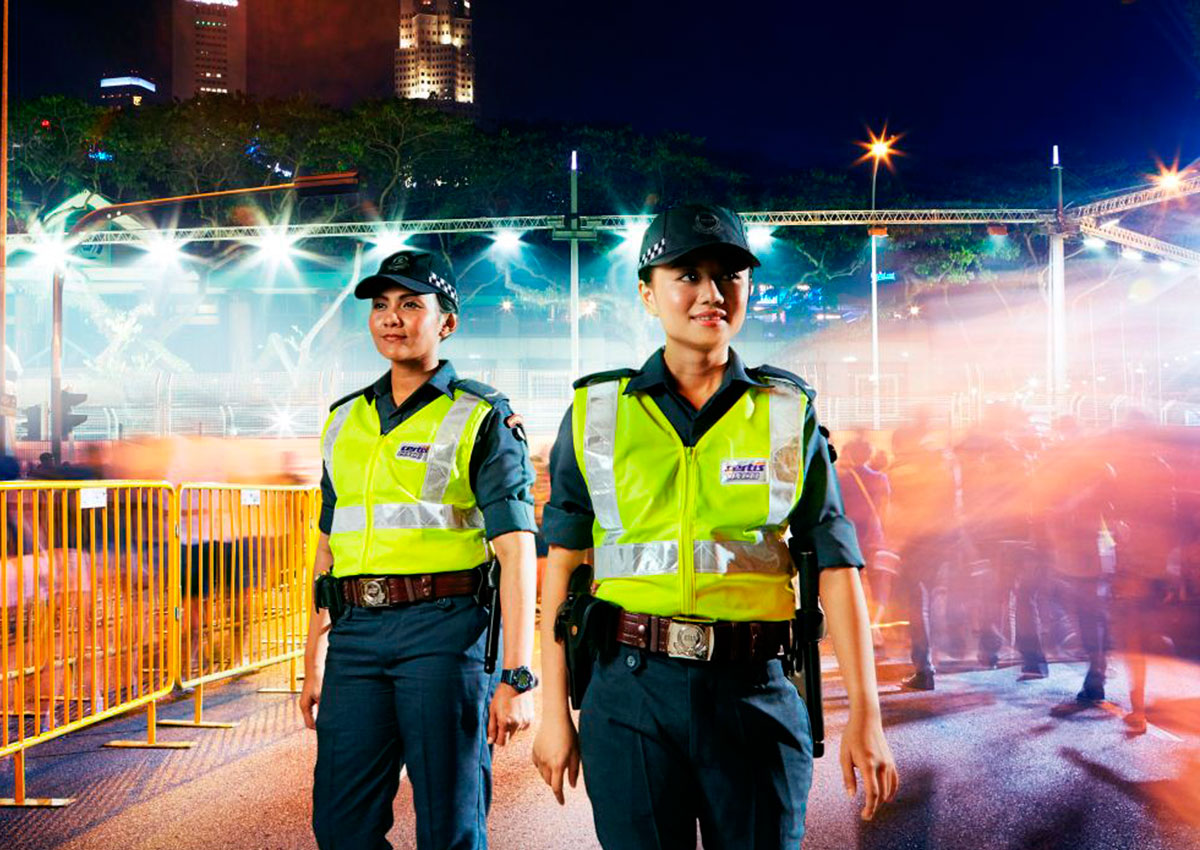
More than half of the around 7,000 auxiliary police officers (APOs), which include those from Aetos and Certis Cisco, are Singaporeans.

And no APOs who are Malaysians are deployed at Singapore’s land checkpoints.

This is a deliberate move by the Government, despite manpower challenges, Minister for Home Affairs and Law K. Shanmugam assured the House yesterday.

He was addressing concerns raised by Workers’ Party’s Ms Sylvia Lim (Aljunied GRC) on the supposedly large number of APO positions filled by Malaysians.

“One officer recently told me that the ratio allowed is five Malaysians to one Singaporean and I wonder if that is true,” she asked.

Ms Lim also questioned if there are guidelines available for the deployment of these officers, particularly at checkpoints.

“For example, at immigration checkpoints, are there Malaysians checking their fellow Malaysians and what are the risks?”

Only Singaporeans, Singapore permanent residents who are Malaysian citizens, or Malaysians are eligible to be an APO, Mr Shanmugam said. “We have deliberately maintained a Singaporean majority over the years and we will continue to do so,” .

These officers are deployed in a range of functions, including protecting sensitive installations and supporting police deployment at major events.

“They are used as a complement for police resources to allow the police to perform core functions like crime-fighting and countering terrorism,” he added.

But “we are conscious of the implications of hiring and deploying Malaysian APOs”.

When it comes to land checkpoints, he said, his ministry requires all APOs to be Singaporeans.


This article was first published on April 7, 2016.
Get a copy of The Straits Times or go to straitstimes.com for more stories.

Image: 
Category: 
Publication Date: 
Friday, April 8, 2016 – 06:30
Keywords: 
Send to mobile app: 
Source: 


Story Type: 
Others

Source link

Dr Lee Wei Ling reveals contentious part of unpublished article for ST

0

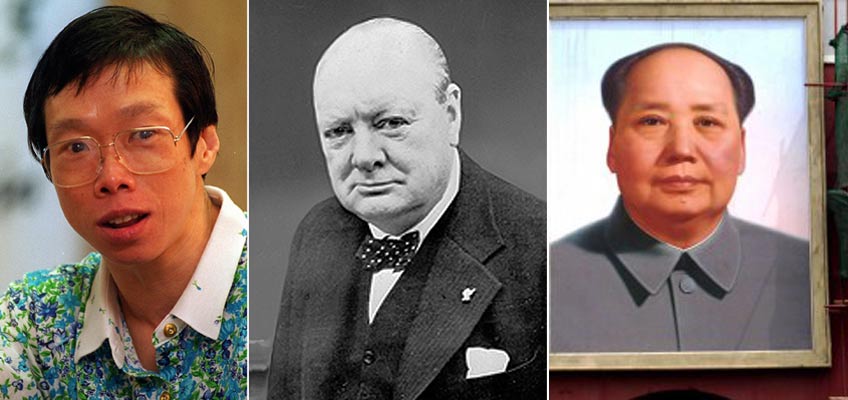
Churchill and Mao might have caused the rift between The Straits Times (ST) and its popular column contributor, Dr Lee Wee Ling.

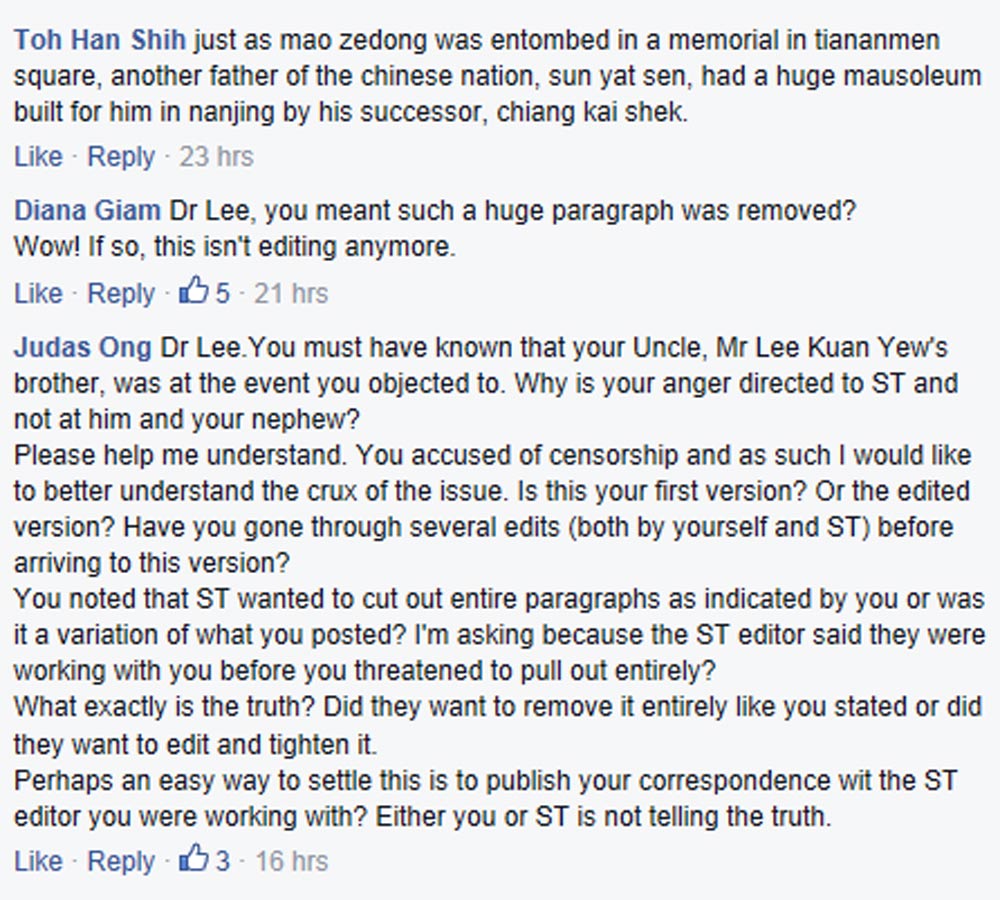
Dr Lee revealed on her Facebook page yesterday the contentious part of her article, that mentioned the death commemorations of the two legendary world leaders, and which ST editors said were “irrelevant”, according to her.

She had produced her article in full earlier on Facebook on March 25 without making any comment.

The saga started when Dr Lee shocked readers when she announced on April 1 that she would stop writing for the English daily of Singapore Press Holdings, after many years in a “love hate” relationship with the newspaper.

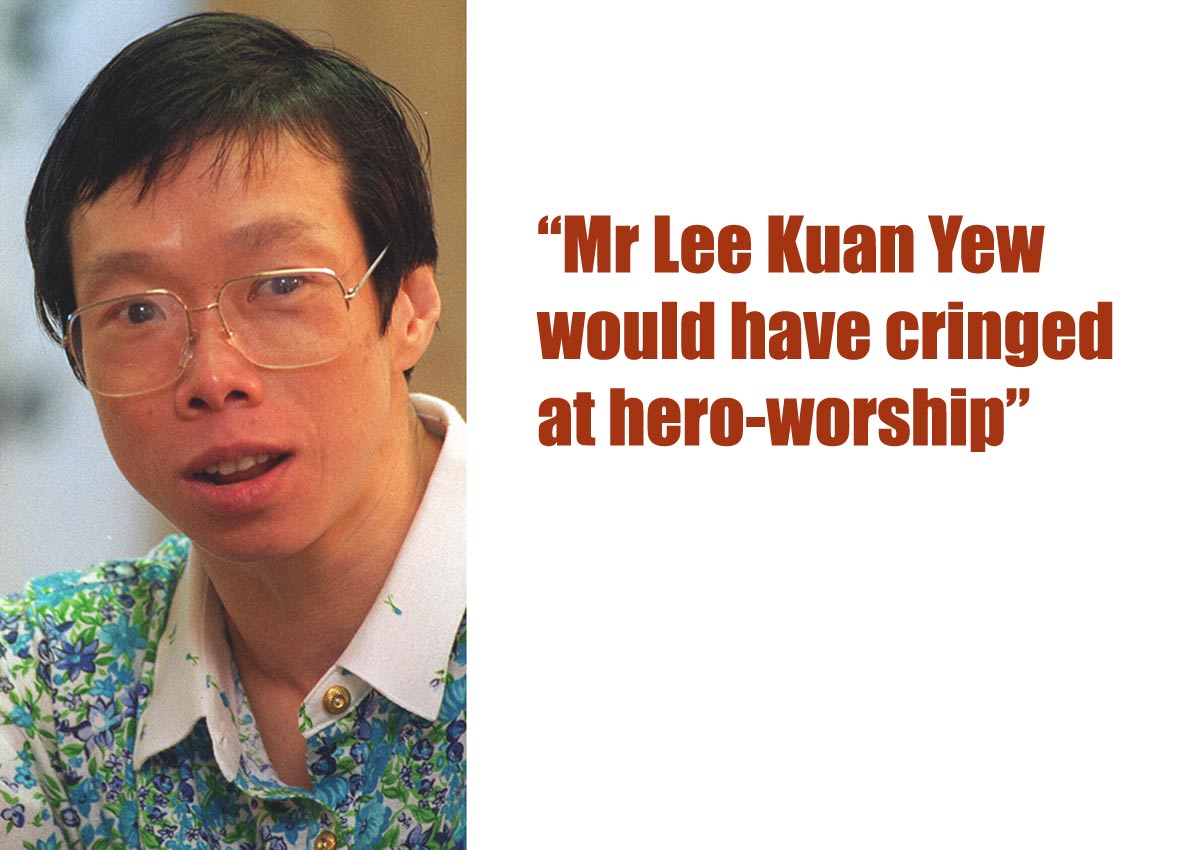
The tipping point finally came in March when the editors refused to publish in full her article on why her father, former Singapore prime minister Lee Kuan Yew, would have cringed at hero-worship by Singaporeans marking his first death anniversary with week-long events.

But she argued that the chunk that the editors wanted removed would have helped drive home her point that Mr Lee, who died in March last year (2015) would be unhappy if he were to be turned into a personality cult after his death. She had explained this in the context of how two foreign countries have remembered their late leaders.

In the disputable part, which contained more than a dozen sentences, Dr Lee highlighted the vastly different ways the two nearly-forgotten world leaders of the war and post-war eras, Prime Minister Winston Churchill of Britain and Chairman Mao Zedong of China, were honoured after their deaths.

She wrote that the body of Chairman Mao, who died on Sept 9 in 1976, was embalmed and placed in a crystal sarcophagus. It was then housed in a memorial hall built as permanent tribute to him in Aug 1977.

The commemoration of Sir Winston Churchill’s death saw a different picture, Dr Lee pointed out.

“The anniversary of his funeral took place 50 years after the actual funeral on 30 January 1965…marked by scores of events, including a service and wreath laying at the Houses of Parliament, a memorial service at Westminster Abbey, and the rebroadcast by BBC Parliament of the original live coverage,” she wrote.

She recalled what the current Prime Minister David Cameron had said in his tribute to Churchill: “Half a century after his death, Winston Churchill’s legacy continues to inspire not only the nation whose liberty he saved, but the entire world. His words and his actions reverberate through our national life today.”

Dr Lee continued in her article: “Compare the actual time from death to the first commemoration, and the different activities involved in the commemoration for the two leaders above. Which one would Papa wish his commemoration to resemble. Also bear in mind, that unlike almost all leaders, Papa was dead set against a personality cult and any hint of cronyism.

“If he was forced to choose one form of commemoration, Papa would have objected less if the commemoration resembled that held for Winston Churchill. Do note that Churchill, unlike Papa, cherished glory and a place in the history of his country.

“Compare what Churchill’s commemoration which was conducted 50 years after his death with the activities that have been taking place in Singapore that will continue for an entire week. I think Papa would have objected if he were able to convey his view.”

Rushing to her defence, one of her Facebook fans insisted that the examples of Mao and Churchill were relevant to the point of her article.

“If such a big chunk is considered irrelevant by ST editor, it is definitely more than editing,” said Teo Lay Yan.

After Dr Lee accused ST editors of curbing her “freedom of speech” in her Facebook post on April 1, fans had urged her to continue writing by posting her articles on Facebook.

ST and a former associate editor, Janadas Devan, who had edited her writing, had countered her allegations, saying that the issue was not about freedom of expression but rather a case of editing to uphold journalistic standards.

ST issued a statement on its Forum page to explain why her demand that her latest article be published unedited was “simply not acceptable”.

It said: “All professional newspapers require their writers to work with an editor, who gives a range of inputs on grammar, language, taste, relevance, coherence, judgment and the law. This is not an issue of freedom of expression, but a matter of upholding standards. This applies to all columnists, including Dr Lee, who has often written about not expecting or accepting special treatment.”

Mr Devan, who had Facebook exchanges with Dr Lee, had said reading her unedited writings was like “sailing through a fog”.

But he had good things to say too: “The effort of turning her raw material into coherent articles – that’s what I remember most about editing Wei Ling. That effort was often worth it because she had something valuable to offer, as her many fans can attest.”

chenj@sph.com.sg

Image: 
Category: 
Publication Date: 
Thursday, April 7, 2016 – 14:31
Keywords: 
Send to mobile app: 
Source: 


Rotator Headline: 
Did Churchill and Mao cause Lee Wei Ling to have a fall out with ST?
Rotator Image: 
Story Type: 
Assignment

Source link

Singapore urges Israel and Palestine to negotiate directly towards a two-state solution

0

SINGAPORE – Singapore has urged both Israel and Palestine to negotiate directly towards a “two-state solution” in the Middle East Peace Process.
“As a friend to Israel and Palestine, we urge both sides to engage in direct negotiations and to refrain from…

Source link

Captain's charisma: Song Joong Ki sets female hearts aflutter

0

South Korean actor Song Joong Ki has been setting female hearts aflutter with his suave turn as an all-action special operations soldier in the hit drama Descendants Of The Sun.

Even his A-list co-star Song Hye Kyo, who plays his love interest Kang Mo Yeon, confesses she has felt her heart palpitate when watching her character being wooed by his Captain Yoo Si Jin.

Recalling a memorable line in a scene where the officer seizes the initiative to kiss Dr Kang, she says: “There are many great lines from the drama. I think many great lines came from Yoo Si Jin, not from my character.

“‘Should I confess my love or apologise?’ That was the line he said (after the kiss) that made my heart flutter.

“We wrapped up filming in December and the drama started to air in February. Since we didn’t watch the end product during filming, I watched the drama while thinking of myself as Kang Mo Yeon. My heart fluttered when I heard that line.”

The 34-year-old actress and Song Joong Ki, 30, were in Hong Kong on Tuesday to attend a press event for Descendants.

The stars were promoting the drama that will air on new Hong Kong channel ViuTV. When they arrived at the airport, they were greeted by hundreds of fans, according to reports.

In Singapore, the 16-episode series is available for free on K-drama streaming site viu.com and its app on smart devices.

But promoting the 13 billion won (S$15 million) drama hardly seems to be necessary.

Descendants – which superimposes an old-fashioned romance drama on a war-themed action thriller and imbues it with comic elements – has garnered top ratings across the region.

In Seoul, where episodes 11 and 12 aired last week, it scored ratings above the 30 per cent share of the audience, surpassing the numbers of another Korean global hit, My Love From The Star, in 2013.

It received more than two billion views on the Chinese streaming site iQiyi. The first four episodes of the drama were watched more than 300 million times on iQiyi and, after eight episodes, the drama broke the one-billion milestone.

In Hong Kong and Singapore, Descendants is the most-watched show on the Viu online service. Last month, more than 60 per cent of Viu’s viewers in Singapore and Hong Kong tuned in to watch it.

Song Hye Kyo found the script, which was filmed in Greece standing in for a fictional war-torn country called Urk, to be a page- turner when she first received it.

She says: “The relationship between a doctor and a soldier intrigued me.

“When I read the script for the first time, I found I could read it as fast as if it were a comic book. That’s when I realised it would be a fun drama that many people would fall in love with.”

According to reports, screenwriter Kim Eun Sook – the creator of successful dramas such as The Inheritors (2013), Secret Garden (2010) and Lovers In Paris (2004) – reworked the script by Kim Won Suk, another screenwriter, beefing up the love story.

Indeed, Descendants may be chock-a-block with action – as Captain Yoo engages in hand- to-hand combat with North Korean soldiers, rescues hostages from terrorists and tangles with nefarious gunrunners –

but Song Joong Ki believes that the drama is ultimately a romance.

He says: “You can see different kinds of scenes in the drama – there’s action, there’re earthquakes. But we still consider it a romantic drama.

“There are many couples like me and Hye Kyo as well as (the second leads) Jin Goo and Kim Ji Won in the drama. I hope the viewers would focus on the cute stories of those couples.”

Between the romances and gunfights, the cast also has plenty of time for comedy, which often had the stars in stitches while the camera was rolling.

Song Hye Kyo says: “The characters aren’t very serious at times. So you’ll see funny parts here and there. Joong Ki and I both laughed a lot. We had to stop filming sometimes because we were laughing too hard. I remember how bad I felt for the crew at the shoot.”

Perhaps part of the drama’s success can be attributed to the adequate time given to the cast and crew to finish the production.

Typically, Korean dramas go to air even as filming is ongoing. Descendants, in contrast, wrapped up filming in December before it premiered in South Korea and China in February.

Song Joong Ki explains that an advantage of this arrangement is that there was time for discussions without the pressure of a tight filming deadline looming over cast and crew.

“We had enough time to communicate and work with one another. I liked the fact that we had a more relaxed setting. That’s what I liked the most about doing this drama,” he says.

He should be pleased that he fought for and scored the role of Captain Yoo.

Mr Kim Woo Taek, chief executive of New Entertainment World, which produced Descendants, has said there were other “superstar candidates” for the role.

He added that Song, who had previously starred in television dramas such as Sungkyunkwan Scandal (2010), “has a relatively weak image”, which is the opposite of the manly Captain Yoo.

Of course, fans of Descendants – especially female ones – would disagree, now that they have seen Song being all alpha male and topless on a few occasions.

The same fans would also have savoured the scenes of other topless muscular soldiers on their routine morning jogs.

Song Hye Kyo’s Dr Kang is among the admirers of those hunky soldiers in the show.

In real life, the actress says, the cast wanted the scenes to end as soon as possible. She reveals: “It was very cold when the soldiers shot the scene as it was winter. They had a really hard time. We wanted to wrap up the filming quickly for the sake of the boys.”

Although pretty boy Song Joong Ki – who was clothed during the jogging scenes – felt sorry for his on-screen subordinates, he too confesses: “On the other hand, looking at those muscular actors made me jealous.”

nggwen@sph.com.sg


This article was first published on April 7, 2016.
Get a copy of The Straits Times or go to straitstimes.com for more stories.
Image: 
Category: 
Publication Date: 
Friday, April 8, 2016 – 09:00
Send to mobile app: 
Source: 


Story Type: 
Others

Source link

Boxing: Manny Pacquiao insists he's hungrier than ever as he aims to end career with a bang

0

LAS VEGAS – Manny Pacquiao believes his 11-month absence from boxing following last year’s mega-fight defeat by Floyd Mayweather has left him hungrier than ever as he prepares for his farewell fight against Tim Bradley on Saturday.

The 37-year-old Filipino insists he will retire from boxing after the third instalment of his rivalry with Bradley, maintaining he will focus on a political career in his homeland where he is seeking election to the Senate.

While Pacquiao has carefully kept a door ajar to extending his career, he told reporters at the MGM Grand in Las Vegas on Wednesday that he views Saturday’s bout as an opportunity to sign off in style.

“For me it’s different, it’s really important for me to win this fight, to win convincingly,” Pacquiao said. “It’s part of my legacy.”

Asked if he still retained the killer instinct which helped him win an unprecedented eight world titles at eight different weight classes, Pacquiao said his lengthy absence had helped renew his enthusiasm.

“I still have that (killer instinct),” Pacquiao said. “I rested almost one year and when I started training for this fight I felt fresh and hungry again, like I did when I first started boxing. It’s been good for me. It’s good that I had a long layoff.

“I still have that desire. I love boxing. Boxing is my passion. I grew up on boxing. I started when I was 12 years old, non-stop, until now.”

Pacquiao’s long-time trainer Freddie Roach admitted he had questioned whether retirement talk could prove a distraction.

“I thought it might be but training camp was great, it was just like every other training camp. Manny maybe worked a little harder and said, ‘Let’s go out with a bang’ and that’s what we intend on doing,” he said.

Pacquiao (57-6-2) has joked that a knockout against Bradley – who has twice gone the distance with the Filipino, winning one, losing one – would boost his appeal at the ballot box when he stands in Filipino elections in May.

However, he has not scored a knockout since 2009, when he demolished Britain’s Ricky Hatton in two rounds before beating Miguel Cotto six months later with a 12th round TKO.

Bradley said he expects Pacquiao to adopt an aggressive game plan.

“I’m expecting him to be more aggressive, he’s going to come out like a bat out of hell and try to take my head off,” he said.

The 32-year-old from the Californian desert city of Palm Springs believes, however, that a combative approach from his opponent could play into his hands.

“If he’s more aggressive, then it’s probably going to give me more opportunities I would think,” he said.

Roach however insisted Pacquiao would walk the line between controlled aggression and outright foolhardiness.

“We’re professionals, we won’t make that mistake,” he said. “We’re not going to go in there looking for a knockout. We’ve never looked for a knockout because if you do it will never happen. The knockouts come as kind of a bonus but we never look for them out there.”

Pacquiao meanwhile shrugged off reports that Bradley had sought to incorporate tactical elements used by Juan Manuel Marquez when he inflicted a devastating sixth round knockout on the Filipino in December 2012.

“I know that Floyd (Mayweather) used the same sparring strategy, I know that they’re going to use that strategy,” he said. “But I learned a lot from that fight. So maybe they should think about another strategy.”

Image: 
Category: 
Publication Date: 
Thursday, April 7, 2016 – 14:24
Send to mobile app: 
Source: 


Story Type: 
Others

Source link

Parliament: More soldiers to patrol public areas; SAF redoubles counter-terrorism efforts

0

April 07, 2016 2:24 PM

SINGAPORE – Soldiers will be far more visible in public areas as the Singapore Armed Forces (SAF) steps up Singapore’s fight against the terrorist threat.


Source link

30 customers, residents evacuated after fire breaks out in Jurong West St 81 coffee shop

0

April 07, 2016 2:20 PM

SINGAPORE – A blaze involving the contents of a coffee shop in Jurong West on Thursday (April 7) morning led to the evacuation of around 30 customers and residents.


Source link

Maid says she was punished in bizarre ways

0

A maid was forced to stand on one leg on a stool while holding another stool in her hand, a court heard yesterday.

The 33-year-old Indonesian, who goes by the name Fitriyah, said that while she maintained the stance for half an hour, her employer, Tay Wee Kiat, forced a small plastic bottle into her mouth.

Testifying in the trial of IT manager Tay and his wife, Chia Yun Ling, she claimed Tay forced the bizarre punishment onto her after wrongly accusing her of breaking an elephant statue.

“He pushed all of the bottle into my mouth until I felt pain,” said Ms Fitriyah, who had apologised and explained that the couple’s daughter had broken the statue. “I cried and told him: ‘Don’t do that to me.’ “

The February 2011 ordeal ended when the couple decided to go out.

Tay, 38, denies 12 charges in relation to offences against Ms Fitriyah, while Chia, 41, has claimed trial to two.

Two of Tay’s proceeded charges accuse him of offering to pay Ms Fitriyah her salary and sending her home, in return for not reporting his offence of voluntarily causing hurt to the police, and instructing her to lie to the police that he did not physically abuse the other maid, Myanmar national Moe Moe Than, 27.

Ms Fitriyah said she felt scared after the statue incident and wanted to change employers, but Chia would not let her.

She then took $50 from Chia’s wallet and told Tay what she had done so that she would be sent back home.

When the couple took her to the agency, Ms Fitriyah refused to leave the car. She changed her mind about going to the agency, afraid that the staff there would scold her and not help her.

She said Tay pulled her hand and she fell onto the pavement, causing her pain in the chest.

The couple then took her to Tay’s father’s house. “I was informed that if I were to go back, I had to sleep with a Bangladeshi to earn money to buy a ticket…,” she said in Bahasa Indonesia through an interpreter.

When she refused to stand on a stool again, Tay slapped her. She also testified that Tay had used a bundle of three canes tied together to hit her on the head “many times”.

He also hit her twice with a bamboo stick, she said.

Another alleged punishment involved the two maids being forced to pray 100 times before a Buddha statue for moving a piece of cloth that was covering it.

Ms Fitriyah, who now works for another employer, demonstrated how it was done in court. With her hands clasped in front of her chest, she said she had to bow, kneel and then get up.

She said Tay then told her and Ms Than to slap each other 10 times.

Ms Fitriyah said once, when Tay found out that his son’s swollen head was due to an accidental fall, he pulled her hair and took her to a room.

“Suddenly, he grabbed my chin hard and pushed me against the edge of the cupboard. My head hit the cupboard. He did it two times,” she said.

She also testified that whenever she was punished, Tay would not give her any food.

The hearing continues.

elena@sph.com.sg


This article was first published on April 7, 2016.
Get a copy of The Straits Times or go to straitstimes.com for more stories.

Image: 
Category: 
Blurb: 
For breaking statue, Indonesian says she had to stand on one leg as bottle is shoved into mouth. -ST

Publication Date: 
Thursday, April 7, 2016 – 14:09
Keywords: 
Send to mobile app: 
Source: 


Story Type: 
Others

Source link