Home Blog Page 4297

High-end fashion outlets head online for opportunities in China

0

Retailers are moving to convert adversity into opportunity as they try to breathe new life into a sluggish market by using Internet platforms to hawk their high-end merchandise. Sun Yuanqing reports.

While the luxury goods retail market in China has been facing difficulties in recent months with sales declining and stores closing, some entrepreneurs are using this setback to seek opportunities online.

Mei.com, a “flash sales” platform for luxury goods and fashion, and Alibaba’s major online marketplace, Tmall.com, held a fashion show on March 30 in Shanghai, announcing a collaboration to launch a luxury channel on Tmall.com.

The event follows Alibaba’s investment in Mei.com last July, which is reported to be worth more than $100 million. The luxury channel began its test run in December, allowing Tmall customers to buy discounted luxury items from Mei.com.

A total of 42 looks were unveiled on the runway, all using pieces available on Mei.com. The show was live-streamed on Tmall and all the items were available on the Tmall app.

“We come from the luxury and fashion sectors, while Tmall specializes in data, technology and the Internet. The collaboration is to combine these competencies,” says Seamon Shi, president of Mei.com.

Mei.com and the luxury channel on Tmall are now unified in terms of inventory and membership accessibility. The move gives Mei.com access to Tmall’s customers, who are estimated to number more than 400 million.

The collaboration also signals a strategic step in Tmall’s plan to diversify its offerings in a bid to build a one-stop shopping destination for the emerging middle class in China, says Dong Benhong, chief marketing officer of Alibaba.

Meanwhile, Tmall has also been trying to upgrade its luxury offerings with the introduction of brands like Burberry and La Perla.

Operating in China since 2010, Mei.com works directly with 3,600 brands in the luxury-goods and fashion sectors, and 300 of them have appointed the platform as their exclusive online partner in China. The brands on the website include Giorgio Armani, Ermenegildo Zegna, Roger Vivier, Michael Kors and Longchamp.

Shi says that the company has seen triple-digit growth in the past few years, although he declined to give numbers.

Compared with other international luxury-shopping websites like Net-A-Porter and Neiman Marcus, Mei.com distinguishes itself through its location and convenience, says Shi.

“We are based in China so we can give the best service and the fastest feedback to customers here,” he says.

“Unlike physical outlets, flash sales protect the brands’ image to a large extent. They also provide customers with the option to buy luxury products at an affordable price.”

The website is also developing a magazine on new trends and iconic products.

As Thibault Villet, the CEO and founder of Mei.com, says: “Our aim is to be the No 1 luxury platform in China.”

Explaining his vision, he says: “What is exciting about doing e-commerce in China is that the ecosystem is changing all the time and we have to stay focused on innovation … Three years ago, we were doing less than 20 per cent of our business through mobile, but last month it was 80 per cent. The customer experience is changing.”

Chinese customers are also evolving rapidly, according to surveys done by Mei.com.

“Three years ago, they wanted more classic brands. But for the last year and a half, there is a very strong shift toward designer brands. The customers are physically and digitally travelling around the world so they are more informed and aware of global trends,” says Villet.

Referring to the recent slowing of the market in China, Edoardo Tocco, regional director of Tod’s China, one of Mei.com’s brand partners, says the country is still a great consumer market.

“The main thing is to find the right key to open the right door. The consumers are there and they are waiting for you,” he says.

“The business model for retailers is to develop a multi-channel strategy. And e-commerce is becoming one of the most important channels.”


Image: 
Category: 
Publication Date: 
Friday, April 8, 2016 – 09:48
Keywords: 
Send to mobile app: 
Source: 


Story Type: 
Others

Source link

Spending kept up with eye on future: Ng Eng Hen

0

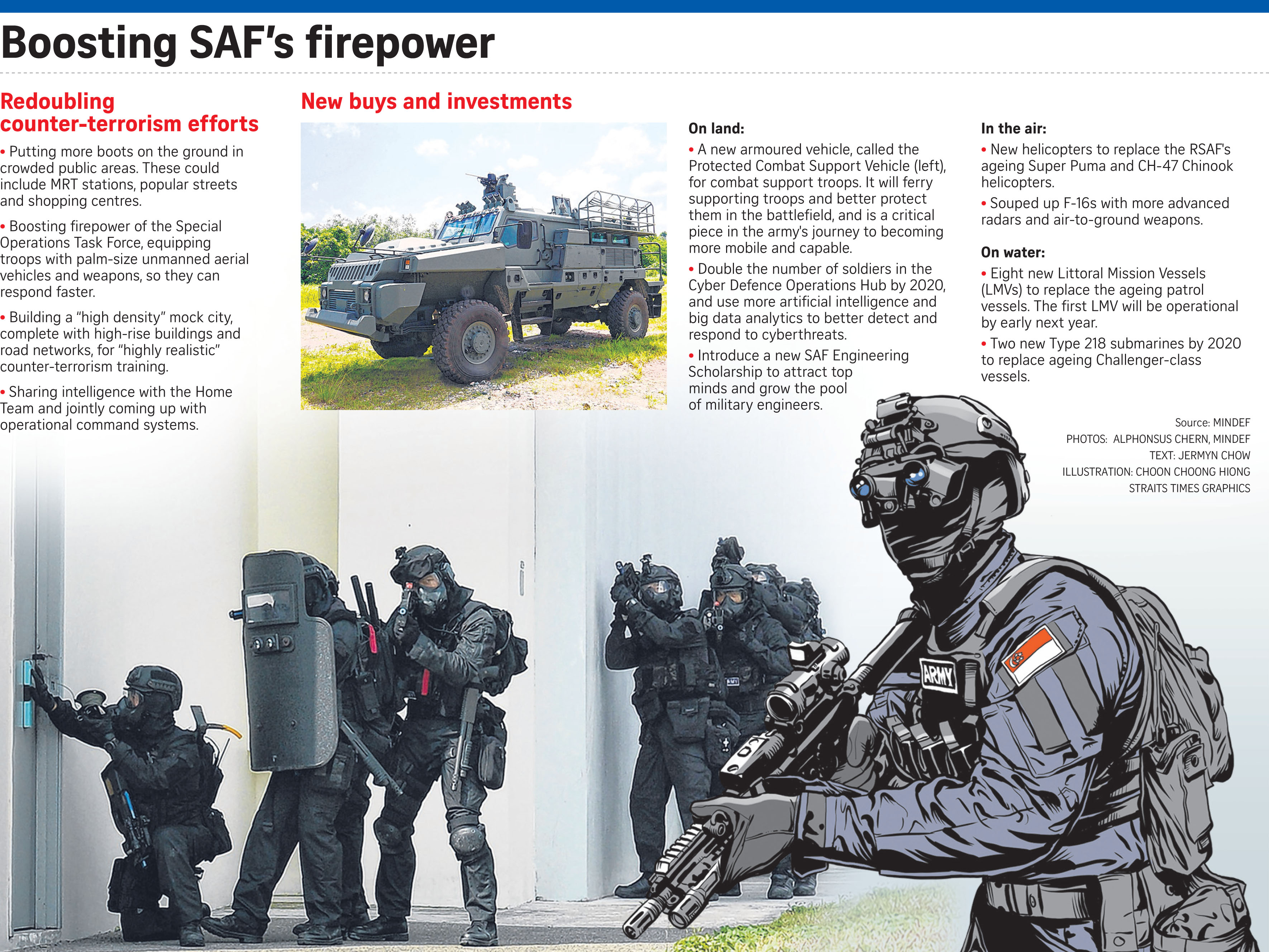
Confronted with a rapidly ageing population and an increasing need to spend on social measures, Singapore must maintain its steady defence spending, said Defence Minister Ng Eng Hen.

This is because it is “the most effective way to stretch the defence dollar”, Dr Ng told the House yesterday.

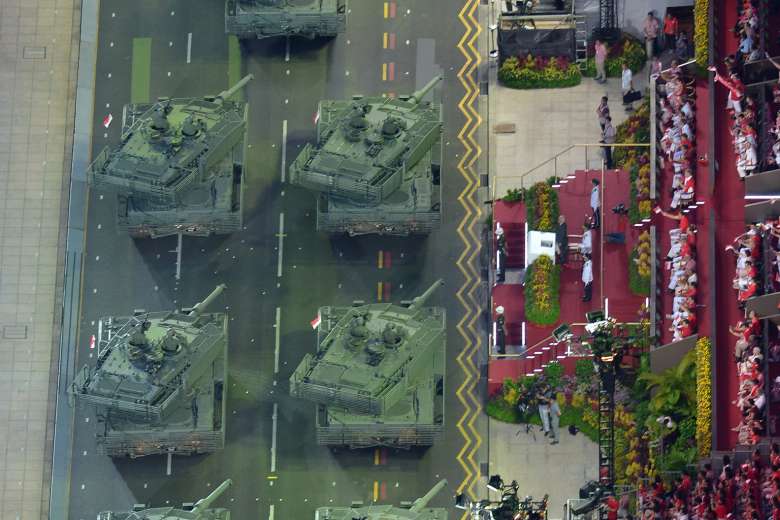
“It allows you to plan long-term (and) allows you to avoid disruptive changes from fluctuating expenditures,” the minister added as he announced new war machines that will be added to the Singapore Armed Forces’ arsenal.

They include a new armoured vehicle for combat support troops, eight new littoral mission vessels and two new submarines, and the move to finalise new helicopters for the Republic of Singapore Air Force.

Dr Ng also announced that SAF will double the number of troops in the Cyber Defence Operations Hub by 2020 to thwart cyberthreats more effectively.

And as part of efforts to make up for its shrinking manpower and sharpen its technological edge, a new scholarship will be launched to draw top engineering minds into the military and grow its pool of military engineers.

He was responding to Mr Zainal Sapari (Pasir Ris-Punggol GRC), who questioned if Singapore’s defence spending policy has changed.

Thanking all MPs for their “steadfast support for the defence budgets over the years”, Dr Ng said the next decade will not be easy for Singapore. In fact, the next few decades will pose the “greatest challenge” to Singapore since its independence in 1965, he said.

He explained that nearly one million people in Singapore will be above 60 in 2030. “So the workforce is declining and your social spending needs to go up,” he said.

This is set against the backdrop of the highest-ever defence spending by Asian militaries, exceeding their European counterparts’ in absolute dollars since 2012, said Dr Ng.

“Rising nationalism and improving economies have fuelled many Asian countries to spend larger and larger sums to modernise their militaries.

“In itself it’s not wrong. But with more capable militaries, miscalculations or missteps can precipitate serious tensions and even physical conflicts,” he said.

Faced with this scenario, Dr Ng said to realise the need to build a strong defence only because of worsening threats will be “too little, too late”.

Even as the Government continues to invest wisely and spend prudently on defence, it buys only what the SAF needs. It also carries out a robust and stringent evaluation process to ensure “we don’t go around shopping for expensive or highly sophisticated stuff”, he added.

The Defence Minister also noted that some people have wondered if the era of troubled peace is “hyped up” and whether Singapore needs to continually arm itself and boost the firepower of its arsenal.

The United States, he said, can perhaps take that line and “live with the consequences if something goes wrong”. This is because it remains the world’s most wealthy democracy with the largest and most capable military, he said.

“But I think for Singapore, a little red dot in the middle of a region of extremist threats, rising nationalism and strategic rivalry, we should guard against the worst and prepare ahead.”


This article was first published on April 8, 2016.
Get a copy of The Straits Times or go to straitstimes.com for more stories.

Image: 
Category: 
Publication Date: 
Friday, April 8, 2016 – 09:40
Send to mobile app: 
Source: 


Story Type: 
Others

Source link

Scalpers selling Shanghai Disneyland tickets for as much as S$816

0

Scalpers are cashing in on the huge demand for admission on the opening day of the Shanghai Disneyland park on June 16 by asking several thousand yuan for a ticket.

Customers snapped up the first tickets issued for the opening day in just five minutes on March 28, temporarily crashing the website. Some who failed to secure tickets turned to scalpers.

The park offers regular and peak-priced tickets, with regular ones costing 370 yuan ($57) and peak ones for high-demand dates selling for 499 yuan. Admission will be 499 yuan during the grand opening period from June 16 to 30.

Vendors on Alibaba Group’s e-commerce platform Taobao and the micro-blogging website Sina Weibo are selling tickets for the opening day for more than 1,000 yuan, with some even costing 3,899 yuan, according to media reports.

A scalper from Shanghai, named “Li Zhenwei” on Alibaba’s secondhand goods trading platform, is selling tickets for June 16 for 999 yuan, claiming to have bought 10 tickets with his wife from Alitrip, one of Disney’s authorised ticket-selling websites.

Another scalper at Taobao.com is selling tickets for June 16 to 30 for 580 yuan.

Shanghai Disney Resort said, “We take various measures to prevent ticket scalping and the sale of fraudulent tickets….Guests should only purchase tickets from authorised official channels.”

Measures have been taken to combat scalping at the Shanghai park. For instance, tourists can buy a maximum of five tickets by giving an ID card number and must enter the park with their ticket confirmation and the identification document used to buy the tickets.

When entering the park, the holder of the identification document should do so with everyone in the group.

Liu Simin, deputy director of the China Society for Future Tourism Studies, said it is not surprising that scalpers have entered the market in view of the demand, adding that this also indicates that demand is strong among tourists.

Image: 
Category: 
Publication Date: 
Friday, April 8, 2016 – 09:38
Send to mobile app: 
Source: 


Story Type: 
Others

Source link

Staying open, forging ties crucial for survival

0

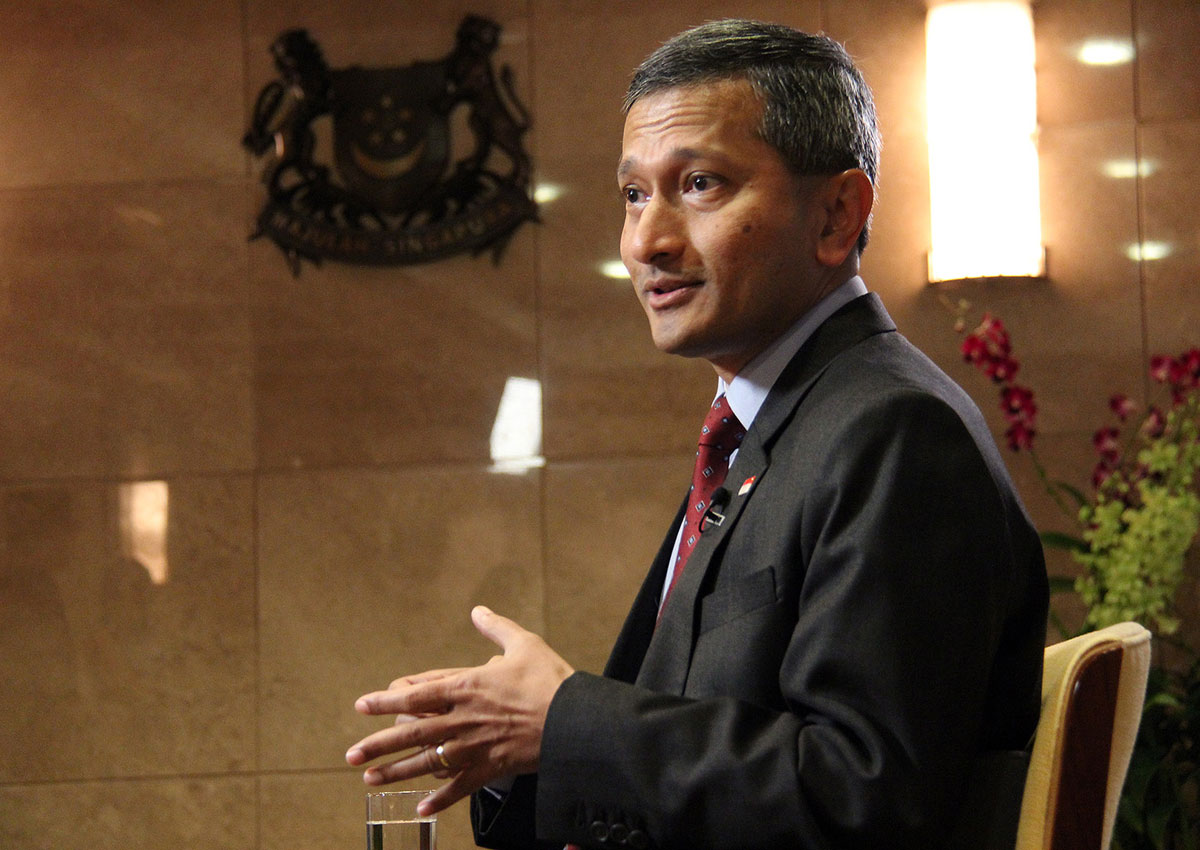
Singapore is a tiny island in a tough neighbourhood, but staying open, relevant and forging partnerships are key to the country’s continued survival, Foreign Minister Vivian Balakrishnan said yesterday.

“The fundamental constraints that Singapore faces as a small island city-state with a multiracial and multi-religious population remain unchanged,” he said in a speech that touched on the constraints of being a small state, but showed how the country was navigating the challenges it faced.

“We must have no illusions about our significance in the world or our ability to influence global events,” he told MPs as he wrapped up the debate on his ministry’s budget.

It does not have a say, for instance, in who the next president of the United States will be, but has to work with the next administration in Washington regardless of who is elected in November.

“This is the karma of being a small state,” he said.

This is why since 1965, Singapore has assiduously forged national unity, achieved economic success and built strong partnerships at the bilateral, regional and international levels, he said.

“Our international engagement with multilateral organisations is also critical. As a small state, we must engage with everyone.”

Singapore’s openness means it will be exposed to external economic headwinds but “we have no choice”, he said.

“We have to remain plugged in to regional and international trade groupings because this opens doors for our people and businesses.”

The newly declared Asean Economic Community, for example, will create jobs and open up a market worth US$2.5 trillion (S$3.4 trillion) and with more than 620 million people to businesses here.

Also, ratification of the Trans-Pacific Partnership free trade pact will create more trade and business opportunities for Singapore companies. He urged parties to ratify the pact, which has been inked by 12 countries, including Singapore.

Singapore is also reviewing or upgrading agreements with countries such as China, Japan and Australia.

It is also on the lookout for opportunities that firms can seize in emerging markets in Africa, Latin America and the Middle East.

President Tony Tan Keng Yam will make a state visit to Mexico in June, the first by a Singapore head of state to Latin America.

In his speech, Dr Balakrishnan also updated the House on Singapore’s relationships with its neighbours, including Malaysia, Indonesia, Brunei and Thailand.

Countries must work together to tackle transboundary challenges such as haze pollution and threats to cyber security, he said.

Singapore remains committed to working with Indonesia to addressing transboundary haze, he said, adding: “Year after year, the main victims of this haze are not Singaporeans but the Indonesians themselves who live at ground zero.”
Singapore wants to do more with the Indonesian government to promote sustainable agricultural practices, to strengthen the response to forest fires, and to hold errant companies responsible for the fires they start or allow to occur in their concession areas, he added.

He also said that as Singaporeans travel more frequently and to more far-flung places, one of his ministry’s top priorities was to ensure consular assistance to them.

But Singaporeans should also register online with the MFA when they travel, said Senior Minister of State for Foreign Affairs Maliki Osman, who also spoke on the issue.

This is so they can be easily contacted and helped in the event of an emergency, like a terrorist attack.


This article was first published on April 8, 2016.
Get a copy of The Straits Times or go to straitstimes.com for more stories.

Image: 
Category: 
Publication Date: 
Friday, April 8, 2016 – 09:39
Send to mobile app: 
Source: 


Story Type: 
Others

Source link

Replacing Causeway 'not solution' to easing congestion: Vivian Balakrishnan

0

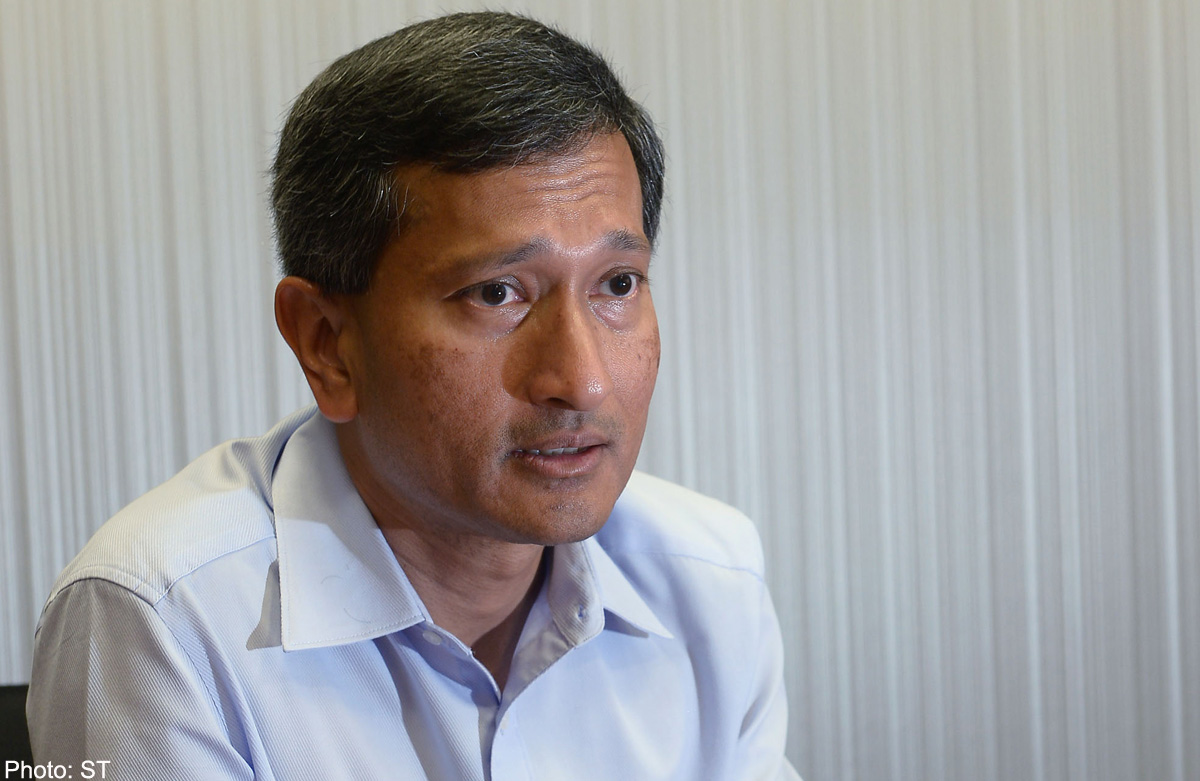
Replacing the Causeway is “not the solution” to border congestion, Foreign Minister Vivian Balakrishnan said yesterday.

“Both governments are working to improve congestion at the Causeway and at our borders,” he added.

Dr Balakrishnan gave this update in the debate on his ministry’s plans. Dr Faishal Ibrahim (Nee Soon GRC) had asked about efforts to boost connectivity between Singapore and Malaysia.

Dr Balakrishnan said the Causeway continues to have sufficient capacity. The conclusion was reached after a joint study by both neighbours, while Singapore had also done its own projections.

His comments come amid renewed calls to consider replacing the Causeway with a bridge. The latest came from the Sultan of Johor last month. In 2001, then Malaysian Prime Minister Mahathir Mohamad had also mooted an arched bridge to let vessels sail under it.

The solution to congestion lies in continually enhancing checkpoint efficiency and operations – but not at the expense of security considerations. This is done through such measures as the use of technology and improving infrastructure, Dr Balakrishnan said.

For example, all motorcycle clearance counters at Singapore land checkpoints will have automated features by the year end. “We have a responsibility to Singaporeans to ensure that we maintain a stringent level of checks,” he said. “The Malaysian Government has also had to step up its own security measures.”

Meanwhile, progress is also being made on the Kuala Lumpur-Singapore High Speed Rail, which aims to connect both cities in 90 minutes, and the Johor Baru-Singapore Rapid Transit System link.

Dr Balakrishnan, recounting his visit to Sabah last week, yesterday expressed his gratitude to the Malaysian guides and the authorities who helped Singaporeans after an earthquake struck Mount Kinabalu in June last year, killing 18 people.

“The Malaysians’ swift, instinctive and spontaneous response at our point of acute need reflects the close ties between our two peoples,” he said. “It behoves us as politicians to build on the already strong ties of kinships, friendships and relationships.”

The annual Leaders’ Retreat will be held in Malaysia this year.

Dr Balakrishnan said it will allow both sides to “take stock of” various bilateral projects. Economic ties also remain robust, he said. Singapore and Malaysia are each other’s second largest trading partners.


This article was first published on April 8, 2016.
Get a copy of The Straits Times or go to straitstimes.com for more stories.

Image: 
Category: 
Publication Date: 
Friday, April 8, 2016 – 09:37
Send to mobile app: 
Source: 


Story Type: 
Others

Source link

Singapore can't accept that 'might is right': Vivian Balakrishnan

0

Singapore does not take a position on territorial claims in the South China Sea but, as a small state, it has a vital interest in ensuring disputes are resolved peacefully, Foreign Minister Vivian Balakrishnan said.

And it cannot accept that “might is right”, he told Parliament in a speech during the debate on his ministry’s plans and policies.

Several MPs had, a day earlier, raised concerns about ongoing tensions in the South China Sea that made headlines in recent weeks, and asked how territorial disputes there might affect Singapore’s ties with the countries involved.

China has done extensive reclamation work, built runways and ports, and deployed significant military assets to the disputed waters, Dr Balakrishnan noted.

While some claimant states have also done similar activities, these “have not been on the same scale or pace as that conducted by China”.

“What a major power does inevitably carries a far bigger signature. China, for its own reasons, has become more assertive in the East and South-east Asian regions,” he added.

Four ASEAN members – Brunei, Malaysia, the Philippines and Vietnam – have overlapping claims in the South China Sea with Beijing.

But Dr Balakrishnan noted that economics is the centrepiece of the ASEAN-China relationship, and the grouping will mark the 25th anniversary of relations with China with a special summit later this year.

“We all stand to lose if tensions escalate and it is thus important to maintain open dialogue on issues of mutual concern, to prevent contentious issues from overshadowing the overall ASEAN-China relationship,” he said.

ASEAN and China are also working on implementing a declaration on conduct in the South China Sea, including a hotline for maritime emergencies, and both sides have had “productive and frank” discussions on a code of conduct, he added.

In his 40-minute speech, Dr Balakrishnan said Singapore was a small state in a tough neighbourhood, without the natural advantages of bigger countries.

Hence it had to stay united, relevant and nimble and constantly navigate choppy geopolitical waters.

Turning to the United States-China relationship, he noted that while there is some degree of competition between the two powers, they will not embark on an “all-out confrontation” given their intertwined economies and common interests.

The dynamics of China’s relationship with Japan, a US ally and the world’s third largest economy, with which it has longstanding territorial disputes, are also complex. Dr Balakrishnan said: “We hope all these major powers will work closely together to tackle issues of common interest, and avoid direct and destabilising confrontations.”

These tensions were also described by Defence Minister Ng Eng Hen as “symptomatic of a more powerful dynamic of strategic rivalry and rising nationalism”.

He observed that the dynamic has stressed existing military co-operation and alliances, as well as international agreements.

He noted during the debate on the Defence Ministry’s budget that Japan regularly scrambles its fighter jets in response to Chinese military aircraft entering disputed airspace in the East China Sea.

Indonesia has also confiscated and destroyed some 150 foreign fishing boats that entered its exclusive economic zone since President Joko Widodo took office in 2014.

Incidents like these are on the rise as Asia ramps up military spending, Dr Ng added.

“Rising nationalism and improving economies have fuelled many Asian countries to spend larger and larger sums to modernise their militaries. In itself it’s not wrong. But with more capable militaries, miscalculations or missteps can precipitate serious tensions and even physical conflicts,” he said.


This article was first published on April 8, 2016.
Get a copy of The Straits Times or go to straitstimes.com for more stories.

Image: 
Category: 
Publication Date: 
Friday, April 8, 2016 – 09:35
Send to mobile app: 
Source: 


Story Type: 
Others

Source link

New moves to recognise NSmen's contributions

0

In a new scheme, recognition for national servicemen’s contributions will include a token when they start families.

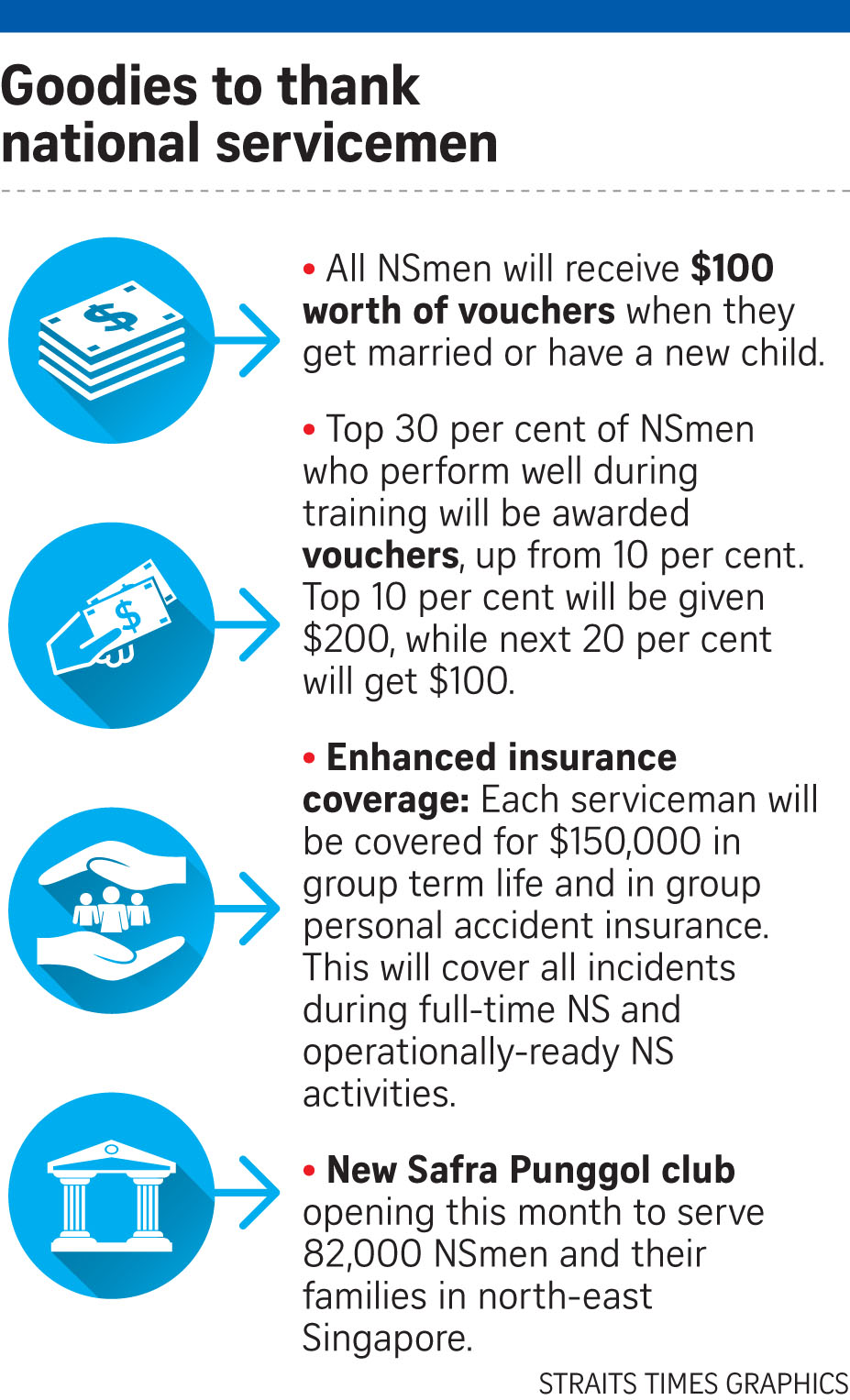
Under the Celebratory Gifts initiative, NSmen will receive $100 worth of vouchers when they get married or have a child. These vouchers can be used at participating merchants including retail and food and beverage outlets.

To be implemented by the end of the year, it was announced by Senior Minister of State for Defence Ong Ye Kung at the debate on the Defence Ministry’s budget yesterday.

In reply to questions from Ms Joan Pereira (Tanjong Pagar GRC) and Dr Lim Wee Kiak (Sembawang GRC) on how NSmen are recognised, Mr Ong said the Government provides tax relief, and awards for housing, healthcare and education.

“These forms of recognition are important to let them know their sacrifices are deeply appreciated,” he noted.

Still, more will be done, including the enhancement of a programme to reward those who do well during in-camp training and national service courses, Mr Ong said.

Starting this month, the NS Excellence Award will be given to the top performing 30 per cent of NSmen, up from 10 per cent previously.

The top 10 per cent will receive $200 worth of vouchers, while the next 20 per cent will receive $100.

Mr Ong also said the Government will enhance the basic life and personal accident insurance coverage for national servicemen from the Singapore Armed Forces, Singapore Police Force and Singapore Civil Defence Force.

With this, each serviceman will be covered for $150,000 in group term life and in group personal accident insurance. This covers all incidents during full-time NS and operationally ready NS activities.

More will also be done to recognise employers who adopt human resource practices that support NSmen.

A national accreditation scheme, the NS Mark, will be launched this year. Under the scheme, organisations can be awarded the NS Mark or a more prestigious NS Mark (Gold).

Mr Ong also touched on the SAF’s compensation framework, in reply to questions from Mr Faisal Manap (Aljunied GRC) on whether the loss of income and costs of care are adequately covered when a serviceman becomes disabled.

Mr Ong said Mindef’s compensation framework takes reference from the Work Injury Compensation Act (Wica) and is “more generous”, with amounts generally “two to four times” that provided under the Wica.

Mindef also pays medical expenses incurred at government and restructured hospitals or clinics for the treatment of service-related injuries, for as long as required.

Moreover, the SAF Benevolent Fund and the SAF Care Fund provide a welfare framework for servicemen and their families.


This article was first published on April 8, 2016.
Get a copy of The Straits Times or go to straitstimes.com for more stories.

Image: 
Category: 
Publication Date: 
Friday, April 8, 2016 – 09:30
Send to mobile app: 
Source: 


Story Type: 
Others

Source link

50,000 Singaporeans took flights from Senai last year

0

MORE Singaporeans are willing to endure traffic congestion at the Causeway as a small price for flying out from Johor’s Senai International Airport, for they find it cheaper than to depart from Changi, reported Malaysian media.

The number of Singaporeans who flew from the airport shot up last year to 50,000 from 35,000 in 2014, an increase of 42 per cent, according to Md Derick Basir, chief executive of Senai Airport Terminal Services.

Although Changi Airport boasts world-class facilities, many Singapore residents prefer to fly from Senai, The Star daily quoted Tee Siew Kiong, chairman of Johor’s Tourism, Domestic Trade and Consumerism Executive Council, as saying.

He saw this as a positive sign for Johor’s tourism development and congratulated Senai Airport for the achievement.

“It goes to show that our airport standards meet the expectations of Singaporean travellers so much so that they do not mind crossing the border to catch a flight here,” he added.

Mr Tee also urged tourism players in Johor to further improve their services to meet the demands of visitors, such as coach services and more varied tour packages.

He said Singaporeans still made up the bulk of Johor’s tourist arrivals, at around 60 per cent.

Mr Md Derick said more Singaporeans chose Senai despite the frequent traffic jams at the Customs and Immigration checkpoints, which during peak periods could result in waits of up to two hours.

The Singaporeans came for domestic flights headed for destinations like Kuala Lumpur and Penang, or international ones provided by AirAsia, he noted.

“They see the value in flying from Senai as it is cheaper than from Changi,” said Mr Md Derick.

The airport lies about 32km north-west of Johor Baru.

Aireen Omar, chief executive of AirAsia, said, currently, her company provides flights from Johor to six foreign destinations – Hanoi, Ho Chi Minh City, Yogyakarta, Surabaya, Bangkok and Hat Yai, reported Sinar Online.

According to Mr Md Derick, the airport is expected to handle 3.1 million travellers by year-end, up from last year’s 2.51 million.

When his company took over the airport’s operation in 2004, it had only about 800,000 travellers per year, he said.


Get MyPaper for more stories.

Image: 
Category: 
Publication Date: 
Friday, April 8, 2016 – 09:33
Send to mobile app: 
Source: 


Story Type: 
Others

Source link

Corruption cases probed by CPIB fall to new low

0

The number of corruption cases scrutinised by the Corrupt Practices Investigation Bureau (CPIB) fell to a new low last year despite a rise in complaints.

Its latest annual statistics show it received 877 complaints last year, up from 736 in 2014 and 792 in 2013.

Of these, 132 cases were subsequently pursued, down from 136 in 2014 and 152 in 2013.

Of the cases pursued last year, 11 per cent involved public officers – a drop of 4 points against the previous year. The rest were private-sector cases.

The CPIB also said about 120 people were prosecuted last year. And nine in 10 of them were from the private sector, mainly from three sectors: construction, marine services and procurement services.

The bureau also pursues non-corruption offences uncovered in its investigation and those found criminally involved are taken to court.

The bureau released the corruption figures yesterday, which coincides with the opening of its roving exhibition at the National Library. The show, “Declassified: Corruption Matters”, was opened by Prime Minister Lee Hsien Loong.

He reiterated Singapore’s strict anti-corruption stand, saying no one is immune from being investigated. The CPIB can investigate anyone, including ministers, he added.

“Everyone knows that when the CPIB calls you up to lim kopi, it is not a casual invitation,” he said, referring to the Hokkien phrase for “drink coffee”.

To enforce the law, the CPIB is kept independent, he said.

Mr Lee attributes Singapore’s low corruption figures to three factors: strong political leadership, a robust and comprehensive anti-corruption framework, and a society that eschews corruption.

Elaborating, he said Singapore’s first prime minister Lee Kuan Yew and his team knew the country had to start from a clean slate of no corruption.

“They understood that one term of an incompetent, corrupt government, and the system will go corrupt, and the cancer would be embedded in the system.”

It was symbolic, he added, that Mr Lee Kuan Yew and his People’s Action Party colleagues wore white shirts and trousers at their first swearing-in ceremony, and made the all-white outfit the party’s uniform.

“It symbolised their determination to keep the Government clean and incorruptible, and it has set the tone for Singapore ever since.”

Singaporeans, too, expect a clean system, and do not condone giving or accepting gifts to get things done. “They readily report corrupt practices when they encounter them. Singaporeans trust the law applies to all and that the Government will enforce the laws without fear or favour,” said PM Lee.

Still, Singapore cannot permanently and completely eradicate corruption, which is driven by human nature and greed, he noted.

But when people succumb to the temptation, “we must make sure they are caught and dealt severely with”, he said.

PM Lee also honoured public- and private-sector individuals who have rejected bribes in their course of work. They were presented with commendation plaques.

The exhibition, which charts Singapore’s anti-corruption journey, will be at the National Library in Victoria Street until May 22. From June to October, it will be on the move, to libraries in Tampines, Bishan, Jurong and Woodlands.


This article was first published on April 8, 2016.
Get a copy of The Straits Times or go to straitstimes.com for more stories.

Image: 
Category: 
Publication Date: 
Friday, April 8, 2016 – 09:26
Keywords: 
Send to mobile app: 
Source: 


Story Type: 
Others

Source link

Otter pup free of fish hook but has small wound

0

THE otter pup that was spotted on Saturday with a fish hook in its eye is now free of the barb.

Facebook user Fast Snail, or Nick Soo, told My Paper yesterday that the pup had been spotted hook-free by about 10 otter watchers.

“We have no idea how the hook was removed,” said the 34-year-old engineer, who photographs and takes videos of otters as a hobby.

“We believe it was pulled out by the otters themselves,” he said.

However, Mr Soo added that the pup has a small wound that is “slightly swollen”.

He said they will keep monitoring to make sure it is all right and thanked members of the public for tracking it.

The pup, believed to be four to five months’ old, is part of a second litter born to two otters often spotted at Bi-shan-Ang Mo Kio Park. The family of 10 is affectionately called Bishan 10.

News of the injured pup broke when otter watcher Yane Kang, 40, snapped photos of the pup with the hook in its eye on Saturday evening.

The incident cast a spotlight on irresponsible anglers, some of whom fish illegally.

Last year, a man turned himself in to the police after a video Mr Soo had taken of him appearing to hook an otter with his fishing line went viral.

The Agri-Food and Veterinary Authority did not take any enforcement action against him due to insufficient evidence. He was issued a fine for fishing in a prohibited area.

Fishing is not allowed at all waterways except Pang Sua Canal, a spokesman for national water agency PUB told The Straits Times in a report yesterday.

PUB issued about 400 summonses for illegal fishing last year. Fines of up to $3,000 can be issued to those caught fishing in unauthorised areas.

Anbarasi Boopal, deputy chief executive at animal welfare group Animal Concerns Research and Education Society (Acres), said they “are relieved that the hook has come off the pup and very thankful to the otter watching community for the updates”.

“We truly hope that there is increased awareness on the plight of wildlife who suffer from such illegal and irresponsible fishing activities in our waterways,” she added.

lydialam@sph.com.sg


This article was first published on April 8, 2016.
Get The Business Times for more stories.

Image: 
Category: 
Publication Date: 
Friday, April 8, 2016 – 08:57
Keywords: 
Send to mobile app: 
Source: 


Story Type: 
Others

Source link