 SINGAPORE – Seven people, including three Traffic Police officers, were injured in the early hours of Sunday morning (April 10) after a 27-year-old driver breached a police roadblock, causing a four-vehicle accident at the junction of Eunos Link and Bedok…
Source link
7 injured after car breaches police roadblock causing 4-vehicle accident
G7 host city Hiroshima: Five things to know

Hiroshima, Japan- Foreign ministers from the Group of Seven nations are gathering this weekend in Hiroshima, the site of the world’s first atomic bombing in 1945.
Here are five things to know about the city: Located some 700 kilometres (440 miles) southwest of Tokyo, the bustling port city of 1.2 million residents is criss-crossed by rivers with plenty of green spaces.
The city was put on the map by a powerful feudal warlord in the late 16th century who built a castle there and gave the area its name.
After World War II, Hiroshima turned to factories and technologies that survived the bombing to rebuild key industries including the auto, ship and steel sectors, as Japan shed its militarist past to morph into a global economic power.
Hiroshima has a rich commercial history, as development was spurred by its maritime links to the traditional business hub Osaka, Japan’s second city.
Through the war, Hiroshima was a key military installation due to its heavy industries such as shipbuilding.
It became the target of the world’s first atomic bombing on August 6, 1945, which killed 140,000 people, including those who survived the explosion but died soon after from severe radiation exposure.
Following the war, the city became a passionate advocate for world peace and denuclearisation.
Notable Hiroshima natives include fashion designer Issey Miyake and acclaimed film maker Kaneto Shindo.
It is home to the Hiroshima Carp, a popular professional baseball team whose former ace pitcher Kenta Maeda transferred to the Los Angeles Dodgers from this season.
Major automaker Mazda has its headquarters in the area.
Over a million people annually visit the Hiroshima Peace Memorial Park near the ruins of an iconic domed building gutted by the blast and an accompanying museum.
The park also has a cenotaph, an arch inscribed with victims’ names.
The site hosts a solemn national ceremony every year to remember the bombing, which is attended by Japanese leaders and foreign dignitaries including US ambassadors.
John Kerry’s weekend visit will be the first-ever by a US Secretary of State.
Another area tourist hotspot is the Itsukushima shrine, dedicated to Japan’s native Shinto religion. The shrine dates back to the year 593.
Hiroshima is known for its oysters and “okonomiyaki”, a kind of fried pancake popular all over the country.
Image:

Publication Date:
Sunday, April 10, 2016 – 14:45
Send to mobile app:
Source:
Hermes ID:
2 205 946
Hermes ID String:
AS0410-HIROSHIMA
Story Type:
Others
Boxing: Vintage Pacquiao wins farewell fight against Bradley

Las Vegas – Manny Pacquiao crowned his 21-year professional career with an emphatic victory over Tim Bradley here Saturday, delivering a vintage performance before saying a farewell to boxing.
Pacquiao – fighting for the first time since his defeat to Floyd Mayweather last May in the “Fight of the Century” – knocked down Bradley twice on his way to a unanimous decision.
The judges’ scorecards at the MGM Grand Garden Arena told the story of Pacquiao’s dominance in the non-title welterweight duel, with the 37-year-old eight-division world champion winning by identical margins of 116-110 on all three cards.
Pacquiao had insisted Saturday’s bout – the 66th of his career – will be his final fight before he focuses on his political career in the Philippines, where he is seeking election to the Senate next month.
Many ring-watchers, however, are sceptical, believing he may well be tempted to extend a career which has seen him earn more than $500 million.
Yet asked afterwards if he planned to stay retired, Pacquiao replied: “I think so. I’ve made a commitment to my family that I’m going to retire after this.
“Maybe I enjoy being a retired man, serving the people, helping the people,” added, before giving a farewell message to his fans.
“Thank you to all the fans in boxing, especially the Filipino people. I’ve really appreciated all your help and support.” Pacquiao had promised an explosive performance and was as good as his word for long periods, uncorking some trademark combinations to overwhelm Bradley.
“Bradley is a good boxer, he’s a champion, he’s a man. It was not easy tonight,” Pacquiao said, shortly before a warm embrace in the ring which concluded with the two fighters arranging to meet for breakfast on Sunday.
Bradley meanwhile paid tribute to his opponent.
“I fought really good tonight but I don’t know what was going on,” Bradley said.
“He always seemed to be in the right spot. He was a step ahead of me when I was supposed to be a step ahead of him.
“He used his experience against me, his ability and he won the fight tonight…I’m in there with a special man, Manny Pacquiao.” A cagey opening round had the feel of a tactical battle, with Bradley carefully keeping his distance as he circled the marginally more aggressive Pacquiao, who threw 33 punches to Bradley’s 19.
The next three rounds followed a similar pattern, with Pacquiao looking the more menacing fighter, relentlessly stalking Bradley around the canvas, cutting off angles, and connecting with more meaningful blows.
Bradley landed occasionally but it was Pacquiao who did the most damage, landing a straight left that caught his American rival flush on the chin in the second round.
Bradley started confidently in the fifth round but again his good work was undone by Pacquiao in the final minute when the Filipino uncorked a series of combinations to score heavily.
A weary Bradley returned to his corner to be admonished by his trainer Teddy Atlas, who yelled “Are you kidding me?” at the 32-year-old as he attempted to raise his fighter for the later rounds.
But the template had been set for the next round, with Pacquiao producing flurries of counter-punching to take the round.
In the seventh, Pacquiao stretched his lead further, scoring a knockdown with a right hook to the chin that sent Bradley falling to the canvas.
Bradley responded bravely in the eighth however, wobbling Pacquiao with a left hook and backing up the Filipino relentlessly.
Yet Pacquiao’s response in the ninth was emphatic, luring in Bradley and then tagging him with a left hook to wobble the American.
A further left hook sent Bradley down for the second time leaving Pacquiao with a commanding lead heading into the final three rounds.
Bradley attempted to pressure Pacquiao but the Filipino finished the stronger to coast home.
Image:

Publication Date:
Sunday, April 10, 2016 – 14:43
Keywords:
Send to mobile app:
Source:
Hermes ID:
2 205 926
Hermes ID String:
AS0410-PACQUIAOBRADLEY
Story Type:
Others
With husband in jail, wife and 2 kids rely on handouts
When her Singaporean husband was jailed for drug offences three years ago, Madam Siti became head of the household and sole carer of their two sons.
“It’s not easy,” said the 36-year- old Indonesian. “Every day, I am busy cooking, cleaning and taking my children to school.”
Without her husband’s $1,700 monthly income from his job as a driver, the family has to rely on about $900 a month, given by the Community Development Council, the Islamic Religious Council of Singapore and her mother-in-law.
Her sons, aged three and five, attend pre-school at different times, and she shuttles them around in the day and prepares their meals. The rent for their one-room unit in Jurong is $50 a month after subsidies, and as long as their utilities bill is under $60, they do not have to pay it.
“I am most scared about my children falling sick,” said Madam Siti. Last month, her older son caught a cold and she could not afford $60 to take him to a private clinic. They waited for three hours at a polyclinic. Groceries, transport and phone charges add up to about $780.
She said her husband’s incarceration has made her more independent. “He didn’t allow me to go out without him,” said Madam Siti.
“Without him, I learnt to take the bus and train to different places.”
She is sometimes afraid to venture out as “my English is no good”. “I want to work so I can stand (on my own),” she said. “I am scared my husband will go to jail again.”
Her husband is due to be released in 2018. Madam Siti is currently on a long-term visit pass that needs to be renewed every year. She is eligible to work here, provided an employer applies for a letter of consent from the Manpower Ministry.
She has lost count of the number of part-time jobs she has applied for – from cleaning to waitressing. But no employer has contacted her.
“I don’t try any more,” she said.
She married her husband five years ago and she suspects he may have been incarcerated previously. They met through a mutual friend in Batam in 2009.
Madam Siti’s “dream” is to work as a masseuse for women who have just given birth.

This article was first published on April 10, 2016.
Get a copy of The Straits Times or go to straitstimes.com for more stories.
Publication Date:
Sunday, April 10, 2016 – 14:30
Keywords:
Send to mobile app:
Source:
Story Type:
Others
More foreign wives left to fend for themselves
More foreign brides are seeking help after being left to fend for themselves due to absent or abusive Singaporean husbands.
This follows the surge in the increase in the number of local men marrying women from various parts of Asia in the last decade.
These women find themselves in a quandary, especially those with children, when their spouses abandon them, turn violent, land in jail or fall ill and die.
The Catholic-run Archdiocesan Commission for the Pastoral Care of Migrants and Itinerant People (ACMI) received 240 calls for help from foreign wives, and handled 46 cases involving them last year, compared to 210 calls and 30 cases in 2011.
The Association of Women for Action and Research (Aware) got 55 similar calls for help last year, a fivefold increase from just 10 in 2011.
Fei Yue Family Service Centre has also seen an increase of 20 to 30 per cent in the number of such cases compared with five years ago, according to its principal social worker, Ms Joanne Tan. She said: “The rise in transnational marriages here means that more such marriages may be on the rocks.”
Latest figures show that 5,126 citizen grooms married non-resident brides in 2014, nearly a 30 per cent jump from the 3,988 in 2002. Such unions accounted for about one in five marriages in 2014.
Over the last decade, more than 50,000 Singaporeans married foreign women who are not citizens or permanent residents.
Social workers say these women tend to be more vulnerable when their husbands leave because of a change of heart, jail or death, as they do not have residence status in Singapore or any family members here to rely on. Some also endure spousal abuse as they depend on the support of their husbands when it comes to renewing their visit passes so they can stay in Singapore.
Those on a long-term visit pass plus can stay here for three years and up to five years for each subsequent renewal. Long-term visit pass holders can typically stay up to a year.
Said Ms Vivienne Wee, Aware’s research and advocacy director: “Renewals are not guaranteed and there is no clear timeline or criteria for obtaining a more stable basis of residence.”
Said Ms Tan: “When they come to us, most of them already show some form of depressive symptoms.”
Finding a job to support themselves and their children is tough.
Those on social visit passes cannot be employed here. Those on long-term visit pass can work but employers need to get permission from the Ministry of Manpower first. And even if they do get jobs, these are usually daily rated or low paying, as these women typically lack qualifications, said Mrs Cindy Ng, an assistant director at Methodist Welfare Services.
Some women also do not turn to their husbands’ extended family since ties often sour when the marriage breaks down. Some may be kicked out of their homes and are faced with another predicament – they are not eligible to rent or buy a public flat.
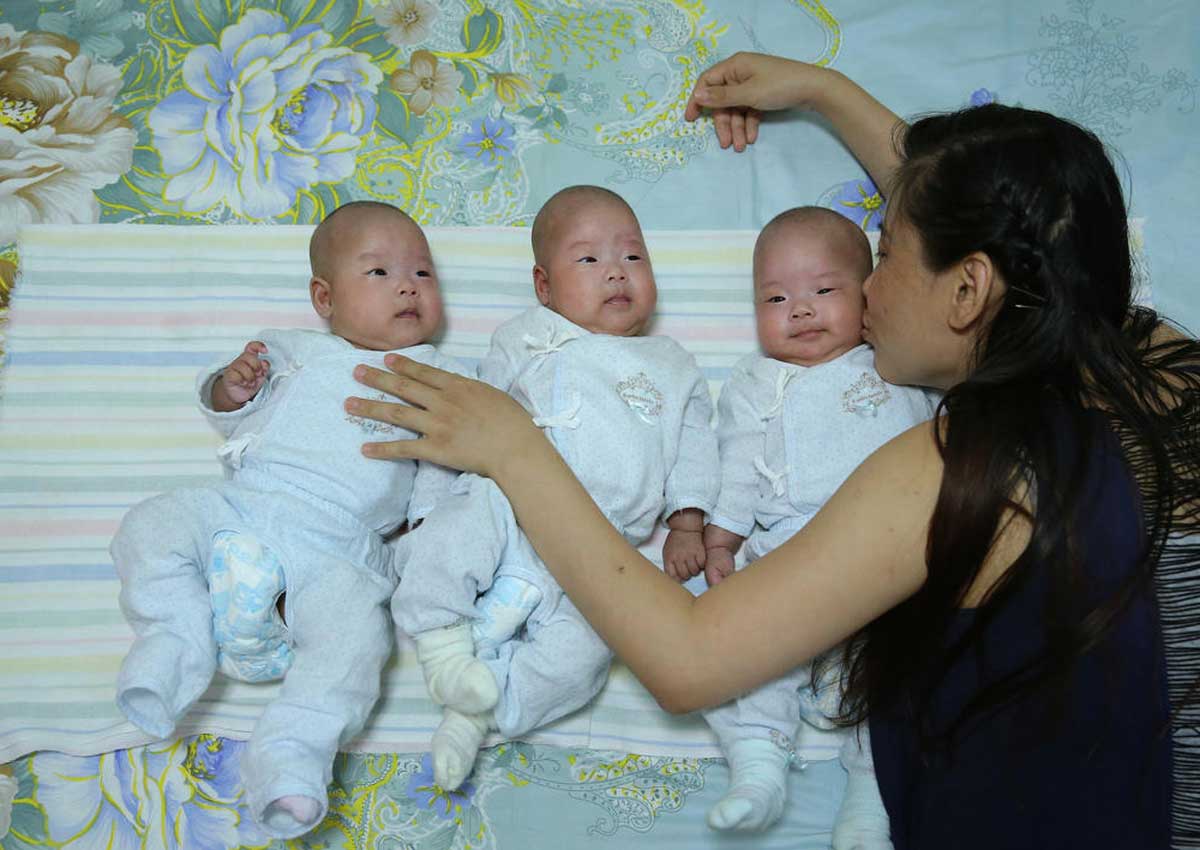
Chinese national Ning Lei, a 35-year-old who gave birth to triplets last year after her Singaporean husband walked out on the marriage, had to stay at a church friend’s home, for instance.
The three girls, who were stateless previously, were granted citizenship last month.
S’pore-born woman who has lived all her life here can’t get citizenship
Click on thumbnail to view photos. Source:
The Straits Times










Singaporean children from foreign spouses can benefit from government subsidies in aspects such as childcare, education and medical care, said a spokesman for the Ministry of Social and Family Development (MSF).
In 2014, 16.9 per cent of all babies, or 7,146 newborns, had a Singaporean father and a non-citizen mother, up from 15.6 in 2000. Malaysian mums top the list of foreign women who had babies with Singaporean men. There were 2,185 newborns from such unions in 2014.
Social workers say foreign wives who have Singaporean children and go to them for help can be referred to the Social Service Offices (SSOs) for Comcare financial aid.
“In addition to SSOs providing financial assistance to the family, we will also partner social workers from Family Service Centres and other community organisations to provide assistance should the foreign parent face other issues such as employment and caregiving,” said the MSF spokesman.
Said Mrs Ng: “If they have Singaporean children, there are schemes to help them but the issue is that some of them are not aware of their rights or do not know where to turn to.”
Ms Tan recalled a case where an Indonesian wife got help to treat her depression only after the school noticed that her child had behavioural issues and referred the family to the authorities. The Singaporean father left the family last year.
Aware does provide information on their rights and the divorce process here. But social workers have called for more to be done, with some suggesting that non-profit groups or government agencies should reach out to every foreign bride. Ms Esther Chia, ACMI’s executive director, suggested getting transnational couples to sign legally binding pre-nuptial contracts that outline the terms each party has to comply with should the marriages break down. Said Ms Chia: “Now, the playing field is not level.”
• Additional reporting by Aw Cheng Wei
This article was first published on April 10, 2016.
Get a copy of The Straits Times or go to straitstimes.com for more stories.
Image:
Publication Date:
Sunday, April 10, 2016 – 14:20
Keywords:
Send to mobile app:
Source:
Rotator Headline:
More foreign wives seek help after S'porean husbands leave, abuse them, land in jail or die
Story Type:
Others
Maid thankful for $63,000 raised for son
Almost two months ago, 10-year- old Dave Caba was wheeled into a hospital in Cebu, Philippines, for an operation to remove a potentially fatal tumour in his left leg.
His mother, Ms Mariza Canete, a Filipino maid who works in Singapore, said that when he awoke he exclaimed: “Yes! This is finally over.”
Although the nine-hour operation removed the tumour and replaced part of the bone with a metal implant, Dave is not entirely free of bone cancer.He has one more chemotherapy session to go, and months of physiotherapy ahead to help him walk again.
Just last Friday, his blood platelets fell dangerously low and he had to have a transfusion – his third since his previous chemotherapy session early last month.
But even to reach this point is a “blessing”, his mother said. “He is now much more cheerful, no longer moody,” said the 30-year-old, who has three children.
Dave, who turned 11 last month, even asked for the bone the doctors removed during the surgery. “He wanted to smash it with his hand because it had been causing him so much pain,” she said.
Her husband cares for him round the clock after quitting his painting job in Saudi Arabia.
Ms Canete said she is indebted to those who made Dave’s surgery and treatment possible. Over four months, nearly $63,000 was raised through two campaigns on American crowdfunding site Indiegogo’s charity platform Generosity.
It was started by Ms Canete’s employer, Ms Isabelle Claisse, and her friend, Mr Adam Reynolds.
The two women also raised over $30,000 by shaving their heads.
Speaking of her gratitude to donors, an emotional Ms Canete told The Sunday Times: “I do not know most of the people who have donated, but this is proof that there are a lot of good people in this world. I am so thankful and so blessed.”
Ms Claisse, 38, said the surgery cost over $16,000 and the implant around $38,000. It will be lengthened using electromagnets as Dave grows, so he will not need any more surgery. The money left will pay for the rest of his treatment.
Ms Claisse said she was “blown away” by the amount raised and the number of donors, especially those who remained anonymous.
“There were people donating four-figure sums in US dollars. It gave me a lot of hope for human nature and made me feel warm.”
samboh@sph.com.sg
Image:

Publication Date:
Sunday, April 10, 2016 – 16:00
Keywords:
Send to mobile app:
Source:
Story Type:
Others
More in S'pore using online platforms to raise funds
A campaign to help a baby born without part of her oesophagus to get specialist surgery in the United States has raised $1.2 million.
Another to get money for surgery for a maid’s young son afflicted by bone cancer has pulled in nearly $63,000.
Less than two weeks ago, a 46- year-old woman with a four-year- old son asked for help to support them financially as she battles ovarian cancer. Since then, she has raised nearly US$40,000 (S$ 54,000).
A campaign to raise money for the families of two SMRT trainees who died after being struck by a train last month has amassed $46,975.
The act of appealing to the kindness of strangers online has been catching on in Singapore, as more turn to sites such as Giveasia and Indiegogo – two of the more popular sites – to raise money for anything from medical treatment, education and even to fix a home razed by fire.
Giveasia, set up by National University of Singapore students in January 2010, has helped 50,000 people here and in Asia raise more than $9.25 million since going online.
Indiegogo has facilitated US$240 million in donations for social campaigns globally. Its social fund-raising arm, Generosity, which was set up last October, now hosts nearly 100 campaigns from Singapore.
Charities too have hopped on such platforms, which offer an easy way to extend their presence online.
“In 2010, we had 25 local charities. Now we have over 250,” said Give- asia co-founder Aseem Thakur, 29.
TTSH Community Fund, the charity arm of Tan Tock Seng Hospital, uses it as an extra platform to reach out to donors for funds to help needy patients with their bills.
TTSH Community Fund executive Deborah Wong said it decided to get on board the Giveasia platform as it offers donors an easy way to give – by using their credit cards – and also draws more eyeballs to its cause.
Last December, the National Volunteer and Philanthropy Centre launched Giving.sg, a one-stop crowdsourcing platform for local charities to appeal for funds. It currently hosts more than 380 causes.
Those who go to these crowdsourcing platforms to raise money instead of going to a charity say crowdfunding brings in more funds.
There is also less red tape. Anyone above the age of 13 – with supervision requirements in Indiegogo’s case – can create a campaign.
But the websites can shut down campaigns that violate guidelines, such as those involving illegal activities.
Giveasia charges a 2 per cent bank fee to process credit or debit card transactions. Generosity charges 3 per cent and 30 US cents on each donation to manage the fund transfer.
For 38-year-old corporate lawyer Isabelle Claisse, who launched a Generosity campaign to help her maid’s 11-year-old son, who had bone cancer and needed surgery, this meant an easier time collecting funds.
“I didn’t have to get people to send cheques or cash,” said the Briton.
Instead, the platform transferred the money to her personal bank account. “I then transfer that money to the hospital,” said Ms Claisse, who has been posting updates on how the money has been used.
Such accountability is critical for a successful campaign, and also helps the public feel more connected to the campaign.
Charity rules here require fund- raisers to keep a record of what has been received and how it is disbursed. And the Office of the Commissioner of Charities advises donors to be cautious and give to individuals or organisations they know.
A spokesman for Generosity told The Sunday Times what makes a successful campaign. “It’s important to start with a personal story, tell the world who you are so they can feel connected. Explain why you care about what you’re doing. Focus on the resources you need, and what your impact will be.
“Transparency will build trust with your contributors.”
kxinghui@sph.com.sg
samboh@sph.com.sg
This article was first published on April 10, 2016.
Get a copy of The Straits Times or go to straitstimes.com for more stories.
Image:

Publication Date:
Sunday, April 10, 2016 – 16:00
Send to mobile app:
Source:
Story Type:
Others
'When I die, I want someone to know'
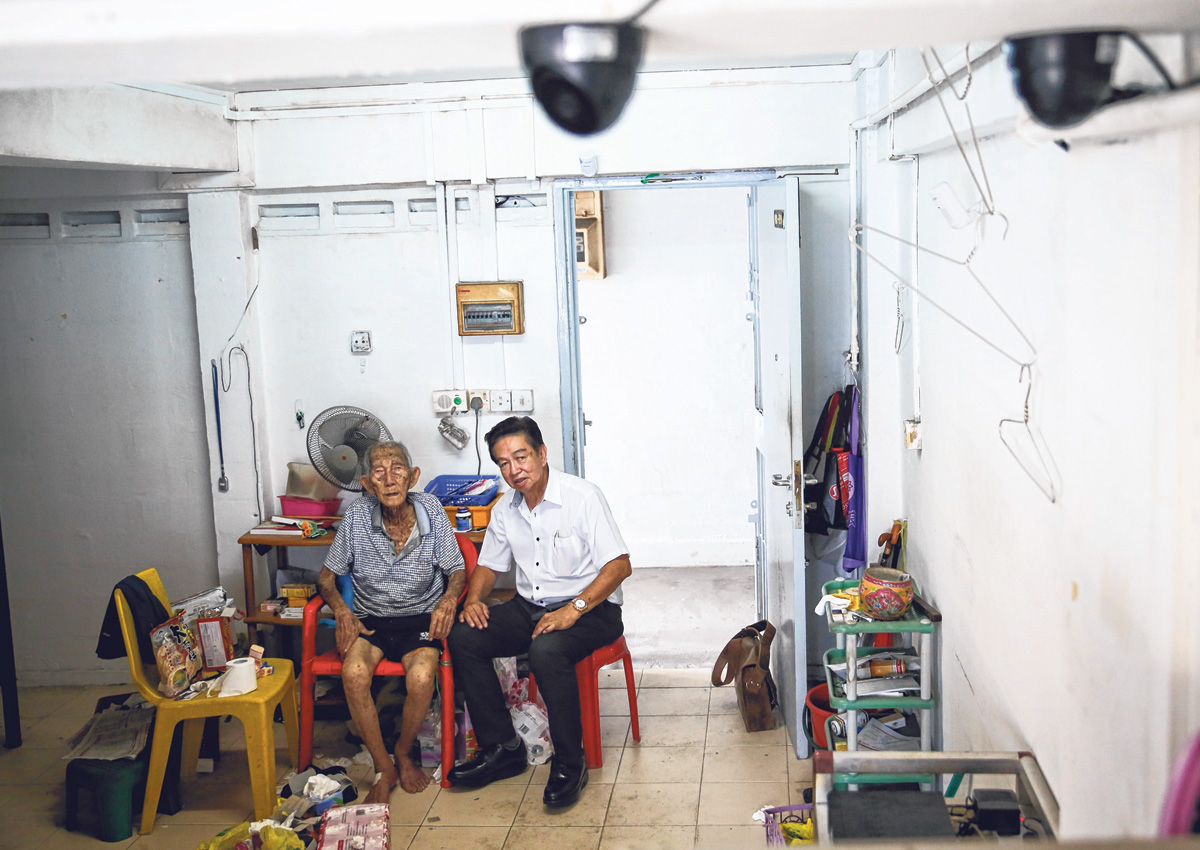
Eighty-five-year-old Mr Wee Yok Tai has lived in the same one-room flat in King George’s Avenue for 30 years and is terrified that he will die alone in it.
The retired cleaner has no family and lives by himself in the spartan rental unit. He counts among his possessions a worn mattress, an empty fridge and two CCTV cameras on the ceiling.
They were installed about a year ago by undertaker Roland Tay, who came up with the unusual idea when Mr Wee asked him for help.
Mr Tay paid $1,000 for the equipment and monitors live footage from it at least three times a day using his mobile phone to check that Mr Wee is all right. Should anything happen, he will head over to help.
“I am alone, and there is no one to take care of me,” Mr Wee said in Hokkien. “Two of my neighbours died and people found out only because of the smell. I don’t want the same thing to happen to me.”
Mr Tay, known for arranging free funerals for murder victims and the needy, suggested setting up a CCTV network, with one camera monitoring the bed and the other the outside of the toilet.
“I could visit him every two or three days instead, but if something happened, it would be too late already,” said Mr Tay, who still makes it a point to visit Mr Wee every few weeks.
Privacy concerns are the least of the octogenarian’s worries.
“I see (Mr Tay) as a friend. I’m in my old age already, and when I die, I want someone to know,” said Mr Wee, who got to know Mr Tay through friends.
Mr Wee has severe arthritis and cannot walk without using a cane. The pain means he spends much of his day seated on a plastic stool in the middle of the room.
“Every day, I sit here and then I sleep, I just don’t want to fall down,” said Mr Wee, who fears that such an accident could kill him. The bachelor’s fear highlights a very real concern elderly residents living alone here face, a problem that social workers say will only get worse as society ages.
According to the General Household Survey released last month, the proportion of households comprising only residents aged 65 or older stood at 82,600, or 6.7 per cent of all households. About half of this number, or 41,200, is made up of residents who live alone.The Government estimates that by 2030, this number will hit 83,000.
Health concerns aside, social workers say dying with dignity is one of the foremost concerns on the minds of these elderly folk.
“Who is going to take care of their funeral matters when they are gone? This is one of their main concerns,” said Mr Desmond Chee, centre manager of eldercare centre Xin Yuan Community Care, a Toa Payoh-based centre which arranges funerals for elderly residents.
Mr Chee points out that although he tells his social workers and children of elderly parents to keep tabs on their charges, the reality is they cannot be there all the time. “Let’s say you have a son who visits his father every Sunday. If something happens to the father on Monday, by the time the son finds out, six days would have passed,” said Mr Chee.
He encourages children who have elderly parents who live alone to install either CCTV cameras or some form of elderly monitoring system in their homes.
Some voluntary welfare organisations, such as the Lions Befrienders, have done just that. Since 2010, it has installed elderly monitoring systems in 500 homes.
Lions Befrienders executive director Chey Chor Khoon said the system combines an alarm that seniors can activate and motion sensors that detect changes in usual movement or rest patterns. An SMS alert is automatically sent to a relative or volunteer befriender when there is a change in the normal patterns.
“We have encountered incidents of seniors who press the emergency button when they fall and cannot get up,” said Dr Chey.
Security companies say they have noticed more inquiries from people who want CCTV systems set up to monitor their aged parents.
Mr Marcus Tan, managing director of security company Eurekaplus, said that over the last two to three years, he has received between five and 10 inquiries a month.
About 30 per cent go on to eventually install these systems, which can cost upwards of $600.
They do this for peace of mind, said Mr Tan.
“Ultimately, what price is your parents’ well-being worth?”
Mr Tay has agreed to handle Mr Wee’s future funeral for free.
Asked if he would go on to help other elderly folk, he said: “As long as people come to me, I will see what I can do to help.”
dansonc@sph.com.sg
This article was first published on April 10, 2016.
Get a copy of The Straits Times or go to straitstimes.com for more stories.
Image:
Publication Date:
Sunday, April 10, 2016 – 16:00
Keywords:
Send to mobile app:
Source:
Story Type:
Others
Car breaches police roadblock leading to 4-vehicle accident
A 27 year-old driver and his passenger have been arrested for traffic and drug-related offences after the car they were in failed to stop at a police roadblock. The ensuing pursuit ended in a four-vehicle accident.
Source link
Allure of paid sex for teenage boys
Never having had a girlfriend, or one who is sexually active, and watching pornography frequently are the two strongest reasons why teenage boys turn to prostitutes, according to the first study here on teens who pay for sex.
Other reasons that some boys are more likely than others to visit prostitutes include the fact that they started having sex before the age of 16, said Associate Professor Wong Mee Lian of the Saw Swee Hock School of Public Health at the National University of Singapore, who led the study.
They could have reached puberty earlier and tend to have older friends who exposed them to behaviour that included smoking, drinking and sex with prostitutes, she said.
Another factor is that these teens have lower self-esteem.
“These boys want to feel accepted and want to boost their ego. They may not have a girlfriend to boast of, but they can pay to ‘conquer’ a prostitute,” she added.
Her study found that educational background or the type of home the family lived in was not a factor in whether a boy was more likely to go to a prostitute.
Prof Wong and PhD student Junice Ng studied 300 heterosexual boys aged between 16 and 19 who visited the Department of Sexually Transmitted Infections Control (DSC) Clinic between 2009 and 2014. The government clinic focuses on the treatment of sexually transmitted infections (STI).
The researchers noticed that more young patients at the DSC clinic said that they have had sex with a prostitute in recent years.
So, they decided to find out more.
Their research, published in the science and medical journal PLOS One in January, found that 39 per cent of the boys polled said they had sex with prostitutes – a figure that Prof Wong described as high.
According to the study, of the boys who visited prostitutes:
– The median age was 16.
– It was the first sexual experience for 38 per cent of them.
– They had a median number of 4.5 sexual partners, including girlfriends or casual friends they slept with, by the time they were interviewed by Prof Wong’s team.
– 30 per cent did not use a condom consistently, that is, each time they had sex with a prostitute.
– 42 per cent were diagnosed with an STI, but none was infected with the Human Immunodeficiency Virus (HIV) that causes Aids.
– Those who did not use condoms consistently were a lot more likely to be diagnosed with an STI.
Hundreds of local men fell for sex scams and lost thousands
Click on thumbnail to view photos. Source:
The New Paper, Internet screengrabs, Lianhe Wanbao, Stomp



























Prof Wong said the teens’ multiple partners and inconsistent condom use are a concern. They could be infected with an STI and pass it on to their girlfriends or others they have sex with.
Doctors and social workers said peer influence and pressure, plus curiosity about sex or a desire to be seen as sexually experienced, are also reasons why the teens turn to paid sex. Prof Wong said: “The boys say their friends dare or urge them to go to a sex worker to initiate them into manhood.”
Those interviewed said national service is one stage in life where many young men get introduced to paid sex by their more sexually experienced mates. Take, for example, full-time national serviceman Raymond (not his real name), who had his first sexual encounter with a prostitute last year when he was 18.
“My army mates talk openly about their sexual experiences and visiting prostitutes. And if you have nothing to share, they tease you,” the 19-year-old said. “I was a bit embarrassed (about being a virgin) and I wanted to fit in.” His army mates took him to Geylang and his sex jaunts continued until he was diagnosed with gonorrhoea recently.
Doctors and social workers interviewed are concerned by the high proportion of teens who went to prostitutes. They believe this is because of the proliferation of online sex sites and forums.
Besides Singapore, some boys also visited prostitutes in neighbouring Johor Baru, Batam and Bangkok, the study found.
Adrian (not his real name), a 21-year-old, has had sex with prostitutes while holidaying in Bangkok. His friends took him to a Geylang brothel and paid for his first sexual encounter when he was 14 or 15.
He has friends who go to Johor Baru regularly to “have fun, as everything from food to prostitutes” is cheaper there.
Adrian, who is waiting to enter polytechnic and says he has stopped visiting prostitutes, added: “The holidays are to chill and to drink, not specifically to have sex. But when it’s all boys going on holiday, sex somehow becomes part of the package.”
This article was first published on April 10, 2016.
Get a copy of The Straits Times or go to straitstimes.com for more stories.
Image:

Publication Date:
Sunday, April 10, 2016 – 14:00
Keywords:
Send to mobile app:
Source:
Rotator Headline:
Nearly 2 in 5 teenage boys have paid for sex with prostitutes: Study
Rotator Image:

Story Type:
Others


