Home Blog Page 4265

More parks to save shy monkey from extinction

0

The shy, gentle banded leaf monkey may be able to claw its way back from the brink of extinction here, with some help from the experts.

The authorities are expanding the primates’ living quarters, and studying their behaviour and population, in an effort to boost their numbers. One of two monkey species native to Singapore, these creatures are critically endangered, with at most 60 of the black and white leaf-eaters left. Unlike their gregarious cousins – the long-tailed macaques – they stay hidden deep in Singapore’s forests, away from people and human homes.

Part of the effort to save them involves habitat expansion, said the National Parks Board (NParks).

“The provision of additional forested habitats, in the form of new nature parks, would help to sustain and possibly increase the population of banded leaf monkeys,” Dr Lena Chan, director of NParks’ National Biodiversity Centre, said.

One such park, the upcoming Thomson Nature Park next to Lower Peirce Reservoir in the Central Catchment Nature Reserve, is especially important, said Ms Andie Ang, 30, who studies banded leaf monkeys and is a member of the primate specialist group of the International Union for Conservation of Nature.

It lies within the area where these monkeys forage for food, so reforestation will enhance their existing habitat, explained Ms Ang, who is pursuing a PhD in biological anthropology at the University of Colorado, Boulder, in the United States.

“The monkeys are now restricted to the Central Catchment Nature Reserve and could easily be wiped out in the event of a fire or a disease outbreak,” she pointed out.

In addition to habitat enhancement, which includes planting trees that provide food for the monkeys, it is also vital to ensure that forest fragments separated by roads are reconnected, she stressed.

Forest canopy connectivity, especially above the Old Upper Thomson Road next to the Thomson Nature Park, will be crucial for the dispersal of the monkeys into nearby forest patches, said Ms Ang.

Thomson Nature Park is one of four announced by NParks in February last year. The others are Chestnut, Windsor and Springleaf nature parks.

Springleaf and Chestnut parks are already open to the public, and Windsor is expected to open later this year. There is no timeline yet for the Thomson park.

Ms Ang said: “It is wonderful to hear about the nature parks. They will not only protect the biodiversity but also bring people closer to nature.”

However, she cautioned that the parks must be well designed so a balance can be struck between public accessibility and nature protection.

Dr Chan added that NParks will also work with stakeholders in developing ecological studies to guide the development of long-term management strategies for the banded leaf monkeys.

There is reason to be optimistic, and NParks has already successfully championed several other disappearing species.

The tiger orchid, which went extinct here in the wild, is one such example. The world’s largest tree-growing orchid, it was re-introduced to the island in 1999 and can now be found along Holland Road and East Coast Park.


This article was first published on April 11, 2016.
Get a copy of The Straits Times or go to straitstimes.com for more stories.
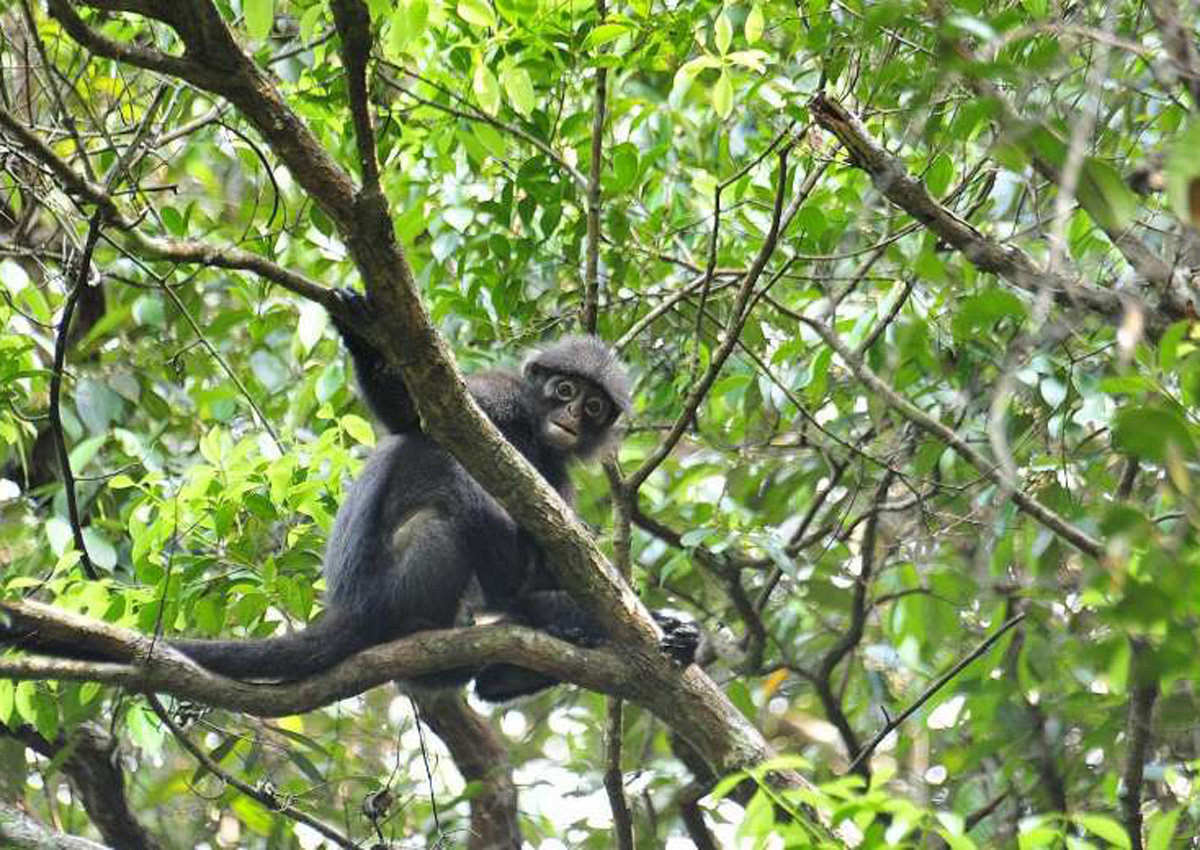

Image: 
Category: 
Publication Date: 
Monday, April 11, 2016 – 08:32
Send to mobile app: 
Source: 


Story Type: 
Others

Source link

App way to learn about 2 HDB towns

0

Residents of Bedok and Punggol will have a new mobile app to help them discover more about their towns by the middle of this year.

The Housing Board (HDB) said it is developing the app to encourage community cohesion. If response is good, it might be extended to other HDB towns.

The app will come with games and quizzes, through which users can learn about the landmarks and history of their towns, said the HDB. The free app will be available for Android and iOS devices.

According to tender documents on government procurement website GeBiz, the app will support functions such as photo-taking, video and audio recording, and playbacks. It can be used in two modes: a learning self-guided journey trail and a competitive race trail.

The self-guided option will include at least 25 hot spots and 10 games and quizzes.

The other mode will come with a time-tracking function, allowing users to form competing teams and race against one another to complete tasks at at least 10 different stations. Points will be awarded for each station and results of the race can be shared on social media and via e-mail.

An HDB spokesman said: “This is part of our larger effort of building active and cohesive communities.”

She added that Bedok and Punggol were chosen as pilots for the app as they are among the towns undergoing the Remaking Our Heartland programme.

The HDB scheme, started in 2007, aims to spruce up public housing estates through new facilities.

Other towns under this programme include Dawson, Yishun, Hougang, Jurong Lake, Toa Payoh, Woodlands and Pasir Ris.

The upcoming app is similar to HDB’s SG Heart Map Tours. Launched last year, the mobile app’s themed trails allow the public to learn about facets of Singapore, such as its parks and food.

Graduate researcher and Bedok resident Joy Goh-Mah, 27, described the new app as a “cool concept”. She hopes it will help her pick up knowledge on sites that she is not familiar with. “Too often, we focus so much on what there is to do in town that we miss what’s happening at our doorstep,” she said.

MP for Pasir Ris-Punggol GRC Sun Xueling said she hopes the new app will include a mix of nature, and historical and lifestyle spots.

“The app will be an engaging way for young residents in Punggol to learn more about their town. Hopefully, this will bring to life and give meaning to their surroundings and increase their attachment to Punggol,” said Ms Sun.


This article was first published on April 11, 2016.
Get a copy of The Straits Times or go to straitstimes.com for more stories.
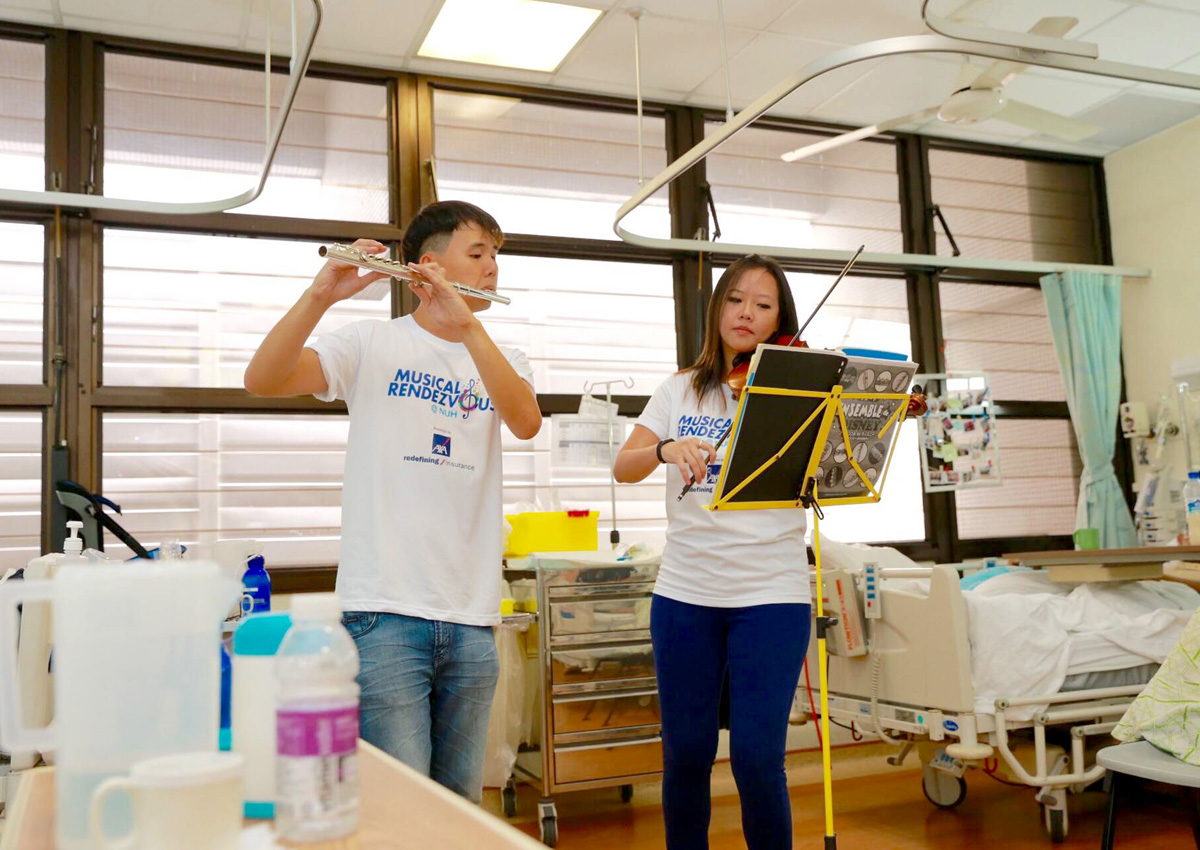
Image: 
Category: 
Publication Date: 
Monday, April 11, 2016 – 08:22
Keywords: 
Send to mobile app: 
Source: 


Story Type: 
Others

Source link

Chorus of support for music in hospitals

0

MUSIC lifts the spirits, which is why hospitals here are putting up free performances for patients, staff and visitors. The National University Hospital (NUH), for example, is increasing the frequency of its programme – where musical groups play up the healing touch at lunchtime concerts – from a monthly to a weekly basis.

The hospital marked the first anniversary of its Musical Rendezvous programme on Wednesday with a concert that included appearances by jazz maestro Jeremy Monteiro, Malay music ensemble Sri Mahligai and the Mayflower Primary School Guzheng Ensemble.

NUH patient Esther Lee, 46, said she enjoyed the music as it “injects life into the ward”.

“Hopefully, the musicians can play more songs next time. It’s nice to have such performances every week,” she added.

Musicians will perform at NUH wards from 2pm to 3pm every Wednesday throughout the year, with concerts in the NUH Lobby B held monthly.

Over at the Changi General Hospital, Lim Ee Guan, director of corporate affairs, said it started a Caring Arts programme last year to “help create a more pleasant, healing environment for patients and visitors” through bi-monthly song, dance or art performances and displays.

At Khoo Teck Puat Hospital (KTPH), pupils from Greenwood Primary School have been performing quarterly at the main lobby since 2014.

Performances range from singing and dance items to even rope skipping.

KTPH also has professional performers and groups visit the hospital to play for patients and staff.

For example, the Singapore Chinese Orchestra will be at the hospital’s main lobby at 12.30pm on April 20.

A KTPH spokesman said such performances are generally well-received.

“The older patients particularly enjoy hearing music from the olden days,” she added.

Being out of bed helps patients to be more mobile and aids in their recovery, she said.

At Alexandra Hospital, staff with musical backgrounds perform for patients regularly, on top of visiting musicians and community bands.

A brass quintet from Yong Siew Toh Conservatory of Music performed there last Saturday and on Friday.

The arts programme at KK Women’s and Children’s Hospital (KKH) involves not just patients and staff but also the community, which is welcome to showcase their talents.

Under the Arts@KKH programme, started in November 2011, performances are held monthly, with 51 completed to date, involving some 1,900 participants from performing arts groups and schools.

Singapore General Hospital’s Arts For Health programme has seen more than 300 concerts staged for more than 10,000 patients, staff and visitors.

These are usually held on the last Friday of each month at the SGH quad.

Local flautist Sin Jin How, who performs for patients and was at NUH’s concert on Wednesday, said he hopes his music brings joy to patients.

“Every time I play for them, I feel like tearing up. It is a reminder of how fragile life is and we should really treasure our time with our loved ones,” he added.

lydialam@sph.com.sg

Category: 
Publication Date: 
Monday, April 11, 2016 – 08:01
Keywords: 
Send to mobile app: 
Source: 


Rotator Headline: 
Local hospitals putting up free musical performances to lift patients' spirits
Rotator Image: 
Story Type: 
Others

Source link

Rats! They have become smarter

0

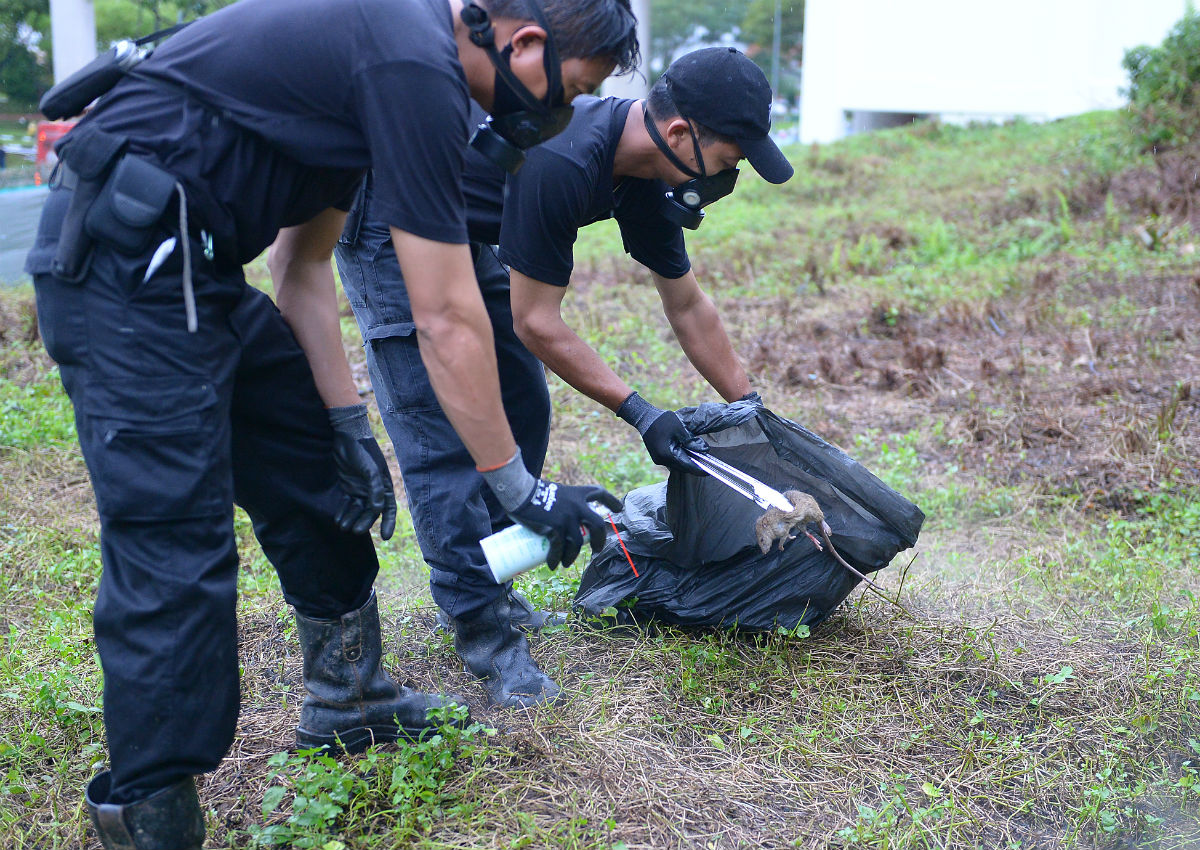
THE rats have evolved but the humans have not, it seems. And that is why the wily rodents plaguing homes and businesses here show no signs of being suppressed but pest busters are not complaining.

“Rodents are very intelligent, very adaptable. They learn to avoid traps, which poses a huge problem,” said director of Origin Exterminators Deanne Ong.

“Unfortunately, many companies are using techniques from the 1990s.”

Exterminators here said common industry practices for rodent management – such as using cages and glue boards to catch rats – have not caught up with evolving rodent behaviour.

Using data to study rats’ movements and their colonies is the way forward, rather than taking a wait-and-see approach which can be labour-driven.

“Using same old trap methods will not work on such an intelligent pest. Pest managers and building owners should look at gathering real-time data using sensors that then dictates how traps are placed,” said Mrs Ong.

“It should be a long-term effort, not project-based approach that building managers are currently taking.”

In addition, those who hire exterminators also tend to deal with the problem after it surfaces, rather than preventing it from the outset through good hygiene practices, for example.

Mrs Ong said: “When they have an infestation and are under pressure to take action from complaints from users, this shows a reactive mindset to the problem.

“This is unfortunately still the industry norm,” she added.

The result: The National Environment Agency recorded 68 per cent more rat-related complaints last year, up from around 4,000 in 2014.

Horror stories have come thick and fast.

Last month, rats re-emerged in Bukit Batok, a year after extensive efforts to wipe them out.

Over at Punggol’s Waterway Point shopping centre, a diner complained that a rat had fallen from the ceiling above her while she was waiting for her meal on March 23.

It is understood that 56 rats were caught at a Chinese restaurant in Orchard Road between January and February this year.

Said PestBusters founder Thomas Fernandez: “Rats are really prevalent everywhere.

“All the shopping centres in Singapore, they have a huge problem.”

Mr Fernandez’s firm received 1,563 inquiries last year – 55 per cent more than in 2014.

For pest control company Rentokil Initial Singapore, sales from rodent infestation increased 18 per cent in the first quarter of this year compared to the same period last year.

While rat infestations are not easy to stamp out, good sanitation is a critical part of the equation, said Junie Yeo, the company’s marketing director.

New buildings can also adopt a rodent-proof design, she added, noting that a 1-cm aperture is all that a rat needs to squeeze into a space.

To get to the root of the problem, pest control companies advise owners to run a thorough “pest check” on a new building before handing it over to tenants.

This includes checking false ceilings, electrical risers and pipings, which are used by rodents to get around.

Added Mr Fernandez: “It is a whole ecosystem because it is all integrated.

“Everybody has a role to play.”

kchitra@sph.com.sg

Image: 
Category: 
Publication Date: 
Monday, April 11, 2016 – 07:56
Keywords: 
Send to mobile app: 
Source: 


Story Type: 
Others

Source link

Sherman Kwek named Deputy CEO of CDL

0

Mr Sherman Kwek is the son of CDL executive chairman Kwek Leng Beng. Prior to this appointment, he was the company’s Chief Investment Officer for two years. 

Source link

ST Now, News As It Happens – April 11, 2016

0

April 11, 2016 6:50 AM

Welcome to ST Now, News As It Happens.  We will keep you updated on the latest happenings in Singapore and beyond. If there is something you want to share with us, please drop us a note via email at stshare@sph.com.sg or reach us on Facebook and Twitter @STcom.  Here’s a recap of what happened earlier.


Source link

Her daughter set flat on fire

0

She used to dread school holidays.

This is because Madam Suputhra Devi Rengasamy has to leave her 10-year-old daughter alone at home.

“I am always scared that something bad will happen to her,” said Madam Devi, 43….

Source link

Fab Four behind Leicester's title charge, says Richard Buxton

0

SUNDERLAND 0

LEICESTER CITY 2

(Jamie Vardy 66, 90+5)

Tantalisingly, the English Premier League title is within touching distance for Leicester City.

Barring a calamitous…

Source link

They get $100 KFC vouchers for tip-offs

0

It was an anonymous tip-off that led to a front page story.

Two weeks ago, The New Paper was informed that well-known local model and club DJ Tenashar and her boyfriend, Mr Thorsten Nolte, were on the run over drug-related…

Source link