Home Blog Page 4252

More govt e-services for S'poreans, platform to help firms share data

0

Singaporeans will soon be able to access more government services online and on their mobile devices while at home or on the go.

Companies will also find it easier to do business with ministries and agencies as they share more data with each other and cut through red tape. Senior Minister of State Sim Ann, in outlining these coming changes, said at least six agencies will go paperless and, by 2020, most of their records and operations will be digitised.

The six are: Immigration and Checkpoints Authority (ICA), Inland Revenue Authority of Singapore (Iras), Ministry of Manpower, Supreme Court, State Courts and Vital, which is the Government’s shared services centre.

With the move to digital, users of ICA’s services need to submit supporting documents only once, instead of doing it each time they apply, said Ms Sim as she wrapped up yesterday’s debate on the budget of the Ministry of Finance.

She also said the Government’s digital drive is bearing fruit.

Taxpayers spend less time filing their taxes because of electronic tax-filing and no-filing schemes.

Employers can also renew their foreign domestic worker permits online themselves, instead of going through an agent.

As for businesses, the upcoming National Trade Platform will provide software tools to help them digitise their documents or information.

This will help bosses share their business data with the Government and business partners, a move that will allow them to plan their operations better.

Ms Sim also assured MPs such as Ms Sun Xueling (Pasir Ris-Punggol GRC) and Ms Cheryl Chan (Fengshan) that seniors unfamiliar with technology will not be left behind.

She said the 26 Citizen Connect Centres, used by 120,000 Singaporeans last year, will be upgraded.

These centres are kiosks with mobile tablets featuring touch screen interfaces that are less cumbersome and easier for the elderly to use.

Some kiosks will be height-adjustable for wheelchair users.

The home pages of the tablets will also be redesigned for users to access swiftly the most commonly used services, such as checking their Central Provident Fund accounts and personal tax statements.

Bridging the digital divide was addressed later by Minister of State Janil Puthucheary as well, during the debate on the Ministry of Communications and Information’s budget.

“We must ensure that no segment of the community is excluded from computer and Internet connectivity, especially low-income households, the elderly, and people with special needs,” he said.

He added: “Getting people online is only the start. Serving them online is just as important.”

During the Finance Ministry debate, some MPs also urged the Government to make it easier for small companies to comply with regulations, or to win government contracts.

Mr Saktiandi Supaat (Bishan-Toa Payoh GRC) said business owners had complained to him that their grant applications had been rejected multiple times because of inadequate information.

Replying, Senior Minister of State for Finance Indranee Rajah said the Government continually reviews the appropriate level of documents and information needed for grant applications.

It will also help promising start-ups with good products but no track record compete, she added.

charyong@sph.com.sg


This article was first published on April 12, 2016.
Get a copy of The Straits Times or go to straitstimes.com for more stories.

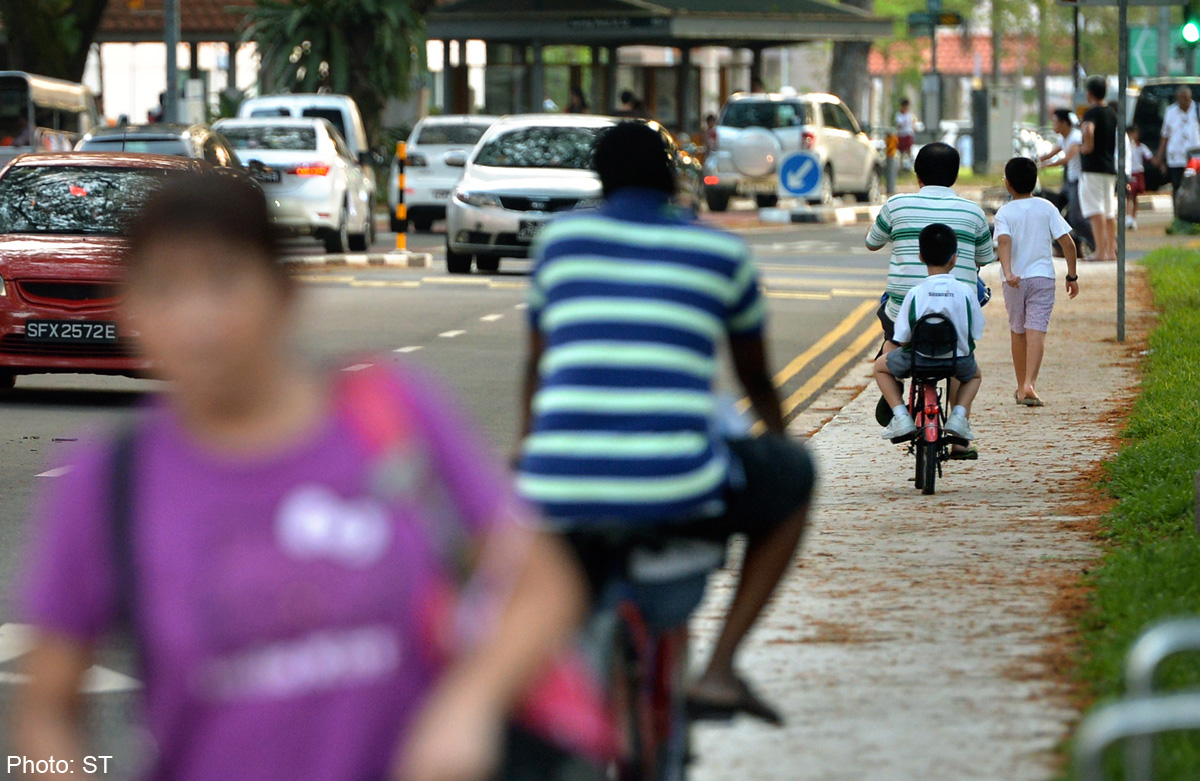
Image: 
Category: 
Publication Date: 
Tuesday, April 12, 2016 – 10:43
Keywords: 
Send to mobile app: 
Source: 


Story Type: 
Others

Source link

Stepping up car-lite strategy a boost for cyclists, pedestrians

0

Singapore’s car-lite strategy will be stepped up in a big way, with more measures planned to wean drivers off cars, said National Development Minister Lawrence Wong in Parliament yesterday.

First, developers will be required to incorporate the needs of pedestrians and cyclists upfront in their development plans.

Second, seamless cycling routes to the Central Business District (CBD) could also be built from six housing estates that are within a 30-minute cycling distance to the city.

Third, the Government may even raise carpark charges to manage the use of cars.

These measures were unveiled yesterday in Parliament.

Mr Wong said the Land Transport Authority and Urban Redevelopment Authority would be incorporating these new building requirements for developers. Developers will have to review the locations of bicycle parking facilities and their vehicular access points. They will have to take into account key pedestrian and cyclist access routes to minimise conflict among users, he said.

He added that these were critical for developments with high footfall, such as schools, shopping malls, office buildings and business parks.

“Through these requirements, we will ensure that our built environment is more conducive for pedestrians and cyclists,” he said.

This was a concern raised by various MPs. Ang Mo Kio GRC MP Darryl David also said dedicated cycling routes should be built to connect housing estates to the city.

Mr Wong said the Government was looking at six such routes – from Bishan, Geylang, Marine Parade, Hougang, the Bukit Timah or Central area, and Queenstown.

These areas are within a 30-minute cycling distance to the CBD, and many are already linked by park connectors to the city. But Mr Wong noted that these routes were not seamless, and there were gaps along the way that would be plugged.

By doing so, people would be able to “get to their workplaces without having to drive”.

Bishan-Toa Payoh GRC MP Saktiandi Supaat, Nee Soon GRC MP Louis Ng and Mr David also asked if more was being done to improve connectivity for cyclists and pedestrians within new and mature housing estates.

“The ideal scenario for such new towns would be entire vehicle-free zones where residents can walk, cycle and scoot as they go about their activities,” said Mr David.

Mr Wong said within HDB estates, there would be more paths set aside for active mobility that would boost “first mile, last mile connectivity to MRT stations”.

For instance, a 14km cycling network would be completed in Bedok next year.

Within the CBD, pedestrian sidewalks would be widened and dedicated cycling paths built to connect cyclists to major office developments, said Mr Wong.

Mountbatten MP Lim Biow Chuan asked if commercial vehicles could be allowed to park for free at night at under-utilised carparks such as those at sports stadiums.

Mr Wong said carpark charges here were already lower than those in other cities and the Government would not lower parking charges or make them free.

In fact, it may have to do the reverse and raise charges as Singapore becomes car-lite, he said.

“Free parking is not really free, free parking is a subsidy to the motorist, paid for by non-motorists,” he said.

dansonc@sph.com.sg


This article was first published on April 12, 2016.
Get a copy of The Straits Times or go to straitstimes.com for more stories.
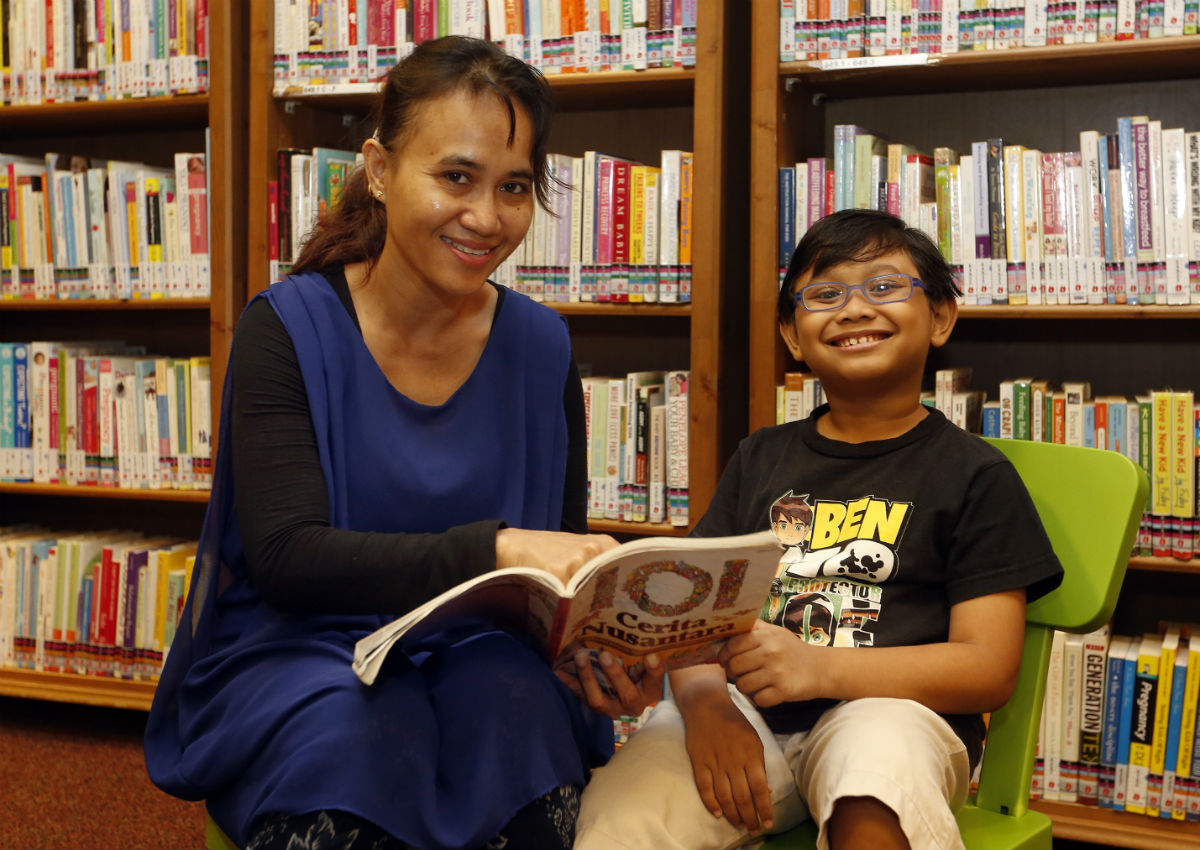
Image: 
Category: 
Publication Date: 
Tuesday, April 12, 2016 – 10:43
Send to mobile app: 
Source: 


Story Type: 
Others

Source link

Committee of Supply debate: Big push to kindle love of reading

0

From bringing specially curated reading materials to offices to transforming an MRT train into a mobile digital library, the National Library Board (NLB) is going all out to get more people to read.

It is starting a National Reading Movement and, on July 30, will mark Singapore’s first National Reading Day. It will also conduct a nationwide survey on reading habits to better understand how to promote reading.

The push comes amid survey results that paint a sobering picture of reading habits here.

Only 44 per cent of respondents in a year-long National Arts Council survey that ended last year had read at least one “literary book”. And only half of Singapore residents had used library services in the past year, an NLB survey last July found.

Minister for Communications and Information Yaacob Ibrahim told Parliament yesterday that the NLB will focus on three priorities for a start: reaching out to new audiences, encouraging reading in the mother tongue languages, and expanding its network of partners to better court readers.

Adults are among those the NLB hopes to get on board, he said. Work commitments might leave them with less time to pick up a book, so the NLB is looking to “bring books to (them), instead of merely encouraging people to come to the books”.

It plans to create more opportunities for reading while on the move and in offices. For one thing, it is looking at curating and pushing out short articles for commuters to access on mobile devices. Later this year, the NLB and the Land Transport Authority will launch a library-themed MRT train, “which not only takes you to the libraries, but will also function as a library”, said Dr Yaacob.

Users can scan QR codes with their mobile devices to download e-books over the NLB mobile app, or access content like short essays.

Under a new Read@Work programme, the NLB will also partner firms to curate reading materials tailored to the companies, such as on industry trends or common management topics, and even short pieces of fiction.

It is also reaching out to seniors, a group the survey identified as the least frequent library user. Only 24 per cent of those aged 60 and above visit public libraries while less than 20 per cent borrow library materials.

The NLB plans to expand its range of reading programmes for seniors, and take books to those who may not be able to go to the library. It will start book clubs and set up more reading corners at community spaces, doubling outreach to senior activity centres by 2020.

On efforts to encourage reading in Chinese, Malay and Tamil, Dr Yaacob said the NLB will double the number of mother tongue language reading clubs from the current five to a total of 10 by this year.

The NLB is also assembling teams of advisers to provide recommendations on Chinese, Malay and Tamil collections and reading programmes at the libraries.

Since he joined Malay-language book club Kelab Membaca Wira Pintar at Tampines Regional Library, eight-year-old Dhiya Durrani Ashraf Adri has picked up Malay words that stun even his parents.

His mother, part-time pharmacist assistant Siti Sapura, 46, said: “Instead of using simpler words, he goes for more difficult words. One day, my husband called me to ask: ‘Have you heard our son speak Malay? Where is he learning all these words?'”

To kick-start the National Reading Movement, a two-month campaign to get people to pledge to read will run this June and July, culminating in the inaugural National Reading Day on July 30.

“We hope to focus the nation’s attention on reading, and to encourage busy Singaporeans to set aside time to read by creating opportunities for people to read together,” said Dr Yaacob.


This article was first published on April 12, 2016.
Get a copy of The Straits Times or go to straitstimes.com for more stories.
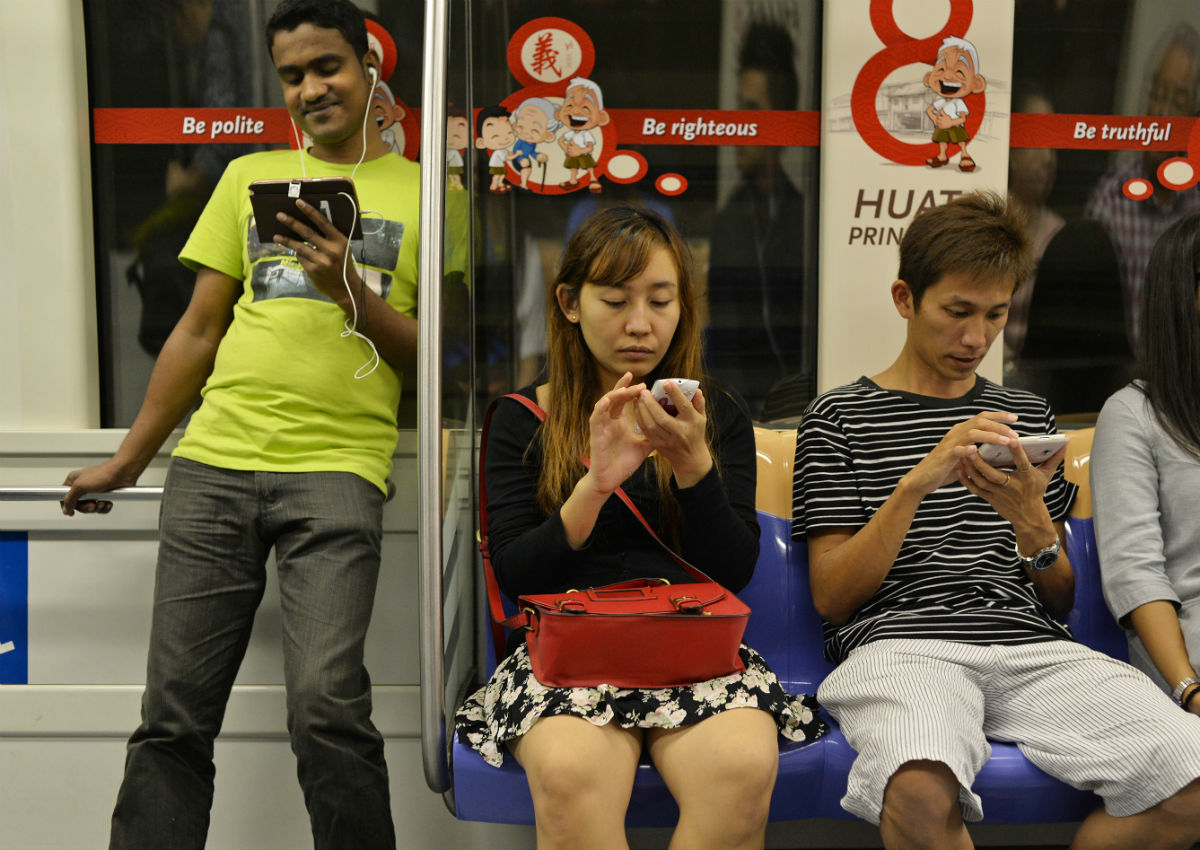
Image: 
Category: 
Publication Date: 
Tuesday, April 12, 2016 – 11:04
Send to mobile app: 
Source: 


Story Type: 
Others

Source link

M1, SMRT launch trial of free WiFi service on 2 buses

0

The trial will start with two buses on service 176, a trunk route service linking Bukit Merah Interchange and Bukit Panjang Temporary Bus Park.

Source link

Wireless@SG: 5Mbps speed by year end

0

Surfing speeds on Singapore’s free public Wi-Fi service Wireless@SG will be more than doubled to 5Mbps by the end of this year, as the Government sees the network as a key enabler of Singapore’s Smart Nation vision.

The number of Wireless@SG hot spots will also be doubled to 20,000 by 2018 to better complement telcos’ 4G networks in meeting consumers’ rising demand for mobile broadband.

“We must build first-class infrastructure for pervasive, seamless and high-speed connectivity to benefit citizens and businesses,” Minister of State for Communications and Information Janil Puthucheary said, in announcing the upgrades in Parliament yesterday.

At 5Mbps, the new Wireless@SG will be slightly faster than the average 3G connection in Singapore. The Infocomm Development Authority found that median 3G download speeds reached 4Mbps from July to December last year.

But median 4G download speeds are four to five times faster, ranging from 16.7 Mbps to 18.6 Mbps.

Some MPs had asked if there were plans to improve the surfing speeds of Wireless@SG, with Mr Zaqy Mohamad (Chua Chu Kang GRC) saying: “Today’s…speeds are slower in performance than what our 4G mobile networks provide.”

Addressing this, Dr Janil said that Wireless@SG’s current speed is already faster than most public Wi-Fi services around the world. But because demand is increasing, there is a need to boost current speeds.

Singapore will also have the highest hot spot density in the world, calculated by the number of hot spots per inhabitant. Currently, it trails only Tokyo.

“But it is not the connectivity that makes us smart; it is what we do with it,” said Dr Janil. “Operators can also use Wireless@SG to offer improved services such as cashless payment and location-based analytics. All this benefits consumers, businesses, and productivity.”

One group of beneficiaries is low-income users. The idea is to allow Wireless@SG to complement existing efforts to bridge the digital divide.

Coverage expansion will target congested places such as hospitals, government buildings and community centres so more people can connect to the network without surfing slowdowns, a common bugbear.

More public places such as hawker centres, train stations and retail malls will also be added to the list of Wireless@SG zones.

About half of the existing 10,000 hot spots, at the current 3,000 locations, already allow users to surf at up to 5Mbps, from 2Mbps before. Speeds at the remaining hot spots will be upgraded by the year end.

As at December last year, there were two million frequent users on the network, clocking 10 million hours a month. Every month, they also consume 1.1 petabytes, or 11 per cent of what mobile users consume monthly on 4G and 3G networks.

This has come after the network was last upgraded in April 2014. Specifically, the log-in process was simplified using identification data already stored on users’ SIM cards.

After a one-time set-up is done, Wireless@SG users can automatically connect to the network in seconds if Wi-Fi is turned on in their devices. Previously, users need to create and key in their username and password. To date, more than 90 per cent of all Wireless@SG users log in via this simplified method.


This article was first published on April 12, 2016.
Get a copy of The Straits Times or go to straitstimes.com for more stories.
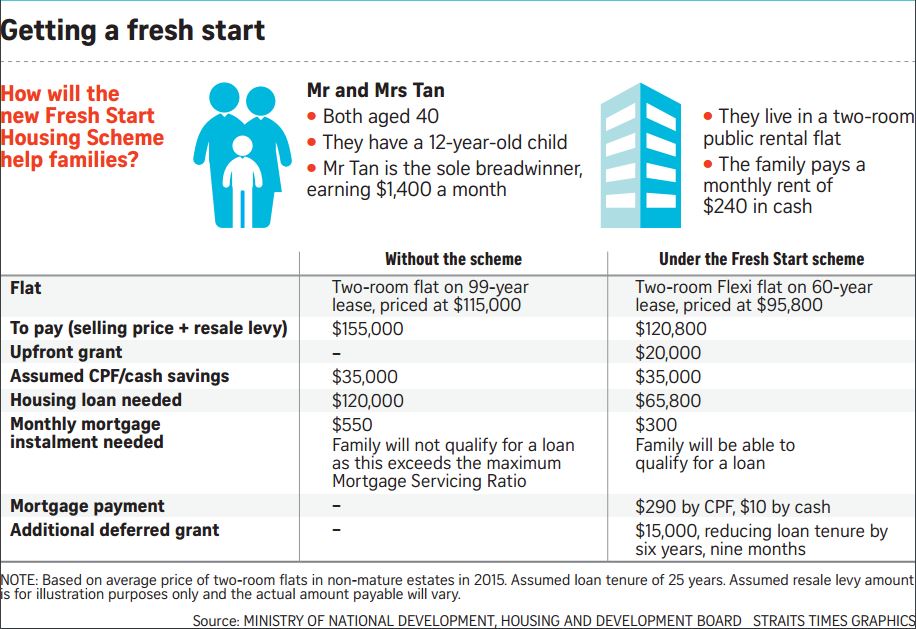
Image: 
Publication Date: 
Tuesday, April 12, 2016 – 10:57
Keywords: 
Send to mobile app: 
Source: 


Story Type: 
Others

Source link

Fresh Start families to get personalised support

0

Second-timer families on the public rental scheme, who get help to buy a new flat, will have to live in it for 20 years before they can resell it.

This is “to ensure a stable home for the children”, said National Development Minister Lawrence Wong yesterday, revealing details of the Fresh Start Housing Scheme.

Families who qualify will also get personalised help even after they get the keys to their flat, he added during the parliamentary debate on his ministry’s budget.

Announced last year and set to start by the end of 2016, the Fresh Start Housing Scheme aims to help public rental tenants with young children buy flats of their own.

Currently, about 1,000 families could potentially qualify, Mr Wong revealed yesterday.

The scheme will not have a large reach, but “can and will have a meaningful impact on the families we are reaching out to”, he added.

To keep prices affordable, it is only for two-room Flexi flats with leases of 45 to 65 years.

Eligible families will be able to get a Housing Board concessionary loan regardless of how many such loans they have taken before.

And the previously-announced Fresh Start Housing Grant will be given in tranches. The grant will range from $31,400 for a 45-year lease to $35,000 for a 60-year or 65-year lease. Families will get $20,000 upon collecting the keys to their flat. The rest will be disbursed annually over the next five years

But to get these later tranches – and to qualify for the scheme at all – families must show commitment to making a fresh start, said Mr Wong.

They must stay employed, manage finances well, and ensure their children attend school regularly.

To track and help families in this commitment, the HDB will work with the Ministry of Social and Family Development (MSF).

MSF officers will check on the families regularly, from flat application till key collection, and for five years afterwards. They will also link families up with other partners for social support, where needed.

“We will hand-hold the families closely and walk this journey with them,” concluded Mr Wong.

If families face difficulties along the way, HDB will consider their circumstances and the efforts they are making to meet the conditions of the scheme, he added.

Mr Saktiandi Supaat (Bishan-Toa Payoh GRC) raised concerns about stringent grant conditions.

Replied Mr Wong: “I am very mindful that the conditions should not be onerous.

“But at the same time, we are making a major move for these families by giving them another grant. So I think it’s fair they must be able to show a certain level of commitment towards home ownership.”

Separately, second-timer rental families will get priority for new flats from the next Build-To-Order exercise onwards. This is under the Tenants Priority Scheme, which sets aside 10 per cent of new two- and three-room flats and is currently for first-timers. In 2015, 411 two- room flats were set aside, far more than the 48 applications received.

Extending the scheme to second- timers will increase their chances of getting a flat, said Minister of State for National Development Koh Poh Koon.

janiceh@sph.com.sg


This article was first published on April 12, 2016.
Get a copy of The Straits Times or go to straitstimes.com for more stories.

Image: 
Category: 
Publication Date: 
Tuesday, April 12, 2016 – 10:43
Send to mobile app: 
Source: 


Story Type: 
Others

Source link

China expresses anger at G-7 statement on East, South China Seas

0

BEIJING – China’s expressed anger on Tuesday (April 12) after foreign ministers from the Group of Seven (G-7) advanced economies said they strongly opposed provocation in the East and South China Seas, where China is locked in territorial disputes.

“We urge the G-7 member states to honour their commitment of not taking sides on issues involving territorial disputes,” China’s Foreign Ministry said in a statement.

The G-7 should focus on global economic governance and co-operation against the backdrop of weak economic growth rather than hyping up disputes and provoking problems, it added.

On Monday, G-7 foreign ministers said after meeting in the Japanese city of Hiroshima that they opposed “any intimidating coercive or provocative unilateral actions that could alter the status quo and increase tensions” in the East and South China Seas.

China claims almost the entire South China Sea, believed to have huge deposits of oil and gas, and is building islands on reefs to bolster its claims.

Brunei, Malaysia, the Philippines, Taiwan and Vietnam also have claims to parts of the waters, through which about US$5 trillion (S$6.74 trillion) in trade is shipped every year.

China also has a separate dispute with Japan over a group of uninhabited islets in the East China Sea.

China has every right to build on the Spratly Islands and there are no problems with freedom of navigation and overflight for the East and South China Seas, the Foreign Ministry said.

China is committed to resolving disputes through talks with countries directly involved via international law and on the basis of respecting historical facts, to maintain peace and stability while safeguarding its sovereignty, it said.

It repeated that China will neither accept nor participate in any arbitration “illegally forced upon it”, a reference to a case lodged by the Philippines against China.

“We urge the G-7 member states to fully respect the efforts made by countries in the region, stop making irresponsible remarks and all irresponsible actions, and truly play a constructive role for regional peace and stability,” the ministry added.

Image: 
Category: 
Publication Date: 
Tuesday, April 12, 2016 – 10:57
Send to mobile app: 
Source: 


Story Type: 
Others

Source link

Parliament: New Cybersecurity Bill to be tabled next year to strengthen Singapore's online defences

0

SINGAPORE – A new Cybersecurity Bill that aims to strengthen laws against online crime will be tabled in Parliament next year (2017).

Minister for Communications and Information Yaacob Ibrahim told Parliament the proposed law will ensure that operators of Singapore’s critical information infrastructure take active steps to secure such systems and report incidents.

It will also empower the Cybersecurity Agency (CSA) to manage cyber incidents and raise the standards of cyber security providers here, he said during the debate on his ministry’s Budget on Monday (April 11).

Dr Yaacob, who is also Minister-in-Charge of Cyber Security, noted that while the existing Computer Misuse and Cybersecurity Act grants law enforcement agencies powers to investigate and apprehend those behind cyber crime, the nature of such crime has evolved. The interconnectivity of such networks also means that the effects of cyber-attacks can be “contagious”, he added.

“Cyber-attacks have increased in sophistication, and attackers have become faster and bolder,” Dr Yaacob said. “It is inevitable that Singapore’s critical information infrastructure will at some point be targets.”

Last week, Senior Minister of State for Home Affairs Desmond Lee said there was a “clear uptrend” in cyber crime, with a surge in online cheating scams being the main reason. The total number of online cheating cases involving e-commerce, credit-for-sex, and Internet love scams nearly doubled in 2015 from the previous year.

To better tackle this threat, many countries have in recent years been strengthening their cyber security legislation, said Dr Yaacob.

They include Germany, which passed a new law last year to raise cybersecurity standards and mandate reporting of significant cybersecurity incidents, and the United States, which last December approved an Act to facilitate the sharing of information on cyber threats.

Dr Yaacob said the Government will start work on developing the new Bill, and the CSA will consult stakeholders on the scope of the new law.

“We are stepping up our efforts to enhance our cyber security, and also the resilience of our infrastructure,” he said.

“This is the necessary foundation for a successful digital economy.”


This article was first published on April 12, 2016.
Get a copy of The Straits Times or go to straitstimes.com for more stories.

Image: 
Category: 
Publication Date: 
Tuesday, April 12, 2016 – 10:55
Keywords: 
Send to mobile app: 
Source: 


Story Type: 
Others

Source link

Public hearings on Elected Presidency begin next week

0

The Constitutional Commission tasked with reviewing the Elected Presidency has received a little over 100 written submissions from groups and individuals, and will hold public hearings later this month and next month.

The nine-member commission, which sought views from the public in February, said in a statement yesterday that it carefully considered all submissions and decided to invite a number of contributors to come before it and clarify or elaborate on their written submissions.

The public hearings will be at the Supreme Court auditorium and are scheduled for next Monday; April 22, April 26 and May 6. The commission’s secretariat said the public will be informed if additional dates are needed .

The commission expects to complete its report, which will contain its recommendations, by the third quarter of this year.

Headed by Chief Justice Sundaresh Menon, the commission was appointed by Prime Minister Lee Hsien Loong on Feb 10.

PM Lee said in Parliament in January that the President has to remain elected, but certain aspects of the process have to be reviewed.

The growth in Singapore’s reserves, of which the President is custodian, means individuals of character and competence are needed. Another consideration is the need for candidates from the minority races to get a chance at being elected from time to time.

The commission includes Public Service Commission chairman Eddie Teo, who helmed the Presidential Elections Committee that vetted potential candidates in 2011.

Also on the panel are Supreme Court judge Tay Yong Kwang, former Parliament Speaker Abdullah Tarmugi, Ambassador-at-Large Chan Heng Chee, and business leaders Chua Thian Poh of Ho Bee Land, Philip Ng of Far East Organisation, Peter Seah of DBS Bank and Wong Ngit Liong of Venture Corp.

The commission sought views related to its terms of reference.

First, the eligibility criteria. This must consider the President’s custodial role over the reserves and public service, a role that needs individuals of character and standing with experience and ability to do the job.

Second, it was to consider provisions for minority candidates to have fair and adequate chance to be elected, given that the President is a unifying figure.

Third, refinements to the Council of Presidential Advisers to ensure decisions are made after careful consideration from those with experience in the public and private sectors.

Among those who wrote in were advocacy groups like the Association of Women for Action and Research and human rights group Maruah, as well as the Workers’ Party.


This article was first published on April 12, 2016.
Get a copy of The Straits Times or go to straitstimes.com for more stories.

Image: 
Category: 
Publication Date: 
Tuesday, April 12, 2016 – 10:44
Send to mobile app: 
Source: 


Story Type: 
Others

Source link

Dengue cases last week fall to 292

0

SINGAPORE – The number of dengue cases reported last week fell to 292, after the previous week’s spike of 377 cases.
However, the numbers are still “high for this time of the year”, cautioned the National Environment Agency (NEA), noting that the “majority of…

Source link