Image:
Publication Date:
Tuesday, April 12, 2016 – 14:38
Keywords:
Send to mobile app:
Source:
Story Type:
Others
Senior Minister of State for Transport Josephine Teo says policies have been put in place to cope with the demands of projected growth in the aviation sector.
Source link

April 12, 2016 2:31 PM
SINGAPORE – An engineering director of a company was charged on Tuesday (April 12) with 53 counts of computer misuse in connection with the coverage of the 2015 South-east Asian Games (SEA Games) held in Singapore.

When the Singapore Repertory Theatre stages Romeo And Juliet at Fort Canning at the end of this month, there may be another theatrical tragedy in the making.
The group’s artistic and managing director Gaurav Kripalani says this could be the last Shakespeare In The Park for several years.
Staging the annual event used to cost between $1 million and $1.2 million, but is now closer to $1.5 million because of increased manpower costs. This is unsustainable, he says.
A total of between 25,000 and 30,000 viewers attend the event every year. Ticket prices this year range from $40 for entrance alone to $108 with drinks and canapes.
Box-office takings cannot cover the staging costs, since a third of the tickets are sold at a subsidised student rate. CHIJ Katong Convent, for example, has sent its Secondary 2 students to the event every year since 2011.
This year, a long-term sponsor, electronics distribution company Trans-Tec, has increased its sponsorship to help. “Despite this, we will still have a significant loss,” says Mr Kripalani.
The Singapore Repertory Theatre first staged the event in 1997 with Hamlet. In 2007, the troupe made it a biennial event, starting with A Midsummer Night’s Dream. The 2009 production of Much Ado About Nothing was nominated for Production Of The Year at the Life Theatre Awards and Shakespeare In The Park has been an annual affair since 2011.
Some actors see it as a rite of passage, including this year’s 20something stars, Cheryl Tan (Juliet) and Thomas Pang (Romeo). Both are taking on a major professional production of Shakespeare for the first time.
Pang, 25, who was in a reworking of Hamlet last month, Cake Theatrical Productions’ Ophelia at Esplanade Studio Theatre, says: “To me, Romeo is just like any other character, but the opportunity to play to such a large audience is exhilarating.
“It’s frightening,” says Tan, 27, of her performances, especially now that she knows the future of Shakespeare In The Park is in jeopardy.
The Singapore Repertory Theatre is banking on Romeo And Juliet and the buzz around Shakespeare’s 400th death anniversary to bring in the crowds this year.
Acclaimed British opera director Daniel Slater, 49, will direct. This will be his first production of the play and he says the staging will evoke a modern city with Asian influences.
“It’s not that we’ve set it in Singapore, but there’s a feeling for Singapore,” he says, down to replacing sword fights with tussles that involve knives, batons and kickboxing.
Among those looking forward to the event are husband and wife Elvin Teo and Tng Pei Wei, both 32, who are expecting their first child this year.
They have had picnic dates at Shakespeare In The Park since 2007. Mr Teo proposed to Ms Tng during The Merchant Of Venice in 2014. The cast called her onstage where Mr Teo played a ukulele and sang a Bruno Mars song.
Ms Tng is a finance manager who loves literature. Mr Teo, a harbour pilot with PSA Marine who says he has no background in literature, adds: “It helps to read the synopsis of the play before the show to know the gist of the story and understand the characters involved. It is also fun to have a loved one decipher the play and more interesting to learn about literature this way.
“It will be sad to see Shakespeare In The Park stopped as it has been an annual event for many people. We were hoping to catch this year’s show after my wife’s confinement.”
This article was first published on April 12, 2016.
Get a copy of The Straits Times or go to straitstimes.com for more stories.

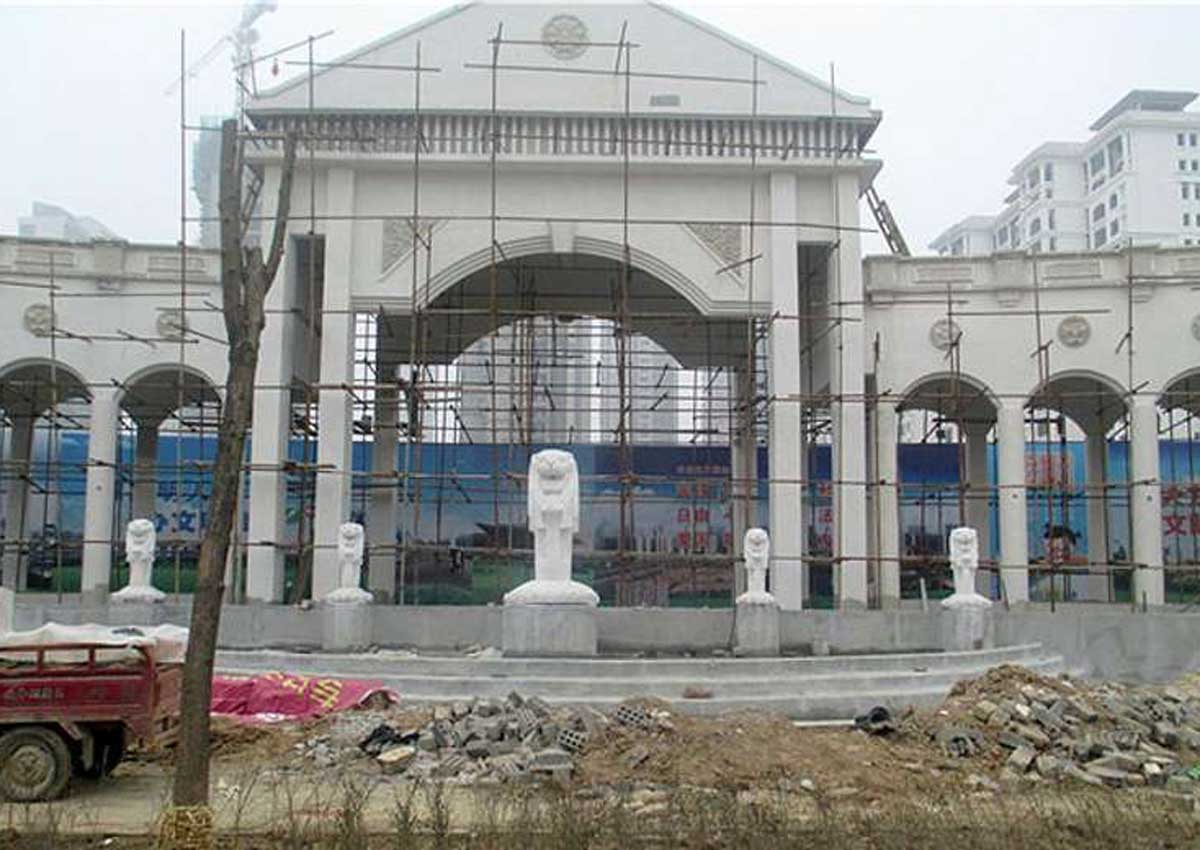
In the city of Zhumadian in central Henan, a residential estate boasts East-West architecture, lots of greenery and Merlion statues at its entrance.
Called Singapore Garden, it is one of more than a dozen property developments in China that boast the Singapore name. But most have no ties with the island republic.
Residential estates with names like Singapore City and Singapore Garden can be found in major cities, including Chengdu, Changchun and Hefei. There is also a Holland Town in Shanghai, a Vienna Woods in Zhengzhou and an Oriental Yosemite in Dalian, just to name a few.
They are all part of a strategy by Chinese developers to project exclusivity and boost sales.
But now the future of these estates is in doubt after the government recently labelled such names in property developments, roads and bridges “bizarre”.
Civil Affairs Minister Li Liguo last month said foreign names that “damage sovereignty and national dignity” or “violate the socialist core values and conventional morality” will be stamped out.
Property developers, including the one behind Singapore Garden in Zhumadian, are worried, particularly in lower-tier cities where the property market is already sluggish due to oversupply.
“We designed our estate to be like Singapore, which is a garden city. It is the main reason people bought units here,” said a sales agent who did not want to be identified.
“If we change the name now, the name will be incompatible with the design. It will upset many buyers and we will have to reprint all our publicity material.”
A developer of a residential estate called Barcelona, in northern Liaoning’s Panjin city, called the government move “unrealistic”.
“The title deeds already have our estate’s name. It’s absurd to ask all our home owners to make changes to them,” said a representative, who asked to be called Ms Lui. “I’m sure many will not agree to do so.”
The move to root out foreign names comes amid the government’s push in recent years, under President Xi Jinping’s leadership, to promote “Chinese values” as a bulwark against Western influence.
Mr Li’s comments were made as part of a review of an official geographical survey, which began in 2014 and is expected to be completed in 2018. His ministry said more foreign names were being adopted as traditional names disappeared.
“Some cities have multiple ‘Manhattan’ or ‘Venice’ roads. It is not only an inconvenience for travellers, but also erodes the sense of home.”
It is unclear how rigid the government intends to be with its clampdown. Officially, China has had a regulation since 1996 banning foreign names, but this has never been strictly enforced.
A news article in Chinese Communist Party mouthpiece People’s Daily on Sunday criticised the practice, saying foreign names were driven by “commercial promotion” and served only to give the “irrational” impression that a place was of higher quality.
But many Chinese netizens were against the authorities’ move, saying it should be the right of developers to pick names. One asked on Weibo: “If a European-style residential estate was called the Forbidden City, wouldn’t it be even weirder?”
Additional reporting by Lina Miao
This article was first published on April 12, 2016.
Get a copy of The Straits Times or go to straitstimes.com for more stories.

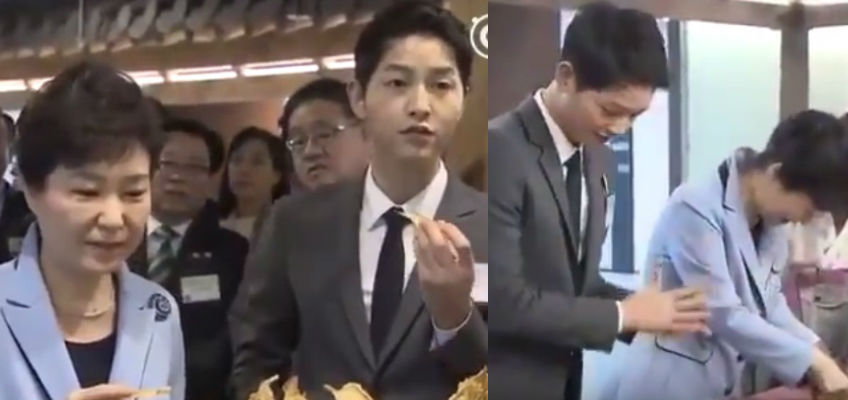
President Park Geun-hye and actor Song Joong-ki, Korea’s tourism ambassador, made Korean dessert together on Monday at the opening ceremony of the K-style Hub, located at the state-run Korea Tourism Organisation’s Seoul headquarters in central Seoul.
“I remember spending a good time with you on the Children’s Day event (at Cheong Wa Dae) in 2013, before (Song) entered the military, Park told Song. “I am very happy to see you becoming a great hallyu star after completing the military well.”
Park also told Song that he is a patriot for taking time off from his busy schedule — as Song’s starrer “Descendants of the Sun” is enjoying global popularity — to work as the tourism ambassador of the country.
Song responded by saying “thank you” and said he will work harder.
Photo: YouTube screengrab
During the event, they walked around the centre and talked about Korean foods such as samgyetang, ginseng chicken soup, which also appeared on the latest episode of “Descendants of the Sun.”
Park and Song also made Korean traditional dessert yakgwa together at the experiment centre. Park complimented Song that his yakgwa is very pretty.
By Ahn Sung-mi (sahn@heraldcorp.com)
Song Joong Ki becomes new face of cosmetics brand Forencos; Song Hye Kyo turns down Mitsubishi offer
Song was also revealed as the new model for Korean cosmetics brand “Forencos” on Tuesday.
“Forencos,” an eco-friendly cosmetics brand established in 1988, uses natural ingredients in skin care and makeup products, with herbs and flower extracts.
The cosmetics brand picked Song for his image of innocence and honesty, and the flawless image built through his KBS2 hit TV drama series “Descendants of the Sun,” which perfectly suits the brand’s image, the agency said in a press release.

































The cosmetics brand is set to expand its market by launching stores in local duty-free shops and 10 overseas markets including China, Hong Kong and the US.
The actor is slated to set out on an Asia tour April 17.
Meanwhile, his co-star actress Song Hye-kyo reportedly turned down an offer from Japan’s Mitsubishi Motors to be a model in its advertisements, public relations company Shall We Talk said Monday.

Song rejected the offer to endorse the company in China about a month ago, added the PR Company.
The actress is reported to have said that she rejected the offer as Mitsubishi Group is involved in lawsuits over the alleged use of Korean forced labour during Japan’s colonial rule over Korea.




























“Song Hye-kyo is deeply concerned about our history and culture,” Seo Kyoung-duk, a Sungshin Women’s University professor, wrote on his Facebook. Seo, known as an expert in promoting South Korea, also revealed the conversation with Song concerning Mitsubishi’s offer. According to Seo, the actress asked him whether Mitsubishi had taken steps to redress its wrongdoings and then decided against signing on with the Japanese company.
Last year, Song and Seo supported the publication of Korean-language brochures for historic sites of Korea’s overseas independence movement in the US as well as foreign museums.
By Jung Eun-jin (jej2403@heraldcorp.com)









































SINGAPORE – By the first half of next year, the private-hire car industry will be regulated under a regime which includes licensing for drivers, registration of vehicles with the authorities, and the prominent display of decals and drivers’ vocational…
Source link

April 12, 2016 1:30 PM
SINGAPORE – The Health Sciences Authority (HSA) has suspended the tobacco retail licences of two retailers that sold tobacco products to minors.
The Government has earmarked $120 million to arm Singaporeans with infocomm technology skills to help meet its goal of building a Smart Nation. The money, double the sum in the previous four years, is to be spent over three years.
It will be used to expand existing training schemes that target Singapore professionals and students.
The new urgency stems from growing demand. It is estimated that about 30,000 such jobs will be in the pipeline by 2020 in such areas as software coding, cyber security and data analytics.
In announcing the move in Parliament yesterday, Minister for Communications and Information Yaacob Ibrahim acknowledged the need to build a strong Singapore core for the industry.
“We must do our best to support our Singaporeans to be highly skilled so that they can compete with global talent,” he said in his reply to MPs’ worry about manpower shortages in the IT industry,.
MPs Zaqy Mohamad (Chua Chu Kang GRC) and Sun Xueling (Pasir Ris-Punggol GRC) as well as Nominated MP Randolph Tan had asked how Singapore could reduce its reliance on foreigners.
The plan, the minister said, starts with the very young, beginning with the Code@SG programme.
It offers enrichment lessons to primary school pupils, the first step to making coding a national capability, thus creating a base to develop future technology professionals.
Dr Yaacob said the programme will be expanded to target 24,000 school-goers every year, up from the current 22,000.
The lessons will get more complex as the pupils move up to the upper primary classes and secondary school. For instance, the Python programming language, which is not offered at present, will be taught to secondary students.
His ministry will also offer more structured internship and mentorship programmes to the 6,000 students each year who are already in infocomm disciplines.
The aim of these measures is to give them enough skills and experience at the foundation level even before they graduate.
The new target is produce 800 such pre-graduates a year – up from the current 130.
“Today, our estimates indicate that a significant proportion of them do not enter the sector on graduation,” Dr Yaacob said.
Overall, the ministry’s goal is to get 8,000 professionals and pre-graduates trained each year, almost double the present 4,500.
Funding for their training comes from many programmes such as the Critical Infocomm Technology Resource Programme (Citrep). It funds up to 70 per cent of the course fees.
But it too will be expanded to include courses for professionals who are new to the industry. Currently, Citrep focuses only on specialised courses like certification for security analysts. It has funded 3,000 IT professionals a year since 2014, but the expanded programme will target 5,600 a year.
A separate $1.55 million will also be set aside by the ministry for the SkillsFuture Study Awards, for people who want to hone their IT skills, including software developers, satellite engineers and master craftsmen.
A total of 310 awards will be given by the ministry this year.
This article was first published on April 12, 2016.
Get a copy of The Straits Times or go to straitstimes.com for more stories.

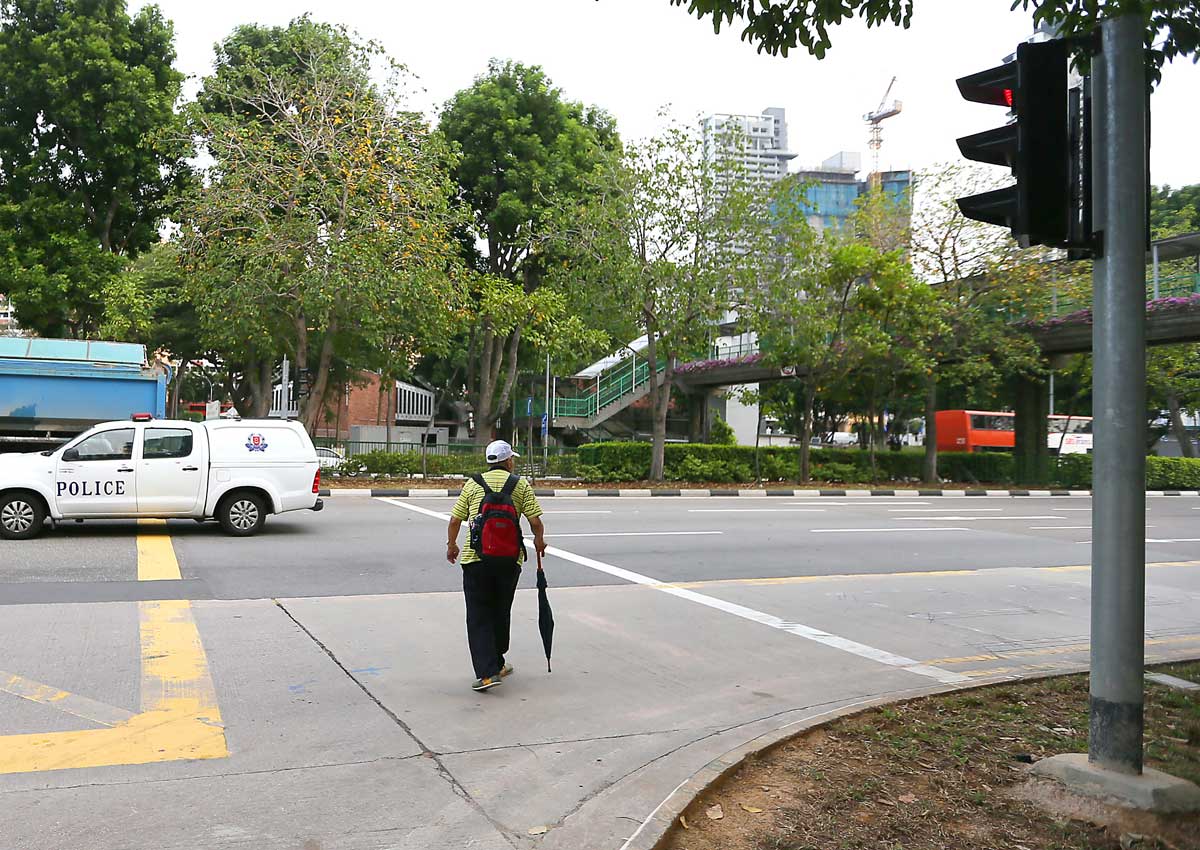
About 30 metres from where they crossed the road is an overhead bridge.
But Mr Tan Tiong Him, 66, opted not to use it as he felt climbing the stairs would be too strenuous because of his age.
He proceeded to cross Eu Tong Sen Street near the New Bridge Road Bus Terminal with his young grandson.
The decision turned to be fatal for eight-year-old Galen Ong Zi Jie.
While they were crossing, a car hit them, and the impact flung the boy to the middle of the road about 10m away.
In a Coroner’s Inquiry into his death yesterday, State Coroner Marvin Bay found the boy’s death to be a “tragic traffic misadventure”.
He said the case was a stark reminder that children are “doubly jeopardised” in any jaywalking scenarios as they are difficult for motorists to detect due to their small size.
Mr Bay said: “Secondly, as a result of their immaturity, children generally have a limited ability to independently assess or discern possible dangers of jaywalking or improperly crossing any road, not designated as a pedestrian crossing.
RISK
“Where their caregivers make a decision to cross at any point other than a properly designated pedestrian crossing, they may inadvertently place themselves, and their young charges, at risk of serious injury, or worse.”
Mr Tan and Galen were standing by the roadside near the bus terminal shortly before 7pm on Dec 9 last year while on their way home to nearby Everton Park after a trip to the swimming pool.
There were traffic lights, but Mr Tan was not sure if pedestrians could cross there safely as he could not see a traffic light with a red or green man.
In court yesterday, Coroner Bay said the area is not a designated pedestrian crossing.
Mr Tan thought it was safe to cross when the lights turned red and he saw three cars stopping from the first to third lanes.
The pair had almost reached the extreme right lane when the lights turned green.
They broke into a run, apparently oblivious of a car driven by student Tan See Woon, 22.
A witness, Mr Melvyn Emmanuel Li Heqian, 34, who was at a nearby bus stop, saw Ms Tan’s car hit both pedestrians.
He said Mr Tan fell to the right while Galen was flung in the air and landed on the second lane.
Ms Tan said that she had not noticed them coming towards her car as a vehicle on her left was blocking her view.
She realised she had hit them only after she heard a loud sound coming from the front left of her silver Toyota.





















Another motorist, engineer Poon Kai Yew, 44, was nearby when he heard the crash and saw something flying towards his car.
He immediately braked and found Galen, who was 1.3m tall and weighed 29kg, lying beside the front wheel of his black Mercedes. He managed to stop in time without hitting the boy.
The police were alerted and Galen was unconscious when an ambulance took him to Singapore General Hospital.
He had injuries, including multiple skull fractures, and died shortly before 1am the next day.
Five jaywalkers in 10 minutes
In just 10 minutes, The New Paper saw five pedestrians jaywalking near the spot where the fatal accident took place last December.
During that time, only one person used an overhead bridge about 30m away.
One of the jaywalkers, who wanted to be known only as Mr Lim, said it was a common spot for pedestrians to cross Eu Tong Sen Street.
The retiree in his 60s admitted he was too lazy to use the overhead bridge and was aware he was risking his life by crossing the busy road.
He said: “I know that the traffic lights here are to allow buses to turn into the New Bridge Road bus terminal and not for us to cross the road.
“But I’ve lived at Everton Park for many years and crossing here is the fastest way to get home. There is a footpath directly on the other side heading straight to my neighbourhood.”
There are no signs to indicate that pedestrians can cross at the traffic lights there.
There is a pedestrian crossing at the traffic lights at the junction of Eu Tong Sen Street and Outram Road, about 200m away.
About 300m away in the opposite direction, there is another pedestrian crossing at the traffic lights near Kampong Bahru Road.
Lifts are being built at the overhead bridge and when TNP pointed this out to Mr Lim, he said he may now use the bridge to cross the road safety.
A Singapore General Hospital nurse, who declined to be identified, was the only person TNP saw using the bridge.
When approached, she smiled and said: “It’s not tiring at all to walk up and down the stairs. The roads here can be very busy and it is better to be safe than sorry.”
ashaffiq@sph.com.sg

This article was first published on April 12, 2016.
Get The New Paper for more stories.