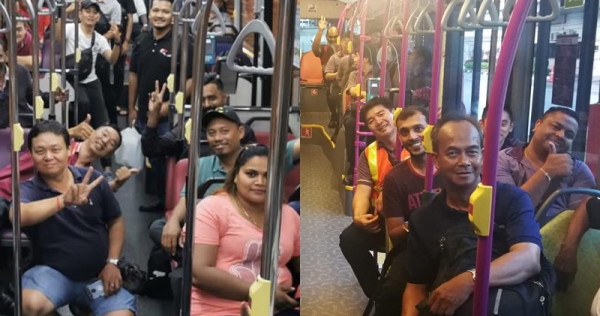
Do they remain in Malaysia and hunker down quietly at home, possibly enduring two weeks of unpaid leave? Or do they continue earning their household income in Singapore, staying apart from their loved ones until the lockdown blows over?
It’s a hard sacrifice, but these Malaysians who work in the public transport sector here have decided that the work must continue. After all, they make up a decent chunk of the workforce that keep the buses and trains running in Singapore.
SINGAPORE: Union members who have lost income due to the COVID-19 outbreak can receive up to S$300 in a one-off cash relief, NTUC secretary-general Ng Chee Meng announced on Wednesday (Mar 18).
This is part of S$25 million committed by the Government, NTUC and its affiliated unions and associations to the NTUC Care Fund (COVID-19).
Union members who have been retrenched with retrenchment benefits of not more than S$6,500 are eligible for the fund.
Those with dependents who originally earned up to S$3,400 gross monthly personal income (GPI), or those without dependents who originally earned up to S$1,500 GPI, and have either lost at least 30 per cent of their monthly earnings due to COVID-19, or are self-employed and have seen their incomes affected by COVID-19 related job or event cancellations, are also eligible for the cash relief.
NTUC members who have lost income due to the COVID-19 outbreak can receive up to S$300 in cash relief. (Photo: Cindy Co)
Existing eligible union members with dependents staying in the same household will receive S$300, while existing eligible union members without dependents staying in the same household will receive S$100 instead.
As for union members who sign up after Mar 1, those with dependents staying in the same household will receive S$200. Those without dependents staying in the same household will receive S$50.
NTUC estimates that a total of 108,000 union members will benefit from the cash relief.
“With the cash relief provided by the Care Fund, together with other assistance programmes that NTUC is availing to our workers, we hope to ease their burden for a while, and continue to help them in the areas of training and employability support so that they can remain relevant and ready for when the upturn comes,” said Mr Ng.
Union members can apply for NTUC’s Care Fund (COVID-19) through their respective unions or through NTUC membership from Mar 25 to Sep 30.
Union members who have been retrenched with retrenchment benefits of not more than S$6,500 are eligible for the fund. (Photo: Cindy Co)
This comes more than three weeks after Mr Ng said that NTUC would roll out a Care Fund for workers affected by the COVID-19 outbreak.
OTHER TYPES OF SUPPORT FOR AFFECTED UNION MEMBERS
Existing union members affected by COVID-19 may also turn to other programmes to get help with daily expenses, or to upgrade their skills during the downtime.
The CapitaLand-U Care Resilience and Enablement (CAP+Ure) Fund supports the children of workers who are experiencing a sudden loss in income. To support the children’s daily necessities and schooling needs, each eligible child will receive a one-time disbursement of S$250 NTUC FairPrice vouchers.
For members who would like to seek training, they can apply for LIFT-UP Pathfinder for customised training worth up to S$500. They can also apply for the Union Training Assistance Programme (UTAP) which defrays 50 per cent of unfunded course fees for union members for up to S$250 per year.
NTUC Secretary-General Ng Chee Meng speaks to frontline workers. (Photo: Cindy Co)
Companies affected by the travel restrictions will receive an allowance of S$50 per worker per night for 14 nights to cover the extra costs, while the Ministry of Manpower has also worked out short-term housing options for affected workers.
Malaysia’s travel restrictions would ban Malaysians from travelling overseas and visitors from entering the country under a restricted movement order from Mar 18 to Mar 31.
Singapore’s Ministry of Health also reported on Tuesday the largest single-day spike in COVID-19 cases. Twenty-three new cases were reported, bringing Singapore’s total to 266.
Just last year gaming personality Cheryl Allison Lim, who is better known by her online handle Cherzinga, went viral over her tweet where she jokingly debunked the old “gamer girl” stereotype.
We’re sure actual gamer girls everywhere can relate to this tweet. After all, there have been cases of female gamers getting openly discriminated by others, such as the case of Kelly, another female Singaporean gamer, who experienced gender discrimination while en route to a fighting game tournament in the United States.
Her viral tweet ended up receiving over 257,000 likes and 56,100 retweets.
For Tan Hang Kian, executive director of Singapore cleaning company Clean Solutions, Tuesday started with a “logistical nightmare”. Of the 2,000 staff he employs, 800 are Malaysians and 150 of those commute daily into the city state.
Tan had to scramble after Malaysia on Monday night announced an overseas travel ban for its citizens among other measures to curb the spread of the Covid-19 outbreak. “It was not confirmed last night whether those with jobs in Singapore will be allowed to come in, but we started making preparations immediately,” he said.
His line managers called their staff in Malaysia, telling them the company would try to house them in Singapore. Early on Tuesday, they started outfitting an existing dormitory – which can accommodate 400 people but is currently only half full – to hold these workers.
“We had to look for beds, look for towels, tooth brushes, all sorts of things. Now we are fixing more shower heads, adding security staff,” Tan said, estimating that about 80 per cent of the workers have agreed to stay on in Singapore and continue working.
Malaysia’s restricted movement order kicked in from Wednesday (Mar 18), with citizens barred from leaving the country and foreigners stopped from entering. But what does it entail for Singaporeans who are in Malaysia?
Tourists wearing protective masks take a picture at Independence Square in Kuala Lumpur, Malaysia. (Photo: AP/Vincent Thian)
(Updated: )
Bookmark
KUALA LUMPUR: The Malaysia government on Wednesday (Mar 18) imposed a restricted movement order that bars its citizens from going overseas and foreigners from entering the country until the end of March.
The order, established by the Malaysian government, aims to prevent further spread of COVID-19, said Malaysia Prime Minister Muhyiddin Yassin.
As of Wednesday morning, Malaysia reported two deaths from COVID-19 and 673 cases in total, the highest in Southeast Asia.
For Singaporeans who are in Malaysia during the restricted movement order for work or a holiday, we have put together information from the Singapore High Commission in Malaysia and Singapore’s Immigration and Checkpoints Authority (ICA) to answer frequently asked questions:
Q: Will Singaporeans in Malaysia be allowed to leave the country during the restricted movement order?
Answer: Yes. Singaporeans in Malaysia will be allowed to leave during the period of the order, which is between Mar 18 and Mar 31, the Singapore High Commission said.
Singaporeans should be prepared for significant travel inconveniences due to the travel restrictions, it added.
ICA has deployed more manpower at Singapore’s land checkpoints to facilitate the movement of travellers across the Woodlands Causeway and Tuas Second Link, said ICA.
Q: Are Singaporeans allowed to enter Malaysia during the restricted movement order period?
Answer: All foreigners who are not employed under “essential services” will not be allowed to enter Malaysia during the period of the restricted movement order, according to the Singapore High Commission.
This includes Singaporeans with Malaysian permanent residence status. Those employed under “essential services” must obtain a verification letter from their employers and present it to the Malaysian Immigration Department at the point of entry.
Q: Will airports and land checkpoints in Malaysia remain open during the restricted movement order period?
Answer: Based on the current available information, airports and land checkpoints will continue to operate.
Various airlines are still operating flights out of Malaysia, the Singapore High Commission said. Travellers should check directly with the respective airlines for any flight changes or cancellations.
The Causeway early in the morning at around 7.20am on Mar 18, 2020. (Photo: Try Sutrisno Foo)
Q: Will Singaporeans returning from Malaysia be subjected to the 14-day Stay Home Notice (SHN)?
Answer: Singaporeans travelling into Singapore from Malaysia via sea or land crossings will not be placed on the 14-day SHN upon entry into Singapore, the Singapore High Commission said.
However, those who fly into Singapore from Malaysia will be placed on a SHN.
Other foreign nationals entering Singapore from Malaysia via sea, land or air will be issued with a 14-day SHN upon entry to Singapore.
Q: Do Singaporeans/Singapore Permanent Residents (PRs) and/or Singapore long term pass holders in Malaysia need to obtain prior health clearance approval from Singapore’s Ministry of Health before entering Singapore?
Answer: Singaporeans, PRs and Singapore long term pass holders in Malaysia are not required to submit health information to Singapore’s Ministry of Health and obtain the ministry’s approval before entering Singapore.
Q: Will Malaysians with Singapore PR status be allowed to leave Malaysia during the restricted movement order period?
Answer: As outlined by the Malaysian government, Malaysian citizens will not be allowed to leave Malaysia during the restricted movement order period from Mar 18 to Mar 31.
For further queries, Singaporeans in Malaysia may contact the Singapore High Commission in Kuala Lumpur at +60-3-2161-6277 or via email at singhc_kul@mfa.sg. Alternatively, Singaporeans may contact the Consulate-General in Johor Bahru at +60-7-226-5012 or via email at Singcon_jhb@mfa.sg.
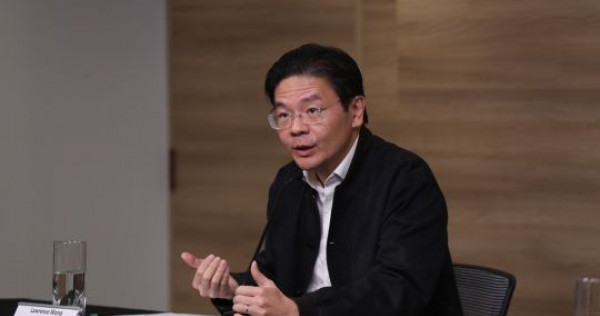
SINGAPORE – Singapore will not rule out a lockdown to tackle the growing threat of the coronavirus outbreak, but it is not an option currently on the cards, said National Development Minister Lawrence Wong on Tuesday (March 17).
“We have always said that we need to consider a whole range of measures and not rule anything out,” he told a press conference at the Ministry of Communications and Information.
“So something as stringent, we are not planning for it – so Singaporeans should not think of us as planning for it. It’s certainly a very extreme measure, and we don’t think we need to get there if we do all the things we have been doing, we have been advocating, and we do them well.”
Mr Wong, who co-chairs the multi-ministry task force set up to deal with the coronavirus situation, was responding to a question on whether Singapore would consider such a measure decided on by Malaysia.
Malaysia had announced that its citizens would not be allowed to travel overseas for two weeks starting from Wednesday (March 18), as part of a slew of measures to arrest the spread of the coronavirus.
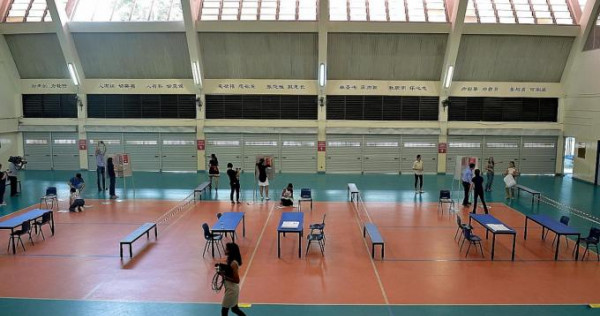
A general election in the heat of the Covid-19 crisis will be very different from previous elections, political watchers said.With social distancing measures in place, for instance, political parties will have to be more creative and think of ways to campaign and engage the audience, they said.
According to the Singapore Constitution, the next general election (GE) must be held by April 2021.
There has been chatter about an impending GE over the last couple of months, at least, but it picked up pace last Friday when the new electoral boundaries were announced.
While the Government is obviously keeping its cards close to its chest, General Elections under Prime Minister Lee Hsien Loong’s watch has come between two to three months after the electoral boundaries report was released. But these are unusual times.
Political analyst and law professor at the Singapore Management University Eugene Tan told The New Paper it is important that all health and safety measures are in place at election rallies.
SINGAPORE: Cruise passenger traffic in Singapore has fallen by 52 per cent year-on-year since the start of the COVID-19 outbreak on Jan 23, the Singapore Tourism Board (STB) said as it pledged to give the industry more support.
“The COVID-19 outbreak has had a serious impact on the cruise industry, both in Singapore and globally,” STB’s director, cruise Annie Chang told CNA, stating that it has received 81 COVID-19 related cancelled ship calls since Jan 23.
From Jan 23 to Mar 9, the agency said Singapore handled a total of 65 cruise calls and 156,465 passengers.
Beyond the drop in passenger traffic, COVID-19 has roiled the global cruise industry as countries turn away cruises amid fears they were acting as floating Petri dishes for the coronavirus.
The Diamond Princess cruise, carrying 3,700 passengers and crew, was quarantined at a Japanese port on Feb 4 after a guest, who didn’t have symptoms while on board, tested positive for COVID-19 after returning to Hong Kong.
More than 700 passengers and crew on the ship eventually tested positive for the virus, and at least seven have died. Japan and other countries have evacuated their citizens from the ship. Five Singaporean passengers stayed in Japan for 14 days before returning home.
On Mar 10, Singapore allowed the Costa Fortuna cruise to dock as part of a scheduled call after Thailand and Malaysia had turned it away.
At a multi-ministerial taskforce press conference, National Development Minister Lawrence Wong said: “The passengers were already in Singapore,” Mr Wong said. “They had arrived in Singapore, and then they embarked on a cruise from Singapore with the intention to come back to Singapore.
“I don’t think it would be right for us to reject the ship if it were to come back to Singapore … so that’s why we agreed to accept them.’
As the number of imported cases swelled, Singapore authorities said on Mar 13 that the country would stop cruise visits with immediate effect.
INDUSTRY TAKES BEATING
With countries implementing travel and port restrictions to curb the outbreak, cruise operators around the world have been forced to cancel or change their itineraries.
Costa has said it would cancel all cruises worldwide until Apr 3 to protect the health and safety of guests and those in their destinations. Carnival’s Princess Cruises, which runs the Diamond Princess, is doing the same until May 10.
The US-based Royal Caribbean, one of the world’s largest cruise operators, has cancelled all cruises departing Singapore until May and recently announced it would suspend US cruises for 30 days.
The operator declined to reveal booking figures, telling CNA it was suspending cruises to ensure the “health and welfare of our guests and crew”.
“We are closely monitoring global developments regarding the coronavirus, and we are being proactive when it comes to protecting the health of our guests, crew and the communities where we sail,” it stated.
FILE PHOTO: The Royal Caribbean cruise ship Anthem of the Seas is docked after passengers were removed with possible coronavirus symptoms at the port of Bayonne, New Jersey, U.S., February 7, 2020. REUTERS/Bryan R Smith
Royal Caribbean said it has also introduced more stringent boarding procedures, including temperature screenings, and added more “medical resources” on board.
“We are also in close communication with respective port authorities and are taking active measures to minimise any port disembarkation issues for our sailings in the region,” it added.
Carnival declined comment, stating that it currently does not have ships sailing from Singapore or the region. Genting Cruises, which runs the Star, Dream and Crystal cruise lines, did not respond to requests for comment.
Tugboats assisting the Genting Dream cruise ship on Wednesday (May 2). (Photo: Singapore Cruise Society)
Chan Brothers Travel, which books cruises from Singapore and abroad, said it expects business to drop by at least 30 per cent for the next three months, including the busy travel season in June.
Its marketing communications executive Victoria Chong said cruise holidays generally appeal to a wide range of people in Singapore, including young and multi-generational families with children, grandparents as well as retirees.
This is partially due to their “relaxed and convenient” nature coupled with “on-board accommodation and a diverse range of amenities and activities”, she said.
Still, a tourism expert told CNA the cruise industry’s image has “taken somewhat of a hit” over the past few months, with “high-profile” cases of countries turning cruises away.
“Singapore’s decision to stop cruise calls will contribute to a loss in tourism arrival numbers and receipts,” senior manager at Nanyang Polytechnic’s (NYP) School of Business Management Shirley Tee said.
“This might also lead to a multiplier effect on F&B, retail, tourism attractions and more.”
HELP ON THE WAY
STB’s Ms Chang said the agency will offer “enhanced support” to industry players that have committed to partnerships under the Cruise Development Fund.
The fund supports companies like cruise operators, travel agents and trainers in activities designed to boost demand for cruises from Singapore.
Ms Chang said the agency is also working on relief measures to help terminal operators cope with Singapore’s port closure. Authorities had earlier announced a 15 per cent property tax rebate for international cruise terminals.
In the bigger picture, STB said a task force comprising tourism leaders from public and private sectors will identify opportunities arising from the COVID-19 crisis and implement measures to “instil confidence in Singapore’s tourism sector and co-create recovery plans”.
“STB will work closely with industry partners on recovery plans for the tourism sector, including cruise,” Ms Chang added.
“We are assessing if further support is required for the cruise industry, and will share details at a later date.”
On the ground, Chan Brothers’ Ms Chong said the travel agency has decided it is “not the most opportune time” for cruise promotions, although it is ready to introduce concepts like themed cruises and all-in escorted cruise tours to woo back customers.
“We are closely monitoring the rapidly evolving situation to ensure we stay attuned to market sentiments,” she said.
“In light of the current and evolving impact of COVID-19, we are likely going to see cruise lines working harder to amp up their offering holistically, particularly in terms of product and service improvement, and pricing promotions, in a bid to attract travellers when the market is ready.”
The cruise ship Grand Princess, held at sea as tests for coronavirus were conducted and arrangements made to offload passengers at the Port of Oakland, passes the Golden Gate bridge in San Francisco, California, U.S. March 9, 2020. REUTERS/Stephen Lam
While NYP’s Ms Tee said special promotions could help bring some travellers back, she stressed that the cruise industry must show it has taken proper hygiene and other precautionary measures to ensure passengers’ safety.
“The support and confidence that our guests have in us are valuable,” Royal Caribbean said, adding that it will continue to monitor infectious disease developments and comply with guidance from global public health authorities.
The operator also recently introduced a policy where guests can cancel cruises as late as two days before departure and use the credit for future cruises until 2021, with COVID-19 “adding uncertainty to travel plans around the world”.
“Trying to guess a month or more in advance where areas of concern about coronavirus might be challenging for medical experts, (more so for) a family preparing for vacation,” the operator’s chief executive Richard Fain said.
TURNING THE TIDE
With COVID-19 being declared a pandemic, Ms Tee said it is tough to predict how long before the cruise and larger tourism industry recover.
She pointed out that the Severe Acute Respiratory Syndrome (SARS) outbreak in 2003, which had also hit tourism and infected some 8,000 people across 26 countries, did not reach the same pandemic status.
The Costa Fortuna docks in Singapore on Mar 10, 2020. (Photo: Try Sutrisno Foo)
Nevertheless, Ms Chang said she expects Singapore’s “resilient” cruise sector to recover and pick up in the long run, attributing this to a strong growth potential for cruises in Asia.
The number of cruise passengers sailing in Southeast Asia is expected to grow at 4.6 per cent to 6.4 per cent per year to hit an estimated 4.5 million passengers by 2035, she said.
“Singapore remains well-poised to capture the growing demand, due to our geographical location and good infrastructure,” she added.
Ms Chang said Singapore’s cruise industry is also in a good position to recover due to many years of good growth, pointing to how passenger traffic had from 2015 to 2019 grown at a compounded annual rate of 15.6 per cent.
Ms Tee said the industry represented a “nascent star” in the tourism sector, contributing 1.87 million passengers from 401 port calls in 2018, a 35 per cent jump from the year before.
She largely attributed the spike to the year-round deployments of cruises from Royal Caribbean and Genting.
The Costa Fortuna docks at Marina Bay Cruise Centre Singapore on Mar 10, 2020. (Photo: Try Sutrisno Foo)
While STB said passenger traffic dropped in 2019 largely due to the grounding of a Royal Caribbean cruise ship for refurbishment, it highlighted that foreign cruise passenger traffic still grew as travellers from countries like India, Germany and the US continued to visit.
“We are in close touch with our partners during this challenging time and will continue to work with cruise lines and our industry stakeholders to support them,” Ms Chang added.
SINGAPORE: They have stopped walking over to my desk with their usual offering of snacks, and for that my colleagues have my gratitude.
There’s a little wager I’ve taken up, to sculpt a six-pack from spare tyre, and the support and goodwill coming my way has been nothing short of sensational. This is – at least anecdotally – commonplace.
See, the folks I went to school with turn 40 this year, and the declaration of goals among us, from losing 20 kg in weight to surpassing personal bests in the marathon clocked some 20 years prior, is rampant. Support has come out of the woodwork in force, with spouses cooking up healthy meals, words of encouragement on social media, even offers from experts to draw up sports science-backed programmes.
Our goal affects these supporters in no way at all, but there is wild backing, this despite the fact that most of my ilk have, mostly through excesses and bad decisions, put ourselves in at the mercy of resilient 40-year-old flab in the first place.
That similar overflowing of goodwill has not been extended to the Football Association of Singapore (FAS) in their own audacious goal of seeing the Singapore flag flown at the Fifa World Cup in 2034. That is a little perplexing, even if understandable.
ONCE BITTEN TWICE SHY? Sure, there was failure in the past with a similar endeavour, Goal 2010. The Lions tumbled out of qualification rather meekly in the third round of qualifiers played in 2008, and critics have yet to stop reminding the FAS of that.
Schadenfreude isn’t ever a good look, and in this instance, it was at least a little misplaced – no Southeast Asian country has ever played at the World Cup finals, much less ours, the region’s smallest nation. And in the years after former Prime Minister Goh Chok Tong launched the Goal 2010 project in 1998, the Lions went on to win four ASEAN football championship trophies, starting in 1998 in what was a historic first international title for Singapore.
The perceived Goal 2010 failure came with some semblance of regional dominance, and gave rise to a generation of footballers who came just one goal shy, on a cold and windy night in the Jordanian capital of Amman in 2010, from becoming the first Singapore team to qualify on merit for the Asian Cup finals.
One of those players, Hariss Harun, went on to become the first Singaporean to win the Asian Football Confederation (AFC) Cup in 2015 with Johor Darul Takzim, and was even named Malaysian football’s best ASEAN player in 2018.
File of photo of Hariss Harun, captain of Singapore’s football team. (Photo: TODAY)
THE WHEELS HAVE COME OFF Since Singapore’s last ASEAN title in 2012, things have gone a little pear-shaped – akin to some Singaporeans turning 40 in 2020 – as the Lions tumbled down the Fifa world rankings, and started to struggle even against opposition once considered regional minnows.
There is nonchalant negativity associated with the local professional league that has not retained Singaporean imagination since the heady days of sell-out crowds between its 1996 launch to the early noughties.
Exacerbated by scandal, money issues and a perceived lack of professionalism, the Singapore Premier League (SPL) situation does not seem to lend confidence to the public that a World Cup qualifying effort could be launched from such a platform.
The Warriors FC situation is perhaps the plainest example in recent history. The league’s most successful club with nine titles, and Singapore’s only ever representatives in the Asian Champions League group stages, Warriors were instructed to sit out the 2020 season of the SPL.
This for being in “dire financial straits”, after being charged for failing to pay salaries of some S$350,000 to more than 30 of its employees last year. Media reports have not made clear how the club will repay its debts.
Some argue that sports is no longer a part of the Singapore psyche, and sure, it doesn’t seem to flow in our veins like it did before the turn of the millennium, but there are clearly a few threads securely twined around the fabric of our nation. We saw that when we rallied around Joseph Schooling and his Olympic dream, then thronged the streets following his historical gold medal win in Rio de Janeiro in 2016.
BUT EVEN UNLIKELIEST UNDERDOGS CAN ACHIEVE The Schooling example is perhaps apt in this discussion: besides Colin and May, which of us can say we believed in Joe’s dream in its nascence? With little initial support, they backed Joe to the hilt, making him a living sporting legend of the country even before he hangs up his goggles.
A concerted effort kick started by one family did pay dividends in an individual sport like swimming, but football is clearly a different proposition. It requires more than just individual talent and dedication to excellence.
Indeed, from encouragement at home to support in the school system, and even the time off and facilities available to train at an elite level, even as aspiring Lions serve national service when they turn 18, Singapore’s football success clearly takes a village – and belief at a national scale.
Like it was with Schooling, belief in sports is a bit of a gamble, no? Few would have predicted that a Chye Tow Kway-loving boy from Marine Parade would go on to beat history’s greatest Olympian, Michael Phelps.
No crystal ball would have shown unfancied Leicester City besting all the giants of English football to the league title in 2016, that a 20-year-old labouring in obscurity in Germany’s lower leagues would go on to be history’s highest goal-scorer at the Fifa World Cup – Germany’s Miroslav Klose – or that among the mere 300,000 citizens that call Iceland home, there would be 23 who would propel the nation into the 2018 World Cup, and even manage a draw with Lionel Messi’s Argentina.
Miroslav Klose, the all-time top scorer at World Cup finals
WHAT’S A RISK WORTH TAKING? Forged in an era of phenomenal national growth that saw Singapore catapult from third world to first, we are understandably addicted to success, and crave association with winners.
Some audacious risks were needed for the growth of our nation, and even for our football. Those sepia-tinted memories of the 1970s and 80s, widely regarded as the golden age of Singapore football, came on the back of a much-criticised gutsy move that we perhaps should keep in mind as football embarks on another one.
In 1974, the late N Ganesan insisted the FAS move football matches from the 10,000-capacity Jalan Besar Stadium to the newly minted National Stadium that could fit 55,000. Badgered by naysayers, who didn’t believe Singaporeans would come out in such numbers for its Lions, the former FAS chairman offered to pay for any losses incurred out of his own pocket.
Ganesan’s audacious wager provided a bigger platform for the likes of Quah Kim Song and the late Dollah Kassim. Those Lions slalomed their way into the hearts of Singaporeans who did come together to create the “Kallang Roar” we still speak fondly of – and yearn for – today, as the billion-dollar Sports Hub continues to search for its soul.
Players from that era still speak of how the hairs on their back would stand as electricity in the air at Kallang touched their skin. And how the Kallang Roar would, like Liverpool’s legendary Anfield’s Kop End, help them dig deep and find more than they believed existed within.
Football is now asking for some of that innate Singaporean risk-taking, a dash of belief and a little goodwill, to fuel another wild effort, as a village.
Some of us are already doing our little bits to back bold ventures of middle-agers striving to cling on to vestiges of youth, even though we’re acutely aware that abs, speed and stamina are longshots at best.
So why not a more worthwhile punt, to root for kids across the island who dare to dream – like Joe did of Olympic gold – of being a Lion, to roar in 2034?
Shamir Osman was a former sports journalist for 12 years before crossing the aisle to work in public relations.
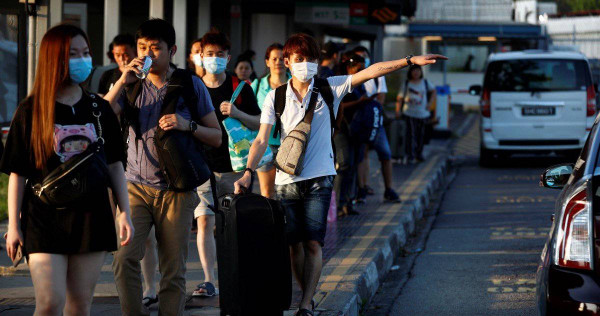
One of the world’s busiest border crossings, the Causeway saw hours-long queues as people tried to enter Singapore from Johor Bahru in the final hours before Malaysia’s travel restrictions to curb the spread of COVID-19 came into force on Wednesday (Mar 18).
A couple carrying a toddler outside Singapore’s Woodlands Checkpoint shortly after midnight Wednesday (Mar 18), shortly after Malaysia’s new travel restrictions took effect. (Photo: Try Sutrisno Foo)
(Updated: )
Bookmark
SINGAPORE: Commuters on the Causeway endured hours-long queues to enter Singapore from Johor Bahru before Malaysia’s new travel restrictions to curb the spread of COVID-19 took effect on midnight of Wednesday (Mar 18).
For the next two weeks, Malaysia will bar citizens from going overseas and foreigners from entering the country, part of a movement control order that was announced by Malaysian Prime Minister Muhyiddin Yassin on Monday night, amid a spike in COVID-19 cases in the country.
Traffic on the Causeway, as seen from Singapore on Mar 17, 2020, several hours before Malaysia’s travel restrictions came into effect. (Photo: Hanidah Amin)
Outside JB Sentral in Johor Bahru, traffic heading towards Singapore slowed to a near-standstill in the hours before the restrictions came into force.
Pedestrians, some carrying large suitcases, were seen walking across the Causeway to Singapore as well.
Traffic on the Causeway remained gridlocked past midnight, and an ambulance, with sirens wailing, was seen trying to make its way through the traffic.
Outside Woodlands Checkpoint in Singapore, those who had made the crossing were seen trying to get on public buses or waiting by the kerb for private transport.
Commuters boarding a bus outside Singapore’s Woodlands Checkpoint shortly after midnight Wednesday (Mar 18). (Photo: Try Sutrisno Foo)
Commuters boarding a bus for Queen Street, after arriving in Singapore ahead of Malaysia’s new travel restrictions. (Photo: Try Sutrisno Foo)
People at Woodlands Checkpoint waiting for private transport after crossing the Causeway ahead of Malaysia’s new travel restrictions. (Photo: Try Sutrisno Foo)
Outside Singapore’s Woodlands Checkpoint shortly after midnight Wednesday (Mar 18), after Malaysia’s new travel restrictions came into force. (Photo: Try Sutrisno Foo)
By 2am, the traffic on the Causeway had dwindled significantly, with mostly heavy vehicles left awaiting entry into Singapore.
Download our app or subscribe to our Telegram channel for the latest updates on the coronavirus outbreak: https://cna.asia/telegram
People outside Singapore’s Woodlands Checkpoint shortly after midnight Wednesday (Mar 18), after crossing the Causeway ahead of Malaysia’s new travel restrictions. (Photo: Try Sutrisno Foo)