Home Blog Page 4226

Shaky Chen just makes it

0

Perhaps it is the fact that in two previous attempts at the badminton event, he has never succeeded in getting past the second round.

Or maybe it is the somewhat notorious reputation that the Singapore Indoor Stadium has made for itself as a tricky venue to play in.

But something about playing at the OUE Singapore Open has gotten world No. 1 Chen Long uncharacteristically superstitious.

Soon after a 18-21, 21-18, 21-19 win over India’s H. S. Prannoy yesterday that was too close for comfort, the Chinese shuttler joked that perhaps doing fewer media interviews might boost his chances.

“I think maybe I should not do any interviews,” he said cheekily. “It seems like every time I do interviews, I end up not getting into the quarter-finals.

“This venue is well known on the circuit. A lot of top players have not been able to win the title here. So I’m quite happy to just be able to win one round.”

Playing one of the first matches of the day, Chen admitted that his performance yesterday was below par.

Just three points away from a shock first-round exit, the 2012 Olympic bronze medallist had to rally against a fearless and aggressive Prannoy, the world No. 22, to etch out a win.

Said Chen: “Maybe I’m still adjusting to the draught here, but I made a lot of mistakes. If I had made fewer of them, it wouldn’t have been such a laborious third game for me. It got a bit too tight, but I guess I lucked out.”

That great escape earned him a second-round meeting against a tricky adversary – Thai Boonsak Ponsana, a two-time champion here.

While Chen lamented the possibility of having to adjust to the draught again today should he play on a different court, team-mate Lin Dan said he faced no such issues.

Playing in Singapore for the first time since conceding a walkover in the 2011 final, Lin’s appeal was undeniable, drawing a decent crowd to the arena even on a weekday morning.

Said the two-time Olympic champion: “It feels as if significant improvement has been made to the draught issue since the last time I played here.

“Maybe it’s due to the feedback and effort of the local organisers over the years.

“It’s very encouraging to see that a first-round match on a Wednesday morning can get people coming to support too.”

Besides the Chinese, the event’s other big names also got past their opening rounds with little hassle.

Despite fighting a flu she caught last week and a roll of her left ankle in her match early in the match yesterday, Spaniard Carolina Marin remained untroubled, beating Indonesia’s Lindaweni Fanetri 21-12, 21-9.

The world No. 1’s greater concern before playing Thailand’s Nitchaon Jindapol today will be nursing her foot.

She said: “I had a good performance and did really good during the match. Now (my ankle) is a little bit painful.

“I’ve got chronic injury in my ankle so I have to take care of it.”

Second seed Nozomi Okuhara played the last match of the day, closed out a swift 21-5, 21-9 victory against Indonesian Yulia Yosephin Susanto. The Japanese will play defending champion Sun Yu of China today.

Denmark’s world No. 5 Jan Jorgensen was the highest-profile casualty of the day, going down 16-21, 20-22 to Japan’s world No. 26 Sho Sasaki.


This article was first published on April 14, 2016.
Get a copy of The Straits Times or go to straitstimes.com for more stories.

Image: 
Category: 
Publication Date: 
Friday, April 15, 2016 – 05:00
Send to mobile app: 
Source: 


Story Type: 
Others

Source link

NHB launches website to house all available heritage resources

0

SINGAPORE – The National Heritage Board (NHB) has launched a one-stop portal which will, for the first time, house all available heritage resources under one roof.
This was announced by Mr Baey Yam Keng, Parliamentary Secretary for the Ministry of Culture,…

Source link

Katy Perry wins round in bid to buy convent

0

LOS ANGELES – Pop superstar Katy Perry on Wednesday won a round in a prolonged legal saga to move into a scenic former convent in Los Angeles.

With more than 86 million followers, Perry is the world’s most popular person on Twitter but she has struggled to win over a crucial market of two – a pair of elderly nuns who oppose selling the complex to the singer for US$14.5 million (S$19.8 million).

The nuns, who voiced distaste for the “I Kissed a Girl” singer, had signed a deal to sell the convent to a restaurant owner, Dana Hollister.

But Los Angeles Superior Court Judge Stephanie Bowick in a brief hearing on Wednesday invalidated the deed.

Her move came in response to the pleas not just of Perry but of the archdiocese, which said that the two sisters, Rita Callahan and Catherine Rose Holzman, did not have authority to complete the sale.

The archdiocese said that Perry had offered the $14.5 million in cash, while Hollister had only paid $100,000 of a promised $15.5 million – $10 million for the former convent and $5.5 million to buy out a property on the complex.

The convent, known as the California Institute of the Sisters of the Most Holy and Immaculate Heart of the Blessed Virgin Mary, once had more than 100 nuns.

The sisters no longer live on the property but Callahan and Holzman argued that they had sole authority under the institute’s bylaws.

Perry, who grew up as a born-again Christian but is known for her support of gay rights and sultry songs such as “Teenage Dream,” has visited the nuns and sung for them in a fruitless bid at persuasion.

Image: 
Category: 
Publication Date: 
Thursday, April 14, 2016 – 14:43
Send to mobile app: 
Source: 


Story Type: 
Others

Source link

Feng faces fight from team-mates for Rio spot

0

Feng Tianwei might have endured an inconsistent start to 2016, one marred by early exits from tournaments and a disappointing World Team Table Tennis Championships outing in Shah Alam, where the women finished without a medal for the first time since 2006.

But the world No. 7 is determined to put her woes behind her as she bids to qualify for her third straight Olympics at the ongoing Asian Olympic Qualification Tournament in Hong Kong.

Feng’s showing at last month’s world team championships bodes well. She carried her team ably and lost only once in 12 matches despite nursing a shoulder injury.

Reflecting on the tournament, Feng, 29, said: “The biggest lesson I got from the world championships was to never give up.

“I’ve recovered well from my injuries. For me, the Olympics is a special event. The competition will be tough but I have prepared well and will give it everything.”

The qualifying tournament is divided into two stages – regional, then continental-wide.

The men’s and women’s champions of each regional tournament – of which there are five – will qualify for Rio. For the continental-wide segment, six men’s and women’s singles spots are up for grabs.

If the Singapore players fail to secure a spot in Hong Kong, they can still qualify for Rio by being among the top 22 players in the International Table Tennis Federation’s Olympic singles ranking.

Each National Olympic Committee (NOC) can field a maximum of two players in the singles events. NOCs with two qualified singles athletes will qualify for the team event.

Feng received a bye into the quarter-finals and will face Thailand’s Nanthana Komwong today. A win could pit her against reigning SEA Games champion, Thailand’s Suthasini Sawettabut, the world No. 59 who shocked Feng 3-1 en route to winning gold in Singapore last year.

But according to women’s head coach Chen Zhibin, Feng’s biggest challengers will likely be team-mates Yu Mengyu, Lin Ye and Zhou Yihan. Chen added: “For this tournament, Tianwei and Mengyu have worked on receiving serves and controlling the first three rallies. Physically they should be sound as we’ve been working on that.”

The Republic’s male paddlers will also be favourites to clinch the South-east Asian berth.

Singapore’s top-ranked male player Gao Ning (world No. 27), has regained both his fitness and confidence, having recovered from an ankle injury that cut short his involvement in Shah Alam.

Gao will face Thailand’s Supanut Wisutmaythangkoon. He said: “I can’t really say who will be my strongest opponent. Everyone will be giving their all because there is a lot at stake, but I’ve recovered well and am very confident.”

In yesterday’s round-of-16 matches, Lin beat Indonesia’s Ceria Nilasari Jusma 4-1 (11-9, 5-11, 11-3, 11-7, 11-8) and will face Zhou. Yu will play Thailand’s Orawan Paranang.

In the men’s matches, Chen Feng swept aside Malaysia’s Leong Chee Feng 4-0 (11-3, 11-3, 11-6, 11-3), while Yang Zi beat the Philippines’ Jann Mari Nayre 4-0 (11-9, 11-3, 11-7, 13-11).

Today, Chen will play Thailand’s Padasak Tanviriyavechakul, Yang will take on Indonesia’s Ficky Santoso while Li Hu, Singapore’s other male paddler, will play Indonesia’s Agus Pramono.


This article was first published on April 14, 2016.
Get a copy of The Straits Times or go to straitstimes.com for more stories.

Image: 
Category: 
Publication Date: 
Friday, April 15, 2016 – 05:00
Send to mobile app: 
Source: 


Story Type: 
Others

Source link

Giving unwed mothers more benefits an inclusive move

0

On Tuesday, unwed mothers achieved a measure of relief.

Minister for Social and Family Development Tan Chuan-Jin announced that the Government is ready to extend the full 16-week maternity leave to them.

Their children will also have access to a Child Development Account (CDA), a savings scheme meant to pay for childcare and healthcare costs.

These benefits were previously unavailable to unmarried mothers, despite years of campaigning by several MPs and women rights groups such as the Association of Women for Action and Research (Aware).

Before, unwed mothers could get only eight weeks of maternity leave, paid for by their employers.

In 2007, the Government said it would give the full 16 weeks – if the women walked down the aisle within a year of giving birth.

Still, for the latest move, the Government made it clear that the benefits are to help children of unwed mothers, not to condone having children out of wedlock.

Said Mr Tan: “I feel that we can do more to support their efforts to care for their children and reduce the disadvantages that their children may face at birth.

These benefits are useful in the child’s developmental or caregiving needs. They also support the unwed parent’s efforts to provide for the child.

“The extension of these benefits to unwed parents does not undermine parenthood within marriage, which is something that we do encourage and it is still the prevalent social norm.”

Unmarried mothers will still not get the Baby Bonus cash gift and parenthood tax rebates that other singles, such as widows and divorcees, receive. They also have to wait until they turn 35 to buy a Housing Board flat under the singles scheme.

While calling Tuesday’s announcement a step in the right direction, Aware’s programmes and communications senior manager, Ms Jolene Tan, said being a single mother still carries stigma.

Aware is trying to change mindsets. Last month, it launched its most public campaign yet on single parents, whether divorced, widowed or unwed.

Posters have been put up along the North East MRT line, showing single parents with slogans such as: “What makes one mother less than another?”

That is also the key thrust of their video, which is screening at Queensway Shopping Centre, challenging viewers to guess which of the mothers talking about their children are not married.

HOW MUCH TO GIVE

The issue of how much assistance to provide single mothers is not unique to Singapore and vexes even countries like the United States.

The basic argument is that single motherhood is bad for society and for the child. Supporters of the traditional family unit cite studies which show that a two-parent household is better for children.

Those who grow up with only one parent do less well academically and emotionally, partly because they are without the perspective of one gender.

The single-wage family is less financially stable. In America, links have even been drawn between crime and children of single-parent households.

There is also a worry that legitimising single parenthood will add to the erosion of the traditional family unit.

This is a stance the Singapore Government has repeated time and again. In 2010, Mr Vivian Balakrishnan, then Minister for Community Development, Youth and Sports, said families are a social pillar of Singapore and that its breakdown is a key social issue.

In March last year, Mr Chan Chun Sing, then Minister for Social and Family Development, also said Singapore needs to find a balance between supporting unwed mothers and the policy to support parenthood within marriages.

The Government is still navigating that same tightrope today. As it has always said, the Government can only move as far as society is prepared to.

And it seems that most Singaporeans, while ready to give children of unmarried mothers a leg-up, are reluctant to accept such family structures as the norm.

A survey in 2012 of around 4,650 people by the National Population And Talent Division – part of the Prime Minister’s Office – found that 80 per cent of single respondents and 85 per cent of married ones felt only married parents should have children.

Still, most were supportive of Tuesday’s announcement. Comments on The Straits Times Facebook page were generally positive, and MP Louis Ng (Nee Soon GRC) said “everyone has welcomed the news”.

MP Alex Yam (Marsiling-Yew Tee GRC) did receive some concerns.

He wrote on his Facebook yesterday that he was asked by two of his friends if this will encourage people to not marry. “Another asked if this will lead to more children out of wedlock,” he wrote.

But there is also research which shows that it is not the number of parents which count, but the quality of family relationships. A child with parents at each other’s throats could have worse developmental outcomes, than one being raised by one parent.

What is most important though, said National University of Singapore (NUS) sociologist Paulin Straughan, is that single mothers often need more support than their married counterparts.

“When the child is raised in a single parent household, there might even be more need to step in, compared with children in intact family households.”

While there are no figures for unwed mothers in Singapore, there were 446 babies registered in 2014 – almost a quarter of which were born to women below 19 – without the fathers’ names.

In 2013, there were 448 babies registered without their fathers’ names.

A DIFFICULT CHOICE

There are still many challenges for unwed mothers, but those who spoke to The Straits Times highlighted three key ones – housing issues, employment and discrimination.

Unlike a divorcee or widow, an unwed mother and her child are not considered a family nucleus, and that means she cannot buy a flat.

The only option is to wait until she turns 35, when she can purchase a flat under the singles scheme.

This means having to rent and may become a financial burden, or living with relatives, sometimes in overcrowded conditions.

“Is that living environment conducive and safe for a newborn child? Do other people living in the house pose a threat to the child?” asked Mrs Jennifer Heng, director of communication and education at DaySpring New Life Centre, which helps pregnant women in need of support.

Housing laws also affect divorced parents, especially low-income ones who had to sell their marital home to pay off housing loans, yet cannot rent a public flat for 30 months.

Employment is another issue.

Logistics executive Charlotte, 39, who asked to be identified by just her first name, had her son two years ago.

She said it is difficult to find a job that pays well enough to support mother and child – and pay for infant care – yet is flexible enough to give her the time to care for her son.

Worse, she experienced discrimination from her friends.

“When I said I was a single mum, I had reactions from disgusted looks to people asking me if the father was already married and why did I not use a condom,” she said.

“Just because my ex left us before we got married, instead of after, my child and I get discriminated? It is very important for the Government to treat all parents equally.”

Business owner Bibiana Neo, whose son was born a year ago, is glad that the extension of maternity leave will benefit those who come after her.

The 33-year-old, who now runs her own business, but was once in sales and marketing, found it hard to cope with a new baby by herself.

While her bosses allowed her to bring the baby to work or work from home, the demands of child-rearing ate into her performance.

Ms Neo believes she could have stayed in her job if she had been given the full maternity leave and CDA benefits.

“It is not right to separate unwed mothers and mothers who are married. Mothers are still mothers,” she said.

WINDS OF CHANGE?

This week’s announcement does not indicate a shift in Government policy away from the traditional family, said MP Seah Kian Peng (Marine Parade GRC), who has been speaking up for unwed mothers since he entered Parliament in 2006.

But he said it is still a significant move that should not be downplayed. “It was always ‘no’ before,” said Mr Seah.

Asked if he thought Singapore could be ready for more change, he said: “I think sentiments are changing and the next big move could cover housing – that is probably the need, the next most important area.

“Am I saying that I support people to bear children out of wedlock? Of course, I don’t.

“But if it so happens this way, we need to do what we can to help the mother and the child.”

NUS’ Professor Straughan believes that policies will change as long as there are gaps that children of unwed mothers fall into.

“If the Government continues to focus on the well-being of the child, I won’t be surprised if more will be done.”

Aware also believes that the current changes are not only pragmatic but also “symbolically helpful”.

Said Aware’s Ms Tan: “This suggests that winds of change are blowing and we are hopeful the Government will review all policies that affect unwed parents.”

While the Government’s stance towards unwed mothers has not changed, the move to equalise maternity leave could persuade more to see that their children should be helped.

It could also slowly reduce stigma. Said Prof Straughan: “Raising a child in marriage is already so difficult, what more doing so without a father. Equal benefits all around will not shift our focus on marriage.”


This article was first published on April 14, 2016.
Get a copy of The Straits Times or go to straitstimes.com for more stories.


Image: 
Publication Date: 
Thursday, April 14, 2016 – 14:47
Send to mobile app: 
Source: 


Story Type: 
Others

Source link

SDP's Chee Soon Juan: He aims to visit every flat

0

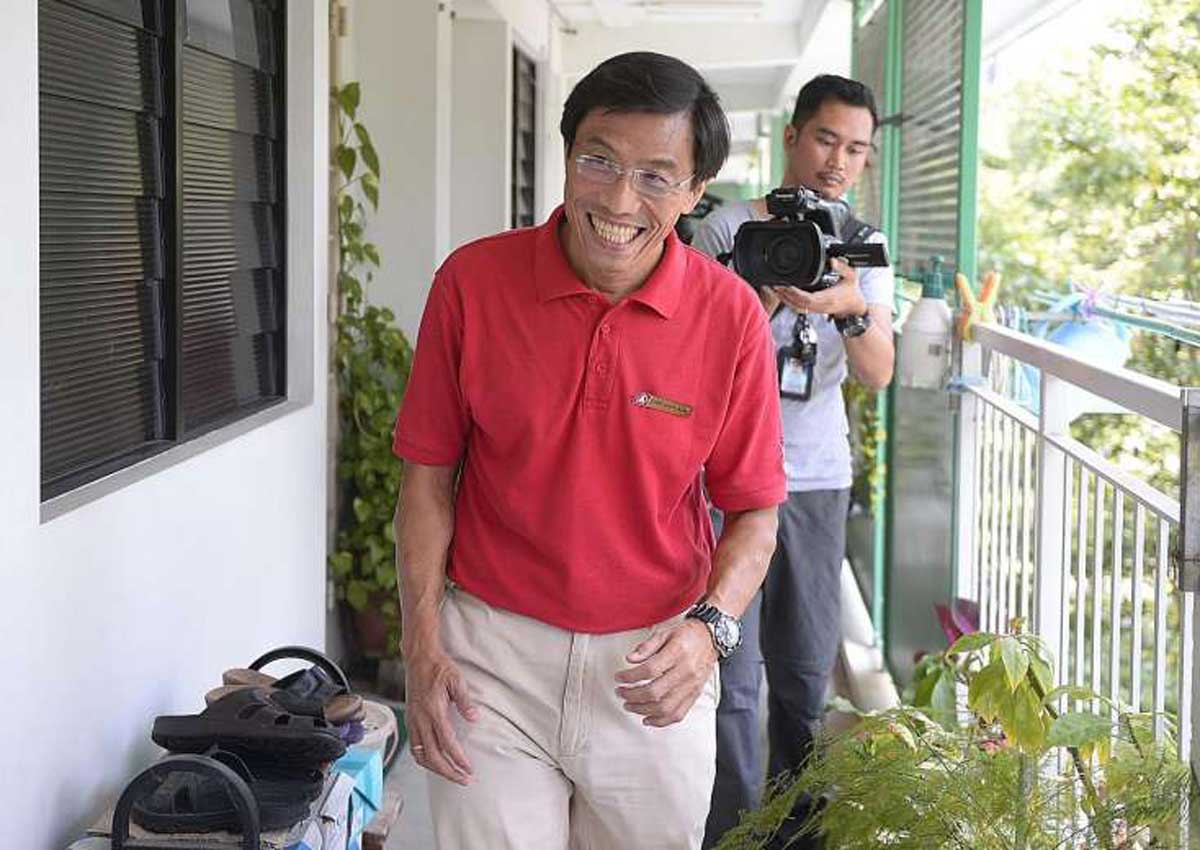
Decked in red party T-shirts, Dr Chee Soon Juan and his team of volunteers have been down in Bukit Batok almost daily for the past month.

The 53-year-old secretary-general of the Singapore Democratic Party (SDP) said his team has knocked on every door in the single-seat constituency as they gear up for a by-election.

And they are going for a second round, he told The Straits Times, as not all residents were home when they went round.

The SDP was the quickest of the opposition parties to stake a claim in the ward, organising a walkabout in the constituency just a day after the PAP announced that Mr David Ong had resigned as MP.

“We are in it to win. We want to make sure that we put in maximum work,” Dr Chee said in an interview at his party’s Ang Mo Kio headquarters last week.

He is aware of the task ahead. At the 2015 General Election, the SDP’s Mr Sadasivam Veriyah won just 26 per cent of the vote. In nearby Holland-Bukit Timah GRC, the four-man SDP team that Dr Chee led won 33 per cent of the vote.

But SDP volunteers recall that at the 1991 General Election, their candidate, Mr Kwan Yue Keng, won over 48 per cent of the vote in the Bukit Batok single seat.

Dr Chee believes it is a plus that this is a by-election. But he still needs to get out and convince residents. This includes talking about how the SDP can manage the town should it win.

“A lot depends on our own fight, our own strategy rather than it being a by-election,” he added.

Dr Chee’s first political contest was in the 1992 Marine Parade by-election. His team got 24 per cent of the vote in a four-way race.

He sat out the 2006 and 2011 elections as he was an undischarged bankrupt, but stood in September last year.

His team relies heavily on technology, live-streaming press conferences and posting videos online. They also use the slogan “Now is the time” and tell residents Dr Chee will be a more useful voice to have in Parliament than another PAP MP.

Dr Chee cited retrenchment concerns and cost of living as the two most pressing issues for residents. He told them that he will raise these issues if he is elected.

He said the SDP will launch programmes to help residents raise their quality of life, and pledged to surpass PAP-run town councils in terms of transparency. He announced a transition team to take over estate matters and form a new town council should he win.

Asked how residents have taken to him, Dr Chee paused, then said that they are generally polite.

But they have complained about rising prices and how Mr Ong initially did not provide a proper explanation to them of why he had resigned.

And what does Dr Chee’s family have to say about his latest bid?

“My children said, ‘Oh no! Again? Didn’t you just have one?'” he said. “But they take it in their stride. I tell them it is always an opportunity to make that difference, even if it is incrementally.”


This article was first published on April 14, 2016.
Get a copy of The Straits Times or go to straitstimes.com for more stories.

Image: 
Category: 
Publication Date: 
Thursday, April 14, 2016 – 14:43
Send to mobile app: 
Source: 


Story Type: 
Others

Source link

Drivers told to pay more for 'parking package'

0

Ms Elsie Chng got a shock when she opened her e-mail inbox last Tuesday morning.

She received an e-mail from carpark operator Wilson Parking, saying her season parking at the Toa Payoh North industrial estate would be revoked unless she paid an extra $40 a month for a package that also allows her to park at the Singapore General Hospital in Outram Road.

“Why would I want to park there when I work in Toa Payoh?” said Ms Chng, a 35-year-old assistant marketing manager. She currently pays $90 a month for her parking.

She called the carpark operator to inquire about the new package and was informed that it would also allow her to park at Tanglin Mall and at Shaw Plaza in Balestier Road.

Mrs Agnes Tan, 37, who also received the e-mail, said Wilson Parking should have allowed drivers to choose carparks that they frequent. “I would have chosen ones near where my children go for their supplementary classes,” said the branding manager.

She said at least 11 of her colleagues received the e-mail, which had gone viral after being posted on citizen journalism website Stomp last Wednesday.

It is not known how many people had received the e-mail.

Mapletree Industrial Trust Management, which operates the Toa Payoh North industrial estate, said it was not consulted before the e-mail was sent out. A spokesman for Mapletree said it had received several complaints and raised the matter with the carpark operator.

“We will also be contacting affected tenants directly on this matter,” she said.

Wilson Parking business development manager Alvin Lim said the company had “unreservedly apologised” to the affected parties.

“We have informed them their parking arrangements remain status quo,” said Mr Lim.

Wilson Parking is one of the largest carpark operators in Singapore, with almost 300 carparks islandwide.

One of the affected drivers, Ms Angelia Tay, 46, said she received the apology by e-mail.

She said she would continue parking at the industrial estate and appreciated that Wilson Parking quickly rectified their mistake.

“Their initial offer was really unreasonable,” said the marketing communications manager .


This article was first published on April 14, 2016.
Get a copy of The Straits Times or go to straitstimes.com for more stories.

Image: 
Category: 
Publication Date: 
Friday, April 15, 2016 – 06:30
Keywords: 
Send to mobile app: 
Source: 


Story Type: 
Others

Source link

Parliament: People's Association has to cater to more sophisticated population

0

April 14, 2016 2:44 PM

SINGAPORE – The People’s Association (PA) has to cater to an increasingly sophisticated population, but remains non-partisan, said Minister in the Prime Minister’s Office Chan Chun Sing on Thursday (April 14).


Source link

PAP's Murali Pillai: 'I never really left Bt Batok'

0

Two weeks ago, lawyer Murali Pillai ‘s team posted a 30-second video on Facebook to introduce him to residents in Bukit Batok.

The video is entirely in Mandarin, and in it, the People’s Action Party (PAP) candidate for the upcoming Bukit Batok by-election asks residents to call him “Ah Mu”.

Although the 48-year-old is familiar with the area, since he began volunteering there 16 years ago, he said every bit helps him to reach out to the 27,000 voters in the constituency.

But he dismisses the suggestion that the video is prompted by the fact that he is the first Indian PAP candidate since 1988 to vie in a single-seat ward that has a higher proportion of Chinese residents than the national average.

“Friends and colleagues have been calling me Mu for aeons,” he told The Straits Times in an interview at a coffee shop last week.

“The issue of reaching out to Singaporeans who do not speak English is not a new one for me.”

He has dealt with similar demographics in the Paya Lebar ward of Aljunied GRC, where he contested in September last year as part of a five-man PAP team that narrowly lost to the Workers’ Party.

“To be effective community leaders, we need to understand residents well. That’s why I’ve resolved to learn a little bit of Mandarin. I am glad to say I have no shortage of teachers,” said Mr Murali, who attended Hwa Chong Junior College.

For PAP leaders looking for a candidate who is familiar with the ground and can reach out to voters, Mr Murali was a natural fit.

Before moving to Aljunied GRC in 2012, he was secretary of the Bukit Batok PAP branch for five years from 2007. He also tended to residents when their MP, Dr Ong Chit Chung, died in 2008.

They are again without an MP after Mr David Ong resigned from the post and the party on March 12 over an alleged extramarital affair.

Mr Murali also responded to criticism from some quarters that he is being moved from one hot seat to another.

“I’ve never really left Bukit Batok,” he said.

Mr Murali, who is married to a teacher with whom he has four children, first got involved in grassroots work helping to advise residents on legal matters in Bukit Batok in 2000 and joined the PAP a year later.

“Relationships once forged do not end just because you go to another place. As and when I’m asked to help, I’ll help,” he said.

Since the announcement of his candidacy on March 21, he has been “re-acquainting” himself with residents, covering at least one to two blocks every night, and making the rounds of markets on weekends.

Residents have been warm to him during these visits. He finds it especially encouraging when some tell him that they remember him from when he served there previously.

He did not want to be drawn into saying how he intended to distinguish himself in Parliament. His opponent, Singapore Democratic Party chief Chee Soon Juan, has said that Mr Murali, if elected, will be no different from the 82 other PAP MPs in Parliament.

Mr Murali’s response? Getting to know residents and dealing with their concerns are bigger priorities.

These, in turn, will shape the issues he will raise in Parliament if elected. So far, two stand out: employment opportunities for the retrenched, and helping the elderly age with dignity and as few worries as possible.

“These are not issues I came up with on my own. These are issues that matter to Bukit Batok residents,” he said.


This article was first published on April 14, 2016.
Get a copy of The Straits Times or go to straitstimes.com for more stories.
Image: 
Category: 
Publication Date: 
Thursday, April 14, 2016 – 14:39
Send to mobile app: 
Source: 


Story Type: 
Others

Source link

Some gaps in rules on private-hire cars

0

Cabbies around the world have rallied against ride-hailing apps such as Uber, staging protests in cities from Kuala Lumpur to Buenos Aires.

Their main complaint is that unregulated and unlicensed drivers are competing unfairly with them.

On Tuesday, the Singapore Government announced a set of “light-touch” regulations requiring drivers from services like Uber and GrabCar to be licensed, undergo background checks and medical screenings and register their cars.

The rules, revealed after a six-month review of the sector, have provided clarity on what were grey areas. They are welcome news for commuters who may have once been hesistant to tap an app to order a private car, driven by a non-professional .

By the middle of next year, all Uber and GrabCar drivers will have to display their licences and mark their cars with decals, offering reassurance to passengers that their service is bona fide.

As private entities, Uber and GrabCar have had no access to their drivers’ criminal records for background checks. They worked around this by either requiring drivers to make a legal declaration of their criminal history or hiring a third-party screening agency to find out.

This will likely no longer be an issue as the Government plans to license each of the 8,000 to 10,000 private-hire car drivers here.

But the rules, targeted mainly at drivers, only address one cog in the wheel of the Uber business model, which also involves car rental firms and insurers.

Uber and the likes are tech companies responsible for pairing up driver and passenger, and leave the actual business of transportation to third-party independent contractors.

In Singapore, many private-hire car drivers lease vehicles from rental firms, which maintain the cars and insure them commercially. While taxi operators must send their cabs for inspections every six months and maintain fleets that are no older than eight years, the same rules do not apply to rental firms.

Uber and GrabCar said they evaluate the condition of the cars before accepting them for use. After that, it is up to the rental firms to keep them road-worthy.

While all cars used for private chauffeuring must be insured commercially, it is unclear whether they all possess the same level of coverage in terms of protecting passengers or drivers in accidents.

National Taxi Association executive adviser Ang Hin Kee has suggested that the regulations spell out a standard level of insurance coverage, as they do for cab firms.

Along with the new regulations, changes have also been made to the taxi driver vocational licence course, such as shortening it from 60 hours to 25 hours.

This is still more than twice as long as the 10-hour course which has been created for private-hire drivers.

While taxi drivers have to be at least 30 years old and Singaporean, Uber and GrabCar drivers do not have such age restrictions. They can be permanent residents or work-permit holders and only have to possess a driver’s licence for two years.

The bar has been lowered and rightfully so, because the bulk of private-hire car drivers – between 60 and 70 per cent, going by industry estimates – are part-timers. But will these disparities make private-hire driving a more attractive proposition than taxi driving?

Uber and GrabCar drivers are free to go onto the roads whenever they please, but cabbies face standards requiring them to clock a certain minimum daily mileage.

Taxi firms are already setting up subsidiaries to run their own private-hire fleets – an indication of where drivers’ preferences are swinging towards.

The lines are becoming blurred, and in the age of the GPS and the use of apps to hail a ride, taxi driving seems to be heading towards oblivion.

To remain relevant, taxi driving must be more than just transporting a passenger from Point A to Point B. Customer service, going the extra mile, a good knowledge of routes, and knowing how to skirt traffic jams will become increasingly important in why a customer chooses a taxi.


This article was first published on April 14, 2016.
Get a copy of The Straits Times or go to straitstimes.com for more stories.
Image: 
Publication Date: 
Thursday, April 14, 2016 – 17:15
Send to mobile app: 
Source: 


Story Type: 
Others

Source link