Home Blog Page 4217

Confessions of a star

0

More than two decades ago, while he was stuck in a traffic jam in Delhi, Shah Rukh Khan (left) realised that strangers had started to recognise him.

“I was in a rickshaw near Panchsheel in Delhi. There were two ladies in the next auto. They were slumped over… almost like the weight of the world was on their shoulders. They looked really morose. And, then suddenly their faces lit up. I didn’t even realise that they were shouting Abhi Abhi… (the character Abhimanyu Rai Shah Rukh played in the TV show Fauji).

“It was very awkward. Both the rickshaw drivers were trying to figure out what’s happening and in that moment the traffic lights changed and we drove off. I wasn’t used to being called by a character’s name, so for about 10 minutes after we moved, I didn’t realise they were calling out to me.”

Today, Shah Rukh is one of the most recognisable men in the world. So the challenge for his next film, the very ambitious Fan, was to make sure the two lead characters look different.

Directed by Maneesh Sharma, the film tells the story of Gaurav, a fan who gets obsessed with his idol Aryan Khanna – with both characters played by Shah Rukh.

He is no stranger to double roles but Gaurav’s look stumped everyone. “When we decided that the two characters shouldn’t look similar, we realised that we didn’t know how to achieve it. Maneesh went to LA to meet make-up artists while my team (at Red Chillies) started work on VFX to figure out if it is possible to make someone look so much younger. We then shot a portion of the film and failed miserably. It was so terrible that we almost shelved the film.”
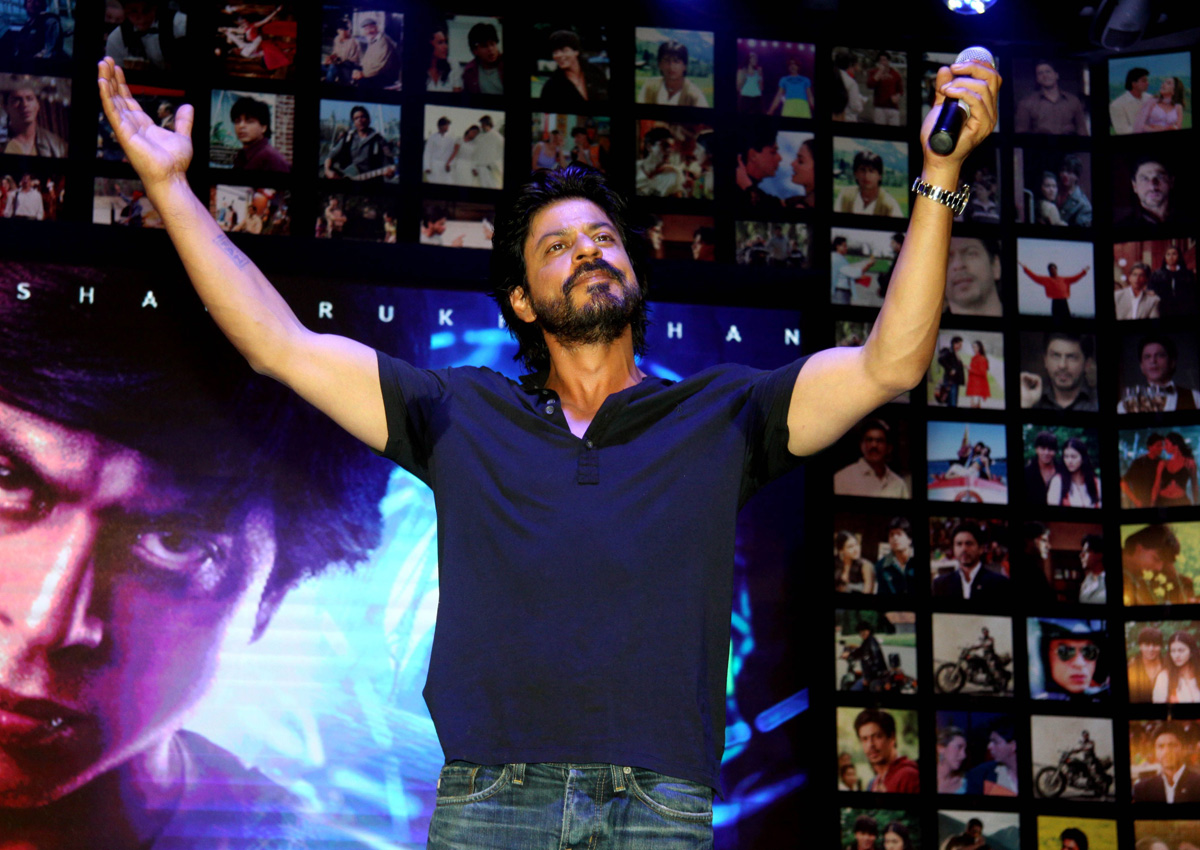
Shah Rukh Khan poses during the trailer launch of his forthcoming Hindi film ‘Fan’, directed by Maneesh Sharma and produced by Aditya Chopra, in Mumbai. Photo: AFP

It was one of those should-we-shouldn’t-we late night meetings at Shah Rukh’s heritage home Mannat, in Mumbai’s tony neighbourhood Bandra, that convinced everyone to take the plunge.

Says Shah Rukh: “I saw the film and I think we’ve got it right. My kids really liked the film and me in it. They gave me a hug at the end. Otherwise they hug me a lot but for a film, they haven’t before. (Smiles) They said, ‘we are very proud of you papa’.

“It was very difficult and challenging. There is always that feeling that we won’t pull it off. Obviously, you never know until the release… When you do a film that you can’t predict the fate of and when you get that right, there’s nothing more exciting.”

The initial plan was to release the film to coincide with Shah Rukh’s 50th birthday on Nov 2 last year. “Adi (Aditya Chopra, the film’s producer) thought that it would be cool for a 50-year-old to be seen playing a 25-year-old. Unfortunately, we weren’t ready for it because it took us a whole year to do the VFX. It took a lot to create Gaurav,” says Shah Rukh.

Apart from the special effects, Shah Rukh lost some weight to play Gaurav. He also changed his body language and his voice. But even after he got Gaurav’s physicality in place, the actor didn’t know what made the character tick.

“He is not based on anyone I have seen in my fans, thankfully. He is a different and strange beast. I don’t know how he got created. There is huge input from everyone from Manu (Anand) the cameraman to the costume designer Niharika (Bhasin-Khan), Greg (Cannom) the make-up guy and my (Red Chillies) VFX team but when I look at him, I don’t know who he is. I don’t understand him or how I did it. I think, I created him in a state that was dichotomous or schizophrenic.”

One would assume that Shah Rukh would bring shades of himself to Aryan Khanna the superstar but that couldn’t be further from the truth.

“Aryan is a superstar without the trappings or flamboyance. He is not like me at all. It would be wrong of Adi and Maneesh to expect me to play myself in this film.

“Aryan is more practical. He is worried about his status and he is more patient. I think he is a lot more mature than me,” he says with a laugh.

Shah Rukh Khan (L) poses with a wax figure of himself at a photocall at Madame Tussauds to promote his upcoming film ‘Fan’ in London. Photo: AFP

Has he ever been a fan?

“I have liked a lot of people and appreciated their work. I am being asked about being a fan, I don’t want to sound arrogant… I like Milkha Singh, Gavaskar and Muhammad Ali. I have an original Life magazine cover of Muhammad Ali.

“Being a fan is a luxury; loving someone is a luxury. You need to have the time for it. You sit for four hours and cut that person’s photo out of a magazine. Unfortunately, because of my circumstances – my parents died young – I didn’t have time to play. I didn’t have the time to be a fan. I had to start working early.

“From age 15, I worked until I was 25 when my mother died. And, before I knew it, I was a star. So, before I had the luxury of being a fan, I was a star. Being a fan is a full-time job and I had to work for a living. I wish I had a Justin Bieber in my life, or Ed Sheeran…”

There is so much talk about this new phase in Shah Rukh’s career where he is working with different directors like Maneesh, Rahul Dholakia (Raees) and Gauri Shinde (untitled film with Alia Bhatt) but he doesn’t understand the fuss.

“I had never worked with Rohit Shetty before Chennai Express. It’s not my world but I really wanted to experience his world. I found his films funny. After watching Golmaal, I called Kareena (Kapoor). I didn’t think I could carry off a line like ‘Don’t underestimate the power of a common man’.

“For an actor, it’s very important to be able to do all kinds of roles. Before that I did a film with Shimit Amin. He was an editor on Asoka, which is how I knew him. Before that, I worked with a choreographer who turned into a director (Farah Khan). I like working with people who have different ideas.”


Get a copy of tabla! for more stories.

Image: 
Category: 
Publication Date: 
Friday, April 15, 2016 – 11:28
Send to mobile app: 
Source: 


Story Type: 
Others

Source link

Back to the joy of just gazing

0

WHEN we were young, and surrounded by space, curiosity, academia and books, our neighbour, who was a professor of astronomy, once took all of us to an observatory to see the stars and the planets.

It was an unforgettable night but it left me wondering about the world of those who observe. The science we were taught was like that too, where conclusions had necessarily to come from observation and study.

The first activity in a fabulous book on chemistry my father gave me was to light a candle and observe everything till it came down to about half its size. When you observe, without distraction, it is incredible how much you learn.

Watching the IPL from home, I realised I had indeed been thrown that opportunity again. In a whirl of hotels, airports, programmes and deadlines, you rarely get time to merely gaze at something; to look at things without seeking to draw an immediate connect.

And so I watched Virat Kohli and A.B. de Villiers bat together and I realised how much I actually enjoyed it.

These are two tough competitors and whatever they might say about each other, and it is nice to see such grace, one wants to be better than the other.

But they played their own way, they didn’t seek to outdo each other, A.B. played at his strike rate, Kohli at his. Within that competition and togetherness, each played in the style that defined him, each remained the player he was.

Over the next six weeks, I am hoping to similarly observe players and two come to mind straightaway. One is Muztafizur Rahman from Bangladesh who has it within him to become another Lasith Malinga who, this year, will be missed not just by the Mumbai Indians but by the IPL itself. He has been one of its pillars.

For the first time Muztafizur is going out of the shelter that his culture and his teammates have afforded him. There will be no one to speak his language, his hefty price tag will put pressure on him and the fact that he is already a four-over bank for his side means his performance will be scrutinised more than that of any other bowler.

He could emerge out of this IPL as a major star or he could be affected by attention and expectation.

Watch him closely.

Just as fascinating will be Sunil Narine.

He is a quiet man and he has endured a lot in recent times. He has been faced with the prospect of never playing cricket again and has now to live with the reality of not seeing his father.

He must emerge out of both, for a player has insecurities and worries like everyone else, and show the world that with his newly-accepted action, he can still be the most effective bowler of his genre.

KKR have been magnificent with him, with their purse and their affection but, believe it or not, there is also the pressure of repaying kindness.

Batsmen, like predators, will be aware of that too and it will be fascinating to see how they tackle him.

Watch Narine closely.

I will also watch a few youngsters carefully.They are all talented, wonderful to see but some have been offered opportunity greater than others have.

Watch for Hardik Pandya and Pavan Negi who, from being bit players for one team, have to play the lead role for their franchise.

Negi is on a huge contract, the kind of money he couldn’t have dreamt of, and while that is wonderful for him, he will have to start believing that he is a key player for his team. It can be a challenging transition.

Shreyas Iyer is in season two. The last two years have been fantastic and he will be aware that he is a few performances away from being considered good enough to play for India. Manan Vohra was a thrilling player a couple of years ago but with Sehwag’s retirement, has the opportunity to play a whole season.

Sanju Samson has been much appreciated but the runs haven’t quite flowed for him and he is in a team that has another wicketkeeper in Quinton de Kock. Axar Patel was in the World Cup team 14 months ago and since then others of his kind have crept up.

Different situations, different stresses but they must cope and deliver for that is what sport demands. As it will of Gautam Gambhir. The India door is less ajar than it was but the KKR door still offers so much. How will the Pathan brothers cope this year, for example?

I will watch this year’s IPL like I watched the stars and the planets. And the candle.


Get a copy of tabla! for more stories.

Image: 
Category: 
Publication Date: 
Friday, April 15, 2016 – 10:49
Keywords: 
Send to mobile app: 
Source: 


Story Type: 
Others

Source link

Ex-LTA officer, Uber driver charged over Bugis Junction scuffle

0

In a video of the incident which occurred in November 2015, Tan Hock Guan, 51, then an LTA officer, is seen throwing a punch at another man clad in a blue polo tee, believed to be Goh Kok Ling, 60, an Uber driver.

Source link

Muslim groups doing more to guide their community

0

The Muslim community is stepping up its efforts to counter extremist influences online, at a time when radical groups abuse the Internet as a platform for their views.

The religious education curriculum already includes lessons that help inoculate youth against online radicalisation, Minister-in-charge of Muslim Affairs Yaacob Ibrahim told Parliament yesterday.

And the Mufti’s office at the Islamic Religious Council of Singapore (Muis) and the Religious Rehabilitation Group – which counsels radicalised persons – are developing print as well as online material to guide the wider community on the issue.

Dr Yaacob was responding to Malay/Muslim MPs at the debate on the budget for the Ministry of Culture, Community and Youth. Muis is a statutory board under its purview.

The above efforts are part of a range of measures that Dr Yaacob outlined yesterday, which aim to build a progressive Muslim community that strengthens Singapore’s multi-religious society at a time when regional and global events could affect social bonds.

Dr Yaacob, who is Minister for Communications and Information, noted that Muslims in Singapore have long been guided by the principles of moderation and respect for different races and religions.

And while it will be increasingly difficult to balance competing views and interests, the community must instil, especially in youth, an appreciation of diversity.

“To me, being progressive is the ability to understand the modern world with an open mind and heart…We need to be well-read and be respectful as we balance differences in ideas, concerns and interests and gain a consensus to find the best possible solution,” he said.

To better guide the community, Muis will work to build the capabilities of religious teachers.

Some 80 per cent of religious teachers are registered under the Asatizah Recognition Scheme, and Muis will discuss with them how to enhance it and get the remaining 20 per cent – some of whom are informally trained – on board.

To better guide those seeking Islamic religious education abroad, Muis will have an enhanced Student Welfare and Careers Office.

Muis will also share knowledge on how Muslims in multicultural societies like Singapore practise their faith in a multiracial society. It will organise the first conference on fatwa – or religious guidance – in contemporary societies later this year.

And to ensure there are enough prayer spaces for Muslims, 15 mosques have been upgraded and two built since 2009. Maarof Mosque in Jurong West will open later this year, and the Yusof Ishak Mosque in Woodlands next year.

When current projects are ready by 2018, there will be 24,700 more prayer spaces compared to 2009.

Dr Yaacob also said the site for the new mosque in Tampines North has been decided: It will be built along Tampines Avenue 10, in the heart of the future Tampines North town.

Madrasah Al-Arabiah in Lorong 6 Toa Payoh will also have a new home next to its current premises.

The six full-time madrasah are also doing more with technology in teaching and learning, he added. Madrasah Irsyad Zuhri worked with the Infocomm Development Authority to set up a STEM (Science, Technology, Engineering and Mathematics) lab to expose students to game designing and robotics, and Madrasah Aljunied is piloting the teaching of the Arabic language using iBooks.

Dr Yaacob noted that just as the nation’s pioneers struggled to make a nation out of disparate communities, today’s generation must work hard to move into the future.

“Let us not wait for others to find the solutions to the challenges that trouble us,” he said.

asyiqins@sph.com.sg


This article was first published on April 15, 2016.
Get a copy of The Straits Times or go to straitstimes.com for more stories.

Image: 
Category: 
Publication Date: 
Friday, April 15, 2016 – 11:25
Send to mobile app: 
Source: 


Story Type: 
Others

Source link

More school facilities can be used for sport

0

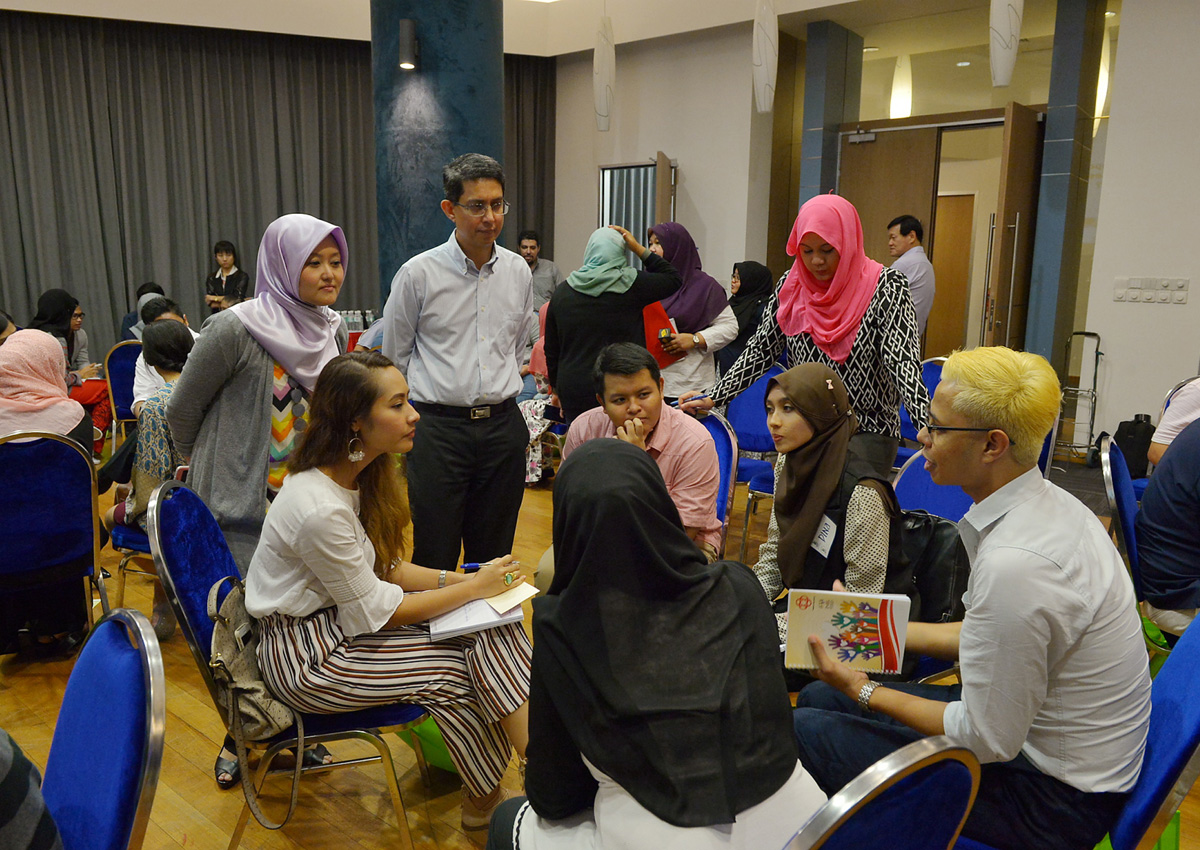
Singaporeans keen to adopt a healthy lifestyle and even pursue sports more seriously will find it easier to do so in the coming years.

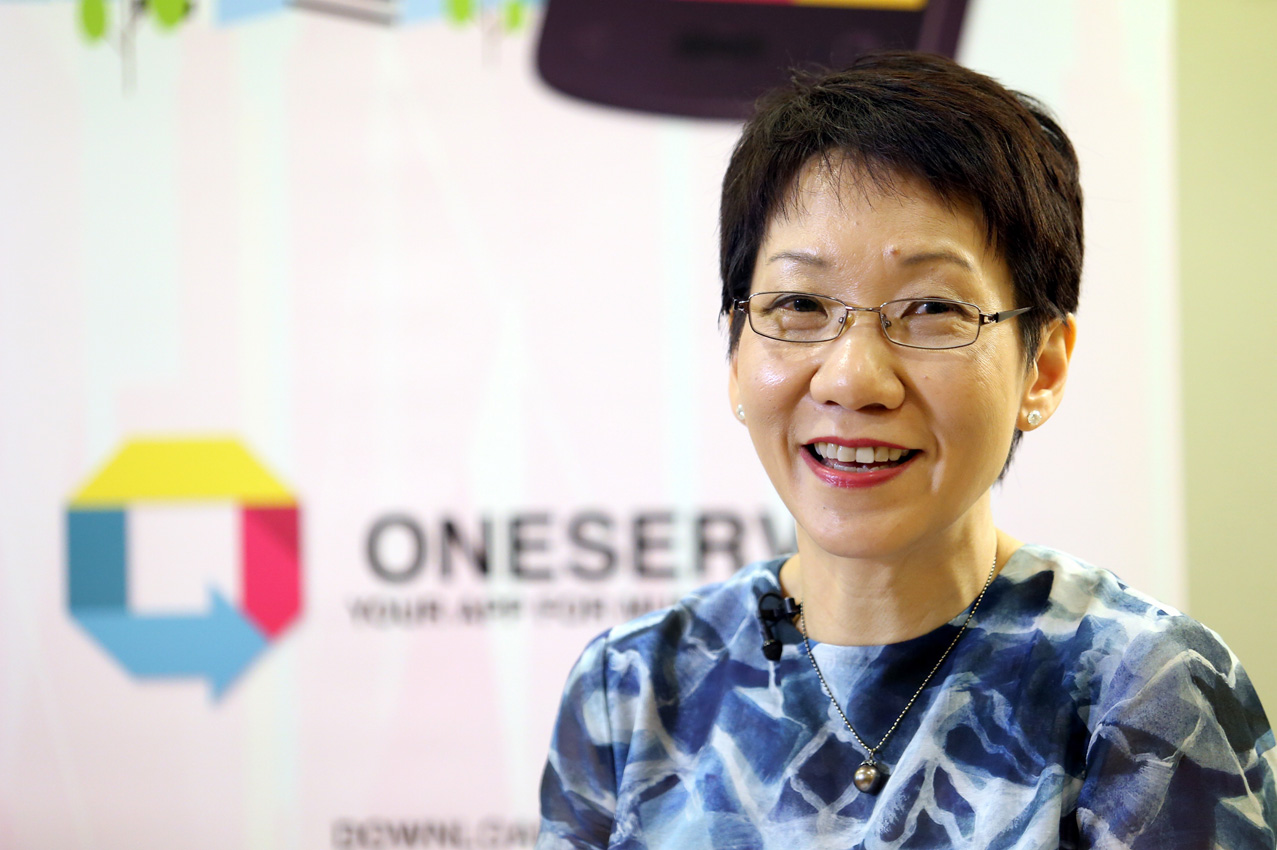
Announcing the Ministry of Culture, Community and Youth’s plans for the sports sector in Parliament yesterday, Minister Grace Fu said the public will have greater access to sports programmes and facilities island-wide.

This builds on the $1.5 billion Sports Facilities Master Plan to ensure Singaporeans have a venue to play and exercise within 10 minutes of their home by 2030; and the Dual-Use Scheme, which opens indoor sports halls and fields in schools outside of school hours.

There are now 87 chargeable school fields, 49 free-to-play fields and 77 indoor sports halls. This is about half of all government primary and secondary schools. The rest will be opened by around 2020.

More than 210,000 bookings for these facilities were made in the last financial year.

Auditor Jacqueline Wong, 35, plays badminton at Yishun Town Secondary School every weekend. She welcomed the expansion of the scheme, saying: “Yishun Town has just four courts, so there’s a limited number of people who can play if we just book one court. More courts will help the whole community.”

There were more than 15 million visitors to public sports facilities last year and a Ministry of Communications and Information survey found that 76 per cent were satisfied with efforts to create a vibrant sports scene.

Besides more spaces to play, more citizens and permanent residents are also joining the country’s biggest “sports club”: ActiveSG Membership in ActiveSG, launched in April 2014, reached 1,011,529 as of March 31. The national movement for sport will set up academies and clubs for basketball, tennis and athletics this year.

Hosting last year’s SEA Games and ASEAN Para Games also stirred the nation, and the ministry aims to build on this legacy towards a physically active and inclusive society.

Said Ms Fu: “Sport is a great way to bring diverse communities together.” To that end, a Disability Sports Master Plan has been launched. It will expand access and opportunities for participation by the disabled community. Mainstream schools Jurongville Secondary and Sengkang Secondary will begin a pilot programme this year to develop a sports curriculum for students with disabilities.

Sport Singapore will launch five Centres of Expertise, where sports programmes and gym facilities will cater to persons with disabilities, within the next five years.

This will start with Sengkang Sports Centre for swimmers with disabilities and Queenstown Stadium for those with cerebral palsy.

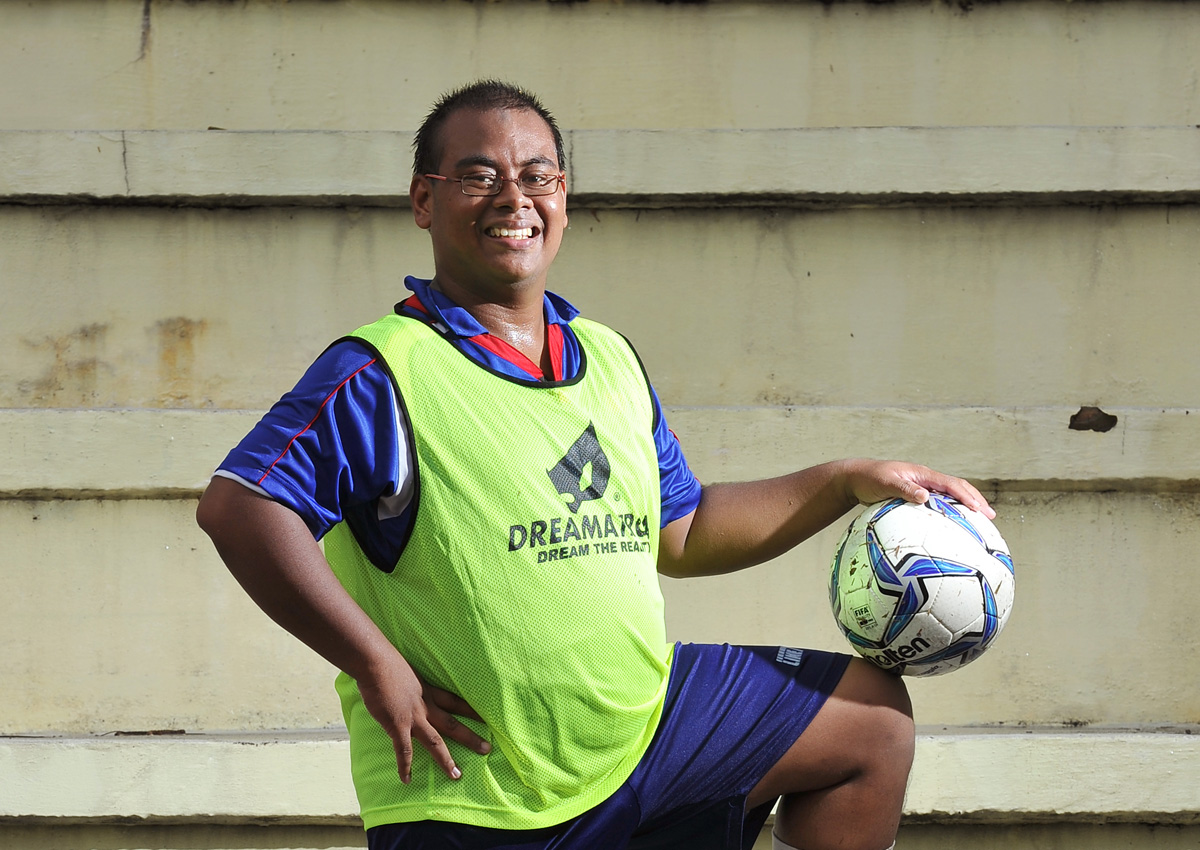
Full-time national serviceman Ismail Abdul Kadir, 25, was excited about training with Singapore’s national cerebral palsy football team at Queenstown. Said Mr Ismail, who experiences uncontrollable trembling in his hands: “My disability is not a barrier for me to go forward to play sports. This is a proper channel for people like me to pursue our football dreams.”

jonwong@sph.com.sg

Additional reporting by Alvin Chia


This article was first published on April 15, 2016.
Get a copy of The Straits Times or go to straitstimes.com for more stories.

Image: 
Category: 
Publication Date: 
Friday, April 15, 2016 – 10:54
Send to mobile app: 
Source: 


Story Type: 
Others

Source link

Bringing arts and culture to more pre-schoolers

0

More children will be exposed to the arts through professional artists and instructors, as the National Arts Council (NAC) and Early Childhood Development Agency (ECDA) expand an arts education programme to a total of 55 pre-schools, up from the current 19.

Separately, a pre-school in Punggol that opens in June will focus largely on the arts as a pilot with the NAC, Parliamentary Secretary for Culture, Community and Youth Baey Yam Keng said.

The new pre-school is “a partnership between artists and teachers, as they seek to incorporate the arts more holistically in the pre-school environment”, he told the House during the debate on his ministry’s spending plans.

Mr Alex Yam (Marsiling-Yew Tee GRC) and Ms Rahayu Mahzam (Jurong GRC) had asked the ministry about its plans to make arts and culture accessible to young children.

Mr Baey said he agreed that children should be exposed to arts and culture at an early age, as it helps develop creativity and confidence.

The arts education programme by NAC, a statutory board under the ministry, and ECDA, which comes under the ministries of Education as well as Social and Family Development, started in 19 pre-schools last year to promote arts education in the early childhood sector.

Children are exposed to the arts through age-appropriate performances, and have opportunities to try out various art forms, such as dance, music and visual arts. They will also visit arts venues such as museums and artists’ studios.

The 55 pre-schools to offer the arts programme this year are run by the Ministry of Education and two anchor operators – PAP Community Foundation and Metropolitan YMCA’s MY World. Anchor operators get government grants and priority in securing Housing Board sites for centres, but are required to keep school fees low for parents.

The new pre-school in Edgefield Plain is run by NTUC My First Skool, another anchor operator. At this centre, artists and pre-school teachers will jointly develop and teach the curriculum.

Said Mr Baey: “The new curriculum aims to provide an even more comprehensive and integrated art and music experience for our young children.”

leepearl@sph.com.sg


This article was first published on April 15, 2016.
Get a copy of The Straits Times or go to straitstimes.com for more stories.

Image: 
Category: 
Publication Date: 
Friday, April 15, 2016 – 10:54
Send to mobile app: 
Source: 


Story Type: 
Others

Source link

Do good and get rewarded with grants of up to $50,000

0

Doing good has received a big boost. Singaporeans and non-profit groups can soon apply for a grant of up to $50,000 each time they have a project that builds national identity or helps the underprivileged.

The Our Singapore Fund will pay for up to 80 per cent of the cost of an approved project.

Similarly, companies will get help from the Government to promote volunteerism among their workers, under a new programme called Company of Good.

They will get training on how to set up or strengthen their corporate giving programmes, and if their efforts are assessed to be good enough, they may display a “Company of Good” logo.

These moves to promote a culture of giving back to society were announced yesterday during the budget debate of the Ministry of Culture, Community and Youth.

Being a caring and cohesive community, alongside having a strong sense of national identity and pride, “will determine whether Singapore continues to thrive in the next 50 years”, said its minister, Ms Grace Fu.

The many meaningful projects that came up during the SG50 celebrations last year show there is a rich store of enthusiasm and public spirit, she added.

“We want to unlock it with a little support to translate these ideas into reality,” she said.

Hence the $25 million Our Singapore Fund, announced by Finance Minister Heng Swee Keat in his Budget speech on March 24.

It will be set up by the second half of the year and will last five years.

Help is also afoot to encourage corporate volunteerism in businesses, especially small and medium- sized enterprises.

In announcing the Company of Good programme, Senior Minister of State for Culture, Community and Youth Sim Ann said: “We regularly speak of corporate transformation in terms of productivity and innovation.

“It is just as important that businesses in our future economy are civic-minded and play active roles in our communities.”

She was replying to Ms Joan Pereira (Tanjong Pagar GRC) and Mr Henry Kwek (Nee Soon GRC).

The programme, to start in June, will be organised by the National Volunteer and Philanthropy Centre (NVPC), in partnership with the Singapore Business Federation Foundation.

All companies can sign up for it, regardless of whether they are practising corporate giving at the moment. They can take an online quiz to assess their corporate giving programmes, and may qualify to display a “Company of Good” logo on their premises and corporate materials.

NVPC will train about 200 companies in two years and the course will cover topics such as how to start a corporate giving programme that engages staff, and ways to promote skills-based volunteerism.

NVPC will subsidise the training fees. Details will be available when the website www.companyofgood.sg goes live next month.

goyshiyi@sph.com.sg


This article was first published on April 15, 2016.
Get a copy of The Straits Times or go to straitstimes.com for more stories.

Image: 
Category: 
Publication Date: 
Friday, April 15, 2016 – 10:54
Send to mobile app: 
Source: 


Story Type: 
Others

Source link

Roots.sg portal lets users uncover S'pore's past

0

The Sri Vairavimada Kaliamman temple in Toa Payoh can trace its roots to the 1860s, when it was a resting spot in the Orchard area for Indian plantation workers and dhobis (washermen). It then evolved into a place for Hindus to pray and sing devotional songs.

This nugget of historical information, part of the Toa Payoh heritage trail, is one of thousands that online users can uncover in a new Web portal launched by the National Heritage Board (NHB) yesterday.

Called Roots.sg, the site is a mammoth repository of information on more than 120,000 cultural treasures and historical artefacts from the national collection.

It also includes 85 heritage trails, 72 national monuments, and about 1,000 heritage resources such as research papers and activity sheets.

The portal “presents heritage resources in a much more dynamic manner”, Parliamentary Secretary for Culture, Community and Youth Baey Yam Keng told Parliament. “Whether you are a serious researcher, or just a curious young student, Roots.sg will provide a new dimension for you to explore and learn more about our history and heritage,” he added.

Produced by NHB’s digital team, it was budgeted in 2014 as part of the Ministry of Culture, Community and Youth’s digital engagement strategy. It took seven months and cost about $400,000 to piece together. It is targeted at educators and the general public.

The senior manager of NHB’s digital team, Mr Shaun Wong, said the portal is one way to better showcase the historic gems under its care. For instance, the team wove an early 19th-century painting from Tanjore, South India, of a dhobi and his wife, into the write-up of the Sri Vairavimada Kaliamman temple. NHB’s existing website, which draws about 300,000 views annually, will now be its corporate site.

Overall, the board chalked up a digital reach of more than 3.07 million views across its digital platforms, including its museum websites and social platforms, last year.

During the debate on the ministry’s budget, Mr Chen Show Mao (Aljunied GRC) raised the importance of implementing heritage impact assessments. Minister Grace Fu said NHB adopts a “calibrated and sensitive approach” to balance heritage preservation and development needs. The assessment frameworks of several countries were studied but these were not fully applicable to Singapore, she added.

“We have decided not to adopt such frameworks wholesale at this point of time, but to evolve an approach suited to our local context.”

She also said NHB will be able to identify Singapore’s heritage assets and better advise on their historical significance when the nationwide survey on the country’s tangible heritage is done by mid-2017.

melodyz@sph.com.sg


This article was first published on April 15, 2016.
Get a copy of The Straits Times or go to straitstimes.com for more stories.

Image: 
Category: 
Publication Date: 
Friday, April 15, 2016 – 10:54
Send to mobile app: 
Source: 


Story Type: 
Others

Source link

Policies put children at heart of what we do: Halimah

0

A slew of government schemes was introduced during the marathon Budget debate that ended in Parliament yesterday.

But what tickled Speaker Halimah Yacob’s funny bone were the abbreviations to which these schemes were reduced.

She noted wryly: “I counted that, in this Budget, 22 new schemes were introduced, including TAC-CIP, HCP, GTD, EAE, iPREP, SSF, OSF and many more.

“Can you remember at least five of them?” she asked as MPs burst into laughter.

The fortnight’s debate, however, is striking for the slaying of two sacred cows, she said in wrapping up the annual marathon.

One is the replacing of the numerical aggregate scores in the Primary School Leaving Examination with letter grades – as in the O- and A-level results – to curb the obsession with academic results.

The other is unwed mums getting the same 16-week paid maternity leave that married mothers get.

Their children, too, will get a savings account to help pay for childcare and healthcare costs.

Both changes reflect a “transformational shift in policy, aimed at placing children at the heart of what we do, instead of focusing narrowly just on academic excellence or procreation”, Madam Halimah said.

Agreeing, Leader of the House Grace Fu said the spirit of inclusivity was “in keeping with the spirit of our National Anthem, Majulah Singapura, that we progress together as a nation”.

Ms Fu, who is Minister for Community, Culture and Youth, also noted the 499 “cuts” by MPs, the highest in the past five Budget debates.

A cut is a call for a $100 reduction in a ministry’s budget, to let MPs query its policies and programmes.

The Health Ministry led with 50 cuts, many of which were on ageing and diabetes, a growing scourge.

But Ms Fu’s ministry topped the list on total speech time, a first since it was set up in 2012.

This reflects MPs’ interest in “the softer side of nation-building, which has taken on greater emphasis in this post-SG50 year”, Ms Fu said.

But what seems to trouble Madam Halimah is the seeming lack of interest among people in the debate, which provides good insights into policies, she said.

She discovered, when visiting her constituents in the past two weeks, that almost all of them had not been following the debates.

“This is our challenge: How to motivate and empower people to be more interested in what’s going on, so that they can make informed choices and better decisions for themselves,” she told MPs.

But it is a two-way process: People need to play their part too.

Said Madam Halimah: “The Government can only do so much.

“It can act as a catalyst, it can prod, nudge, persuade and influence but, beyond that, it really depends on all of us, how fast we want to run and how much of that rainbow we want to catch.”

rachelay@sph.com.sg


This article was first published on April 15, 2016.
Get a copy of The Straits Times or go to straitstimes.com for more stories.

Image: 
Category: 
Publication Date: 
Friday, April 15, 2016 – 10:54
Keywords: 
Send to mobile app: 
Source: 


Story Type: 
Others

Source link

COE quotas up by nearly 15% for May-July period

0

SINGAPORE – The Certificate of Entitlement (COE) quota for all categories will increase for the next three months to a total of 28,908 COEs, an increase of nearly 15 per cent compared to the 25,210 COEs released between the February to April period.
For…

Source link