Home Blog Page 4190

China's space mission shows that embryos can grow in space

0

Chinese mission shows cells can multiply, but colonisation of the cosmos has a ‘long way to go’

The latest results from experiments aboard China’s SJ-10 recoverable satellite prove for the first time that early-stage mammal embryos can develop in space.

China launched the country’s first microgravity satellite, SJ-10, on April 6. The return capsule will stay in orbit for several more days before heading back to Earth. An orbital module has been used to carry out experiments.

High-resolution photographs sent from SJ-10 show that mouse embryos continued to successfully develop throughout a 96-hour period.

“The human race may still have a long way to go before we can colonise space but, before that, we have to figure out whether it is possible for us to survive and reproduce in outer space like we do on Earth,” said Duan Enkui, a professor at the Institute of Zoology affiliated with the Chinese Academy of Sciences, and the principal researcher involved with the experiment.

“Now, we have finally proven that the most crucial step in our reproduction-early embryo development-is possible in outer space.”

Embryonic development starts with a single fertilized cell that divides into two cells, four cells, eight cells and so on, until the fertilized egg forms a blastocyst that can be implanted into a womb.

The first attempt to develop mammalian embryos in space was carried out by NASA’s STS-80 Spacecraft in 1996. However, none of the 49 mouse embryos on board successfully developed.

“Since space experiments are expensive, no one attempted to develop embryos again in the decade following NASA’s failure,” Duan said.

In 2006, China launched the recoverable satellite SJ-8, which carried four-cell embryos in its orbital module. Scientists successfully received high-resolution pictures of those embryos. However, none grew.

“Our team analysed the initial results and improved the experimental apparatus during the following 10 years but we still did not expect such a big success,” Duan said of the latest mission.

The SJ-10 carried more than 6,000 mouse embryos in a self-sufficient, enclosed chamber that is about the size of a microwave oven. Everything involved, from the cell culture system to the nutrient solution, had been refined through hundreds of ground tests.

During the experiment, a camera took photographs of the embryos every four hours and sent those pictures back to Earth.

The images revealed that some of the embryos developed into advanced blastocysts in four days.

“This represents an important milestone in human space exploration,” said Aaron Hsueh, a professor who specializes in reproductive biology at Stanford University. “One small step for mouse embryos, one giant leap for human reproduction,” he said.

David Elad, a professor of biomedical engineering at Tel Aviv University in Israel, said the achievement represents both a technological leap forward and scientific excellence in assisted reproduction.

“The successful development from two cells to blastocyst in microgravity conditions without manual intervention represents top-level integration of deep understanding of the biological factors of early reproduction with cutting-edge technological skills,” Elad said.

Peter C.K. Leung, a fellow of the Royal Society of Canada and of the Canadian Academy for Health Sciences at the University of British Columbia, was also enthusiastic about the breakthrough.

“The innovation has a paramount impact in pushing back the frontier of reproductive biology and will have immense potential benefits to human health,” he said.

Image: 
Category: 
Publication Date: 
Monday, April 18, 2016 – 09:48
Send to mobile app: 
Source: 


Story Type: 
Others

Source link

500 students fall sick at school built on toxic site in China

0

The Ministry of Environmental Protection started an investigation on Sunday into what caused about 500 students at Changzhou Foreign School in Jiangsu province to come down with a range of pollution-related illnesses.

The school had relocated in September to a facility built on a toxic site.

The spate of illnesses that flared since then include leukemia, dermatitis, eczema, bronchitis and blood abnormalities.

According to the school, 641 students were examined recently by doctors, and 493 were diagnosed with various diseases and conditions.

The local government confirmed the new campus was built on a brownfield site that had housed three chemical factories.

The plants had produced highly toxic chemicals including carbofuran and methomyl.

People who formerly worked in the factories said they had buried toxic chemicals near the plants to save time and money.

They also spoke of discharging untreated wastewater into rivers.

An environmental report showed that soil and nearby groundwater contained organic pollutants including chlorobenzene and carbon tetrachloride. Heavy-metal pollutants such as mercury, lead and cadmium were also found.

The concentrations of chlorobenzene in the groundwater and soil greatly exceeded normal levels, according to the report.

The amount of chlorobenzene in the groundwater was 94,799 times normal. It was 78,899 times higher in the soil.

Pan Xiaochuan, a professor at the public health school under Peking University, was quoted by China Central Television as saying that the high number of students being diagnosed with diseases and conditions in such a short space of time should be connected with the heavy pollution levels.

Professors specialising in environmental issues told CCTV the environmental assessment report that justified the construction of the new campus did not look for pesticides.

And they said that builders had used heavily polluted groundwater during the construction process.

Image: 
Category: 
Publication Date: 
Monday, April 18, 2016 – 09:45
Send to mobile app: 
Source: 


Story Type: 
Others

Source link

UNESCO experience dawns on conservation of China's cultural relics

0

Protecting and preserving cultural relics has been an important task for China, especially in recent years as conflicts between conserving of historical relics and the growing economy stand out in the fast process of the nation’s urbanization.

On Tuesday, President Xi Jinping stressed in a national meeting that the conservation of relics is part of the official duties of the CPC and all government departments.

President Xi suggested that private sectors should be mobilized and involved in the effort.

Despite the efforts of protecting them, China’s cultural relics were not taken care of at its best. Frescoes in Fenghuangshan scenic spot in Northeast China’s Liaoning province, for example, was damaged at large after restoration. Sustainable development, though being laid as an important issue by the central government, still lacks concrete and convincing examples of progress.

Given such dilemma, we’ve invited Pietro Laureano, an Italian architect and urban planner to share with us his experience in conserving cultural relics.

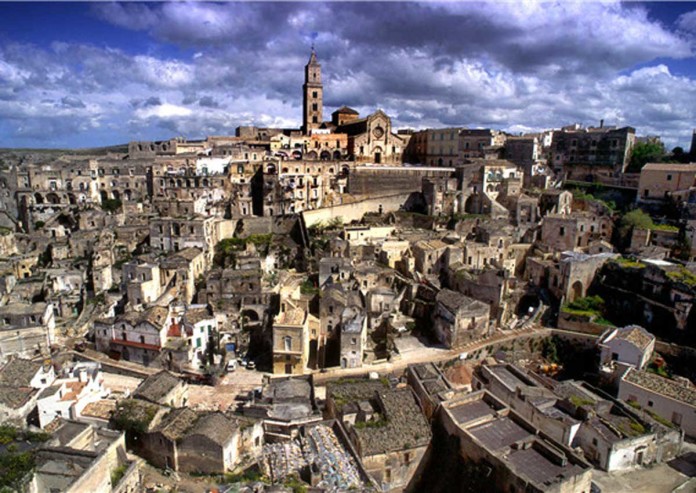
As a UNESCO consultant on arid areas, water management and endangered ecosystems, Laureano once spent ten years restoring the historic city of Matera in Italy.

He helped turn the once abandoned ruins of Matera into a sustainable city. Matera was also chosen as the 2019 European Capital of Culture.

In an exclusive interview with China Daily Website, Laureano also gave advice on how China could achieve sustainable development in terms of conserving its many cultural relics.

What was Matera like ten years ago? Why were people moving away from Matera?

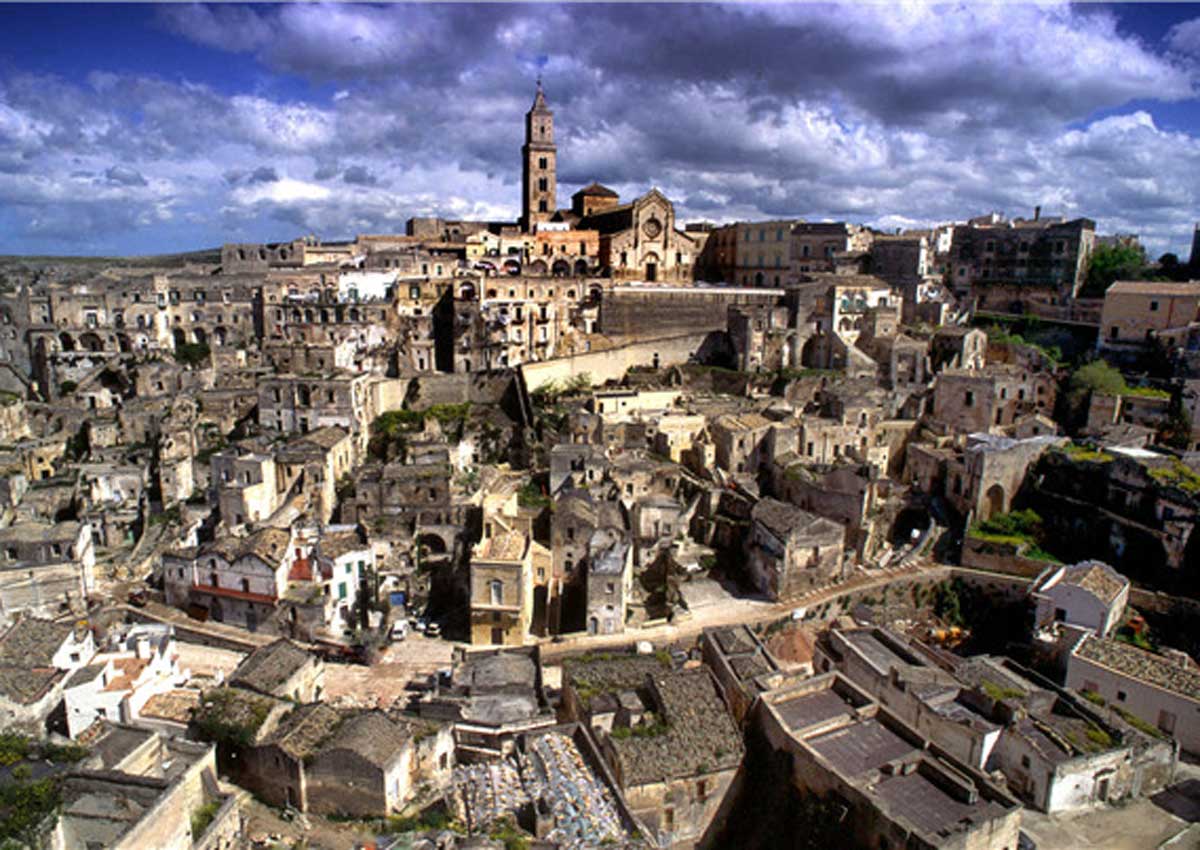
Matera, in the South Italy, is a primordial dwelling settlement based on cave-houses that were carved in the stones and therefore called the “Sassi” (rocks).

In the 1950s this way of living was considered inacceptable modern living. The Sassis of Matera was declared a national shame and 20,000 inhabitants were forced to move to new quarters.

The abandoned houses became State property and were boarded up in order to prevent people from living in caves.

Consequently, the Sassi of Matera became a desert town; the largest historic centre of Europe that was completely abandoned. The dwellings not inhabited and aired underwent a rapid degradation process as well as the rock-hewn churches which boasted beautiful medieval frescoes.

Since when did Matera start being valued and preserved? And what measures have been taken to make this work?

It started after the mass migration of the inhabitants of the rock dwelling city of Sassi di Matera. In the 1980s, there was an emergence to preserve it, but no one seemed to see how.

Some wanted to leave the site as it was, abandoned, which would have been a testimony of what had happened in the past. Others proposed to make the dwellings inhabitable again with a bold effort to reclamation by rehabilitating all necessary transformations.

In the first option, the Sassi of Matera would have remained deserted. Essentially it would have been a museum city, impossible to preserve. In the second option, the reclamation would have involved demolition and reconstruction. The solution would have only been achieved if the inhabitants returned after the necessary restorations compatible with the preservation of its character.

Finally, we used the UNESCO principles. The landscape is build by the people; it is a balance of nature and culture. It is movement and change. It is not possible to keep the landscape as a museum.

But it is necessary to propose those changes in harmony with the historical evolutionary process.

When did people start moving back to Matera? Why are they moving back, are there any incentives? People started moving back after the inscription of Matera as a UNESCO World Heritage Site in 1993.

It was the first such site in southern Italy. By stimulating the will and the pride of the community, Matera, as cultural and economic endeavour, generated a new vision.

It was necessary to give people examples. When I did the UNESCO candidature project, I restored a grotto-house and I lived in the caves with my family.

We inserted all modern facilities in the cave-house without to altering its original elements.

As an incentive, the state paid 50 per cent on restoration expenses. With the new image, the tourism and the increase of in value for habitation, more and more people returned.

Now, who lives in Matera? How do they balance the ecosystem with their daily lives?

The residents are intellectual working class people. There are many foreigners living in Matera.

They identify with the qualities and the meanings of those places.

They (Matera residents) became part of the brilliant Matera ecosystem by saving water and energy, recreating the community, choosing a calm lifestyle, a green lifestyle, and a healthy lifestyle.

They use traditional technologies in an innovative way.

For example: rehabilitating the cisterns to harvest rainfall water; using that water to restore terrace gardens.

What’s Matera’s current status in Italy?

Matera has become a national and international tourist attraction. At present, 4,000 people have come back to the city. Other houses are undergoing restoration work. It is the most important example of urban rehabilitation in the Mediterranean.

Matera won the candidacy, against the most important and beautiful cities of Italy, for being the European Capital of Culture for 2019. This crowns a success that started with the UNESCO inscription and the new vision and narrative developed for the candidature.

Are there any universal practices that China can borrow from Matera’s experience? Could you give us some examples?

China has so many well restored extraordinary places.

Take Lijang in Yunnan province and Luohe in Henan province as examples. But sometimes the rebuilding activities are too heavy like some ancient quarters of Beijing. Each situation is different.

But when it is possible, it is better to keep the authentic fabric and to restore instead of rebuilding.

In other situations, preserve the landscape is necessary to assure an economic return to the habitant (like the wonderful landscape of the terraced fields of Honghe in Yunnan).

But if we increase the agriculture production with industrialisation we risk destroying the place.

The solution in Italy has been to increase the value of typical products while exalting the variety and quality of the original character, turning it into a heritage place.

The typical food production safeguards are possible thanks to the maintenance of traditional techniques in soil management.

The most refined production houses are proud to list the traditional techniques they use in their manufacturing methods and the success of so many companies are actually due to the capacity to incorporate tradition into their processes.

You’ve travelled to quite a few places in China, are there any specific places that interest you? Do you think they could be better preserved? If so, how?

The Chinese people’s historical knowledge allowed architectures to build quality structures and landscapes with a universal value which many of them are now inscribed on the UNESCO World Heritage list.

However, traditional knowledge is in danger and its disappearance would cause the loss of the people’s capability to keep and pass on the artistic and natural heritage.

With the abandoned villages and mountains, some places have lost their ability to absorb water and mitigate climate. Landslides and flooding are becoming more frequent.

A new environmental and urban design based on blue and natural engineering is necessary. We need to inventory, protect, and reuse traditional knowledge as an extraordinary source so that appropriate innovative solutions can be derived today and in the future.

Using traditional knowledge does not mean reapplying the techniques of the past,.

It means to understand the logic of this model to create projects based on innovative sound technologies.

The Matera UNESCO experience was a methodology of inventory that was elaborated by IPOGEA and the International Traditional Knowledge Institute (ITKI) to gather and protect historical knowledge and promote innovative practices.

In your opinion, what is sustainable development and how can one achieve sustainable development?

Development is sustainable when the natural resources are not destroyed.

Development is sustainable when it is oriented towards the wellbeing of the people and future generations.

The climatic change and the economical situation demonstrated errors in the system.

We cannot face the global crises of applying the methods that caused it: technocracy, waste of resources, undifferentiated approach for all countries, top-down approach.

A new paradigm is required and scholars, researcher, international bodies, administrators, local activists and associations put forward various strategies: sustainable development; the green economy; a third industrial revolution based on alternative energy sources; zero emissions; zero km; the slow-economy; design for poverty; ecosystems harmonic management theories.

These are all points of interest today.

We propose traditional knowledge, use its innovative underlining wisdom, and be engaged everywhere in the comprehension of the pattern of signs. We need recovery the relation between nature and culture.
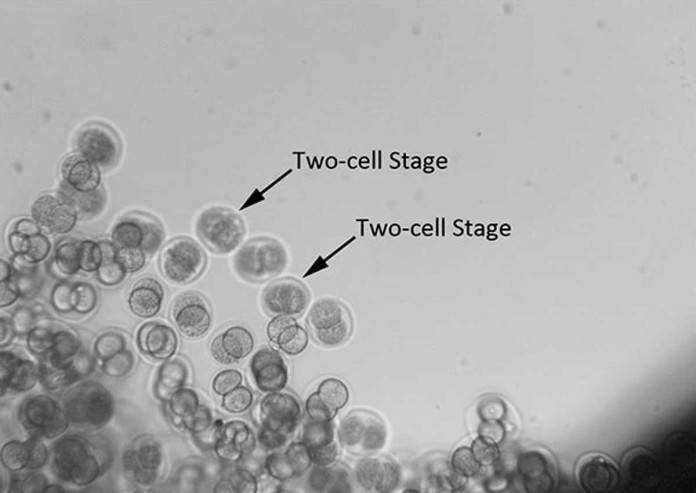
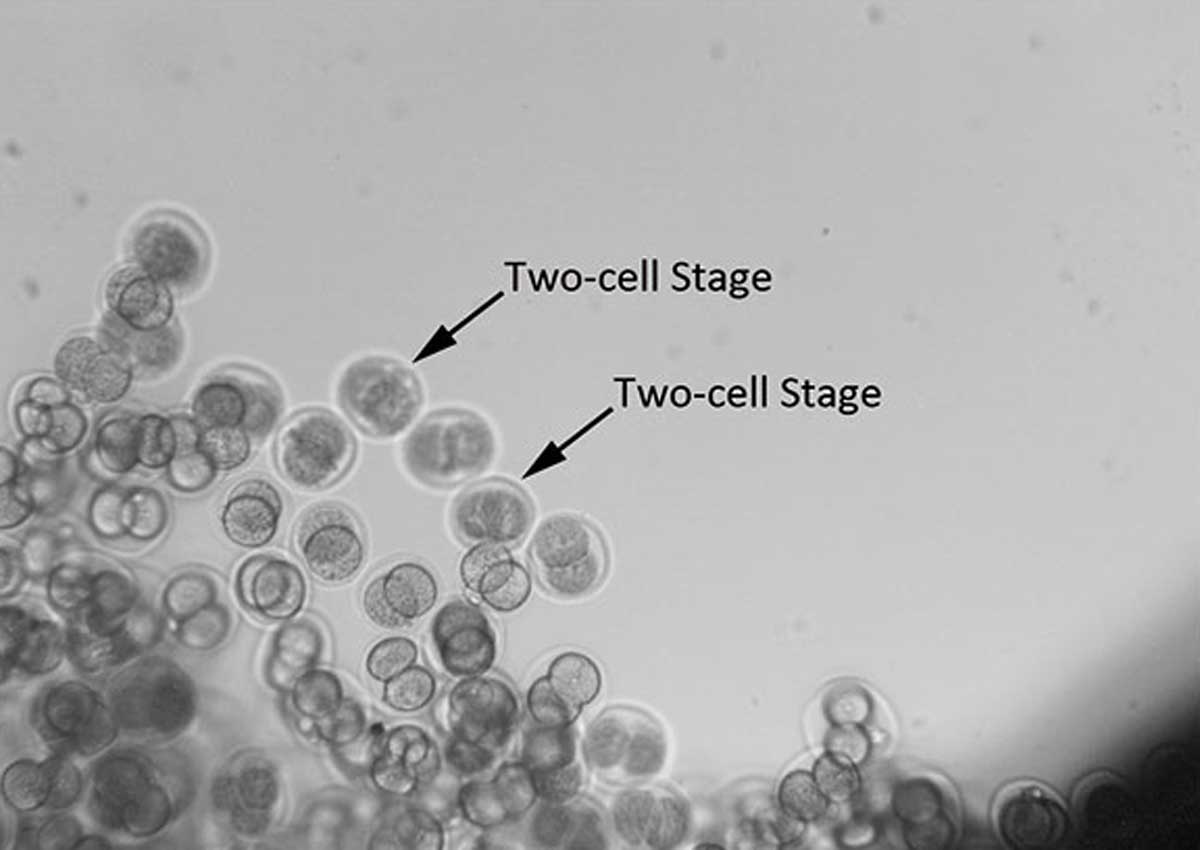
Image: 
Category: 
Publication Date: 
Monday, April 18, 2016 – 09:38
Keywords: 
Send to mobile app: 
Source: 


Story Type: 
Others

Source link

Stretch of SLE closed after cement truck overturns

0

SINGAPORE – An accident involving a cement truck on Monday morning (April 18) prompted the authorities to close off a stretch of the Seletar Expressway (SLE), after the Upper Thomson Exit heading towards the Central Expressway (CTE).
The accident, which…

Source link

Two children in alleged molestation case at PCF childcare centre undergoing counselling

0

SINGAPORE – Two six-year-olds, a girl and a boy, are currently undergoing counselling as a result of an alleged molestation case at a PAP Community Foundation (PCF)-run childcare centre, the pre-school operator said in a statement early Monday morning (April…

Source link

Singapore’s exports shrink 15.6% in March, biggest drop in a year

0

Exports to all of Singapore’s top 10 markets, except Japan and Hong Kong, declined last month, according to IE Singapore.

Source link

Singapore's non-oil domestic exports fall 15.6% in March, faring worse than expected

0

SINGAPORE – The Republic’s non-oil domestic exports (NODX) slid back into contraction in March, performing worse than economists’ expectations due to a contraction in both electronic and non-electronic exports.
NODX fell 15.6 per cent last month compared to a…

Source link

SLE towards CTE closed after tipper truck accident

0

A tipper truck crashed into the centre divider of the Seletar Expressway and overturned, spilling cement on both sides of the expressway.

Source link

A day with local otter watchers

0

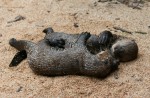
IT IS 6.30am and I approach – as quietly as I can – a family of 10 otters frolicking on the grass by the Helix bridge in Marina Bay.

Beside them sit otter watchers Nick Soo, better known by his online moniker Fast Snail, and Yane Kang, whose photos of a pup injured by a fishing hook hit the news early in April.

Mr Soo, a 34-year-old engineer, is taking videos of the family, known as the Bishan 10 as the parent otters were first sighted in Bishan-Ang Mo Kio park.

It is a Saturday and My Paper has taken up an invite to join an informal group of about 10 to 20 otter watchers.

“Bring a bicycle, or wear running shoes,” Mr Soo reminds me in a text message the night before.

I learn how valuable a bicycle is after walking with Ms Kang for half an hour from the Singapore Flyer to Gardens by the Bay, hoping to catch sight of the creatures.
We are foiled when Mr Soo tells us that the otters have turned tail and swum back to the other side of the Flyer.

Throughout the morning, we are joined by others, some of whom are notified of the otter locations shared in a WhatsApp chat group.

The group is as motley as they come, including an IT engineer, a university lecturer, an environmental engineer and one who works in financial services.

Their ages range from 30 to 60.

Asked about the diversity of people, Jeffery Teo, 44, who has followed otters for about four years, laughs and says: “Background doesn’t matter. In the eyes of the otters, we are all equal.”

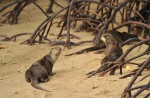
We watch them catch and eat fish, play, sunbathe and clean themselves on leaves.

They come out to catch fish in the morning from 7am to 9am and in the evening from 5pm to 7pm, returning to their holts, or nests, to sleep when the sun is high, says Ms Kang.

The watchers usually find the otters based on where they were last spotted the previous night, often by fellow watchers.

It is best to spot an otter by 6am, which is about the time it wakes up, says Mr Soo. If you miss the creatures at their last-sighted spot, chances are, it will be very difficult to find them again.

Three otter watchers tell me that they manage to find the otters six out of 10 times that they try.

Some, like Ms Kang, seek the mammals daily before work, while others do so only on weekends.

Most go on foot but Mr Soo cycles from his home in Bishan, which was where he spotted his first otters in May last year.

Asked why they choose to follow the otters, most of the watchers laugh and say “because they are cute”.

The mammals are very entertaining, chittering to one another, occasionally squabbling over a catch of fish.

Whenever they come on land, joggers and cyclists pause and whip out their smartphones to take a photo or video.

Dragon boaters and kayakers on the Kallang river also take five to admire the creatures playing in the water.

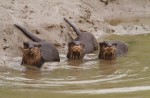
At 10am, a tour boat stops its engine for tourists to watch the otters, which swim up to the boat curiously.

The Bishan 10 are the friendliest of the bunch, the otter enthusiasts tell me.

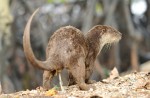
There are at least 50 otters in Singapore, with families scattered in places such as Marina Bay, Changi, Kallang and Pasir Ris.

With the increasing spotlight on the otters, plans must be made to study how to better co-exist with wildlife, says National University of Singapore anthropology lecturer Lai Ah Eng, 60, who has followed the otters for about a year.

Throughout the morning, we spot two illegal anglers who have their rods in the water near the otters. The otter watchers tell me that the Marina Bay area already has fewer of such anglers.

“We can co-exist with more wildlife if we think out of the usual frame,” says Dr Lai.

“We are privileged that we live in a small city state but have this wildlife. We could do a lot more in terms of public awareness, conservation and protection, whether it’s wild pigs or monkeys or, now, otters.”

lydialam@sph.com.sg


Get MyPaper for more stories.

Image: 
Category: 
Publication Date: 
Monday, April 18, 2016 – 08:08
Keywords: 
Send to mobile app: 
Source: 


Rotator Headline: 
Otter watch: Where to find them and best times to see them
Story Type: 
Others

Source link

First hearing today on changes to elected presidency

0

The hearings on proposed changes to the elected presidency will start today, with at least four academics and a researcher set to speak on the matter.

They are Singapore Management University law dons Eugene Tan and Jack Lee, Institute of Policy Studies senior research fellow Mathew Mathews, academic Loke Hoe Yeong from the European Union Centre in Singapore, and human rights researcher Brian Chang.

The five are among 19 individuals and groups who will give their views at four hearings on the elected presidency, instituted in 1991.

They were selected by the Constitutional Commission – formed to review the elected presidency – out of more than 100 individuals and groups who had sent in their views during a public consultation.

Only the Workers’ Party declined to participate among those invited. It had called for presidential elections to be abolished in its submissions and said its MPs would speak about the issue in Parliament.

The commission, led by Chief Justice Sundaresh Menon, was appointed by Prime Minister Lee Hsien Loong in February to review three aspects of the elected presidency.

The three areas are: the eligibility criteria for candidates; provisions for minority candidates to have a chance of being elected from time to time; and changes to ensure members of the Council of Presidential Advisers have experience in the public and private sectors.

Associate Professor Tan said in his submissions that he agreed qualifying criteria should be made more stringent, given the increase in reserves that the president has to safeguard. But he said any changes should kick in only after the next presidential election due by August next year. “Changing the rules of the game so late in the presidential electoral cycle would upset legitimate expectations. This would also unnecessarily politicise the election for a non-partisan office,” he wrote.

Mr Chang and Mr Loke both suggested the creation of a vice-president post to ensure minority candidates get a chance to be elected. The vice-president would have to be of a different race from the president, and must contest the election on the same ticket. Mr Chang said it would ensure anyone of any race will be able to stand in the election.

Dr Lee suggested that a committee be appointed to identify suitable minority candidates with the help of relevant organisations such as civil society groups and unions.

He said this would be similar to how Nominated MPs are chosen by a parliamentary select committee.

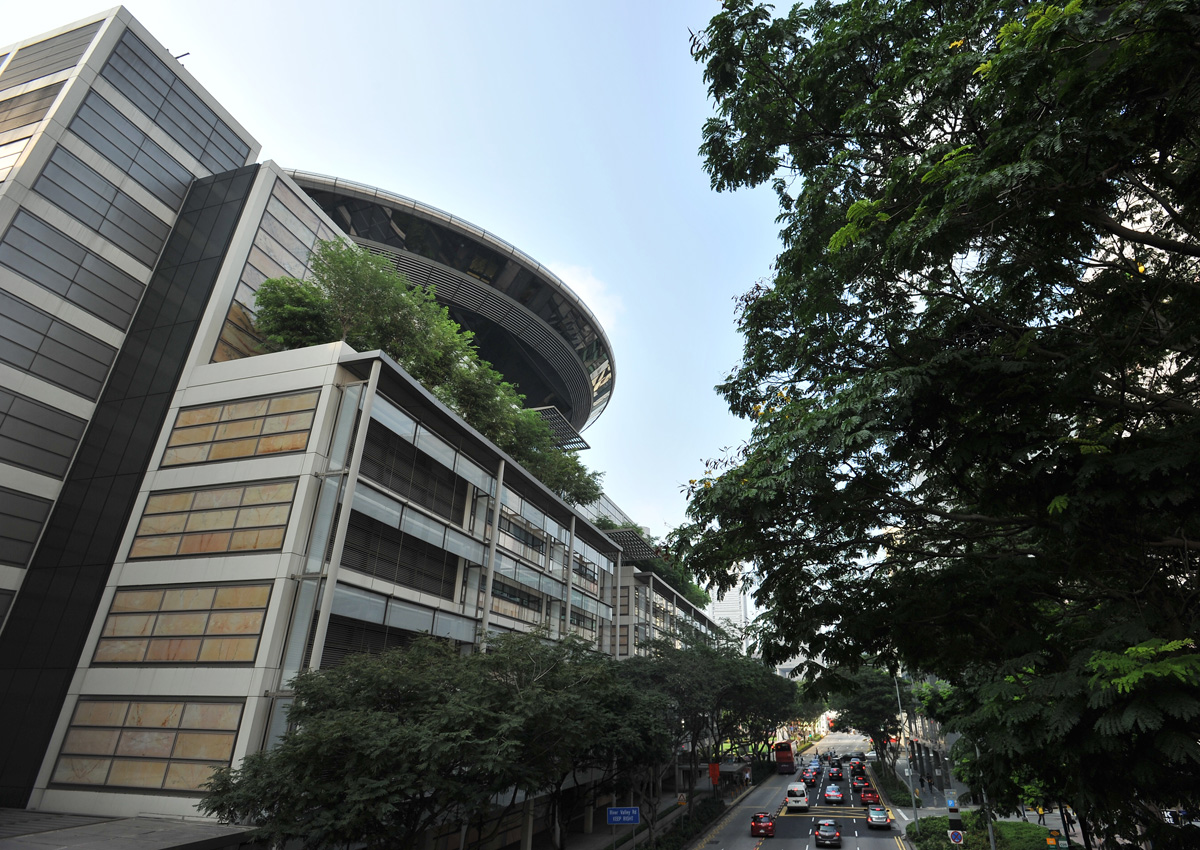
The public hearing will be held at the Supreme Court auditorium from 9.30am to 5pm today. The other hearings will be on Friday, and April 26 and May 6.

yuenc@sph.com.sg


This article was first published on April 18, 2016.
Get a copy of The Straits Times or go to straitstimes.com for more stories.

Image: 
Category: 
Publication Date: 
Monday, April 18, 2016 – 08:05
Send to mobile app: 
Source: 


Story Type: 
Others

Source link